






A collector's guide to Uri, Switzerland: its geology, mining history and notable minerals, illustrated with the 77 specimens documented from this locality on EarthWonders.
Key facts
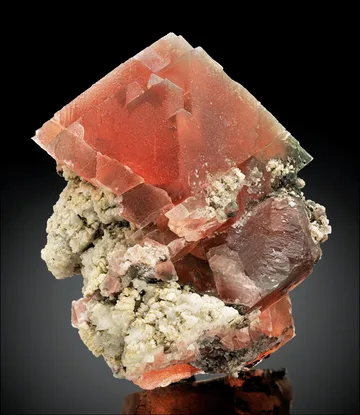
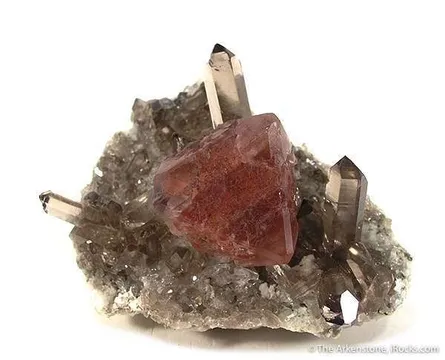
Uri is not a single mine locality so much as a compact Alpine mineral province: a canton where the Reuss Valley, Göschenen Valley, Göscheneralp, Maderanertal, Urseren, Realp, Furka, and the Gotthard ground all cut through some of the classic crystalline terrain of the Central Swiss Alps. For collectors, its name means Alpine clefts—zerrklüfte opened by tectonic stress in granite, gneiss, and associated metamorphic rocks of the Aar massif and Gotthard region, later lined with quartz, smoky quartz, adularia, chlorite, calcite, fluorite, hematite, rutile, sulfides, and a long tail of rarities. The aesthetic signature is unmistakable: glassy, water-clear to lightly smoky quartz, deep morion crystals, twisted gwindels, chlorite-dusted faces, and, at the top end, salmon-pink to raspberry-red fluorite octahedra riding on quartz.
Regional View
Country View
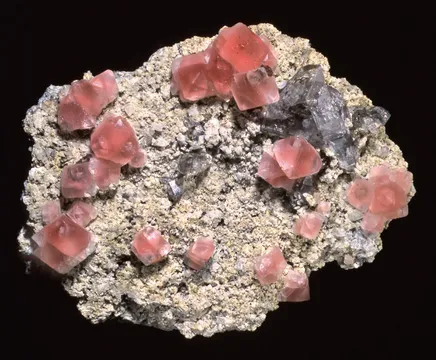
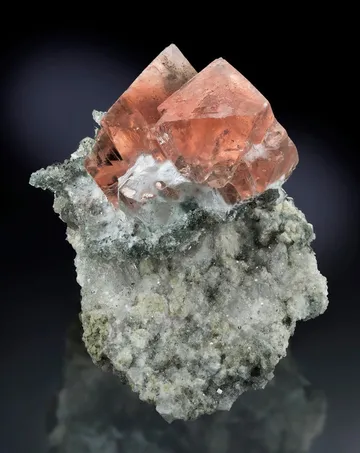
The canton’s fame rests especially on two kinds of specimens. The first are the great rock-crystal and smoky-quartz finds: sharply terminated Alpine quartz groups, lustrous single crystals, and gwindels from the Göschenen and Furka-Realp districts, including the historic Tiefengletscher smoky quartz find of 1868. The second are the rose fluorites of the Göscheneralp, above all Planggenstock, where modern strahler work produced quartz and fluorite specimens that became a national mineral story rather than merely a dealer-room event. At their best, Uri fluorites are not just “pink fluorite”; they are gemmy octahedra with saturated warm colour, sharp edges, internal zoning or chlorite phantoms, and an architectural contrast against pale quartz, feldspar, or granitic matrix.

Photo: Wikimedia Commons / Arkelin

Photo: Wikimedia Commons / Daniel Mietchen
Search for specimens: View all specimens from Uri, Switzerland
The collector’s “Uri” label usually covers a network of Alpine cleft localities rather than one deposit. The productive ground lies in the high crystalline Alps around the Reuss and its side valleys, where Variscan granites and older gneisses of the Aar massif, and rocks of the Gotthard region, were fractured and rehealed during Alpine uplift. These tension fissures became natural pressure vessels: hot aqueous fluids circulated through quartz- and feldspar-rich rocks, dissolved silica, alkalis, calcium, fluorine, metals, and trace elements, and deposited crystals as the rocks cooled and rose toward the surface. In specimen language this gives the classic Alpine suite—quartz, smoky quartz, adularia, albite-pericline, chlorite, calcite, hematite, rutile, fluorite, titanite, apatite, epidote-group minerals, zeolites, and assorted sulfides and secondary species.
Göscheneralp is the canton’s showpiece mineral district. The slopes around Planggenstock, Winterstock, Feldschijen glacier, Lochberg, the Älpergen glacier area, Dammastock, and adjacent cleft systems have produced quartz, smoky quartz, gwindel, rose fluorite, adularia, chlorite, calcite, galena, pyrite, hematite, and secondary lead-uranium-vanadium-molybdenum minerals. Planggenstock itself is recorded as a 2,823 m peak south of the Göscheneralpsee and is famous for giant quartz crystals in Alpine clefts. Its most important modern workings were opened by professional strahlers Franz von Arx and Paul von Känel, later with Elio Müller, who followed a large fissure system with work that became essentially small-scale mountain mining.
The Planggenstock cleft system is also the best-known Uri example of specimen mining as a technical enterprise. Work began in the 1990s after promising cleft signs were recognized high above the Göscheneralp. Early work required removing enormous granite blocks; later the workings advanced tens of metres into the mountain. The major 2005/2006 chamber yielded more than fifty unusually clear, lustrous, lightly smoky quartz crystals and groups, with a total weight of roughly two tonnes; the great display group in Bern weighs about 300 kg and carries a 107 cm central crystal. Associated rose fluorites from the same system include large, gemmy octahedra, some reaching around 10 cm, and the literature and dealer record repeatedly emphasize their combination of colour, transparency, and size.
Uri’s other classic quartz story lies in the Furka-Realp-Tiefenbach area. The Tiefengletscher find of 1868 produced a large quantity of dark brown to nearly black smoky quartz—morion—from a high Alpine cleft above the glacier. Historical accounts describe crystals of exceptional size, some doubly terminated, with the best examples entering museum collections. The Hotel Tiefenbach area and surrounding ground near Gletschhorn, Galenstock, Sidelengletscher, Büelenhorn, and the Furka Pass remain strongly associated with smoky quartz, gwindel, rock crystal, and rose fluorite in the collecting literature and local mineral culture.
Maderanertal, the Bristen area, the Brunni Valley, Schächental, Meien Valley, Susten Pass, Hospental, Andermatt, and Amsteg broaden the canton’s mineralogical profile beyond display quartz. Maderanertal and the Brunni Valley are known for Alpine cleft minerals including quartz, axinite-(Fe), pargasite, phenakite at specific sublocalities, and sulfate occurrences such as pickeringite. The Schächen and Brunni areas are classic Uri names for axinite-bearing Alpine assemblages. Around Amsteg and the hydropower and tunnel works, specimen mineralogy intersects with ore mineralization: pyrrhotite, sphalerite, galena, native bismuth, native silver, pyrite, chalcopyrite, and quartz are recorded from power-station and water-tunnel workings, while the historically noted Pfaffensprung-Amsteg water tunnel exposed a manganese-zinc-silver mineralization.
Tunnel construction has repeatedly revealed Uri minerals because infrastructure crosses the same crystalline rocks that strahlers pursue from the surface. The St. Gotthard railway, highway, and base-tunnel systems, the Furka basis tunnel east section, Amsteg hydropower galleries, Realp power works, and the second Gotthard road tunnel have all intersected clefts or mineralized zones. Recent Gotthard second-tube work near Göschenen produced notable rock crystal and rose fluorite; the canton treated the finds under the local mineral-rights regime, with professional mineral supervision and recovery rather than casual removal by workers.
Collecting access is regulated. Uri mineral collecting is not a free-for-all scramble in the talus: a strahler patent is required on land administered by the Korporation Uri, with day, week, and annual permits available through the corporation, and the permit is personal and non-transferable. In Ursern corporation territory, mineral collecting requires an annually requested strahler patent and applicants must be adults. The practical result for visiting collectors is straightforward: buy specimens with good provenance unless you already know the Swiss patent system, land status, safety obligations, and local restricted zones. High Uri clefts are serious mountain ground, not roadside digs, and many of the famous pockets are in steep, glaciated, or privately/communally regulated terrain.
Quartz from Uri ranges from bright, colourless rock crystal to lightly smoky, smoky, and morion material, with habits spanning simple prisms, doubly terminated crystals, steep Alpine groups, gwindels, sceptre forms, and chlorite-dusted cleft plates; the finest pieces are tied to the Göschenen Valley and Göscheneralp, the Planggenstock system, the Furka-Realp-Tiefengletscher area, Maderanertal, and numerous smaller clefts in the Reuss-side valleys. The Planggenstock find defines the modern high end: exceptionally transparent, high-lustre quartz crystals and groups, some near or above one metre, with the most famous museum group weighing about 300 kg and centred on a 107 cm crystal. Ordinary Uri quartz may simply be clean Alpine material, but collector-grade pieces show undamaged terminations, glassy lustre, attractive chlorite or adularia association, elegant “floating” balance, old locality pedigree, or a precise sublocality such as Planggenstock, Tiefengletscher, Göschenen Valley, or Maderanertal rather than a vague Swiss Alps label.
Smoky quartz is one of Uri’s great collector minerals, from honey-brown and champagne-smoky Planggenstock crystals to nearly black Tiefengletscher morion and deeply coloured Göscheneralp gwindels. The best Uri smokies have the Alpine look collectors prize: sharp, lustrous faces, strong transparency under transmitted light, clean terminations, subtle chlorite dusting rather than muddy coating, and sometimes the twisted, tabular gwindel habit that makes a small specimen more desirable than a larger but conventional prism. Tiefengletscher is the great historical name, with the 1868 cleft remembered for enormous dark crystals, while modern Göschenen and Göscheneralp material is judged by lustre, degree of damage, depth and evenness of colour, and whether the specimen sits naturally on quartz, adularia, chlorite, or granitic matrix instead of being a loose, trimmed single.
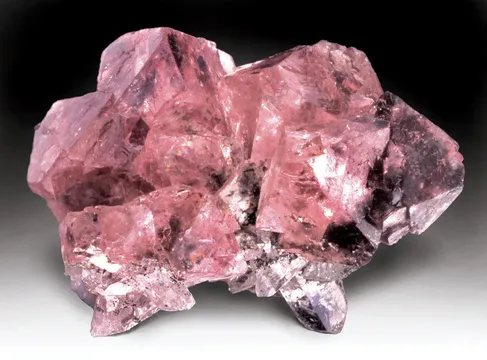
Fluorite from Uri is most coveted as rose to dark pink octahedra from Göscheneralp, especially Planggenstock, where the species is considered a world-class and classic occurrence. The ideal specimen is a sharp, transparent octahedron or octahedral cluster with saturated pink to reddish colour, undamaged edges, and a natural association with quartz or smoky quartz; small fluorites scattered over quartz points, stacked octahedra on matrix, and crystals with chlorite inclusions or green internal phantoms are all characteristic of the district. Planggenstock pieces are separated from ordinary Alpine fluorite by size, colour intensity, transparency, documented cleft history, and the rarity of large undamaged crystals, while more common small rose fluorites from the broader Göscheneralp district are still highly collected when the colour is fresh and the octahedral form is crisp.
Uri’s long mineral list includes adularia, albite-pericline, calcite, chlorite, hematite, rutile, pyrite, pyrrhotite, galena, sphalerite, chalcopyrite, native bismuth, native silver, titanite, anatase, brookite, fluorapatite, phenakite, milarite, monazite-(Ce), xenotime, thorite, uraninite, zeolites such as laumontite and stilbite-subgroup minerals, axinite-(Fe), pargasite, prehnite, talc, and sulfate minerals including pickeringite. Scientifically, the Amsteg power-station material is notable for pyrrhotite-5C, a crystallographic pyrrhotite polytype described from the locality but not treated as an IMA-approved mineral species. Planggenstock adds an unusual suite of secondary species linked to galena alteration, including cerussite, hydrocerussite, anglesite, plumbogummite, plumbojarosite, wulfenite, vanadinite, vanuralite, goethite, and opal, making it more than a simple quartz-and-fluorite pocket in mineralogical terms.
For Uri material, provenance is value. “Uri, Switzerland” is acceptable for an old thumbnail crystal, but not for a serious specimen. Fine examples should ideally carry a sublocality: Planggenstock, Göscheneralp, Winterstock, Göschenen Valley, Tiefengletscher, Furka Pass area, Maderanertal, Amsteg, or another named valley, glacier, cleft, tunnel, or mine. This matters because prices change drastically: a sharp rose fluorite from Planggenstock, a true Tiefengletscher smoky quartz, and a generic Alpine quartz from Uri are different market objects even if all three can be honestly labelled from the canton.
The chief authenticity issue is not a famous wave of outright fakes, but soft provenance and optimistic labelling. Pink Alpine fluorite is strongly locality-sensitive in the market, and attractive Swiss-looking octahedra are sometimes offered with only broad labels. For costly Planggenstock fluorite, ask for collection history, finder or dealer history when available, and old labels or purchase records. Also examine whether the specimen is a natural matrix piece, a trimmed cluster, a repaired octahedron, or a mounted crystal; all can be collectible, but they should not be priced as the same thing.
Smoky quartz invites a different caution. Because quartz colour can be altered by irradiation or heat in general commerce, a fine Uri smoky should be assessed for natural Alpine form, surface quality, inclusions, and provenance, not only darkness. Natural Uri morion and smoky quartz often show the cleft-grown vocabulary of the Alps—chlorite films, rehealed surfaces, gwindel habit, adularia association, and subtle uneven smoky zoning. Over-dark, perfectly uniform loose singles with vague “Swiss Alps” labels deserve more scrutiny.
Condition is especially important. Uri quartz is hard, but Alpine crystals commonly show bruised terminations, edge chatter, contact marks from pocket crowding, or old extraction scars. Gwindels can be chipped along the stepped twist and are unforgiving under side lighting. Fluorite is much softer and cleaves readily, so inspect octahedron edges and points under magnification. Small bruises on rose fluorite can turn a premium specimen into a reference piece, while a clean edge line and unpolished natural faces carry a large premium. Avoid prolonged strong sunlight for rose fluorite as a conservative display practice, and store fine pieces away from heat and aggressive light.
Some Uri specimens carry minerals that deserve sensible handling. Galena-bearing pieces and secondary lead species from Planggenstock should be kept out of children’s reach and handled with washed hands, as with any lead mineral. Uranium-bearing or uranium-influenced cleft material is documented in parts of the district; most collector specimens are not hazardous display objects, but labelled uraninite, thorite, vanuralite, or uranium-stained pieces should be treated as radioactive-mineral specimens and stored accordingly. Ultraviolet response can be interesting—Planggenstock quartz has been observed to show green luminescence in the cleft environment—but fluorescence is not a primary authentication test for Uri quartz or fluorite.
Availability is uneven. Small to moderate Uri quartz and smoky quartz appear regularly on the European market, especially from older collections and modern strahler activity. Good gwindels, named Tiefengletscher pieces, and matrix smokies are less common. Fine rose fluorite from Göscheneralp is genuinely scarce, and top Planggenstock fluorite is both locality-famous and condition-sensitive, so clean, well-documented examples are expensive and often sell privately. Museum-scale Planggenstock quartz is effectively institutional material; cabinet specimens and miniatures from the district are the realistic target for most collectors.
The Planggenstock story begins like many Alpine mineral stories do: not with a mine gate, but with signs in a cliff. In 1993 Franz von Arx and Paul von Känel examined the upper Planggenstock above the Göscheneralp and suspected a major cleft. They did not simply chip a pocket and leave. Over twenty-three days they cleared roughly 150 cubic metres of huge granite blocks, some described as up to 10 cubic metres and around 25 tonnes, before a large cleft finally opened. It already contained big quartz groups, but the true discovery lay deeper in the mountain.
By 1997 they had found another system about 15 m lower. Year after year they pushed into the granite, with results that alternated between encouraging and punishing. The work took on the character of primitive mining: drilling, blasting, clearing, hauling, and inching through a cold, wet fissure in the wall above the Göscheneralp. A documentary description from the period notes that von Arx and von Känel belonged to the small minority of strahlers who pursued the work professionally; it also records more than 30 tonnes of debris removed with simple tools and muscle power before quartz and rose fluorite emerged.
The breakthrough came on September 21, 2005. After a long summer with no significant find, the men were close to leaving the Planggenstock for the season. Then a pneumatic drill broke into a hidden chamber. When Franz von Arx shone a flashlight through the small opening, the crystals inside lit up “wie ein Christbaum”—like a Christmas tree. Behind the hole were large, extraordinarily clear quartz crystals and groups, some around a metre long, including a monumental group later displayed in Bern. The pocket was not merely large; it was elegant, with high-lustre, lightly smoky crystals that seemed composed rather than piled.
Getting the crystals out was a second ordeal. The lower cleft entrance sat below the hut on an exposed wall and was reached by a nearly vertical aluminium ladder above a drop of roughly 200 m. Museum visitors to the site in July 2009 described arriving by helicopter at a tiny platform where the aircraft touched with only one skid, then descending to a ledge barely a metre wide. A narrow rail projected from a hole in the rock and ended abruptly over the abyss. Lying belly-down on a small cart, they were winched about 20 m into the low cleft, protected by a safety system meant to keep the cart from being flung out over the wall if the cable failed.
Inside, the romance of “crystal treasure” gave way to wet stone, chlorite clay, and cold. After the cart ride the visitors continued on foot through the adit. Warmed fresh air was blown in, yet the rock temperature measured only 2°C. At the far end, the natural cleft was too low to stand in, so they lay on a quartz floor with free crystal faces under them, everything damp and coated in greenish clay. When the lamps were switched off, an ultraviolet lamp showed an intense green shimmer in places, and a Geiger counter ticked excitedly—evidence of minor uranium deposition in the cleft.
The numbers turned the find into public history. The 2005/2006 Planggenstock material comprised more than fifty gleaming, mostly extraordinarily clear, lightly smoky quartz crystals and groups with a total weight of about two tonnes; one account of the Flüelen display also records twenty-five rose-coloured fluorite crystals shown with them. The great group, about 300 kg, carries a 107 cm central crystal. The crystals were first displayed in the old church at Flüelen, where roughly 90,000 visitors came to see them before the Natural History Museum Bern acquired the find. In 2010 the treasure changed hands for 4.5 million Swiss francs, with the full museum project rising to about 6 million francs after exhibition work, lighting, and installation.
The old Tiefengletscher smoky-quartz story is wilder and more nineteenth-century. In 1867, tourists descending from the Galenstock noticed dark spots in a white quartz band on a precipitous rock wall above the Tiefen Glacier. Their guide, Peter Sulzer, recognized the signs as possible crystal cavities. He returned, climbed with difficulty to the spot, and extracted good smoky crystals. A later attempt to widen the entrance was battered by bad weather—wind and hail forced the party to spend a miserable night huddled in a narrow cavity. The next morning they broke into a larger cave, filled almost to the roof with granite and quartz fragments mixed with chlorite sand, with large smoky crystal faces glinting from the debris.
Then the find became a village event. After the first explorers had already recovered about a ton of crystals, able-bodied people from Guttannen reportedly came with tools, ropes, and baskets to carry more material down. Thousands of smoky crystals were obtained, including individuals and groups weighing 50 to 100 pounds or more. One lot of the finest pieces was sold to the Bern museum for 8,000 francs. Two of the famous crystals received names: “The King,” recorded as 32 inches high, 3 feet in circumference, and 255 pounds, and “The Grandfather,” slightly heavier. It is exactly the kind of discovery that explains why Alpine smoky quartz still carries a mythic charge among collectors: difficult ground, dangerous weather, communal recovery, named giants, and museum preservation.
A more recent tunnel episode shows how the same mineral province still surprises. During work on the second Gotthard road tunnel near Göschenen, a cleft with rock crystal and rose fluorite was opened in the mountain. Peter Amacher of Geo-Uri, acting in the canton’s mineral-supervision role, and his team recovered the material in a nearly 24-hour operation using a lifting platform. Amacher described the rose-fluorite find as one of the best in Switzerland for years. Later Gotthard second-tube finds displayed at Schloss A Pro showed darker, more intense pink tones than earlier material, with delicate, plate-like structures stacked like carefully layered bricks and associated with calcite in fine architectural forms. In Uri, even a road tunnel can become a mineralogical event.
_(Naturhistorisches_Museum_Bern).jpg)

