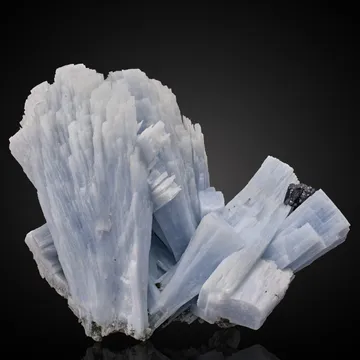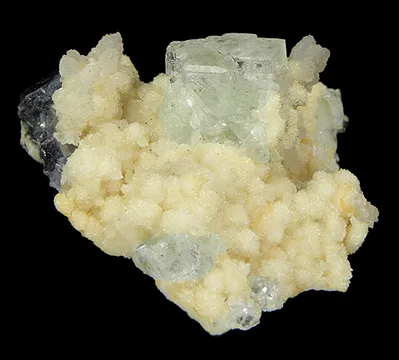
Gibraltar Mine, Mexico — Naica district locality known for glassy fluorite on sulfide matrix, galena, calcite, and rare gypsum; provenance adds collector value.
Key facts
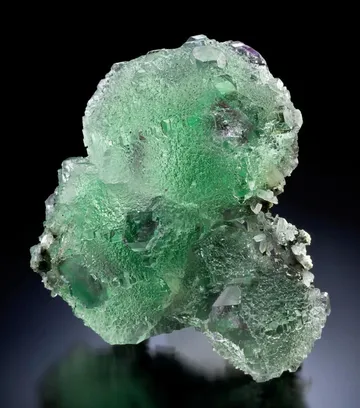
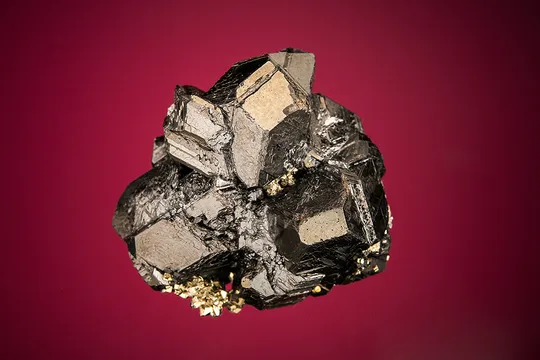
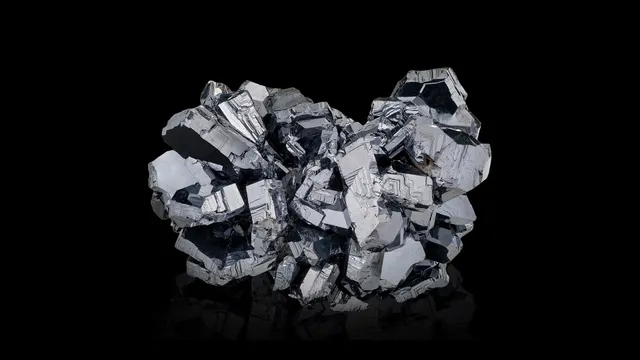
Gibraltar Mine belongs to the Naica mining district of Saucillo Municipality, Chihuahua, one of Mexico’s great carbonate-replacement and skarn-sulfide systems. For specimen collectors, the name “Gibraltar” usually appears on old labels for the Naica assemblage of pale green to colorless fluorite, jet-black sphalerite, silvery galena, creamy to pink manganese-bearing calcite, pyrite, quartz, and minor chalcopyrite. The best pieces have the unmistakable Naica look: glassy cuboctahedral or octahedral fluorites perched on black sulfide matrix; mirror-bright galena with sparkling calcite; frosted, pinkish calcite rhombs with tiny pyrite and chalcopyrite accents; and, in the wider mine system, extraordinary gypsum and anhydrite formed in hot sulfate-rich cavities.
The historical name is important but complicated. Gibraltar was one of the older mine names in the Naica district, later absorbed into the consolidated Naica operation in the mid-20th century. Many specimens that circulated in the 1960s through 1990s were sold with Gibraltar, Naica, or simply Chihuahua labels, and old dealer usage was not always aligned with mine geology. In strict modern locality terms, many sulfide-zone specimens are better understood as Naica Mine material from the consolidated operation, while Gibraltar survives as a historical mine name and as a shaft/workings name associated with the district. That does not diminish the collector significance of “Gibraltar” labels; it makes provenance especially valuable.
Regional View
Country View
Geologically, Naica is a classic Mexican chimney-manto replacement deposit: lead-zinc-silver sulfides and skarn developed in Cretaceous limestones on and around the Sierra de Naica dome, influenced by Oligocene intrusive activity, felsic dikes and sills, and a strong fault-fracture plumbing system. Collecting fame came not from oxidized silver minerals but from the open-space growth of primary sulfides and gangue minerals inside breccia-rich chimneys and late vugs. Those voids are what gave collectors lustrous sphalerite, galena, fluorite, calcite, quartz, and pyrite in showy combinations rather than merely massive ore.

Photo: Wikimedia Commons

Photo: Wikimedia Commons
Search for specimens: View all specimens from Gibraltar Mine, Mexico
Gibraltar Mine is recorded at Naica, Saucillo Municipality, Chihuahua, Mexico, in the south-central part of the state. The broader Naica district sits in and beneath the Sierra de Naica, a northwest-southeast elongate carbonate ridge surrounded by desert basin country. The ore system is a chimney-manto, limestone-replacement, skarn-sulfide deposit: tabular mantos and steep tubular chimneys formed where hydrothermal fluids moved through limestone, felsite dikes, thrusts, and steep fault intersections. In district-scale terms it belongs with the great northern Mexican carbonate replacement deposits such as Santa Eulalia, Ojuela, Los Lamentos, and San Pedro Corralitos.
The host sequence is dominantly thick-bedded Cretaceous limestone, locally marmorized and cut by thin discontinuous felsic dikes and sills. Skarn formed first where higher-temperature fluids reacted with carbonate rocks and igneous bodies, producing calc-silicate assemblages that include garnet, epidote, vesuvianite, and pyroxene-group minerals in the broader mine system. Sulfide mineralization followed, cutting and replacing the skarn and adjacent limestone. The economic ore was chiefly lead-zinc-silver, with galena, sphalerite, pyrite or pyrrhotite, and lesser chalcopyrite and arsenopyrite; fluorite, calcite, dolomite, quartz, anhydrite, and gypsum filled late cavities and fractures.
Naica’s ore bodies are structurally dramatic. Modern descriptions emphasize numerous steep sulfide chimneys rising from skarn bodies, with the largest chimneys hundreds of meters tall and locally many meters across. This is crucial for specimen collectors: vertical chimneys periodically collapsed or brecciated, making open cavities in which sulfides and gangue minerals could grow freely. Those pockets yielded cabinet-quality combinations rather than anonymous massive ore. A later low-temperature stage produced vugs with late galena, abundant fluorite, anhydrite, dolomite, quartz, and calcite.
Historically, mineralization at Naica was discovered in 1794, but sustained formal exploitation began much later, around 1900. The old district consisted of multiple named mines and workings, including Gibraltar, Maravillas, Lepanto, San Francisco, San Patricio, Siglo XX, Xochitl, and others. By the late 1950s these earlier properties had effectively been consolidated into the Naica Mine. Peñoles’ own history records Naica under its control from 1964 through 2014, with the mine operating as an underground lead-zinc-silver operation with a beneficiation plant and installed milling capacity of 954,000 tonnes per year. Its 2014 production included 711,000 tonnes of milled ore, 1.855 million ounces of silver, 19,694 tonnes of lead, and 15,399 tonnes of zinc.
Water has always defined the mine. Hot inflows, sulfate-rich waters, gypsum deposition in workings, and deep pumping were persistent operational problems. On January 1, 2015, a major natural water inflow flooded a significant portion of the mine. After more than nine months of attempts to lower water levels sufficiently for sustained mining, Peñoles announced on October 13, 2015 that operations were suspended indefinitely. As of Peñoles’ current public mine listing, Naica remains categorized as an operation suspended in 2015. Local news in 2025 and 2026 reported exploration and feasibility work toward a possible reopening, but that is not the same thing as open collecting access.
Collectors should understand that Gibraltar is not a casual field-collecting destination. It is a private industrial mine complex, historically active underground, with flooding, heat, shafts, ramps, unstable ground, and restricted access. The famous gypsum caves are scientifically important and hazardous; specimen removal from them is not a legitimate modern collecting activity. Market specimens come from old production-era recovery, dealer inventories, older Mexican collections, and historical mine-room or pocket finds, not from hobby collecting.
The important finds tied to Gibraltar/Naica labels are mostly sulfide-zone and late-vug specimens from the consolidated Naica system. Classic material from the 1960s through 1980s includes galena-calcite pieces, manganese-bearing calcite rhombs, and fluorite on sulfides. Later finds, including material around the 1990s and 2000s, placed pale green to colorless fluorite, quartz, sphalerite, pyrite, and minor chalcopyrite into the international specimen market. A particularly well-known specimen-producing area in the broader Naica Mine was described in the mineral press as the 5087 Chimney on the 640 Level, which produced colorless to pale green fluorite with pyrite, hairlike silicate inclusions, and associated sulfides. Older labels reading “Gibraltar Mine” may therefore be historically meaningful, but the most precise label depends on the specimen’s actual collection date, mine level, and source.
Fluorite is the signature cabinet mineral of the Gibraltar-labeled Naica suite: typically colorless, water-clear, pale sea-green, apple-green, gray-green, or zoned green with purple edge phantoms, forming cubes modified by octahedron, dodecahedron, trapezohedron, or trisoctahedron faces, as well as true octahedra and complex cuboctahedral crystals. Documented specimens range from thumbnail and miniature crystals of about 1–2 cm to cabinet pieces with crystals around 4 cm, and old dealer photographs record larger single Naica fluorites as well. The best Gibraltar/Naica fluorites sit cleanly on lustrous black sphalerite or silvery galena, are accented by calcite, pyrite, quartz, or chalcopyrite, and show strong transparency, sharp complex modifying faces, balanced composition, and preferably phantoms or inclusions without distracting bruises; ordinary pieces are paler, frosted, incomplete, or visually lost in massive sulfide matrix.
Sphalerite from Gibraltar-labeled Naica specimens is usually lustrous jet-black to dark brown, iron-rich in appearance, and most prized where it forms sharp twinned crystals rather than massive ore. It commonly provides the dark sculptural base for pale fluorite, calcite, quartz, and minor chalcopyrite, with documented collector pieces showing sphalerite crystals supporting fluorite cuboctahedra, calcite rhombs, and tiny quartz points. Good sphalerite here is not valued for bright color but for contrast, luster, twinning, crisp crystal form, and placement: a glassy green or colorless fluorite perched on black sphalerite is among the defining Naica looks, while isolated dull sphalerite without sharp faces or attractive association remains more mineralogical than aesthetic.
Galena from the Gibraltar/Naica suite occurs as bright metallic cubes, cuboctahedra, modified crystals, and intergrown masses, commonly associated with calcite, fluorite, quartz, sphalerite, and minor chalcopyrite. Classic 1970s–1980s Naica pieces include galena with calcite perched on top, galena forming a reflective matrix for fluorite, and striking cabinet specimens in which a calcite seam separates two layers of galena like a mineral sandwich. Quality galena is judged by luster, sharpness, face complexity, absence of bruising on exposed edges, and contrast with white to colorless calcite or pale fluorite; the most satisfying examples show crisp individual crystals rather than a dark massive lump with only one presentable face.
Calcite at Gibraltar/Naica ranges from colorless rhombs and sparkling druses to creamy, white, botryoidal, yellowish-orange, and manganese-bearing pink rhombohedral clusters. The best documented Gibraltar-labeled calcites are frosted to lustrous translucent rhombs, sometimes creamy pink and manganese-bearing, with individual rhombs reported to about 5 cm on edge and cabinet pieces around 10 cm across. Calcite is not merely filler here: it gives the locality its color contrast, fluoresces vividly in some pieces under longwave ultraviolet light, and provides the bright stage for black sphalerite, silver galena, brassy chalcopyrite, pyrite specks, quartz points, and pale fluorite; top specimens combine clean rhombohedral form, warm body color, fluorescence, and undamaged terminations.
Pyrite is widespread in the broader Naica sulfide system and appears on Gibraltar-labeled specimens as bright golden accent crystals, coatings, inclusions, and unusual small aggregates on quartz, calcite, fluorite, and sphalerite. It may occur as sharp tiny crystals dusting manganese-bearing calcite, as inclusions in pale fluorite, as bright scattered crystals with calcite, or as pyrite after pyrrhotite in the wider Naica assemblage. The best pyrite specimens from this suite are not large standalone pyrite display pieces but balanced combinations where sharp golden pyrite gives scale and sparkle to otherwise pale fluorite, pink calcite, or white quartz; dull oxidized pyrite or unstable sulfide-rich matrix needs closer inspection before purchase.
Chalcopyrite is a lesser but visually important accessory in Gibraltar/Naica material, most often seen as small brassy crystals on or near sphalerite, calcite, quartz, and fluorite rather than as the dominant species. Documented specimens include pale green to gray-green cuboctahedral fluorite on jet-black sphalerite with brassy chalcopyrite accents, pink manganese-bearing calcite dusted with tiny chalcopyrite and pyrite, and broader Naica examples of chalcopyrite twins on quartz-calcite matrix. Good chalcopyrite from this locality is judged by placement and freshness: tiny sharp brassy highlights can make a fluorite-sphalerite or calcite specimen sing, while tarnished, granular chalcopyrite adds little unless it documents a specific paragenetic association.
Quartz from Gibraltar-labeled Naica specimens is usually a supporting gangue mineral, but it can be highly distinctive in combination pieces: clear to colorless prismatic sprays, quartz points on sphalerite, quartz with calcite coatings, and uncommon amethystine quartz on sphalerite matrix are all documented in the broader Naica collector record. One GIA lab note discussed colorless quartz from the Gibraltar Mine area with solid inclusions including rhodochrosite and tiny black pyrrhotite grains, underscoring that quartz here can be inclusion-rich and mineralogically interesting even when visually subordinate. The most desirable quartz specimens have sharp, clean prismatic crystals arranged with fluorite, calcite, sphalerite, or pyrite; ordinary quartz is usually valued only as matrix or context unless it carries unusual inclusions or attractive calcite overgrowths.
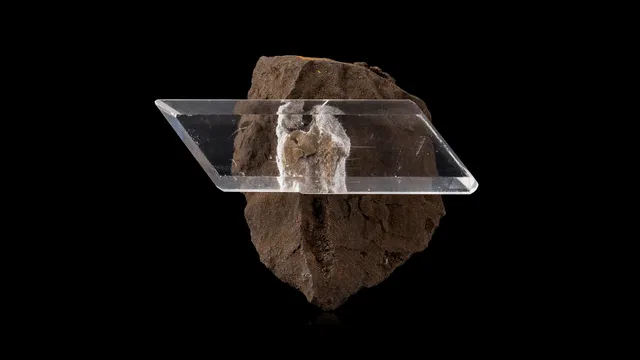
The narrow standard mineral list for Gibraltar Mine includes calcite, manganese-bearing calcite, fluorite, galena, gypsum var. selenite, pyrite, and sphalerite, while the wider Naica Mine system is far richer and includes anhydrite, barite, dolomite, celestine, cerussite, chalcopyrite, arsenopyrite, pyrrhotite, epidote, grossular, vesuvianite, diopside, hedenbergite, wurtzite/sphalerite records, sulfosalts, and cave minerals documented through modern research. No recognized mineral species is generally treated as having Gibraltar Mine itself as a type locality; its mineralogical importance rests instead on world-class gypsum caves in the district, fine primary sulfide-gangue combinations, and the complex label history of an old mine name absorbed into the Naica operation.
The first authenticity issue is locality labeling. A label reading “Gibraltar Mine, Naica” may reflect old dealer convention, a historical mine name, or a real pre-consolidation attribution, but many sulfide-zone pieces mined after the mid-1950s are more precisely labeled Naica Mine, Naica, Saucillo Municipality, Chihuahua, Mexico. For old collections, preserve the original label, but consider adding a modern clarification label rather than replacing history. A careful label might read: “Gibraltar Mine label; probably Naica Mine sulfide-zone material, Naica, Saucillo Municipality, Chihuahua, Mexico,” unless there is specific pre-1955 or workings-level documentation.
Gypsum and selenite labels require special caution. Historic cave specimens are often attributed to Cave of Swords, Gibraltar, Xochitl, Maravillas, or simply Naica, but much natural gypsum in collections came from smaller caves throughout the mine, and some later gypsum grew rapidly in mine infrastructure as hot sulfate waters cooled in sumps, pipes, and valves. No legitimate collector specimen should be represented as removed from the famous Cave of the Crystals. Claims of direct Crystal Cave origin should be treated as a red flag unless backed by extraordinary institutional documentation.
Condition varies widely. Fluorite commonly shows edge bruising, cleaved corners, frosted faces, or internal stress; gemmy green crystals with undamaged modifying faces are scarcer than their reputation suggests. Galena is dense and easily bruised on corners, so inspect exposed crystal edges. Sphalerite can show contact damage and is soft enough to abrade; avoid pieces where black matrix has been oiled to simulate luster. Calcite rhombs are prone to cleaves and acid damage, and botryoidal or drusy calcite can trap dust that is difficult to remove without dulling associated sulfides.
Fluorescence can add value. Some Naica calcite fluoresces strong orange, hot pink, or related warm colors under longwave ultraviolet, and some fluorite responds purple to blue-purple. Fluorescence should be treated as an added feature, not as proof of locality, because many Mexican calcites and fluorites fluoresce. Still, a Gibraltar/Naica combination with attractive daylight aesthetics and good UV response is distinctly appealing.
The market is active but selective. EarthWonders’ specimen counts show fluorite as the dominant Gibraltar species, followed by sphalerite, galena, calcite, and pyrite; chalcopyrite and quartz are present but much less common as principal cataloged species. Good cabinet fluorite-sulfide combinations, pink manganese-bearing calcite, and sharp galena-calcite pieces are old Mexican classics and increasingly provenance-sensitive. Modest miniatures and small cabinets remain obtainable, but top pieces from old collections, especially those traceable to major Mexican collectors such as Dr. Miguel Romero or to long-held museum display loans, command a premium.
In the old Naica district, the cave stories are never far from the specimen stories. In 1927, William F. Foshag described the selenite caves as reached from Concho on the Mexican Central Railroad and then by a narrow-gauge line to Naica. The better-known cave was guarded by a heavy wooden door, not as a romantic flourish but to keep vandals from stripping the crystals. Inside, blocks of limestone had fallen from the roof, then acquired botryoidal calcite and scattered gypsum blades. In the spaces between boulders, Foshag saw clear selenite crystals standing like figures in niches, many with water-filled channels and movable bubbles.
The deeper part of that historic cave must have seemed theatrical under miners’ lamps. Foshag described gypsum crystals four and five feet long, with some probably reaching six feet, growing from the floor like maguey plants on the Mexican hills. Farther along was a narrow opening just large enough for a man, “a veritable corridor of swords,” completely lined with blade-like crystals two to three feet long. In the largest chamber the floor rose at about 30 degrees and was banked with countless selenite blades; at the crest stood a radiating group over four feet high, gray but tipped in white, and nearby a stumpy crystal estimated at sixty pounds with a nearly four-foot blade growing from it.
Decades later, the specimen trade inherited not only the crystals but the confusion of names. Peter Megaw later explained that Gibraltar had been operated by Eagle Picher before acquisition by the Fresnillo Mining Company in the mid-1950s, and that the name persisted as one of the hoisting shafts. In a collector forum exchange, he warned that sulfide-zone specimens should not automatically be called Gibraltar, because Peñoles used the Naica name after consolidation. He also remembered buying gypsum crystals “by the carload” from the mine manager; the proceeds, he wrote, helped pay for refreshments served in the miners’ club. It is a wonderfully human detail: world-famous selenite passing through a mining camp economy of trucks, managers, collectors, and social rooms.
The great modern discovery came much deeper. In 2000, miners advancing in the Naica system intersected the Cave of the Crystals at about the 290-meter level. The chamber contained giant transparent gypsum crystals, many meters long, in heat and humidity severe enough to make entry a physiological challenge. The crystals were too large to become collector specimens in any ordinary sense; their importance was scientific, visual, and almost mythic. For mineral collectors accustomed to thumbnails and cabinets, Naica suddenly enlarged the scale of crystal growth to architecture.
Documenting that world was almost as difficult as discovering it. During the Naica Project, a multidisciplinary team with Speleoresearch & Films, La Venta, and Virtualgeo worked under extreme cave conditions. In the Cave of the Crystals, survey teams faced temperatures reported around 118 degrees Fahrenheit with humidity near 100 percent. Their laser scanner was operating beyond ordinary field comfort, and technicians wore special cooling and breathing equipment while moving tripods, power supplies, cables, and laptops among huge crystals. Over two working days, the essential survey operations lasted about three hours; only about 20 minutes were actual scanning, but the work captured more than 43 million points to create a three-dimensional record of a place that may not remain accessible.
The water story closed the operating chapter in 2015. Naica had long required heavy pumping to keep workings usable, and gypsum even crystallized in the mine’s pumping infrastructure as hot sulfate waters cooled. When extraordinary inflows entered the deep mine on January 1, 2015, operations could not be restored. Peñoles spent more than nine months trying to lower the water to a sustainable working level before announcing indefinite suspension in October. For collectors, that means the market today is largely an old-stock and collection-dispersal market; for the mine itself, it means the same water that helped build Naica’s mineral wonders also halted one of Mexico’s great lead-zinc-silver operations.