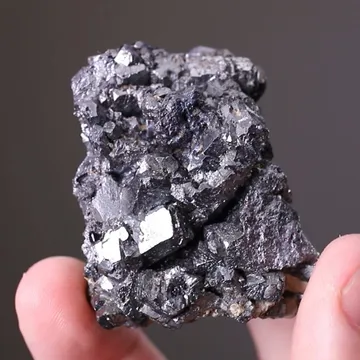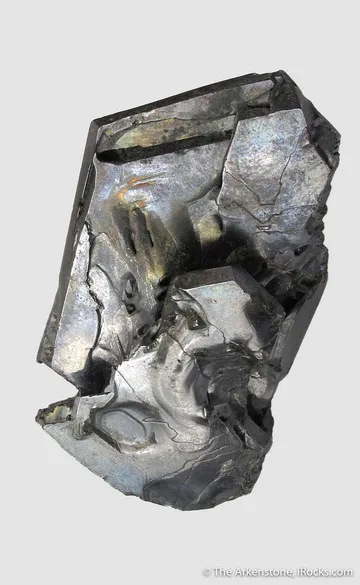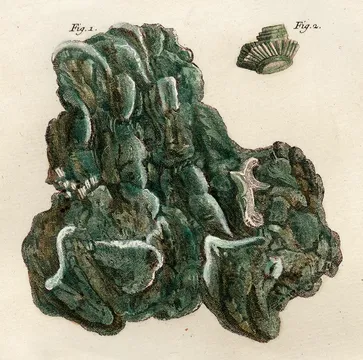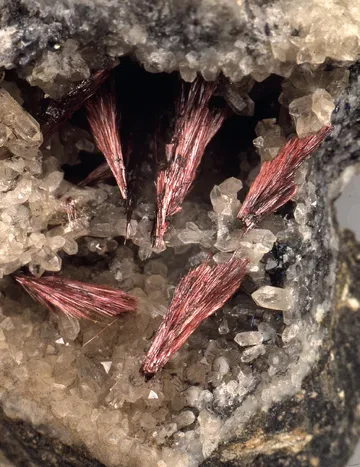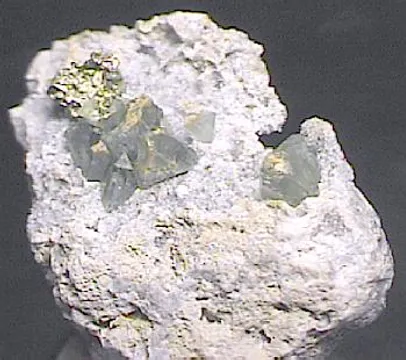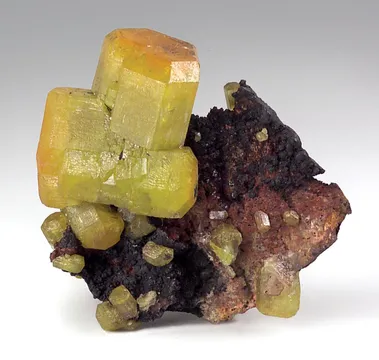
Germany: a mosaic of historic mines from Erzgebirge to Freiberg and Clara Mine, prized for wire silver, sulfides, proustite, pyromorphite, and micromounts.
Key facts
Germany is not a single mineral locality in the ordinary sense; it is a dense mosaic of classic European mining districts, each with a different mineral personality. For the collector, the country’s importance begins in Saxony, where the Erzgebirge supplied silver, tin, cobalt, bismuth, uranium, and an extraordinary vocabulary of hydrothermal vein minerals to European science and commerce. Freiberg and its satellite mines gave collectors sculptural wire silvers, argentiferous sulfosalts, pyrargyrite, acanthite, galena, sphalerite, arsenopyrite, fluorite, barite, quartz, and calcite, while also giving mineralogy some of its great historical names: freibergite, argyrodite, and the discovery story of germanium.
Regional View
Country View
The finest German specimens often have a distinctly “old European” character: wire silver rising from calcite or dark sulfide matrix; prismatic green pyromorphite from Saxony, Bad Ems, the Black Forest, and Bavaria; deep-red proustite and pyrargyrite from Erzgebirge veins; cobalt-nickel arsenide assemblages from Schneeberg and Annaberg; hauyne and sanidine in volcanic ejecta from the Eifel; agate, jasper, amethyst, and smoky quartz from the Idar-Oberstein gemstone region; and, from the modern collector’s standpoint, superb microcrystallized arsenates, phosphates, vanadates, tungstates, carbonates, and sulfates from the Clara Mine.

Photo: Wikimedia Commons
Germany also matters because mineralogy as a discipline was deeply shaped there. Freiberg’s mining academy, its collections, and the work of Werner, Breithaupt, Weisbach, and other mineralogists helped turn mineral collecting from cabinet curiosity into systematic science. German locality names are embedded in species names and in the language of ore geology: Freiberg, Annaberg, Schneeberg, Hagendorf, Clara, Rammelsberg, Siegerland, Bad Ems, and Idar-Oberstein are not merely places on labels but reference points in the history of mineral description, mining technology, and specimen aesthetics.
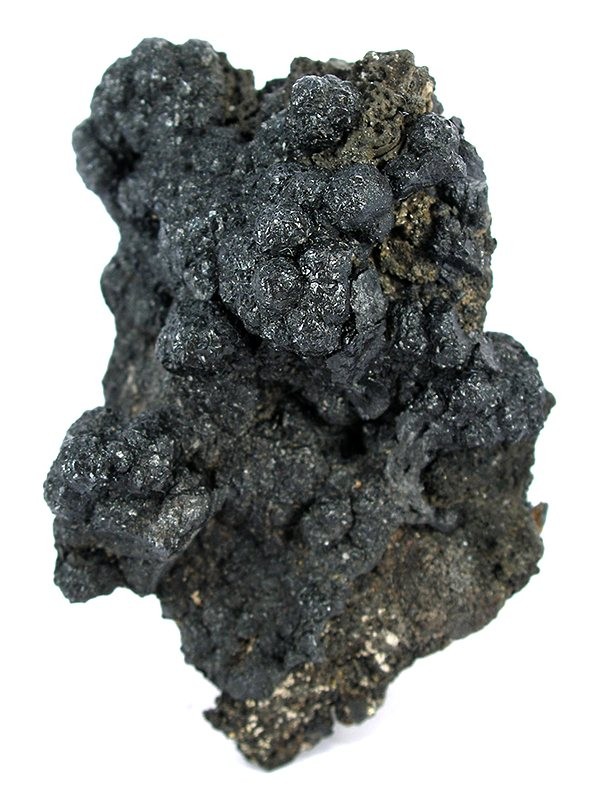
Search for specimens: View all specimens from Germany
Germany’s specimen-producing geology is unusually varied for a European country. The great collectible districts belong to several overlapping families: Variscan and post-Variscan hydrothermal veins, sediment-hosted massive sulfide and barite deposits, Permian volcanic agate fields, alkaline volcanic ejecta fields, pegmatites, evaporites, iron-manganese districts, and post-mining oxidation environments. The result is a country list that ranges from major cabinet specimens to some of the most demanding and rewarding micromount material in Europe.
The Erzgebirge of Saxony is the country’s central historical mineral province. Around Freiberg, silver-bearing hydrothermal veins cut the lower Eastern Ore Mountains and extend across a mining landscape long worked for precious and base metals. Classic Freiberg ore assemblages include galena, sphalerite, pyrite, arsenopyrite, acanthite, native silver, pyrargyrite, proustite, stephanite, freibergite-group sulfosalts, calcite, quartz, fluorite, and barite. Himmelsfürst, Himmelfahrt, Reiche Zeche, Beschert Glück, Kurprinz, Beihilfe, and related mines produced many of the labels most desirable to collectors of Saxon silver and sulfosalts. The best pieces show bright native silver wires or curls on white to gray calcite, compact metallic argyrodite or acanthite on sulfide matrix, or ruby-red silver minerals tucked into carbonate-lined cavities.
The broader Erzgebirge cobalt-silver-uranium belt adds Schneeberg, Annaberg-Buchholz, Johanngeorgenstadt, Schlema, Pöhla, and other names. Schneeberg and Annaberg are especially important for cobalt-nickel-arsenic assemblages: skutterudite, nickeline, rammelsbergite, safflorite, cobaltite, erythrite, annabergite, roselite, bismuth minerals, native arsenic, native silver, and later uranium species. The visual language changes from Freiberg’s silver-carbonate elegance to darker, denser masses of arsenides and sulfarsenides, often brightened by pink to crimson cobalt bloom or pale green nickel bloom. Some of the most attractive modern Erzgebirge pieces are not large cabinet specimens but rich small-cabinet and thumbnail examples of proustite, silver, roselite, erythrite, bismuth minerals, and uranium alteration species from old mine dumps and underground workings no longer accessible to casual collectors.
Rammelsberg, above Goslar in the Harz Mountains, is a different sort of classic. It is a sediment-hosted massive sulfide and barite orebody, worked for more than a millennium and preserved today as part of the UNESCO World Heritage landscape of Goslar and the Upper Harz water-management system. The collector material is typically massive or banded ore rather than open-pocket crystals: sphalerite, galena, chalcopyrite, pyrite, barite, carbonate, and complex finely laminated sulfide textures. Fine hand specimens are prized for historical provenance and ore fabric rather than sparkle. Slabs and polished sections from Rammelsberg can be especially instructive, showing the striped, mottled, or schlieren-rich character of the ore that made the deposit famous among economic geologists.
The Black Forest contributes several distinct specimen traditions. The Clara Mine near Oberwolfach is the most important active specimen source in Germany today. It is a barite-fluorite vein system in gneiss, worked underground for industrial baryte and fluorspar, with ore transported to the processing plant at Wolfach-Kirnbach. Collectors do not collect underground in the working mine; instead, the Mineralienhalde Grube Clara receives fresh ore from the mine and operates as a paid collecting site. Clara is famous for baryte, fluorite, quartz, galena, pyrite, chalcopyrite, malachite, azurite, chrysocolla, clinoclase, olivenite, cornwallite, scorodite, pyromorphite, mimetite, stolzite, wulfenite, silver, torbernite, uranophane, and many rarer arsenates, phosphates, vanadates, tungstates, and carbonates. The mine’s geology is controlled by several principal vein structures: a baryte vein, a fluorite vein, and a younger quartz- and galena-bearing diagonal vein system. The most mineralogically interesting Clara material comes from structural intersections, brecciated zones, oxidation pockets, and small vugs where supergene minerals crystallized on baryte, fluorite, quartz, limonite, or sulfide remnants.
The Hagendorf-Pleystein pegmatite district in the Upper Palatinate of Bavaria is the collector’s Germany for phosphates. Hagendorf North and Hagendorf South are not “pretty mineral” localities in the casual sense; their greatness lies in the extraordinary alteration assemblages of lithium-iron-manganese phosphates in granitic pegmatites. The Hagendorf Süd pegmatite was mined for ceramic-grade feldspar and, for a time, lithium from triphylite. Primary triphylite, zwieselite, fluorapatite, and hagendorfite were altered through complex hydration and oxidation into dense associations of strunzite-group, rockbridgeite-group, hureaulite, laueite, phosphophyllite, and numerous rare secondary phosphates. Much of the important material now survives in museum and private collections because the principal mines are closed, flooded, or otherwise unavailable.
The Eifel volcanic fields give Germany another sharply different collecting identity. Around the Laacher See volcanic complex, mineralized volcanic ejecta and related deposits have produced hauyne, sanidine, nosean, nepheline, leucite, augite, amphiboles, mica, titanite, apatite, zircon, and a wealth of microcrystals in alkaline volcanic rocks. The showpiece Eifel specimen is usually a pale volcanic bomb or trachytic matrix carrying sharply blue hauyne crystals with glassy sanidine, sometimes with striking fluorescence from associated feldspar. Most Eifel collecting is field- and quarry-sensitive: active quarries, private land, crop fields, and protected volcanic or archaeological areas require permission, and many former collecting sites have changed status over time.
The Idar-Oberstein region in Rhineland-Palatinate belongs as much to gemstone culture as to mineral collecting. Local agate, jasper, amethyst, rock crystal, smoky quartz, and chalcedony occur in Permian volcanic rocks and related geodes and veins. Historically, the region’s material supplied a lapidary industry that became one of the world’s great agate-cutting and hardstone-carving centers. Today, specimens with secure Steinkaulenberg or Saar-Nahe provenance are collected for both geological and cultural reasons: they are not merely quartz varieties, but the raw material behind centuries of German cutting, carving, beadmaking, and gemstone commerce.
Access across Germany varies strongly by locality. Some sites are museums or visitor mines, some are active industrial operations, some are closed underground workings, some are legally protected geotopes or heritage landscapes, and some are private fields, quarries, or dumps. The Clara collecting dump is the outstanding legitimate pay-to-collect venue tied directly to a major active mine. Elsewhere, serious collectors should assume that permission is needed, that underground entry is forbidden unless through an official visitor mine, and that old dumps may be protected, privately owned, unstable, or already heavily picked over. German labels also require care: many historical specimens passed through dealers, museums, university collections, estate lots, and East/West German trade channels, and older labels may use obsolete district names, mine spellings, or political geography.
Germany’s mineral list is large, but several groups define its collector identity. Native silver from the Freiberg district is the archetype: wiry, arborescent, curled, and hackly growths, commonly on calcite or dark sulfide matrix. Himmelsfürst pieces can be especially desirable when the wires are sculptural and old-label provenance is secure. Freiberg also anchors the historical identity of freibergite, now treated within the modern tetrahedrite-group nomenclature as a silver-rich subgroup rather than the simple older species concept familiar from antique labels. Collectors should expect older specimens to carry traditional names that do not map perfectly onto current IMA nomenclature.
Argyrodite, Ag8GeS6, is one of Germany’s great type-locality minerals. It was discovered at the Himmelsfürst Mine near Freiberg, and its analysis led Clemens Winkler to the element germanium in 1886. As a specimen mineral, argyrodite is rarely “beautiful” in the conventional sense: the best pieces are metallic gray to black masses or small crystals, often on sulfide matrix. Their importance is historical and chemical. A fine Himmelsfürst argyrodite is a mineralogical document as much as a display specimen.
Saxon ruby silvers deserve separate mention. Proustite and pyrargyrite from the Erzgebirge, when fresh and protected from light, have the deep cherry-red to cochineal-red translucency that made “red silver ore” one of the great lures of European mining. These specimens are commonly small, light-sensitive, and easily darkened, but a well-preserved Saxon proustite or pyrargyrite with a reliable old label remains a connoisseur’s piece. Acanthite, stephanite, polybasite-series minerals, and related sulfosalts round out the Freiberg and Erzgebirge silver suite.
Schneeberg and Annaberg are essential for cobalt and nickel minerals. Annabergite, named from Annaberg, is the familiar apple-green nickel arsenate coating that forms by alteration of nickel arsenides. Erythrite provides the corresponding rose to crimson cobalt bloom. These colors are attractive, but the serious appeal lies in matrix and association: nickeline, skutterudite, rammelsbergite, safflorite, native bismuth, native arsenic, silver minerals, barite, fluorite, quartz, and calcite. Schneeberg is also tied to several type-locality or historically important bismuth, cobalt, arsenate, and secondary minerals, making accurate sublocality labels especially important.
Pyromorphite is one of Germany’s most beloved display minerals. Saxony’s Zschopau district, especially the Heilige Dreifaltigkeit Mine tradition, belongs in any serious discussion of the species; so do Bad Ems, the Siegerland, Sauerland, Black Forest, Taunus, and Bavarian localities. German pyromorphites range from lustrous grass-green prisms to yellow, olive, brown, and orange barrels, crusts, and botryoidal aggregates. The best are bright, sharp, well-contrasted on barite, quartz, limonite, or galena, and carry a precise mine attribution rather than the unhelpful market shorthand “Germany.”
The Clara Mine is Germany’s modern rarity engine. It is best known to cabinet collectors for baryte and fluorite, but to micromounters it is a universe of secondary species: arsenates such as olivenite, clinoclase, cornwallite, agardite-series minerals, scorodite, and many barium-iron arsenate relatives; lead minerals such as pyromorphite, mimetite, anglesite, cerussite, wulfenite, stolzite, and raspite; copper minerals such as azurite, malachite, chrysocolla, cuprite, native copper, and chalcophyllite; uranium species such as uranophane and torbernite; and rare locality-defining species including claraite and other minerals first described from the mine. Many Clara specimens are visually modest until examined under magnification, where minute but sharp crystals can make exceptional micromounts.
Hagendorf is the German name that phosphate specialists watch for. Hagendorfite, phosphophyllite, strunzite, scholzite, and numerous rare secondary phosphates tie the Bavarian pegmatites to the history of phosphate mineralogy. The finest Bolivian phosphophyllites dominate the display market, but Hagendorf material has the power of origin and paragenesis. A small, verified Hagendorf phosphophyllite or strunzite may matter more to a systematic collector than a far showier specimen from a less historically important source.
The Eifel is best known to collectors for hauyne and sanidine. Hauyne from Mendig and other Laacher See area occurrences can show an intense blue rarely matched by other silicate specimens, typically as small crystals in pale volcanic matrix. Sanidine occurs as glassy feldspar crystals and can form attractive associations with hauyne and other volcanic minerals. Because many Eifel specimens are small and matrix-dependent, the collector’s eye must judge not only crystal size but whether the specimen preserves the volcanic context that proves its identity.
Idar-Oberstein’s minerals are mostly quartz-family gemstones: agate, jasper, chalcedony, carnelian, amethyst, smoky quartz, and rock crystal. Their significance is not only mineralogical but cultural. A German agate with old Idar provenance, natural color, and documented origin is different from an agate merely cut in Idar from imported Brazilian rough. For collectors, that distinction is crucial.
German mineral specimens reward precise labels. “Germany” alone is almost never adequate. The country contains multiple localities for the same species, and some of them produce outwardly similar specimens. Pyromorphite is a prime example: Bad Ems, Zschopau, Hofsgrund, Clara, Freihung/Tanzfleck, Rohdenhaus, and Siegerland pieces should not be collapsed into a single national label. Native silver likewise needs mine-level attribution when possible: Himmelsfürst, Himmelfahrt, Freiberg district, Pöhla, Schlema, and other Erzgebirge sources carry different historical and market meanings.
The most important authenticity caution concerns Saxon wire silver, especially specimens attributed to Himmelsfürst. Fine, sculptural wire silver from the Freiberg district is highly desirable, and doubts have been raised about some material attributed to Himmelsfürst in modern trade. Collectors should prefer old collection labels, credible chain of custody, matrix consistent with the locality, and reputable dealers. Be wary of brilliantly fresh wires on suspiciously generic matrix, unusually large “old German” silvers without old documentation, or labels that use a famous mine name without supporting history.
Light sensitivity is a real issue for Saxon ruby silvers. Proustite and pyrargyrite darken with light exposure; historic specimens may be naturally dark from age, but fresh red crystals should be stored away from strong light and photographed quickly under controlled illumination. Silver specimens tarnish, but cleaning is risky: removing patina can destroy historical character, alter delicate wires, or expose repairs. Many old European pieces have been stabilized, trimmed, mounted, or repaired at some point in their collecting life; this is not automatically disqualifying, but it should be disclosed.
Clara Mine material presents a different problem: identification. Many attractive Clara specimens are microcrystalline mixtures, and color is an unreliable guide. Green may be malachite, cornwallite, olivenite, agardite, pyromorphite-mimetite series, or something rarer; yellow crusts may be arsenates, phosphates, tungstates, or iron oxides; pale coatings may be baryte, quartz, anglesite, fluorite, or secondary phosphates. Serious Clara collectors should expect to use magnification and, for rarities, analytical confirmation. The mine’s arsenates, lead minerals, and uranium-bearing species also deserve sensible handling: avoid inhaling dust, wash hands after handling, keep fragile microcrystals boxed, and store radioactive or arsenic-bearing specimens responsibly.
Baryte and fluorite from Clara commonly show edge wear because much of the specimen material is recovered from blasted and transported ore. Sharp old-time cabinet pieces with intact fluorite cubes on contrasting bladed baryte are much less common than small broken pieces from the public collecting dump. Fluorite may show purple fluorescence, and some baryte from Clara and other German localities can fluoresce; fluorescence is a bonus, not an identification by itself.
Hagendorf phosphate specimens are often small, friable, altered, and easy to misidentify. Many species occur as crusts, sprays, or microscopic crystals in complex associations, and older labels may use outdated phosphate names. Matrix and paragenesis matter. Because many important Hagendorf minerals now come from historical material rather than fresh collecting, provenance through a known German or European collection can substantially increase desirability.
Idar-Oberstein specimens require a different kind of skepticism. The town is one of the world’s great cutting centers, and for nearly two centuries its workshops have handled imported agate and colored stones from Brazil and elsewhere. A carved, polished, or sliced agate sold in Idar-Oberstein is not necessarily a German agate. For locality collecting, ask whether the rough is from Steinkaulenberg, Saar-Nahe, or another German occurrence, or whether it is imported material worked by German lapidaries. Both categories can be collectible, but they are not the same thing.
In the market, Germany remains available but selective. Clara specimens are common in Europe and still appear fresh because the collecting dump is active, though top cabinet baryte-fluorite combinations and rare analyzed micromounts command premiums. Freiberg silver, argyrodite, Schneeberg cobalt-nickel material, classic Zschopau pyromorphite, old Bad Ems pyromorphite, and Hagendorf phosphates with good labels are increasingly provenance-driven. The best German specimens are often not the biggest; they are the ones whose labels, paragenesis, and history are as strong as the mineral itself.
The founding story of Freiberg has the compact power of a mining legend. In the Erzgebirge version, silver was first found near today’s Freiberg in 1168, when merchants from Halle noticed silver-bearing material in a stream. From that discovery grew one of Europe’s great mining towns. The details have been polished by centuries of retelling, but the historical consequence is plain: miners, craftsmen, administrators, metallurgists, and merchants moved into the district, and the silver veins of Saxony helped create a mining culture that influenced law, education, technology, and even currency far beyond the mountains.
The story of argyrodite is more laboratory drama than mountain legend. In 1885, a silver-rich ore of unfamiliar character was found at Himmelsfürst. Albin Weisbach recognized it as a new mineral and named it argyrodite; Clemens Winkler then confronted the analytical problem that made the mineral famous. His assays kept losing 6 to 7 percent of the material. The missing fraction was not mercury, arsenic, antimony, or any ordinary component of the Freiberg silver suite. After weeks of work, Winkler isolated a new element and named it germanium. For collectors, the appeal of argyrodite is inseparable from that suspense: a dark, rather unshowy silver-germanium sulfide that quietly completed a prediction in the periodic table.
At Clara, the romance is not only in the mine but in the dump. The working mine is industrial, with underground baryte and fluorite extraction, ramps, drilling, blasting, loading, transport to Wolfach, and backfilling of voids for stability. Yet the collector’s Clara is the Mineralienhalde at Wolfach-Kirnbach, where fresh mine rock is spread for searching. It is one of the rare places where a family with hand tools and an experienced micromounter with a loupe can work the same locality legally, side by side, and both go home with something real. The novice sees baryte, fluorite, quartz, malachite, or pyrite; the specialist sees an analytical puzzle that might include a rare arsenate or phosphate in crystals barely visible to the unaided eye.
Idar-Oberstein’s gemstone story turns on exhaustion and reinvention. The local Hunsrück agate and jasper deposits had supported a cutting culture for centuries, powered first by water-driven wheels along the Nahe and nearby streams. Cutters worked prone against large sandstone wheels, pushing stone with their bodies in a posture that was as much endurance as craft. When local agate supplies dwindled in the nineteenth century, the industry might have faded. Instead, emigrants and traders connected Idar-Oberstein with the enormous agate deposits of southern Brazil. Brazilian rough flowed back to German workshops, and the town’s expertise survived by becoming international. That is why an “Idar” object can be German in workmanship even when the stone itself was born an ocean away.
The Dreher family gives the Idar story a human scale. Their carving lineage is traced back through generations, and the family’s modern work shows how a mineral district can become an artistic tradition. The old craft of agate cutting, once tied to local geodes and water wheels, evolved into three-dimensional hardstone carving of animals, flowers, and gem sculptures. Fabergé’s commissions and the circulation of plaster models through Idar workshops added another layer: some carvings that collectors associate with Russian luxury passed through the hands, eyes, and tools of German lapidaries trained in the agate town.