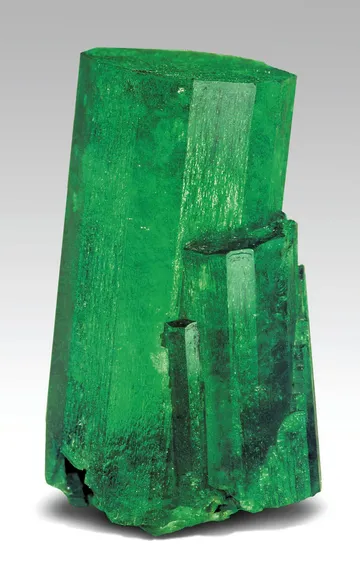
Gachalá, Colombia: a key emerald belt locality known for emerald and euclase crystals, pocket-vein mineralization, and the famous Gachala Emerald.
Key facts
Gachalá occupies a special place in the eastern Colombian emerald belt: not as a giant, continuously celebrated mining camp like Muzo, but as a compact Guavio-district source whose best crystals have entered the highest tier of emerald lore and whose euclase has given collectors one of Colombia’s most distinctive non-emerald mineral suites. The mineralization belongs to the same broad Chivor–Gachalá–Macanal system on the eastern flank of the Eastern Cordillera, where beryllium-bearing hydrothermal brines moved through Lower Cretaceous marine sedimentary rocks, especially black shales, mudstones, argillites, limestones, and carbonate-rich fault breccias. In collector terms, that means pockets and veins rather than pegmatites: pale carbonate gangue, sulfides, albitized wall rock, iron oxides after pyrite, and locally sharp emerald or euclase crystals released from narrow structural traps.
Regional View
Country View
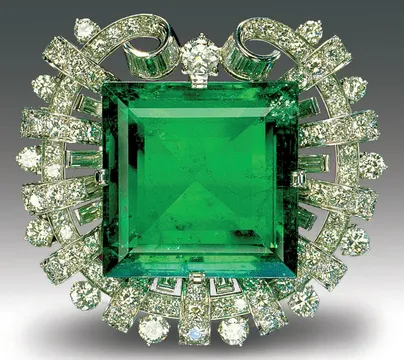
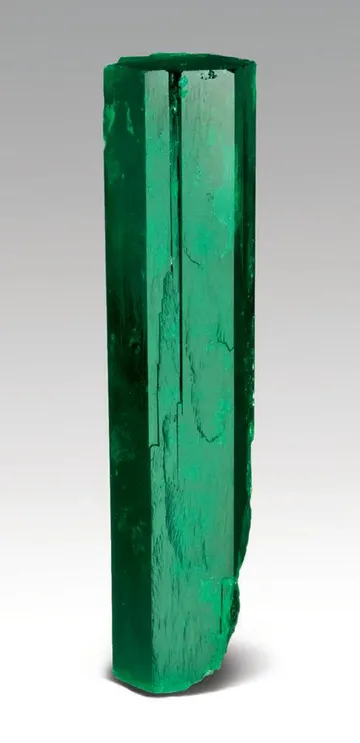
The name that made Gachalá famous internationally is the 858-carat Gachala Emerald, an uncut crystal found at the Vega de San Juan mine in 1967 and later donated by Harry Winston to the Smithsonian Institution. For specimen collectors, however, Gachalá is more than a famous single stone. It is a locality where emerald, euclase, pyrite, calcite, quartz, and alteration minerals tell the story of a sediment-hosted emerald system in a way that can be held in the hand. The best euclases are glassy, pale to medium blue, sharply terminated, and strikingly transparent for a mineral with perfect cleavage; the better pyrites show crisp forms, commonly modified or partly transformed by brown goethite; and the finest emerald specimens have the clean, bright, slightly bluish green character long associated with the eastern belt.

Photo: Wikimedia Commons
Gachalá specimens are often imprecisely labeled in older collections. “Gachalá” may refer to the municipality, to the old mining district, or specifically to La Vega de San Juan, Matecaña, Palomas, La Emilia, El Diamante, La Estrella, El Tesoro, or other workings. Serious collectors should treat the district name as a starting point, not a final locality attribution, unless a mine, tunnel, or old collection label gives more detail.
Search for specimens: View all specimens from Gachalá, Colombia
Gachalá is a municipality in Cundinamarca’s Guavio Province, east of Bogotá and southwest of Chivor across steep Andean terrain cut by the Guavio drainage system. In mineralogical use, “Gachalá” commonly covers several emerald and euclase-producing sites in and around the municipality, especially La Vega de San Juan and, in the gem literature, Matecaña and later Mina La Emilia workings such as El Diamante, La Estrella, El Tesoro, and the El Toro tunnels. Palomas, a mining village near additional workings, is also tied to the Gachalá specimen suite.
The deposit type is sediment-hosted hydrothermal emerald mineralization, one of the classic Colombian types. Unlike pegmatite-related emerald deposits in many parts of the world, Gachalá’s emeralds and euclases formed in marine sedimentary rocks that were fractured, brecciated, albitized, carbonatized, and invaded by hot saline fluids. The emerald and euclase are documented in veins and pockets related to calcite and carbonate veins, fault breccias, and altered black shales or mudstones. The common gangue and alteration assemblage includes dolomite, calcite, albite or oligoclase, pyrite, minor muscovite or sericite, fluorapatite or “apatite,” quartz, and local traces or reports of rutile and fluorite in the broader Gachalá studies. This is a structurally controlled deposit: faults, fractures, breccias, and favorable black shale units are not incidental scenery but the plumbing that made the pockets possible.
The older geological work on the Gachalá emerald mines describes mineralization in breccias, veins, and locally along fault walls with N–NE structural trends affecting low Mesozoic strata; it also emphasizes the close relation to black shales showing strong metasomatic alteration. Later emerald-deposit syntheses place the eastern belt, including Gachalá, in the group of Colombian sediment-hosted deposits formed by hot saline brines linked to evaporitic sequences and basinal fluid circulation. The practical result underground is familiar to Colombian miners: carbonate veins and altered shale are followed as indicators, but even good indicators may continue for long distances before a pocket appears—or may produce nothing at all.
Mining history at Gachalá begins in modern collecting literature with the mid-1950s discovery and exploitation of Las Vegas de San Juan, usually written today as La Vega de San Juan. Contemporary accounts describe the discovery as accidental, with a mule or pack animal exposing emerald-bearing material on a steep trail. Within the first six months, illicit miners reportedly removed a very large value of fine rough before government intervention and formal concession activity. The source was described as about five miles from Chivor, in the same mountain formation, and accessible only by hours on horseback from the village. Early recovery was not yet classic hard-rock pocket mining in matrix; miners worked soft sands and gravels by shovel and bar, suggesting that high-level primary veins or weathered pocket material had shed emeralds downslope.
Production has been intermittent rather than continuous at a single famous mine, but the district has yielded stones and specimens of lasting importance. The 858-carat Gachala Emerald, found at Vega de San Juan in 1967, is the best-known single crystal. Matecaña is notable among collectors and gemologists for emerald replacing gastropod fossils, a rare oddity that demonstrates how emerald-forming fluids used available cavities and organic-rich sedimentary structures. La Vega de San Juan is also important for euclase, and modern locality records describe it as a prolific producer of emerald and euclase for more than half a century, with many specimens circulating simply as “Gachalá.”
Mining access today should be considered controlled, private, and potentially hazardous. Gachalá workings are active or intermittently active emerald mines, not open collecting sites. Modern reports describe artisanal-scale underground extraction and formal tunnel operations rather than casual surface collecting, with environmental restrictions ending the old dominance of open-pit methods. Visitors documented by GIA in the 2010s entered through mine companies and owners, not as independent collectors. At Mina La Emilia, the active workings included four tunnels at the time of the visit; El Diamante used a 48-meter vertical shaft with an elevator followed by internal shafts, including a winch-lowered harness known locally as la cincha. El Tesoro also used a winch-lowered harness system, while La Estrella was a ramp-style tunnel mine. Groundwater, rotting or fracturing wooden supports, vertical shafts, narrow tunnels, and the constant risk of destroying pockets during excavation make specimen recovery a professional mining matter.
The pocket style matters for collectors. At El Diamante, miners were working along calcite veins with jackhammers when they were thought to be close enough to a productive zone that blasting was avoided. The same principle applies to specimen preservation: when miners can recognize an approaching pocket and work by hand, intact euclase, emerald, pyrite, and calcite associations have a better chance of surviving. When blasting meets a pocket first, the result is usually fragments, loose crystals, and damaged plates. For Gachalá material, provenance and pocket history are therefore inseparable from condition and value.
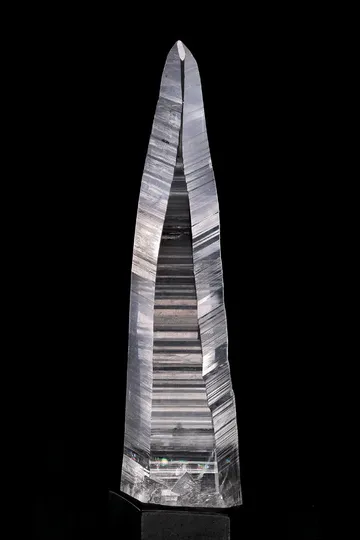
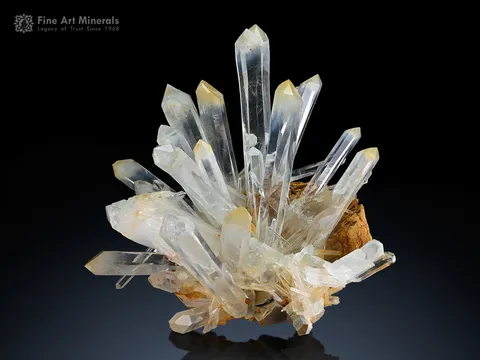
Gachalá euclase is one of the classic Colombian expressions of BeAl(SiO4)(OH), occurring in hydrothermal veins and pockets tied to the emerald system rather than in pegmatite cavities. Documented material from La Vega de San Juan and nearby Gachalá workings is typically pale blue to blue-green, generally lighter than the intensely saturated La Marina Mine euclase from the western belt, but the best Gachalá crystals compensate with sharp form, glassy luster, and high transparency. Good specimens may show isolated, euhedral crystals on or with calcite, pyrite, and altered vein material; some pieces preserve fragmentary hydrothermal vein texture with light blue euclase, white calcite, and brown oxidized pyrite. Size varies from small thumbnail crystals to important cabinet pieces, with a documented large Gachalá euclase specimen of about 15 cm noted in collector literature. What separates a top Gachalá euclase from an ordinary one is not simply size: the crystal must be bright, undamaged along its perfect cleavage, well terminated, and ideally accompanied by enough calcite, pyrite, or vein matrix to prove its Colombian sediment-hosted setting.
Gachalá pyrite is both an attractive collector mineral and a geological indicator of the emerald-euclase system. It is recorded from the municipality and from La Vega de San Juan, commonly associated with euclase, calcite, and goethite; many specimens show brassy pyrite partly altered or coated by brown iron oxides, and Mindat records specifically note goethite coating or pseudomorphing the exterior of twinned pyrite crystals. In the hand, these pieces can range from bright metallic crystals on carbonate gangue to darker brown “limonite after pyrite” forms whose original cubic or pyritohedral habit is still legible. The most desirable Gachalá pyrites are crisp, sharply twinned or well defined, and clearly connected to the local emerald-vein assemblage rather than being anonymous sulfide lumps; pieces with euclase or calcite associations carry much stronger locality character.
Other documented minerals from Gachalá include beryl var. emerald, calcite, quartz, baryte, fluorapatite or “apatite,” and goethite, with emerald by far the most historically important. The district is not known as a mineral-species type locality in the formal sense; its mineralogical importance rests instead on exceptional occurrences within an unusual sediment-hosted emerald system. Matecaña’s emerald-replaced gastropod fossils are among the great Colombian emerald oddities, while La Vega de San Juan’s combination of emerald and euclase gives Gachalá a much broader collector identity than a single gem-crystal locality.
The first collecting issue is locality precision. “Gachalá” on an old label may be accurate at the district level but incomplete; if the specimen is euclase, La Vega de San Juan or Palomas may be possible; if emerald, La Vega de San Juan, Matecaña, La Emilia, El Diamante, El Tesoro, La Estrella, or another tunnel may be involved. Conversely, some older material from the eastern belt is loosely labeled “Chivor” even when it may have come from nearby Gachalá-area workings. A serious label should preserve both the broad district name and any mine, tunnel, pocket, dealer, or collection history supplied with the piece.
Euclase from Gachalá is vulnerable to condition problems because of its perfect cleavage. Even a transparent, well-colored crystal can lose much of its specimen value if it has a cleaved back, bruised termination, rehealed-looking but actually broken faces, or edge chipping. Inspect blue crystals carefully under a loupe; Colombian euclase can be mistaken by non-specialists for aquamarine or pale beryl, and older accounts note that euclase in the Chivor–Gachalá region was not always well distinguished from blue beryl by miners and workers. Euclase has a distinctly different crystal habit, cleavage, and luster from beryl, but mislabeling remains possible in mixed Colombian material.
Emerald specimens require the same skepticism applied to all Colombian emeralds. Loose gem rough and crystals may be oiled or resin-filled for clarity, and cut stones are routinely treated in the commercial gem trade; specimen crystals on matrix are less often discussed in those terms, but any “untreated” claim should be supported by trusted provenance or laboratory documentation when value is high. Added matrix, repaired crystals, glued-on emeralds, and locality upgrades are well-known risks in the broader emerald market, even where a particular Gachalá fake has not been publicly documented. The safer purchase is a specimen with coherent geology: emerald or euclase emerging naturally from calcite, pyrite, albite-rich or shale matrix, with contact relationships that make sense under magnification.
Pyrite and goethite pieces present a different challenge. Brown goethite coatings and pseudomorphs after pyrite are part of the documented Gachalá suite, so oxidation alone is not a defect. However, friable iron oxides, crumbling altered matrix, and detached crystals are common condition concerns. Avoid washing pyrite-rich material aggressively; Colombian matrix specimens can include soft carbonate, shale, and oxidized sulfide zones that suffer from soaking, acid cleaning, or ultrasonic treatment. Store pyrite specimens dry and stable, away from humidity swings.
Fluorescence is mainly of gemological interest here. The Smithsonian record for the Gachala Emerald includes a photographed response of a related emerald crystal under white light showing red fluorescence, and chromium-bearing Colombian emeralds can show useful luminescence behavior in gem testing. Do not, however, buy a Gachalá specimen on fluorescence alone. For collectors, form, color, transparency, condition, matrix integrity, and provenance matter far more.
Availability is uneven. Gachalá emerald rough and small specimens still circulate through Colombian mining and Bogotá trading channels, but fine euclase from the old and better pockets is scarce. The strongest euclase specimens appear sporadically from old collections or from limited new production and are competed for by both species collectors and Colombian locality specialists. Pyrite and goethite after pyrite are more obtainable, but truly sharp, well-localized, aesthetic Gachalá pieces are much less common than the simple species name suggests.
The founding story of modern Gachalá mining has the satisfying improbability of a true emerald-country tale. In the mid-1950s, a peasant farmer was leading his mule down a steep Cundinamarca mountain trail when the animal tripped on a boulder. The disturbed stone exposed emerald-bearing material from what would become Las Vegas de San Juan, the “new Gachala emerald mine” of early gem reports. Within six months, contraband miners were said to have removed roughly a million dollars’ worth of superb rough. Government authorities then halted further uncontrolled work while a legal concession was pursued. At that stage the deposit was still being worked by simple shovel-and-bar methods in soft sands and gravels, and early observers believed the true mother veins lay higher in the tropical forest above.
The district’s most famous crystal emerged in 1967: the 858-carat Gachala Emerald from Vega de San Juan. Its survival as an uncut crystal is almost as remarkable as its size. Fine emerald crystals of that quality are normally sawn, preformed, and divided into gems; this one retained enough form, scale, and color to become a museum object instead. Harry Winston donated it to the Smithsonian in 1969, placing a Gachalá mine crystal in the same national gem context as some of the world’s most famous stones. For collectors, that donation fixed the locality in public memory: Gachalá was no longer merely a satellite name near Chivor, but the source of one of the great uncut emeralds.
A later field visit shows the district from a miner’s-eye view rather than through the glow of a museum case. At Mina La Emilia, visitors met Camilo Sanchez, Benito Mendez, and Christian Mendez at the Diamante mine camp and immediately began examining rough from local tunnels while a Chinese buyer looked for the clean, bright material for which Gachalá and Chivor are prized. The next day brought El Diamante, La Estrella, and El Tesoro. El Diamante began with a vertical shaft and elevator descending 48 meters, followed by a tunnel and then a second internal shaft descended by la cincha, a harness lowered by winch. The productive ground lay on the first level reached by elevator, but the mine carried the constant pressure of groundwater. Wooden braces absorbed the water’s weight, rotted, fractured, and had to be doubled or replaced.
The same visit captured how modern Gachalá mining balances geology, hope, and caution. At El Diamante, the team described a systematic exploration pattern: follow mineralization along a level for as much as 1,800 meters, check geological indicators every 50, 70, or 100 meters, test an opposing face if the signs fail, then drive a transverse tunnel 25 meters away and continue the search. Near one pocket, miners advanced with a jackhammer along a calcite vein because they believed they were close enough to productive ground that blasting could ruin the crystals. At La Estrella, a geologist worked a calcite vein by hand picks, convinced that depth into the same zone might bring a major emerald pocket.
Benito Mendez gives the human scale of the place. He had been in the emerald trade for more than 50 years and was 82 when interviewed, yet still moved through trails and mine workings with the ease of someone who had spent a life around them. He had started as a dealer at Peñas Blancas, Coscuez, and Muzo before turning to mining, and during the violent 1980s and 1990s he found Gachalá safer than the Muzo and Coscuez areas. He preferred the cooler climate too, moving to Gachalá more than 20 years before the visit, first for open-pit mining and then for tunnel work. His family’s production was taken to Bogotá, auctioned among partners, and either sold as rough or cut by specialists chosen according to the stone.
On the last morning of that field visit, three more Gachalá tunnels—El Toro 1, El Toro 2, and El Toro 3—rounded out a district still very much alive. El Toro 1 was about a year old and had not yet produced emerald. El Toro 2 had been worked intermittently for about seven months, with the visited zone active for four months and a 102-meter tunnel showing some signs that emeralds might be found. El Toro 3 had the most activity. The eastern belt lacked the large organized mine markets of the western belt, so sales took place in a looser, more intimate way: outside mine gates, in camps, in dining areas, and through miners and dealers who knew exactly what a fresh pocket could mean.