Force Crag Mine, UK, a premier English vein locality prized for high-contrast sphalerite, barite, siderite and galena, with mining history and preserved mill.
Key facts
Force Crag Mine sits at the head of Coledale, above Braithwaite in the north-western Lake District, where an east-west lead-zinc-barium vein cuts the dark slates and siltstones of the Ordovician Skiddaw Group. For collectors it is one of the essential English vein localities: not because it yielded a long parade of exotic display species, but because it produced a distinctive and immediately recognisable assemblage of white to pale-pink barite, lustrous black sphalerite, pale-brown siderite, galena, quartz, manganese oxides, and a suite of secondary lead-copper-zinc minerals. The best specimens have the sober, high-contrast look of a northern English mine: glossy black sphalerite crystals, sometimes up to centimetre scale, picked out against buff siderite or white quartz; sculptural bladed barite from the upper barytes workings; and, more rarely, secondary pyromorphite, cerussite, linarite, malachite, native silver, and related supergene species from oxidized parts of the vein.
Regional View
Country View
The mine is also historically important. It was one of the last serious attempts to keep metalliferous mining alive in the Lake District, working intermittently for lead, zinc, silver-bearing galena, barytes, and minor manganese ores from the nineteenth century until final abandonment in the early 1990s. The surviving mill, with its ore-crushing and flotation machinery, is a rare intact relic of twentieth-century barytes and zinc dressing in England, and the whole mining landscape—adits, spoil heaps, tracks, tramways, dams, leats, dressing floors, aerial-ropeway remains, and mill buildings—helps explain why Force Crag matters to collectors as a place, not merely as a name on a label.

Photo: Wikimedia Commons
Mineralogically, Force Crag is especially valued for its vertical zonation. In the higher High Force workings, barite dominates, occurring as coarse white to locally pale-pink crystalline masses and, in open spaces, as large tabular crystals. Lower down, especially around the No. 3, No. 1, and No. 0 levels, sphalerite and galena become the chief ore minerals, with siderite and quartz taking on greater collector importance. That downward transition from barite-rich upper workings to sulphide-rich lower workings gives Force Crag specimens much of their character: a piece labelled only “Force Crag” is best understood by asking whether it is a barytes specimen from the high workings, a black-sphalerite-and-siderite specimen from the lower vein, or a small secondary species from the oxidized or dump material.
Search for specimens: View all specimens from Force Crag Mine, UK
Force Crag Mine lies in Coledale, roughly west-south-west of Braithwaite and west of Keswick, at National Grid Reference NY 200 216. The mineralised structure is the Force Crag Vein, a roughly east-west, steeply dipping fault-vein in Skiddaw Group slates and siltstones along the northern margin of the Lake District batholith. The worked portion extended for about a kilometre of strike and at least 350 m of vertical interval, accessed by a numbered series of adits from No. 0 at the lowest level to No. 7 in the high workings. Historic descriptions record an average vein width of around 1.5 m, with local expansions to more than 6 m, and splitting into parallel fractures in the deeper lower workings.
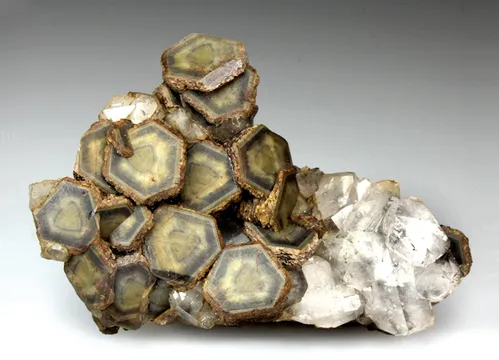
The mine is best thought of as two linked but contrasting mineralogical environments. The High Force workings, developed on the upper fellside, were the great barytes ground. There, barite formed the dominant vein filling, commonly coarse and white, with locally pale-pink shades, and associated with quartz, iron oxides, and abundant manganese oxides historically described as psilomelane and wad. Galena and sphalerite are sparse to nearly absent in that high-level barite zone. By contrast, the lower workings are the classic collector source for lustrous black sphalerite with pale-brown siderite, plus galena, quartz, minor barite, pyrite, chalcopyrite, dolomite, calcite, ankerite, and local pale-yellow fluorite. No. 1 Level is particularly important in descriptions of the lower vein: it exposed a wide section of sphalerite-rich mineralization with a conspicuous white barite band.
Mining at Coledale was known by documentary evidence as early as 1578, when an ore-analysis report recorded silver-bearing lead ore, but the main documented working history begins in the nineteenth century. John Tebay held a lease, and in 1839 the mine was sub-let to Airey and Cowper and partners. The early enterprise drove low levels to work argentiferous galena; ore sales are recorded from the early 1840s, but the long and expensive adit work yielded disappointing returns, and the lead-mining phase ended in the 1860s. Barite became commercially important later, and from 1867 Hall and Straughton took the lease with barytes as the primary target. Levels 4 and 5 were begun in the High Force workings, followed by Levels 6 and 7 in the 1870s. Production peaked in the 1870s, but falling prices and harsh winters repeatedly ended otherwise promising campaigns.
Zinc became a serious target in the twentieth century. Cumberland Mines Ltd worked the lower levels from 1906, built a new mill in 1908-09, and attempted to process sphalerite, barite, and galena from the mixed vein material. The fundamental metallurgical problem was that sphalerite and barite were too close in density for simple gravity dressing to separate efficiently. The Coledale Syndicate installed an Elmore flotation plant in 1914, a major step for the site, but the company soon exhausted its capital. Braithwaite Mines Ltd took over in 1915, and zinc mining continued intermittently until post-war zinc prices collapsed. The Derwent Fells Mining Company reopened high barytes ground in the late 1920s and early 1930s; Tampimex Oil Products Ltd then rebuilt the mill in 1939-40 and worked the High Force barytes on a much larger wartime scale.
The post-war chapters were no less dramatic. La Porte Chemical Company began the ambitious internal incline linking the lower workings with High Force, but abandoned the project in 1952 just short of completion and without extracting ore from that campaign. McKechnie Brothers resumed operations in 1960 and located further barytes, but production never matched expectations. Later attempts by Force Crag Mines, Force Crag Mines UK, the Braithwaite Mining Company, and finally the New Coledale Mining Company kept the mine alive through exploration, refitting, and small-scale extraction. The last phase, from 1984 into the early 1990s, focused on zinc in Levels 0 and 1; once chemical separation was made to work in 1987, some ore was successfully dressed, but poor market conditions, plant problems, lease pressures, and underground collapse brought the working life of the mine to an end.
The mine is now owned and managed by the National Trust. The Coledale track and the open fell around the site are accessible to walkers and cyclists, but vehicular access is controlled, the mill is only opened on advertised guided days, and the underground workings are not open for casual collecting. The site is a Scheduled Monument and a Geological Site of Special Scientific Interest, so collectors should treat it as a protected historic and scientific landscape rather than as an active collecting dump. Old specimens in collections and on the market are therefore the main legitimate source of good Force Crag material today, especially pieces collected during nineteenth- and twentieth-century working, the 1970s-1980s reopening period, and documented older dump collecting before modern conservation restrictions tightened.

Photo: Wikimedia Commons
Important specimen sources include the High Force barite workings, the lower sphalerite-rich levels, the sub-levels above No. 0 Level, and material from No. 1 Level and nearby dumps. Documented collection records include sphalerite and galena from a sub-level above No. 0 Level in the late 1980s, siderite and quartz from below No. 0 Level, fluorite collected in 1987, and barite collected in 1988. The lower mine’s best-known specimen style—black sphalerite crystals with pale-brown siderite on quartz or slatey matrix—appears in museum and private collections and in old British dealer catalogues, which confirms that this was not merely a micromount locality but a source of cabinet-quality material.
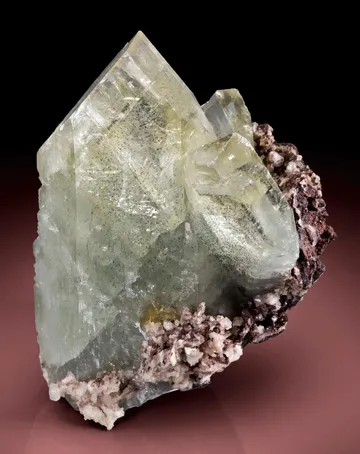
Barite from Force Crag is the signature mineral of the High Force workings, where the upper part of the vein was sufficiently rich to support repeated barytes campaigns from the late nineteenth century through the twentieth century; it occurs mostly as white to locally pale-pink coarsely crystalline vein filling, with individual crystals commonly reaching large hand-specimen scale and with vuggy material producing tabular crystals and bladed groups. The most desirable specimens are not merely lumps of massive white barytes, but architectural clusters of bright tabular or bladed crystals, especially where they show a clean association with quartz, iron or manganese oxides, pyromorphite, galena, sphalerite, or siderite. Force Crag barite is separated from ordinary mine-run barytes by provenance and form: pieces tied to the High Force levels, the 1870s workings, or the later wartime and post-war barytes ground carry stronger locality interest, while sharp freestanding blades, pale-pink tinting, or contrasting sulphide associations elevate a specimen markedly.
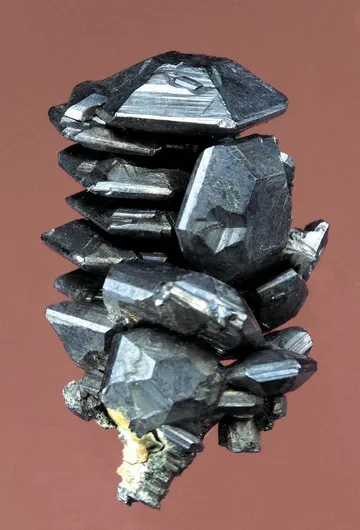
Sphalerite is the classic collector mineral of the lower Force Crag vein, especially from the No. 3, No. 1, and No. 0 levels where it becomes the dominant sulphide and occurs as dark-brown to nearly black coarsely crystalline bands and as lustrous, well-formed black crystals lining vugs. Published descriptions note crystals up to about 2 cm across in the lower workings, and older British dealer records include bright black crystals to several millimetres as well as a notably large bright crystal on siderite-slate matrix with minor barytes; the usual companions are pale-brown curved rhombic siderite, quartz, galena, calcite, minor barite, and occasional secondary lead minerals. Good Force Crag sphalerite is judged by crystal definition, gloss, freedom from siderite crusting that obscures the form, and the quality of contrast against buff siderite or white quartz; massive blende is commoner and historically important, but the sharp black crystals are what collectors remember.
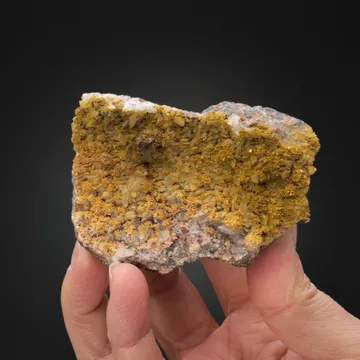
Siderite at Force Crag is both a gangue mineral and a visual key to the lower-zone specimens, forming pale-brown to brown curved rhombic crystals and drusy coatings on sphalerite-rich and quartz-bearing matrix, with particularly attractive pieces showing rosettes or crusts of siderite partly encrusting glossy black sphalerite. Historic survey work even noted that siderite in the waste and unprocessed ore can stain material a distinctive orange-brown, and specimen records include small brown crystals to a few millimetres covering massive sphalerite, as well as siderite and quartz from deeper below No. 0 Level. The best siderite specimens from Force Crag are those in which the siderite is well crystallized rather than earthy, fresh enough to retain a warm tan to brown colour, and arranged so that it frames or contrasts with sphalerite rather than smothering it completely.
Other documented minerals from Force Crag include galena, pyrite, chalcopyrite, arsenopyrite, bournonite, native antimony, native silver, acanthite, cerussite, anglesite, pyromorphite, fluorite, calcite, dolomite, ankerite, goethite, hematite, manganite, manganese oxides historically labelled psilomelane and wad, brochantite, langite, lautenthalite, linarite, malachite, serpierite, gypsum, jarosite, melanterite, erythrite, skutterudite, cuprite, and wulfenite. No valid mineral species is generally recognized as having Force Crag as its type locality; its rarities instead lie in the supergene suite and in microscopic or included species, especially native silver from near-surface alteration, native antimony and bournonite inclusions in galena, and the small but collector-interesting copper-lead sulphates. Old reports of stolzite from Force Crag are historically important but should be treated with caution, as later authors regarded the occurrence as improbable or erroneous.
Force Crag specimens are generally robust compared with many secondary-mineral localities, but they have predictable condition issues. Barite cleaves readily and the large tabular crystals from the barytes zone are prone to bruised edges, contacted faces, and iron or manganese staining. Sphalerite crystals can be lustrous but are often partly hidden by siderite, quartz, or later coatings; check for chipping along crystal edges and for old repairs on larger display pieces. Siderite is commonly drusy or curved-rhombic and can be attractive even when small, but brown carbonate coatings may be confused with dull iron oxide unless individual crystals are visible under magnification.
The most important authenticity issue is locality precision. Force Crag material may appear under older labels such as “Force Craig,” “near Keswick,” “Coledale,” “Braithwaite,” or “Cumberland,” and those labels can be legitimate. However, northern English sphalerite-siderite-quartz specimens from the Lake District, the North Pennines, and Scottish lead-zinc veins can resemble one another superficially, so old labels and collection history matter. A Force Crag sphalerite specimen should typically fit the black sphalerite plus pale-brown siderite and quartz/barite/galena association; showy fluorite-rich or calcite-rich pieces should be checked especially carefully against their labels, because Force Crag fluorite is documented but generally minor and modest.
The historical “stolzite from Force Crag” problem deserves special caution. Greg and Lettsom’s nineteenth-century report was repeated for many years, but later geological work argued that the occurrence is doubtful in the context of the deposit. Any specimen sold as Force Crag stolzite should therefore be considered suspect unless accompanied by modern analytical evidence and a credible chain of custody. The same caution applies to unusual supergene micro-species: Force Crag has a real secondary suite, but small blue, green, or yellow crusts should not be named beyond visual confidence without analytical support.
Modern collecting access is highly restricted by the protected status of the site and by safety. The mine is on National Trust land, the mill and mine landscape are scheduled, and the underground workings are unsafe and not open to casual collectors. Today’s market availability is therefore mostly recycled collection material: old British dealer stock, documented private collections, micromounts from older dump collecting, and occasional specimens from the 1970s-1980s reopening years. Cabinet-quality Force Crag sphalerite with sharp lustrous crystals and good siderite contrast is considerably scarcer than massive ore pieces; sharp barite groups with reliable Force Crag provenance are also much less common than massive barytes.
Force Crag material is not especially known for fluorescence in the way that some fluorite, calcite, or willemite localities are, so fluorescence should not be a primary buying criterion. Handling concerns are practical rather than exotic: keep barite away from knocks, avoid aggressive washing of friable siderite or oxidation products, and store sulphide-rich pieces dry. Specimens containing pyrite, marcasite, or soluble sulphates such as melanterite should be monitored for deterioration, though most well-kept sphalerite-siderite-quartz specimens are stable in normal cabinet conditions.
Force Crag’s story begins with an old clue rather than a worked-out mine: a 1578 report for Sir Thomas Percy, Earl of Northumberland, recording silver in Coledale lead ore. That single paper trail suggests that miners or prospectors had already been nosing along the vein where it reached daylight, probably taking shallow ore from the hill before anyone imagined the later forest of adits, rails, leats, and mill machinery. By the 1840s the work had become formal. Levels 2 and 3 were driven in from the lower fellside, a waterwheel and primitive dressing area were set on the valley floor, and a dam was built to keep water available through dry spells. The first sale of ore is recorded in September 1841. Yet the geology refused to behave like a simple bonanza: a long low adit eventually ran hundreds of yards but produced only a disappointing tonnage of ore, and the early lead venture faded in the 1860s.
The mine’s second life began when barite became worth money. In 1867 Hall and Straughton took the lease with barytes in mind, and the higher fellside suddenly mattered. Level 4, named Postlethwaite’s Level after one of the company directors, was started in April 1867 where the vein showed on the surface; by the end of the first month it was already producing considerable barytes. Levels 5, 6, and 7 followed as the workings climbed the crag. The logistics were as memorable as the mineralogy. Barite from the high levels was once sent down the face by water in long chutes, the mine using gravity and the mountain stream as part of its haulage system. In 1873 a horse-drawn tramway toward Braithwaite was begun to ease the long outward journey. Production grew strongly and peaked in 1877, but in 1878 prices fell sharply and a severe winter stopped mining altogether. By January 1881 the company was wound up, leaving thousands of tons of barytes produced and a high-level landscape of adits, ledges, stopes, and spoil.
The twentieth-century mill tells a more mechanical story: ingenuity against a stubborn ore. Sphalerite and barite were both valuable, but they were inconveniently close in density, so the old gravity methods sent too much zinc to the dumps. Cumberland Mines Ltd built a large new mill in 1908-09, but the problem was only properly addressed when the Coledale Syndicate installed an Elmore flotation plant in 1914. A pelton wheel, driven by a pressurised jet of water, powered the equipment. The principle was elegant: crush the ore, mix the powder with water and carefully chosen oils, make bubbles carry the zinc mineral to the surface, and skim off the concentrate. In practice it was capital-hungry, technically demanding, and vulnerable to prices. The First World War helped demand; the post-war slump helped kill it.
The wartime barytes episode was the mine’s grand industrial moment. In 1939 Tampimex Oil Products Ltd took over a site where adits and buildings had again fallen into disrepair, rebuilt the mill, installed new machinery, and launched high-level extraction on an unprecedented scale. A track down to the mill soon proved inadequate, so by 1940 an aerial ropeway was built at a cost of around £10,000, an enormous investment for a remote Lakeland mine. During the war roughly 35,000 tons of barytes ore came out of Force Crag. Then the weather intervened again: the harsh winter of 1947 put the mine out of action for six weeks and caused severe flooding. With wartime demand over and barytes prices down, the operation collapsed into another abandonment.
One of Force Crag’s boldest schemes produced almost no ore at all. In 1949 La Porte Chemical Company began driving a long underground incline from Level 3 up toward the High Force workings, intended to solve the chronic transport problem and test the vein at depth. It was the sort of engineering idea that makes sense on a section drawing: connect the upper barytes ground to a lower haulage route and let the mine move ore internally rather than wrestling it down the mountainside. By 1952 the incline was abandoned only a little short of completion, and the whole operation ceased without ore production from the venture. Its incompletion is part of the fascination of Force Crag: again and again the deposit was good enough to tempt investment, but never quite easy enough to reward it reliably.
The 1970s and 1980s gave the mine its last working breath and some of its most recent collectible material. In 1976 observers described the mine as a possible survivor, perhaps to reopen alongside Carrock as one of the last working mines in a district that had once held dozens. They noted the large mill, roughly 150 ft by 100 ft across four elevations, and even an Ingersoll Rand compressor in almost perfect working order. No. 1 Level gave off warm air, attributed partly to depth and partly to a warm-water and carbon-dioxide-bearing spring near the end of the workings; beyond a rise from No. 0, the air could become bad. At No. 3 Level, scree had left only a small opening, around 12 by 18 inches, through which air could rush with startling force when the wind entered the High Force portal and was funnelled down the incline.
The final working company, New Coledale Mining Company, formed in 1984 with a small workforce of about eight people. It concentrated on zinc from Levels 0 and 1, and after the chemical separation process was perfected in 1987, a modest amount of ore was extracted and refined. This was the last real mining at Force Crag, and it explains why some legitimate specimens carry 1980s collection dates, names of local collectors, or references to the sub-level above No. 0 Level. But the lease was nearing expiry, the workings were difficult, and an underground collapse in spring 1991 ended attempts to keep the operation alive. The mine that had repeatedly revived for lead, barytes, zinc, and hope finally became a conserved landscape.
Even after closure, Force Crag continued to generate a new kind of mineralogical story: mine water. Metal-rich water from Level 1 entered Coledale Beck carrying zinc, cadmium, and lead, and the site became a test case for passive treatment. A full-scale system was built using vertical-flow ponds filled with compost-based media and a wetland planted with soft rushes. Instead of a conventional industrial plant, the treatment relies on chemical and biological reactions in the pond media to bind metals before the water returns to the beck. In a place where miners once fought water, powered machinery with water, sluiced ore with water, and were finally defeated by collapses and flooding, Force Crag’s modern afterlife is again a story of water moving through minerals.