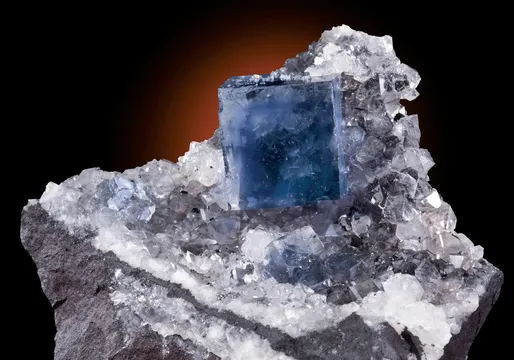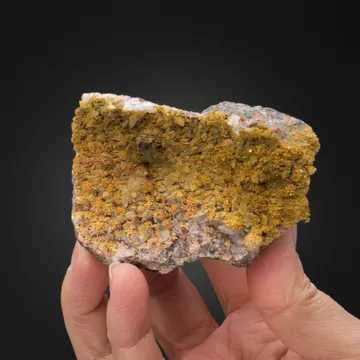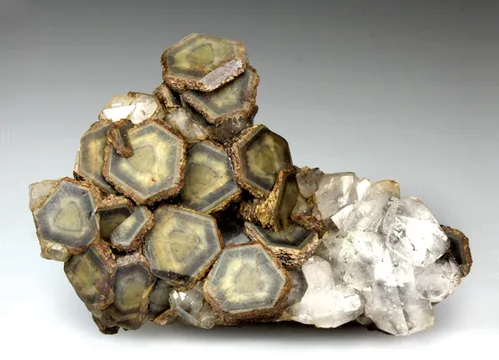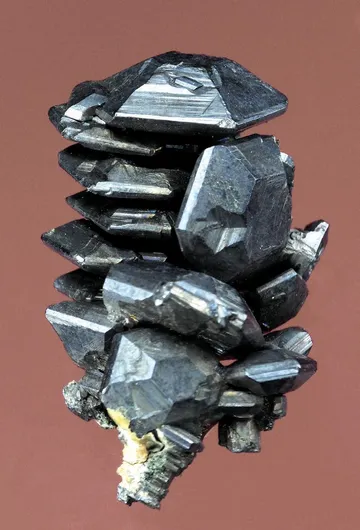
Fallowfield Mine, UK — Northern Pennine locality famed for witherite and alstonite, white-to-grey translucent crystals; historic type locality for Ba carbonate…
Key facts
Fallowfield Mine is one of the classic names of northern English mineral collecting: a Tyne Valley lead–witherite mine on the north side of the River Tyne, just north of Acomb near Hexham, and one of the northernmost mineralized veins customarily treated as part of the Northern Pennine Orefield. Its importance rests on a very particular chemistry. The Fallowfield Vein lies in the outer, barium-rich zone of the orefield, where late carbonate-bearing hydrothermal fluids produced abundant barium carbonate rather than the more usual sulphate gangue alone. In collecting terms that made Fallowfield exceptional: it yielded not only commercial quantities of witherite, BaCO3, but also superb crystallized witherite, and it is a joint type locality for alstonite, BaCa(CO3)2, with Brownley Hill Mine near Alston.
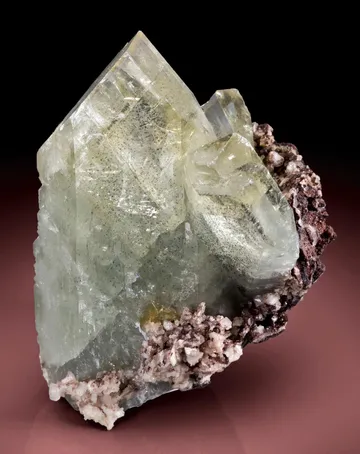
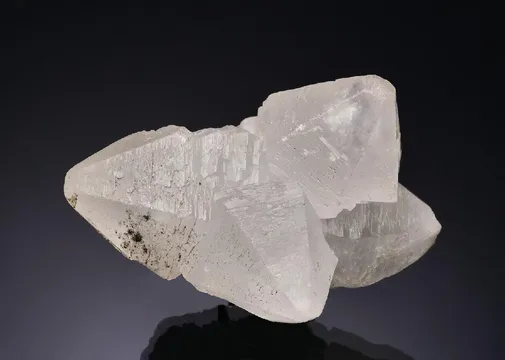
The best Fallowfield specimens have a look that serious collectors recognize immediately. Witherite occurs as white to grey-white, translucent to frosty, pseudohexagonal pyramids and bipyramids, commonly cyclically twinned and often stepped or striated on the faces. The finest old pieces show stout, isolated or clustered crystals rising from sugary to sparkling alstonite, sometimes with calcite, baryte, or small galena. Alstonite itself is generally a micro- to small-crystal mineral here, but at Fallowfield it was unusually abundant for the species: acute pseudohexagonal pyramids and bipyramids, commonly only a few millimetres long, can richly coat matrix and provide the diagnostic association that elevates many Fallowfield witherites from merely good British classics to historically important locality pieces.
Regional View
Country View
Historically, Fallowfield bridges two collecting worlds. It was an old lead mine, recorded from the early seventeenth century and probably worked through several phases long before witherite became the principal prize. By the 1820s, crystallized carbonate of barytes from Fallowfield was already known to collectors; by the mid-nineteenth century, it had become a source of some of the finest witherite crystals then known. Commercial witherite mining began in the 1840s and continued into the early twentieth century, but the great cabinet specimens are overwhelmingly old mine-production pieces. Today the underground workings are inaccessible, the vein is not exposed at surface, and remaining specimen material is associated with old spoil rather than fresh pockets.

Photo:
Search for specimens: View all specimens from Fallowfield Mine, UK
Fallowfield Mine lies immediately north of Acomb in Northumberland, in the Tyne Valley near Hexham. The locality is best understood as a barium-rich, low-temperature hydrothermal vein deposit belonging to the peripheral northern expression of the Northern Pennine Orefield. Although structurally it lies in Carboniferous rocks of the Northumberland Trough rather than on the Alston Block itself, its mineralogy links it closely with the outer orefield zone that also includes the celebrated Settlingstones Mine.
The Fallowfield Vein strikes approximately north-east to south-west and cuts Upper Carboniferous, Namurian sandstones and mudstones. The mine workings also proved the vein downward into Lower Carboniferous, Dinantian strata beneath the Four Fathom Limestone. Before the barium carbonate phase of working, coal was raised from the Little Limestone Coal, and parts of the mine were connected with the nearby Acomb Colliery workings. That coalfield association is not incidental: the vein passed through a mixed sedimentary pile of sandstone, shale, coal measures, and limestones, and the presence of limestone wall rock was important in the formation of the calcium-bearing barium carbonate alstonite.
The vein was substantial for this part of the field. Workings extended for at least 2 km along strike from a number of shafts. Early descriptions record the vein as maintaining a width of about 6.1 m through much of the mine, locally widening to more than 12 m. The filling was dominated by witherite, with lesser baryte, galena, alstonite, calcite, and only rare sphalerite. Witherite formed ribs up to about 1.8 m wide, locally rich enough to contain as much as 70% barium carbonate. The broad paragenetic interpretation is that earlier baryte was extensively altered by later carbonate-rich hydrothermal fluids, producing witherite; where those fluids interacted with limestone wall rock and gained calcium, alstonite and perhaps related barium-calcium carbonates could form. At Fallowfield, alstonite was not merely a trace curiosity: it was locally abundant enough to create crystalline masses and rich coatings, making the mine one of the world’s most important sources of the species.
Mining at Fallowfield is recorded as early as 1611, when the mine was already valuable enough to be the subject of a dispute over possession. Through the seventeenth and eighteenth centuries it was a lead mine, and by the mid-eighteenth century accounts describe periods of both flooding and renewed activity. One eighteenth-century report noted flooded and impassable lower levels, while later accounts record steam pumping and a sizeable workforce. Lead mining continued into the nineteenth century, but by the 1840s witherite had changed the mine’s economic character. Jacob Walton and John Cowper acquired the mine in 1845, and commercial extraction of witherite began in the following year. The mine remained associated with the Walton family until its final closure period in the early twentieth century.
Production figures are incomplete, but the scale was large for witherite. Recorded witherite output from 1855 to 1912 totalled 98,986 tons, and estimates that include early gaps from 1846 to 1854 bring the total to about 105,000 tons. Recorded lead concentrate production for 1848–1907 was 11,196 tons. Fallowfield was second to Settlingstones as a regional commercial source of witherite, but for collectors its witherite crystals—especially the old pseudohexagonal pyramidal and bipyramidal forms on alstonite—are among the most desirable of all English barium carbonate specimens.
The specimen-producing zones were tied to vugs, ribs, and open spaces in crystalline witherite and alstonite-bearing parts of the vein, particularly in the upper levels developed for witherite after the lead-mining phase had left much gangue in place. Old mine sections record development at 300, 230, 175, 120, and 80 ft O.D. for witherite, above the deeper lead workings at the 45-fathom and 69-fathom levels. This helps explain why many good specimens are essentially barium-carbonate pieces rather than sulphide-rich ore specimens: the collectible pockets were in the witherite–alstonite gangue, not principally in galena ore shoots.
Collecting conditions today are very different from the nineteenth-century mine era. The underground workings are closed and inaccessible, and there is no surface exposure of the vein. Remaining spoil heaps occur around former shafts; many are overgrown, some lie within or near a landscaped caravan-park setting, and others are on adjoining agricultural land. Parts of the spoil are designated for geological conservation because of the alstonite-bearing material. Any visit requires permission from the relevant landowner or occupier, respect for SSSI restrictions where applicable, and a realistic expectation: the great cabinet witherites were mine-era finds, while modern surface material is more likely to be small alstonite-bearing veinstone, fragments of witherite, baryte, calcite, and galena.
Fallowfield witherite is the locality’s signature collector mineral: white to pale grey, commonly translucent to frosty, and most prized as cyclically twinned pseudohexagonal pyramids, bipyramids, and short prismatic-looking forms with stepped or striated faces. Historic descriptions record crystals up to 5 inches long, and surviving old specimens commonly show crystals from miniature scale into the 3–5 cm range, with exceptional pieces exceeding that. The best examples are not massive witherite or rounded radiating nodules, although those occur; they are sharp, well-spaced, undamaged pyramidal or doubly terminated crystals perched on sugary alstonite or alstonite-coated sandstone, sometimes with baryte films, calcite, and small galena. A strong Fallowfield piece should have recognizable pseudohexagonal form, intact tips, some translucency or silky internal glow, and preferably visible alstonite association, because that combination captures both the mine’s world-class witherite production and its type-locality status for alstonite.
Alstonite is the great rarity that gives Fallowfield its mineralogical rank beyond witherite alone. The mine is a joint type locality for alstonite with Brownley Hill Mine; Fallowfield alstonite occurs as colourless, white, and rarely pale rose-pink acute pseudohexagonal pyramids or bipyramids, commonly only up to about 5 mm, with horizontally striated faces and a characteristic re-entrant line. It also forms sugary crystalline masses, locally to about 10 cm across. The verified mineral list also includes anglesite, baryte, calcite, cerussite, and galena. Sphalerite is mentioned in geological descriptions as rare, though it is not always present in modern simplified locality lists. Barytocalcite has historically been reported from Fallowfield, but later review could not confirm undoubted specimens, so collector labels naming barytocalcite from this mine deserve particular caution.
Fallowfield witherite is a classic old-time material, and provenance matters. Many of the finest pieces left the mine during the nineteenth and early twentieth centuries, passed through British dealers and institutional collections, and may now carry old labels from collections, museums, or dealers. A credible old label does not merely add romance; it can help distinguish true Fallowfield material from visually similar English witherites from Settlingstones, Nentsberry Haggs, Rampgill, Brownley Hill, or other Alston Moor and Northumberland localities.
The main mislabelling risk is locality confusion within northern England. Fallowfield pieces should typically show white to grey-white pseudohexagonal witherite, often on or with abundant fine alstonite. Settlingstones material may be excellent but commonly has a different overall habit and history, while Alston Moor witherites can be more chalky, massive, or associated with a different suite. Specimens labelled “barytocalcite” from Fallowfield should be treated skeptically unless analytically confirmed, because the mineral has been cited historically but not verified by later review of undoubted specimens.
Repairs are a realistic concern on important Fallowfield witherites. Witherite is brittle, relatively soft, and commonly preserved as projecting pyramids or bipyramids; old mine and collection pieces may have reattached terminations, glued breaks at the base of crystals, or old restoration where a crystal was reset on matrix. Examine straight seams, mismatched face striations, glossy glue in recesses, and fluorescence halos under UV. A clean, disclosed repair on a major old specimen may be acceptable, but undisclosed composite construction or multiple reset crystals should sharply reduce confidence and value.
Condition is central. The sharpest Fallowfield crystals have delicate tips and edges, and many specimens show small bruises, rubs, or contact damage. Slight peripheral damage from removal is common; damaged terminations on the main display crystals are much more serious. Alstonite coatings are fine-grained and can be friable, so avoid aggressive cleaning. Rose-pink alstonite from Fallowfield has been noted historically as light-sensitive, fading toward white on exposure, so any pinkish specimen should be stored away from strong light. Witherite contains barium in a carbonate mineral; it should not be licked, ground, soaked unnecessarily, or handled casually around food, and dust generation should be avoided.
Market availability is intermittent but real. Lesser Fallowfield witherite miniatures and massive crystallized pieces appear from old collections, but sharp, aesthetic, matrix specimens with obvious alstonite are scarce and command strong prices. Recent dealer and auction offerings show a wide spread: small or damaged examples can be comparatively approachable, while fine small-cabinet pieces with 3–5 cm crystals on alstonite can reach several thousand dollars, and exceptional old display specimens are firmly in the high-end British-classic category.
The first known documentary glimpse of Fallowfield is not a mineral label but a quarrel. In 1611, John Errington petitioned against Sir John Fenwick, saying Fenwick had forcibly dispossessed him of the mine under the pretext that it belonged to the King. That single legal flash tells us the essential early fact: Fallowfield was already worth fighting over more than four centuries ago. The parish registers of nearby St John Lee later carried frequent references to miners, evidence that the workings were not a passing trial but part of the local economy and local population through the later seventeenth century.
By 1734 the drama had shifted underground. A report by John Armstrong, dated 14 August 1734, described the mine as flooded and idle. A rough plan showed a 15-fathom level running under Acomb Common and a deeper Fallowfield Level 25 fathoms below it, with sumps descending step by step to still lower workings. The report described water dropping down two sumps and passing about 1,300 yards through lower levels that had not been passable for many years. The proposed rescue was a full engineering campaign: repair old shafts, clear levels, drive an air drift, sink sumps, and push a new drift 180 fathoms, with the total estimated at £630. It is a strikingly practical eighteenth-century picture—timber, sludge, air, water, and money—long before the mine became famous for cabinet minerals.
The witherite story enters the collector’s record slowly and then all at once. A Cambridge Philosophical Society donation recorded on 10 December 1821 listed “Crystallized Carbonate of Barytes from Fallowfield – Northumberland,” suggesting that well-crystallized witherite had become recognized by then. In 1823 the occurrence was mentioned briefly as “Fallowfield mine, Hexam,” with little elaboration. By 1835 the tone had changed dramatically: James Finlay Weir Johnston wrote that Fallowfield was known to modern collectors as the locality where the finest crystallized carbonate of barytes had yet been obtained. Within about a dozen years, Fallowfield had gone from a scarcely described source to a benchmark name for a species.
The mine’s commercial turn depended on men who understood both minerals and markets. In 1845 Jacob Walton and John Cowper acquired Fallowfield. Cowper belonged to a family deeply tied to Alston mineral dealing; the older John Cowper had supplied Thomas Thomson with the material involved in the early alstonite story. When Walton and Cowper took over, the principal mine development was on the 45-fathom and 69-fathom levels, but the later witherite workings pushed into upper parts of the vein where barium carbonate gangue had been left behind by lead miners. What earlier workers had not valued became the basis of a new industry.
Specimens flowed as well as ore. In 1847 William Hutton donated Fallowfield witherite and alstonite to the Natural History Society of Northumbria, whose collection is now part of the Great North Museum: Hancock. By 1858, Greg and Lettsom could write that Fallowfield had produced “the finest crystals yet known,” noting that they were often very perfect, sometimes remarkable in size, and reached up to 5 inches long. The largest crystals were often coated with a white deposit of baryte, a detail still familiar to anyone who has studied old Fallowfield witherites with semi-matt or frosted surfaces.
One of the most memorable Fallowfield specimen episodes came in 1887, when the Alston dealer Peter Gilmore offered the British Museum a piece he called “The largest Witherite ever found at Fallowfield.” His description is wonderfully concrete: nearly 18 inches long, carrying “3 different formations” of crystals—large flat-topped crystals, pointed forms, and doubly terminated crystals—set on pink alstonite and dogtooth calcite. Gilmore valued it at £50 but offered to take £20 “clear of damage.” The museum countered with £15; Gilmore accepted so the specimen would remain in the country. It is the kind of transaction that defines old mineral collecting: a great object, a proud dealer, a national collection, and a price negotiation preserved in the archive.
The working mine also had its dangers. On 10 May 1905, George Cowing, a 19-year-old barytes putter employed by Walton and Cowper, suffered a fatal accident at Fallowfield. He normally worked as a banker on the surface but was acting underground that day. The record notes that two cages ran in a vertical shaft with working levels at 60 and 65 fathoms, and that fencing at the 50-fathom level consisted of chains set 2 ft and 3 ft 6 in above the pavement, across the road 4 ft from the shaft. His skull was broken; he managed to walk some distance outbye before losing consciousness. The dry measurements in the account make the scene more vivid, not less: a young worker, a deep shaft, chains across a roadway, and the mine still active only a few years before final closure.
Fallowfield Mine, Northumberland — GeoGuide / Geological Conservation Review — The essential modern locality account, covering geological setting, mining history, vein dimensions, mineral assemblage, alstonite type-locality status, and collecting significance.
Young, B., “Fallowfield Mine,” in Mineralization of England and Wales, Geological Conservation Review Series No. 36, Chapter 3, JNCC / Natural England — Formal GCR treatment of the mine as a nationally important mineralogical site in the Northern Pennine context.
Mindat: Fallowfield Mine, Acomb, Northumberland, England, UK — Current locality database entry with coordinates, mineral list, specimen photographs, and references.
Mindat: Witherite from Fallowfield Mine — Species-specific occurrence page rating Fallowfield witherite as world-class and documenting photo associations, especially alstonite.
Mindat: Alstonite from Fallowfield Mine — Species-specific entry for the type-locality mineral alstonite at Fallowfield.
Spencer, L. J. (1910). “On the occurrence of Alstonite and Ullmannite (a species new to Britain) in a Barytes-Witherite vein at the New Brancepeth Colliery near Durham.” Mineralogical Magazine, 15, 302–311. — Important early paper comparing New Brancepeth alstonite with material from Brownley Hill and Fallowfield and discussing the alstonite/bromlite nomenclature.
Bindi, L., Roberts, A. C., & Biagioni, C. (2020). “The crystal structure of alstonite, BaCa(CO3)2: an extraordinary example of ‘hidden’ complex twinning in large single crystals.” Mineralogical Magazine, 84, 699–704. — Modern structure determination based on an excellent Fallowfield alstonite crystal, showing why the species remained crystallographically difficult despite long-known crystals.
Breithaupt, J. F. A. (1841). “Holoëdrites syntheticus oder Alstonit,” in Vollständiges Handbuch der Mineralogie, vol. 2, pp. 255–256. — The work that introduced the name alstonite, now accepted over the earlier bromlite usage.
Wilson, W. E., ed. (2010). The Lindsay Greenbank Collection: Classic Minerals of Northern England. The Mineralogical Record, Vol. 41, No. 1.1. — Collector-focused reference with a dedicated Fallowfield Mine section and illustrated classic northern English specimens.
Alderton, D., Chapman, J., Critchley, C., Green, D. I., Poole, J., & Moreton, S. (2022). “A review of the minerals from Lead Mines Clough, Anglezarke, Chorley, Lancashire: the type locality for witherite.” Journal of the Russell Society, 25. — Valuable broader witherite history including detailed discussion of Fallowfield’s early collecting record, nineteenth-century dealers, production figures, and notable specimens.
BGS: Geology of the country around Bellingham, Memoir for 1:50,000 Geological Sheet 13 — Regional British Geological Survey memoir including Fallowfield mine workings and stratigraphic context.
BGS: Northern England British Regional Geology — Regional framework for the Maryport–Stublick–Ninety Fathom fault system and peripheral barium-lead mineralisation including Settlingstones and Fallowfield.
GeoGuide: Fallowfield Mine, Northumberland — Best single overview of the geology, mineralogy, mining history, and conservation value of the locality.
Mindat: Fallowfield Mine, Acomb, Northumberland, England, UK — Useful for coordinates, verified mineral list, specimen photographs, and locality references.
Wikimedia Commons: Category Fallowfield Mine — Open-licensed images of Fallowfield witherite, including the specimen illustrated in this guide.
Keys to the Past: Fallowfield lead and witherite mines — Archaeological and historical summary of the mine and associated smelt-mill site.
Acomb Parish Council: History — Local parish context for Fallowfield’s role in Acomb’s mining history.
Steetley Minerals: Alston Moor and northern Pennine localities — Collector-oriented regional notes, including a concise Fallowfield entry.
Crystal Classics: Fallowfield witherite on alstonite specimen — Example of a high-end modern dealer description for a classic Fallowfield matrix specimen.
MineralAuctions: Fallowfield witherite, fine old classic material — Recent auction record illustrating market interest in sizeable old Fallowfield crystallized witherite.