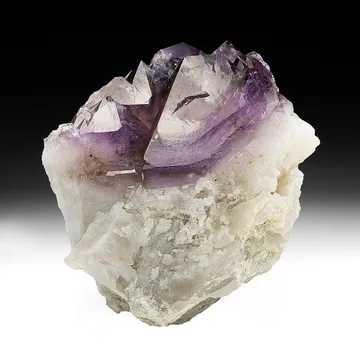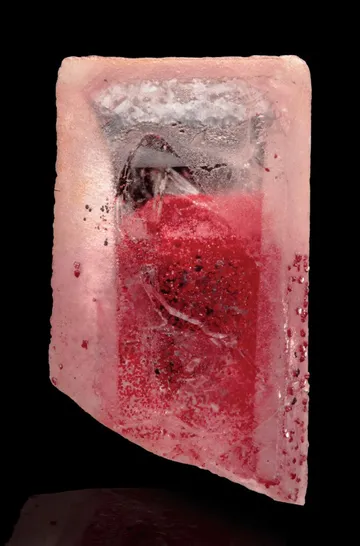
El Entredicho Mine, Spain - Almadén locality for brilliant red cinnabar crystals and rare mercury-associated micro-minerals, highly prized by collectors.
Key facts
El Entredicho is the collector’s El Dorado of the Almadenejos sector of the Almadén mercury district: a relatively small open pit that exposed, in a concentrated and unusually accessible way, the classic Almadén-style mercury system and a far richer micro-mineral suite than the great Almadén mine itself usually yields to collectors. Its principal ore was cinnabar in the Criadero Quartzite, the famous Ordovician–Silurian quartzite-and-sandstone unit that hosts the district’s stratiform mercury deposits. At El Entredicho, that old stratiform ore was cut and overprinted by fracture-controlled mineralization along the San Javier–San José fault system, by abundant native mercury, and by tuffaceous volcanic rocks of “roca frailesca” affinity that supplied the chemical stage for an extraordinary Hg-Cu-Ni-Co assemblage.
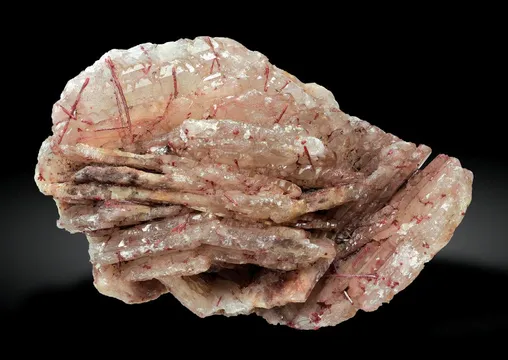
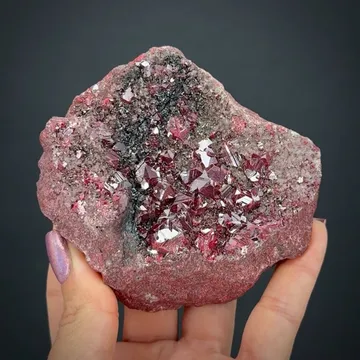
For specimen collectors, the mine matters above all for two overlapping reasons. First, it was the main late-20th-century source of sharp, brilliant, red cinnabar crystals from the Almadén district: small by Chinese standards, but among the finest anywhere for luster, color, crystal variety, and contrast on pale dolomite. Second, it became a reference locality for rare mercury-associated micro-minerals—especially grimmite, donharrisite, gortdrumite, calomel, eglestonite, schuetteite, metacinnabar, montroydite, uricite, and hannebachite. The best specimens are not large cabinet showpieces; they are bright, precise, high-magnification pieces: vermilion to deep cherry-red cinnabar rhombohedra, twins, tabular hexagonal crystals, and rounded forms on white, grey, or brownish rhombohedral dolomite, sometimes with native mercury inclusions or with tiny metallic thiospinels and sulfides from the volcanic zones.
Regional View
Country View
The pit also has an unusually vivid physical history. To mine it as an open cast operation, the Valdeazogues River and the Almadén–Ciudad Real road had to be diverted; the old mine remnants of El Entredicho and Valdeazogues were largely consumed by the new pit. When mining ended, the void flooded. What had been a working mercury pit about 450 m by 350 m and roughly 100 m deep became a steep-sided lake—spectacular from a distance, but no longer a collecting ground in the old sense.
El Entredicho lies near Almadenejos, Ciudad Real, in Castile-La Mancha, within the Almadén syncline of the Central Iberian Zone. The locality belongs to the globally important Almadén mercury region, where mercury mineralization is concentrated in Paleozoic sedimentary and volcanic rocks. The key host at El Entredicho is the Criadero Quartzite, a unit of quartzites and sandstones near the Ordovician–Silurian boundary. In the classic stratiform ore, cinnabar occurs as impregnation and fissure filling in specific quartzite levels: an important lower mineralized bank at the base of the unit, in contact with footwall shales, and an upper bank near the hanging-wall Silurian graphitic shales.
The lower bank was the principal ore source in the modern open pit and reached thicknesses of about 1–2 m. The upper bank was more folded and broken, and was exploited especially near the San Javier fault in the northwestern part of the pit; it corresponds historically with the Valdeazogues workings. These quartzite-hosted ores are the “Almadén type”: cinnabar-dominant, mercury-rich, and poor in the broader polymetallic suite that collectors might expect from other hydrothermal districts. That monometallic character is important when reading old labels—arsenic and antimony minerals historically attributed to “Almadén” or “Almadenejos” are not automatically credible for El Entredicho.
Structurally, the mine sits in a complex, tightly folded and faulted part of the southeastern periclinal termination of the Almadén syncline. The San Javier and San José faults are especially important. A second, collector-favorable style of mineralization occurs as cinnabar, pyrite, and native mercury filling fissures that cut the stratiform ore levels. These late fissures produced the most attractive display specimens: brilliant cinnabar crystals perched on white dolomite, and more rarely on calcite, quartz, or barite. In some parts, native mercury was so abundant that it exceeded cinnabar locally, particularly in the old El Entredicho mine.
Volcanic rocks are central to the mine’s mineralogical personality. The eastern side of the open pit exposed tuffaceous volcanic rocks, explosive breccias, basaltic sills with ultramafic enclaves, and small basaltic dikes. In these volcanic and tuffaceous rocks, an unusual Hg-Cu-Ni-Co assemblage was recognized: cinnabar with millerite, chalcopyrite, grimmite, gortdrumite, and donharrisite. This association is the reason El Entredicho is much more than just a cinnabar locality. The rare sulfides occur as tiny but highly significant crystals in dolomite geodes and in cavities in fine-grained volcanic rock, often demanding microscope work but rewarding the collector with species and habits scarcely seen elsewhere.
The modern El Entredicho orebody was discovered in 1974 during exploration by the Servicio Geológico de Almadén. Preparatory work for open-pit mining began in 1978, and exploitation continued until 1997, with a stoppage from 1991 to 1993. The extracted ore was crushed near the pit and transported by truck to the metallurgical installations at Almadén. Official and technical sources give totals around 300,000–350,000 flasks of mercury for the modern operation; using the Spanish mercury flask standard of 34.47 kg, that is on the order of ten to twelve thousand metric tonnes of mercury. The pit ultimately reached about 450 m on its long axis, 350 m on its shorter axis, and about 100 m in depth, with 10 m benches.
A separate “Nuevo Entredicho” mineralized body was discovered by drilling in 1987 at about 150 m depth. It was a small, very high-grade mercury body associated with pyroclastic volcanic rocks; it was studied in detail but was not mined. Mineralogically and genetically it helps explain the importance of volcanic rocks in the El Entredicho area, but collectors should be careful not to confuse specimens from the open pit and old workings with drill-core or research material from the Nuevo Entredicho deposit.
Access today is not what it was during the mining and early post-mining years. The open pit is closed, privately controlled, and flooded; tourist information for Almadenejos describes it as a lake that is not visitable. The Spanish geosite inventory notes unstable slopes, private property, and mineral collecting only as admissible for research purposes. For collectors, this means old-stock specimens from the exploitation years, verified study material from known collections, and carefully labeled micro-specimens are the realistic sources. Unauthorised entry is not only legally problematic; in a flooded mercury open pit with unstable benches, it is physically foolish.
The best specimen recoveries came from the working life of the pit and from dumps, stockpiles, and ore-storage areas accessible during exploitation and dismantling. Collectors and researchers recovered cinnabar crystals from carbonate-filled fissures in quartzite; metacinnabar nodules and crystals from carbonate veins; chalcopyrite, grimmite, gortdrumite, millerite, and donharrisite from volcanic-rock zones; and late oxidation products from altered, mercury-rich fractures. The old underground El Entredicho workings, now largely destroyed by the open pit, supplied historically important calomel and eglestonite specimens, including museum pieces preserved in Madrid.
Cinnabar from El Entredicho is the locality’s signature collector mineral: generally 1–5 mm, only exceptionally exceeding 1 cm, but often brilliantly lustrous and sharply formed in fissures in quartzite and carbonate veins where the red crystals stand out against pale dolomite. The crystallography is varied—rhombohedral combinations, contact and penetration twins, isometric-looking forms, tabular hexagonal crystals dominated by the basal pinacoid, flattened plates, rounded faces, vermiform or acicular aberrant growths, and dark red spherulitic forms that can be mistaken for metacinnabar. The finest specimens are not judged by size alone; the best pieces show clean red color, glassy to adamantine luster, crisp trigonal morphology, and strong contrast on dolomite, while pieces from volcanic “frailesca” or barite-rich zones may show more rounded faces. In the eastern volcanic sector, cinnabar is locally later than the Cu-Ni-Co sulfides, coating or pseudomorphing chalcopyrite and even covering grimmite or gortdrumite, and native mercury inclusions are a recurring El Entredicho feature.
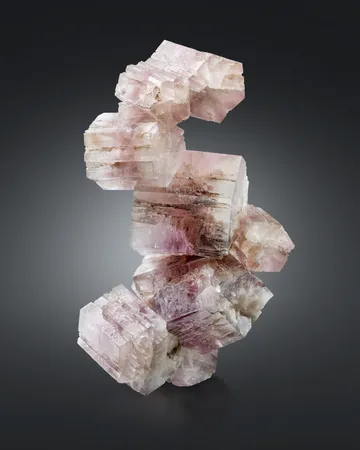
Dolomite is the main gangue mineral of the El Entredicho open pit and the essential matrix for many of its best micro and miniature specimens. It occurs as simple rhombohedral crystals, typically white, greyish, or brownish from iron-oxide inclusions, with a maximum size around 3–4 mm in the documented material. Dolomite is most valued here not as a standalone species but as the stage on which the mine’s more important minerals developed: cinnabar, chalcopyrite, metacinnabar, and, more rarely, grimmite and gortdrumite. Transparent dolomite may enclose cinnabar, native mercury, pyrite, or metacinnabar, and iron-rich dolomite can be visually indistinguishable from ankerite without analysis. The best El Entredicho dolomite specimens are therefore those with clean rhombs, open cavities, and high-contrast attached cinnabar or rare sulfides rather than massive carbonate vein fragments.
Other documented minerals make El Entredicho exceptional among Almadén-district localities. The mineral list includes native mercury, graphite, chalcopyrite, metacinnabar, sphalerite, wurtzite, millerite, galena, pyrite, marcasite, calomel, eglestonite, montroydite, quartz, jamborite, hannebachite, calcite, siderite, ankerite, aragonite, malachite, baryte, schuetteite, hydroniumjarosite, jarosite, natrojarosite, gypsum, muscovite, fuchsite, uricite, grimmite, donharrisite, and gortdrumite. The most important rarities are the Hg-Cu-Ni-Co sulfides of the volcanic zones: donharrisite occurs here in world-class bronze-yellow metallic lamellar and pseudohexagonal crystals up to 10 mm in groups or 4 mm for individual well-formed crystals; grimmite occurs as tiny cuboctahedral thiospinel crystals and was first recognized here as a natural NiCo2S4 composition before the species was formally described from Příbram; and gortdrumite appears as black prismatic, flattened, or lanceolate microcrystals associated with cinnabar, dolomite, and chalcopyrite. The old El Entredicho workings produced the district’s finest calomel and eglestonite specimens, including museum examples; the open pit also yielded important schuetteite, metacinnabar, montroydite, uricite, hannebachite, and a possible mercury-rich jarosite-type phase that has been discussed but not yet approved as a mineral species.
El Entredicho material rewards careful labels. The name has been used in at least three overlapping ways: the old El Entredicho mine, the old Valdeazogues/Las Minetas workings, and the modern open pit that destroyed or incorporated much of the earlier ground. Specimens of cinnabar on dolomite from the modern pit are straightforward if they come with credible late-20th-century provenance; calomel and eglestonite may be from the old mine rather than the open pit; and “Nuevo Entredicho” should be reserved for the drilled volcanic-hosted deposit, not casually applied to any specimen from the pit.
The main authenticity issue is not widespread fakery but historical over-attribution and species confusion. “Siegenite” from El Entredicho has been treated as an erroneous report: the cobalt-rich thiospinel material is better assigned to grimmite in light of later nomenclature and analysis. Old reports of tetrahedrite, bournonite, stibnite, realgar, and silver-mercury amalgams in the Almadén–Almadenejos area also need caution; modern review of El Entredicho material argues that antimony and arsenic minerals are extremely unlikely in the mercury deposits of this district, and that some historical “amalgam” material is mechanical mixture of pyrite and native mercury. A supposed moschellandsbergite specimen in a Madrid museum collection was found to be pyrite coated by a thin layer of galena. For rare species—grimmite, donharrisite, gortdrumite, jamborite, hannebachite, montroydite, eglestonite, uricite—visual identification alone is not enough; SEM-EDS, Raman, XRD, or provenance from a recognized analytical collection should be expected.
Condition is a serious part of judging specimens. El Entredicho cinnabar crystals are commonly tiny, and their value depends on luster, isolation, and undamaged terminations. Rounded crystal faces may be natural, especially on material associated with frailesca rock or barite, but abrasion, dump wear, and careless trimming can turn a good micro into red pepper on dolomite. Dolomite matrices are small and can be friable; barite may be corroded; calomel and eglestonite from old material can be delicate; and donharrisite is notably fragile because of its lamellar habit and excellent cleavage.
Handling requires the respect due to mercury minerals. Cinnabar, metacinnabar, native mercury, calomel, eglestonite, montroydite, and schuetteite should be kept out of children’s reach, never cut or ground casually, and stored so that dust, loose droplets, or fragments cannot migrate. Native mercury-bearing specimens are particularly problematic: droplets can detach, amalgamate metals, and contaminate boxes or drawers. Keep such pieces sealed in a stable container, avoid heat, wash hands after handling, and do not use ultrasonic cleaning or aggressive acids. Fluorescence is not a major collecting feature of El Entredicho specimens; visual appeal is overwhelmingly about red cinnabar luster, pale carbonate contrast, and micro-crystal associations.
Market availability is finite. The mine has been closed since 1997 and is now flooded and inaccessible to normal collecting, so fresh finds are not expected. Fine cinnabar on dolomite still appears from old Spanish collections, but the best sharp, bright, well-centered pieces are increasingly selective. Analytical rare-species specimens are scarcer still; many are micromounts or thumbnail-sized matrix pieces tied to a small circle of collectors and researchers active during the working and dismantling years. For serious locality collectors, a balanced El Entredicho suite would include cinnabar on dolomite, metacinnabar, native mercury in or on matrix if safely contained, a carbonate gangue piece, and at least one documented rare Hg-Cu-Ni-Co species if obtainable with analytical confidence.
The history around El Entredicho begins with a landscape that seems almost designed for mercury. Roman activity in the Valdeazogues–El Entredicho area is tied to Sisapo, the ancient mining center of the region, and the mining society known as Societas Sisaponensis. The miners of that world were not chasing cabinet specimens; they wanted cinnabar for pigment and mercury for metallurgy. Yet the same red mineral that passed through Roman hands two thousand years ago is what draws collectors to El Entredicho today.
Almadenejos itself was born from mercury. In 1699, cinnabar was discovered at the Encomienda de Castilseras, where the modern town stands. Workers first built rough dwellings around the Concepción mine so they would not have to travel from Almadén; the settlement became a mining village, then a town, and in 1836 it separated administratively from Almadén. Even the name is a geological nickname: “little Almadén.” Around the town, mining left a remarkably concentrated heritage—shafts, furnaces, the Cerco de Buitrones, walls, and the baritel structures built to move men and ore.
The old El Entredicho and Valdeazogues workings had one quality that sounds almost unreal to a modern collector: native mercury could be so abundant that it became the dominant mercury mineral in places. In the late 18th and early 19th centuries, miners collected it profitably from the workings, despite the obvious health risks. In the modern open pit, native mercury was again observed as thick liquid drops in quartzite fissures, associated with cinnabar, dolomite, calcite, quartz, barite, metacinnabar, montroydite, and calomel, and even as inclusions in dolomite, quartz, and barite.
The 19th-century mine left behind a museum trail. Felipe Naranjo y Garza, then subdirector of the Almadén mines, obtained several calomel specimens from El Entredicho and in 1835 donated examples to Spanish and foreign museums, including the School of Mines museum in Madrid, now the Museo Histórico Minero “Don Felipe de Borbón y Grecia.” One preserved specimen, recorded as number 768, is about 8 x 7.5 cm and carries groups of calomel crystals up to 2 cm long, grey-brown to yellowish brown or amber-yellow. Other labels in the same museum preserve the old Spanish name “mercurio córneo,” the “horn mercury” of earlier mineralogy.
The modern open pit demanded a dramatic act of engineering before it could be worked. A 1978 royal decree declared the mine project, the diversion of the Valdeazogues River, the diversion of the Almadén–Ciudad Real road, and the construction of a reservoir to be of public utility. The text makes clear why: the newly discovered cinnabar orebody was considered vital to the survival of the local mining population and the economic future of the district. The project required expropriation of land in Almadenejos and Almodóvar del Campo and turned a river-bottom mercury deposit into a large open pit.
For collectors, the golden years were the two decades of open-pit exploitation. Benches, dumps, stockpiles, and dismantling areas exposed what underground Almadén rarely did: numerous small but well-formed cinnabar crystals in accessible carbonate-filled fissures. The pit became one of the most popular destinations for Spanish mineralogists and mineral amateurs of the period. Later work by Borja Sainz de Baranda Graf, César Menor Salván, Antonino Bueno Yanes, and colleagues transformed those collecting impressions into a modern mineralogical record, showing that the eastern volcanic rocks held a unique Hg-Cu-Ni-Co paragenesis.
One of the most memorable discoveries came from specimens that at first did not look like world-class rarities. In the volcanic zones, Borja Sainz de Baranda and Antonino Bueno independently found metallic, lamellar material. SEM-EDS later showed it to be donharrisite, a mineral that until then had been known only from two localities worldwide, in each case as microscopic grains. At El Entredicho it occurs as bronze-yellow lamellar groups and pseudohexagonal crystals, in some cases large enough and sharp enough to become the best known specimens of the species.
Grimmite followed a similarly modern path. Tiny cuboctahedral crystals on dolomite with chalcopyrite were analyzed and recognized as a linnaeite-subgroup thiospinel with the natural NiCo2S4 composition. Before the formal species name existed, the material was discussed as a possible new species and as a “siegenite analog.” When grimmite was later formally described from Příbram in the Czech Republic, the El Entredicho material fell into place as one of the best known occurrences—and, by crystal quality, among the most desirable.
The final transformation of the locality is almost cinematic. The pit that once exposed cinnabar-red ore, white dolomite seams, black shales, yellowish volcanic tuffs, mercury droplets, and microcrystal pockets is now flooded. The modern lake hides the benches that made the locality famous, leaving the old specimens to carry the mine’s mineralogical memory.