A collector's guide to Diamond Hill Quartz Mine, USA: its geology, mining history and notable minerals, illustrated with the 25 specimens documented from this locality on EarthWonders.
Key facts
Diamond Hill Quartz Mine, near Antreville in Abbeville County, South Carolina, is one of the classic public quartz localities of the southeastern United States: a small, intensely weathered Piedmont prospect where hydrothermal quartz veins cut metamorphosed granitoid rock and weather out into red, yellow, brown, and black oxide-stained pockets. The mine matters to collectors because it is not simply “a quartz dig,” but a locality with recognizable specimen styles: skeletal and “elestial” quartz plates, smoky quartz, milky quartz, amethyst on drusy quartz, oxide-colored crystal crusts, phantoms, enhydros, and rarer pocket material such as cacoxenite and quartz epimorphs after earlier carbonate or sulfide crystals.
The geological setting is the key to the locality’s look. The prospect is in granitoid gneiss related to the Antreville Pluton, later fractured along the Lowndesville shear zone. Silica-rich hydrothermal fluids used those fractures as pathways, depositing quartz in veins and open spaces. Long Piedmont weathering then converted much of the surrounding feldspathic rock to saprolite and clay, so collectors commonly work through soft, iron-rich earth around stubborn quartz ribs, boulders, and clay-filled pockets rather than hard-rock underground workings. The best specimens preserve both histories at once: sharp quartz faces from the vein cavities, and vivid hematite/goethite and manganese-oxide surface color from the later weathering environment.
Historically, Diamond Hill has been known to southeastern collectors since at least the mid-20th century, with published mineral-occurrence notice in the 1950s and a modern revival after Chester “Chet” Karwoski purchased the property in 2003 and reopened fresh collecting ground with machinery. Subsequent magazine articles, web field reports, and collector documentation have made Diamond Hill unusually well recorded for a fee-collecting locality. The April 2008 amethyst strike in particular changed the mine’s reputation, showing that Diamond Hill could produce large, high-quality amethyst plates and crystals rather than only the more familiar skeletal and smoky quartz.
Regional View
Country View
Visually, Diamond Hill specimens are often more “earthy” and textural than alpine-clean quartz. Fine pieces may show snowy milky quartz points partly veiled by amber iron stain; smoky or amethyst zones under clear secondary quartz; black manganese coatings in recessed areas; and stepped skeletal faces that look architectural when left unstripped. Collectors who know the locality often value the original oxide skin rather than automatically cleaning it away, because the color and pocket context are part of the Diamond Hill identity.

Photo: Richard Jacquot / WNCrocks
Search for specimens: View all specimens from Diamond Hill Quartz Mine, USA
Diamond Hill Quartz Mine is an active fee-collecting mine/prospect near Antreville, Abbeville County, in northwestern South Carolina. Mindat records the locality as the Diamond Hill Quartz Mine, also historically referred to as the Diamond Hill Quartz prospect, at approximately 34.27055, -82.57411. The collecting ground lies within the Appalachian Piedmont rather than the Blue Ridge proper, but its mineralization belongs to the long tectonic and metamorphic history of the southern Appalachians.
The deposit is best understood as a quartz-vein and pocket system in granitoid gneiss. Published locality descriptions identify the host rock as granitoid gneiss formed by metamorphism of the Antreville Pluton, with later fracturing associated with the Lowndesville shear zone. The veins trend broadly northeast-southwest, matching the regional structural grain. Hydrothermal fluids introduced silica into the fractured rock, and open cavities in the vein system allowed quartz crystals to grow. Later weathering produced deep saprolite and clay, while iron- and manganese-bearing phases oxidized and stained both the pocket clays and the crystals.
There is no ore body here in the usual base-metal or precious-metal mining sense; Diamond Hill is a specimen-producing quartz prospect. Its “production” has been quartz varieties and associated pocket minerals rather than commercial tonnage. The principal specimen zones are commonly discussed by collectors as the Skeletal Pit, Amethyst Pit, and Smoky Pit, each named for the quartz style most associated with it. Skeletal quartz has been especially important in the eastern or upper part of the working area; smoky quartz has been particularly associated with the lower or western pit; and amethyst has come from central mine pockets and later from documented amethyst discoveries in the Amethyst Pit area.
The modern collecting history begins before the present pay-dig operation. A 1959 Rocks & Minerals notice recorded Diamond Hill as a mineral occurrence, and the site was prospected for decades before the modern machine-assisted collecting era. Chester Karwoski purchased the property in 2003, reopened collecting opportunities, and became central to the mine’s early-2000s documentation. Field reports from 2003–2005 describe renewed access, fresh pockets, and the discovery of cacoxenite. The 2005 “Chunky Dave Pocket” in the Smoky Pit produced phantom smoky/amethyst material good enough to warrant a Rock & Gem article. The April 2008 machine dig then exposed the celebrated large amethyst pocket that supplied heavy plates, large crystals, phantoms, enhydros, and dark facet-grade fragments.
Today Diamond Hill operates as a public fee-dig locality on private property. The mine states that its piles are unsalted and that finds come from the property. Current visitor information describes surface collecting and digging in multiple acres of quartz-bearing spoil and dirt, with guests able to search piles or attempt harder vein work where permitted. The current published rules include no night digging, no trailers, no throwing rocks in the pit, shirts and shoes required, children accompanied by a paid adult in the mining area, and no digging in the parking area. The mine lists hours as 9:00 AM to 5:00 PM, with basic facilities only—outhouse or portable toilet and picnic tables, but no running water—so serious collectors should arrive prepared with water, food, packing material, and appropriate tools.
The notable finds are pocket-specific. The mine’s literature and collector reports preserve names such as the Skeletal Pit, Amethyst Pit #1, Amethyst Pit #2, Smoky Pit, Quartz Knob, the Jacquot Morph Pocket, Chunky Dave Pocket, and Brockway Vacation Pocket. These names matter because Diamond Hill quartz is strongly pocket-dependent: one pocket may produce milky skeletal plates, another iron- and manganese-coated druse, another amethyst crystals pointed downward into clay, and another quartz casts after calcite or siderite. A specimen with an old pocket name, collector attribution, and collection date is substantially more interesting than an anonymous “Diamond Hill quartz” label.
Diamond Hill amethyst is the mine’s prestige quartz variety but not its most common one: good pieces usually occur as purple secondary crystals rising from, or sitting on, earlier drusy quartz, with the best examples showing saturated “grape jelly” color, smoky zoning, phantoms, enhydros, and intact terminations. Local collectors have used the phrase “jumping bigger” for the transition from small druse to larger amethyst crystals in a pocket, and field reports note that amethyst crystals may be found projecting downward into clay-filled cavities. The April 2008 machine dig produced the locality’s landmark amethyst, including crystals reported up to 6 inches across, plates carrying 2–6 inch crystals, dark facet-grade material, and very large matrix pieces; more ordinary Diamond Hill amethyst tends to be pale, partial, contacted, or hidden beneath oxide coatings until cleaned. Top collector pieces preserve strong purple color, good luster, visible pocket architecture, and minimal broken tips—large undamaged clusters are notably scarcer on the market than milky or skeletal quartz from the same mine.
Quartz from Diamond Hill is remarkably varied for such a compact locality: milky, clear, smoky, skeletal, phantom, drusy, oxide-coated, and epimorphic habits all occur, often in clay-filled pockets within the northeast-southwest quartz veins. Skeletal quartz is perhaps the most characteristic non-amethyst style, especially as plates and clusters with stepped or ribbed faces from repeated growth and dissolution; smoky quartz is more localized to the Smoky Pit and may be pale, cloudy, blocky, or overgrown; and many plates carry red, yellow, brown, and black iron- and manganese-oxide coatings that collectors either preserve for natural color or remove to reveal white quartz below. Good Diamond Hill quartz is judged less by pure transparency than by form, completeness, locality character, and pocket evidence: crisp skeletal faces, balanced plates, undamaged points, strong natural oxide contrast, phantoms under clear overgrowth, or well-formed casts after earlier minerals separate the serious specimens from ordinary broken milky quartz.
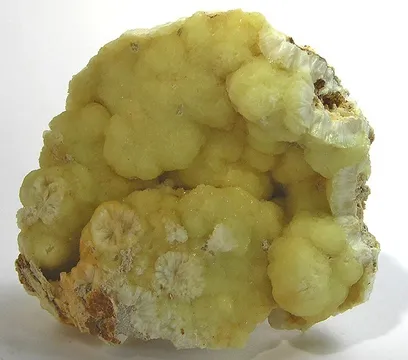
Other documented minerals and varieties from Diamond Hill include smoky quartz, milky quartz, chalcedony, cacoxenite, beryl, almandine, grossular, epidote, fluorite, acanthite, native silver, limonite, and manganese oxides. Cacoxenite is the standout rarity, reported as bright yellow to golden radiating fibrous masses and first noted at the mine in late 2002; it has been documented from Diamond Hill specimens rather than as a major abundant species. Grossular is recorded as orange-red euhedral but weathered and non-gemmy crystals found with epidote at the back of the site. Quartz epimorphs and pseudomorph-related material are also important to collectors: Diamond Hill has yielded hollow quartz casts after dogtooth calcite and other calcite forms, as well as casts or replacements involving siderite and pyrite, especially from named pockets and the Quartz Knob area.
Diamond Hill specimens are generally straightforward to authenticate when they carry the locality’s typical combination of clay-pocket quartz, iron/manganese oxide staining, skeletal growth, smoky or amethyst zoning, and Piedmont saprolite texture. The mine’s own material is sold and collected as unsalted, and the locality’s public reputation rests on that point. The greater authenticity concern is not usually outright fakery, but weak or over-broad labelling: “Diamond Hill, SC” can be confused with other “Diamond Hill” localities, with Ellis-Jones/Due West amethyst in the same county, or even with unrelated Georgia amethyst localities. A serious label should read Diamond Hill Quartz Mine or Diamond Hill Quartz prospect, Antreville, Abbeville County, South Carolina, USA.
Condition is the main grading issue. Quartz from the spoil piles and machine digs may have pocket contacts, bruised terminations, broken side crystals, etched areas, clay-filled recesses, and oxide crusts that obscure damage. Large plates are especially prone to broken edges and missing points because they were exposed by machinery or removed from boulder pockets. On the other hand, many apparent “defects” are original pocket features: contact marks, self-healed areas, internal phantoms, and natural oxide skins can be part of the specimen’s appeal. Examine tips carefully under strong light before paying a premium for amethyst or smoky quartz.
Cleaning decisions are unusually important at Diamond Hill. Iron Out, oxalic acid, and similar cleaners can remove much of the orange and brown iron staining from quartz, often leaving a whiter, cleaner-looking specimen, but they may also erase the locality’s most attractive natural color. Black manganese coatings may be more tenacious, and deep internal stains, phantoms, or coatings sealed beneath later quartz overgrowth will not simply wash away. For skeletal quartz and oxide-rich druse, many collectors prefer selective cleaning or no chemical cleaning at all; for smoky or amethyst points hidden under mud and iron, careful cleaning can reveal color, luster, and internal features. Avoid harsh mechanical brushing on delicate druse, epimorphs, and cacoxenite-bearing pieces.
Amethyst color should be protected from prolonged direct sunlight, as amethyst can fade with extended exposure. Enhydro specimens should not be heated, left in hot vehicles, or cleaned with boiling liquids; field reports from the 2008 amethyst strike specifically describe wrapping specimens and storing them out of the sun to reduce heating and cracking. Cacoxenite is a fragile fibrous phosphate and should be treated as a display mineral, not scrubbed or acid-cleaned casually.
Rarity at Diamond Hill is highly uneven. Milky and iron-stained quartz are common. Skeletal quartz is a signature material and remains available, though large undamaged aesthetic plates are much scarcer than bulk fragments. Smoky quartz is less abundant than milky quartz, and good amethyst is distinctly scarcer still. Large, saturated, undamaged amethyst clusters with documented pocket history are genuinely desirable southeastern U.S. specimens and do not appear in quantity on the market. Pieces with named-pocket provenance—especially from the 2005 smoky/amethyst discoveries or the April 2008 amethyst strike—deserve careful retention of labels and field notes.
In the early modern history of Diamond Hill, the pivotal change came in 2003, when Chester “Chet” Karwoski bought the property and brought in heavy earth-moving equipment. For a mine that had already been known to local collectors, fresh machinery meant something more than convenience: it meant unweathered vein sections, new boulder pockets, and a chance to expose zones that hand diggers had missed. Mike Streeter’s 2004 geology account captures the mood of that period—club members from Georgia and the Southern Appalachians arriving to dig while collectors asked the deceptively simple question of how the crystals formed. The answer, as Streeter framed it, was not one event but a sequence: pluton, metamorphism, fracturing, hydrothermal silica, deep burial, uplift, saprolite, and clay-filled pockets stained by iron and manganese.
The 2005 smoky/amethyst find became one of the locality’s first modern legends. During a joint dig involving Chet’s crew and MAGMA club collectors, Dave Smith spotted a large smoky crystal cluster in a collapsed pocket at the bottom of the Smoky Pit. At first it was not glamorous: the crystals were hidden under a thick iron coating. After cleaning, the find revealed phantom smoky/amethyst crystals that Rick Jacquot described as the finest of their type from the mine and possibly from South Carolina. That discovery became the subject of Jacquot’s 2006 Rock & Gem article “Phenomenal Phantom Quartz,” and it established a pattern that repeats at Diamond Hill: the best specimen may first appear as a dirty, coated, deeply unpromising mass in clay.
The most dramatic known episode is the April 2008 machine dig. Karwoski and a local digging crew worked the property for eight days, targeting the three familiar areas: the Skeletal Pit, the Amethyst Pit, and the Smoky Pit. For years, amethyst had been the elusive prize—occasional crystals, few fine undamaged ones, and virtually no large perfect examples. Then the machine opened a vein and pocket system unlike the usual Diamond Hill production. The crystals were not just purple; they were large, some reported up to 6 inches in diameter, and they occurred on plates carrying 2–6 inch amethyst crystals. Some plates weighed a few pounds, some weighed hundreds, and one was estimated around 1,000 pounds.
The crew treated the material as both treasure and problem. Once a specimen came out, it was wrapped and kept out of the sun because heat could crack the crystals. A 120–150 pound amethyst plate was photographed among the finds, and a much larger plate required the trackhoe: lifted, turned onto blankets, rolled onto a pallet, and loaded onto the back of Jacquot’s truck, nicknamed “Maggie.” Jacquot joked that he used a person, Mark, rather than a quarter for scale. The big plate had rosette clusters of 2–4 inch crystals, side pockets with perfect crystals, and some damaged tips—still, he called it the largest amethyst plate he had ever seen.
The split after the dig sounds almost unreal for a South Carolina locality. The large matrix pieces were laid on cloth on the ground, while singles and smaller plates went onto tables. One of the largest crystals was about 8 inches in diameter. Sandi spent an entire day sorting crystals for the count. Among the keepers were double-terminated crystals on drusy plates, facet-grade purple pieces, plates with side pockets of perfect crystals, and specimens with phantoms visible in the larger points. One flawless single crystal was measured at 4 1/2 inches across and just under 5 inches tall, with at least one enhydro. Another 30-pound matrix specimen was covered on both sides with small to large amethyst druse and topped by three large double-terminated crystals, the largest 4 3/4 inches in diameter.
The enhydros became a second wonder of the same strike. After cleaning, Jacquot noticed that many of the large purple crystals contained moving bubbles. One evening, while showing a piece to Sandi, both of them saw something move inside the crystal; a large bubble traveled about an inch back and forth within the stone. He later estimated that about 50–60 percent of his April 2008 amethyst material contained at least one enhydro, and some pieces held solid material moving in liquid. For collectors, that is the kind of feature that changes how a specimen is handled: not merely a display crystal, but a sealed pocket of ancient hydrothermal fluid inside Diamond Hill quartz.
Diamond Hill’s quieter stories are often about form rather than size. The Jacquot Morph Pocket, found in Amethyst Pit #1 in 2006, yielded quartz druse and golden epimorphs after dogtooth calcite. The pocket itself was only about 2 feet by 1.5 feet, yet removing epimorphs from its walls took several hours. Some pieces were nicknamed for their shapes, including “The Lisa Simpson,” while another epimorph later called “The Bearded Lady” came from a 2009 MAGMA field trip. The names sound playful, but they record real collecting practice: Diamond Hill pockets are small enough to remember, distinctive enough to name, and varied enough that a calcite cast, a skeletal plate, and an amethyst enhydro can all belong to the same mine without looking like the same locality at first glance.