






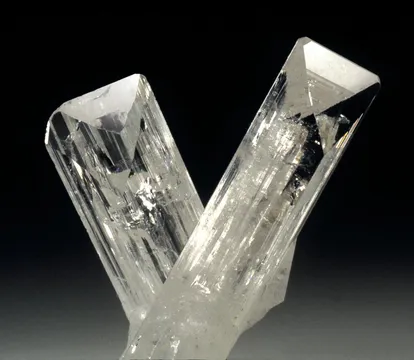
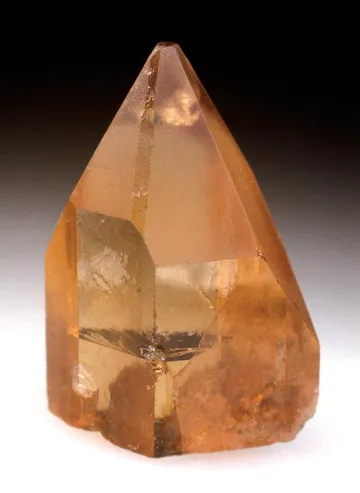
メキシコ、サンルイスポトシ州チャルカス産のダンビュライト。ガラス状で大きく、のみの先端を持つ結晶が pale pink tones; コレクターに人気のチャルカス産地。
Key facts
Charcas産ダンブリライトは、メキシコのクラシック鉱物の定義の一つです。ガラス状で縦方向に縞が入り、シャープなくさび形の端部を持つ柱状結晶は、通常は無色〜乳白色で、最良の標本では淡いピンクを帯び、端部が光を透過するだけでなく輝くほど宝石質です。最高品質の標本は建築的なすっきりとした外観を持ち、長いプリズムが基部から角度を変えて伸びるか、交差する群を形成します。時には方解石、石英、黄鉄鉱、硫砒青長石、あるいは薬玉状の石英が添えられ、淡いダンブリライトを引き立てつつも窮屈にはしません。

産地は粘板岩脈の露頭地帯ではなく、長年続く多金属鉱山地区です。Charcasは亜鉛-鉛-銅-銀のスカルンと炭酸塩置換系であり、ボロンに富む代替岩相が、ここでダンブリライトが豊富かつ結晶良く現れる理由です。ダトサイトは地区内の初期のCa-B系相を表しますが、ダンブリライトは後続の、より壮麗な硼珪酸塩で、Charcasをコレクターの間で名高い場所としました。
Charcasの素材を際立たせるのは、単なる種の違いだけではありません。ダンブリライトは他所でも見られ、宝石質の結晶は複数の国で知られていますが、Charcasは seriously collectors が高く評価する組み合わせを生み出しました。大きいサイズ、強い光沢、清潔なくさび端部、魅力的な縞模様、いくつかの結晶には淡いピンクがかった色調、そして手頃な単結晶から大規模なキャビネット結晶群まで幅広い価格帯を持つ点です。Charcasのダンブリライトは、控えめなサムネイルサイズから、元気なボックス標本、基岩付きの組み合わせ、あるいは大規模な博物館級の群まで、いずれも同じ recognizable な視覚言語に属します。

Search for specimens: View all danburite specimens from Charcas, San Luis Potosí, Mexico
Charcas lies north of the city of San Luis Potosí in a high, semi-arid part of the Mexican Central Mesa. The modern mining complex is an underground polymetallic operation with three principal mines: San Bartolo, Rey-Reina, and La Aurora. These mines are industrial workings, not casual collecting sites, and specimens reaching the market have historically come through mine workers, local channels, dealers, older collections, and occasional documented mineral discoveries rather than through open public collecting.
Geologically, the district is a Tertiary polymetallic skarn and carbonate-replacement system hosted in Jurassic-Cretaceous carbonate rocks and older clastic rocks. Intrusive activity produced metamorphic halos and mineralized structures; in the carbonate host rocks, mineralization occurs as veins and mantos, while fractures in shale and sandstone tend to be less mineralized. The ore suite is zinc-lead-copper-silver, with sphalerite, galena, chalcopyrite, pyrite, calcite, quartz, and silver-bearing minerals in the broader system. The boron-rich calcium metasomatic envelope is the important collector-mineral story: datolite and danburite are not incidental oddities here but major expressions of the skarn’s chemistry.
The historical arc of Charcas is unusually long. Spanish-period silver mining began in the 16th century; accounts differ on whether the first discovery should be dated to 1563 or 1573, but the district’s mining identity was already established in the late 1500s. Early work focused on near-surface silver minerals and later moved deeper into primary zinc-lead-copper-silver ores. Modern operations began in the early 20th century, and the district remains an active mining area rather than a merely historical collector locality.
The collector names attached to the best danburite specimens include San Bartolo, La Aurora, San Sebastian, Bufa, and broader “Charcas” district labels. Older labels are often not mine-specific, and that is normal for this locality. When a specimen is labeled simply “Charcas, San Luis Potosí,” that may be more honest than a precise mine name added later without documentation. Mine-specific labels are most valuable when they come with older dealer tags, published references, collection history, or clear association with a documented find.
Notable finds include classic colorless to pale pink chisel-terminated danburite groups, danburite with calcite, danburite with pyrite, danburite with citrine or amethystine quartz, and rarer pieces associated with datolite or nifontovite. A celebrated 2005-2006 episode from the San Bartolo mine introduced danburite specimens with amethyst quartz—an especially attractive and less typical combination for the district.## Charcas, San Luis Potosí, Mexico のダンブリットの特性
Charcas産ダンブリットは、長さ方向の筋が強く入った直方晶プリズム状の結晶と、くさび状の「のみ」状末端で最もよく知られています。側面は高度に光沢がありガラスのようで、結晶の底部は乳白色、エッチングされたり、ポケット内で取り付けられていた場所が接触したり、欠けたりしていることがあります。より良い標本では、下部プリズムが曇っていても、端部は透明で明るいことがあります。含有基部から宝石質上部端部へと分布するこの縁取りは、Charcas の共通で魅力的な特徴です。
色は、無色・水晶のように透明なものから、乳白色、非常に淡いピンクまで幅があります。ピンク色は通常は繊細で飽和していないことが多く、中厚の結晶やニュートラルな背景を背にしたグループで最もよく見られます。いくつかの例では煙状、はちみつ色、あるいは微かな暖色系の内部反射を示しますが、コレクターの古典的な好みは、無色から淡いピンクで、光沢が強く、端部が清浄な結晶です。
典型的なバラバラの結晶や小さなグループは2–6 cm程度で、キャビネット標本や単結晶は8–12 cm程度で良く知られています。大きなグループははるかに希で、壮観なものになることがあります。公表済みの博物館写真付きの例として、かなりのキャビネット・クラスター、Aurora鉱山の10 cm主結晶、San Bartolo産ダンブリット-アメジスト標本の8.3 cmの支配的結晶、San SebastianとCharcasの20–35 cm級の非常に大きな展示品が挙げられます。サイズだけで Charcas のダンブリットが重要になるわけではなく、完璧なのみ状の端部、優れたガラス質、傷のない小さな結晶が、鈍く大きいものよりも価値を高めることがあります。
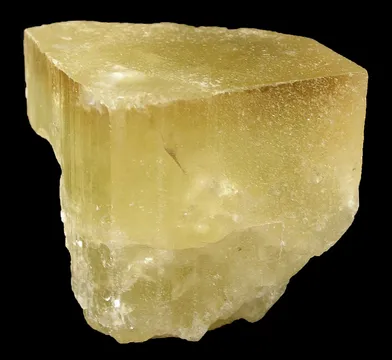
関連鉱物は、その所蔵地の個性の重要な部分です。方解石は最も頻繁で商業的にも重要な伴生鉱物で、無色、白色、黄色がかったもの、または淡い黄金色の結晶として現れます。石英も一般的で、ロック水晶、シトリン、アメジストを含みます。黄鉄鉱と黄铜礦は金属的なアクセントを提供し、閃亜鉛鉱、ダトライト、アポフィライト群の鉱物、石膏、方石英、磁鉄鉱、ニフォンツォビトなどが、より広いダンブリット含有の assemblage に文献的に記録されています。基質が方解石または石英を含む標本は、独立した単結晶よりも市場に出回る機会が少ないため、一般的に希です。品質はまず termination(終端)で判断されます。鮮やかで損傷のない四角錐状の終端と明るい faces が標準です。次に光沢です。Charcas クリスタルは蝋のように見えたり死んでいるように見えてはいけません。特に結晶の上部三分の一を透過する透明性が高く望まれます。自然に見える淡いピンク色で、良い形状と組み合わさるとボーナスとなります。基質と連結が美観的で損傷がない場合、評価はさらに高まります。方解石はコントラストを加え得ますが、サン・バルトロのダンブリートに見られるアメジストは特別なサブカテゴリです。最後にバランスが重要です。長い単結晶が単独で立つか美しく展示できるべきで、群晶は絡み合ったプリズムの混雑ではなくリズムを持つべきです。## Collector Notes
Charcas danburite is available enough that collectors should be selective, but fine examples are not casual commodities. Small single crystals and modest clusters remain obtainable; clean matrix pieces, pale pink cabinet groups, undamaged large crystals, and aesthetic combinations with calcite or amethyst are much less common. Recent market evidence shows everything from inexpensive small crystals to four-figure dealer specimens, with condition and association driving the spread more than size alone.
The main authenticity issues are not elaborate fakes but misidentification, vague locality labels, and undisclosed restoration. Colorless danburite can be confused by beginners with quartz, topaz, or phenakite; the Charcas habit—striated prisms with chisel terminations—helps, but it is not a substitute for mineral identification. A reliable specimen should have the correct hardness, luster, heft, crystal form, and, for gem material, optical properties consistent with danburite. For valuable pieces, a reputable dealer, old label, or analytical confirmation is worth the premium.
Treatments are not a major collecting concern for Charcas danburite in the way they are for some colored gem minerals. The bigger concern is repair. Long prismatic crystals are vulnerable to breaks, and reattached crystals or repaired bases are possible, especially in matrix groups. At least one current dealer listing for a Charcas danburite-calcite specimen explicitly discloses restoration, which is exactly the kind of transparency collectors should expect. Repairs are not automatically disqualifying on a major display specimen, but they should be disclosed and priced accordingly.
Condition problems are easy to miss because danburite’s glassy surfaces and internal reflections can distract the eye. Inspect the chisel edges under strong light; tiny nicks on the termination are common. Check the prism edges for bruising, the base for fresh breaks, and matrix contacts for glue, filler, or unnatural alignment. Internal veils and fractures are normal and often attractive, but open cracks through a termination reduce value. Calcite associates can be more fragile than the danburite itself, so look for missing calcite tips or chipped scalenohedra on combination pieces.
For labeled material, treat overly precise locality claims with caution. “Charcas” is often fully acceptable; “Aurora,” “San Bartolo,” “San Sebastian,” “Bufa,” or “Rey-Reina” should ideally be supported by a label trail or a known find style. Many older specimens circulated before dealers consistently separated the district’s individual mines, so an old broad Charcas label may be more trustworthy than a later mine attribution added for marketing.## Stories & Field Notes
Charcas の物語は、ダンブリットの物語ではなく、銀の物語として始まる。16世紀、スペインの探鉱は現在のサンルイスポトシ市の北にあるこの高地に達した。ある史説は、フアン・デ・オニャテに銀を発見し、父 Cristóbal de Oñate を称えてサン・クリストバル鉱山を開いたとする。鉱山とともに修道士フランシスコ会が来訪し、1574年、フェリペ2世はボリビアの Charcas 県の偉大な鉱山地にちなんで Santa María de las Charcas の創設を認可した。最初の集落は実務的そのものだった:鉱山、家、刑務所、溶鉱炉、そして修道院。
最初の Charcas は長くは続かなかった。グアチチルの国に位置しており、若い採鉱キャンプが形成されるやいなや紛争が妨げとなった。 元の集落は焼かれ、1584年には現在の Charcas の地に再建され、近くに新しい修道院が置かれた。コレクターが Charcas をガラスのようなダンブリットのラベルとして考える習慣に慣れている者にとって、これはより深い背景である:植民地時代の銀、 frontier の暴力、再建の強制、そして四百五十年を超える採鉱の連続性から生まれた地区。
ダンブリットの章ははるか後である。過去60年間にわたり、 Charcas はメキシコの偉大なコレクター・ローカリティのひとつとして浮上し、ダンブリットだけでなくポーカー・チップ状の方解石、デートライト、石英、ニフォンツォ石も名を馳せた。現代の鉱山は依然として操業中の工業的事業であり、最高の標本は鉱石採掘の副産物として耀くもので、標本鉱山の産出物ではない。そうした産業的現実は博物館のラベルや古いディーラーのノートにも現れている:大きなグループはのんびりとした週末の掘削から来たのではなく、採鉱の過程で地下の袋から出会ったものである。
現代で最も魅力的なエピソードの一つは、2005年のツーソンで起きた時のことで、クラシックな Charcas ダンブリットにアメジスト水晶が現れた。 Charcas はすでに色のない~薄いピンクのダンブリットで有名だったが、ライラック色の水晶の追加により新しい様相が生まれた:白色または透明のダンブリット結晶が、アメジストの小さな群を紫の基礎またはコーティングとして提供する。 この素材は San Bartolo 鉱山に結びつけられ、2006年まで続いた。記録された標本の一つは、主成分のダンブリット結晶が 8.3 × 2.2 cm、全体が 7 × 6.5 × 4.5 cm であった。別の小さな群は、強い色のアメジスト結晶で密に覆われていた。通常、落ち着いた透明感のある輝きが魅力のこの産地にとって、突然の紫のアクセントはヨーロッパの鉱物雑誌のショーニュースとして記録されるほど印象的だった。## 鉱物学的記録と公表物
Robert B. Cook, “Connoisseur’s: Danburite, Charcas, San Luis Potosí, Mexico,” Rocks & Minerals, vol. 78, no. 6, 2003, pp. 400-403. DOI: 10.1080/00357529.2003.9926754. Charcas danburite とコノサー域としての地位に関する焦点を絞ったコレクター向け記事。 ResearchGate record
Matthias Jurgeit, “Geologie und Mineralien der Zn-Pb-Cu-Ag-Lagerstätte Charcas, San Louis Potosi, Mexiko,” Mineralien-Welt, vol. 16, no. 5, 2005, pp. 54-62. Charcas Zn-Pb-Cu-Ag鉱床の地質学的・鉱物学的取り扱い、 locality 記録に引用。 Mindat reference listing
Jean des Rivières, “The Charcas Mining District, Charcas, San Luis Potosí, Mexico,” The Mineralogical Record, vol. 55, no. 6, 2024, pp. 717-779. 地区の現代的で包括的な locality 治療、鉱山・歴史・地質・標本鉱物をカバー。 Mineralogical Record issue page
William D. Panczner, Minerals of Mexico, Van Nostrand Reinhold, 1987, 459 pp. メキシコの鉱物 locality の標準的な古典的参考文献で、 Charcas danburite の発生例についていくつか引用。 Mindat reference listing
Le T. T. Huong, Laura M. Otter, Michael W. Foerster, Klaus Peter Jochum, and coauthors, “Femtosecond Laser Ablation-ICP-Mass Spectrometry and CHNS Elemental Analyzer Reveal Trace Element Characteristics of Danburite from Mexico, Tanzania, and Vietnam,” 2018. Charcas の多金属スカルン環境からのメキシコ産 danburite を含む微量元素比較を含む。 ResearchGate record
Sorbonne University mineral collection specimen: large Charcas danburite, photographed by Marie-Lan Taÿ Pamart, with dimensions listed as 20 × 24 × 20 cm. Charcas の大きさの material の重要な公共コレクション例。 Wikimedia Commons file page
Harvard Museum of Natural History display specimen: danburite from the Aurora mine, Charcas, photographed by DerHexer. 実例として Aurora Mine material のミュージアム文脈画像として有用。 Wikimedia Commons file page## Videos & Media
“Danburite, Calcite,” Collectors Edge Minerals. A dealer media page for a classic soft-pink Charcas danburite with calcite, including dimensions, price context, and a disclosed restoration. View media page
“DanburiteMexique.jpg,” Didier Descouens / Wikimedia Commons. A large 35 × 28 × 21 cm San Sebastian Mine danburite specimen from Charcas, photographed as a Wikimedia quality image. View media page
“Danburite et pyrite (Mexique).JPG,” Parent Géry / Wikimedia Commons. A Charcas danburite crystal with pyrite, illustrating the metallic association seen in some district specimens. View media page## Further Reading & External Links
Mindat: Charcas, Charcas Municipality, San Luis Potosí, Mexico — コア・ローカリティページで、座標、地区の文脈、鉱物リスト、参考文献を掲載。
Mindat: Danburite from Charcas — 種特有の産状ページで、関連鉱物と地区のダンブルライト写真ギャラリーを含む。
Mindat: Aurora Mine, Charcas — La Aurora の鉱山レベルページ。ホウ素を豊富に含むスカルン情景と記載鉱物リストを含む。
Mindat: Danburite from San Bartolo Mine — San Bartolo のダンブルライト関連の同質物質、特に石英とアメジスト関連の材料に有用。
Southern Copper 2025 Form 10-K — 活発な Charcas 掘削複合体の最新の企業情報と地質情報、操業、生産、鉱床モデル。
Mineralogical Record Vol. 55, No. 6, Mexico Special Issue X — Charcas 鉱山地区に関する Jean des Rivières の詳述記事(2024 年)特集ページ。
Mineralogical Record sample PDF, Mexico Special Issue X — Charcas 記事の公開サンプル。歴史、アクセス、地区概要を含む opening ページ。
Fabre Minerals: San Bartolo danburite with amethyst quartz — 販売業者向け参照ページで、2005-2006 年の San Bartolo ダンブルライト-アメジスト産出を記録。
Wikimedia Commons: Danburite-222354.jpg — Aurora Mine のダンブルライト群の10.6 × 8.0 × 3.6 cm のオープンライセンス写真。
Wikimedia Commons: Danburite-158837.jpg — Charcas のダンブルライトクラスター(5.1 × 4.9 × 3.5 cm)、典型的なノミ状終端部を持つ写真。


_2012-07-20.jpg)

.JPG)