Comanche Grasslands, USA — renowned for gemmy barite in large septarian concretions with calcite, offering crystals and classic eastern Colorado shale appeal.
Key facts
Comanche Grasslands, USA, as used by collectors, points to the Timpas–La Junta–Otero County collecting country of southeastern Colorado: open shortgrass prairie cut into low mesas, shale slopes, and weathered badland gullies where Upper Cretaceous marine shales have released great septarian concretions. The locality is not a hard-rock mine, nor a vein field in the usual western sense. Its best specimens are geodes in slow motion: calcareous concretions split by shrinkage cracks, later sealed by calcite and, in the most coveted pieces, gemmy barite.
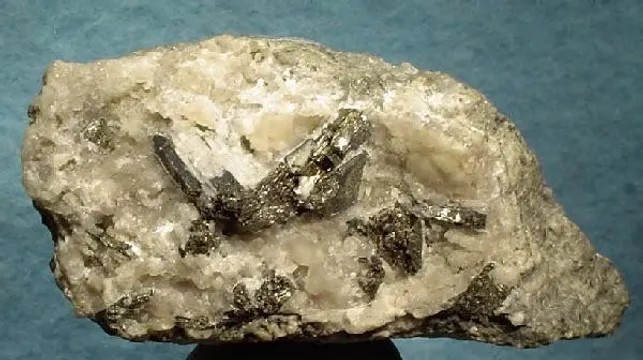
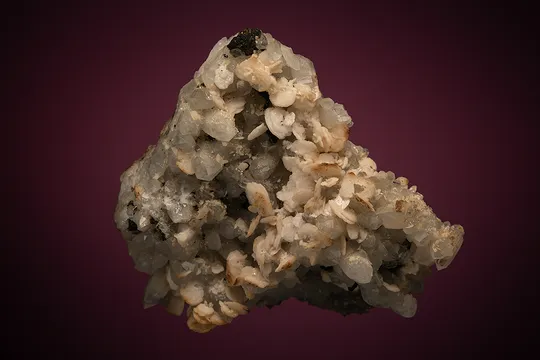
The classic material is barite or baryte, BaSO4, as glassy, water-clear to white or faintly yellow crystals in cracks and cavities of large concretions, commonly on brown, tan, white, or orange-stained calcite. Good Comanche Grasslands pieces have the unmistakable look of the eastern Colorado shale country: sharp, bright, often chisel-terminated barite perched on drusy or rhombohedral calcite, sometimes still attached to heavy, rounded concretion matrix. Ordinary pieces are fragments of massive seam barite or dull calcite; the best specimens show complete, transparent crystals with undamaged terminations and a sense of having been opened from a sealed Cretaceous nodule yesterday.
Regional View
Country View
The geological setting gives the locality its collector importance. Early USGS work in the Apishapa quadrangle described barite as vein filling in large concretions in the Apishapa shale, and also as a sparse but attractive associate of calcite in similar concretions near the top of the Carlile Shale. Later mapping of Otero and southern Crowley Counties singled out the Blue Hill Shale Member of the Carlile Shale for its zone of large septarian concretions, some as much as six feet across, with brown and white calcite and occasional barite. For collectors, those technical descriptions translate directly into field practice: find the right concretion horizon, expose the nodule carefully, and hope the interior cracks held enough open space for barite to grow as crystals rather than as massive white spar.
Historically, these were never large industrial barite deposits. Their importance is mineralogical and aesthetic. The USGS already noted in 1912 that the crystals were sought by mineral collectors, while doubting that the quantity of barite would support much of an industry. That assessment still feels right: the locality has produced enough specimens to become a recognized Colorado classic, but not enough fine pieces for the best examples to be common.
Search for specimens: View all specimens from Comanche Grasslands, USA
Comanche Grasslands specimens come from the Comanche National Grassland region of southeastern Colorado, particularly the smaller Timpas Unit southwest of La Junta in Otero County. The wider national grassland is a discontinuous public-land mosaic rather than one fenced collecting site, so old labels may read “Comanche Grasslands,” “Timpas,” “La Junta,” or simply “Otero County, Colorado.” In mineral collections those labels usually refer to the same general collector tradition: barite and calcite opened from Cretaceous septarian concretions in the shale country south and southwest of the Arkansas River valley.
The deposit type is sedimentary-diagenetic. Barium-bearing fluids moved through compacting marine mudstones and calcareous shales after the concretions had formed and cracked. The cracks and voids in the septaria provided the miniature “pockets.” Calcite is the dominant cavity mineral and commonly formed multiple generations: earlier drusy or brown rhombohedral coatings, later white or tan rhombs, nailhead forms, compressed scalenohedral habits, and locally larger stepped crystals. Barite is much rarer. Where present it may occupy seams through the concretion or stand as isolated, transparent crystals on calcite-lined walls.
The best geological descriptions place the specimen-bearing environment in Upper Cretaceous units of the old Colorado Group terminology. In the Apishapa quadrangle, barite was described in large concretions of the Apishapa shale and, more sparingly, in concretions at the top of the Carlile Shale with calcite. In the Otero–Crowley mapping area, the Blue Hill Shale Member of the Carlile Shale contains a zone of large septarian concretions from 15 to 30 feet below the top of the member; those concretions commonly contain brown and white calcite and may contain barite. Collectors working the ground have also reported concretion-bearing shale horizons below hard shale or limestone caps on the low hills, with individual concretions ranging from manageable nodules to multi-foot masses.
There is no conventional mining history of shafts, stopes, mills, or successive operating companies for this locality. Its production history is a collecting history. Published geological work recognized the barite by 1912, and collectors have documented finds from at least the early 1970s onward. Notable self-collected material is recorded from Timpas in 1972 and 1976, from La Junta-area concretions in 1978, from early-1980s calcite finds, and from renewed collecting and documentation around 2020. The Dan and Dianne Kile self-collected Colorado display shown at the 2004 Tucson show included gem water-clear barite on calcite from Otero County, underscoring how highly the best of these prairie concretions are regarded by serious Colorado collectors.
Access today must be treated as a public-land and land-status question, not as an open-pit locality. Parts of the relevant ground lie within the Comanche National Grassland, while other parcels in Otero County may be private, BLM-administered, state, county, claimed, leased, closed, or otherwise restricted. Forest Service guidance for the Pike–San Isabel National Forests and Cimarron–Comanche National Grasslands allows small-quantity recreational rockhounding for personal use when there is little or no disturbance, but activities that create significant disturbance, use power equipment, drive off roads, remove vegetation, or work in sensitive areas can require prior contact, a Notice of Intent, a plan of operations, or a permit. Collectors should also avoid archaeological materials, vertebrate fossils, campgrounds, administrative sites, withdrawn areas, and active mining claims unless explicit permission is secured.
The notable “pockets” are not named pockets in the mine sense; they are individual concretions. Field accounts describe meter-wide and larger concretions with colorful orange rinds, gray interiors, calcite veins, and rare barite seams. Some weathered nodules are disappointing, yielding only dull, orange-brown calcite. Others open into broad cavities with calcite-coated walls and isolated clear barite crystals. The practical distinction is simple but unforgiving: a concretion must be large enough, unweathered enough, and internally open enough to preserve lustrous crystals. Most are not.
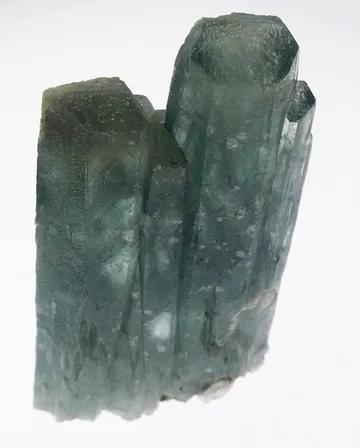
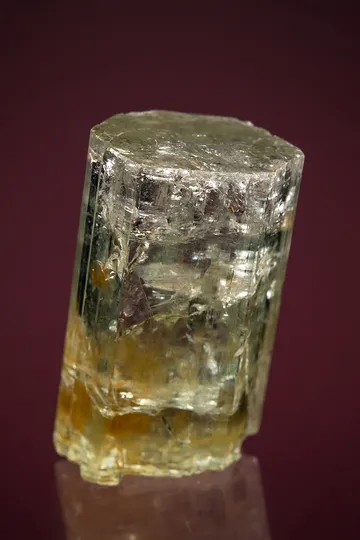
Barite from Comanche Grasslands is prized as transparent to translucent white, colorless, pale yellow, or faintly bluish BaSO4 crystals grown in septarian cracks of Cretaceous shale concretions, most often with tan, brown, white, or orange-stained calcite. The finest examples are sharp, glassy, chisel-terminated or tabular-prismatic crystals rather than massive seam fragments, and documented individual crystals from the broader Otero County material include thumbnail to small-cabinet scale pieces, with clear crystals around 2–4 cm recorded from Timpas and Otero County specimens. Matrix pieces are especially desirable when the barite is perched on bright calcite points or rhombs inside a natural concretion cavity, because that association preserves the locality’s distinctive sedimentary origin; loose singles can be beautiful, but without a strong label they are easier to confuse with other clear Colorado barites.
Baryte is the same mineral species as barite, the spelling difference reflecting mineralogical usage rather than a separate Comanche Grasslands species. On old and new labels alike, the Comanche material is the classic Otero County septarian-concretion baryte: clear to white crystals, commonly chisel-ended and locally tabular, growing with calcite in cracks through large shale-hosted nodules. Better pieces show bright faces, transparency, intact terminations, and a balanced relationship to the brown or white calcite-lined cavity; lesser pieces are cloudy, contacted, weathered, or consist mainly of massive vein filling. Because barite is uncommon in these concretions compared with calcite, an aesthetic baryte-on-calcite specimen from Comanche Grasslands is substantially more desirable than a calcite-only nodule plate of similar size.
Calcite is the essential companion mineral and, at times, the main specimen mineral in its own right. Documented Comanche Grasslands and Otero County examples include rhombohedral clusters, nailhead growths, rosette-like groups, blocky stepped crystals, tan to soft golden translucent crystals, and white later-generation coatings inside septarian cavities. Aragonite has been recorded from Upper Cretaceous Otero County concretions as delicate arborescent growths on altered calcite, apparently related to meteoric-water alteration and redeposition. The locality is not known as a type locality for any mineral species, and its rarity lies not in an exotic species list but in the unusual preservation of attractive barite and calcite crystals inside High Plains marine-shale concretions.
Label discipline matters. “Comanche Grasslands,” “Comanche National Grassland,” “Timpas,” “La Junta,” and “Otero County” are often used with overlapping intent, but they are not equally precise. A specimen labeled only “La Junta” may have come from the broader Otero County concretion belt rather than within the town itself; a specimen labeled “Comanche Grasslands” should ideally carry a collector name, date, and more exact field information if available. Barite and baryte on EarthWonders should be understood as spelling variants of the same mineral, not two different species.
No well-established fake industry is associated with this locality, but misattribution is a real concern. Clear white barite on calcite occurs at other Colorado localities, and loose colorless barite crystals without matrix are far less diagnostic than barite attached to Otero-style concretion calcite. A convincing Comanche Grasslands specimen should look sedimentary and septarian: heavy gray-to-tan concretion matrix, calcite-lined cracks, clay or iron-oxide staining, and barite growing in the geometry of a shrinkage vein or cavity rather than in a hydrothermal vug.
Condition is the main grading issue. The concretions are opened mechanically, so contacted terminations, bruised edges, and broken seam surfaces are common. Many calcites weather dull before collection; pieces with bright, unworn calcite and undamaged barite are far scarcer. Clay coatings can be present and may hide luster, but aggressive cleaning is risky. Barite itself is chemically robust, yet many specimens owe their aesthetic value to calcite matrix, so acid cleaning can destroy the association that makes the piece local and attractive. Gentle water cleaning, a soft brush, patience, and restraint are usually preferable.
The material is heavy for its size because of both barite and dense concretion matrix. Thin barite blades or chisel terminations can detach under shock, and calcite points bruise easily; store pieces with support under the matrix rather than pressure on the crystal tips. Some Otero County calcite has been reported to fluoresce under longwave ultraviolet, but fluorescence should be treated as a bonus feature, not a defining test for the locality.
Market availability is intermittent. Calcite-only pieces from the Otero County concretion fields appear more often than fine barite-on-calcite, and truly gemmy, undamaged barite crystals on attractive matrix are not abundant. The best specimens tend to remain in Colorado collections or pass quietly among field collectors, because each good piece represents a lucky concretion rather than a mine lot.
In June 1972, collector Stephen Rose was at Timpas opening the kind of concretion every Otero County collector hopes for. His field photographs and notes describe an opened concretion with a cavity lined by calcite and holding a clear baryte crystal about 2 x 2 x 2.5 cm. Later, recalling the same general collecting ground, he wrote of finding the first of the clear barites usually called “La Junta” barites in the mid-1970s. That phrase is revealing: the specimens entered the collector world under a nearby town name, but their real identity was always tied to the concretion zones of Otero County.
Rose’s most memorable account is not only mineralogical. A calcite specimen from near Timpas, collected in 1976, measured 13 x 12 cm overall, with a 6 x 7 cm rosette of calcite on matrix colored by orange lichens. He found it near a windmill, already partly exposed in a weathered concretion. The difficulty was not underground danger or blasting; it was the prairie itself. He remembered watching for cactus in the crumbling concretion and keeping an eye on a nearby Hereford bull that seemed to be calculating the distance between collector and truck. That specimen later went to display at the Indian Valley Museum in Taylorsville, California — a long journey for a calcite rosette that began in a weathered Colorado nodule.
Modern field accounts have the same flavor: broad country, lonely hills, hard nodules, and sudden reward. In 2020, Scott Rider documented Comanche Grasslands concretions with orange rinds, gray interiors, and calcite vein networks. One meter-wide concretion was described as an average to medium-sized example for the area, colorful but lacking barite. Another concretion found by Chris Rayburn in early 2020 had veins large enough that an arm could fit into one of them, and part of the nodule yielded clusters of nailhead calcite on unusual brown-and-white rhombs. The note that barite is a “rare instance” in these concretions is exactly what experienced collectors learn after a day of digging: the geology promises barite, but calcite answers most of the time.
Another collector’s account from Otero County reads like a summer field postcard. A storm cooled the country enough for digging, and an apparently untouched hillside produced three nodules more than five feet in diameter. Each held two to four different crystal structures. One contained a large chunk of barite, not a perfect display specimen, but still the kind of find that keeps collectors returning to shale slopes where nine concretions may disappoint and the tenth may open into a real pocket.
One 2020 report captures the access tension of the locality as well as any formal rule sheet. A collector working in Otero County found a huge concretion with a large baryte seam and very large calcite clusters, close enough to a road to be tempting, only to be stopped by a ranger before he could fully explore it. The discussion that followed turned into the practical lesson every Comanche Grasslands collector needs: public land is not a single category, rules differ by administrator and impact, and the right answer is always to verify land status and permission before digging. In a place where the mineralization is scattered through hills and public-land parcels, legal preparation is as important as a crack hammer.