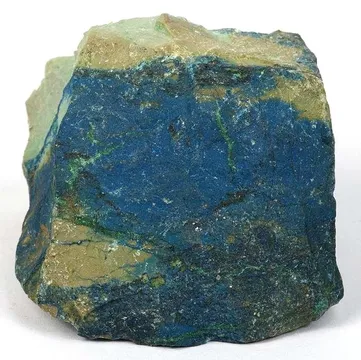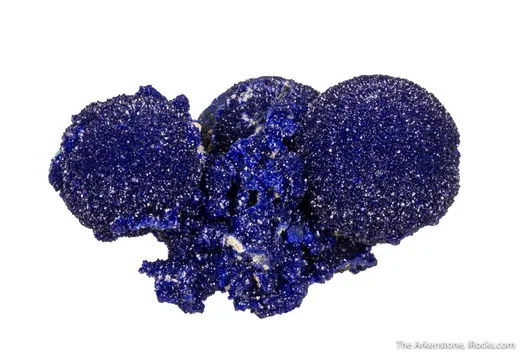
Cochise County, USA — premier mineral locality with Bisbee copper minerals, azurite and malachite, Tombstone silver-lead-manganese ores, and Turquoise District…
Key facts
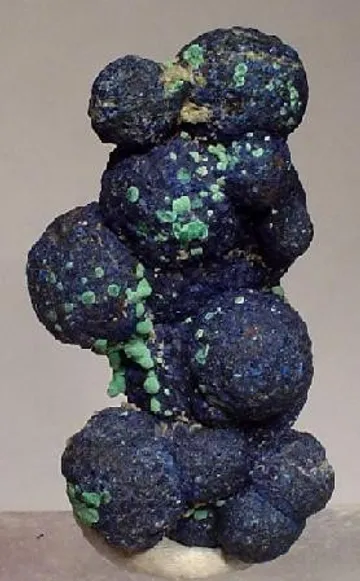
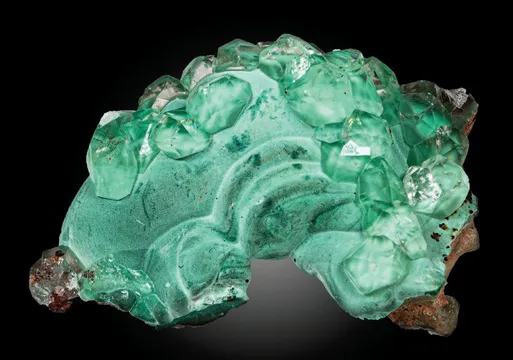
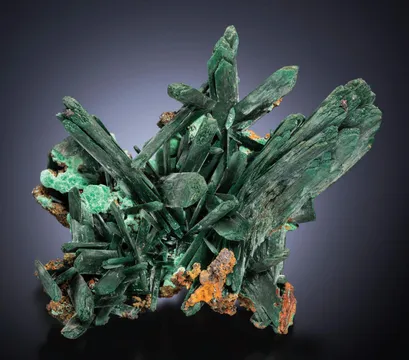
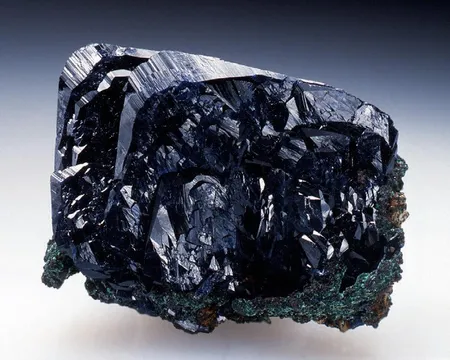
Cochise County is one of the great mineral provinces of the American Southwest: a high-desert county where Paleozoic carbonate rocks, quartzites, Cretaceous clastics, Laramide to Tertiary intrusions, thrust faults, and later normal faulting combined to make a chain of celebrated ore districts rather than a single mine camp. To collectors, the name immediately divides into several mineral worlds. Bisbee, in the Mule Mountains, is the classic copper-carbonate and copper-silicate locality, famous for velvety malachite after azurite, electric blue azurite, cuprite, brochantite, aragonite, rosasite, and a formidable list of rare copper and tellurium species. Tombstone is the silver-lead-manganese district with oxidized veins, replacement ore, fluorite, wulfenite, tellurates, tellurites, and micromount rarities that made the Grand Central–Contention and Joe mine material important far beyond Arizona. The Turquoise or Courtland-Gleeson district adds oxidized lead-copper-zinc minerals and wulfenite from workings such as the Mystery, Silver Bill, and Tom Scott. Farther east, the Chiricahua Mountains contributed one of Cochise County’s best-known display-specimen signatures: deep yellow Hilltop mine wulfenite on pale calcite and sparkling quartz.
Regional View
Country View
The best Cochise County specimens have a distinctly old-Arizona look: oxidized gossan matrices, broken cavern walls lined with vivid secondaries, and sharp crystals that seem almost too colorful for their dusty desert setting. Bisbee pieces often show saturated blues and greens in three-dimensional cavities; the finest malachite pseudomorphs preserve the bladed or rosette habit of the original azurite so well that they read as green azurite crystals. Hilltop wulfenites are not the scarlet “windowpanes” of Red Cloud, but warm, translucent, butterscotch to lemon-yellow blades and tabs, commonly around thumbnail to small-cabinet scale, perched on white calcite or drusy quartz. Tombstone pieces can be broader in character: fluorite on quartz casts, yellow wulfenite accents, silver-lead oxidation minerals, and, for the specialist, tiny tellurium oxysalts that turn a modest vug into a research specimen.

Photo: Wikimedia Commons
Search for specimens: View all specimens from Cochise County, USA
Cochise County’s collectible minerals come from several historically separate mining districts, each with its own geology and specimen style. At Bisbee, the Warren district mineralization is centered in the southeastern Mule Mountains, where Paleozoic limestones and quartzites were intruded by porphyry bodies and cut by major faults. The ore occurred as irregular replacement bodies in limestone, contact breccia, and disseminated sulfide zones in granite porphyry, especially around Sacramento Hill and the Dividend fault system. Primary sulfides included pyrite, chalcopyrite, bornite, sphalerite, and galena, but the collector’s Bisbee is overwhelmingly the oxidized part of the system: a deep, rich zone of copper carbonates, oxides, sulfates, arsenates, silicates, and secondary lead-zinc minerals formed above and around the sulfide ore.
Bisbee’s mining history began in the late 1870s with lead-carbonate and copper discoveries in what became one of Arizona’s definitive copper camps. The Copper Queen orebody was developed in 1880; Phelps, Dodge & Co. became the dominant force through the Copper Queen Mining Company, while Calumet & Arizona emerged as another major producer in 1900. In 1931 the large Copper Queen and Calumet & Arizona interests were consolidated under Phelps Dodge as the Copper Queen Branch. Underground mining and later open-pit operations transformed the hills around Bisbee, and the district continued as a major producer until the modern shutdown of the Copper Queen operations in the 1970s. For mineral collectors, the most important Bisbee names include the Copper Queen, Czar, Holbrook, Southwest, Junction, Shattuck, Campbell, Cole, Lowell, and Lavender Pit workings. Some labels are precise to a shaft or level, but many old labels simply read “Bisbee,” and that is often as close as responsible attribution can go.
The Campbell mine is especially important for serious mineral collectors. It was a major underground Cu-Pb-Zn-Ag-Au-Mn-Bi-In-Sn producer and the locality connected with a large Campbell orebody of mostly oxidized copper mineralization in Cambrian, Devonian, and Mississippian limestones near porphyry dikes and sills. Its mineral list is large, and it is tied to the rare-mineral side of Bisbee as well as to classic display material. The Southwest mine in Hendricks Gulch is similarly important for azurite, malachite, and modern rare-species work, including the type material of eddavidite.
Tombstone, roughly northwest of Bisbee, is a different collecting environment. The Tombstone Hills contain Paleozoic carbonate and clastic rocks, Cretaceous Bisbee Group rocks, the Uncle Sam Porphyry, the Schieffelin Granodiorite, and younger volcanic rocks, all cut by a complicated structural history of thrusting and later normal faulting. Ore was deposited as fissure fillings and replacement bodies in limestone and porphyry, and the oxidized ores carried hematite, limonite, cerussite, chlorargyrite, native gold, argentiferous galena, sphalerite, pyrite, alabandite, malachite, chrysocolla, manganese oxides, and wulfenite. Tombstone was a spectacular silver camp in the early 1880s, producing more than $5 million worth of ore per year in 1881 and 1882 before the richest upper ore and water-table conditions changed the economics of the district. Attempts to work below water level were eventually abandoned in 1911, though the district continued intermittently afterward.
For collectors, Tombstone’s old silver mines are significant for far more than Western history. The Toughnut mine has produced wulfenite, descloizite, caledonite, linarite, fluorite, quartz, and unusual oxidized lead-copper assemblages. The Grand Central mine and the broader Contention–Grand Central group are among the notable American localities for tellurium oxysalts, including several minerals first described from the district. The Joe mine is tied to schieffelinite and other tellurium-bearing species in quartz gangue. The Gallagher Vanadium and Manila properties, also in the Tombstone district, are known to micromounters for transparent and iron-stained quartz crystals, commonly small and sometimes scepter-shaped, as well as barite, fluorite, galena alteration products, and oxide-zone minerals.
The Courtland-Gleeson or Turquoise district lies on the east side of the Dragoon Mountains, east of Tombstone and north-northeast of Bisbee. Its ore deposits are pyritic replacements in limestone, shale, and porphyry along thrust structures, with oxidized masses rich in iron and copper oxides and cavities lined by chrysocolla, malachite, and azurite. The district produced oxidized gold-silver-lead-copper ore in the 1880s, saw copper mining begin near Courtland in 1901, and had its main mixed oxide-sulfide production from 1912 through 1918. Collector labels from this district include Gleeson, Courtland, the Mystery mine or Mystery Tunnel, Silver Bill, Tom Scott, and Copper Belle. Wulfenite from this belt tends to be a specimen mineral of cavities and oxidized lead-copper zones rather than a bulk ore mineral.
The Chiricahua Mountains add the Hilltop mine, also known historically by related names including Hand mine, Kasper tunnel, Gray mine, Dunn shaft, Blacksmith shaft, and Rhem adit in the California district. Hilltop is a classic Cochise County wulfenite locality, with deep yellow crystal groups in association with quartz, calcite, mimetite, mottramite, hematite, cerussite, dolomite, and willemite. Most fine examples are old collection specimens; accounts and dealer records consistently describe the mine as inactive for many decades, with most collectible wulfenite attributed to the late nineteenth century through early twentieth century workings, and a particularly active specimen-producing period often associated with the years before and around World War I.
The Dos Cabezas district, in the Dos Cabezas Mountains, broadens the county picture with gold-bearing lodes in veins hosted by Precambrian granite and Cretaceous sedimentary rocks cut by younger dikes. The collector interest there is not comparable to Bisbee or Tombstone for colorful secondaries, but it is relevant for gold on quartz and coarse white to gray quartz gangue associated with galena, pyrite, sphalerite, and chalcopyrite.
Collecting access today is limited and must be treated conservatively. Many Cochise County mines are on private land, patented claims, active claims, municipal or company-controlled property, or protected historical ground. Bisbee is best experienced legally through the Copper Queen Mine Tour, the Bisbee Mining & Historical Museum, and established dealers and collections; the tour is interpretive rather than a collecting opportunity. Tombstone and Bisbee both contain dangerous old underground workings, and Arizona’s abandoned-mine safety guidance is explicit: old shafts, adits, stopes, and dumps can involve unstable ground, toxic air, explosives, hidden openings, and wildlife. Serious collecting in Cochise County is now chiefly a matter of provenance, old collections, legal claim access, estate material, and carefully documented dealer specimens rather than casual entry into old workings.
Cochise County wulfenite is best known from the Hilltop mine in the Chiricahua Mountains, where it occurs as deep yellow to butterscotch tabular crystals and bladed groups, commonly around the centimeter scale on matrix, with quartz and white to glassy calcite as the most desirable display associations; mimetite, mottramite, hematite, cerussite, dolomite, and willemite are also recorded companions. The county also has important wulfenite from the Tombstone and Courtland-Gleeson districts: Tombstone pieces may show clusters, rosettes, or small yellow-orange blades in oxidized silver-lead assemblages, including Toughnut material with quartz, fluorite, descloizite, caledonite, or linarite, while the Turquoise district includes cavity wulfenite from Mystery, Silver Bill, and Tom Scott workings. The best Cochise wulfenites are sharp, lustrous, undamaged yellow crystals with a clear matrix context—Hilltop pieces on sparkling quartz or sculptural calcite are especially recognizable—whereas ordinary pieces tend to be isolated small blades, damaged crystals, or specimens whose label cannot be pinned beyond a broad Arizona attribution.
Quartz in Cochise County is both a gangue mineral and, in selected pockets, a legitimate specimen species. At Hilltop, colorless, sparkling quartz druse is an important matrix for yellow wulfenite and helps distinguish good old Hilltop combinations from loose or ambiguous wulfenite pieces. In the Tombstone district, the Gallagher Vanadium and Manila dumps have produced transparent and iron-stained quartz groups, with well-terminated crystals commonly under 8 mm and often as scepters; silica also occurs there as chalcedony and opal on oxidized material. Around Tombstone’s fluorite localities, including Second Chance and La Fluorita Dulcita material, quartz may occur as hollow casts or replacement textures associated with purple fluorite, giving pieces a distinctly sculptural character. In the Dos Cabezas district, quartz is the coarse white to gray gangue of gold-bearing lead-zinc-copper veins. The best Cochise quartz specimens are therefore not judged simply by size, but by paragenesis: clean scepters, crisp casts, or bright drusy quartz that frames wulfenite, fluorite, gold, or oxide-zone rarities.
Beyond wulfenite and quartz, Cochise County is a major rare-mineral county. Bisbee is famous for azurite, malachite, cuprite, brochantite, aragonite, rosasite, chrysocolla, connellite, spangolite, and an extraordinary suite of copper secondary minerals, while Tombstone contributes silver species, lead carbonates and sulfates, manganese minerals, fluorite, descloizite, caledonite, linarite, and a dense cluster of tellurium oxysalts. Type-locality and type-material significance is especially strong at Tombstone’s Grand Central–Contention group and related mines, with minerals such as backite, flaggite, tombstoneite, schieffelinite, emmonsite, fairbankite, oboyerite, and winstanleyite tied to the district in the literature. Bisbee’s rare-species record includes eddavidite from the Southwest mine and a long list of post-mining and supergene species that require careful preservation and, in some cases, analytical confirmation.
Cochise County specimens reward provenance. A label reading “Bisbee” can still be completely legitimate, especially for older material, but a shaft-level attribution—Czar, Southwest, Campbell, Cole, Junction, Holbrook, Shattuck, Copper Queen, Lavender Pit—is far more meaningful when the specimen style supports it. The same is true for Tombstone and Hilltop material: “Tombstone district” is plausible for many oxidized silver-lead specimens, but a Grand Central, Toughnut, Joe, Gallagher, Manila, or Second Chance attribution should fit the mineral association and matrix.
The main authenticity issue is not a famous, well-documented treatment industry for Cochise County specimens, but mislabelling. Yellow wulfenite can be especially vulnerable because Arizona and Mexico produced many superficially similar yellow to orange wulfenites. Hilltop wulfenite should generally look like deep yellow to butterscotch tabs or blades on quartz or calcite-rich oxidized matrix, not like a generic Mexican plate with an unrelated limonitic matrix. A questioned Hilltop attribution should be checked against associated minerals: smithsonite-rich or otherwise anomalous assemblages may point away from Hilltop, and old shop labels are not proof by themselves. For high-value wulfenite, old collection labels, photographs, and comparison with published Hilltop examples matter.
Bisbee azurite and malachite also invite overconfident labelling. Real Bisbee pieces can be extraordinarily bright, and malachite-after-azurite pseudomorphs can look almost stylized, so vivid color alone does not make a specimen suspect. What matters is texture: natural Bisbee material usually shows coherent vugs, gossan or limonite matrix, botryoidal crusts, bladed pseudomorphs, or replacement features consistent with copper oxidation. Polished Bisbee azurite-malachite slabs exist and can be excellent lapidary objects, but they should not be confused with untouched cabinet specimens. Dyed, reconstituted, or composite blue-green “azurite-malachite” objects circulate in the broader market; if a piece lacks crystal texture, shows color concentrated in cracks, or is sold under a vague “Arizona” name without provenance, caution is warranted.
Condition is central. Wulfenite has low hardness and perfect cleavage, so Hilltop and Tombstone crystals are commonly nicked along thin edges. Sharp centimeter-class yellow blades on matrix are much rarer than partially chipped examples. Calcite matrices can be cleaved or etched; fluorite from Tombstone localities can have bruised octahedral edges; azurite may be friable on gossan; velvet malachite can rub or mat if handled. Do not clean Cochise secondaries aggressively. Avoid acids on mixed carbonate, lead, zinc, and copper assemblages unless you have a specific conservation reason and know the paragenesis. Many Tombstone micromounts and Bisbee rare species contain lead, copper, arsenic, tellurium, selenium, or sulfate components; keep them dry, avoid inhaling dust, and wash hands after handling.
Availability varies sharply by sublocality. General Bisbee azurite-malachite and malachite pseudomorphs appear regularly, but fine old-time pieces with strong shaft provenance are much less common and command a premium. Hilltop wulfenite is a classic old-collection mineral rather than a steady modern production item. Tombstone fluorite-quartz pieces and oxidized lead-copper specimens are obtainable, but the rare tellurium minerals are almost exclusively specialist micromount or research material. For a serious Cochise suite, buy fewer specimens with better labels: one sharp Hilltop wulfenite on quartz or calcite, one unmistakable Bisbee azurite-malachite or malachite-after-azurite, and one Tombstone oxidized silver-lead association will say more about the county than a tray of vaguely labelled “Arizona” pieces.
Cochise County’s mineral story begins in the uneasy country of army scouts, prospectors, and Apache campaigns. At Bisbee, the often-told discovery narrative starts not with a mining company but with Jack Dunn, a scout attached to a cavalry detail from Fort Huachuca in 1877. The party camped below a spring in the Mule Mountains, only a few hundred yards from what later became Old Bisbee. After dinner, Dunn noticed mineralized rock on the slope and realized the canyon held lead, copper, and perhaps silver. Military duty prevented him from staying to prospect, so he shared the find with George Warren, who was supposed to locate claims and work the ground with Dunn as a partner. Warren became inseparable from the camp’s mythology: colorful, unreliable, and eventually memorialized on Arizona’s state seal, while Dunn’s discovery helped open the “Queen of the Copper Camps.”
Tombstone’s founding story is even more compact, and its name remains one of the sharpest bits of mining-camp language in the West. Ed Schieffelin prospected east of the San Pedro River in 1877 while soldiers joked that the only thing he would find in that country would be his tombstone. The phrase stayed with him. When he found silver-bearing rock in the hills, he named his claim Tombstone, turning a warning into a locality name that would outlive the mines, the boom, and the gunfight mythology. The town grew from ore, not from romance: the Toughnut, Goodenough, Contention, Grand Central, and other mines were commercial workings before they were legends.
The Hilltop mine story is quieter but beloved by Arizona collectors. Its setting in the Chiricahua Mountains is remote even now, and accounts of the old workings emphasize the difficulty of moving ore from that high country. Hilltop wulfenite is not a common modern field-collecting product; it is a relic of early mining and early collecting, passed through old labels and estate boxes. That is part of its appeal. A small-cabinet Hilltop wulfenite with centimeter yellow blades on calcite or quartz is not just a lead molybdate specimen—it is a piece of a mine whose best material belongs to the age of burros, hand work, and scattered mountain camps.
Bisbee’s later preservation story is also collector-relevant. When large-scale mining ended, the city did not simply abandon the underground world that had made it. Mayor Chuck Eads, working with Phelps Dodge, helped turn a portion of the Copper Queen workings into a public mine tour, opening in 1976 and preserving a legal, interpreted glimpse of the hard-rock environment from which the county’s great copper specimens came. The tour does not replace collecting, and it is not a collecting site, but it keeps the setting intelligible: rails, helmets, darkness, drill steel, and the temperature shift underground make the old Bisbee specimens feel less abstract.