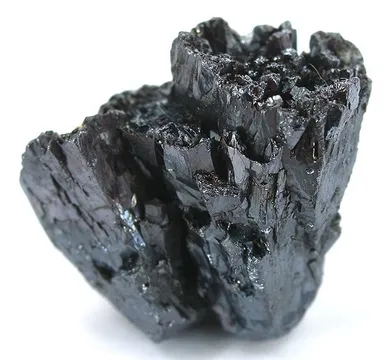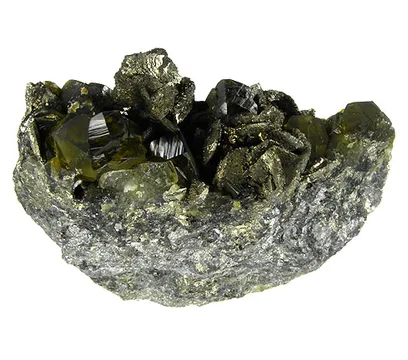
Cerro Huañaquina, Bolivia — a magnetite locality near Potosí yielding sharp black octahedra on volcanic matrix, with rare hydroxylapatite and hematite dusting.
Key facts
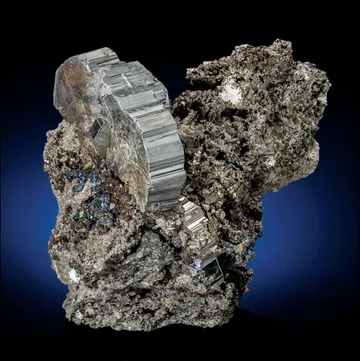
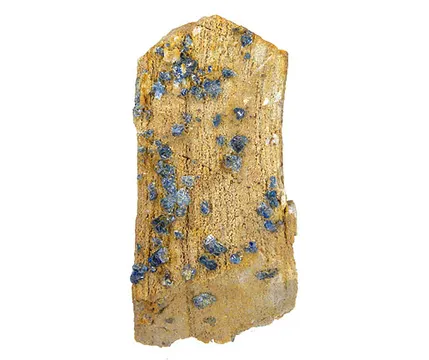
Cerro Huañaquina is one of the great oddities of Bolivian collecting: a Potosí locality celebrated not for silver sulfosalts, tin veins, or the familiar high-Andean polymetallic suite, but for superb black magnetite crystals. The mountain, historically labeled Cerro Huañaquino on many specimen labels, is an eroded dacite laccolith north of the city of Potosí, with small fissure workings developed specifically for mineral specimens rather than for iron ore. Its best pieces are immediately recognizable: sharp, lustrous, gunmetal-black to black octahedra, commonly scattered or crowded across pale feldspar-rich volcanic matrix, sometimes with white to peachy hydroxylapatite and, more rarely, a thin chocolate-brown hematite dusting.
Regional View
Country View
Among modern magnetite localities, Huañaquina matters because it produced true display specimens: not just massive ore, sand, or dull contact-metamorphic grains, but free-grown octahedra with the bright, architectural look collectors more often associate with classic Alpine magnetites. The deposit also has a compact but interesting accessory assemblage. The David Mosiah claim is best known for carbonate-rich hydroxylapatite, while San Calixto, Huayriquiña, La Nenita, and other small workings on the mountain account for much of the magnetite that reached the market in the early 2000s. The surrounding foothills expose multicolored Cretaceous Miraflores Formation marls and stromatolite-bearing beds, a separate sedimentary setting that adds a small lapidary and fossil dimension to the broader Cerro Huañaquina name.

Photo: Wikimedia Commons / Rob Lavinsky, iRocks.com

Photo: Wikimedia Commons / Rob Lavinsky, iRocks.com
Search for specimens: View all specimens from Cerro Huañaquina, Bolivia
Cerro Huañaquina lies in the Yocalla Municipality of Tomás Frías Province, Potosí Department, Bolivia, near the Potosí–Tarapaya area and close enough to Potosí city that collectors and dealers have long described it simply as “near Potosí.” Mindat places the mountain at about 19°31′20″S, 65°52′08″W; other gazetteer-based sources give an elevation of roughly 4,383 meters. Older specimen labels commonly read Cerro Huañaquino, Cerro Huanaquino, or simply “Potosí, Bolivia,” and some market labels have used nearby place names such as El Molino or Tarapaya.
Geologically, the collector locality is the eroded remnant of a dacitic intrusive body, generally described as a laccolith. The collectible magnetite is not from a conventional iron mine. It occurs as open-space crystals and coatings in narrow fissures in fine-grained dacitic volcanic rock, typically on pale feldspar-rich matrix with subordinate quartz. Modern work on magnetite-(apatite) systems has cited Cerro Huanaquino as an example of euhedral magnetite and apatite lining open cracks in dacite affected by argillic or steam-heated alteration, which helps explain why the pieces look so unlike the massive iron ore of larger magnetite-apatite districts.
The ore-body language used for large mines hardly fits Huañaquina. There are no great stopes of magnetite ore documented here; the specimen workings are small adits and prospects on the mountain face. San Calixto is recorded as a 2001–2002 small-scale specimen-mining operation for magnetite crystals lining fissures in dacite, and it is explicitly only one of several magnetite-producing workings on the mountain. The David Mosiah claim is a magnetite-feldspar-apatite vein locality in dacitic volcanic rock and is the principal named source for the well-formed carbonate-rich hydroxylapatite crystals. Huayriquiña, also spelled Huaraniquiña, appears frequently on later labels for fine magnetite, while La Nenita is also recorded as a mineral-specimen mine producing magnetite.
The collecting history is unusually well documented by collector testimony. The first magnetite crystals were reportedly noticed loose in sandy gully material around 1995 by Alfredo Petrov and a companion while they were prospecting for an apatite occurrence. By late 2003, several tons of magnetite specimens had reportedly been produced for the mineral market. The largest wholesale flows went through dealers such as Topgem in Arizona and Mikon in Germany, while some of the choicest pieces entered the hands of specialist dealers and collectors in the United States. Production was local, small-scale, and specimen-driven; village miners followed the fissures into the dacite until the rock became too hard to work profitably, then began new short adits nearby.
The best pockets yielded sharp, well-separated octahedra rather than a crowded black crust. Fine cabinet plates can show dozens of bright crystals across a pale volcanic matrix; better crystals commonly run around 0.5 to 1.5 cm, with exceptional individuals around 2 cm across. Some specimens show cream feldspar crystals between the magnetite octahedra, producing the contrast collectors prize. Other pieces are almost all black, with crystals stacked in a dense, stair-step aggregate. A minority carry white to peach-tan hydroxylapatite, including prismatic and hexagonal crystals, and rare pieces show magnetite with a thin hematite coating rather than true hematite replacement.
Current access should be understood as collector-market access, not public recreational collecting. The workings are small local adits on a high Andean mountain rather than an organized fee-collecting site, and published sources do not document a regular tourist or club-collecting arrangement. Most specimens available today are either older stock from the early 2000s production, recycled collection pieces, or small lots continuing to circulate through dealers and auctions.
Cerro Huañaquina magnetite is prized for sharp, lustrous octahedra on pale dacitic matrix, with crystals commonly in the millimeter to 1.5 cm range and exceptional examples reaching about 2 cm across. The color is black to gunmetal black, sometimes slightly silvery on fresh faces, and the best specimens show crisp, individually isolated octahedra rather than a congested crust. Associations include cream to beige feldspar, quartz, white to peach-tan carbonate-rich hydroxylapatite, minor hematite coatings, and small Ti-bearing accessory minerals recorded from the mountain. The choicest pieces came from the early 2000s fissure workings, especially San Calixto, Huayriquiña, David Mosiah, and related small adits; quality depends heavily on luster, separation, intact crystal edges, and the contrast between black magnetite and light matrix.
Other documented minerals from Cerro Huañaquina and its immediate sublocalities include carbonate-rich hydroxylapatite, hydroxylapatite, hematite including martite, baryte, quartz including smoky quartz, K-feldspar and other feldspar-group minerals, rutile including ilmenorutile, ilmenite, titanite, schorl, mica-group minerals, muscovite, perovskite, pyrite, calcite, gypsum including selenite, alum-(K), almandine from El Molino dredge tailings, and cristobalite or beta-quartz reported with uncertainty. No formal IMA type species is established in the principal locality records consulted; the mineralogical rarity of the locality rests instead on the unusually fine crystallization of magnetite and the uncommon, well-formed carbonate-rich hydroxylapatite crystals from the David Mosiah area.
The most important authenticity issue at Cerro Huañaquina is not artificial treatment but locality confusion. Huañaquina magnetite has been deliberately or casually sold under incorrect labels, including “Tazna mine,” “Machacamarca,” “Oruro,” “Pocona,” “Molino Mine,” and broad labels such as “Potosí, Bolivia.” Some of those names refer to real Bolivian places, which makes the problem more persistent: a specimen may be genuine Huañaquina magnetite but carry a misleading locality inherited from wholesale trade. Good old labels are valuable, but they should be read critically.
A typical authentic piece shows black octahedral magnetite on light dacitic or feldspar-rich matrix. The crystals should be strongly magnetic, but testing with a powerful magnet should be done gently; loose fragments and delicate edges can snap toward the magnet or collide with the test object. A weak hand magnet held near, not dragged across, the specimen is enough. The matrix is often pale tan, white, or beige, and may be friable along weathered zones. Some surfaces are naturally oxidized or coated with hematite, producing duller brown-black faces. A RRUFF sample from Cerro Huañaquino is described as black octahedra with hematite at the surface and magnetite in the interior, so a thin hematite skin is not automatically a defect or a fake.
Condition is the collector’s main value filter. Many pieces were recovered from narrow fissures, and common flaws include contacted backs, broken peripheral crystals, chipped octahedral edges, dull oxidized faces, and crowded crystals with little visual separation. High-end pieces have bright metallic luster, sharp unbruised tips, attractive spacing, and enough pale matrix to set off the black octahedra. Plates with crystals all leaning in different orientations can be excellent if the individuals are distinct; heavy intergrowth alone does not make a fine specimen.
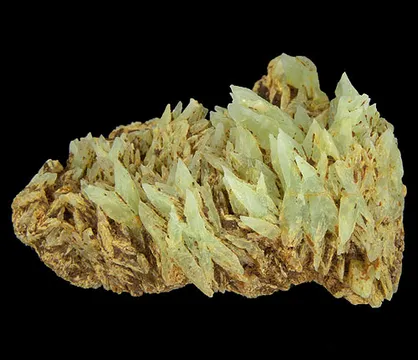
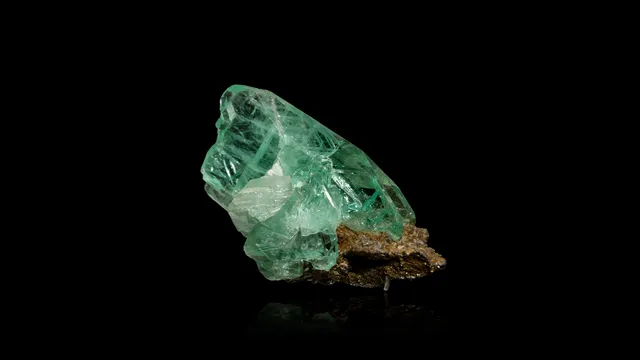
Hydroxylapatite from the David Mosiah claim is much rarer on the market than the magnetite. The best crystals are well-formed, prismatic to hexagonal, translucent white, grey-white, or peach-tan, and can show orange to pinkish-orange fluorescence under shortwave UV. Most crystals are small, and examples over a few centimeters are exceptional. Handle them as small phosphate crystals rather than rugged ore specimens: avoid abrasion, prolonged dusty storage, and repeated UV exposure for display.
Availability is moderate for ordinary magnetite and sharply limited for top examples. Small and mid-grade Huañaquina magnetites still appear from old stock and dealer inventories, often at accessible prices. Fine, undamaged cabinet plates with isolated lustrous octahedra are much scarcer and have performed strongly in auction records. Carbonate-rich hydroxylapatite specimens are notably harder to locate, especially with size, translucency, and complete terminations.
On Christmas Eve 2003, a small locality mystery played out in the Mindat discussion pages. Collector Alan Plante had a new Bolivian magnetite in hand: clusters on a white to tan matrix, individual crystals from 2.5 mm to 1.5 cm, octahedral, shiny, metallic, dark greyish black, and intergrown in “stair-step fashion.” The label was inadequate, and Bolivia was too full of magnetite possibilities for a clean catalog entry. Within hours, other collectors had begun circling the answer. One had heard of “Cerro Luanaquino,” another noted that a “mountain of these” was then on the market under a scatter of names: Oruro, Machacamarca, Cerro Huañaquino.
Then Alfredo Petrov entered the thread and settled it with the sort of field detail only a person who had stood on the slope could give. He had been to the locality a couple of times and was already frustrated by the label chaos. He joked that he had to “patrol the bolivian corridors,” removing duplicate or false locality entries that collectors had created after copying dealer labels. The correct source, he explained, was four small adits on Cerro Huanaquino, roughly 20 km north of Potosí. San Calixto or Calixto Prospect could be legitimate for one owner’s adit, but “Machacamarca,” “Oruro,” “Pocona,” and “Molino Mine” were wrong for these specimens.
Petrov’s account of the find has become part of the lore of the locality. Around 1995, he and a friend were not searching for magnetite at all; they were prospecting for apatite when they found the first magnetite crystals loose in sand in a gully. What followed was not the opening of an iron mine but the birth of a specimen dig. Local villagers worked the fissures exclusively for collectors. The veins were so narrow that Petrov described them as little more than coatings on cracks in the dacite. A new adit would begin in weathered ground, where the crystals were more oxidized; as miners pushed inward, the rock grew harder and the magnetite became brighter and more lustrous. Eventually the dacite became too tough to justify the labor, so the miners stopped and began again elsewhere on the same mountain.
By the end of 2003, Petrov estimated that at least 2 or 3 tons of specimens had already been produced. The bulk material moved through wholesale channels, especially Topgem in Arizona and Mikon in Germany. The best pieces, in his estimation, went to Brian Kosnar in Colorado. That one short chain of events explains why the locality appears in so many early-2000s collections: a high Andean gully discovery, a few hand-dug adits, village specimen mining, and then a sudden flood of black octahedra into the international market.