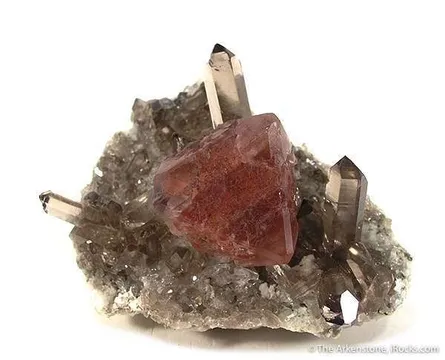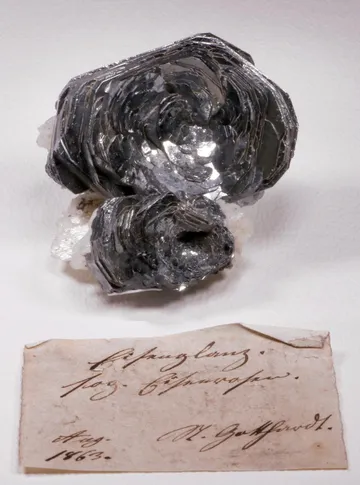
Central St Gotthard Massif, Switzerland — Alpine locality famed for smoky quartz, rock crystal, adularia, and iron-rose hematite rosettes, a collector classic.
Key facts
The central St Gotthard Massif is one of the classic Alpine cleft districts: a high, glaciated, structurally tortured slice of the Central Alps where granites, granitic gneisses, metasediments of the Tremola series, and related crystalline rocks are cut by mineralized fissures. For collectors, its name is inseparable from smoky quartz, rock crystal, adularia, chlorite-coated crystals, rutile, anatase, phenakite, bazzite, and above all the metallic hematite rosettes known to generations of Swiss strahlers as Eisenrosen, or “iron roses.” These are not mine-run ore specimens. The best pieces are cavity-grown Alpine cleft specimens: sharply terminated quartz or smoky quartz with glassy luster, white to pearly adularia, green chlorite dusting or phantoms, and hematite plates stacked into sculptural black-silver rosettes.
Regional View
Country View
The locality name is broad in the way many old Alpine labels are broad. On labels it may appear as St. Gotthard, San Gottardo, Gotthard Pass, Fibbia, La Fibbia, Alpe di Fieud, Lucendro Valley, Monte Prosa, or simply “Gotthard.” That looseness is part of the locality’s historical charm and also one of its modern collecting headaches. The core iron-rose district lies around the high country near the pass, with Fibbia near the center of a famous cluster bounded roughly by St. Gotthard Pass, Monte Prosa, Alpe di Fieud, and Piz Lucendro. Many old specimens entered European and American collections before precise sublocality labeling became the norm, so the best attributions often rest on old labels, collection history, matrix style, and associated minerals.

Photo: Wikimedia Commons
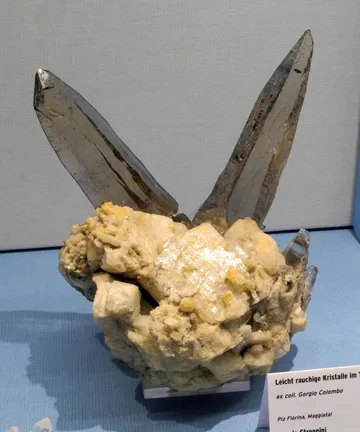
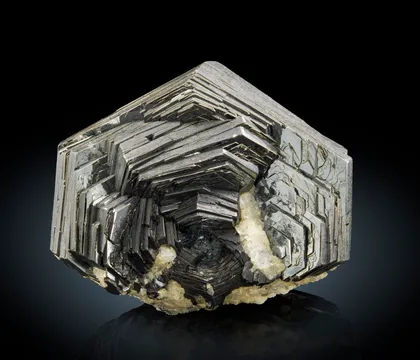
The visual signature of the central Gotthard classics is contrast. Smoky quartz from the area can be wine-brown, champagne, nearly colorless, or strongly zoned, with the best crystals showing glassy transparency and bright faces. Chlorite may be a flaw on lesser material, but in the right specimen it is part of the story: a directional green frosting, an internal phantom, or a speckled cap that records a later phase of cleft mineralization. Hematite adds the locality’s most dramatic note. The finest Gotthard iron roses are sharp, lustrous stacks of thin hematite plates, sometimes standing free, sometimes perched on adularia or quartz, and sometimes carrying red rutile in oriented overgrowths.

Photo: Wikimedia Commons
Search for specimens: View all specimens from Central St Gotthard Massif, Switzerland
The central St Gotthard occurrence is best understood as an Alpine-type cleft district rather than a conventional ore deposit. Mineral specimens formed in open fissures created during Alpine deformation and exhumation, where fluids circulated through crystalline basement rocks and deposited quartz, feldspar, hematite, rutile, zeolites, apatite, fluorite, and rarer Be- and rare-earth-bearing minerals. In the central Gotthard area, the host rocks include hard granite and granitic gneiss, rocks of the Tremola series, metagranites around La Fibbia, and associated gneisses and schists. The clefts are generally discontinuous, pockety bodies: a productive cavity may yield superb specimens over a very small volume, while adjacent rock is barren.
There are no large ore bodies in the sense a mining geologist would use the phrase. The “ore” mineral that made the locality famous is hematite, but it occurs as crystallized cleft hematite rather than as a worked iron ore. Around Fibbia, Lucendro, Monte Prosa, and Alpe di Fieud, hematite plates grew in rosettes, sometimes as isolated floaters, sometimes on adularia, and sometimes on quartz or smoky quartz. Rutile is an especially important companion: fine red rutile prisms may sit epitactically on hematite, giving high-grade specimens a color and textural complexity that separates them from plain gray iron roses. Quartz and adularia are the structural stage on which much of the locality’s specimen mineralogy plays out. Aesthetic pieces commonly show black hematite on white feldspar, smoky quartz with green chlorite, or quartz-adularia groups with late-stage oxides.
La Fibbia and Alpe di Fieud are the essential names for iron-rose collectors. La Fibbia is a mountain area close to the pass and above the historic Gotthard route; Alpe di Fieud appears in literature and collector accounts as the scene of one of the great hematite finds. The mineral suite reported from La Fibbia includes quartz, hematite, rutile, xenotime, fluorite, apatite, orthoclase variety adularia, albite, muscovite, phenakite, titanite, bertrandite, chlorite minerals, stilbite, and bazzite. That assemblage explains why serious collectors look closely at small Gotthard specimens: a thumbnail may hold not only a hematite rose, but also a blue bazzite crystal, tiny xenotime, apatite, or Be minerals of real locality importance.
The historical significance reaches back to the beginnings of Alpine mineral collecting. Adularia was named in 1780 by Ermenegildo Pini for the Adula Massif, considered part of the Gotthard massif in the older usage; old literature also connects the name with the St. Gotthard region and “Mons Adula.” The Gotthard also became a tunnel mineral locality. The 19th-century Gotthard railway tunnel, the 20th-century road tunnel, the later Gotthard Base Tunnel, and the ongoing second road-tunnel works all intersected crystalline rocks and fissures, and tunnel specimens have been treated as cultural and scientific material rather than casual spoil. Finds from tunnel construction include quartz, pyrite, apophyllite, fluorite, and rare native gold/electrum occurrences in calcite veins near the south side of the railway tunnel.
Modern collecting is regulated, and the practical rules depend on the canton, municipality, and land authority. In Ticino, collecting of rocks, minerals, and fossils of scientific interest is governed by cantonal nature-protection law, and the Museo cantonale di storia naturale is responsible for authorizations; annual, weekly, and certain group daily permits are part of that system. Around Ursern, the Korporation Ursern requires a Strahlerpatent for mineral recovery on its territory, does not issue daily or weekly patents, restricts tools and methods, prohibits explosives and machine assistance, and recognizes the traditional practice of marking an occupied cleft with a tool and weatherproof identification. For today’s collector, that means the locality is not a casual “walk up and dig” destination. Legal access, land status, season, weather, avalanche and military restrictions, and occupied clefts all matter.
The best-known specimen production is from strahler work in high Alpine clefts, but tunnel construction provided a second, unusual production channel. During major works, mineral supervisors were assigned to recover and safeguard specimens before they disappeared into spoil piles or pockets. The Gotthard Base Tunnel produced cleft material studied scientifically for low-temperature mineral formation during Alpine exhumation. Dealers have also handled a small number of tunnel-origin specimens, including clear quartz gwindels and hematite-adularia pieces labeled from the NEAT construction. These are not common on the market, and precise tunnel-section provenance is especially important.
Quartz is the framework species of the central St Gotthard clefts, occurring as clear rock crystal, smoky quartz, rutilated quartz, chlorite-included crystals, sceptres, etched floaters, and occasional gwindel-style forms from tunnel and Alpine cleft settings. Historic descriptions emphasize regular crystals, flattened comb-like forms, sceptres, and phantoms, with abundant inclusions—especially green chlorite, but also rutile needles and rarer inclusions. From the collector’s standpoint, ordinary Gotthard quartz is not enough; good pieces show bright, glassy faces, undamaged terminations, balanced composition with adularia or hematite, and a quality of transparency that lets chlorite phantoms or smoky zoning read clearly rather than muddying the crystal. The most distinctive examples are not merely “Swiss quartz,” but quartz with a Gotthard signature: alpine sharpness, structural elegance, and associations with iron roses, rutile, adularia, or chlorite from the Fibbia-Lucendro-St Gotthard pass area.
Hematite is the prestige mineral of the central St Gotthard Massif, chiefly in the iron-rose habit: rosette-shaped aggregates of thin, metallic, tabular hematite plates, steel gray to black, sometimes mirror-lustrous and sometimes more satiny on larger crystals. The core district around Fibbia, Alpe di Fieud, Monte Prosa, and Lucendro is one of the classic sources of Alpine Eisenrosen, and its finest specimens are prized for sharp petal edges, open three-dimensional construction, lack of bruising, and strong contrast against white adularia or colorless to smoky quartz. The best pieces may show red rutile in oriented overgrowths, while lesser specimens are dull, mashed, too massive, or poorly crystallized despite having the right “rose” outline. A well-preserved Gotthard hematite rose on matrix is substantially harder to obtain than a loose rosette, and old labels from major collections can add real significance.
Smoky quartz from the central St Gotthard Massif ranges from pale champagne and gray-brown to darker brown crystals, and the finest pieces show Alpine glassiness rather than simply dark color. Specimens from the St Gotthard pass area may be single floaters, complex-faced etched crystals, clusters, or quartz associated with hematite, adularia, rutile, or chlorite; old-time smoky quartz pieces from the locality are especially valued when they combine transparency with crisp terminations and sculptural form. Chlorite is common here and can either diminish or elevate the specimen: a dull green coating over all faces is ordinary, but directional frosting, phantoms, or selectively chloritized terminations give the piece a distinctly Gotthard character. Good smoky quartz from this locality should be judged by luster, clarity, damage, geometry, and association—not by darkness alone.
Chlorite at the central St Gotthard Massif is usually a companion rather than the display mineral, yet it is one of the defining visual and paragenetic features of the locality’s quartz. Historic accounts note that green chlorite commonly occurs as inclusions within quartz and as a thin film on crystal faces, with the coating often tenacious and not readily removable; later chlorite dusting may be limited to upward-facing faces, making it a useful clue to the crystal’s position in the cleft. Collectors should distinguish unattractive dirt-like chlorite from deliberate Alpine texture: fine sage-green speckling, sharp phantoms, or selective frosting can make a quartz or smoky quartz specimen more interesting and more locality-correct. Chlorite also appears with adularia and hematite-bearing cleft assemblages, where it contributes the green note in the classic black-white-green Gotthard palette.
In the context of central St Gotthard collecting, “iron” on older or simplified specimen listings usually points to iron-rose material—that is, hematite Fe2O3 in rosette form—not native iron metal. True native iron is not the classic Gotthard collectible; the famous “iron roses” are crystallized hematite aggregates whose metallic luster and layered plate structure inspired the name. For EarthWonders specimens listed under Iron from this locality, the collector’s eye should therefore focus on the same criteria that govern Gotthard hematite: sharp stacked plates, rosette form, metallic gray to black color, undamaged petal edges, and association with adularia, quartz, smoky quartz, rutile, or chlorite. Any specimen represented as native iron from this locality would require analytical support and unusually strong provenance, whereas an “iron rose” label is entirely consistent with the historic Gotthard tradition.
Other minerals documented from the central St Gotthard Massif and its immediate pass-area sublocalities include adularia, albite, apatite, rutile, anatase, brookite, magnetite, ilmenite, pyrite, sphalerite, kyanite, staurolite, diopside, phlogopite, heulandite-group zeolites, stilbite, titanite, fluorite, phenakite, bertrandite, bazzite, xenotime, monazite, crichtonite, dessauite-(Y), cleusonite, synchysite-group minerals, and rare gold/electrum reported from tunnel settings. Adularia is the name of greatest historical importance because the variety was named from the Adula-Gotthard region in the 18th century. Bazzite, phenakite, bertrandite, xenotime, and rare Ti-REE oxides are the species that keep small, unassuming Gotthard cleft pieces interesting under magnification; a miniature hematite-adularia specimen from Fibbia may carry more mineralogical weight than its size suggests.
The main authenticity issue is locality precision. “St. Gotthard” is a classic label, but it can hide several different realities: Fibbia, Alpe di Fieud, Lucendro Valley, Monte Prosa, Gotthard tunnel material, a nearby but non-central Gotthard locality, or simply an old dealer shorthand for Swiss Alpine iron roses. For an expensive specimen, especially a hematite rose on matrix, the strongest examples carry old labels, collection provenance, a credible sublocality, and a matrix-association style that makes geological sense.
Mislabelling is particularly common around iron roses. Lucendro and Cava Lombardi material has historically been sold or relabeled as “Fibbia” or simply “Gotthard,” and older labels may be geographically broad rather than intentionally deceptive. That matters because top Fibbia and Alpe di Fieud pieces carry a premium, while a more generic Gotthard label should be priced with caution unless supported by provenance. Similar Alpine iron roses occur in other Swiss districts, Austria, Italy, Pakistan, and China; some of the Asian hematite-on-quartz associations can echo the Swiss look closely enough to fool a casual buyer.
Repairs and assembly must be checked carefully. Hematite roses are made of thin platy crystals, and broken petal edges, small rubs, cleaved plates, and glued contacts are common condition concerns. A rosette perched perfectly on quartz or adularia should be examined under magnification for adhesive, unnatural contact geometry, or suspicious filler. Matrix pieces are rarer and more desirable, but they are also more vulnerable to restoration; a loose rosette hot-glued to an adularia group is not the same specimen category as a naturally attached iron rose.
Quartz and smoky quartz from the locality should be checked for bruised terminations, rehealed breaks, etched surfaces mistaken for damage, and iron staining or chlorite coatings misread as dirt. Natural chlorite on Gotthard quartz may be tenacious and locality-characteristic, so aggressive cleaning can reduce rather than improve the specimen. Conversely, unattractive clay or limonite in crevices can make a good crystal look worse than it is. Adularia can chip along cleavage and may be edge-worn on older specimens; white feldspar matrix can also hide repaired hematite attachments.
Fluorescence is not a major buying point for the standard Gotthard quartz-hematite-chlorite suite. The locality is more about luster, form, alpine paragenesis, and provenance. Rarer species such as bazzite, phenakite, xenotime, monazite, and crichtonite-group minerals should be treated as analytical minerals unless the specimen comes from a reliable specialist or has supporting identification. For market availability, small quartz and smoky quartz pieces appear periodically, iron roses are available but increasingly price-sensitive, and high-grade hematite on matrix with strong Fibbia or Alpe di Fieud provenance is genuinely scarce.
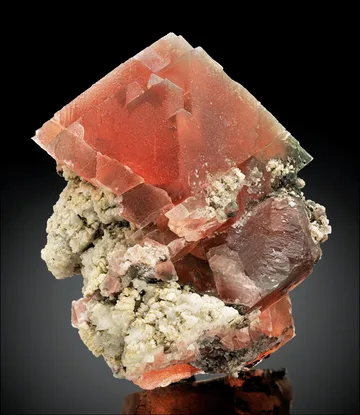
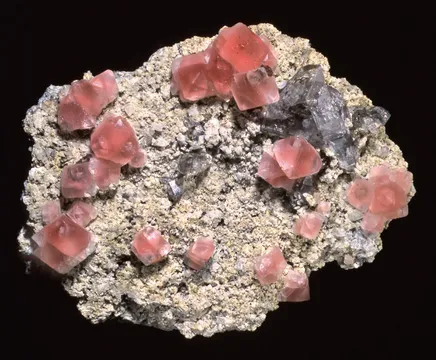
The great Gotthard collecting story is the one Swiss strahlers still recognize instantly: Bruno Schaub-Gottschalk at Alpe di Fieud. By the time his account entered the literature, he had worked the La Fibbia district for more than thirty years, recovering iron roses, adularia, stilbite, bazzite, xenotime, apatite, smoky quartz, and on one occasion pink fluorite and phenakite. The remarkable part is not only the species list but the patience. In the account preserved through later catalogues and the Mineralogical Record treatment of Alpine iron roses, Schaub-Gottschalk spent three years clearing overlying debris before serious collecting could begin. Out of that work came a hematite cluster about 9 cm across on matrix, a specimen described in print as arguably the finest hematite iron rose ever found in Switzerland. It is the kind of object that gives an Alpine field story its moral: before the glitter, there is rock, rubble, weather, and years of stubbornness.
The tunnel stories belong to a different kind of collecting. At the Gotthard Base Tunnel, the numbers are almost anti-mineralogical in scale: a 57 km tunnel, roughly 28 million tonnes of excavated rock, and only rare moments when a cleft revealed collectible crystals. Peter Amacher, a trained geologist and strahler, was assigned during the Amsteg-Sedrun section to help safeguard crystals as cultural property. His job put him in an odd position—part mineral collector, part geological observer, part policeman. Tunnel workers were not supposed to pocket the crystals, and when they saw a promising cleft they were expected to alert him. Yet much of the work still depended on his eye. He reportedly entered the tunnel about 3500 times, never knowing what would be visible at the tunnel face.
That underground work produced observations surface collectors rarely get. In a talk reported from the 2013 Kristalltage at Bramberg, Amacher emphasized that many tunnel specimens were absolutely fresh from the mountain and had not been affected by surface water. Pyrite on some specimens appeared as small golden crystals “dusted” over the pieces, while equivalent near-surface material would more often be limonitic and rusty. Just as striking was what was missing: in the NEAT tunnel, smoky quartz was not found, even though smoky quartz occurs in corresponding near-surface zones above the tunnel. For collectors accustomed to thinking of Gotthard smoky quartz as a surface-cleft classic, that absence is a useful reminder that color, radiation history, fissure position, and later alteration are part of the specimen’s biography.
The second Gotthard road tunnel has continued the same unusual relationship between infrastructure and mineral collecting. Beginning with the works launched in 2021 and expected to run for years, Peter Amacher and a small team again monitored blasts and tunnel progress for crystal clefts. Reports from 2024 and 2026 describe new material going on display at Schloss A Pro in Seedorf, including quartz and intensely colored pink fluorite recovered from the works. Amacher described waiting as a large part of the job: standing near the work area after blasts, then moving in quickly when a cleft appeared. In one published profile, his fascination with the tunnel was summed up by a line that every serious field collector will understand: if he had not been inside for five or six days, he felt he was “in withdrawal.”
Paul Pomarais, “Minéralogie du massif du Gothard (Alpes Centrales Suisses),” Bulletin mensuel de la Société linnéenne de Lyon, 40(2), 1971, pp. 20–28 — A concise classic overview of Gotthard mineralogy, including quartz habits, chlorite coatings, hematite roses, rutile, fluorite, gold, and locality notes.
Stefan Graeser, “Alpine Minerals: A Review of the Most Famous Localities of the Central Swiss Alps,” Rocks & Minerals, 73(1), 1998, pp. 14–32 — Important English-language treatment of Swiss Alpine cleft localities, with a table of minerals from La Fibbia and discussion of the Gotthard district’s hematite, adularia, and rare-species assemblage.
“Iron Roses of the Alps,” The Mineralogical Record, vol. 36, no. 6, November–December 2005 — The major collector-oriented article on Alpine iron roses, with special attention to the St Gotthard/Fibbia core district and the Alpe di Fieud find.
Mindat: Central St Gotthard Massif, Leventina, Ticino, Switzerland — Core locality database entry listing the standard mineral suite and placing the central massif within the broader Gotthard collecting geography.
Mindat: Adularia mineral data — Documents the 1780 naming of adularia by Ermenegildo Pini for the Adula Massif, part of the Gotthard massif in this historical-mineralogical context.
Naturhistorisches Museum Wien: Hematite, St. Gotthard, Switzerland — Museum record for a St. Gotthard iron-rose hematite specimen approximately 9 x 6 cm, inventory A.h. 953.
Richard Gunter Catalogue: Bazzite from Fibbia — A useful collector-note article tying bazzite on adularia with a small iron rose to Fibbia and summarizing the locality’s rare Be-mineral context.
Timing of low-temperature mineral formation during exhumation and cooling in the Central Alps, Switzerland — Scientific study using Gotthard rail-base-tunnel fissure assemblages to constrain late Alpine cleft mineral formation.
St Gotthard Highway tunnel north section, Göschenen, Uri, Switzerland, Mindat — Tunnel locality entry documenting quartz, pyrite, pyrrhotite, rutile, sphalerite, and related tunnel minerals.
Vorkommen von Mineralien im Kanton Uri: Tunnel, Stollen, Abbaue — Useful Swiss locality compilation for tunnel and excavation mineral occurrences, including Gotthard railway and road tunnel records.
“Tunnelgeschichten – Peter Amacher, Strahler und Geologe,” SRF — Audio/media feature on Peter Amacher’s work recovering crystals during Gotthard Base Tunnel construction.
“Der Kristallhüter vom Gotthard,” Swiss Films — Film record for Felice Zenoni’s documentary following geologists and mineral supervisors during the second Gotthard road-tunnel project.
“SRF DOK: Der Kristallhüter vom Gotthard,” SRF Media Portal — SRF media page describing the documentary, the second road tunnel, Peter Amacher’s role, and tunnel-crystal recovery.
“KRISTALL-WUNDERKAMMER / CAMERA DELLE MERAVIGLIE,” Vimeo — Short media piece on the Sasso San Gottardo crystal exhibition, the strahler tradition, and Swiss rock-crystal culture.
“Sasso San Gottardo Trailer Deutsch,” Sasso San Gottardo — Official museum trailer page for the Gotthard pass fortress and exhibition complex, including the Crystal Cavern.
Mindat: Central St Gotthard Massif, Leventina, Ticino, Switzerland — Best starting point for the locality hierarchy and standard mineral list.
Wikimedia Commons: Minerals of St Gotthard pass area — Open image category with quartz, smoky quartz, hematite, chlorite, adularia, anatase, and other Gotthard pass specimens.
Canton Ticino: Autorizzazioni for mineral, rock, and fossil collecting — Official Ticino permit information for legal collecting.
Korporation Ursern: Mineralien — Local rules for mineral collecting on Ursern corporation territory, including Strahlerpatent requirements and cleft-claim customs.
Korporation Ursern: Antrag Strahlerpatent — Practical application information for the Ursern Strahlerpatent.
Euklas: Fundregion Gotthard — Field-photo page showing Gotthard clefts, quartz, adularia, hematite iron roses, apatite, and anatase from the collecting region.
Saphira Minerals archive: NEAT tunnel and Fibbia specimens — Market reference for Gotthard tunnel quartz gwindels and Fibbia hematite iron roses.
Heritage Auctions archive: Hematite and adularia, Fibbia, George Vaux provenance — Useful provenance and market record for a classic Fibbia iron rose collected into the George Vaux collection in 1896.
Fabre Minerals search archive: Central St Gotthard hematite iron rose — Dealer archive documenting a Rock H. Currier collection iron-rose specimen from the central massif.
Crystal Classics: Hematite var. Iron Rose, Lucendro Valley — Market reference for a large Lucendro Valley iron rose and modern pricing context.
Mineralien.de: Cava Lombardi, Lucendro Pass iron rose — Useful note on Lucendro/Cava Lombardi material and historical broad labeling as “Fibbia” or “Gotthard.”