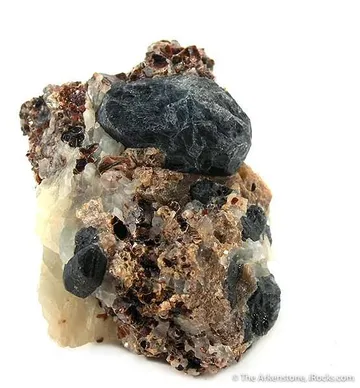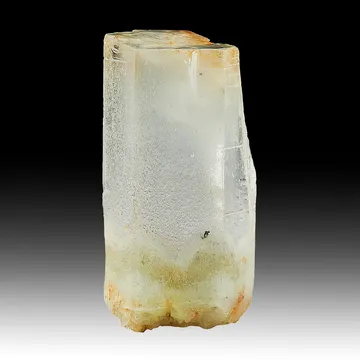
Camp Robin area, Madagascar locality — multicolored tourmaline from gem-bearing pegmatites, a Madagascar source prized by collectors for liddicoatite varieties.
Key facts
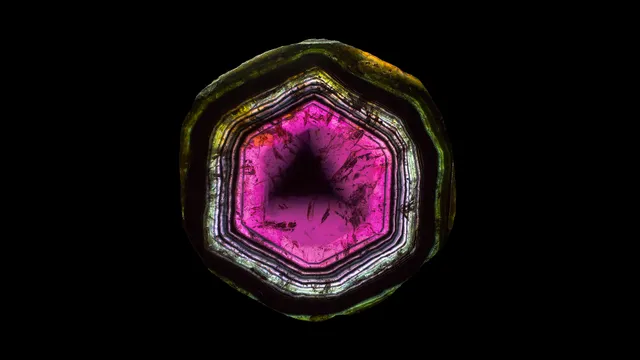
Camp Robin is not a single neat mine name so much as a collector’s shorthand for a belt of gem-bearing pegmatites in Madagascar’s central highlands, traded through and around the village and commune of Camp Robin. For collectors, its importance lies in the sudden modern appearance of large quantities of multicolored tourmaline from a rare-element miarolitic pegmatite field: a district-scale source of polished slices, gem rough, and complete crystals that extended the Madagascar liddicoatitic tourmaline story beyond the older classic localities around Antsirabe and the Sahatany region. The best pieces have the unmistakable Madagascar look—glassy red, cranberry, mauve, pink, olive-green, yellow-brown, and sherry-brown tourmaline, sometimes with complex zoning visible through the crystal and sometimes cut to reveal elaborate internal architecture.
Regional View
Country View
The geology is classic gem-pegmatite country: coarse granitic bodies and miarolitic pockets carrying feldspar, quartz, lithium minerals, boron, fluorine, and enough chemical complexity to grow tourmalines that may pass through elbaite, fluor-liddicoatite, and related compositions within a single crystal. Camp Robin material entered the market in meaningful quantity in the mid-2000s, with the best specimens quickly recognized by collectors as a modern Madagascar counterpart to the older, more legendary “liddicoatite” production. Its historical significance is not as a nineteenth-century museum locality but as a dramatic twenty-first-century rush district: discoveries at Nandihizana, Anjomanandihizana, Fiadanana, Valozoro, Ankitsikitsika, and Antsengy supplied carving rough, gem cut stones, and occasional specimen crystals of real cabinet quality.
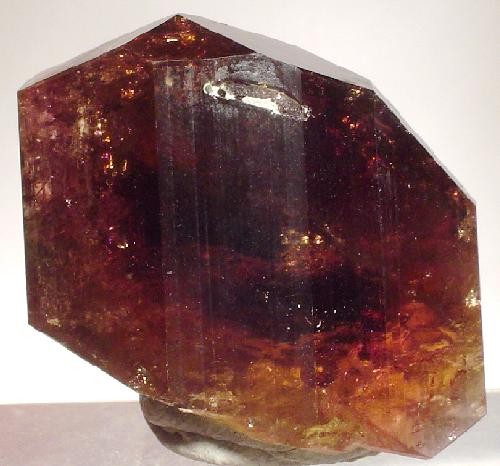
Photo: Wikimedia Commons
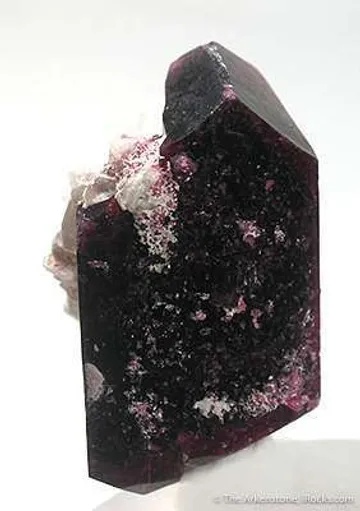
A fine Camp Robin crystal is usually judged first by transparency, luster, termination, and the liveliness of its internal color. Ordinary pieces may be dark, included, broken, or simply massive carving-grade rough. The special ones are complete, lustrous, doubly terminated when luck allows, and internally animated—raspberry red grading into sherry brown, green bodies with pink caps, or strong red-orange crystals that glow when backlit. Because visual identity is treacherous in this tourmaline group, the wisest labels read with care: “tourmaline,” “liddicoatitic tourmaline,” “fluor-liddicoatite,” or “elbaite-fluor-liddicoatite series” should be used according to evidence, not wishful color zoning.
Search for specimens: View all specimens from Camp Robin area, Madagascar
The “Camp Robin area” is a mining-area name used by the gem trade for a rare-element miarolitic pegmatite field in the central highlands of Madagascar, in the broader corridor between Ambositra and Fianarantsoa. Published gemological reports place the tourmaline-bearing district along the national road linking those towns, with a northeast-southwest field on the order of 40 km long. Camp Robin village sits centrally enough in the district that it became the trade name under which material from multiple deposits circulated.
The deposit type is granitic rare-element pegmatite, locally with both primary pegmatite workings and residual near-surface concentrations. The mineralization is not an orebody in the base-metal sense but a series of gem pockets, weathered pegmatite zones, and eluvial or residual accumulations of tourmaline. At Nandihizana, described as part of the Camp Robin region, the producing pegmatite was reported with a north-south strike and subvertical dip. Its assemblage included white perthite feldspar, abundant green amazonite, quartz, black tourmaline, lepidolite, and yellow danburite, with tourmaline recovered both from soil and from the underlying pegmatite.
The main named tourmaline localities attached to the Camp Robin area include Valozoro, Fiadanana, Anjomanandihizana or Nandihizana, Ankitsikitsika, and Antsengy. Valozoro was an early producer, with primary and secondary residual deposits worked in 1995–1996. A much larger phase began in August–September 2005, when a near-surface find at Anjomanandihizana or Nandihizana yielded several tonnes of multicolored tourmaline, largely carving quality. Soon after, further deposits to the south and southeast—especially Fiadanana, Ankitsikitsika, and Antsengy—became important. Mindat’s locality summary records more than sixteen separate tourmaline localities in the area and several tons of tourmaline mined since the 2005 discovery.
Mining has been overwhelmingly artisanal rather than the work of a long-running corporate operator. The available reports describe local diggers, gem traders, and rush-style workings rather than a formal specimen-mining company. The material moved through Madagascar’s gem-trading networks, including African and Chinese buyers who absorbed included material for carving. Some specimen-quality crystals passed through established mineral dealers and into collector inventories, while gem-quality fragments were cut into stones or slices.
Production quality varied sharply. Much of the Camp Robin output was included, fractured, or best suited for carvings. Well-formed crystals were explicitly noted as rare in the Nandihizana production, which helps explain why complete cabinet crystals with clean terminations command much more collector attention than abundant broken or sawn material. The best documented pocket-style specimen pieces include glassy, complete, raspberry-red to sherry-brown floaters from the 2006–2007 finds; green-bodied crystals with pink caps on smoky quartz; strong red-orange doubly terminated crystals from older collections; and large cut or sliced crystals that show internal zoning along the length.
Collecting access today should be regarded as controlled, local, and non-recreational. This is not a North American-style fee-digging destination. The deposits are in rural Madagascar, often in artisanal workings where land permission, mining rights, local authority, safety, and community relationships all matter. Old pits, unstable hand-dug workings, and the history of rush mining make casual collecting inappropriate without legitimate local permission and knowledgeable guidance.
Camp Robin “liddicoatite” is best understood as collector shorthand for calcium-rich, often fluor-liddicoatitic tourmaline from the district’s rare-element pegmatites; the most responsible labels distinguish confirmed fluor-liddicoatite or liddicoatite from visually similar elbaite only when analysis supports it. The prized specimens are short to elongated prismatic crystals, commonly striated and vitreous, in cranberry red, red-orange, mauve, pink, purple, olive green, yellow-brown, sherry brown, and multicolored combinations; sizes range from small crystals of a few centimeters to substantial small-cabinet and cabinet pieces, with documented examples around 8–11 cm and individual crystals exceeding 100 g. Associations include smoky quartz, albite or cleavelandite, feldspar, and occasionally londonite-rhodizite series minerals, while the broader pocket assemblage in the Camp Robin region includes amazonite, lepidolite, black tourmaline, and danburite. The best pieces here are complete, lustrous, gemmy enough to glow when backlit, and preferably terminated or doubly terminated; ordinary pieces are dark, broken, heavily included, or attractive mainly as slicing and carving rough.
Tourmaline is the defining mineral of the Camp Robin area, and the district’s published material includes multicolored pink, purple, red, olive-green, yellow-brown, yellow, light-green, strawberry-red, and violetish-red crystals from Anjomanandihizana/Nandihizana, Fiadanana-Valozoro, Ankitsikitsika, and Antsengy. Chemically studied samples from the Camp Robin-area deposits were reported as ranging from Ca-rich elbaite to liddicoatite, a crucial point because the crystals cannot be reliably species-named by color, habit, or zoning alone. Habits include prismatic crystals and fragments, occasional floaters, doubly terminated crystals, fan-shaped groups from nearby Nandihizana-area workings, and material cut as slices, cabochons, carvings, and faceted stones. Collector-grade Camp Robin tourmaline is separated from the abundant commercial rough by surface quality, symmetry, intact terminations, strong transparency, and distinct color zoning or color contrast; the best matrix pieces with smoky quartz or albite are much scarcer than loose broken rough.
Other minerals documented from the Camp Robin area include albite, quartz, smoky quartz, and the londonite-rhodizite series. These are important less as standalone abundance minerals than as context for the pegmatite environment and specimen associations: tourmaline on smoky quartz, tourmaline with albite or cleavelandite, and the rare borate association that serious Madagascar pegmatite collectors watch for. I found no verified type-locality mineral for the Camp Robin area itself; the district’s mineralogical importance rests instead on its modern production of liddicoatitic tourmaline and associated rare-element pegmatite species.
The first authenticity issue is nomenclature. Camp Robin tourmalines are still widely sold as “liddicoatite,” but modern tourmaline classification is chemistry-based, and elbaite, fluor-liddicoatite, and related calcium-rich lithium tourmalines can overlap visually. Triangular zoning, red color, pink caps, or “Madagascar look” are not proof of species. A label that says “tourmaline, liddicoatitic,” “fluor-liddicoatite?” or “elbaite-fluor-liddicoatite series” may be more honest than an overconfident species name without analytical support. For significant purchases, especially expensive single crystals, ask whether the identification is based on electron microprobe or other quantitative work, or simply on dealer tradition.
Condition is the second great separator. Camp Robin produced plenty of carving rough, and many pieces are fractured, included, edge-worn, sawn, or incomplete. The best uncut specimens should be checked for repaired terminations, shallow restoration, glued bases, hidden chips along prism edges, and luster differences between front and back faces. Backlighting is useful because it reveals both the internal color and the extent of veils, feathers, healed fractures, and dark inclusions. A crystal that looks black in normal case lighting may become vivid and valuable in transmitted light, but only if the surfaces and terminations are good enough to carry the specimen.
Slices and polished pieces require a different kind of caution. Madagascar liddicoatitic tourmaline slices in general are known for resin stabilization, wax or oil in fractures, and occasional constructed doublets with glass or plastic when fractured slices have been reinforced. That does not make all slices undesirable—some of the most educational tourmaline specimens are polished cross sections—but it does mean that a slice should be examined under magnification for filled feathers, unnatural surface films, separation planes, and backing materials. Ask whether the slice is a simple polished section or a stabilized composite.
No strong, Camp Robin-specific fake epidemic emerged from the sources I found, but mislabeling is common because “Camp Robin,” “Madagascar liddicoatite,” and “fluor-liddicoatite” are often used loosely in the trade. Be wary of vague old labels that conflate the district with other Madagascar localities, especially older Anjanabonoina, Sahatany, or Manapa material. A true Camp Robin-area specimen should ideally carry a more precise sublocality—Valozoro, Fiadanana, Ankitsikitsika, Antsengy, Anjomanandihizana, or Nandihizana—though much trade material legitimately moved under the broader Camp Robin name.
Market availability is better than for the older classic Madagascar liddicoatites but still uneven. Included fragments and polished material appear regularly; complete, lustrous, well-terminated crystals with strong color are much less common; large, undamaged, doubly terminated, gemmy crystals are genuinely competitive specimens. In value terms, the hierarchy is straightforward: analytical confidence, precise locality, intact crystal form, luster, transparency, color contrast, termination quality, and old or reputable provenance all matter.
The Camp Robin story begins quietly in the mid-1990s, with tourmaline at Valozoro a few kilometers southeast of Ambatofitorahana. Those early workings were both primary and secondary residual deposits, and for several years they did not ignite the sort of rush that Madagascar gem country is famous for. Then, in August–September 2005, the tempo changed. At Anjomanandihizana—also reported as Nandihizana—miners found an enormous near-surface quantity of multicolored tourmaline, measured not in pockets or flats but in several tonnes. Much of it was carving grade, yet the sheer volume put the district on the map almost at once. Soon the name “Camp Robin” was doing double duty: a village name, a trading center, and a collector’s label for a whole emerging belt of pegmatite deposits.
By mid-October 2005, the Nandihizana discovery had become a full rush. About 5,000 diggers and gem traders descended on the site. Government attempts to control the influx failed, a familiar pattern in Madagascar whenever a new gem discovery offers even the chance of a quick fortune. The main pit was roughly 75 m long and 14 m deep. Material came out in buckets, lifted by ropes and ladders, while the miners chased tourmaline through soil and the underlying pegmatite. The scene produced plenty of color—yellow, light green, olive green, strawberry-like red, and violetish red—but relatively few well-formed specimen crystals. Demand was strong enough that even included material vanished into the market, much of it destined for carving.
The Nandihizana pegmatite was not a barren fracture with isolated crystals; it was a proper rare-element body. Reports describe white perthite feldspar, abundant green amazonite, quartz, black tourmaline, lepidolite, and yellow danburite, the latter sometimes chatoyant. That is the kind of mineral association that tells a collector the pocket chemistry had matured: boron, lithium, fluorine, alkalis, and volatile-rich conditions all in play. Yet the workings also show the frustrating reality of pegmatite collecting. A district can be rich in color and still stingy with perfect crystals. The miners produced many colors, but the collector-grade survivors—clean, complete, lustrous, and shapely—were the exceptions.
In March 2006, a nearby Nandihizana-area mine yielded a different sort of spectacle: several hundred kilograms of fan-shaped dark green and dark purple tourmaline crystals, with groups reportedly reaching 20 cm long. Those groups sound impressive by weight and visual abundance, yet they belong to the same cautionary Camp Robin pattern. Quantity does not equal specimen quality. The district’s best cabinet crystals are remembered not because tons of tourmaline came out, but because only a small fraction combined color, form, transparency, and condition.