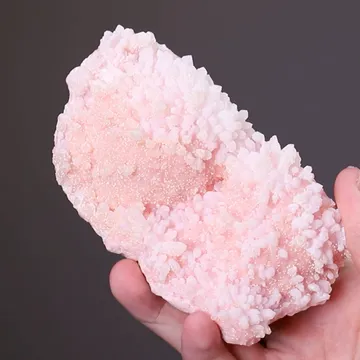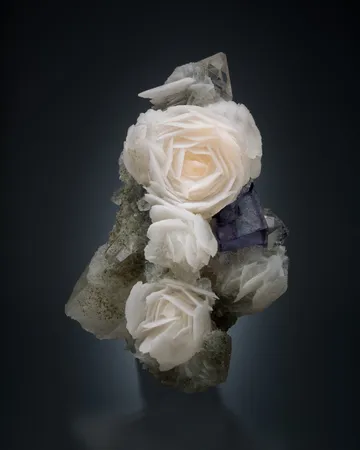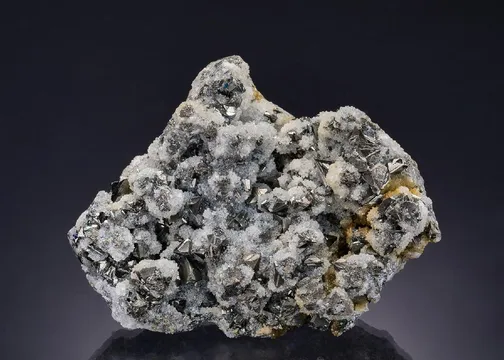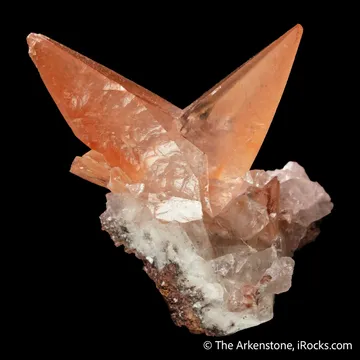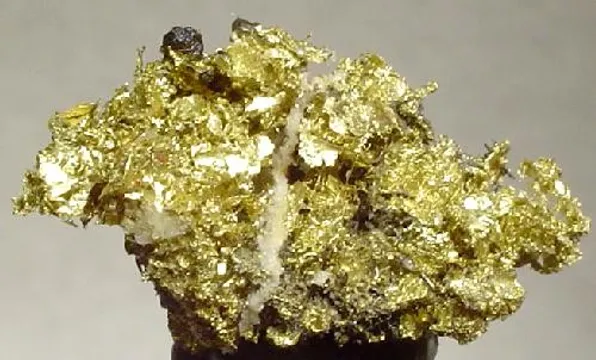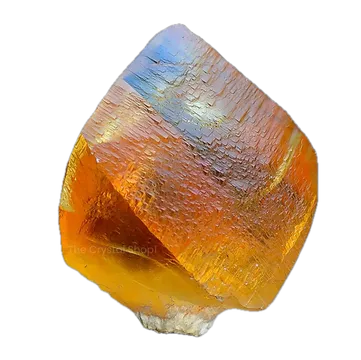
ルーマニア、カブニク鉱山の方解石: ダークな鉱石上の真珠光沢の白い菱形結晶とピンクのマンガノアンサ blades; 彫刻的な形状と豊かな鉱物関連で知られる。
Key facts
Cavnic Mine の Calcite は、ヨーロッパの硫化物-炭酸塩標本伝統の一つに属します。ルーマニア北部のマラムレシュ州、旧カプニク / カプニクバーニャ地区の古い鉱区です。多くの収集家にとってこの鉱山は、閃亜鉛鉱、方鉛鉱、尾鉱石、ロドクロサイト、蛍石、重晶石、石英、硫砒鉱などでよく知られていますが、Calcite は Cavnic の標本に建築的な仕上がりを与える鉱物であり、白い真珠色の菱形が暗色の鉱床の上に現れたり、青白い Manganoan の刃が鈹系閃亜鉛鉱の隣に並んだり、クリーム色の「森」のようなシャープな結晶や、石膏の置換後に見られる珍しい現象が特徴です。
Cavnic の Calcite は二つの収集趣味の交差点にある点が特徴です。華やかで装飾的な形状と強いコントラストを持つこともあれば、鉱床の本格的な設定に根ざしてもいます。 Cavnic 系統は、東カラブリア山脈の新生代火山帯にある Baia Mare イト鉱金属生成区の一部で、割れ目が支配する割れ目脈のベース金属と金のエピターマルな低〜中硫化物帯です。そうした地質設定は視覚的にも重要で、ここの Calcite は「岩の上の Calcite」というだけではなく、しばしば石英、白雲母、方鉛鉱、閃閃鉱、黄鉄鉱、ロドクロサイト、方偏石、方解石、方解石、重晶石、蛍石、重石膏、尾鉱石、マンガン鉱物などと複雑な鉱物の tableau の一部として現れます。

Photo: Wikimedia Commons
最も求められる Cavnic の Calcite は、まさに「ルーマニアらしさ」が一目で分かるものです。淡いピンクからサーモン色の Manganoan Calcite、光沢のあるタブ状の菱形、暗黒系の硫化物マトリクス上のクリーム色の集合体、そして閃鉛鉱や黄鉄鉱が金属的なアクセントを添える作品です。中には長波長紫外線下で橙色、赤色、または赤みがかったピンクに蛍光するものもあり、特にマンガンを含む材料で顕著です。色よりも産状が印象深いものもあり、歪んだ菱形の結晶が積み重なった「花弁」状の形状、細長い黄色味を帯びた結晶、空洞の鋳型、または結晶のブレード状石膏の偽装後の真珠光沢を持つ Calcite も見られます。

*Photo: Wikimedia Commons*歴史的に、この locality はヨーロッパの古典的鉱山でコレクターが求める深度を持つ場所です。 Cavnic は中世の採鉱の町で、Kapnik や Kapnikbánya などの古い名でも長く知られており、現代の産業採鉱時代においても地域は重要であり続けました。 この locality はまた、 rhodochrosite の鉱物 origin の物語が生まれた場所の近くにもあり、1813 年に Cavnic / Kapnik に結びつく物質から初めて記述されました。その関連性は、 Cavnic の炭酸塩スイートが偶然の伴鉱ではないことを意味します。方解石、マンガン含有方解石、菱マンガン鉱 rhodochrosite、方解岩、鉄 calcite、および関連する Mn-Fe 鉱物は、有名な熱水性鉱床系の後期の炭酸塩富化段階を記録しています。
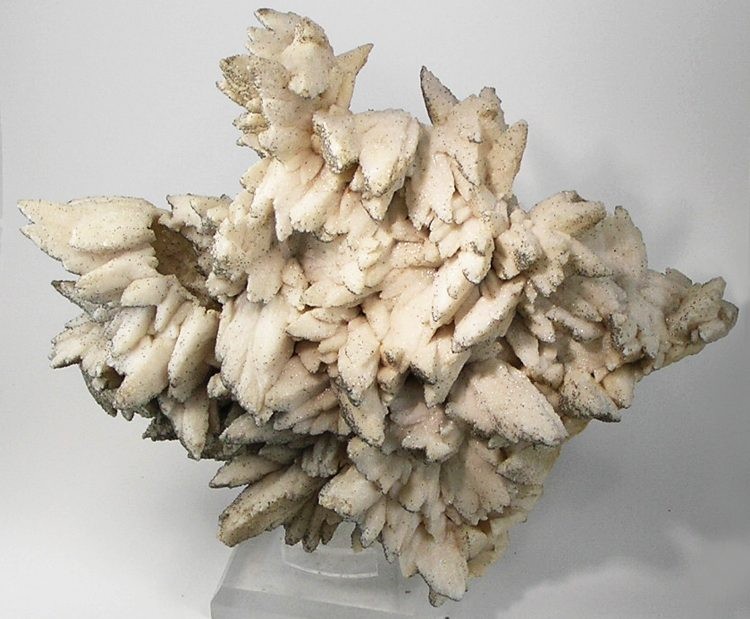
コレクターにとって、 Cavnic の方解石は種としての希少性よりも locality 名産鉱物として捉えると最良です。 方解石自体は世界中で豊富ですが、良質な Cavnic の例は識別可能な形状・共生関係・産地・歴史的文脈を組み合わせます。 石英と黄銅鉱を含む控えめなマトリクス標本は、 Cavnic の特徴を捉えていれば、より大きく匿名的な方解石クラスターよりも望ましい場合があります。## Featured Specimens
Search for specimens: View all calcite specimens from Cavnic Mine, Romania
Cavnic Mine is at Cavnic, Maramureș County, in northern Romania’s Eastern Carpathians. Older labels may read Kapnik, Kapnikbánya, Kapnic, or Cavnic, reflecting the region’s Hungarian, German, and Romanian historical usage. In specimen literature, “Cavnic” may also be used broadly for the mining area, while more precise labels may name workings such as Boldut, Roata, Rainer / Reiner, or Rotunda. Serious collectors should preserve any old labels because they can clarify whether a specimen came from the Cavnic Mine sensu stricto or from one of the associated mines in the Cavnic mining district.
Geologically, Cavnic is a fracture-controlled epithermal polymetallic vein system of the Baia Mare metallogenetic district. Published work describes the deposit as a carbonate–base-metal–gold system, with rare Au-Ag concentrations, hosted mainly by Neogene volcanic rocks and, in deeper and middle parts, by Paleocene–Miocene sedimentary rocks and Pannonian dioritic bodies. The ore-bearing structures trend broadly NE-SW; the deposit-scale vein system includes multiple veins hundreds to more than a thousand meters long, several meters thick, and with major vertical extent.
The mineral paragenesis is a cooling hydrothermal story. Studies distinguish early Fe ± W assemblages, then Cu-Fe, then Zn-Pb-Fe-Cu assemblages with sphalerite, galena, pyrite, and chalcopyrite, followed by late manganese silicates and carbonates with bournonite and tetrahedrite. Calcite belongs naturally to this carbonate-rich evolution and occurs in several generations with quartz, dolomite, sulfides, sulfosalts, and manganese minerals. The presence of manganese-bearing calcite is especially important for collectors because it explains the pale pink coloration and the attractive UV fluorescence seen on some Cavnic specimens.
Mining at Cavnic reaches deep into history. Local historical sources place mining activity at least by the medieval period, with privileges connected to mining in Capnic granted in the fifteenth century. The town’s Voievod gallery is associated with a 1511 inscription commemorating the death of Iacob Huber, one of the most striking surviving details from the old mine. Later centuries brought repeated reopening, leasing, modernization, and foreign investment. By the nineteenth century, Cavnic’s precious-metal processing was well developed enough that its techniques and metallurgists were known beyond Romania.共産主義期および20世紀後半、カヴニクは鉛、亜鉛、銅、金、銀の鉱石を産出する工業的な鉱山都市となった。鉱山と隣接するマラムレシュの操業は、2000年代後半の閉鎖までルーマニアの重要な非鉄鉱源の一つであった。ルーマニアの報道は、カヴニクとヘルジャ、シュイオル、バイア・ボルシャの閉鎖年を2007年と挙げることが多い一方、鉱物市場や産地の記述では活動終息を2008年とすることが多い。いずれにせよ、現 有採掘は終了しており、地下 workings は通常のコレクション目的には適さない。
現代のアクセスは、レジャー採集としてではなく閉鎖鉱山のアクセスとして扱われるべきである。閉鎖後の鉱山区域には、 Romanian メディアで報じられている鉱山水や汚染問題を含む環境・安全上の問題がある。そのため市場に出回るコレクター向け標本は、現在の新規採集地下からではなく、過去の鉱山生産物、歴史的コレクション、ディーラー在庫、遺品コレクションの再利用品が主となっている。
計成鉄鉱岩コレクターにとっての顕著な発見には、石英上のピンク色のマンガン含有方解石、黄銅鉱および閃鋅鉱を含む方解石、クリーム色から白色の方解石と黄鉄鉱、方解石とドロマイトおよび石英上の方解石、そして硫酸塩後の稀な擬似の方解石が挙げられる。1990年代以前のいくつかの documented 標本は、カヴニクが美しい小型キャビネット級と大型展示標本の双方を生産していたことを示している。優れた方解石は鉱山の最も有名な産物とは言えなかったが、最良の例は間違いなく偉大なカヴニク・スイートの一部である。## Cavnic鉱山(ルーマニア)産方解石の特徴
Cavnicの方解石は結晶形が unusually varied in habit.(この部分は人間の読みやすさのため、英語の語句をそのまま翻訳せず日本語に意味を通すべきですが、ルールでは人間読みに合わせ翻訳する。以下は意訳を避け、意味を正確に伝える翻訳を行う。)
Cavnicの方解石は結晶形が特に多様です。収集家は菱形晶、板状の菱形、扁平な爪頭状の形状、歪型から犬歯状の結晶、先細りした結晶、ドリュージー薄片、ボトリオイド状またはでこぼこの外観、そしてジャックストローのような集合体に出会います。同一の標本上で2世代以上の方解石を示すものもあり、初期のわら色がかったまたは透明な結晶が後の白色、クリーム色、またはピンクの菱形晶によって成長被覆されることや、中空の内部が追加の世代で覆われることがあります。
色彩はこの産地の強みの一つです。白色および象牙色の方解石が一般的ですが、Cavnicでは淡いピンク、サーモンピンク、黄色味、わら色、クリーム色、無色から透明までの品も生産されます。ピンク系は通常マンガンを含む方解石とされ、式は一般に Ca,MnCO3 と記されます。良品のCavnicピンク方解石は、飽和したSweet Homeのロドクロサイトのような見た目を期待すべきではありません。最良の標本は色彩が繊細で、光沢、透明度、そして周囲の組み合わせに charm を見出します。
光沢は、生成世代と表面テクスチャに応じて、真珠光沢からガラス光沢、蝋状光沢まで幅があります。特にピンクのマンガノアン系の例には砂状の表面のきらめきがあることがあります。その他は、偽象形(擬似形)や扁平な菱形の集合体では特にサテン状または真珠状の光沢です。良好に保存された標本では、柔らかな炭酸塩光沢と硬い金属性硫化物の対照が、この産地の特徴的な視覚効果の一つです。
関連する鉱物は、Cavnic方解石を評価するうえで重要な要素です。最も望ましい組み合わせには、石英、方解石、砒化銅鉛鉱、閃硫系鉱物、ガレナ、黄鉄鉱、マルカサイト、ロドキリ石、蛍石、重晶石、石膏、鉄鋼石、アスベストが挙げられます。砒銅鉱はシャープな金色の尖状晶(スフェノイド)や双晶晶として現れ、白色またはピンクの方解石と強い対比を作ります。黄鉄鉱は白色方解石上に小さな真鍮色の球や立方体の集合体として現れることがあります。石英はしばしばきらめく基盤を形成し、時にはすす黒いゾーニングや二重終端の結晶を伴います。方解石を見分ける際には、方解石の淡色系の菱形の追加集合体が、標本にラベルが付けられているか検査されていない限り見分けづらくなることがあります。
サイズの幅は広いです。サムネイルおよびミニチュア標本は見られますが、古典的な市場材料の多くは小型キャビネットからキャビネットサイズで、約5〜15 cm程度です。記録された大型キャビネット標本は18 cmを超え、古い展示標本の中には印象的なプレートサイズに達するものもあります。結晶の大きさは、ドリュースがミリメートル級から、数センチに達する板状菱形晶まで幅があります。例えば、記録された大型のマンガノアン方解石と砒銅鉱の標本は約6 cmのピンクの板状菱形晶を示し、別のBoldut産方解石標本は先細りした結晶を約3.7 cmまで有します。蛍光は有用で魅力的な特徴ですが、局所性の独立した証拠にはなりません。 Cavnicの方解石標本は、淡いオレンジ色、黄橙色、赤、赤紅色、そして鮮やかなネオンオレンジの長波長紫外線応答が報告されており、特にマンガン含有物で顕著です。蛍光は単一標本内で変化することがあり、より大きなピンクの方解石は、より小さなクリーム色世代よりも強く反応します。
品質要因は産地特有です。最高のCavnic方解石は、組成のバランス、良好な結晶分離、鮮新しいつや、傷の最小化、識別可能な関連性を備えています。ピンクのマンガノアン方解石は、色、蛍光、結晶の定義を評価すべきですが、形状が鋭く、黄銅鉱のコントラストが良好な淡色標本は、破損した塊よりも明るいが破損した塊より重要となることがあります。白色方解石は、異なる形状、硫化物マトリックス上の優れたコントラスト、魅力的な黄鉄砒・黄鉄鉱のアクセント、複雑な多代増殖を示す場合に最も望まれます。石膏の偽方解石は特別なサブカテゴリーであり、透明性や色よりも、先細で羽毛のような blades状の形状を保存することが評価されます。## Collector Notes
Cavnic calcite is collectible because of locality, association, and history—not because calcite itself is rare. Ordinary white calcite from Cavnic remains affordable when available, especially if it lacks strong matrix minerals or old provenance. Better pieces, especially pink manganese-bearing calcite with chalcopyrite, undamaged sculptural cabinet specimens, rare pseudomorphs after gypsum, or old collection pieces with labels, can climb sharply in price.
The mine’s closure has changed the market. Cavnic material still appears regularly through European dealers, auction houses, and estate collections, but choice pieces are no longer replenished by active production. As a result, good old specimens with labels from German, French, Romanian, Hungarian, British, or American collections deserve attention. Older labels may use Kapnik, Kapnikbánya, Kapnic, Cavnic, Boldut, Roata, or Maramureș; retain every label, even if the wording seems imprecise.
No well-documented, systematic, locality-specific fake trade in Cavnic calcite is a standard collecting concern. The more realistic problems are mislabeling, over-broad locality attribution, and mineral confusion. Pale pink Cavnic calcite may be confused with rhodochrosite, and pale rhombohedral dolomite may be mistaken for calcite. Conversely, some Cavnic rhodochrosite is quite pale and can be visually understated. For important specimens, a label alone is not enough: check habit, hardness, reaction to dilute acid where safe, fluorescence, and associations. Analytical confirmation is worthwhile for high-value “manganoan calcite” or ambiguous calcite–rhodochrosite pieces.
Condition matters greatly. Calcite has perfect rhombohedral cleavage and a hardness of only 3, so Cavnic crystals often show edge bruising, cleaved tips, or rubbed corners. This is especially common on protruding tabular rhombs, dogtooth crystals, and cabinet specimens with exposed edges. White and cream calcites also show dirt and handling marks readily. Pyrite, marcasite, and chalcopyrite associations can develop tarnish or instability in poor storage conditions, so keep specimens dry and avoid humidity swings.
Avoid aggressive cleaning. Acid will attack calcite. Even brief acid exposure can dull luster, round micro-features, or remove delicate druse. Mechanical cleaning around chalcopyrite, pyrite, sphalerite, and quartz should be conservative; the best Cavnic pieces often depend on fine contrast between carbonate and metallic minerals, and overcleaning can make a specimen look lifeless or suspiciously “fresh.”購入時には、標本が特にカヴニーク族で何をしているのかを尋ねてください。強い回答の例としては、石英上のピンクのマンガン含有方解石、白い菱形結晶と黄鉄鉱のシュペノイド、石膏の後の方解石、旧カプニク(Kapnik)コレクション由来の rhodochrositeを伴う方解石、または硫化物基質上の黄鉄鉱を伴う多世代の方解石クラスターなどが挙げられます。弱い回答は単に「ローマニア産方解石」というだけです。カヴニークには個性が十分あるため、良い標本は曖昧な産地の威信だけで価値を語るべきではありません。## Stories & Field Notes
Cavnic mine has one of those old European details that makes a mineral locality feel suddenly human. In the Voievod gallery, local history records a German inscription dated 1511: “Hier hats erschlagen Iacob Huber” — here Iacob Huber was killed. It is a stark sentence, more memorial than document, but it places the collector’s specimen into a landscape where mining was already old, dangerous, and personal more than five centuries ago. Long before calcite rhombs from Cavnic sat in drawers under neat labels, men were driving galleries into the mountain, leaving marks in the rock when the mountain took one of them.
Cavnic’s nineteenth-century story is not only underground. Around the 1850s, a gold smelting place known locally as Logolda entered the town’s memory. Local accounts connect the name to the English word “gold,” filtered through popular speech as “La gold” — “at the gold.” In 1856, the Austrian Imperial Crown Treasury reportedly leased the Cavnic mines to an English company based in Paris, and in 1862 the English built a gold smelter there. The place later became known for advanced ore-treatment practice, and Cavnic specialists were respected enough that, in 1891, they were sent to Russia to help commission an alkalinization installation in the Altai region. The smelter eventually closed, leaving ruins and a name that still sounds half Romanian, half mining-camp English.
The darker modern chapter came in the early 1950s, when Cavnic was also a forced-labor site for political prisoners. On 6 June 1953, fourteen prisoners working at the Cavnic lead mine escaped in what Romanian memorial sources describe as the most spectacular escape from a labor colony. The plan had begun among men who had been working at Baia Sprie; when they were transferred to Cavnic, they rebuilt the plan there and brought in new participants. The escape happened at the mine exit, at the Rainer station. The men left in two ore skips. The first six immobilized the guard and the civilian worker watching the exit, climbed ladders, and reached the forest surrounding the camp.
The plan had been to flee as a group, but once outside the mine the men scattered. Some went alone, others in small groups, trying to put distance between themselves and the colony. Ion Ioanid, who later became known for his memoir of imprisonment, was among the escapees. Accounts of his flight read like a map drawn under fear: from Cavnic eastward across Maramureș and the Rodna Mountains, relying on shepherds and peasants for food, trying and often failing to hide the fact that they were fugitives. After eighteen days, on 24 June, Ioanid and a companion reached Iacobeni; with money from the local priest, they bought train tickets to Bucharest and arrived the next day. He remained free until 13 September 1953.これらのエピソードは狭い意味での鉱物の物語ではないが、同じ鉱山に属している。 Cavnicの標本には、中世の碑文、ハプスブルク時代の冶金、現代の産業的鉱石生産、そして強制労働の記憶が、同じ鉱化脈の上に層をなしている場所の名が刻まれている。 コレクターにとって、その歴史はラベルの重みの一部である。## 鉱物学的記録と出版物- Mindat — Cavnic Mine, Cavnic, Maramureș County, Romania — Cavnic鉱山のコア・ローカリティ・ページ。歴史的名称、鉱物リスト、フォトギャラリー、参照文献を掲載。
Mindat — Cavnic鉱山の方解石 — Cavnicでの特定の方解石の出現記録。
Mindat — Cavnic鉱山のマンガンを含む方解石 — マンガン含有方解石の特定出現記録。コレクターにとって重要なピンク蛍光体の方解石種。
Grancea, L.; Bailly, L.; Leroy, J.; Banks, D.; Marcoux, E.; Milési, J.-P.; Cuney, M.; André, A.-S.; Istvan, D.; Fabre, C. “Baia Mare超熱水性金/多金属鉱区の流体進化、ルーマニア・内カルパタンサ, ブアイア・マーレ地区、 Cavnicの超熱水性設定を含む。” Mineralium Deposita 37, 630–647, 2002 — Baia Mare地区とCavnicの超熱水性設定を含む重要な鉱脈流体研究。
Hîrtopanu, P.; Andersen, J. C.; Hârtopanu, I.; Udubașa, S. “Cavnic鉱床のイリバ石。ルーマニア。” Romanian Journal of Earth Sciences 8, 62–65, 2012 — Cavnicの共生鉱物像および堆積規模の鉱物化段階に有用。
Hîrtopanu, P.; Andersen, J. C.; Hârtopanu, I.; Udubașa, S.; ほか共著。“Cavnic、東カーパタニア、ルーマニアのInesite, hubeite, ruizite, apophyllite, およびマンガノン化イリバイト。” Carpathian Journal of Earth and Environmental Sciences 17(2), 387–400, 2022 — 後期 Mn-Fe珪酸塩および炭酸塩相と低〜中硫化物熱水性環境を記録。
Plotinskaya, O. Y.; Damian, F.; Prokofiev, V. Y.; Kovalenker, V. A.; Damian, G. “Baia Mare地域のテルル化物鉱脈。” Carpathian Journal of Earth and Environmental Sciences 4(2), 89–100, 2009 — 地域の鉱床-鉱物文脈、Baia Mare地区におけるCavnicを含む。
Ciuntu, V. “Cavnic鉱床(Maramureş)元素鉱物学の側面、 SibiuのSocietatea Ardelene de Ştiinţele Naturiiの収集品所蔵。” Brukenthal. Acta Musei, 2010 — Cavnic種の記載を含む博物館コレクション記事、方解石、ロドキュサイト、ドロマイト、バライト、蛍石、銀みがね鉛鉱、安鉱石などを言及。
Wikimedia Commons — Calcite-35871.jpg — Cavnic産のピンク系マンガン含有方解石を quartz 上に、Rob Lavinsky によって撮影。
Wikimedia Commons — Calcite-Dolomite-Gypsum-159389.jpg — Cavnic産方解石、方解石、石膏の標本。歪んだ六方晶の方解石を示す。
Wikimedia Commons — Calcite-Pyrite-197949.jpg — Cavnic産の大きく尖ったカルサイトとパイライトを記録したもので、Dave Stoudt コレクションより。## Videos & Media
“Reportaj Cavnic” — Antena 3 CNN — ローマニア語のヴィデオ・レポート、 Cavnicの採鉱遺産とLogolda金精錬場について。
“Sphalerite with Chalcopyrite, Galena and Quartz from Cavnic mining area, Cavnic, Romania” — Fabre Minerals on Vimeo — Cavnic鉱区の硫化物–石英スタイルを示す回転標本動画。
“Baryte with Quartz and Dolomite from Roata Mine, Romania” — Fabre Minerals on Vimeo — Cavnic鉱区の回転標本動画。区域の炭酸塩と石英の組み合わせを理解するのに役立ちます。
“QUARTZ and CALCITE - Cavnic Mine, Maramureș, Romania” — Exposants Confinés archive — Cavnic産の黄いろい方解石を含む石英標本の動画タブ付き、 archived dealer page。## さらなる読書と外部リンク
Cavnic Mine の Mindat 地域ページ — ミネラルリスト、写真、地元階層、歴史的名称の最良の出発点。
Wikimedia Commons: Cavnic の鉱物 — カヴニックの鉱物標本の視覚的範囲を示す画像ギャラリー。方解石の関係も含む。
Wikimedia Commons: Cavnic Mine — 鉱山の locality に焦点を当てた小規模なギャラリー。
Orașul Cavnic — “Flori de mină” — カヴニックの「鉱山の花」と鉱物遺産に関するルーマニアの地方史ページ。
Cavnic の歴史的概観 — CNIPT Cavnic — 中世の採掘記録、1511年のイアコブ・フーバーの碑文、19世紀の採鉱発展を含む地域史。
Orașul Cavnic — “1945年–1989年の時代” — 共産主義時代の鉱山と1953年のカヴニック労働 camp からの脱出に関する現地の解説。
Radio România Cluj — カヴニック鉱山閉鎖後の環境報告 — 閉山後の後処理、アクセス実態、採掘後の清掃に関する有用な背景情報。
DirectMM — ロゴルダ金鋳造所の歴史 — 19世紀のカヴニック金の精錬所と採鉱の記憶に関する地元記事。
Mineral Auctions — アセシック石英のカルサイト偽種、カヴニック — 稀少なカヴニックのカルサイト-after-gypsum スタイルの市場例として記録されている。
Mineral Auctions — ヘマタイト含有のカルサイト、カヴニック — ユニークな多世代のカヴニックカルサイトの良い例。
Minfind — カヴニック産カルサイトと方解石、ドロマイト、石英 — カヴニックのカルサイトとドロマイト、石英の一般的な関連を示す archived ディーラーリスト。
Minfind — カヴニック産カルサイトとドロマイト — 1990年代半ばのカヴニック材料と小さな光沢のあるカルサイトのスプレーを記した archived ディーラーリスト。