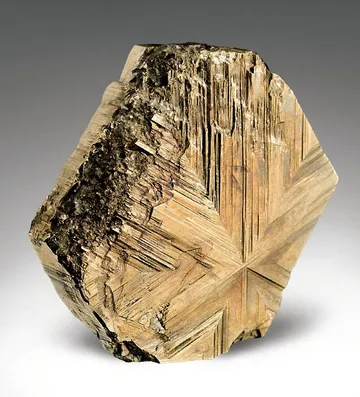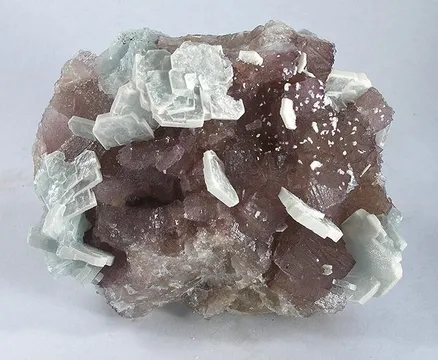
British Columbia, Canada: a Cordilleran locality yielding Moyie pyromorphite, Kamloops Lake ferrierite, and Cariboo gold; diverse specimens prized by collector…
Key facts
British Columbia is not one locality in the ordinary cabinet-label sense; it is a Cordilleran mineral province, a long accreted margin where oceanic arcs, continental-shelf strata, ultramafic slices, granitic belts, and young volcanic basins have been welded, broken, intruded, uplifted, and mineralized for hundreds of millions of years. For collectors, that complexity translates into a remarkable spread of specimen environments: oxidized lead-zinc veins at Moyie yielding Canada’s best-known pyromorphite; gold-quartz vein systems and placer fields at Cariboo, Atlin, Cassiar, and Bridge River; zeolite-bearing amygdules at Kamloops Lake; major silver-lead-zinc camps in the Kootenays; copper-gold porphyries and epithermal veins in Stikinia’s Golden Triangle; and a long list of small but scientifically important occurrences that have supplied type minerals and rare species. The best British Columbia specimens have a distinctly western Canadian look: green pyromorphite prisms on iron-stained matrix, lustrous ferrierite rosettes tucked into chalcedony-lined basalt cavities, coarse placer gold with quartz adhering to rough nuggety surfaces, and quartz crystals from remote veins that may show phantoms, rainbow veils, or double-terminated “diamond” habits.
Regional View
Country View
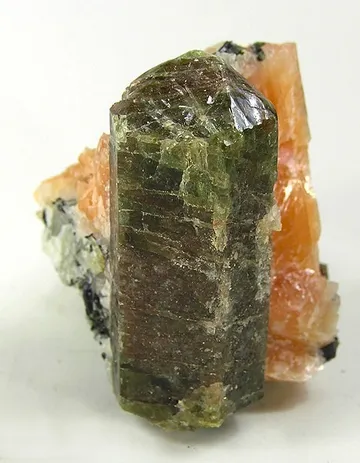
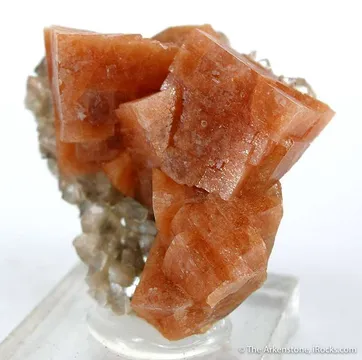
The collector’s British Columbia is anchored by a few classic names. The Society Girl Mine near Moyie is the key Canadian pyromorphite locality: yellow-green to green prisms, sometimes curved or barrel-shaped, from oxidized galena-cerussite zones in a narrow fissure vein. Kamloops Lake is the type area for ferrierite-Mg, represented by radiating, orange to reddish zeolite sprays on chalcedony in altered basaltic amygdules. The Cariboo Goldfield at Barkerville and Wells is historically central to the creation of British Columbia and scientifically important for the relationship between pyritic quartz veins, replacement bodies, and placer gold. Farther west, Bralorne-Pioneer represents the high-grade orogenic gold-quartz vein end of the province’s specimen story, while Atlin and Turnagain preserve the romance of coarse placer gold in nuggets large enough to become provincial icons.

Photo: Wikimedia Commons
Search for specimens: View all specimens from British Columbia, Canada
British Columbia’s mineral specimen localities are distributed through the five great longitudinal belts of the Canadian Cordillera: Insular, Coast, Intermontane, Omineca, and Foreland. Each belt carries its own specimen signature. The Intermontane arc terranes hold many copper-gold porphyry and epithermal systems; the Omineca and eastern Kootenay belts include important lead-zinc-silver deposits and oxidized vein systems; the Coast and Bridge River areas host major gold-quartz vein camps; and younger volcanic and sedimentary basins preserve zeolites, agates, opal, and industrial-mineral occurrences. Because the province is a collage of accreted terranes, the specimen record is less a single paragenesis than a sequence of environments stacked side by side: sediment-hosted massive sulfide, polymetallic vein, orogenic gold, porphyry copper-molybdenum-gold, skarn, placer, zeolite amygdule, pegmatite, and supergene oxidation.
For collectors, the most cabinet-ready oxidized lead minerals come from small fissure and replacement systems rather than from the great bulk-tonnage mines. The Society Girl group, about two miles southeast of Moyie and roughly 2,000 feet above Moyie Lake, was described in early British Columbia mining reports as a lead-silver occurrence with galena, quartz gangue, zinc minerals, cerussite, and “pretty” pyromorphite crystals in the oxidized workings. The host rocks belong to the Aldridge Formation of the Purcell Supergroup, and the vein follows a strong Moyie-area fissure zone. In the upper oxidized zone, galena altered to cerussite, limonite, and pyromorphite; tabular cerussite crystals and green pyromorphite prisms are the species that put the mine into Canadian specimen literature. Later collector mining in the 1970s recovered flats of specimens and many thumbnails, but good matrix clusters remained scarce.
The province’s gold specimen story begins with placers but does not end there. Fraser River gold in 1858 triggered one rush; Cariboo gold in 1860–1861 built an enduring camp whose geology still attracts research. The Cariboo Goldfield includes both lode deposits and secondary placer deposits, with lode mineralization in pyritic quartz veins and pyritic replacement bodies near a terrane-bounding fault zone between Slide Mountain oceanic rocks and Barkerville Terrane metasediments. The Cariboo Gold Quartz, Island Mountain, and Mosquito Creek mines produced gold from 1933 to 1987, while placer mining on creeks around Barkerville continued at varying intensity long after the first rush. The gold in British Columbia placers ranges from fine flattened grains to chunky, irregular, drusy, and quartz-adhering nuggets; the best specimens are those that preserve their natural rough form rather than being cleaned, burnished, or melted.
The Bridge River camp, especially Bralorne and Pioneer, represents the province’s great high-grade lode-gold tradition. Its gold-quartz veins are classed as mesothermal, orogenic, greenstone-hosted quartz-carbonate systems, closely tied to the Cadwallader fault zone and Bralorne intrusive rocks. Historical descriptions emphasize free gold with pyrite and arsenopyrite in banded quartz veins, with scheelite and other minor phases locally present. Production from Bralorne-Pioneer was enormous by British Columbia standards, and the district remains one of the names serious gold collectors watch for, although most surviving specimens are either ore pieces, gold-in-quartz, or small native-gold showings rather than the abundant crystallized leaves and wires associated with certain American or Australian camps.
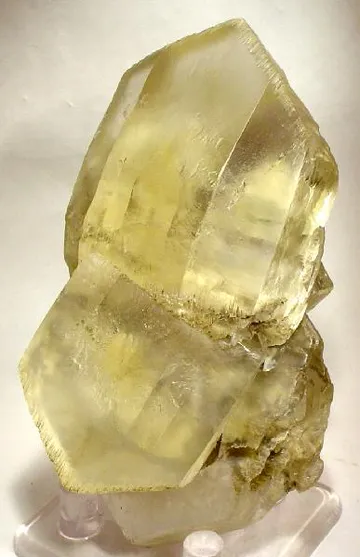
Quartz is everywhere in British Columbia, but specimen-grade quartz is more selective. Gold districts such as Cariboo, Bralorne, Cassiar, and Atlin have supplied quartz as vein material, usually valued when it carries visible native gold, sulfides, or attractive brecciation. The most explicitly specimen-oriented quartz occurrence documented in provincial records is the Phantom property in the Groundhog coalfield of northwestern British Columbia, discovered in 1989 during a regional prospecting program. There, more than thirty quartz veins cut sandstone, siltstone, and mudstone sequences in the Bowser Basin; vugs and channels in the veins yielded crystals noted for phantoms, rainbow effects, and double-terminated “diamond” forms. Small-scale hand work from 1990 to 1993 produced over 1.5 tonnes of A-B grade material, making it an unusual British Columbia quartz occurrence where the quartz itself, rather than its ore value, was the focus.
British Columbia’s major mining history is much broader than specimen collecting. The Sullivan Mine at Kimberley was one of the world’s great sediment-hosted lead-zinc-silver deposits, worked for roughly a century and important not only economically but mineralogically: it is the type locality for mcgillite, a pink Mn-Fe hydroxychlorosilicate of the pyrosmalite group. Rossland, Slocan, Ainsworth, Sandon, Phoenix, Britannia, Anyox, Premier, Eskay Creek, Bralorne, Cariboo, Atlin, Cassiar, Highland Valley, and the Golden Triangle all belong to the province’s mining map. Some produced few display specimens despite massive ore output; others, especially oxidized vein systems and zeolite/amygdule pockets, produced modest quantities of highly recognizable collector pieces.
Collecting access today must be treated as a legal and safety matter, not a casual rockhound assumption. Much of British Columbia’s mineral ground is covered by active mineral titles, private land, First Nations interests, parks, conservancies, recreation areas, heritage properties, operating mines, reclaimed mine sites, or hazardous abandoned workings. Recreational hand panning is allowed only under defined conditions, and valid mineral titles require permission from the recorded holder. Provincial parks and protected areas generally prohibit removal or collection without authorization. For specimen collecting, the practical rule is simple: confirm land status, claims, and access before entering; obtain written permission where needed; avoid underground openings and unstable dumps; and treat old mine sites as industrial hazards even when they look like quiet forest ruins.
British Columbia pyromorphite is defined above all by the Society Girl Mine near Moyie, where Pb5(PO4)3Cl formed in the oxidized zone of a lead-bearing vein as galena altered to cerussite, limonite, and phosphate-rich secondary assemblages; the classic crystals are yellow-green to deep green prisms, commonly lustrous, translucent to opaque, and sometimes subtly curved or barrel-shaped, with single crystals reported to about an inch and better cabinet pieces showing clusters of several centimeters on limonitic, cerussite-rich, or quartz-bearing matrix. Matrix specimens are much scarcer than loose prisms and thumbnails, so the best pieces combine saturated green color, sharp hexagonal form, hoppered or lightly skeletal terminations, undamaged luster, and an aesthetic perch rather than a mere scattering of isolated crystals. Wulfenite has been confirmed from the Society Girl assemblage as tiny golden plates, but it is rare; cerussite, galena, sphalerite, limonite, and quartz are the associations most relevant to specimen identification. Old labels from other British Columbia lead mines should be scrutinized carefully, because the reliable pyromorphite specimen tradition is overwhelmingly centered on Society Girl, with additional documented but less celebrated occurrences such as oxidized Slocan-area material.
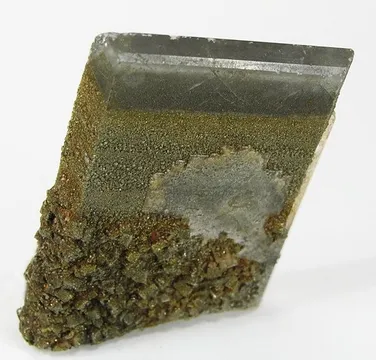
British Columbia quartz ranges from common vein quartz in gold camps to genuine specimen crystals from remote pocketed veins, and the finest collector quartz is not simply clear SiO2 but material with a precise district character: gold-bearing white quartz from Bralorne-Pioneer and Cariboo, sulfide-bearing quartz from polymetallic Kootenay veins, and crystal specimens from the Phantom occurrence in the Groundhog coalfield, where vugs and channels in 30-to-100-centimeter-wide veins yielded crystals noted for phantoms, rainbow inclusions, and double-terminated “diamonds.” The Phantom material, discovered in 1989 and hand-worked in the early 1990s, is especially important because provincial records describe it as a specimen-quality quartz occurrence rather than an ore vein byproduct. Good British Columbia quartz specimens are judged by more than clarity: intact terminations, visible internal phantoms, limpid luster, balanced clusters, doubly terminated crystals, or native-gold association distinguish them from the massive white vein quartz that is abundant across the province’s mining districts.
British Columbia gold specimens fall into two principal collector categories: placer nuggets and gold-in-quartz. The placer tradition is strongest in the Fraser, Cariboo, Atlin, Cassiar, and Turnagain districts, where coarse grains and nuggets were recovered from bedrock cracks, shallow gravels, and ancient pay channels; the most desirable natural pieces show rugged, unpolished surfaces, attached quartz, drusy texture, or sculptural flattened forms that record transport without being reduced to anonymous bullion. The lode tradition is best represented by Bralorne-Pioneer and Cariboo gold-quartz systems, where free gold occurs with pyrite, arsenopyrite, quartz, carbonate, and locally scheelite or other accessory minerals. British Columbia gold is historically important even when visually modest: the Cariboo rush helped shape the province, the Bralorne-Pioneer mines produced high-grade gold from quartz-carbonate veins, and large nuggets such as the Turnagain Nugget preserve the romance of northern placer mining. Excellent specimens are those with visible native gold that remains securely embedded or naturally exposed, carries credible locality documentation, and has not been excessively cleaned, flattened, soldered, mounted, or represented as crystalline when it is actually water-worn placer metal.
Beyond pyromorphite, quartz, and gold, British Columbia is scientifically notable for several rare and type-locality minerals. Ferrierite-Mg was originally described from the Kamloops Lake area, where radiating zeolite aggregates occur with chalcedony in altered basaltic cavities. Mcgillite, a pink manganese-rich hydroxychlorosilicate, has its type locality at the Sullivan Mine at Kimberley. Cupropolybasite is tied to the Silbak Premier Mine at Stewart. Zoltaiite and greenwoodite, both rare barium-vanadium silicates, are type-locality species from the Wigwam Pb-Zn deposit near Revelstoke. The province also has important specimen and study occurrences of cerussite, anglesite, wulfenite, ferrierite-group zeolites, chalcedony, agate, nephrite jade, rhodochrosite, scheelite, sphalerite, galena, pyrrhotite, pyrite, arsenopyrite, native silver, tetrahedrite-group minerals, and numerous supergene sulfates, phosphates, and oxides in oxidized base-metal workings.
The strongest British Columbia locality premium belongs to specimens with specific sublocality documentation. A label that says only “British Columbia” is rarely enough for a serious cabinet unless the species is distinctive and the provenance is convincing. For pyromorphite, Society Girl Mine attribution matters greatly; loose green prisms, old thumbnails, and small matrix pieces are still seen, but high-quality matrix clusters are scarce and command a premium. Be cautious with older labels attributing pyromorphite to other southeastern British Columbia lead mines without analytical or literature support, especially where later locality reviews have questioned the species. Society Girl pyromorphite can be confused in trade with more abundant Idaho, German, Chinese, or Australian pyromorphite; British Columbia examples tend to be fewer, often smaller, and more historically significant than visually overwhelming.
Condition issues vary by species. Society Girl pyromorphite crystals may be loosely attached to matrix, and older pieces often show bruised terminations, rubbed edges, or missing isolated prisms. Cerussite associations should be handled carefully because cerussite can chip and cleave, and old limonitic matrices shed dust. Ferrierite and other zeolite specimens from Kamloops-area basalt cavities are delicate: thin bladed sprays and chalcedony-lined cavities can be damaged by trimming, ultrasonic cleaning, or aggressive brushing. Gold-in-quartz is commonly sawn, polished, acid-cleaned, or stabilized; that is not automatically deceptive, but the treatment should be disclosed, and natural specimen value is highest when the gold’s form and matrix relationship remain intact. Placer nuggets are frequently cleaned or tumbled; over-bright, rounded, unnaturally shiny pieces may be less desirable as mineral specimens even if their bullion value is unchanged.
Fluorescence is not the main buying criterion for most classic British Columbia cabinet material. Some carbonates, opal/chalcedony, scheelite-bearing gold-quartz ore, and supergene minerals may respond under ultraviolet light, but the province’s best-known collector species are valued primarily for form, color, association, and locality. Lead minerals such as pyromorphite and cerussite should be handled with ordinary mineral hygiene: wash hands after handling, avoid inhaling dust from trimming or sawing, and do not use them in jewelry or open educational handling trays for children. Arsenopyrite-bearing gold ores and oxidized mine-dump material deserve similar respect.
Market availability is uneven. Society Girl pyromorphite appears periodically as thumbnails and small miniatures, often from old Canadian collections or 1960s–1970s collecting, with larger matrix pieces much less common. British Columbia gold is always available in a broad sense because placer gold continues to circulate, but well-documented mineral specimens from named creeks or historic lode mines are much scarcer than anonymous nuggets sold by weight. Phantom-property quartz is a specialist item; when properly labeled, it is of greater interest than ordinary British Columbia quartz because its pocketed crystal occurrence is documented. Type-locality rarities such as mcgillite, zoltaiite, greenwoodite, and cupropolybasite are primarily micromount, research, or museum-level specimens and should not be expected in quantity on the general market.
The Society Girl Mine has the scale and texture of a locality collectors remember by rumor: a small group of seven Crown-granted claims, perched east of Moyie Lake, famous not because it was a great mine but because the oxidized lead vein happened to grow handsome green pyromorphite. Early reports described ore that was mostly galena, cerussite, and quartz gangue, with silver carried in the lead. The specimen tragedy is easy to imagine: hand sorting would have saved some bright crystals, but plenty of pyromorphite-rich material probably went to the smelter as ore. The surviving pieces are therefore a kind of accident of selectivity—loose, barrel-shaped prisms and occasional clusters that were attractive or fragile enough to escape the ore stream.
In the summer of 1975, Rod Tyson of Tyson’s Fine Minerals and John Gorham returned to the Society Girl site as specimen miners rather than ore miners. Their first season produced several flats of specimens and countless thumbnails, the kind of recovery that can define a Canadian locality for decades. The follow-up trip in 1976 was the more sobering half of the story: after the earlier success, they recovered only a small number of thumbnails. That contrast explains the market today. Society Girl pyromorphite is not rare in the sense of being unknown, but fine pieces are not endlessly replaceable; the best matrix miniatures are the survivors of a very limited oxidized zone, a brief mining history, and a few focused collecting episodes.
British Columbia’s gold stories run on a larger stage. At Spruce Creek in the Atlin Lake district, an 84-ounce nugget was taken from 126 feet below the surface on July 8, 1899. Contemporary accounts estimated that it contained about 50 ounces of pure gold and was worth about $1,000, with reports of thousands of bean-sized nuggets and hundreds more like gravel stones in the same broader rush-era narrative. For a mineral collector, the detail that matters is the depth: this was not a casual surface picker but a heavy, coarse placer specimen recovered from deep ground in a northern camp that had only recently entered the gold-rush imagination.
The Turnagain Nugget is the province’s most famous surviving gold specimen. Alice Shea found it in 1937 while walking on her husband Vern Shea’s claim near the Turnagain River in northern British Columbia. The nugget weighs about 1,642 grams, or 52 troy ounces, and has been described as roughly 20 centimeters long. The British Columbia government bought it for $1,500, and it later became a museum and exhibition object rather than a melted bar. In the mineral world, that survival is everything. Many large nuggets vanish into refineries; this one kept its form, its name, and its story.
The Cariboo story is not only about individual nuggets. Gold discovered in 1860 and 1861 turned creeks such as Antler, Lightning, Slough, and Williams into names that still carry weight, and the rush helped transform a remote colonial frontier into the political and economic framework of British Columbia. Later, in the 1930s, when the province was battered by the Great Depression, lode mines at Wells and in the Bridge River country began producing gold from bedrock. The Cariboo Gold Quartz and Island Mountain mines helped create and sustain the town of Wells, while Bralorne and Pioneer drove deep into high-grade quartz-carbonate veins. For collectors, a Cariboo or Bralorne label carries both geology and history: pyrite-rich quartz veins, coarse placer gold, depression-era mining, and the long Canadian habit of saving only a small fraction of ore as specimens.
Kamloops Lake offers a very different field image. Ferrierite occurs not in a romantic gold creek but in basaltic cavities along the north shore of a dry interior lake landscape. Collectors describe ferrierite as radiating sprays and rosettes on chalcedony, commonly stained orange to red by hematite. One field note from a Kamloops Lake ferrierite specimen records a collector reaching for a rock on July 5, 1996, only to see movement beside it: a small rattlesnake, just centimeters away and hidden by grass. The specimen was left behind “in the care of its reptilian sentinel.” It is a fitting British Columbia collecting scene—beautiful crystals, difficult access, dry grass, prickly pear, and a reminder that the province’s best specimens rarely come from comfortable places.