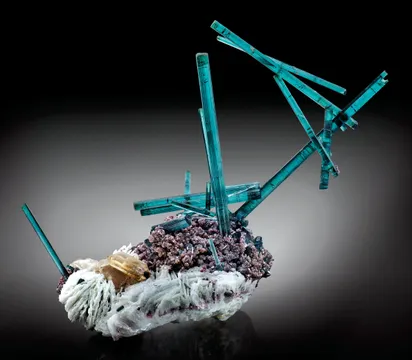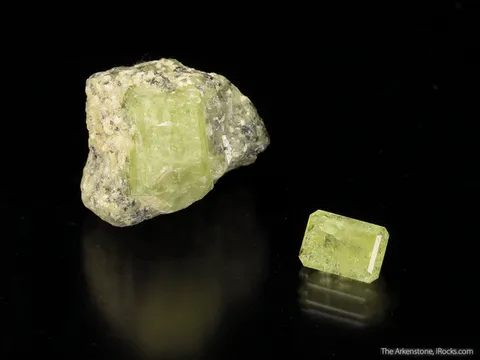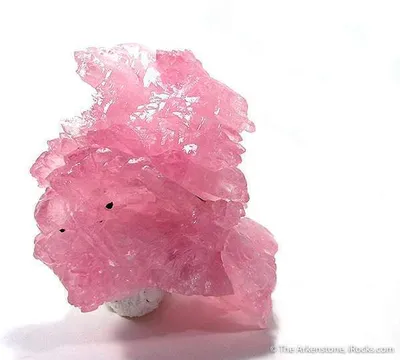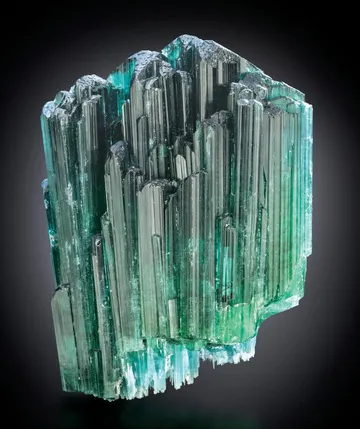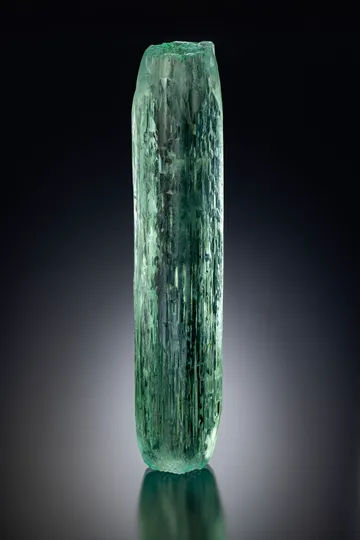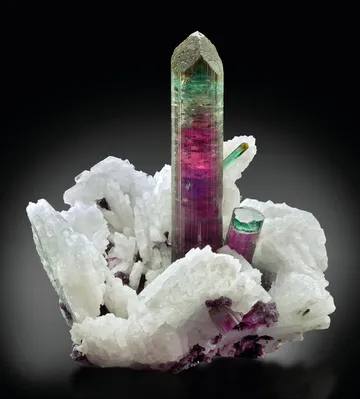
Brazil, a vast collecting province, centers on Minas Gerais pegmatites yielding elbaite tourmaline, quartz, beryl, rare phosphates, and famed amethyst geodes.
Key facts
Brazil is not one mineral locality in the narrow sense; it is a continent-scale collecting province, with several of the world’s benchmark specimen districts lying within one national boundary. For serious collectors, the country’s center of gravity is eastern Minas Gerais, where gem-bearing granitic pegmatites of the Eastern Brazilian Pegmatite Province cut schists and gneisses of the Araçuaí orogen and have yielded elbaite tourmaline, quartz, beryl, brazilianite, phosphates, feldspar, muscovite, and a long list of rare species. Pederneira, Cruzeiro, Jonas, Golconda, Santa Rosa, Sapucaia, Córrego Frio, Telírio, and Cigana are not just place names on labels; they are part of the working vocabulary of high-end mineral collecting.
Regional View
Country View
The Brazilian collector aesthetic is famously vivid. Minas Gerais pegmatites give sharp, transparent elbaite crystals in rubellite, green, blue-green, watermelon, and multicolored zoned forms, commonly on cleavelandite, lepidolite, quartz, feldspar, and sometimes morganite. The same broad province produced classic quartz—rock crystal, smoky quartz, rose quartz, rutilated quartz, scepter and skeletal forms—and the phosphate localities of Galiléia, Linópolis, Divino das Laranjeiras, Conselheiro Pena, and Mendes Pimentel added brazilianite, childrenite-eosphorite series minerals, triphylite alteration suites, hureaulite, ludlamite, vivianite, and rarities of genuine scientific consequence.

Photo: Wikimedia Commons
Southern Brazil supplies the other great Brazilian look: basalt geodes from the Paraná Basin, especially Rio Grande do Sul. There the Serra Geral Formation hosts cavities lined with chalcedony, agate, quartz, calcite, and amethyst, from small lined nodules to display geodes measured in tens or hundreds of kilograms. These pieces have made Brazilian amethyst and agate a permanent presence in museums, living rooms, lapidary shops, gem shows, and serious systematic collections alike.

Photo: Wikimedia Commons
Brazil’s historical importance is equally broad. Its colonial and imperial mineral searches helped shape the early gemstone trade; its twentieth-century mica, beryl, quartz, tourmaline, amethyst, and agate booms built regional cutting and trading centers such as Governador Valadares, Teófilo Otoni, Soledade, and Ametista do Sul; and its pegmatites remain a fertile field for mineralogical description. A first-rate Brazilian specimen should not merely say “Brazil” on the label: the best labels preserve mine, claim, pocket, district, and find history, because a Pederneira Rocket Pocket tourmaline, a Rio Grande do Sul amethyst geode, a Lavra da Ilha quartz Japan-law twin, and a Sapucaia phosphate are completely different collecting objects.

Photo: Wikimedia Commons
Search for specimens: View all specimens from Brazil
For collectors, Brazil divides naturally into several specimen provinces. Eastern Minas Gerais is the classic pegmatite country. The Eastern Brazilian Pegmatite Province is an elongated belt extending through eastern Minas Gerais and beyond, with many productive bodies emplaced in metamorphic rocks during and after the Brasiliano tectonic cycle. The most important collector pegmatites are differentiated bodies enriched in boron, beryllium, lithium, phosphorus, niobium, tantalum, tin, and volatile-rich residual fluids. Their specimen-producing zones are not simply “ore” in the metal-mining sense: the collector material comes from miarolitic cavities, replacement pockets, albite-rich zones, lepidolite-rich masses, quartz cores, and phosphate-alteration pods.
In the São José da Safira district, mines such as Pederneira, Cruzeiro, Aricanga, Golconda, Jonas, and Santa Rosa belong to the great Brazilian tourmaline tradition. Pederneira’s productive pegmatites include the Dilo and Dada bodies, described as subparallel tabular pegmatites almost concordant with the schistosity of their biotite-quartz-garnet mica-schist host. Much of the gem and specimen production came where relatively thin pegmatite bodies swelled into inclined columns, locally much thicker than the surrounding tabular portions. The pocket assemblage that collectors recognize—elbaite, cleavelandite, lepidolite, quartz, feldspar, muscovite, beryl, and accessory phosphates or oxides—reflects that late, fluid-rich pegmatite evolution.
Pederneira was first noticed in the 1940s, when a farmer named Pacheco found muscovite after a storm and sold barrels of mica by mule to American buyers near São José da Safira during the World War II mica boom. The mine later slept, revived in the 1980s, and then became one of the most documented specimen-producing tourmaline mines in the world after the late-1990s and early-2000s pockets. Named finds such as Keké’s Pocket, the Giant Quartz Pocket, Sharon Stone Pocket, Proud Pocket, Rocket Pocket, Afghan Pocket, Grandon Pocket, Azul Bien Grande Pocket, Blue-Green Pocket, Violet Pocket, Blue Gem Pocket, and Cranberry Blue Pocket are collector landmarks because they preserve recognizable differences in color zoning, terminations, matrix, and pocket habit.
Cruzeiro, about two hours from Governador Valadares, is one of Brazil’s most prolific modern tourmaline mines. Its earlier history involved mica mining; the modern tourmaline enterprise began with José Neves and Antonio De Assis Neves in the 1950s, passed through a period of ownership by Julius Sauer, and returned to the Neves family in 1982. Production has included red and pink rubellite, green, blue, blue-green, and bicolored elbaite, with large crystals and commercial gem rough recovered from extensive underground workings. The mine remains important both to the gem trade and to mineral-specimen collecting.
The older Governador Valadares tourmaline districts add a more turbulent chapter. Santa Rosa, first worked for mica in 1938, exploded into fame after garimpeiro Tião Matias found colored tourmaline chips in ant holes and armadillo burrows on October 12, 1967. Within a year, large quantities of bicolored pink-and-green tourmaline on quartz were recovered. Jonas, discovered in 1978 near the Itatiaia mine, became one of the great rubellite localities, producing large, clean, high-value crystals from an unusually rich pocket. Golconda I, II, and III contributed green, blue-green, rose, and sapphire-blue tourmalines, with Golconda III especially remembered for a major emerald-green tourmaline bonanza.
The Galiléia–Conselheiro Pena–Linópolis–Divino das Laranjeiras phosphate district is the intellectual counterpart to the tourmaline mines. Sapucaia, Córrego Frio, Telírio, Cigana, Boa Vista, Eduardo, Gentil, and related pegmatites have produced both fine cabinet specimens and type-locality minerals. Córrego Frio is famous for brazilianite, scorzalite, and souzalite; Sapucaia is tied to a remarkable suite of phosphate species and has been the subject of detailed mineralogical work; Cigana has produced phosphate assemblages including hureaulite, rockbridgeite-group minerals, correianevesite, ludlamite, and vivianite; and Telírio has been a major source of greenish-yellow brazilianite crystals for decades.
Brazil’s quartz production is too widespread to reduce to one district. Minas Gerais has yielded water-clear rock crystal, smoky quartz, rutilated quartz, rose quartz, citrine, “elestial” skeletal quartz, scepters, Japan-law twins, phantoms, and quartz with schorl, hematite, chlorite, rutile, or clay inclusions. The Ilha claim near Taquaral, Itinga, in the Jequitinhonha River, is especially recognized for quartz and rose quartz specimens from a pegmatite literally set in riverine ground that could be worked only when water conditions permitted. Diamantina and nearby quartz districts add long, tapered clear crystals and the heavily marketed striated crystals often sold under metaphysical trade names.
In Rio Grande do Sul, the deposit type changes completely. Amethyst and agate occur in geodes and amygdaloidal cavities within the Serra Geral Formation flood basalts of the Paraná Basin. The productive horizons are basalt flows whose cavities formed as gas bubbles and open spaces in cooling lava, later lined by silica-bearing hydrothermal fluids. A typical geode has a green celadonite outer skin, then chalcedony or agate, then quartz or amethyst crystals toward the interior; some cavities are solidly agate-filled, while others open into glittering purple crystal chambers. Ametista do Sul, Iraí, Santa Maria, Salto do Jacuí, Frederico Westphalen, and Soledade are central names in this southern gem economy, with Soledade historically important as a cutting, polishing, dyeing, and export center.
Mining access today varies sharply. Large active gem mines, active pegmatite workings, and phosphate claims in Minas Gerais are private industrial or garimpo operations, and collecting is by permission only. Pederneira and Cruzeiro material reaches collectors through mine ownership, partners, dealers, and estate dispersals rather than casual field collecting. In Rio Grande do Sul, some former or active amethyst workings are tourist attractions, but that should not be confused with free collecting access in commercial mines. Serious buyers should treat precise locality and pocket provenance as part of the specimen, not as decoration: “Brazil” is adequate only for low-level trade material, not for fine specimens.
Brazilian tourmaline is led by elbaite from the pegmatites of Minas Gerais and northeastern Brazil, with the most collectible matrix specimens coming from Pederneira, Cruzeiro, Jonas, Golconda, Santa Rosa, Aricanga, and related districts; habits range from slender pencils and doubly terminated crystals to stout prisms, scepters, sprays, “V” compositions, and large single crystals, with colors including cranberry-red rubellite, emerald to blue-green indicolite, watermelon zoning, pink-and-green bicolor, violet-leaning hues, and rare cuprian Paraíba-type material from Paraíba and Rio Grande do Norte. At Pederneira, the best pieces are pocket-specific: Rocket Pocket crystals may show natural scepter forms created by selective corrosion of zones in the crystal, Grandon Pocket crystals can exceed the Rocket Pocket size range dramatically and sit on cleavelandite, lepidolite, and citrine quartz, while Cranberry Blue material is prized for saturated cranberry-red and cranberry-blue zoning. Ordinary Brazilian tourmaline may be loose, repaired, dark, incomplete, or poorly terminated; the great pieces combine saturated color, high transparency, intact terminations, credible pocket provenance, balanced matrix, and minimal visible restoration.
Brazilian quartz is a collecting field in itself, with Minas Gerais producing superb rock crystal, smoky quartz, rose quartz, rutilated quartz, phantom quartz, scepters, skeletal “elestial” forms, Japan-law twins, and quartz included by rutile, hematite, chlorite, schorl, clay, or other minerals. The best collector pieces are not merely large clear crystals but sculptural pocket specimens: Lavra da Ilha rock crystal with rare Japan-law twins, rose quartz crystals on quartz from the Ilha claim, long tapered Diamantina crystals, rutilated smoky quartz with natural terminations, and Pederneira quartz that serves as an aesthetic matrix for tourmaline. Brazil also supplies huge quantities of commercial quartz, so quality separation is severe: great specimens show sharp faces, glassy luster, transparency, undamaged terminations, attractive inclusion patterns, or unusual crystallography, while ordinary pieces are abundant, bruised, polished, sawed, irradiated, heat-treated, or sold under vague trade names.
Brazilian ludlamite is a rarer phosphate-specimen specialty, best documented from Minas Gerais pegmatites around Galiléia, Conselheiro Pena, Divinópolis, Laranjeiras, Boa Vista, and Cigana-related phosphate assemblages, where it occurs as apple-green to light-green lustrous crystals and crystal aggregates in altered phosphate zones rather than as a common gem pegmatite mineral. Scientific work on Boa Vista material described light-green ludlamite from a lithium-bearing granitic pegmatite associated with metavivianite and siderite, and dealer-documented older Laranjeiras material preserves small but bright translucent crystals, sometimes with eosphorite. The best Brazilian ludlamite specimens have visible, lustrous, well-separated crystals with fresh green color and reliable locality data; ordinary examples are small, crusty, dull, or lost in complex phosphate matrix unless accompanied by analytical or provenance support.
Brazilian amethyst is most familiar from Rio Grande do Sul geodes in the Serra Geral Formation basalts, especially Ametista do Sul, Iraí, Santa Maria, and related northern and central districts, where crystals line gas cavities that commonly show celadonite skins and agate or colorless quartz layers before the purple quartz interior. Geodes are typically smaller than a meter across, but multi-meter cavities and very large display pieces are known; crystals may be short, lustrous, bluish-purple, and densely crowded, or form radiating slabs with agate centers. The finest collector pieces have strong natural purple color, bright luster, complete crystal lining, undamaged rims, attractive geode form, and honest preparation, while lower-grade material is pale, heavily broken, cement-backed, dyed, or heated to yellow-orange material sold commercially as citrine.
Brazilian vivianite is most important to collectors as a phosphate-associated species from Minas Gerais pegmatites, especially the Galiléia–Conselheiro Pena region, with documented occurrences at Sapucaia and Cigana and with associations including cleavelandite, muscovite, pyrite, metavivianite, siderite, jahnsite-group minerals, phosphosiderite, and other secondary phosphates. Cigana material is notable because dealer descriptions record sharp translucent smoke-blue crystals on muscovite or cleavelandite, an unusual pegmatitic setting for a mineral more often collected from sedimentary, bog, or sulfide-oxidation environments. The best Brazilian vivianite pieces are fresh, transparent to translucent, richly blue-green to smoke-blue, and on attractive matrix; ordinary pieces are blocky, oxidized, darkened, cleaved, or light-damaged, and vivianite should be displayed with care because color can deteriorate with exposure.
Brazilian smoky quartz comes chiefly from Minas Gerais pegmatites and quartz pockets, where it ranges from pale tea-colored crystals to dark “morion” and skeletal, scepter, cathedral, rutilated, and inclusion-rich specimens. Fine pieces may be freestanding single crystals, clusters, or quartz-on-quartz growths, sometimes with golden rutile needles or pale amethyst tips, and Brazilian material is often valued for its size, glassy luster, and clarity. The best collector specimens retain natural terminations and natural surfaces; ordinary or problematic pieces may be polished at the termination, artificially irradiated to darken color, reheated, chipped along edges, or sold under vague metaphysical terms that obscure the actual locality.
Brazilian agate is inseparable from Rio Grande do Sul, where the Serra Geral basalts host nodules and geodes formed with chalcedony, quartz, amethyst, calcite, and related silica phases; Salto do Jacuí and the Soledade cutting-and-export industry are especially important in the trade. Natural colors are commonly gray, white, bluish-gray, brownish, red, black, or softly banded, while the brilliantly blue, green, pink, and purple slices so common in gift shops are generally dyed. Good collector-grade Brazilian agate is judged by tight natural banding, fortification patterns, tubes, sagenitic inclusions, undistorted geode form, and honest disclosure of cutting or dyeing; ordinary material is abundant, heavily dyed, mass-polished, or sold as decorative rather than mineralogical material.
Beyond these headline species, Brazil has an exceptional record of type-locality and rare minerals. Brazilianite, NaAl3(PO4)2(OH)4, was described from the Córrego Frio mine in Minas Gerais and remains one of the world’s great collectible phosphate species; scorzalite and souzalite were also discovered at Córrego Frio. Sapucaia is tied to type minerals including arrojadite-group and jahnsite-group species, barbosalite, frondelite, faheyite, moraesite, ruifrancoite, and tavorite. Cigana is the type locality for correianevesite, and eastern Minas Gerais has also produced important childrenite-eosphorite, hureaulite, rockbridgeite, triphylite-lithiophilite alteration suites, montebrasite, beryllonite, herderite, fluorapatite, columbite-tantalite, cassiterite, beryl varieties, chrysoberyl including alexandrite, topaz, euclase, and many other species that keep Brazil central to both aesthetic and systematic collecting.
The first rule with Brazilian specimens is to insist on specificity. “Brazil” is an acceptable country line, but it is not a serious locality for fine tourmaline, phosphate, quartz, amethyst, or agate. A good label should ideally include state, municipality, mine or claim, and—where relevant—pocket or find name. “Minas Gerais” alone covers a mineralogical universe; “Pederneira mine, São José da Safira, Minas Gerais, Brazil, Rocket Pocket, 2001” is a very different level of information.
Tourmaline from Brazil often involves repair or restoration, especially matrix tourmaline from Pederneira and other pegmatites where crystals naturally broke from their attachment points during pocket collapse or extraction. Repair is not automatically a defect in this market; many famous pieces are repaired, and the important question is whether repairs, reattachments, gap fills, added matrix, or reconstruction have been disclosed. For Pederneira specifically, pocket reconstruction and “lock-fit” reattachment can be part of legitimate specimen preparation, but undisclosed composite work is a serious value problem.
Quartz demands equal caution. Brazil is a major source of natural quartz, but also of polished, irradiated, heated, oiled, acid-cleaned, or spiritually rebranded quartz. Very dark smoky quartz should be assessed for irradiation; bright yellow-orange “citrine” clusters and cathedral forms are commonly heat-treated amethyst, especially when they preserve amethyst-geode crystal habit. Natural citrine from Brazil exists but is much less common than the mass-market material suggests, and the trade name “Rio Grande do Sul topaz” is a misleading quartz name, not topaz.
Rio Grande do Sul agate is commonly dyed. The Brazilian Geological Survey notes that pink, purple, green, and blue colors in Rio Grande do Sul agate are dyed, while red and black can be natural or treated. Dyed agate may be perfectly acceptable as lapidary or decorative material, but it should not be sold as natural-color agate to mineral collectors. Look for dye concentration along fractures, saw marks, porous zones, and unnaturally uniform electric colors.
Amethyst geodes introduce their own condition issues. Large geode “cathedrals” may be sawed, backed with cement, stabilized, repaired, or assembled for display. That is normal in the decorative trade, but specimen-grade material should disclose backing, repainting of basalt exteriors, glued fragments, and any heat treatment. Fine natural purple color, intact crystal surfaces, and clean undamaged rims carry a premium; overly dark geodes may photograph well but often lack transparency and internal life.
Vivianite and some hydrated phosphates require careful handling. Vivianite is light-sensitive and oxidizes from pale or blue-green material toward darker colors; it should be kept out of direct sunlight and strong display lighting. Ludlamite, hureaulite, and other hydrated phosphates can be brittle and cleavable, and phosphate matrix specimens should be protected from humidity swings, abrasion, and unnecessary washing.
Market availability is broad at the low end and selective at the top. Brazilian amethyst geodes, agate slices, common quartz, and commercial tourmaline are continuously available. Fine Pederneira pocket specimens, strong Cruzeiro matrix pieces, top Jonas rubellite, clean Paraíba cuprian elbaite, aesthetic Sapucaia phosphate specimens, and well-crystallized Brazilian ludlamite or vivianite are much more competitive, increasingly provenance-driven, and often trade through specialist dealers or old collections.
At Pederneira, one of the great modern tourmaline stories begins not underground but with a small photograph in New York. In early 2000, dealer Daniel Trinchillo was shown a 4-by-6-inch print by Michel Jactat, who had just returned from Brazil. The picture showed a recently recovered Pederneira tourmaline. Trinchillo’s reaction was immediate: “WOW!” The specimen would later be nicknamed “Sharon Stone,” and it became one of the first signals that Pederneira was entering a world-class phase. The mine was then controlled by a partnership that included José Menezes de Souza, Wilson Tomich, Saint-Clair Fonseca Jr. known as “Keké,” Eustacio Neves, and José Miranda Da Costa Jr. The story has all the features of Brazilian specimen mining at its most dramatic: a half-glimpsed pocket, local miners, foreign dealers, fast decisions, uncertain ownership, and the sense that a single pocket could change the direction of a mine.
Pederneira itself had been born much earlier, during wartime mica hunger. In the 1940s, after a heavy storm, a farmer named Pacheco found an outcrop full of muscovite. Demand for mica was high during World War II, and Americans were already mining mica nearby at Cruzeiro. Pacheco gathered several barrels of muscovite, loaded them onto mules, and hauled them to São José da Safira to sell. The Americans examined the place but decided the mica was not sufficient for a large operation, and the mine was left to local hands. Decades later, that modest mica showing would become one of the most famous tourmaline specimen mines on Earth.
The Rocket Pocket of 2001 gave Pederneira one of its signature forms. In many crystals, a red rubellite core was surrounded by a green-blue outer zone, but corrosion selectively attacked the boundary between zones. Where the outer rind broke away or dissolved back, the original full-width termination remained perched over a narrower stem, creating natural tourmaline scepters—the “rockets” that gave the pocket its name. These were not carved or engineered shapes; they came from pocket chemistry and crystal growth history. The matrix was equally memorable: nearly flawless quartz, brilliant white rose-like cleavelandite, and small purple stacks of lepidolite, a perfect stage for the gemmy tourmalines.
The Grandon Pocket in 2004 raised the scale. It produced the largest intact Pederneira specimen, nicknamed “Grandon,” loosely “the Big Boss.” When the pocket was breached, the specimen lay on its side, so that looking horizontally into the cavity meant looking “down” onto the tops of three giant citrine quartz crystals that formed its base. José Menezes was central to saving it. Extraction took more than two weeks, and removal was only the beginning. The specimen was taken to Governador Valadares for cleaning and reconstruction; small stickers marked lock-fit contacts where detached tourmalines belonged. It was later disassembled again, sent to the United States, trimmed, cleaned, repaired, and restored at Mile High Mineral Cleaning Lab in Colorado. When finally shown at the 2007 Tucson Gem and Mineral Show, it had become not just a specimen but a documented mineral-world event. It later entered the Houston Museum of Natural Science.
Cruzeiro’s history is a family epic. The deposit was reportedly discovered in 1915, with a first mining lease in 1938. During the 1940s, an American company mined mica there for the war effort, employing 800 men and producing an estimated 20 percent of global mica production. In the 1950s, José Neves and Antonio De Assis Neves began mining tourmaline. At first, they wanted only large clean crystals, and material that might be valued today was discarded in waste piles. Julius Sauer of Amsterdam Sauer later bought much of the production and then the mine itself. When Sauer offered the mine back, José Neves sold everything he owned and brought Antonio back in as partner. One month after Sauer warned him not to take too many risks in gemstone mining, José hit a major pink tourmaline deposit. Soon the mine was producing red, pink, green, blue, and bicolored tourmaline, including 26 kilograms of very clean rubellite.
The Cruzeiro story turned tragic in January 1992, when both Neves brothers died in a plane crash in Brazil. Douglas Williams Neves, José’s son, was still a teenager, but he had already spent years at the mine, where he mined tourmaline with a pick, washed and cleaned what he found, and sold it directly to his father. After the crash, Douglas, Beatrice Neves, and Antonio de Neves Jr. took over. Under family control, Cruzeiro became one of the most successful colored-stone mining operations in the world, with a large workforce and continuing production of tourmaline for both gem cutting and mineral collecting.
Santa Rosa has one of the most vivid discovery scenes in Brazilian tourmaline history. On October 12, 1967, garimpeiro Tião Matias noticed chips of colored tourmaline in ant holes and armadillo burrows while prospecting a hillside southwest of Itambacuri. He dug first in a race against the insects and animals, then deeper, and found quartz crystals encrusted with gemmy pink-and-green bicolored tourmalines. The kaolinized pegmatite was soft enough that little equipment was needed, and within weeks the hillside was overrun by more than 4,000 garimpeiros. Matias tried to impose order—no guns, no knives, no hard liquor, and prison for thieves—but the richness of the find overwhelmed control. In less than a year, tons of gem- and specimen-quality tourmaline were recovered; within three years, the mine was nearly abandoned.
Rio Grande do Sul amethyst has its own practical drama. At some mines, once a geode was located, miners punched a small hole into it and lowered a light inside before the geode was removed. Buyers judged the color and quality through that tiny opening, negotiated a price, and only then did miners chisel the geode from the hard basalt. A large intact geode could take as long as a week to remove. In Iraí, Alberto Lemos de Moraes began underground recovery in 1969, targeting fresh unweathered basalt where intact cavities were more common; his tunnel eventually reached 60 meters. Elsewhere, twenty miners at the Bortoluzzi-Fischer operation used open-pit methods to reach a productive basalt layer 30 meters below surface after a year of moving overburden by bulldozer.
Ametista do Sul’s local history preserves the accidental beginning of the trade. In the 1940s, hunters and pioneering farmers in the Médio and Alto Uruguai region found the first stones under tree roots, in streams, and in cultivated ground. Postwar commercial value brought the first garimpeiros. In the 1960s, crawler tractors began removing overburden above the gem-bearing layers. By 1972, production reached a peak, and the style of mining shifted strongly from open digging into underground galleries that today may extend hundreds of meters into the basalt. The town’s identity, economy, tourism, and even architecture now orbit the purple geodes beneath it.