Berkshire County, USA — a diverse collecting locale famed for almandine-rich garnet-schist, historic Richmond gibbsite type-locality, and old-iron ore geology.
Key facts
Berkshire County occupies the western edge of Massachusetts, where the Berkshire Hills, Hoosac Range, Taconic highlands, marble valleys, old iron districts, and high-alumina schists meet in a compact but unusually varied collector’s landscape. For specimen collectors, the county is not a single mine story so much as a layered western Massachusetts story: almandine-rich Hoosac Formation schists around Windsor; historic brown iron-ore workings in the Stockbridge–Richmond–West Stockbridge belt; lime-marble and talc occurrences along the carbonate valleys; small placer-gold localities in Williamstown streams; and, most historically, the Richmond iron-ore occurrences that produced the type-locality material for gibbsite.
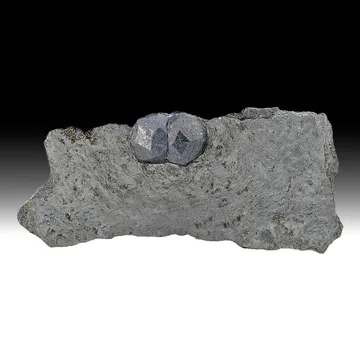
The county’s most collectible metamorphic pieces are garnet-schist specimens: dark red to brown almandine porphyroblasts set in silvery muscovite- and paragonite-bearing schist, commonly accompanied by chloritoid, chlorite, albite or andesine, and locally staurolite. These are not gemmy pegmatite garnets; their appeal is textural and geological. The best pieces preserve well-spaced, sharp-looking crystals standing out from a micaceous matrix, with enough contrast that the garnets read as individual crystals rather than as anonymous red specks in a slab.
Regional View
Country View
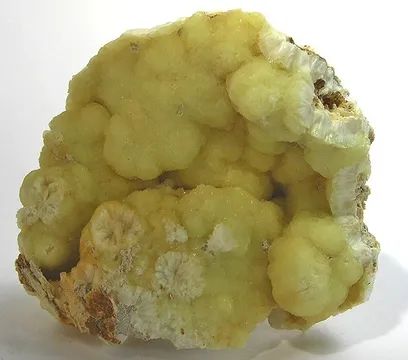
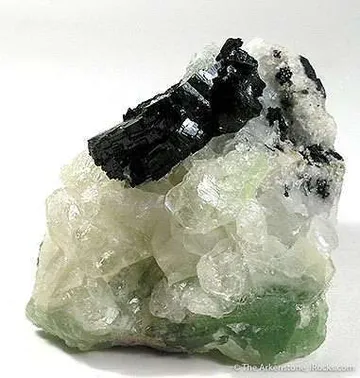
The other great Berkshire County mineralogical distinction is historical rather than showy: Richmond is the type locality for gibbsite, Al(OH)3, named in 1822 by John Torrey for Colonel George Gibbs. Richmond material is typically white, pale olive, or blue-green botryoidal to stalactitic gibbsite on iron-oxide matrix, a deceptively light aluminum hydroxide from the same old iron-ore environment that helped make the Stockbridge Valley district economically important in the nineteenth century.

Photo: Rob Lavinsky / iRocks.com via Wikimedia Commons
Collectors should also be aware of a long-standing cataloging complication: classic western Massachusetts diaspore specimens are overwhelmingly tied to the Chester Emery Mines in Chester, which is in Hampden County just southeast of Berkshire County. Older cabinets, regional collections, and online databases sometimes group these specimens broadly with the Berkshire highland mineral province or, on marketplace pages, under a Berkshire County heading. Strictly speaking, the Chester Emery diaspore is not a Berkshire County occurrence in the administrative sense, but it is inseparable from the western Massachusetts collecting tradition represented here.
Search for specimens: View all specimens from Berkshire County, USA
Berkshire County’s collectible minerals fall into several different geological settings. The Windsor garnet occurrences belong to high-alumina Hoosac Formation schists on the eastern limb of the Berkshire anticlinorium, a multiply deformed Taconian and Acadian metamorphic terrane. The best-documented collecting and teaching locality is the Height of Land Garnet Locality in Windsor, on the Height of Land in the woods on both sides of Shaw Road, within the broader Notchview area. There, the mineral list is compact but instructive: almandine, albite including andesine, chloritoid, chlorite-group minerals, margarite, muscovite, and paragonite. Nearby Beuman Road adds another high-alumina schist assemblage with almandine, chloritoid, muscovite, paragonite, quartz, chlorite-group minerals, and staurolite.
The Windsor garnets are products of regional metamorphism rather than ore deposition. They grew as porphyroblasts in pelitic to high-alumina schist during prograde metamorphism, and their associations record the transition through chloritoid-plus-garnet assemblages toward higher-grade kyanite- and biotite-bearing rocks elsewhere in western Massachusetts. For collectors, the practical point is that the specimens are matrix pieces: garnet crystals locked in mica-rich schist, not loose gem crystals. Freshly broken pieces can show strong crystal relief and rich wine-red to brownish-red garnet color; weathered slabs often look dull until cleaned and trimmed.
A second major Berkshire County setting is the Stockbridge Valley brown iron-ore district. These are Taconic “brown iron ore” or limonite-style deposits developed generally near the contact between Stockbridge Formation marbles and overlying Walloomsac Formation schists and schistose marbles. The district includes mines and prospects in Stockbridge, West Stockbridge, Richmond, Pittsfield, Lenox, Cheshire, North Adams, and Williamstown. The ore minerals and gangue documented from the district include goethite, hematite, limonite, siderite, calcite, dolomite, aragonite, quartz, pyrite, galena, sphalerite, talc, tremolite, chlorite-group minerals, muscovite, and gibbsite. At places the iron mineralization penetrates the marble as siderite-rich masses and veins, a useful clue when interpreting old labels from the district.
The Richmond group is the most historically important part of that iron-ore story for mineral collectors. Richmond was originally part of Stockbridge and was incorporated in 1765. Its small iron mines included the Carr, Cone No. 1, Cone No. 2, and Klondike mines on the south side of Cone Hill. A furnace was constructed at Richmond in 1829 and is recorded as the last operating blast furnace in Massachusetts. Mineralogically, Richmond matters because gibbsite was found with the hydrated iron ore in the Richmond iron beds, and Richmond became the type locality for the species. The locality also carries allophane, goethite, gypsum including selenite, limonite, and the historical material called “richmondite” of Kenngott, an approximate hydrated aluminum phosphate name that modern collectors should treat as an old literature term rather than a desirable validated species label.
The old iron industry gives Berkshire specimens much of their historical aura. Western Massachusetts brown hematite and limonite ores were developed by the mid-eighteenth century, with a furnace at Lenox in 1765. By the nineteenth century, the county’s iron deposits supported a web of small mines, ore beds, furnaces, and transport routes. Later geological work by the U.S. Geological Survey mapped and described the district in detail, including the Klondike, Cone, Carr, Cheever, Bacon, Andrews, Potter, Hudson, Leet, Goodrich, and related workings.
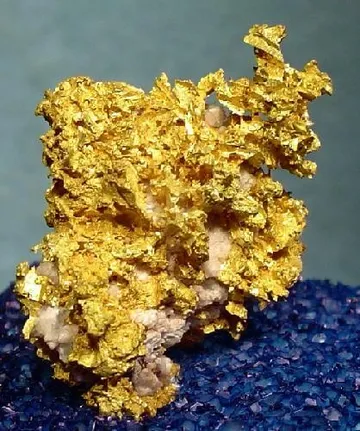
Berkshire County also has small but real specialty occurrences outside the two main collecting themes. Williamstown’s Roaring Brook placer gold locality is recorded as an alluvial stream deposit containing native gold with almandine, chlorite-group minerals, muscovite, and probable ilmenite and magnetite. Windsor includes the River Road Rutile Locality and talc prospects, while Pittsfield has a lost rutilated green quartz locality reported from the southeast part of town. Across the county, marble, limestone, quartzite, talc, asbestos, graphite, copper, lead, silver, nickel, gypsum, and aggregate resources appear in locality records, but few produced the kind of cabinet specimens that travel under precise locality labels today.
Collecting access is limited and should be treated conservatively. Notchview is a Trustees of Reservations property, open for recreation from dawn to dusk, and the Height of Land garnet outcrops lie in a protected landscape rather than at an open fee-collecting mine. Permission is essential before collecting, and hammering on conservation land is not something to assume is allowed. Many of the old iron mines are on private land, are flooded, backfilled, overgrown, or represented today only by old ore-bed ponds, dumps, cuts, or names on maps. Serious collectors should expect most Berkshire County specimens on the market to be older collection pieces rather than fresh production.
Almandine is the signature collectible garnet species of Berkshire County, especially from the Windsor high-alumina Hoosac schists at the Height of Land Garnet Locality and Beuman Road Chloritoid Locality. The material is typically deep red to brownish red, occurring as metamorphic porphyroblasts in silvery micaceous schist rather than as isolated gem crystals; associations include muscovite, paragonite, chloritoid, chlorite-group minerals, albite or andesine, margarite, quartz, and locally staurolite. The most satisfying pieces show coarser, well-separated garnets standing proud enough from the mica-rich matrix to read as crystal specimens, while ordinary pieces are simply garnetiferous schist with crowded or abraded red grains.
“Garnet” labels from Berkshire County usually refer to almandine-bearing schist from the Windsor–Hoosac Formation metamorphic belt, though old regional labels may use the group name when the species was never analytically confirmed. Collectors should expect red to reddish brown crystals in muscovite-rich schist, commonly with chloritoid and paragonite, and in some alluvial Williamstown material garnet may occur as heavy-mineral grains with magnetite, ilmenite, muscovite, and native gold. Strong Berkshire County garnet specimens are those with clean matrix contrast, visible crystal faces or at least sharp porphyroblast outlines, and an old, specific Windsor or Williamstown provenance; weak examples are massive mica-schist fragments where “garnet” is only a rock-forming component.
Diaspore specimens cataloged under this Berkshire County marketplace page are best understood as classic Chester Emery Mines material from nearby Chester, Hampden County, not as a strict Berkshire County occurrence; the administrative correction matters because the Chester Emery Mines are a well-defined locality of their own. The classic Chester diaspore occurs as colorless, pink, violet, violet-gray, or grayish blades and needlelike crystals on joints and openings in emery blocks, commonly associated with corundum, magnetite, hematite, margarite, paragonite, amesite, chlorite-group minerals, rutile, brookite, epidote, and other minerals of the emery vein. Good examples have visible bladed crystals with color and luster against the dark emery or pale mica matrix; ordinary examples are massive emery fragments with only indistinct grayish diaspore.
Other Berkshire County minerals worth knowing include gibbsite from Richmond, the county’s true type-locality mineral and its most important historical species; goethite, hematite, limonite, siderite, calcite, dolomite, aragonite, pyrite, galena, sphalerite, quartz, muscovite, talc, tremolite, and gibbsite from the Stockbridge Valley brown iron-ore district; rutile from Windsor; green rutilated quartz from a now-lost Pittsfield locality; and native gold from alluvial stream deposits in Williamstown. Gibbsite deserves special attention because Richmond specimens can be visually deceptive: pale botryoidal aluminum hydroxide on iron oxide may look superficially like smithsonite, hemimorphite, prehnite, or weathered carbonate, but the combination of low heft, botryoidal habit, iron-ore association, and Richmond provenance is highly characteristic.
The main authenticity issue for Berkshire County specimens is locality precision. “Berkshire,” “Berkshire Hills,” “western Massachusetts,” “Windsor,” “Richmond,” and “Chester” are not interchangeable labels. Almandine and garnet-schist specimens should ideally be traced to Windsor, especially the Height of Land Garnet Locality or Beuman Road Chloritoid Locality. Gibbsite should be tied to Richmond, preferably with old collection provenance. Diaspore should be treated as Chester Emery Mines material unless a label and supporting evidence say otherwise, because Chester is in Hampden County, not Berkshire County.
No widespread modern fake industry is known for Berkshire County garnets, gibbsite, or Chester diaspore, but mislabeling is common enough to matter. Generic “Massachusetts garnet” can be confused with Franklin County, Hampden County, or Worcester County material; Chester diaspore may be folded into Berkshire because of regional collecting shorthand; and pale botryoidal gibbsite from Richmond can be misidentified as carbonate, prehnite, hemimorphite, or smithsonite if locality history is lost. For higher-value Richmond gibbsite, provenance and visual agreement with known type-locality habits are more important than size alone.
Condition is a practical concern. Berkshire almandine schist is tough in bulk but mica-rich matrix cleaves, sheds, and bruises easily along foliation. Garnets may be fractured internally or partly plucked from the matrix during trimming. The best specimens are trimmed so the schist supports the crystals without looking like a random roadcut slab. Avoid pieces that have been aggressively wire-brushed, oiled, acid-cleaned without reason, or trimmed so thin that the garnets are likely to pop out.
Gibbsite from Richmond is historically important but not especially hard or dense, and botryoidal surfaces can be rubbed, chalked, or iron-stained. Richmond gibbsite is recorded as fluorescing bright green under shortwave ultraviolet and white under longwave ultraviolet, so UV response can be a useful supporting observation, though it should not substitute for provenance and mineral identification. Store fine examples away from abrasion and avoid repeated washing, scrubbing, or chemical cleaning.
Chester diaspore, when encountered on this page or in older Berkshire-region cabinets, should be judged as a classic western Massachusetts emery specimen. Diaspore blades can be delicate, and the dark emery matrix may contain magnetite or hematite intergrowths that make specimens heavy, blocky, and prone to edge chipping. The best Chester pieces combine visible crystals, attractive pale mica or dark emery contrast, and a label naming the Chester Emery Mines or a specific mine such as the Old, Melvin, Wright, Sackett, or Snow mine.
Market availability is sporadic. Windsor garnet-schist pieces appear occasionally, usually as older self-collected or regional collection specimens rather than active commercial production. Richmond gibbsite is much scarcer, and strong type-locality examples are more likely to surface through old collections, museum deaccessions, or specialist dealers. Chester diaspore is more available than Richmond gibbsite but should be bought with a corrected locality note if it appears under a Berkshire County heading.
In 1822, a pale, light, botryoidal mineral from Richmond entered mineralogical history under a new name: gibbsite. The material came from the iron-ore environment at Richmond, associated with hydrated iron ore in a bed owned by Mr. Gates. John Torrey named it for Colonel George Gibbs, one of the foundational figures in early American mineral collecting, whose collection later became part of Yale’s mineralogical heritage. The specimen description is modest by modern gem-show standards—white, pale olive, or blue-green aluminum hydroxide on iron-ore matrix—but the locality is anything but modest. Richmond is the type locality of a globally important aluminum hydroxide mineral and one of the few places in Massachusetts whose name is built into the formal history of a mineral species.
The Richmond iron mines themselves carry the atmosphere of a vanished industry. The south side of Cone Hill held small workings with names that still sound like a nineteenth-century field notebook: Carr, Cone No. 1, Cone No. 2, and Klondike. A blast furnace was built at Richmond in 1829, and Richmond is recorded as the site of the last operating blast furnace in Massachusetts. That industrial landscape—iron ore, furnace stone, charcoal, lime, roads, ponds, and small pits—was also the landscape that produced the gibbsite. For a collector, a Richmond gibbsite label is therefore doing double work: it identifies a type-locality mineral and ties the specimen to the last breath of an old Massachusetts iron-making district.
The Windsor garnet story is quieter but beautifully specific. In the 1992 New England Intercollegiate Geological Conference field guide, John T. Cheney and John B. Brady led geologists south through a nearly continuous high-alumina Hoosac schist belt and stopped at the Notchview Reservation in Windsor. The road log turns left onto Savoy Hollow Road, then right onto Shaw Road, and climbs east to the height of land. The stop is not described as a quarry or mine, but as large outcrops in the woods on both sides of the road. After roughly sixteen miles of travel from an earlier garnet stop, the writers emphasized that the rocks were still in the Garnet Zone and that the grain size—especially of the garnets—was coarser. That is exactly the sort of locality where collectors and petrologists look at the same rock differently: one sees a garnet-studded schist specimen, the other sees a metamorphic isograd frozen into the roadside woods.
Diaspore adds a label story rather than a Berkshire County occurrence story. The old Chester Emery Mines, just outside Berkshire County in Hampden County, produced diaspore, margarite, amesite, corundum, magnetite, and other classic minerals for generations of New England collectors. The emery vein was known as a nearly vertical chain of disconnected lenses extending for about four miles across hills and the Walker Brook valley. Old descriptions of the diaspore are vivid: needle-shaped crystals and blades on joints of emery blocks, sometimes colorless, pink, or violet, with perfect crystals in open spaces. Because Chester sits in the western Massachusetts highlands and because older collectors often filed regional material broadly, Chester diaspore still turns up under Berkshire-adjacent labels. A careful modern label should keep both truths visible: classic western Massachusetts diaspore, Chester Emery Mines, Chester, Hampden County.