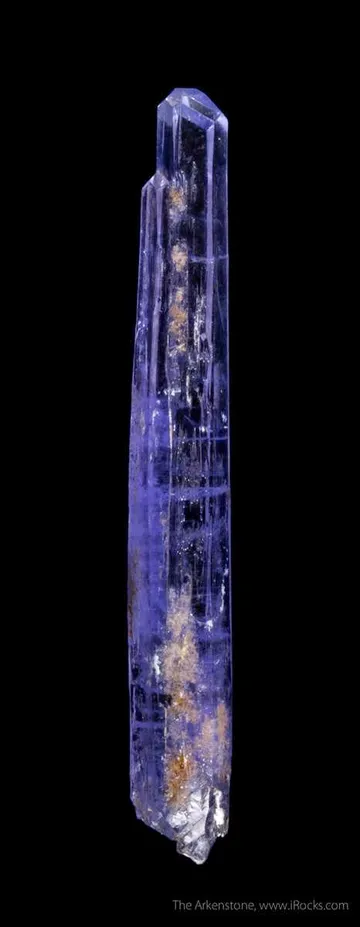
Berg Aukas Mine, Namibia - a premier Otavi Mountainland locality famed for dark descloizite crystals, vanadates, and rich smithsonite, prized by collectors.
Key facts
Berg Aukas is one of the great Otavi Mountainland localities: a former Zn-Pb-V mine east of Grootfontein whose best specimens turned an ore deposit into a collector landmark. Its setting is distinctly northern Namibian—carbonate rocks of the Otavi Group folded into the Berg Aukas Syncline, then opened by faults, solution cavities, collapse breccias, and cave fills that became chemical traps for zinc, lead, and vanadium. In economic geology the mine is important enough to lend its name to “Berg Aukas-type” Zn-Pb mineralization; in specimen mineralogy it is the locality by which serious collectors judge descloizite.
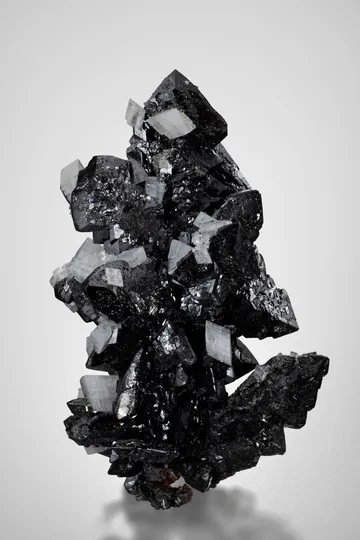
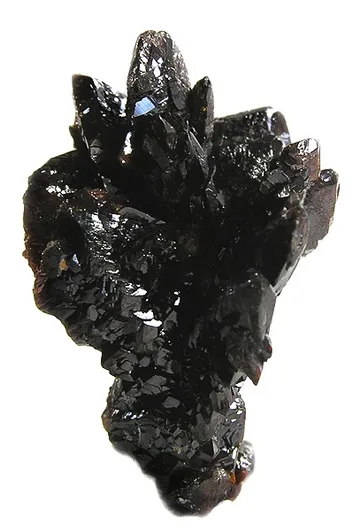
The mine’s signature look is dark and sculptural: lustrous brown to black descloizite in spear-point blades, tabular crystals, radiating clusters, and pocket linings, commonly contrasting with pale calcite, dolomite, smithsonite, or willemite. The best Berg Aukas specimens have a density and authority that few vanadates equal—black, glossy vanadate crystals with amber-brown edges, sometimes dusted or edged with pale carbonate. Alongside those classics are quieter but highly desirable smithsonites and willemites: ivory, tan, pale green, yellowish, pinkish, or salmon-toned zinc minerals in rhombs, sheaf-like aggregates, druses, globules, rosettes, and acicular sprays.
Regional View
Country View
Historically, Berg Aukas matters because it straddles three worlds at once: a high-grade 20th-century zinc-lead-vanadium mine, a classic mineral-specimen source, and an unusually informative palaeokarst system. The vanadium mineralization was not simply a late oxidation rind on ore; it occupied ancient cave and collapse settings, and descloizite-bearing breccias at Berg Aukas have been tied to Miocene fossiliferous cave fills. That combination—economic ore, collector-quality crystals, and fossil-bearing karst—is part of why the locality remains so distinctive among the many famous mines of northern Namibia.

Photo: Wikimedia Commons
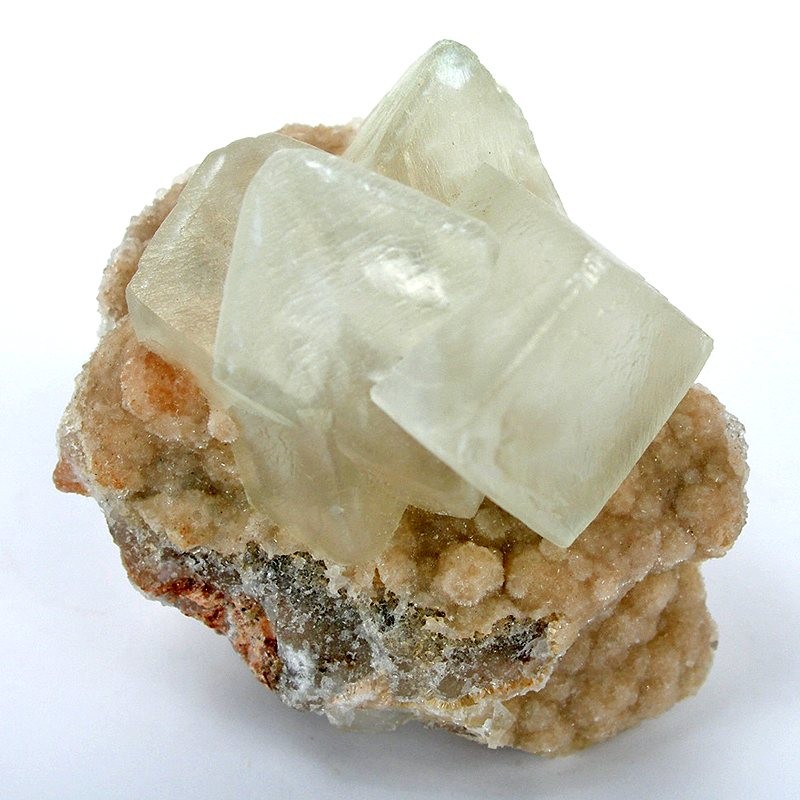
Photo:
Search for specimens: View all specimens from Berg Aukas Mine, Namibia
Berg Aukas Mine lies on farm Berg Aukas 593 in the Grootfontein area of Namibia’s Otjozondjupa Region, within the Otavi Mountainland. Older labels may read “Berg Aukus,” “Grootfontein District,” or “South West Africa.” The locality sits east of Grootfontein, in the same broad metallogenic province as Abenab, Tsumeb, Kombat, and other carbonate-hosted base-metal deposits that made northern Namibia famous among collectors.
The host rocks are dolostones, limestones, and shales of the Berg Aukas Formation at the base of the Abenab Subgroup of the Otavi Group. Structurally, the mine is on the northern limb of the Berg Aukas Syncline. Primary mineralization was dominated by sphalerite and galena, with subordinate pyrite reported in the sulphide assemblage, while the oxidized and nonsulphide portions produced willemite, smithsonite, cerussite, descloizite, vanadinite, calcite, dolomite, and related secondary minerals. This is the classic Berg Aukas-type association: zinc-lead sulphides and zinc nonsulphides spatially overprinted and accompanied by spectacular vanadium mineralization.
Published mine descriptions divide the deposit into a stratabound Northern Ore Horizon and a more irregular group of Central, Intermediate, and Hanging Wall ore bodies. The Northern Ore Horizon consisted of lens-like sulphide and oxide ore bodies developed along a bedding-parallel fault or breccia horizon. Its lower parts contained massive sphalerite-galena ore, while oxidized upper portions included willemite with smithsonite, cerussite, and a descloizite-rich breccia cap cemented locally by calcite and dolomite. The Central Ore Body was very different in shape and behavior: an irregular, brecciated, pipe-like to chimney-like body developed in recrystallized dolomite along steep north-south fractures and solution cavities. The Hanging Wall Ore Body occupied erratic steep lenses above the Northern Ore Horizon, and the ore bodies commonly included barren dolomite blocks, mud, sand, clay, and open cavities lined by crystalline willemite or descloizite.
The deposit was discovered in 1913 when the apex of the Central Ore Body was found at the top of a hill. Mining began in 1920 and stopped in 1928 when the workings reached groundwater. The mine was reopened in 1950, and the later mining era produced vanadate and sulphide concentrates, with roasting and processing carried out at the mine site. Industrial sources describe Berg Aukas as a low-tonnage, high-grade producer during the 1958–1978 period; reported figures include about 2.3 million tonnes hoisted at average grades around 15% Zn, 3.9% Pb, and 0.85% V2O5. Another commonly cited reserve estimate at closure was 1.65 million tonnes grading roughly 17% Zn, 5% Pb, and 0.6% V2O5. The mine closed in 1978, leaving a finite historical supply of specimens.
The South West Africa Company was closely tied to the property during the main operating years, with official notices from the South West African administration recording mining rights over part of farm Berg Aukas 593 in the 1960s and transport permissions connected with the Berg Aukas mine in the 1970s. Later records and palaeontological publications refer to Gold Fields Namibia in connection with ownership, and 21st-century corporate disclosures record China Africa Resources Namibia holding mining licences over the hard-rock ore bodies, slag dump, and tailings storage facilities during redevelopment evaluation. For collectors, those later corporate chapters matter chiefly because they underline that the locality is not a casual open collecting ground.
Access today should be treated as restricted and hazardous. The underground workings flooded after closure, old galleries have been described as unsecured in places, and environmental studies document contamination associated with mine dumps, tailings, slag, roasting residues, and historic ore processing. The former mine settlement and infrastructure have also been repurposed, including use connected with the National Youth Service and agricultural training. Modern “field-collected” claims deserve skepticism unless they come with clear permission, date, and provenance; most legitimate Berg Aukas specimens now move through old collections, dealer stocks, and estate material.
The most important specimen-producing environments were the oxidized vugs, fractures, and karst-collapse breccias adjacent to the smithsonite-willemite zinc ores, especially around the Central Ore Body and related supergene zones. Descloizite occurs throughout the supergene portion of the deposit and became an ore mineral at a scale rarely matched elsewhere. Smithsonite is especially characteristic of upper Central Ore Body material, while willemite occurs both as ore and as collector-quality cavity linings, rosettes, sprays, and aggregates. The best specimens were not one isolated pocket style but a family of related cavity products: descloizite spear points on carbonate, pale smithsonite on willemite, willemite sprays and druses, and scarce combinations carrying two or three of the mine’s signature minerals together.
Descloizite is the defining Berg Aukas mineral and one of the finest species-locality pairings in the vanadate world. It occurs in vug and fracture fillings associated with karst fill and collapse breccia, commonly close to the oxidized smithsonite-willemite zinc ore. Habits range from frequent spear-shaped crystals and subparallel blade groups to prismatic, pseudocubic, pyramidal, and tabular forms; the best pieces are complete, lustrous, sharply terminated clusters rather than dull crusts or broken ore fragments. Colors include metallic black, green-black, chocolate brown, orange-brown, golden brown, and occasional red crystals under about 5 mm, with some specimens showing iridescent or bornite-like surface play. Associations with calcite, dolomite, smithsonite, willemite, mimetite, cerussite, anglesite, and vanadinite are documented, but the classic collector look is glossy dark descloizite standing proud on pale carbonate or zinc-rich matrix. Top specimens show strong three-dimensional architecture, undamaged spear tips, bright reflective faces, and enough contrast or matrix to prove the Berg Aukas character at a glance.
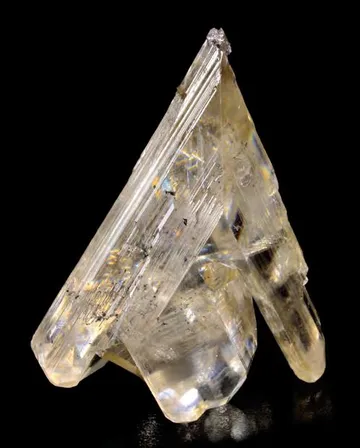
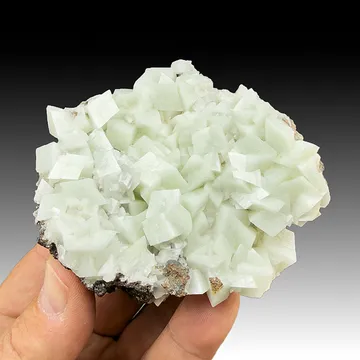
Berg Aukas smithsonite is a secondary zinc carbonate of the oxidized ore, most common in the upper parts of the Central Ore Body and strongly associated in specimen data with willemite and descloizite. It is typically opaque to translucent white, ivory, tan, pale yellowish, or faintly greenish rather than the electric blues and greens collectors associate with Tsumeb; its strength is form and association. Documented habits include botryoidal and sheaf-like aggregates, and composite crystals may reach about 4 cm, while fine specimens can show lustrous rhombohedral forms, mound-shaped clusters, or translucent yellow-tan masses that glow warmly when backlit. The most desirable pieces are those where smithsonite is the visual subject rather than a label accessory: sharp rhombs or rich clustered aggregates on willemite, pale smithsonite set against dark descloizite, or balanced combinations with clean surfaces and minimal bruising on crystal edges. Ordinary Berg Aukas smithsonite can look chalky or massive; fine examples have luster, translucency, sculptural separation, and old mine provenance.
Willemite from Berg Aukas is both an ore mineral and a collector mineral, occurring as massive material, granular ore, needle-like to prismatic hexagonal crystals, aggregate bundles, and radiating rosettes in vugs; crystals up to about 1 cm are documented. Colors range from white and pale yellow-white to red-brown, with collector pieces also encountered as tan, ivory, salmon, orange, bronze, or pale greenish drusy and acicular growths. It is closely tied to the nonsulphide zinc ore and appears in important combinations with smithsonite and descloizite, especially where pale smithsonite rhombs sit on tan drusy willemite or where willemite lines cavities near dark vanadate crystals. Some Berg Aukas willemite is fluorescent, but locality quality should be judged first in daylight: intact sprays, crisp rosettes, sparkling druse, visible crystal separation, and convincing placement in the matrix are more desirable than massive or dusty zinc-silicate ore. The best pieces have enough willemite present to matter aesthetically, not merely as a microscopic or label-only association.
Calcite at Berg Aukas is primarily a gangue and late carbonate mineral, but it is important to collectors because it frames and contrasts the locality’s descloizite, smithsonite, and willemite. Documented specimen calcite occurs as small scalenohedral to rhombohedral crystals, and calcite is one of the most frequent companions of Berg Aukas descloizite in photo and occurrence records. It may appear as buff, pale, cream, orange-tinted, or translucent crystals scattered through dark vanadate clusters, as carbonate cement in breccia, or as post-descloizite carbonate growths that record a later stage of open-space filling. Calcite-only specimens are far less important than combinations; the collectible standard is a piece where calcite enhances a descloizite group by adding color contrast, paragenetic interest, or a clean stage-like base without obscuring the vanadate crystals. Pieces with calcite coatings that mask descloizite faces, or with bruised carbonate cleavages dominating the display, are much less desirable.
Vanadinite is documented from Berg Aukas but is far less abundant on the specimen market than descloizite, and it should not be confused with the giant classic vanadinites of Abenab. In the Berg Aukas paragenesis it belongs to the oxidized lead-vanadium suite, associated in records with descloizite, smithsonite, willemite, cerussite, and other secondary minerals. Collector pieces tend to be sought as rarity combinations rather than as large stand-alone vanadinite specimens: small red to orange-red or brownish vanadinite crystals, patches, or early cores associated with descloizite can add considerable locality interest. Published discussion of Otavi vanadates notes that descloizite may occur close to or even nucleate on earlier anhedral vanadinite in some Berg Aukas material, making carefully examined combinations especially appealing. A good Berg Aukas vanadinite specimen is therefore judged by verified association, freshness, crystal visibility, and old provenance, not by the size expectations collectors bring from Moroccan or Abenab vanadinite.
Other documented minerals from Berg Aukas include galena, sphalerite, pyrite, cerussite, anglesite, mimetite, mottramite, copper-bearing descloizite, dolomite, baryte, goethite, hematite, quartz, aragonite, minium, and matlockite. The mine’s fame rests on occurrence quality and ore-deposit significance rather than a large roster of type-locality minerals: its great rarities are not dozens of exotic named species but scarce, well-provenanced combinations from a closed Zn-Pb-V system—mimetite with descloizite, cerussite or anglesite in vanadate-rich matrix, matlockite from the locality, minium as red crusts on galena, and chemically interesting descloizite-mottramite series material from the Otavi supergene environment.
Berg Aukas is a closed classic, so provenance matters. The strongest specimens usually carry old collection labels, dealer records, or a chain back to 1960s–1970s material. Labels may use “Berg Aukus,” “Grootfontein District,” or “South West Africa,” all of which can be consistent with older Berg Aukas material. The mine closed in 1978, and later pieces typically represent old stock, collection recycling, or specimens recovered before closure rather than fresh mine production.
The most important mislabelling issue is confusion with Tsumeb and other Otavi Mountainland localities. Descloizite, vanadinite, and related vanadates from northern Namibia have historically been over-attributed to Tsumeb because that name is better known commercially. Classic Berg Aukas descloizite tends to be dark brown to black, spear-shaped, bladed, tabular, or rosette-like, commonly with calcite, dolomite, smithsonite, or willemite. Some old “Tsumeb descloizite” labels on brown-black crystallized material deserve scrutiny, and some “Otavi” or “Grootfontein” labels may require locality judgment based on habit, matrix, and provenance.
Species-level identification can also be subtle. Descloizite is the zinc-dominant member of the descloizite-mottramite series; mottramite is copper-dominant, and copper-bearing descloizite is known from the Otavi district. Color alone is not an analytical method. Expensive, greenish, unusually dark, or atypical vanadate specimens should be considered candidates for XRD, Raman, SEM-EDS, or at least comparison with well-documented material if the label is weak.
Condition is central to value. Descloizite has vulnerable spear tips, thin blade edges, and projecting crystals; even excellent specimens may have peripheral nicks or old contact points. Look closely at terminations, ridge lines, and the outer edge of clusters. Dark lustrous descloizite hides repairs and chips surprisingly well under strong light, so rotate the specimen and inspect for glue lines, polished-looking breaks, unnatural luster changes, and isolated reattached blades. Smithsonite and calcite are also easily bruised along rhomb edges and cleavage surfaces. Willemite sprays and drusy crusts can be abraded into a dusty surface if mishandled.
Treat Berg Aukas material with sensible heavy-metal discipline. Descloizite contains lead and vanadium, cerussite and anglesite contain lead, and the mine’s tailings and processing residues are documented as chemically problematic. Display specimens are safe under normal mineral-collection handling, but avoid grinding, soaking unknown porous material, eating while handling, or allowing children to play with loose fragments. Wash hands after handling friable ore, tailings-like pieces, or specimens with powdery coatings.
Fluorescence can add interest, especially in willemite-bearing specimens, but it should not be the sole basis for value. Some Berg Aukas willemite responds under shortwave ultraviolet light, while smithsonite and calcite behavior can vary by composition and impurities. A fine daylight specimen with strong form, association, and provenance will generally be more desirable than a broken or massive piece that only becomes interesting under UV.
Market availability is uneven. Small to medium descloizite specimens appear regularly because Berg Aukas produced large quantities of the species, but top-quality, undamaged, highly lustrous spear-point clusters with good composition are finite and increasingly fought over. Smithsonite and willemite are scarcer in fine, stand-alone quality; combinations with both, or with descloizite, are especially desirable. Vanadinite from Berg Aukas is a rarity association rather than a common commodity. The best buying strategy is to pay for verified locality character, condition, and aesthetics, not merely for the words “Berg Aukas” on a label.
The Berg Aukas story begins with a clue on a hill. In 1913, prospectors located the apex of the Central Ore Body at the top of Berg Aukas, the surface expression of a much stranger body below: dolomite cut by steep fractures, solution cavities, collapse breccias, mud, sand, zinc-lead ore, and vanadium minerals. Mining started in 1920, but the first phase lasted only until 1928, when the workings reached groundwater. That early shutdown is part of the mine’s character. Berg Aukas was never a simple open hole in a clean vein; it was an ore-filled palaeocave system, and water was part of its life from the beginning.
When the mine reopened in 1950, Berg Aukas entered the period that made its mineral name. The later operation mined both oxidized and sulphide ores, produced vanadium and sulphide concentrates, and processed ore on site. Before 1960, vanadate-bearing ore from different ore bodies was treated by gravity concentration; by the end of 1961 a flotation plant had been introduced for lead, zinc, and vanadate minerals, and by 1965 the plant was divided into oxide and sulphide sections. The reported monthly capacity of that plant was 8,000 tons. To the specimen collector, those details explain why the locality supplied so much material yet still feels finite: it was an industrial mine that happened to cut magnificent open-space minerals, not a specimen dig run for collectors.
The most extraordinary chapter is written not in ore ledgers but in cave breccia. In the south wall of the Central Ore Body, geologists recorded a remnant section of the old cave fill. The lower part contained Middle Miocene breccias, while higher levels included younger fills. Blocks from the mine showed descloizite crystals growing directly on fossiliferous pink breccia, so precisely that the bases of the crystals molded the original surface texture of the breccia. In some cases, fossil-rich breccia was enclosed by crusts of large descloizite crystals, and those crystal crusts were themselves enclosed again by fossil-bearing breccia. That relationship allowed the timing of a major pulse of descloizite crystallization to be tied to the late Middle Miocene, around 13 ± 1 million years ago, probably over only 1–2 million years.
The fossil list from Berg Aukas is startling for a vanadium mine. The breccias yielded bat bones and teeth in abundance, suggesting that the Central Ore Body cave had once been inhabited by bats. Because bat guano is acidic and phosphate-rich, researchers even raised the possibility that it may have influenced ore genesis, though they also emphasized the spatial control exerted by the older sulphide bodies. Other mammals in the breccias indicate that the Otavi region was appreciably more humid in the Middle Miocene than it is today. A collector holding a Berg Aukas descloizite is therefore not just holding an oxidized ore mineral; in some cases, the chemistry of the crystal belongs to a cave landscape of bats, running water, roof collapse, and a greener ancient Namibia.
Berg Aukas also entered palaeontology through much larger headlines. Fossiliferous palaeokarst at the locality yielded Otavipithecus namibiensis, described in Nature in 1992 as the first Miocene hominoid from southern Africa. Other palaeontological work from Berg Aukas described a remarkable sequence of micromammal faunas ranging from the late Middle Miocene to Recent, and the locality has been called one of the most comprehensive African records of such faunas. That is a rare distinction for a mine better known to collectors for black vanadate blades. Few classic mineral localities ask you to think at once about zinc ore, vanadium crystallization, bat guano, ancient cave pools, and early hominoid fossils.
After closure, the mine gained another, quieter afterlife. The deeper workings flooded, waste-rock dumps and tailings remained, and environmental studies later examined the chemistry of the old processing area. Parts of the former mining town and infrastructure were reused, including for training and agricultural purposes. For collectors, this modern landscape is a reminder that Berg Aukas is not simply a romantic lost pocket locality. It was a mine, a workplace, a settlement, a source of contamination, a fossil site, and finally a closed classic whose best specimens now survive above ground in drawers, cabinets, museums, and old dealer stocks.