A collector's guide to Balochistan, Pakistan: its geology, mining history and notable minerals, illustrated with the 210 specimens documented from this locality on EarthWonders.
Key facts
Balochistan matters to collectors because it is not a single mine story but a province-scale mineral province where several very different geological environments have produced modern classics. The specimens that changed the international market came chiefly from rugged desert ranges: Kharan and the Ras Koh Mountains for brookite, anatase, quartz, axinite, epidote and rutile; Killa Saifullah and related ultramafic belts for lemon-yellow brucite; Loralai and Kalat–Mastung carbonate terrains for fluorite and calcite; and Khuzdar–Wadh for water-clear “Herkimer-style” quartz with hydrocarbons. The best Balochistan pieces have the sharpness of open-pocket growth: bright quartz clefts carrying red-brown titanium oxides, blackish-green bow-tie epidote, honey and purple-blue fluorite-calcite plates, and botryoidal brucite in saturated yellow.
Regional View
Country View
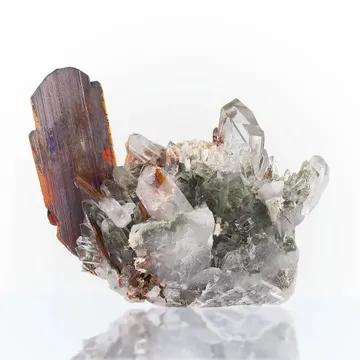
For collectors, the province’s signature look is cleft-grown contrast. Kharan brookite is usually judged against clear or milky quartz: thin, lustrous, red-brown to orange blades, sometimes with black internal phantoms, arranged on quartz or albite like Alpine fissure specimens but from the arid Chagai–Ras Koh arc terrain of western Pakistan. The Zard Mountain area, west of Kharan, became the key name attached to this material after the early-2000s boom, while Nausherwani and Thurdook/Thurdok labels appear on more specific pieces. The locality has also produced unusual epidote described from Zard Mountain: pseudohexagonal to bow-tie crystals, slightly magnetic because of magnetite-bearing core material, from pockets in weathered igneous or skarn-like rock.
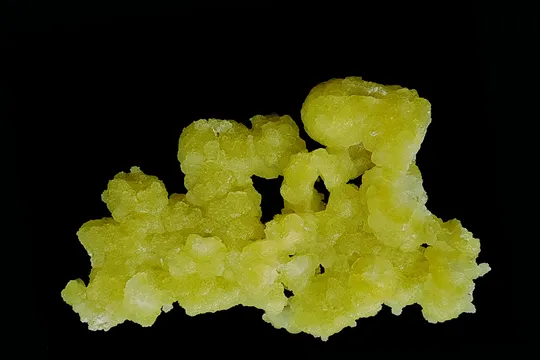
Balochistan’s other modern landmark is brucite. Before the Pakistani find, brucite was rarely a color mineral for mainstream aesthetic collectors; the Killa Saifullah material changed that almost overnight. Its best specimens are translucent, lustrous, lemon-yellow botryoidal to reniform aggregates on hydromagnesite, dypingite, altered serpentinite or chromite-bearing matrix. The most saturated yellow examples are far scarcer than the pale yellow and grayish material and remain among the defining brucite specimens of the last decade.
Search for specimens: View all specimens from Balochistan, Pakistan
Balochistan is a province-level locality, so its collector minerals come from several deposit types rather than from one continuous ore body. Western Balochistan includes the Chagai–Raskoh arc, an east-west magmatic belt extending across western Pakistan and into neighboring Iran and Afghanistan. Within this broad arc terrain are porphyry copper-gold systems such as Saindak and Reko Diq, volcanic and intrusive rocks, skarn-like calc-silicate assemblages, and open fissures or pockets. The collector-famous Kharan specimens are not ore specimens in the industrial sense; they are pocket minerals from the Ras Koh and Zard Mountain region, where quartz, albite, brookite, anatase, rutile, titanite, epidote and axinite formed in open spaces with unusually crisp crystal development.
The Kharan District story begins for most collectors with the major 2004–2005 arrival of brookite and anatase. Labels from this material can be broad or confusing: Kharan District, Mount Zard, Zard Mountain, Ras Koh Range, Nausherwani mine, Nausherwani quartz mine, Thurdook and Thurdok all occur in the specimen trade. Zard Mountain is the most important geographic name for the brookite-anatase suite; it lies west of Kharan in the Ras Koh Mountains, and the name “Zard” is widely reported as the Balochi word for yellow. The best early brookites were flattened, lustrous, red-brown blades on quartz or albite, commonly miniature to small-cabinet pieces with main crystals around 1–3 cm, though larger crystals and larger plates are known. Nausherwani material is especially associated with quartz, faden quartz, anatase, brookite and axinite, while Thurdook is a named Zard Mountain digging area tied to high-quality brookite.
Epidote from the Zard Mountains and nearby Ras Koh localities represents another distinctive Balochistan pocket style. USGS authors examined two unusual epidote crystals supplied by Rock Currier in 2012 and described flat, tabular, pseudohexagonal crystals 5.5–6.5 cm across that were slightly magnetic. The core material was interpreted as weathered igneous rock or skarn-like material containing magnetite, titanite, quartz, albite, biotite, actinolite and chamosite. Later market descriptions popularized “bow-tie” epidote from Balochistan: dark green to blackish-green, highly lustrous paired crystals or clusters, some single loose bow ties and some compound groups.
In northern Balochistan, Killa Saifullah is the crucial modern locality for brucite. Pale yellow brucite reportedly entered the mineral-specimen market in 2015, followed by stronger yellow material in 2016 and especially attractive specimens mined in 2017. The matrix and associated minerals point to an ultramafic alteration setting: hydromagnesite, dypingite, altered serpentinite, chromite-bearing matrix and related magnesium-carbonate assemblages. The brucite is collected as specimens rather than as an ore commodity, but the surrounding district is also known for chromite, magnesite, asbestos and other ultramafic-related industrial minerals.
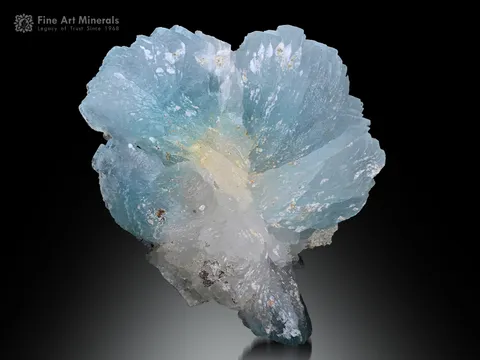
The Loralai District fluorite-calcite deposits are a different system again. Geological Survey of Pakistan work describes fluorite in Jurassic Loralai Limestone, occurring as veins and disseminated grains along faults and fractures in an anticlinal core. Reported areas include Gadebar, Daman Ghar, Tor Thana, Wategam, Mekhtar, Balao and Mahiwal, with mining in progress at several Mekhtar-area localities and related zones. Collector specimens are typically cubic fluorite with calcite, in colors reported from pink, blue, light gray, green and light yellow to the purple-blue and gray-brown pieces common in the market. Good cabinet plates show stepped or well-developed cubes, translucent edges, and dogtooth to honey-colored calcite on the reverse or between fluorite zones.
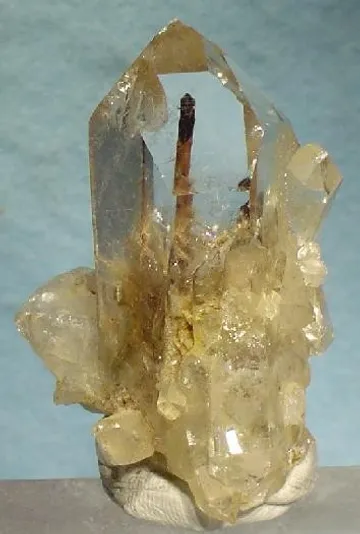
Khuzdar District adds another Balochistan specialty: water-clear, double-terminated “Herkimer-style” quartz with petroleum or hydrocarbon inclusions. Wadh is listed as an Alpine vein or calc-silicate locality and also as a source of Herkimer-style quartz; Buhirmas, near Koraro, is a more precise locality for hydrocarbon-bearing crystals. These are not Herkimer diamonds in the strict New York sense, but collectors use the style name for the sharply double-terminated quartz habit. The finest examples are transparent, highly striated, free of matrix, and may show yellow-brown petroleum inclusions, moving bubbles, and fluorescence from the inclusion chambers.
Industrial mining in Balochistan is much larger than the specimen trade. Saindak in Chagai District is a copper-gold deposit operated through Saindak Metals Limited and Chinese mining involvement; Reko Diq is one of the world’s major undeveloped copper-gold porphyry projects; Duddar in Lasbela is a sediment-hosted lead-zinc-barite system; and chromite, iron ore, barite, marble, magnesite, fluorite and coal are all important provincial commodities. These large operations explain Balochistan’s mineral reputation, but most collectible display specimens reach the market through small-scale miners, local dealers, Pakistani mineral exporters and international fine-mineral dealers rather than through public collecting.
Collecting access should be considered restricted. The key specimen localities are remote, arid, mountainous, locally controlled and subject to mineral rights, security concerns and landowner permissions. Serious collectors normally acquire Balochistan specimens through established channels rather than by field collecting. For expensive pieces, especially brookite, axinite, epidote and brucite, old labels and reputable dealer provenance matter because district-level labels can hide meaningful differences in locality, age of find and value.
Quartz is the connective tissue of Balochistan collecting: it forms the classic matrix for Kharan brookite and anatase, occurs as faden and tabular cleft quartz at Nausherwani and related Kharan workings, appears as amethyst from Zard Mountain and Dalbandin, and forms water-clear “Herkimer-style” crystals with hydrocarbon inclusions at Wadh and Buhirmas in Khuzdar District. Kharan quartz is valued when it is bright, transparent to milky, sharply crystallized, and aesthetically positions brookite or anatase rather than merely serving as a dull base; Nausherwani pieces with faden structure and titanium-oxide associates are especially desirable. The Khuzdar crystals are judged differently: fine pieces are double-terminated, water-clear, sharply striated, matrix-free or lightly contacted, and may contain yellow-brown petroleum inclusions, mobile bubbles, or fluorescent inclusion chambers.
Balochistan fluorite is best known from Loralai District, especially Mekhtar and related limestone-hosted vein localities, and from Kalat–Mastung occurrences such as Koh-i-Maran and Dilband. The collector material is generally cubic, commonly purple-blue, smoky gray-brown, greenish, yellowish or light blue, and often associated with calcite; some cubes show stepped growth, satin to glassy faces, translucent edges, and a blocky three-dimensional architecture rather than the isolated cubes seen from many classic vein localities. Good specimens have cleanly developed cubes on multiple display surfaces, stronger color zoning or translucency at the edges, and attractive honey to white calcite contrast; ordinary pieces are massive, dull, iron-stained, or lack well-defined cube geometry.
Calcite from Balochistan is most visible to collectors as the principal associate of Loralai fluorite, where white, honey, tan or amber calcite grows with cubic fluorite in limestone-hosted veins and fracture fillings. On better fluorite-calcite plates, calcite forms sharp dogtooth or scalenohedral crystals, sometimes concentrated on the reverse side of a specimen or rising between fluorite cubes, giving the piece a two-sided display character. Standalone calcite from Loralai is less famous than the fluorite association, but sharp dogtooth groups, clean color contrast, and minimal bruising are the features that separate a collectible piece from the abundant carbonate gangue of the province’s limestone terrains.
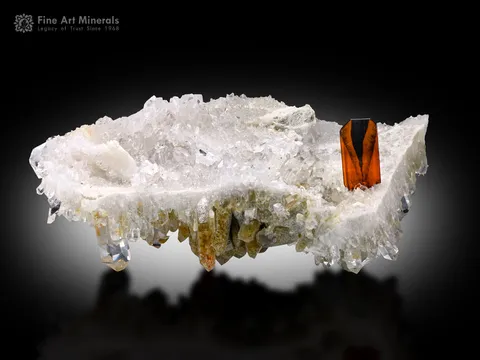
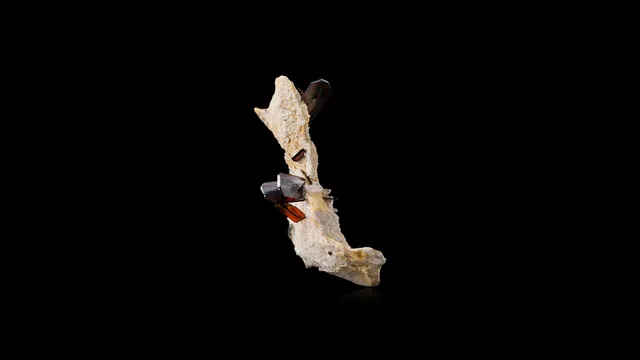
Brookite is the mineral that made Kharan District internationally important to fine-mineral collectors. The classic Balochistan crystals are thin, flattened, lustrous blades or tabular-prismatic crystals, usually dark brown to reddish brown in reflected light but glowing amber, orange-red or root-beer red when backlit; black internal phantoms and darker zoning can be a major value feature rather than a flaw. The best specimens came from the 2004–2005 Kharan and Mount Zard production and related Nausherwani and Thurdook labels, with quartz and albite as the standard matrix and anatase or rutile as notable titanium-oxide associates. A good Kharan brookite has complete sharp terminations, bright luster, transparency, dramatic internal zoning, and a natural, convincing attachment to quartz; dull opaque blades, chipped edges, broken tips and suspiciously isolated glued-looking placements are far less desirable.
Balochistan epidote is not merely a common green skarn mineral; the Zard Mountain and Ras Koh material includes unusual tabular, pseudohexagonal, pseudo-octahedral and bow-tie forms that made the locality notable. Documented crystals from Zard Mountain reach 5.5–6.5 cm and can be slightly magnetic because of magnetite-bearing core material, while market pieces from Kharan are typically dark green to blackish green, highly lustrous, thick, paired or fan-shaped crystals and clusters, sometimes on quartz. Fine specimens are valued for sharp geometry, strong luster, clean bow-tie symmetry or sculptural cluster form, and freedom from edge bruising; ordinary examples lose much of their impact when the paired crystals are incomplete, dull, or broken at their thin outer edges.
The yellow brucite from Killa Saifullah District is one of Balochistan’s great modern mineral discoveries, first appearing in pale yellow material around 2015 and reaching the market in brighter, more saturated examples in 2016–2017. It typically forms translucent botryoidal, reniform, radial or coarse-grained aggregates on hydromagnesite, dypingite, altered serpentinite or chromite-bearing matrix, with the most desirable pieces showing uniform lemon-yellow color, strong translucency, waxy to vitreous luster, and attractive mushroom-like or flowing rounded forms. The difference between an ordinary and a fine Balochistan brucite is largely color and light: grayish-yellow or chalky pieces are common, while saturated lemon-yellow specimens that glow evenly when backlit and retain crisp natural surfaces are much scarcer and command a premium.
Axinite from Balochistan is chiefly associated with Kharan District, the Ras Koh Mountains, Wadh and Nausherwani/Char Kohan labels, with axinite-(Fe) and axinite-group pieces appearing as sharp clove-brown, reddish-brown to mauve-brown blades and wedge-shaped crystals. Good specimens can be gemmy to translucent, glassy, and dramatically jackstrawed or clustered, sometimes with albite, quartz or epidote; some recent Balochistan examples show large, sharp crystals in small-cabinet to cabinet sizes, while older Nausherwani pieces are notable for uncommon locality provenance. Condition is decisive because the knife-edge terminations chip easily: the best pieces have clean edges, transparent brown color, bright luster, and a balanced cluster or matrix display rather than a heap of broken, contacted blades.
Rutile from Balochistan is most important as part of the Kharan titanium-oxide association, especially in quartz with brookite and anatase. Some Kharan quartz contains fine silver to reddish acicular rutile, and early reports noted interesting brookite and rutile inclusions in quartz from the district; on some brookite specimens, acicular rutile appears as epigenetic needles or inclusions associated with the titanium-oxide growth history. Fine Balochistan rutile pieces are therefore usually judged as combination specimens: clean quartz, visible rutile needles, and an attractive relationship to brookite or anatase are more important than isolated rutile size, while cloudy quartz, scattered invisible needles, or indistinct inclusions make the piece primarily a curiosity.
Tourmaline is documented from Balochistan chiefly as schorl and as a regional heavy-mineral or accessory component rather than as the gemmy pegmatite tourmaline for which northern Pakistan is famous. In the Balochistan collector context it is a minor species tied to Kharan and broader provincial listings, typically black, prismatic and subordinate to quartz, feldspar and calc-silicate assemblages. The best pieces are locality pieces for systematic collectors—sharp, recognizable black tourmaline on a coherent Balochistan matrix with reliable provenance—whereas broken black prisms without a convincing label are easily confused with material from many other Pakistani or Afghan localities.
Anatase from Balochistan belongs to the same Kharan–Zard Mountain titanium-oxide story as brookite and rutile, and the best specimens show sharp, lustrous, dark metallic to black crystals on quartz, albite or feldspar-rich matrix. Early dealer material from Kharan included cabinet pieces with anatase crystals over 1 cm, and many anatase specimens were marketed broadly as Kharan before Zard Mountain became a more precise and useful locality label. Fine examples have isolated, bright, striated or sharply bipyramidal crystals with good contrast against pale quartz or feldspar and, ideally, associated brookite; ordinary pieces are crowded with small black crystals that lack definition or are too embedded to display well.
Prehnite from Balochistan is a secondary but attractive collector mineral, best known in trade references from the Chaman area as pale sea-foam to light green prehnite associated with quartz. It is not as extensively documented as Kharan brookite or Killa Saifullah brucite, so strong locality control is important; the most desirable pieces show rounded, translucent prehnite surfaces carrying or framing sharp quartz crystals, giving the specimen the fresh cleft-grown look that collectors associate with the province’s better pocket minerals. Ordinary pieces are massive, pale and label-dependent, while better Balochistan prehnite has visible crystal texture, pleasing color, and a convincing quartz association.
Garnet from Balochistan is recorded as garnet group species including andradite and spessartine from Kharan District, with “brown garnet” also associated with Kalat in Pakistani gemstone summaries. Collectors should expect Balochistan garnet to be a locality and assemblage mineral rather than a rival to Pakistan’s better-known northern almandine, spessartine or grossular occurrences. Better pieces show discrete, identifiable garnet crystals in a Kharan calc-silicate or quartz-feldspar matrix with reliable provenance; ordinary pieces are dark, small, massive, or too generically labeled to carry much locality premium.
Other documented Balochistan minerals important to systematic collectors include albite, titanite, magnetite, actinolite, clinozoisite, chamosite, chlorite-group minerals, chromite, chrysotile, hydromagnesite, dypingite, magnesite, baryte, manganite, cerussite, galena, sphalerite, malachite, azurite, chrysocolla, turquoise, zircon, forsterite and several copper, lead-zinc and iron minerals from industrial districts. Balochistan is better represented by unusual habits and modern specimen discoveries than by classic IMA type-locality mineral species: its rarities are the locality-specific expressions—magnetic pseudohexagonal epidote, phantom brookite on quartz, hydrocarbon-bearing Herkimer-style quartz, and saturated yellow brucite—rather than a long list of minerals first described from the province.
The most important authenticity concern for Balochistan specimens is assembly and repair, especially for Kharan brookite and anatase on quartz. Brookite blades are thin, brittle and visually dramatic, exactly the kind of crystals that can be glued back onto matrix or mounted onto unrelated quartz. Examine the base of every major brookite under magnification. Natural pieces usually show believable pocket texture, small associated crystals, partial embedding, or contact relationships that make sense; suspicious pieces may show glue shine, powdered quartz filler, unnatural gaps, a crystal hovering above the matrix, or a single perfect blade on a blank base with no supporting paragenesis.
Brucite has a different set of concerns. The Killa Saifullah material is soft, easily scratched, and commonly rounded, translucent and botryoidal, so rubbed surfaces, edge bruises, chalky alteration, and matrix loss are common. Hydromagnesite and dypingite can appear as white coatings or matrix; these should not automatically be read as damage, but buyers should distinguish natural white associated minerals from abrasion, chalky alteration or cleaning residue. Brucite should be handled gently, kept dry, and protected from rubbing against harder minerals. A brucite specimen that glows evenly when backlit is usually much more desirable than one that is merely yellow on the surface.
Locality labeling deserves particular attention. Older brucite labels sometimes used Kharan, while later information points many of the yellow brucites to Killa Saifullah District; high-value specimens should be relabeled conservatively only when provenance supports the change. Kharan brookite labels may say Kharan District, Zard Mountain, Mount Zard, Ras Koh Range, Nausherwani mine, Nausherwani quartz mine, Thurdook or Thurdok. The broad label is not necessarily wrong, but a precise and defensible label is better. Fluorite labeled simply “Balochistan” may be from Loralai, Mekhtar, Kalat, Koh-i-Maran, Mastung or another carbonate-hosted occurrence; color and habit alone are not enough to assign a more exact locality.
Condition is the main value driver across the province’s best minerals. Brookite loses value rapidly with chipped edges, broken terminations, repaired bases and dull luster. Anatase must be sharp and bright; broken black crystals can look like mere iron oxides. Epidote bow ties should have complete opposing blades and intact outer points. Axinite is highly vulnerable along knife edges and terminations. Fluorite-calcite plates often suffer bruised cube corners, cleaved fluorite edges and broken dogtooth calcites; because many pieces are large and heavy, damage during shipping is common. Herkimer-style quartz should be checked for chips at the terminations, internal cracks crossing the crystal, and oil or resin applied to mask damage.
Fluorescence and optical behavior add interest but should not be overused as identification shortcuts. Hydrocarbon-bearing quartz from Buhirmas and related Khuzdar localities may show fluorescent yellow inclusion chambers under both shortwave and longwave ultraviolet light. Fluorite from Balochistan may fluoresce variably, but color, habit and fluorescence do not establish a precise district. Brucite’s best display often comes from backlighting rather than UV response; strong, even translucency is a value feature.
Market availability remains active but uneven. Loralai fluorite-calcite is currently common in online trade, including large decorative and cabinet specimens, but fine crystallized pieces with sharp cubes and attractive calcite are a smaller subset. Modest Kharan brookite and anatase still appear, but early-production, damage-free, transparent phantom brookites on quartz are increasingly competitive. Brucite ranges from inexpensive pale yellow pieces to expensive saturated lemon-yellow specimens; the finest examples from the original 2015–2017 period have entered advanced collections. Axinite and bow-tie epidote from Kharan are much less frequently available than the casual number of online listings suggests, and clean, large crystals with reliable provenance should be treated as serious purchases.
The first great Balochistan shock for collectors came from Kharan. Around 2004, brookite and anatase began arriving in quantity from the desert mountains of western Pakistan. Brookite had long been a connoisseur’s species—admired for sharpness, rarity and crystal form, but often small—then Kharan suddenly delivered large, lustrous, red-brown blades on quartz. Some specimens looked almost Alpine at first glance, with clear quartz and freestanding blades, yet the transmitted orange-red color and black internal phantoms gave them a distinctly Pakistani voice.
The early labels captured the confusion of a remote find entering the international market. Specimens were sold as Kharan, Mount Zard, Zard Mountain, Ras Koh, Nausherwani, Thurdook, Thurdok, and sometimes under broader Balochistan names. The crystals themselves were easier to recognize than the paperwork: flat, glassy, brown-red brookite blades standing on quartz or albite, some with black hourglass-like internal zones. By 2005, dealers were documenting pieces with main crystals near 3 cm, and one celebrated style showed parallel growths of broad, flat crystals that gave the visual impression of a single larger blade.
The Zard Mountain epidote story is quieter but scientifically memorable. In 2012, Rock Currier of Jewel Tunnel Imports supplied two unusual epidote specimens for study. They were not ordinary prismatic epidote. They were flat, pseudohexagonal crystals, 5.5–6.5 cm across, and they were slightly magnetic. Under examination, the reason was not mysterious magnetism in epidote itself but magnetite-bearing core material within a weathered igneous or skarn-like assemblage. That small detail—the epidote crystal that responds to a magnet—became one of the most memorable facts about the Zard Mountain suite.
Then came the yellow brucite. Pale yellow Balochistan brucite appeared in the specimen trade around 2015, but by 2016 and the 2017–2018 show seasons the material had become impossible for collectors to ignore. The old mental picture of brucite—white, gray, pale green, compact, often interesting but rarely spectacular—no longer fit. Killa Saifullah pieces were lemon-yellow, translucent, lustrous, rounded and sculptural. Some looked like small yellow umbrellas or glowing botryoidal mushrooms on white magnesium carbonate matrix.
Thomas P. Moore’s Mineralogical Record report on the material captured the excitement around one online offering: 25 bright yellow brucite specimens from “a group of little mines and prospects” in Killa Saifullah District. The strongest color was not common. Dealer commentary at the time suggested that “top yellow” occurred in only about one specimen out of ten, while the most saturated lemon color was vastly rarer. That scarcity explains the price spread collectors still see: pale yellow brucite can be accessible, but the truly glowing lemon pieces behave like elite modern classics.
Fluorite tells a more industrial and geological story. In Loralai District, fluorite was described in Jurassic Loralai Limestone as veins and disseminated grains along faults and fractures. The same faulted carbonate setting that interests economic geologists gives collectors heavy, angular plates of cubic fluorite and calcite. Many are not delicate thumbnails but hefty cabinet pieces: purple-blue or smoky cubes on one side, honey or white dogtooth calcite on another, with the rugged look of fracture filling rather than a neat geode pocket.