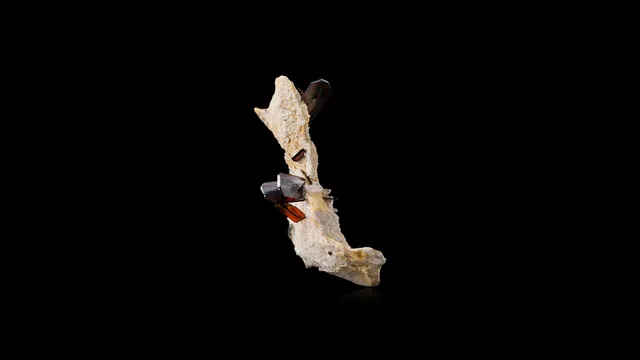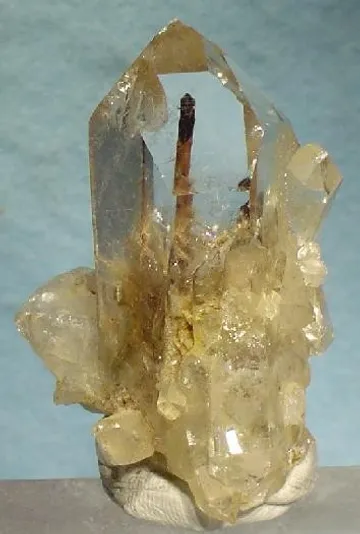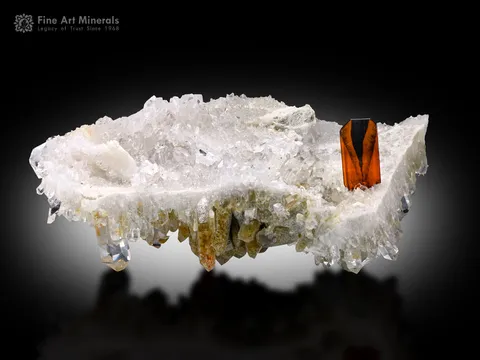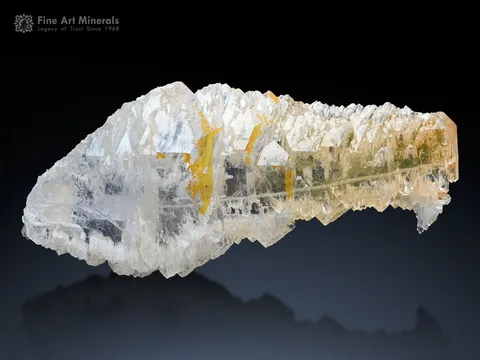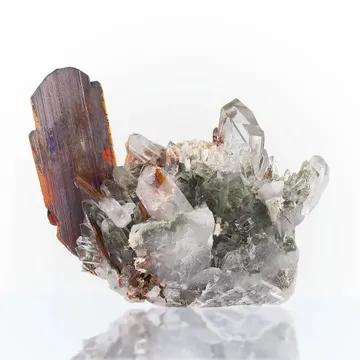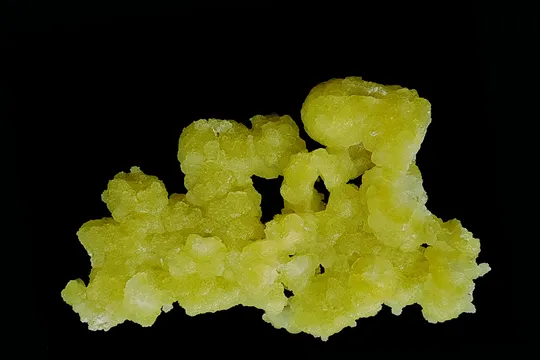
A collector's guide to Killa Saifullah, Pakistan: its geology, mining history and notable minerals, illustrated with the 98 specimens documented from this locality on EarthWonders.
Key facts
Killa Saifullah has become one of the modern names serious mineral collectors recognize at a glance, even though the label is usually a district name rather than a single mine name. Its collector fame rests on the Muslim Bagh–Nisai sector of northern Balochistan, where chromite- and magnesite-bearing ultramafic rocks of the Muslim Bagh ophiolite have yielded the vivid yellow brucite that changed the reputation of the species in the specimen trade. Before these Pakistani finds, brucite was respected but rarely loved for cabinet aesthetics; after the 2015–2017 influx of lemon-yellow, translucent botryoidal pieces, it became a color mineral with international demand.
Geologically the district is anchored by the Muslim Bagh ophiolite, a Late Cretaceous slice of former oceanic lithosphere and upper mantle emplaced onto the Indian margin. The collector minerals come out of a working mining landscape rather than a purpose-made specimen locality: dunite, harzburgite, serpentinite, magnesite veins, and podiform chromite bodies form the mineralogical engine. Brucite occurs as a secondary magnesium hydroxide product related to serpentinization and alteration of peridotitic rocks; chromite is the long-mined economic ore mineral, occurring in pods, veins, bands, disseminations, and massive lenses in the mantle section.
The finest brucites are unmistakable: rounded to grape-like and botryoidal aggregates, waxy to pearly in luster, translucent when backlit, with color ranging from pale yellow to intense lemon-yellow and occasional whitish or bluish zones. White hydromagnesite or dypingite may dust or partly coat the yellow brucite, sometimes producing a snow-on-citrus contrast. Matrix pieces are especially prized when the yellow spheres sit cleanly on dark gray to black chromite-rich or serpentinite matrix; many commercial specimens, however, are essentially matrix-free botryoidal brucite plates or floaters. Chromite specimens from the same district are much less decorative in the classic crystallographic sense, but they are important locality pieces: dense black, submetallic to metallic, commonly massive, granular, banded, or disseminated in serpentinite/dunite rather than freestanding crystal groups.
Regional View
Country View
The collecting story is unusually recent for a locality tied to mining that began more than a century ago. Chromite was the reason the Muslim Bagh district was mapped, leased, mined, and repeatedly studied; brucite was the mineral-collector revelation. Dealer records and gemological reports place the first pale yellow brucite material on the market in 2015, followed by brighter and more abundant yellow specimens in 2016 and especially attractive pieces seen around the 2017–2018 Tucson and Munich cycles. That short discovery-to-market interval explains why labels can be imprecise: “Killa Saifullah,” “Muslim Bagh,” “Nisai,” “near Ekhai,” and, less reliably, “Kharan” have all appeared in the trade.
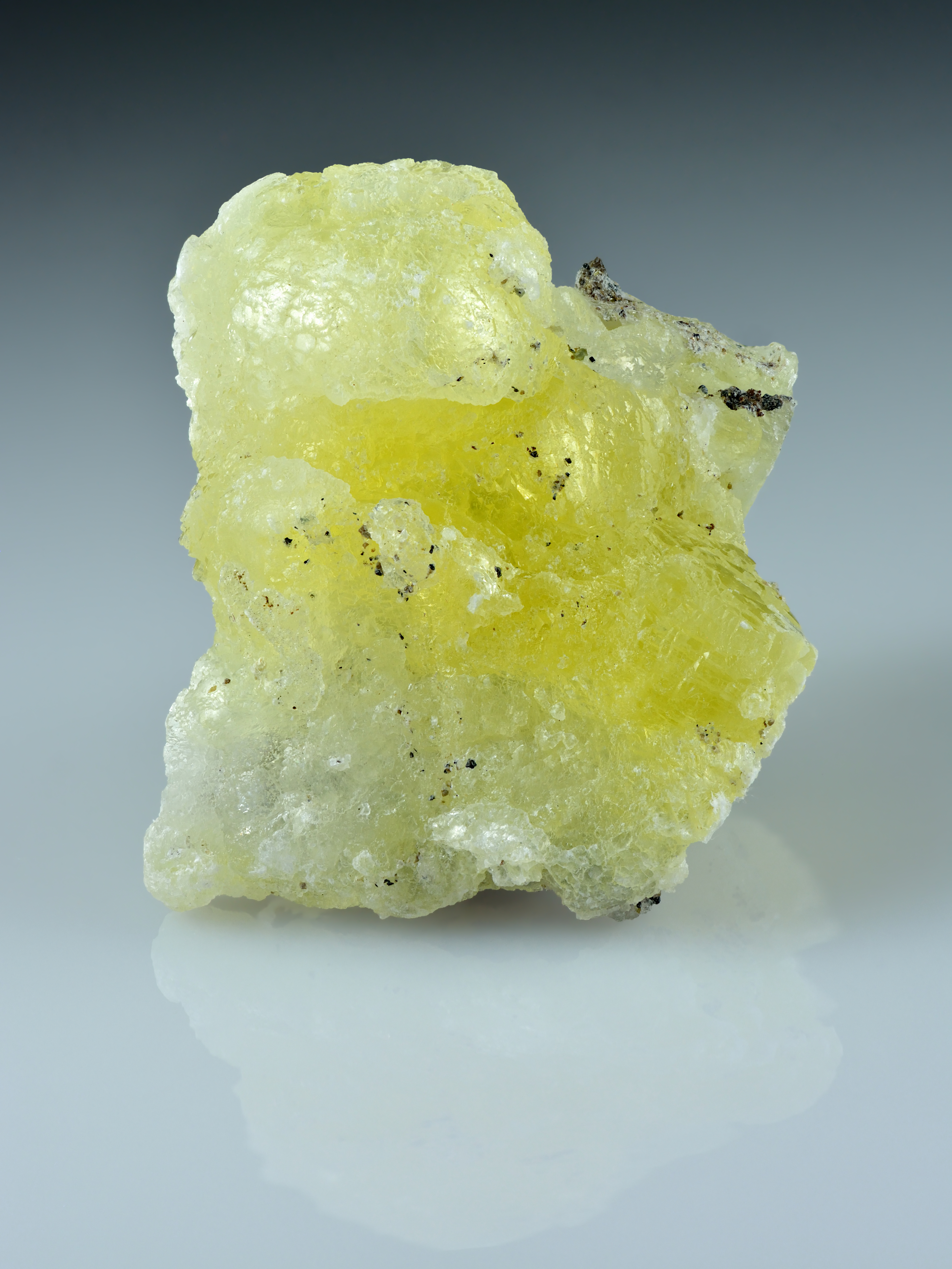
Photo: Wikimedia Commons
Search for specimens: View all specimens from Killa Saifullah, Pakistan
Killa Saifullah District lies in northwestern Balochistan, with Muslim Bagh and Nisai forming the collector-relevant mineral belt. In specimen labels, “Killa Saifullah” most often refers to the district-wide source of the yellow brucite rather than to the town itself. The best-supported collecting area for the famous material is near the Ekhai hamlet, south of Nisai village, in the broad magnesite and chromite mining country associated with the Muslim Bagh ophiolite. Muslim Bagh lies west of Killa Saifullah town, and the chromite-mining areas are commonly described south to southeast of Muslim Bagh, in and around the Jang Tor Ghar and Saplai Tor Ghar massifs.
The deposit setting is an ophiolite-hosted ultramafic complex. The Muslim Bagh ophiolite is divided into the Jang Tor Ghar massif to the west and the Saplai Tor Ghar massif to the east, with a mantle section dominated by foliated peridotite, harzburgite, dunite, and serpentinite, passing into dunite-rich transition zones and associated mafic rocks such as gabbro, dolerite dykes, sheeted dykes, and basaltic units. This is exactly the kind of rock architecture expected to host podiform chromite: depleted mantle peridotite cut and impregnated by dunite, pyroxenite, and related ultramafic bodies, later serpentinized and fractured.
Chromite is the economic backbone of the district. The ore bodies are podiform, vein-like, lenticular, banded, disseminated, cigar-shaped, dyke-like, and locally massive, with chromite concentrated in serpentinized dunite and associated ultramafic tectonites and cumulates. Published descriptions of the broader Muslim Bagh–Zhob chromite province separate ore groups around Khanozai, Jang Tor Ghar, Saplai Tor Ghar, Nisai, and Fort Sandeman/Zhob. Chemical studies describe Muslim Bagh chromites as aluminian chromites with high Cr2O3 contents, and later resource summaries distinguish Jang Tor Ghar, Saplai Tor Ghar, Khanozai, and Nisai ores by their chromium grade and Cr:Fe ratios. For collectors, that economic story matters because the brucite was not discovered in a vacuum: the same ultramafic rocks that made Muslim Bagh famous to mining engineers created the alteration environment for the yellow brucite.
Brucite belongs to the alteration and serpentinization assemblage. It occurs in peridotite and related ultramafic rocks, commonly with hydromagnesite, dypingite, serpentine minerals, magnesite, and locally chromite-rich matrix. Near Nisai, magnesite bodies are described as lenticular bodies and veins cutting ultramafic tectonite and cumulate rocks, with individual magnesite veins reported from roughly 15 cm to 1.5 m thick and extending up to about 30 m. That vein-and-fracture style helps explain why brucite specimens appear as botryoidal crusts, vein fillings, thin plates, and rounded aggregates rather than as deep-pocket euhedral crystals.
Mining history in the district begins with chromite. Chromite was reported from the region at the start of the 20th century, with production beginning in 1903 in the Hindubagh/Khanozai area and expanding to Muslim Bagh during the First World War period. Regular, organized mining accelerated around 1914–1915 under the Baluchistan Chrome Company, which acquired major leases in the Zhob Valley and became the principal producer for decades. Early production figures were modest by modern standards but historically important: published records give 2,578 tons in 1915 and 24,334 tons in 1918, with more than 800,000 tons exported by the early 1960s and later summaries noting more than 1.5 million tons mined by the early 2000s.
Modern Muslim Bagh mining remains a mixed small-scale and commercial mining landscape, with chromite extracted by underground and open-pit methods depending on the geometry of the ore. A 2021 field survey of Muslim Bagh chromite mining recorded underground extraction, partnership-based mine ownership, five-year leases among many operators, mines in hilly terrain, two-shift working at many sites, and production constrained by disputes, financing, explosives availability, ore-price instability, lack of electricity, and weak emergency medical support. These details are important for collectors because specimen recovery is incidental to mining: brucite, dypingite, hydromagnesite, and unusual matrix pieces enter the market when miners recognize aesthetic material among ore and alteration zones.
Collecting access today should be understood as commercial and negotiated, not recreational. The notable material comes from active or formerly active mining concessions in a remote district, with safety, security, land, tribal, and lease issues that are not comparable to casual collecting at an abandoned quarry. Serious collectors normally acquire Killa Saifullah material through Pakistani suppliers, international dealers, show circuits, and auction houses rather than by field collecting. Labels naming “Nisai” or “near Ekhai” are more precise than district-only labels, but older commercial labels may simply say “Killa Saifullah,” “Balochistan,” or “Pakistan.”
Notable finds include the pale yellow brucite material that appeared in 2015, the brighter lemon-yellow material that followed in 2016, and larger, more aesthetic Tucson-market specimens mined in mid-2017. High-grade collector pieces include elongated botryoidal floaters, thin sculptural plates, spherical aggregates on dark matrix, pieces with analyzed dypingite, and specimens showing white hydromagnesite or dypingite over yellow brucite. One auction description singled out a 39 mm spherical brucite aggregate as an unusually large individual for this locality style, while dealer records document cabinet pieces exceeding 12–13 cm across. Good labels should distinguish specimen brucite from chromite ore and should avoid the older, ambiguous tendency to assign all Pakistani yellow brucite to Kharan District.
Killa Saifullah brucite is the district’s signature collector mineral: lemon-yellow to pale yellow, locally whitish, bluish, or greenish, occurring as waxy, pearly, translucent botryoidal aggregates, rounded balls, rosettes, plates, and rare matrix pieces from serpentinized ultramafic rocks near the Nisai–Ekhai area of the Muslim Bagh ophiolite. Typical cabinet-quality pieces range from small thumbnails of a few centimeters to cabinet specimens over 10 cm, with individual rounded aggregates commonly in the millimeter to centimeter range; particularly large spherical groups around 3–4 cm are exceptional. Associations include hydromagnesite, dypingite, altered serpentinite, magnesite, and chromite-rich matrix. The best pieces combine strong uniform lemon color, translucency under backlighting, clean botryoidal form, glossy luster, minimal bruising, and either an elegant floater shape or sharp contrast against dark matrix; ordinary examples are chalkier, paler, bruised white on exposed high points, or visually confused by excessive white alteration.
Chromite from Killa Saifullah is best understood as a classic Muslim Bagh ophiolite ore mineral rather than a showy crystal species: black to brownish black, dense, submetallic to metallic, and commonly massive, granular, disseminated, banded, podiform, vein-like, or nodular in serpentinized dunite and harzburgite of the Jang Tor Ghar, Saplai Tor Ghar, and Nisai mining areas. Collectible pieces are usually hand specimens showing clean ore texture, bright metallic fracture, sharp contrast with pale serpentine or magnesite, or direct association with yellow brucite. The best locality specimens are not judged by crystal form but by geological clarity: visible chromite lenses, banding, “grape-shot” or nodular texture, attractive black-on-green ultramafic contrast, or rare aesthetic brucite-on-chromite combinations; ordinary pieces resemble undifferentiated ore lumps and need strong provenance to hold collector interest.
Other documented minerals from the district reflect the split personality of the locality: ophiolite alteration minerals on one side and sedimentary-rock fracture minerals on the other. The brucite assemblage includes hydromagnesite and dypingite, both important because white crusts on yellow brucite are often one of these magnesium carbonates rather than merely “matrix.” Muslim Bagh records include antigorite, chrysotile, lizardite, clinochlore, chlorite-group minerals, forsterite, diopside, enstatite, magnetite, hematite, ilmenite, dolomite, magnesite, calcite, pectolite, tremolite, spinel, and andradite, including demantoid reported from Muslim Bagh and the Saplai Tor Ghar chromite mine. District-scale gemstone surveys additionally document chrysocolla, malachite, azurite, serpentine, epidote, almandine garnet, natrolite, chert, marble, quartzite, quartz, fluorite, and calcite, with copper minerals tied to basaltic or ophiolitic settings and fluorite/calcite tied to fractures in sedimentary carbonate units.
The principal authenticity problem for Killa Saifullah material is not synthetic brucite so much as locality precision. Early Pakistani yellow brucite circulated with inconsistent labels, and some material was attributed to Kharan District before better-informed dealers and locality records shifted the accepted source for the classic lemon-yellow material to Killa Saifullah, especially the Nisai–Ekhai area. Khuzdar/Wadh brucite also exists in Balochistan and can be confused with Killa Saifullah material, so color and habit alone are not enough for exact provenance. A reliable label trail, Pakistani supplier history, or dealer analysis matters more than a neat-looking handwritten locality.
White coatings should be examined carefully. Hydromagnesite and dypingite are real associates from the locality, and several dealer specimens have been sold with analytical confirmation of dypingite. At the same time, brucite is soft and easily bruised; scratched or pressure-damaged yellow surfaces can turn whitish, so not every white patch is necessarily a distinct mineral species. For valuable pieces, ask whether the white phase has been analyzed, especially when it is used as a selling point.
Condition is central. Brucite has low hardness, perfect basal cleavage, and a sectile to fragile feel; edges and high points abrade easily, and botryoidal surfaces can show small flattened contacts, pressure marks, chalky bruises, or broken globules. The best pieces have intact rounded surfaces and a glow from within rather than a dull, powdery look. Avoid washing aggressively, ultrasonic cleaning, acids, heat, and prolonged handling. Keep specimens dry, padded, and away from vibration; loose brucite plates can shed tiny fragments if stored against harder minerals.
Fluorescence is not a major selling feature for the classic yellow brucite, though associated carbonate phases may respond variably under UV. Color is the real value driver. Bright, even lemon-yellow specimens with translucency are much more desirable than pale cream or opaque yellow pieces. Matrix pieces are less common than matrix-free aggregates and can command a premium when the composition is balanced and undamaged. Brucite with confirmed dypingite, hydromagnesite snowflake-like accents, or chromite matrix adds locality character.
Market availability remains good compared with many classic localities because significant quantities entered the trade after 2015, but top examples are already selectively held. Small thumbnails and miniatures are common at modest prices; clean small-cabinet and cabinet pieces with strong color are much scarcer; large, undamaged, sculptural, highly translucent specimens with dark matrix or analyzed secondary phases sit in a much higher tier. Chromite from Killa Saifullah is far rarer as an intentional collector specimen on the open market, despite being abundant as ore, because most production is mined, crushed, shipped, or sold industrially rather than preserved as mineral specimens.
The most revealing story from Killa Saifullah is the speed with which yellow brucite went from local mining byproduct to international show sensation. In 2015, pale yellow brucite from Balochistan began appearing on the mineral market. In 2016 the color improved from pale to bright yellow, and by the 2017–2018 Tucson season many of the pieces on tables were vivid enough to make older brucite localities look austere by comparison. Gemological observers noted that while cut stones and beads were present, most of the material remained in the specimen trade, where the botryoidal aggregates showed best.
The early labels were part of the drama. Some pieces were first thought to be from Kharan, an understandable trade-route confusion in a region where minerals often move through dealers far from the actual mine. Later dealer accounts and locality records corrected the picture: the classic lemon-yellow material was from Killa Saifullah District, with the more specific collecting area near Nisai and Ekhai in the Muslim Bagh ophiolite belt. For collectors who bought early, a “Kharan” label on yellow botryoidal brucite can now be a clue to an old market moment rather than proof of a different mine.
Munich 2015 is one of the marker dates. Fabre Minerals recorded Killa Saifullah brucite as a Munich 2015 novelty, describing botryoidal aggregates on matrix with unusually well-defined brucite crystals and color varying between yellow and white. One such specimen, collected or marketed in August 2015, measured 9.6 × 7 × 2.9 cm and was later noted as having been reviewed, photographed, and published in The Mineralogical Record, volume 47, number 1, page 105. Another similar piece was published in Lapis, number 10/2016, page 9. Those publication notes matter because they pin the locality’s modern collecting debut to a very specific European show cycle.
A different window into the district comes from the chromite mines themselves. A 2021 field study surveyed 51 mine owners in the Muslim Bagh area and found a mining world built on small leases, partnerships, and hard manual logistics. Only about two-fifths of the surveyed owners had leases, many leases were for five years, and the leased areas ranged from less than one acre to 875 acres. Most operations were partnership-based; many mines worked two shifts. The same study’s illustrations included ore outside a mine, a laborer at a haulage entrance, and a donkey used to extract chromite ore. The contrast is striking: the world’s most coveted yellow brucite emerged from a district where the daily industrial reality is black chromite ore, underground workings, price instability, explosives shortages, and sparse emergency medical support.
By the time Killa Saifullah brucite reached major auction houses, the descriptive language had changed. It was no longer just “interesting Pakistani brucite” but vivid, gemmy, botryoidal, lemon-yellow material purchased directly from Balochistan. One Bonhams lot described a brucite-on-chromite specimen with hydromagnesite in which the larger spherical brucite crystal measured 39 mm across, calling that size impressive for the locality’s individual rounded forms. The same description likened the hydromagnesite on the brucite to little snowflakes, a visual shorthand collectors still use for the best white-on-yellow pieces.
Kakar, M. I., Mahmood, K., Kerr, A. C. & Khan, M. (2013). “Petrology of the mantle rocks from the Muslim Bagh Ophiolite, Balochistan, Pakistan.” Journal of Himalayan Earth Sciences, 46(2), 101–112. A key petrological paper on the mantle section, Jang Tor Ghar and Saplai Tor Ghar massifs, dunite, harzburgite, and podiform chromite setting.
Kakar, M. I., Kerr, A. C., Mahmood, K., Collins, A. S., Khan, M. & McDonald, I. (2014). “Supra-subduction zone tectonic setting of the Muslim Bagh Ophiolite, northwestern Pakistan: Insights from geochemistry and petrology.” Lithos, 202–203, 190–206. Establishes the supra-subduction-zone interpretation for the Muslim Bagh ophiolite and places the district in the Neo-Tethyan tectonic framework.
Jan, M. Q., Windley, B. F. & Abbas, S. G. (1984). “Microprobe Analytical Data on Chromitites from the Muslimbagh Ophiolite, Baluchistan, Pakistan.” Geological Bulletin, University of Peshawar, 17, 1–16. Important analytical work on Muslim Bagh chromites, including chromium-rich aluminian chromite compositions.
Huda, I. & Panezai, S. (2021). “Chromite Ore Mining and Associated Factors in the Muslim Bagh Ophiolite of Balochistan, Pakistan.” Geosciences, 11(1), 43–54. A modern field-based study of mining practice, lease structure, production constraints, and safety issues in the Muslim Bagh chromite area.
Laurs, B. M. (2018). “Yellow Brucite from Balochistan, Pakistan.” Journal of Gemmology, 36(1), 7. Concise gemological note documenting the appearance of yellow brucite in the market, the Killa Saifullah/Khuzdar locality-reporting ambiguity, faceted material, and Tucson 2018 observations.
Ahmed, J., Kakar, M., Khan, M., Ghaffar Kashani, A. & Naeem, A. (2017). “The Classification and Distribution of Gemstones from Northern Balochistan, Pakistan.” Lasbela University Journal of Science and Technology, 6, 290–298. Regional gemstone survey documenting Killa Saifullah district species and the relationship of gemstones to the Zhob Valley ophiolite belt.
Mahmood, K. and others (2002). “Platinum Minerals in Muslim Bagh Ophiolite, Pakistan.” Acta Mineralogica Pakistanica, 13. Documents platinum-group mineral interest in Muslim Bagh chromites, including laurite and related Ru-Os-Ir-bearing phases in chromite samples.
Fabre Minerals, Killa Saifullah brucite reference specimens. Dealer records with unusually useful locality, date, analysis, collection, and publication notes for the 2015–2017 brucite finds.
Mindat: Killa Saifullah District, Balochistan, Pakistan — Best single locality database entry for district-level mineral lists, locality hierarchy, and photo records.
Mindat: Nisai, Killa Saifullah District — More precise locality entry tying the famous brucite to the Ekhai area south of Nisai.
Mindat: Muslim Bagh, Killa Saifullah District — Core entry for the chromite-mining district and ophiolite-hosted mineral assemblage.
Mindat: Brucite from Killa Saifullah District — Species-occurrence page showing brucite’s world-class status and associated minerals recorded from photo data.
Mindat: Chromite from Muslim Bagh — Chromite occurrence record with references to Muslim Bagh analytical and geological work.
Pakistan Stratigraphy: Muslim Bagh Ophiolite — Clear, source-based summary of the ophiolite’s age, sequence, tectonic setting, and economic significance.
Kakar et al. 2013, Journal of Himalayan Earth Sciences PDF — Essential geological background on mantle rocks, dunite, harzburgite, and podiform chromite.
Huda & Panezai 2021, Geosciences — Field-based account of Muslim Bagh chromite mining conditions and production factors.
Journal of Gemmology 36(1), 2018 PDF — Includes Brendan Laurs’ note on yellow brucite from Balochistan and the Tucson market appearance.
Fabre Minerals Killa Saifullah reference specimens — Useful commercial record of analyzed brucite-dypingite specimens and early show-publication history.
Wikimedia Commons: Brucite - Killa Saifullah, Pakistan — High-resolution CC BY-SA photograph of a yellow Killa Saifullah brucite specimen.