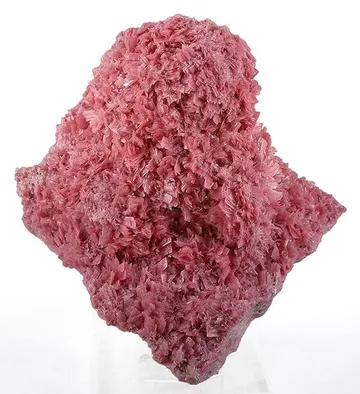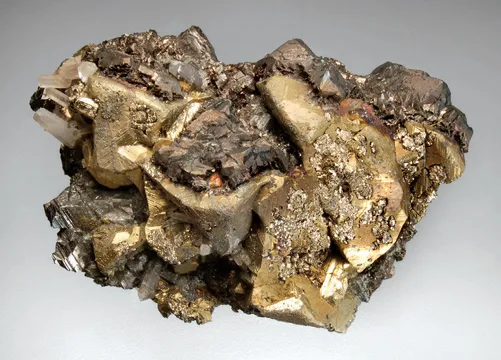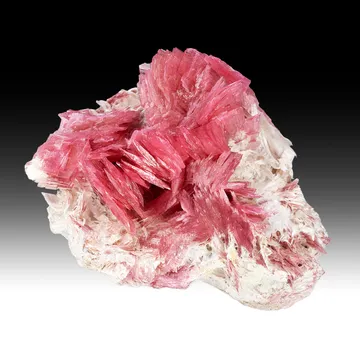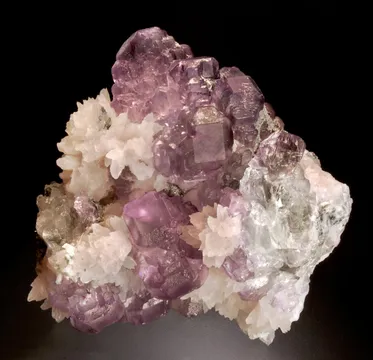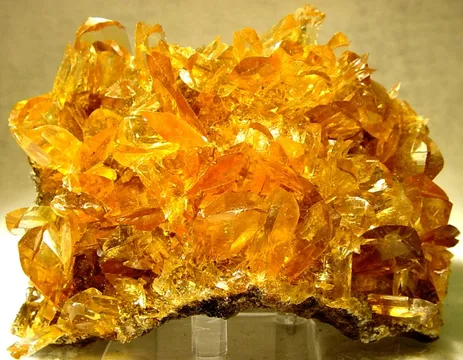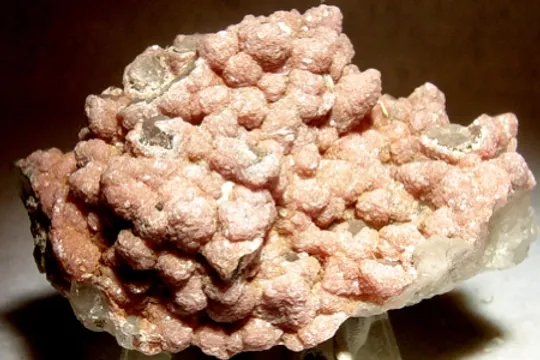
Austria Duvas mine, Peru, Morococha locality yielding pink rhodochrosite on quartz in botryoidal to rosette-like forms; prized for rarity and collector appeal.
Key facts
Austria Duvas is a compact but increasingly recognizable name in the Morococha district of central Peru, one of the great polymetallic mining camps of the Andes. The mine lies in Junín, in Yauli Province, near Morococha and the Ticlio divide, where long-lived mining has followed veins, replacement bodies, skarn-related mineralization, and porphyry-linked hydrothermal systems through folded Paleozoic to Mesozoic rocks cut by Miocene intrusions. In mining and government documents the operation is most often spelled Austria Duvaz, while mineral-specimen labels commonly use Austria Duvas; both forms refer to the same Morococha-area mine locality.
For collectors, the name now means pink manganese carbonates on quartz. The best 2021 material consists of botryoidal to spheroidal crusts and rosette-like aggregates of small, bright rhodochrosite crystals, ranging from soft pastel pink to a more vivid, uniform rose. These sit on sparkling white to water-clear quartz, often with black to brown sphalerite microcrystals. The association is instantly Peruvian in its metal-rich context but visually unusual: the rounded pink sprays and quartz-lined matrix can evoke Cavnic, Romania, more than the more familiar rhombohedral rhodochrosites from other Peruvian mines.
Regional View
Country View
Austria Duvas is not a classic old cabinet-locality in the way Uchucchacua, Huanzala, or Casapalca are; its modern collector identity rests on a narrow but interesting suite. The locality’s documented mineral list is small—calcite, manganese-bearing calcite, quartz, rhodochrosite, rhodonite, and sphalerite—but that sparseness is part of its appeal. It is a mine whose collectible production seems to have come in distinct pulses rather than a long public collecting tradition, with the 2021 rhodochrosite and manganese-bearing calcite finds forming the core of what collectors now recognize.
Search for specimens: View all specimens from Austria Duvas mine, Peru
Austria Duvas is in the Morococha mining district, Yauli Province, Junín Department, in the high central Andes of Peru. The mine and associated facilities are described in Peruvian environmental and mining documents as lying in the Tuctu sector, roughly 8 km east of the continental divide at Ticlio, at elevations around 4,300 to 4,500 m. Access is by the Central Highway corridor from Lima toward La Oroya, then by local mine roads from Morococha. This is severe puna country: glaciated relief, high ridges, U-shaped valleys, moraines, and cold high-altitude working conditions rather than a casual collecting hillside.
Geologically, Austria Duvas belongs to the Morococha portion of the Yauli Dome, a structurally complex Andean district whose stratigraphy includes Paleozoic and Mesozoic sedimentary and volcanic units, including the Excélsior, Mitu, Pucará, Goyllarisquizga, Machay, and Casapalca units, cut by intrusive rocks. The district-scale mineralization is part of a late Miocene magmatic-hydrothermal system that includes the great Toromocho Cu-Mo porphyry system, polymetallic veins, replacement bodies in carbonate rocks, pyritic quartz bodies, and skarn-related mineralization. Austria Duvas sits in that same metal-zoned environment, but the collectible specimens are late-stage open-space carbonate-quartz assemblages rather than the massive production ore itself.
The mine has been worked as an underground polymetallic operation. Technical descriptions list copper, silver, zinc, and lead as economic metals in the mine feed, and one engineering thesis describes eight operating levels, with production and development on levels 1600, 1700, and 1750. Mining methods included ascending cut-and-fill, overhand cut-and-fill variants, and the implementation of bench-and-fill longhole mining in narrow veins to improve production. The workings include veins, bodies, disseminated zones, old stopes, ramps, galleries, and crosscuts, while processing has been associated with the Puquiococha concentrator, documented at 450 tonnes per day in earlier environmental paperwork, with later plans contemplating expansion.
Historically, the Sociedad Minera Austria Duvaz name is long-lived in Morococha. Public company and government records connect the company to the district for more than a century, while a Sika mining case study states that the mine operated from 1957. A 2006 agreement between Peru Copper Inc. and Sociedad Minera Austria Duvaz described approximately 225 hectares of Austria Duvaz concessions in the Morococha district, including ground adjacent to the Toromocho pit area, as well as a processing plant and worker housing in Morococha. Later Peruvian government records document environmental approvals, mine-closure instruments, tailings-management issues, and in 2023 an OEFA evaluation of the Austria Duvaz unit under a holder described as in liquidation. For collectors, that means the mine should be understood as an industrial, regulated underground operation, not an open collecting locality.
The pocket history relevant to mineral collectors is much more specific than the mining history. The principal modern find appeared in 2021. February 2021 material included spheroidal aggregates of manganese-bearing calcite on quartz and sphalerite, with some rhodonite microcrystals in a white clayey matrix. July 2021 material included true rhodochrosite, analyzed as such, in small lenticular to rhombohedral crystals forming spheroidal, botryoidal, and rosette-like growths on quartz with sphalerite. Dealers repeatedly noted that similar paler specimens from the same mine and period proved to be manganese-bearing calcite, while the more intensely pink examples analyzed as rhodochrosite. That distinction is central to buying Austria Duvas specimens well.
Collecting access today should be treated as closed unless arranged through legitimate mine channels. This is a private, high-altitude underground mine environment with active or recently active industrial infrastructure, closure obligations, tailings facilities, and regulatory oversight. Loose “field collected” claims without a reliable chain of custody deserve skepticism. Most collector specimens appear to have entered the market through dealer channels after discrete mine finds, not through recreational collecting.
Austria Duvas rhodochrosite is best known from the 2021 find: spheroidal to botryoidal aggregates and rosette-like crusts of small lenticular or rhombohedral crystals, typically bright pastel to intense uniform pink, on quartz matrix with scattered sphalerite microcrystals. Recorded cabinet and small-cabinet specimens range from about 4.9 cm to more than 15 cm across, with many good pieces in the 6–10 cm range; the finest have saturated, even color, lively sparkle from water-clear or white quartz points, distinct rounded pink forms rather than a flat powdery coating, and enough relief to read as sculptural. Ordinary pieces tend to be paler, chalkier, flatter, or confused with manganese-bearing calcite, a real issue at this mine because both materials occurred in the same 2021 production period and had to be distinguished analytically.
Quartz at Austria Duvas is the essential display partner rather than the headline species: small, bright, white to translucent or water-clear crystals line the matrix beneath and between the pink manganese carbonates. In the better rhodochrosite pieces, the quartz gives the specimen its sparkle and contrast, setting off the rounded pink aggregates with clean, glassy points; in some manganese-bearing calcite specimens it forms a translucent drusy base with sphalerite and minor rhodonite. Collectors should favor quartz that is bright, undamaged, and visible enough to frame the rhodochrosite rather than buried under clay or carbonate, because the eye appeal of Austria Duvas pieces often depends on the pink-and-white rhythm between carbonate rosettes and quartz-lined cavities.
Other documented minerals from Austria Duvas include calcite, manganese-bearing calcite, rhodonite, and sphalerite. The manganese-bearing calcite is especially important because it can closely resemble the rhodochrosite, occurring as pink spheroidal growths of lenticular crystals on quartz and sphalerite; several 2021 examples were specifically described as analyzed material. Rhodonite is a notable rarity here as microcrystals partially coating the manganese-bearing calcite association, commonly embedded in or associated with a white clayey mass. No type-locality mineral species is documented for Austria Duvas in the standard locality records, and the locality’s mineralogical interest lies instead in its unusual late manganese-carbonate assemblage within the Morococha polymetallic district.
The main authenticity issue at Austria Duvas is not a famous fake, but a real identification problem: pink rhodochrosite versus manganese-bearing calcite. Both occurred in the same mine and same 2021 collecting period, and dealer descriptions state that paler look-alike specimens proved to be manganese-bearing calcite while the more intense pink specimens were analyzed as rhodochrosite. Any costly Austria Duvas rhodochrosite should be bought with confidence only when the dealer is reputable, the specimen matches the known habit and association, and analysis or a credible source chain is available.
Condition should be checked closely. The attractive surfaces are made of many small carbonate crystals, commonly in rounded, botryoidal, or rosette-like crusts. High points can bruise, edges can powder or rub, and small quartz tips may chip. The white clayey matrix seen on some manganese-bearing calcite-rhodonite pieces can shed or soil the display surface. Avoid aggressive cleaning, acid treatment, ultrasonic cleaning, and prolonged soaking; rhodochrosite and calcite-group carbonates are acid-sensitive, and the specimens owe much of their value to fine surface texture and color.
Mislabelling is plausible in three directions: Austria Duvas material may be sold simply as Morococha rhodochrosite, may be confused with manganese-bearing calcite from the same mine, or may be mistaken visually for Cavnic-style rosette rhodochrosite. The Peruvian locality should show the characteristic quartz and sphalerite association and, in the best examples, the 2021 mine-find provenance. A label using “Austria Duvaz” instead of “Austria Duvas” is not in itself a problem; that spelling is standard in Peruvian mining documents.
Market availability is modest but real. The mine is not a broad, continuously supplied collector locality, yet the 2021 find distributed enough specimens that small-cabinet examples appear on dealer sites, auction archives, and collector marketplaces. Most pieces are rhodochrosite with quartz, with or without sphalerite; manganese-bearing calcite-rhodonite pieces are more specialized and should be bought for locality interest as much as beauty. Exceptional pieces are those with strong pink color, visible individual crystal texture, bright quartz, minimal bruising, and a balanced, three-dimensional composition.
The most interesting Austria Duvas story is a story of mistaken identity solved by analysis. In 2021, a mine that had been obscure to specimen collectors suddenly produced pink carbonate specimens on quartz and sphalerite. Some were pale and pretty; others were much stronger in color. The pale pieces might have passed easily as ordinary rhodochrosite in a dealer tray, but analysis showed them to be manganese-bearing calcite. The more intensely colored material, from the same mine and period, proved to be true rhodochrosite. That small distinction changed the way serious collectors look at Austria Duvas: color was not just an aesthetic preference, but a clue, and in borderline cases a label without analysis became less persuasive.
The February and July 2021 finds also produced two visually related but mineralogically distinct suites. The February material was dominated by pink manganese-bearing calcite: spheroidal growths of lenticular crystals on translucent quartz and sphalerite, sometimes with rhodonite microcrystals caught in a white clay mass. The July material supplied the more desired rhodochrosite: small lenticular to rhombohedral crystals arranged in rounded, botryoidal, or rosette-like groups, on quartz with sphalerite. The months matter. They help explain why specimens from the same mine, same year, and similar-looking pockets can carry different species names.
A later dealer description captured a collector’s double-take: the 2021 Austria Duvas rosette rhodochrosites looked so much like material from Cavnic, Romania, that Romanian dealers at mineral shows reportedly mistook them for their own country’s specimens. That comparison is useful because it describes the habit better than a dry species list can. These are not the large, isolated rhombohedra of the Sweet Home mine, nor the stalactitic Argentine material, nor the flatter pink crusts seen from many base-metal mines. At their best, Austria Duvas rhodochrosites are small roses of pink carbonate on a glittering quartz floor.
There is also an older thread to the locality. A 2025 auction listing described a rhodochrosite pseudomorph after baryte from Austria Duvas, recalling that such specimens were seen in the early to mid-1990s and had become rare. The specimen was a small cabinet piece, 8.7 x 6.7 x 6.4 cm, with pastel-pink translucent rhodochrosite rhombohedra replacing a dense jackstraw cluster of tabular baryte blades, the largest pseudomorph about 2.2 cm on edge, on sphalerite and quartz matrix. That older style is very different from the 2021 rosettes and suggests that Austria Duvas produced at least two collectible rhodochrosite habits separated by decades: pseudomorphic baryte replacements known to older collectors, and the modern quartz-associated rosettes that brought the name back into circulation.
Mindat locality file: Austria Duvas mine, Morococha District, Yauli Province, Junín, Peru — The core locality record, including coordinates estimate, locality type, commodity list, and documented mineral list: calcite, manganese-bearing calcite, quartz, rhodochrosite, rhodonite, and sphalerite.
Mindat occurrence record: Rhodochrosite from Austria Duvas mine — Species-specific record for rhodochrosite at Austria Duvas, with associated photo-data minerals including quartz and sphalerite.
Mindat occurrence record: Rhodonite from Austria Duvas mine — Species-specific record for rhodonite at the locality, useful because rhodonite is a minor but distinctive part of the 2021 manganese-bearing calcite assemblage.
Hyršl, Jaroslav. 2012. Gemstones of Peru. Granit, p. 68. Listed in the Mindat Austria Duvas locality record as the reference for quartz, rhodochrosite, and rhodonite from this mine: Mindat locality reference listing.
Fabre, Jordi. Personal communication, cited in the Mindat locality record for calcite, manganese-bearing calcite, and sphalerite from Austria Duvas: Mindat locality record.
Catchpole, H., Kouzmanov, K., Putlitz, B., Seo, J. H., and Fontboté, L. 2015. “Zoned Base Metal Mineralization in a Porphyry System: Origin and Evolution of Mineralizing Fluids in the Morococha District, Peru.” Economic Geology, 110(1), 39–71. DOI: 10.2113/econgeo.110.1.39. ETH Research Collection metadata
Catchpole, H., Kouzmanov, K., Bendezú, A., Fontboté, L., Putlitz, B., and Seo, J. H. 2012. “Zoned Base Metal Mineralization in a Porphyry System: Origin and Evolution of Ore-Forming Fluids in the Morococha District, Peru.” SEG 2012 extended abstract. INGEMMET PDF
Benites, D., Torró, L., Vallance, J., Laurent, O., Valverde, P. E., Kouzmanov, K., Chelle-Michou, C., and Fontboté, L. 2021. “Distribution of indium, germanium, gallium and other minor and trace elements in polymetallic ores from a porphyry system: The Morococha district, Peru.” Ore Geology Reviews, 136, 104236. DOI: 10.1016/j.oregeorev.2021.104236. PUCP publication record
Ordoñez Antonio, Wualdo. 2017. “Aplicación de taladros largos en vetas angostas, caso Mina Austria Duvaz - Morococha.” Undergraduate thesis, Universidad Continental. ALICIA / CONCYTEC record
Sociedad Minera Austria Duvaz S.A.C. 2010. Estudio de Impacto Ambiental U.E.A. Austria Duvaz. Environmental impact study describing location, access, processing capacity, geology, and planned mine components. Scribd copy
Organismo de Evaluación y Fiscalización Ambiental. 2023. “Evaluación ambiental focal de la superficie terrestre en el ámbito de la unidad fiscalizable Austria Duvaz…” Report 00209-2023-OEFA/DEAM-STEC. OEFA repository record
Ministerio de Energía y Minas del Perú. 2025. “Plan de Cierre de Minas de la unidad minera Austria Duvaz.” Government record of mine-closure approval and linked environmental instrument. Gob.pe record
Fabre Minerals reference specimens: South America, including Austria Duvas 2021 rhodochrosite and manganese-bearing calcite — The richest public dealer archive for the 2021 finds, with specimen sizes, habits, dates, and analysis notes.
Minfind archive: Rhodochrosite, Quartz, Sphalerite from Austria Duvas — Useful archived listing summarizing the analyzed rhodochrosite versus manganese-bearing calcite issue.
Weinrich Minerals archive: Rhodochrosite with Quartz from Austria Duvas — A concise market example of the quartz-matrix Austria Duvas style.
Mineral Auctions archive: Rhodochrosite pseudomorph after Baryte from Austria Duvas — Important for the older pseudomorph habit and provenance through Dr. Art Soregaroli and Garry Kolodinsky.
Mindat: Austria Duvas mine locality page — Best starting point for the verified species list and locality hierarchy.
Sika case study: Shotcrete support at Minera Austria Duvaz — Short industrial note confirming the underground polymetallic mine setting, altitude, operator, and support requirements.
SEC archive: Peru Copper signs agreement with Austria Duvaz, March 20, 2006 — Historical corporate source on Austria Duvaz concessions, plant, housing, and proximity to Toromocho.
OEFA Resolution 805-2015-OEFA/DFSAI — Government environmental enforcement record involving the Puquiococha concentrator tailings pipeline.