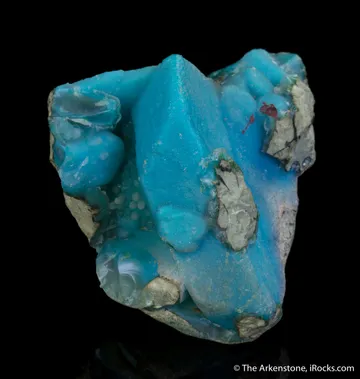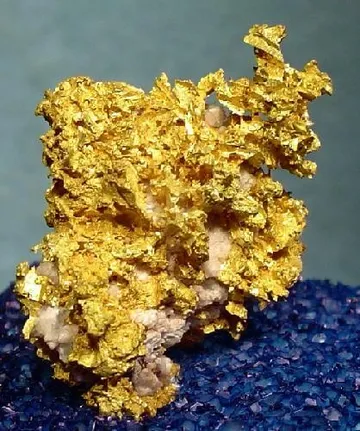
Arizona, USA - copper-rich locality famed for Bisbee azurite and malachite, wulfenite, vanadinite, and rare sulfates; key oxidation zones from Bisbee to Ajo.
Key facts
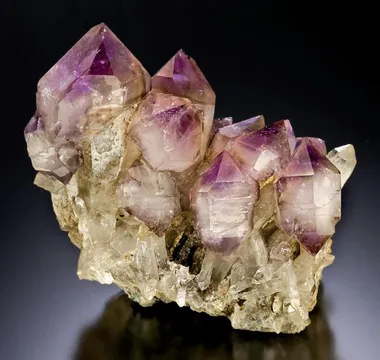
Arizona is not a single mineral locality so much as a collecting civilization: a dry, copper-rich province where Laramide porphyry systems, replacement ores in Paleozoic carbonate rocks, vein deposits, skarns, breccia pipes, volcanic-hosted massive sulfides, pegmatites, quartz veins, and desert oxidation zones have produced one of the deepest specimen traditions in North America. Its great cabinet identity is built on secondary copper and lead minerals—azurite, malachite, brochantite, linarite, wulfenite, vanadinite, dioptase, chrysocolla, cuprite, native copper, cerussite, mimetite, and a long tail of rare sulfates, arsenates, silicates, fluorides, and guano-related species. The look is unmistakable: Bisbee blue against velvet green, Red Cloud orange tablets, North Geronimo cherry-red vanadinite, Tiger lead-copper rarities on pale oxidized matrix, Ajo copper silicates in quartz and altered ore, and Four Peaks amethyst with a wine-red violet body color that belongs to Arizona alone.
Historically, Arizona’s importance to collectors follows its importance to mining. The state’s specimen record was built in the same places that made its copper reputation: Bisbee in the Mule Mountains, Morenci in Greenlee County, Globe-Miami and Christmas in central Arizona, Ajo in Pima County, Ray and Superior in Pinal County, Jerome in Yavapai County, and the lead-silver-wulfenite country of western Arizona. Early miners opened vast oxidation zones before the specimen market existed in its modern form; pockets were blasted, sorted, sold, saved by mine captains, or simply smelted. The survivors—especially old Bisbee azurites and malachites, Tiger linarites and wulfenites, and Red Cloud wulfenites—are now standards by which American locality collecting is judged.
Regional View
Country View
The unifying theme is oxidation in an arid climate. Copper sulfides, lead-zinc ores, vanadium-bearing solutions, carbonate host rocks, fault breccias, and limited leaching water combined to make open spaces mineralogically extravagant. Bisbee’s limestone caves and gossan cavities gave collectors azurite rosettes, malachite pseudomorphs, calcite stalactites, cuprite, brochantite, and linarite. Tiger’s Mammoth-Saint Anthony system compressed gold, molybdenum, vanadium, lead, zinc, copper, and rare halide-sulfate chemistry into a world-class suite. The Red Cloud and North Geronimo mines in the Trigo Mountains turned lead-vanadate chemistry into some of the most saturated orange and red crystals in the United States. Four Peaks, far from the copper camps in mood and setting, gave Arizona its gem-quartz counterpart: amethyst from cavities and fractures in brecciated quartzite high in the Mazatzal Mountains.

Photo: Wikimedia Commons

Photo: Wikimedia Commons
Search for specimens: View all specimens from Arizona, USA
Arizona’s specimen geology is dominated by metal districts of southern, central, and western Arizona. The largest economic systems are porphyry copper deposits and related replacement, skarn, vein, and breccia bodies, many of Laramide age, where primary chalcopyrite, bornite, pyrite, chalcocite, sphalerite, galena, molybdenite, and associated sulfides were overprinted by supergene enrichment and desert oxidation. In carbonate-hosted districts such as Bisbee and Tiger, the contact between reactive limestone and metal-bearing fluids created especially favorable ground for open cavities and later secondary species. In the western lead-silver districts, including the Red Cloud–North Geronimo area, vanadium-bearing oxidizing fluids acted on lead ores to make wulfenite, vanadinite, mimetite, descloizite-group minerals, cerussite, anglesite, and manganese-iron oxides.
Bisbee, officially the Warren district, is the best known Arizona locality to mineral collectors. Its great mines—Copper Queen, Czar, Holbrook, Southwest, Shattuck, Junction, Campbell, Cole, Higgins, and the later Lavender Pit—worked replacement ore bodies and related mineralization in Paleozoic carbonate rocks cut by faults and intrusive activity in the Mule Mountains. The oxidation zone was unusually deep and rich. Copper carbonates and oxides filled caves, seams, and vugs; azurite, malachite, cuprite, native copper, calcite, aragonite, brochantite, chrysocolla, linarite, turquoise, and rare sulfates and chlorides were preserved in extraordinary variety. The district produced huge metal output as well as a museum-level specimen suite, and old labels from Bisbee carry special weight because the richest underground specimen zones are long gone.
Morenci, in Greenlee County, represents the large-scale porphyry end of Arizona mineralization. It is a vast copper system, historically mined underground and then by open pit, and it has produced azurite, malachite, chrysocolla, turquoise, quartz, pyrite, and other oxidized copper minerals. Morenci specimens are typically judged differently from Bisbee specimens: less cave-like and more massive or vein-related, but sometimes with superb bladed azurite, malachite pseudomorphs, and striking blue-green lapidary material. The continuing industrial scale of the mine means access is not comparable to old-time collecting localities; specimens generally come from historic production, company-sanctioned recovery, old collections, or secondary market dispersals.
Ajo’s New Cornelia Mine, in Pima County, is a classic porphyry copper district and a type-locality anchor for Arizona mineralogy. Its oxidized copper silicate assemblage includes ajoite and papagoite, with shattuckite, conichalcite, quartz, muscovite, pyrite, and related alteration minerals. The Ajo material is important scientifically and historically, though collectors should be careful not to confuse it with the later, far more visually familiar South African quartz crystals containing blue ajoite, papagoite, and shattuckite inclusions. At Ajo the Arizona story is ore-body mineralogy and type material, not the transparent included-quartz style that dominates the modern metaphysical and gem market.
The Mammoth-Saint Anthony Mine at Tiger, in Pinal County, is one of the state’s most celebrated specimen deposits. Located as a gold mine in the late nineteenth century and later worked for molybdenum, vanadium, lead, zinc, and other metals, it became famous among collectors for wulfenite, diaboleite, leadhillite, cerussite, caledonite, azurite, malachite, linarite, dioptase, matlockite, and numerous rare lead-copper species. The deposit sat in a complex breccia environment involving rhyolite, mafic volcanic rocks, and Oracle Granite near the Turtle fault. For collectors, Tiger is a name that must be treated with precision: fine old pieces may be labeled Mammoth, St. Anthony, Mammoth-St. Anthony, Tiger, or simply Mammoth Mine, and the best pieces deserve preservation of every old label.
The Grand Reef Mine in Graham County is smaller in public fame but very large in mineralogical importance. It is best known to collectors for linarite, and scientifically for a remarkable suite of lead fluoride minerals. Grandreefite, pseudograndreefite, laurelite, aravaipaite, artroeite, and calcioaravaipaite belong to the Grand Reef story, making the locality a touchstone for advanced systematic collectors.
In western Arizona, the Red Cloud Mine and the North Geronimo or Pure Potential Mine in the Silver district of La Paz County define the state’s wulfenite-vanadinite market. Red Cloud is synonymous with orange-red tabular wulfenite, while North Geronimo/Pure Potential is the reference Arizona locality for deep red vanadinite in small, brilliant, often hoppered crystals and aggregates. These are lead-vanadate oxidation-zone specimens, not copper-camp products, and their best examples have a sharply different aesthetic from Bisbee or Morenci.
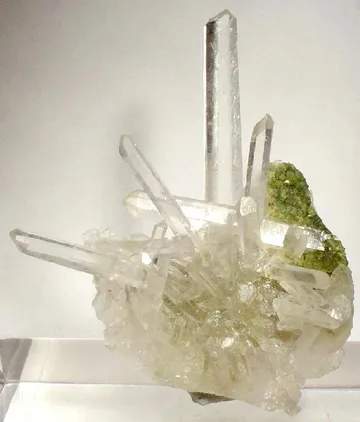
Quartz collecting in Arizona ranges from public rockhounding sites to hard-country gemstone mining. Diamond Point near Payson is a managed quartz-crystal collecting area on National Forest land, known for clear, doubly terminated “Payson diamond” crystals weathering from cavities associated with the Martin Formation. Four Peaks, in the Mazatzal Mountains, is the state’s famous amethyst locality, producing gem-quality purple quartz from crystal-lined cavities and fractures in brecciated quartzite at a rugged high-elevation mine that has long required unusually difficult access.
Collecting access today is highly variable and must be treated locality by locality. Many classic mines are private, patented, active industrial properties, reclaimed sites, or hazardous abandoned workings. BLM-administered lands in Arizona may allow casual noncommercial collection in reasonable amounts where not otherwise restricted, but collecting is prohibited or restricted in many special designations, national monuments, developed recreation sites, active claims, tribal lands, state parks, and private properties. Arizona State Trust Land is not public land for rockhounding; a recreational permit does not authorize mineral collecting there. The safe collector buys well-provenanced old specimens, attends club field trips, uses current land-status maps, and obtains explicit permission before entering any claim, dump, mine road, or underground opening.
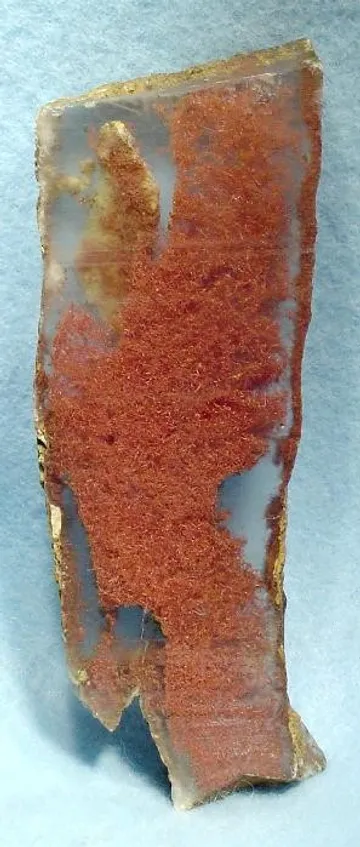
Arizona quartz is best approached as several distinct collecting traditions rather than one habit: clear doubly terminated crystals from Diamond Point near Payson, amethyst from Four Peaks, quartz gangue and druses in copper districts, chalcedony and agate across desert volcanic terrain, and copper-silicate-bearing quartz from localities such as Ajo and Wickenburg-area occurrences. The Diamond Point material is typically small hand-specimen to thumbnail scale but prized when it is water-clear, lustrous, undamaged, sharply double terminated, and free enough from iron staining to show its “Payson diamond” character; Four Peaks amethyst is judged by rich red-violet color, transparency, clean terminations, and attractive association with hematite-stained or colorless quartz growth in brecciated quartzite. Ordinary Arizona quartz is abundant, but fine locality pieces stand out when the habit, setting, and old label are specific: a Diamond Point floater, a Four Peaks amethyst plate, or a copper-district quartz specimen with ajoite, papagoite, shattuckite, chrysocolla, or sulfide associations has far more collector meaning than a generic “Arizona quartz” label.
Arizona azurite is anchored by Bisbee, where the best pieces show saturated royal to navy-blue crystals, sparkling botryoidal crusts, rosettes, bladed groups, stalactitic masses, and azurite with velvet malachite on gossan or limestone matrix; old Bisbee crystals reportedly reached several inches, and even modest miniatures are desirable when the luster is bright, the color is not blackened by excessive thickness, and the matrix is unquestionably district-correct. Morenci adds a different style, with bladed azurite, azurite-malachite lapidary material, and replacement textures from a giant porphyry copper system, while Tiger, Grand Reef, Ajo-area prospects, Globe-Miami, and numerous smaller copper camps provide additional oxidized-copper occurrences. The finest Arizona azurites separate themselves by locality confidence, undamaged crystal faces, lively contrast with malachite or limonite, and the unmistakable old-camp look of specimens saved before the great oxidized zones were exhausted.
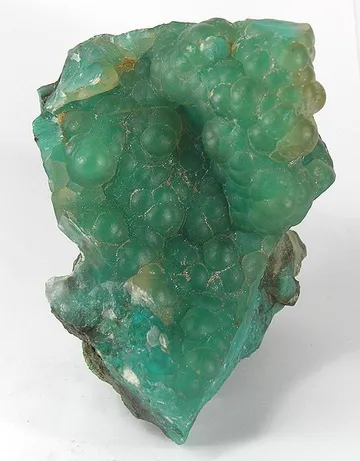
Arizona malachite reaches its most collectible expression at Bisbee, where it occurs as velvety botryoidal crusts, silky fibrous coatings, stalactitic and cave material, green replacement of earlier azurite crystals, and vivid accents on azurite, cuprite, calcite, and limonitic gossan. Strong Bisbee malachite is not simply “green copper stain”: it has texture, chatoyance, depth of color, and form, whether as plush pseudomorphs after azurite blades from the Southwest and Copper Queen systems or as curved cave surfaces with azurite and calcite. Morenci, Ajo, Globe-Miami, Jerome, Ray, and many smaller copper districts produced malachite as well, but good collector specimens are those with deliberate form and association—velvet over sharp pseudomorphs, undamaged botryoids, stalactitic geometry, or sharp contrast with blue azurite—rather than massive, chalky, or powdery oxidation-zone material.
Arizona brochantite is a connoisseur’s secondary copper mineral, most classically represented at Bisbee, where it occurs in the oxidized copper ores with malachite, cuprite, azurite, calcite, chrysocolla, linarite, and other sulfate-chloride assemblages. The species is easy to overlook because compact green brochantite can be visually confused with malachite, but the best Bisbee examples show darker emerald-green acicular to prismatic crystals, sparkly crusts, nests, or veinlets, sometimes in dramatic association with red cuprite or pale calcite. Strong pieces are sharply crystallized, lustrous, and correctly identified; weak pieces are merely green coatings. Because brochantite was noted historically as a minor constituent rather than a showy ore mineral, old, well-crystallized Bisbee examples with reliable labels are much scarcer and more interesting than their understated appearance may suggest.
Arizona calcite is most collectible where it records the same open-space oxidation environments that made the copper specimens famous: Bisbee cave calcites, copper-tinted stalactites, helictitic forms, crystals with malachite, aragonite, cuprite, native copper, aurichalcite, and limonite, and later small flowstone-like material in post-mining environments. The Holbrook and Copper Queen systems are especially associated with calcite specimens, including stalactitic and cave forms that were collected and sold in the early specimen trade. Elsewhere in Arizona, calcite is a common gangue mineral in lead-zinc and copper deposits, and it appears with wulfenite and vanadinite in western Arizona and central Arizona lead deposits. Good Arizona calcite is not judged by size alone; it is judged by sculptural form, transparency or copper coloration, intact terminations, association with classic Arizona species, and an old label tying it to a specific mine rather than to the state in general.
Arizona vanadinite is defined by the lead-vanadate oxidation zones of western and southern Arizona, especially the North Geronimo or Pure Potential Mine near the Red Cloud and Hamburg mines in the Trigo Mountains, the Red Cloud district, the Old Yuma Mine near Tucson, and several smaller lead districts. North Geronimo/Pure Potential specimens are typically bright orange-red to deep cherry-red hexagonal crystals on matrix, commonly only a few millimeters but intensely lustrous; the most desirable show hoppered basal faces, parallel-growth aggregates, sparkling coverage, and vivid contrast with calcite, wulfenite, mimetite, or dark oxidized matrix. Old Yuma is historically important for bright red vanadinite with wulfenite, including crystals approaching thumbnail display size, while Red Cloud-area material is valued when the locality is precise. Good Arizona vanadinite competes by color saturation, sparkle, crystal sharpness, and locality pedigree rather than by the larger crystal size associated with Morocco.
Arizona linarite is a serious collector’s mineral, with the Grand Reef Mine in Graham County and the Mammoth-Saint Anthony Mine at Tiger in Pinal County standing out as the state’s great names. Grand Reef is celebrated for superb linarite crystals and its rare lead fluoride suite, while Tiger produced linarite with a famous lead-copper assemblage that also includes caledonite, leadhillite, cerussite, diaboleite, wulfenite, azurite, malachite, and dioptase. Bisbee also has linarite, generally rarer and more modest than its azurite-malachite showpieces, often in sulfate-rich oxidized copper associations. The best Arizona linarites show intense electric blue color, sharp bladed to prismatic crystals, lively luster, and minimal bruising on a contrasting pale or gossany matrix; because linarite is fragile and easily confused in small blue crusts with azurite or other copper sulfates, analytical confidence and old labels matter greatly.
Arizona’s “other minerals” list is almost a second guide by itself. Wulfenite is the state mineral and is represented by Red Cloud, Old Yuma, Glove, Rowley, Tiger, 79 Mine, and other classic localities. Dioptase from Tiger, turquoise from Bisbee, Morenci, Kingman, and other mines, chrysocolla and gem silica from major copper districts, cuprite from Bisbee, native copper from Bisbee, Ray, Morenci, and Jerome, and aurichalcite from the 79 Mine all have strong followings. The state is also unusually rich in type-locality species and rare-mineral localities: ajoite and papagoite from New Cornelia at Ajo; grandreefite, pseudograndreefite, laurelite, aravaipaite, artroeite, and calcioaravaipaite from Grand Reef; rowleyite, phoxite, allantoin, and natrosulfatourea from the Rowley Mine; and Tiger-related rarities including yedlinite, bideauxite, pinalite, ruizite, and mammothite. For systematic collectors, Arizona is not merely a source of attractive copper minerals; it is one of the great American laboratories of oxidation-zone mineral diversity.
Arizona labels deserve close scrutiny. A specimen labeled only “Arizona” is often marketable but mineralogically weak; the difference between Bisbee, Morenci, Tiger, Ajo, Grand Reef, Red Cloud, North Geronimo, Old Yuma, Rowley, 79 Mine, or Diamond Point can be the difference between a common state specimen and a major locality piece. Old Bisbee material is especially prone to broad labeling: “Copper Queen” may be used loosely for nearby Bisbee mines or for material sold through Copper Queen channels, and some historically labeled Copper Queen specimens may actually have come from neighboring Czar, Holbrook, Southwest, or other workings. Preserve all old labels, even ambiguous ones, and do not “improve” a locality attribution unless there is real evidence.
Azurite and malachite from Bisbee and Morenci are sometimes confused in the market, particularly when pieces are massive, botryoidal, or polished. Bisbee azurite-malachite commonly has a vuggy gossan or limestone cave character; Morenci pieces more often show porphyry-copper oxidation textures, massive lapidary bands, or bladed crystal habits from a different geologic environment. Ajoite is another caution zone: modern “ajoite in quartz” specimens are usually associated with South African localities, and Arizona ajoite from Ajo is not the same transparent included-quartz style. Treat any dramatic “Arizona ajoite-in-quartz point” claim with skepticism unless accompanied by authoritative provenance.
Condition is a major value driver. Bisbee azurite bruises easily, and dark blue crystals may conceal edge wear until viewed under strong side light. Malachite velvet can be rubbed smooth, matted by dust, or damaged by old cleaning. Linarite is soft, brittle, and vulnerable along crystal edges. Wulfenite and vanadinite from western Arizona chip at exposed edges and corners; hoppered vanadinite aggregates in particular can look complete while missing tiny high points. Calcite stalactites and cave pieces may have old breaks, sawn bases, or copper-salt staining that is part of the specimen’s history rather than a defect, but acid cleaning can ruin associated carbonates, copper minerals, or delicate surface luster.
Treatments and enhancements are most relevant in Arizona turquoise, chrysocolla, gem silica, and lapidary azurite-malachite, where stabilization, backing, waxing, resin filling, polishing, and dyeing may occur. For crystallized cabinet specimens, the main concerns are cleaning residues, repaired wulfenite or azurite crystals, glued vanadinite aggregates, trimmed matrix, and locality inflation. Use UV cautiously: some Arizona calcite, fluorite, willemite, and related material can fluoresce strongly, especially from western lead districts, but fluorescence alone is not a locality proof. Handle vanadinite, wulfenite, mimetite, cerussite, linarite, and other lead-bearing species with normal mineral-collection hygiene: wash hands after handling, avoid dust, and keep fragile or toxic minerals away from children and food-preparation areas.
Market availability is uneven. Small Arizona quartz from Diamond Point and common malachite or chrysocolla remain available, while top Bisbee azurite, Tiger linarite, Grand Reef linarite, Red Cloud wulfenite, and North Geronimo/Pure Potential vanadinite are increasingly old-collection minerals. Fine specimens appear through estate dispersals, major dealers, show inventory, and occasional permitted collecting at certain fee or claim localities, but the classic underground pockets are not renewable in any practical collecting sense. In Arizona, provenance is not paperwork decoration; it is part of the specimen.
At Tiger, the Mammoth-Saint Anthony Mine seems almost engineered for mineral-collecting legend. The mine was located in 1879 as a gold mine, then became a producer of vanadium, molybdenum, lead, zinc, and other metals before closing in 1952. Collectors remember it not as a neat one-species locality but as a mineralogical storm: more than 95 common, rare, exceptional, or unique species, with wulfenite, diaboleite, leadhillite, cerussite, caledonite, azurite, malachite, linarite, and dioptase among the best-known names. One reported mineralized fracture ran 750 feet vertically and only 4 to 6 inches wide, lined with orange-yellow wulfenite crystals to two inches on an edge. That is the kind of measurement that tells the whole story: a crack narrow enough to reach into, but long enough to stock cabinets for generations.
The Tiger stories also have the tempo of a mine that was producing specimens faster than collectors could fully absorb them. From the Mohawk Shaft, emerald-green dioptase appeared in such abundance that Dick Jones reportedly collected 18 large boxes of specimens in one afternoon from the conveyor belt alone. That detail is worth pausing over. Today a sharp Tiger dioptase specimen is a prize; in that moment, the mine machinery itself was delivering them in bulk, and the collector’s problem was not whether the locality would produce, but whether he could keep up.
Red Cloud’s legend belongs to a different color. The mine, registered as a claim in 1878 and worked intermittently into the early twentieth century, became the great American name for wulfenite: vibrant orange-red tablets, groups and single crystals, some exceeding two inches on an edge. The finest were associated with the amateur collector Ed Over, whose discoveries became important enough that the Smithsonian displayed his best finds. Red Cloud is one of those localities where a species and a place nearly merge in collectors’ minds; to say “Red Cloud” is already to imply a certain color, luster, and tabular geometry.
The Old Yuma Mine near Tucson adds one of Arizona’s most cinematic pocket stories. It was an old gold mine, later famous for brilliant orange wulfenite and bright red vanadinite; black wulfenite with specks of gold in the crystal was also reported there. Dick Jones found a vanadinite pocket more than two feet across that produced hundreds of rock fragments covered with half-inch crystals. In another seam, loose orange wulfenite crystals cascaded into his outstretched shirt. Later the seam proved to be part of a larger pocket of choice wulfenite accompanied by snow-white cerussite. The image is hard to improve: a collector underground, shirt held open, while Arizona wulfenite pours out like coins.
Four Peaks is the opposite of a mine-camp dump locality. Its story begins high in the Mazatzal Mountains, where the amethyst occurrence sits near the southern end of the four-peak skyline east of Phoenix. Around the turn of the twentieth century, Jim McDaniels climbed a steep gulch while prospecting for gold, following black iron sand and quartz pebbles upslope. About 400 feet below the peak, he found the gulch bed “literally paved with purple pebbles.” Their source was a depression floored with soft, broken sandstone, with points and knobs of amethyst plates protruding from it. There were no gold values, so McDaniels filed the showing as a mineral location instead. Arizona gained not a gold mine, but its defining amethyst locality.
The old Four Peaks working methods sound almost willfully archaic against the grandeur of the setting. Systematic development followed later, but the mine remained a hand-mining operation: pick, shovel, wheelbarrow, and occasional small blasts. There was no road, not even a jeep road. The foot approach at more than 7,000 feet was long, dangerous, and exhausting; workers stayed with guard dogs, used radio communication with Phoenix, and relied on helicopter flights to bring in supplies and carry amethyst out. Few American quartz localities have a logistical identity as strong as the material itself.
North Geronimo, also known in collector circles as Pure Potential, is a modern classic compared with Red Cloud or Tiger. Claims in the Trigo Mountains go back to the late nineteenth century, but this particular vanadinite occurrence came to broad collector attention in the mid-1990s when George Godas began working the mine he called Pure Potential. The best crystals were not huge; many were seldom larger than 5 mm. But they were brilliant, orange-red to deep red, and some developed dramatic hoppering on the basal pinacoid so that the crystals became hollow-looking shells near their tips. In 2005 Jim Ricker reportedly removed about 40 flats of similar material. Since then, the best hoppered North Geronimo vanadinites have moved from “new find” status into the category collectors know well: recent enough to remember, scarce enough to chase.