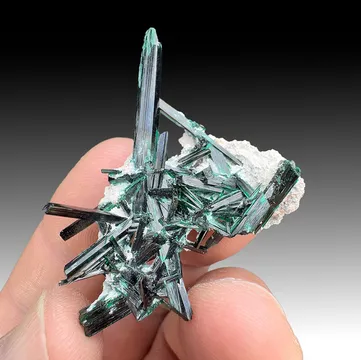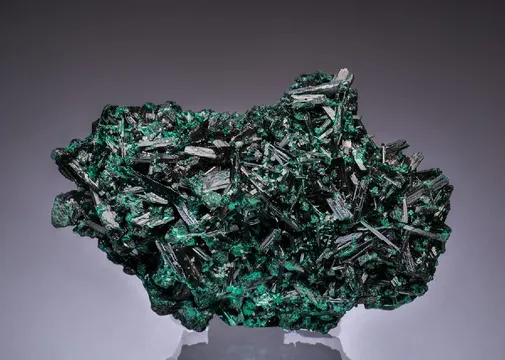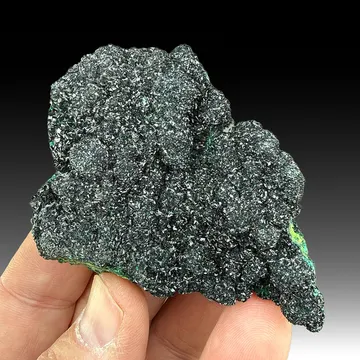
Brochantite - emerald-green prisms and silky sprays of a copper sulfate hydroxide; valued for vivid color, varied crystal habits, and copper-collection appeal.
Key facts
Brochantite is a copper sulfate hydroxide that forms in the oxidized zones of copper deposits, especially in arid climates. It is beloved by collectors for its rich bottle- to emerald-green color and diverse habits: from sharp, lustrous prismatic crystals to silky fibrous sprays and velvety druses. The best specimens offer vivid color, bright vitreous luster, and striking contrast against iron-rich gossan, quartz, or pale matrix minerals. Dramatic associations with chrysocolla, malachite, azurite, and cuprite are common and enhance display value. While abundant as coatings and microcrystals, truly fine, well-terminated macro crystals on aesthetic matrix are far scarcer and highly sought.
As a classic secondary copper mineral, brochantite appeals to both beginner and advanced collectors. Affordable pieces include dense druses or radiating sprays, while top-end specimens—particularly sharp, well-isolated prisms from storied localities—command strong prices. Historic mining districts in Chile and Arizona popularized the species in the early 20th century, and modern discoveries (notably at Milpillas) rekindled interest with superb color and luster. Its accessibility across price points, range of habits, and deep green hue keep brochantite a perennial favorite in copper suites and species collections alike.
Below are notable localities known for producing collectible, often world-class brochantite. Each listing includes a map, description, and an image gallery filtered to brochantite from that locality.
Famed for azurite, Milpillas also produced choice brochantite: sharp, lustrous, deep-green crystals and sprays—often on or near chrysocolla or quartz, and sometimes as elegant, glassy tufts. The mine’s modern preparation and careful recovery yielded fresh, damage-minimized specimens with excellent luster. Though production has ceased, Milpillas brochantite retains strong demand for its color, crystal perfection, and polished modern provenance.
Bisbee is an American classic for copper minerals, and brochantite is no exception. Expect dark bottle-green druses, silky sprays, and occasional robust prisms on iron-rich gossan. Bisbee pieces often display storied provenance and attractive associations (cuprite, azurite, malachite), and the contrast on limonite makes the green “pop.” Fine, undamaged sprays and discrete crystals on balanced matrix are scarce and coveted—especially older labeled specimens from the great mining era.
Tsumeb’s unparalleled chemical complexity yielded brochantite in fine, often sharply terminated prismatic crystals with vivid color and high luster. Matrix associations (dolomite, calcite, quartz) and unusual paragenesis add scientific interest. Although not the most common Tsumeb species, well-formed crystal groups with top luster are classic and keenly sought, combining the mine’s prestige with textbook crystal form.
Color and Luster:
Crystal Form and Habit:
Matrix and Associations:
Size and Aesthetics:
Condition:
Identification tips (common confusions):
Repairs:
Stabilization/Coatings:
Fakes:
Brochantite is moderately durable (hardness ~3.5–4.5) but fragile in fine crystals and sensitive to acids.
Handling:
Environment:
Light and Temperature:
Cleaning:
Long-term care: