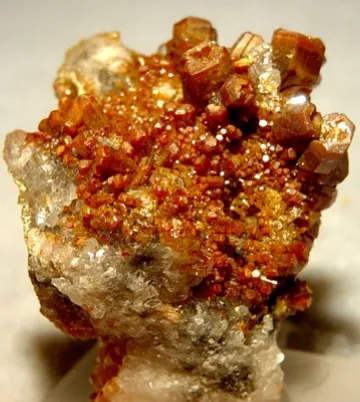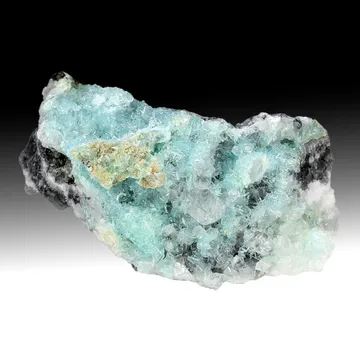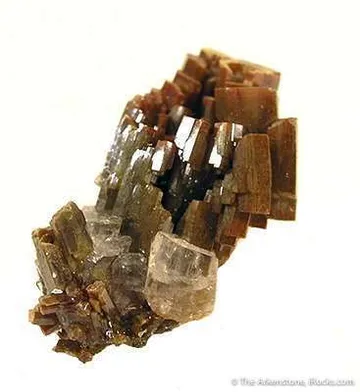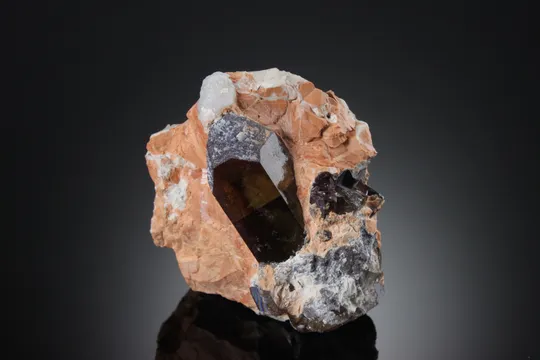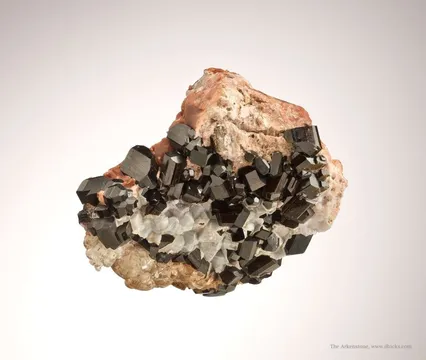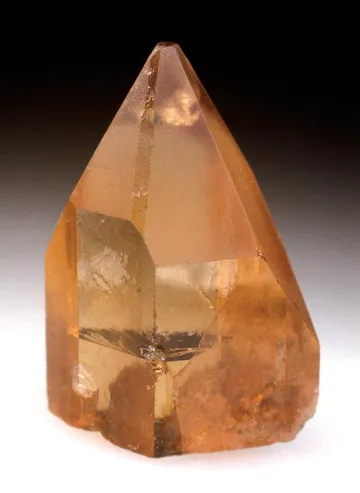
Amelia Mine, Mexico - type locality for boleite, pseudoboleite, and cumengeite; blue cubes and sculptural pyramids make it a must for collectors.
Key facts
Amelia Mine is the specimen heart of the Boleo District at Santa Rosalía, Baja California Sur: a desert-coastal copper camp where oxidized, chlorine-rich, lead-copper-silver mineralization produced one of the most unmistakable thumbnail suites in the mineral world. Its signature pieces are not large by cabinet-mineral standards, but they are architectural: indigo to electric-blue cubes of boleite, pseudocubic stepped pseudoboleite, and strange blue cumengeite pyramids growing in oriented fashion on boleite or pseudoboleite cores. For collectors, Amelia is important not merely as another Mexican copper locality, but as the type-locality ground for the boleite–pseudoboleite–cumengeite association, centered historically around the Cumenge shaft area.
Geologically, Amelia belongs to the Boleo copper-cobalt-zinc-manganese system, a sediment-hosted, manto-style deposit developed in the Santa Rosalía basin. The workable ores occurred in clay-rich stratiform beds, especially the district’s numbered ore horizons, and at Amelia the collector-famous material is tied to ore bed no. 3 near the head of Arroyo de la Soledad. The ore was oxidized and lay above the water table; that is crucial for understanding the specimens. Lead, copper, silver, abundant chlorine, gypsum, clay, manganese oxides, and arid-zone oxidation chemistry combined to make hydroxychlorides and oxychlorides that look more like crystallographic models than ordinary mine minerals.
Regional View
Country View
The best Amelia specimens are miniatures and thumbnails with intense blue crystals isolated on pale gypsum, limonite, clay, quartz-rich, or iron-oxide matrix. A fine boleite from here is a sharp, lustrous cube or modified cube with a depth of color that can run from teal-blue rims to nearly blackish indigo faces. A fine cumengeite is even more sculptural: tetragonal pyramidal crystals arranged as a six-sided “star” over a cubic boleite or pseudoboleite nucleus. Pseudoboleite can be the hardest of the three for the eye to separate, because it commonly forms stepped, epitaxial growths on boleite; the collector learns to look for the re-entrant, tiered architecture rather than simply a blue cube.

Photo: Wikimedia Commons, Didier Descouens

Search for specimens: View all specimens from Amelia Mine, Mexico
Amelia Mine lies in Arroyo de la Soledad in the Boleo District near Santa Rosalía, Mulegé Municipality, Baja California Sur, Mexico. The broader Boleo deposit is a copper-cobalt-zinc-manganese system in clastic sedimentary rocks of the El Boleo Formation, where mineralized clay-rich horizons or mantos are stacked through the section and dip gently eastward toward the Gulf of California. Faulting offsets these beds in step-like fashion, and the old mines followed favorable ore horizons rather than narrow vein shoots.
The Amelia workings were developed principally in ore bed no. 3, near the head of Arroyo de la Soledad. In the Amelia and Curugú area, ore bed no. 3 strikes roughly north-northwest and dips gently northeast. The USGS description emphasizes repeated northwest-trending normal faults; the Curugú fault had a maximum displacement of about 60 meters, and the Amelia fault near the Amelia shaft about 40 meters. Rather than a uniform sheet of ore, the Amelia and Curugú mineralization was concentrated in elongate, northwest-trending, riblike ore shoots. That geometry matters to specimen collectors because pockets of collectible boleite-group minerals were localized, not broadly distributed through every meter of the old mine.
The ore at Amelia was oxidized and above the water table. Boleo ores are enriched in copper, manganese, zinc, cobalt, lead, silver, sulfur, and chlorine, and the oxidized zone contains copper oxides, carbonates, silicates, and oxychlorides. The collector assemblage at Amelia reflects exactly that chemistry: boleite, pseudoboleite, cumengeite, paratacamite, anglesite, gypsum, cerussite, phosgenite, brochantite, chrysocolla, and other late secondary species in clayey and iron-stained matrices. Older labels and literature may say “atacamite,” but later work on the Boleo suite has shown that at least some of those reports should be treated cautiously and that paratacamite is a key green copper chloride at Amelia.
Historically, Amelia was one of the oldest mines in the Boleo District. Prominent outcrops along Cañada de Curugú and nearby ground drew prospectors soon after the district’s discovery. The Boleo company worked Amelia from 1886 until 1919, when the mine was abandoned; the adjacent Curugú mine was worked from 1894 to 1900. The Amelia mine eventually extended about 2 kilometers northwest and reached a maximum width of about 1 kilometer, with roughly 44 kilometers of underground workings. Extraction was mainly through the vertical Amelia shaft and nearby inclined entries known as Chiflón 186 Amelia and Chiflón Cumenge; the Cumenge shaft served for ventilation. Principal haulage levels included the 190, 186, 180, 172, 170, and 158 meter levels above sea level.
The most specimen-significant ground is the area around the Cumenge shaft, identified in the USGS account as the type-locality area for boleite, pseudoboleite, and cumengeite. Classic nineteenth-century specimens made their way to European collections early, including exceptional large boleite crystals. Later collecting history is also important: the famous 1970s rediscovery and reworking by Ed Swoboda and Bill Larson supplied many of the matrix pieces that define Amelia in modern collections. Some documented specimens from that work came from the 600-foot level and were stabilized immediately because the clay matrix was so friable.
The district did not stop being of economic interest after the classic French period. Boleo was mined for much of the twentieth century, later revived and explored by modern companies, and today the broader project remains an industrial mining district under Minera y Metalúrgica del Boleo rather than a casual collecting area. For collectors, that means old Amelia material, authenticated 1970s pieces, and more recent specimens from controlled re-entry, dump work, or mine-preparation activity are the normal legitimate sources. Anyone visiting Santa Rosalía should treat the old workings as dangerous, concession-controlled ground and should not assume that specimen collecting is publicly permitted.
Boleite from Amelia is the standard by which the species is judged: sharp, lustrous cubes and modified cubo-octahedral crystals in saturated Prussian-blue to indigo colors, usually only a few millimeters but locally reaching near-centimeter size and, in exceptional historic examples, larger. The finest pieces are isolated blue crystals on pale gypsum, limonite, clay, quartz-rich, or paratacamite-bearing matrix, with clean faces, crisp edges, strong color, and no distracting bruising; lesser pieces are massive-looking, chipped, dull, or so dark and embedded that the geometry is lost. Amelia boleite is commonly associated with pseudoboleite, cumengeite, gypsum, paratacamite, anglesite, and brochantite, and the most desirable pieces either show a single perfect cube in sculptural isolation or multiple crystals arranged naturally on contrasting matrix.
Cumengeite is Amelia’s most bizarre-looking blue mineral, prized for tetragonal pyramidal crystals that commonly grow epitaxially on the faces of boleite or pseudoboleite to form little star-like constructions. Good Amelia pieces show sharp pyramids, translucency at thin edges, high luster, and rich blue color; the most memorable examples preserve the relationship between the cubic core and the outward-pointing cumengeite crystals clearly enough that the epitaxy can be read without magnification. Most specimens are thumbnails or miniatures, with crystals in the millimeter range, though the locality produced unusually well-formed crystals for the species and remains the source of the best-known collector examples.
Pseudoboleite from Amelia is subtler than boleite but far rarer in good, obvious specimens: it forms dark to vivid indigo-blue pseudocubic crystals and, especially, stepped epitaxial overgrowths on boleite cubes. The diagnostic Amelia look is a cube whose faces and edges appear terraced or built up by thin plates, sometimes with re-entrant geometry, rather than a simple smooth boleite cube. Good pieces show the stepped form sharply, with enough luster and color to separate it visually from matrix and enough completeness that the pseudoboleite overgrowth is not merely a rough blue crust; specimens with boleite and cumengeite together are particularly desirable because they show the full Amelia trio in a single crystallographic construction.
Gypsum is not Amelia’s headline mineral, but it is one of the locality’s important specimen partners because pale white to colorless gypsum plates, crusts, and small crystals provide the classic contrast for boleite and its relatives. On Amelia pieces, gypsum is valued less as a stand-alone species and more as a matrix mineral: a thin white sheet or sparkling crystalline patch can make an indigo boleite cube appear dramatically sharper. The best gypsum-bearing Amelia specimens keep the matrix intact and clean, without powdering, staining, or heavy glue shine, and they preserve blue boleite, pseudoboleite, paratacamite, or anglesite in a visually balanced setting.
Other documented Amelia minerals include anglesite, brochantite, calcite, cobalt-bearing calcite, cerussite, chrysocolla, paratacamite, pearceite, phosgenite, pyromorphite, and romanèchite. Two names require special care on labels: “atacamite” has appeared historically but is treated as erroneous for Amelia in later Boleo work where the material is paratacamite, and “spherocobaltite” likewise appears as an erroneous literature entry rather than a secure Amelia species. Percylite is historically intertwined with the early French descriptions of the Boleo blue chlorides, but the three collector-critical Amelia names remain boleite, pseudoboleite, and cumengeite.
Amelia specimens are small, dense, and deceptively fragile. The crystals themselves are lead-copper-silver or lead-copper hydroxychlorides, but the matrix is often the weak point: clay, soft limonite, gypsum, and friable oxide mixtures break, flake, and powder easily. Many legitimate classic matrix specimens were stabilized soon after collection; documented 1970s Swoboda-Larson pieces include matrix treated with a dilute glue solution because the clay could not otherwise support the heavy crystals. Stabilization is therefore not automatically a defect here, but it must be disclosed, and glossy glue films, darkened matrix, or visible pooling reduce collector appeal.
The most common condition issues are chipped cube edges, cleaved backs, missing epitaxial blades, scuffed luster, loose crystals, and matrix repairs. A boleite cube with one damaged rear face may still be desirable if the display face is sharp and the damage is old, natural, or fully disclosed; a repaired top crystal or reconstructed clay matrix is a more serious matter and should be priced accordingly. Under magnification, examine every cube corner and the contact between crystal and matrix. Amelia pieces are often photographed dramatically, and the difference between a clean 6 mm cube and a bruised 6 mm cube is large in value.
Mislabelling is a genuine issue. Boleite, pseudoboleite, and cumengeite are closely related and commonly intergrown, so old labels may name only boleite even when pseudoboleite or cumengeite is present. Conversely, stepped or altered boleite is sometimes optimistically offered as pseudoboleite without analytical support. The atacamite/paratacamite problem is another locality-specific trap: green copper chloride sprays or balls on Amelia specimens should not be accepted as atacamite simply because an old label says so. For valuable pieces, a reputable provenance, a published photograph, a Mindat minID, or analytical confirmation can matter.
Because these are lead-bearing minerals, handle specimens sensibly: do not lick, acid-test, powder, or ultrasonically clean them; keep them away from children; wash hands after handling; and store loose fragments securely. Gypsum-bearing pieces should be kept dry and mechanically protected. I would not use water cleaning on Amelia matrix specimens, and I would avoid solvents unless a conservator has first determined what stabilizer is present.
Rarity varies sharply by quality. Loose or matrix-poor small boleite crystals appear periodically, and modest examples can still be found. Fine matrix boleite, obvious pseudoboleite, and sharp cumengeite are much scarcer. Recent dealer and auction records show the spread well: small loose boleite crystals can be relatively accessible, while illustrated, rich, or classic ex-collection Amelia pieces regularly move into four-figure territory. Cumengeite and convincing pseudoboleite remain especially thin on the market, and old labels from the 1970s Swoboda-Larson work, major collections, or institutional deaccessions add real value when the specimen quality supports the story.
The old Amelia mine is not a romantic single-shaft curiosity; it is a maze. By the time the USGS summarized the workings, Amelia contained about 44 kilometers of underground development, stretching roughly 2 kilometers along the northwest trend and up to 1 kilometer wide. The specimen locality collectors speak of so casually—the Cumenge shaft area—was part of an industrial system with vertical and inclined access, haulage levels at measured elevations, ventilation entries, and ore shoots followed through clay-rich manto ground. The blue crystals that now sit in thumbnail boxes came from a mine built for copper, not for collectors.
One of the most repeated modern Amelia stories belongs to the mid-1970s, when Ed Swoboda and Bill Larson returned collectors’ attention to the mine. Auction and specimen records tie many classic matrix pieces to their work, and the details are wonderfully practical rather than glamorous: blue cubes on soft clay were so unstable that collected specimens had to be soaked in a 5% glue dilution to keep them together. A documented Philadelphia Academy specimen from the 600-foot level carried about ten teal-blue to deep indigo boleite cubes on stabilized clay matrix with green copper chloride clusters, and it had been donated by Bill Larson to the museum in the 1970s. That is Amelia in miniature: world-class crystallography held together by desert clay and field conservation.
The Swoboda-Larson work also explains why some of the best Amelia pieces are not nineteenth-century relics but late-twentieth-century classics. Several documented specimens state that the two collectors rediscovered and worked the same areas where the original discoveries had been made around 1900. Their finds supplied the market with sculptural boleite groups, pseudoboleite on boleite, and cumengeite specimens at a quality rarely matched elsewhere. For a collector, a credible Swoboda-Larson provenance is not a decorative label; it often points to one of the defining recoveries of the locality.
The locality was not finished after that episode. In the 2009 New Mexico Mineral Symposium abstracts, Jack Crawford reported repeated visits with his wife over four years and described encouraging and helping a local miner re-enter the Amelia mine to collect boleite, pseudoboleite, and cumengeite. He also noted a rich chrysocolla outcrop south of Amelia along the same no. 3 ore horizon. That short abstract captures the modern reality of Boleo collecting: the geology still has surprises, but access depends on local miners, old workings, changing mine conditions, and the practical realities of an active mining district.