






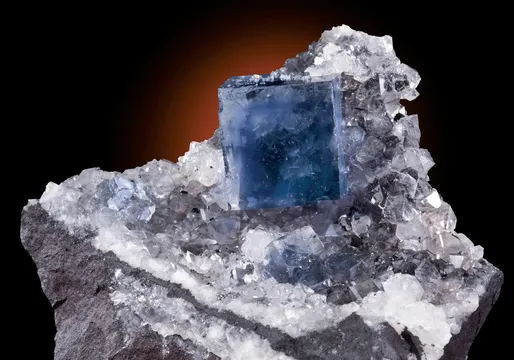
Allenheads Mine, UK: premier North Pennines locality yielding lavender to wine-purple fluorite cubes, often twinned on dark sphalerite matrix, with notable Dia…
Key facts
Allenheads Mine, better known to many mineral collectors under its twentieth-century name Beaumont Mine, is one of the essential North Pennines localities: a great lead mine of East Allendale, later reopened for fluorspar, and the source of a small but highly distinctive suite of classic English fluorite specimens. Its importance is not simply that it produced fluorite; it produced fluorite from the same geological architecture that made the Northern Pennine Orefield famous — hydrothermal veins and stratabound “flat” replacements in Carboniferous limestones, with galena and sphalerite as principal ores and fluorite, quartz, siderite, ankerite and related carbonates as the characteristic gangue.
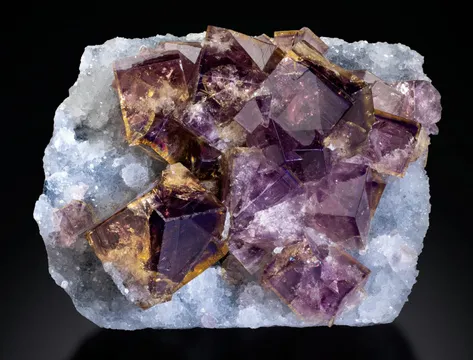
For the collector, Allenheads has a look. The best material is generally not the bright green Rogerley style or the deep saturated Weardale purple of some Durham mines, but pale lavender to wine-purple cubes, commonly twinned or interpenetrant, set on dark sphalerite-rich and iron-carbonate matrix. The Diana Vein material is the name to remember: lustrous, highly reflective fluorite with sphalerite and siderite from remnants of flats encountered during the British Steel reopening. Henry’s Vein, by contrast, is associated with more opaque purple cubes, siderite, occasional galena, and some important siderite/ankerite epimorphs after fluorite. Good Allenheads specimens have sharp cubic form, strong luster, intact corners, contrasting dark sulphide or warm brown siderite, and — in many examples — a subtle daylight shift or fluorescence that brings the lavender body colour alive.
Historically, Allenheads was not a minor hill working. Contemporary and modern accounts describe it as the largest or most productive single lead mine in the North Pennines, with a long sequence of veins beneath and around the village. The mine was worked by the Blackett-Beaumont interests and later associated with W. B. Lead; its mine yard, washing floors, bouse teams, shafts, levels and hydraulic machinery formed the industrial core of the village. For mineral collectors, however, its best-known specimens came late: the ambitious British Steel Corporation fluorspar venture of 1969–1981, commercially disappointing but mineralogically memorable.
Regional View
Country View

Photo: Wikimedia Commons
The surviving mine buildings help explain why Allenheads pieces can carry two histories on one label. A nineteenth-century lead mine sits beneath a twentieth-century fluorspar prospect; an old lead district produced the collector fluorites that reached the market under the name Beaumont Mine. Labels using Allenheads, Beaumont, Diana Vein, Henry’s Vein, East Allendale or Northumberland may all be referring to the same essential locality, but the best labels give the vein and, where possible, the British Steel-period provenance.
Search for specimens: View all specimens from Allenheads Mine, UK
Allenheads Mine lies at Allenheads in East Allendale, Northumberland, within the Northern Pennine Orefield on the Alston Block. The regional deposit style is a fluoritic Mississippi Valley-type system developed in Carboniferous sedimentary rocks, especially limestones within the Yoredale succession. Mineralising brines moved through fault-vein systems and adjacent permeable horizons, depositing galena, sphalerite, fluorite, quartz and iron-bearing carbonates. At Allenheads, the collector’s interest is inseparable from the “flat” deposits: essentially bedding-parallel replacement bodies in limestone, especially the Great Limestone, where original limestone was replaced by combinations of quartz, ankerite, siderite, fluorite, galena and sphalerite. These flats could be richer in ore minerals than the parent fissure veins and were a major part of the mine’s economic success.
The vein system beneath Allenheads was complex. Nineteenth-century descriptions name Poverty Vein, Sun Vein, Diana Vein, Blackett Vein, Style Vein, Christopher Mills’ Vein and Grindstone Vein among the veins then understood or worked. The old accounts describe “much lead” with coloured cubical spar — blue, purple and amber — as well as “black jack,” the miners’ name for sphalerite, and quartz. The mineralised interval was described through a vertical range from the Grindstone Sill to the Four Fathom Limestone, but the most economically and mineralogically important flats were associated with limestones, particularly the Great Limestone.
Allenheads was developed as a major Blackett-Beaumont lead enterprise. The Fawside level was begun in 1776, the Gin Hill shaft had been dug by 1793, and the village became a planned industrial settlement focused on the mine and ore works. The surviving bouse teams — tall stone storage bays for newly mined ore before dressing — are among the most evocative surface remains. Historic England records fourteen apsidal bays separated by stepped walls, remains of washing floors, a stone-arched drainage tunnel, a paved channel from the Fawside level, spoil heaps and associated mine-yard structures. All lead working at the ore works had ceased by 1896.
The mine’s nineteenth-century output was enormous by North Pennine standards. Modern geological work and local historical summaries record roughly 250,000 tons of lead concentrates or lead ore ready for smelting from Allenheads between the early eighteenth century and closure, with a substantial proportion coming from stratabound flats. This helps explain why so little early, well-localised collector material survives: Allenheads was an ore mine first, and nineteenth-century specimens were often traded under broad regional labels such as Alston Moor, Cumberland, Weardale or simply “North of England.”
The twentieth-century chapter is the reason most collector-quality Allenheads fluorites can be placed with confidence. British Steel Corporation reopened the old workings in 1969–1970 under the name Beaumont Mine, looking for fluorspar for steelmaking. Rather than relying solely on old entrances, a new inclined access was driven to reach the old ground and anticipated reserves. The commercial expectation was not met. The hoped-for fluorspar reserves, whether unworked in place or left as backfill, did not materialise at the scale required. By 1981 the venture had effectively ended, and by the early 1980s the mine was inactive.
That failed fluorspar venture nevertheless opened the pockets and flats that made Allenheads a classic specimen locality. The Diana Vein produced the celebrated pale lavender, twinned fluorites with sphalerite and siderite, many recovered around the early 1970s and commonly cited as the mine’s finest specimen material. Dealer and collector accounts also record that much of one major 1975 find went to Germany for the Munich show, which helps explain the number of strong Allenheads pieces that have long circulated in continental European collections. Henry’s Vein yielded a different style: mostly untwinned purple cubes, siderite and occasional galena, along with box-like siderite/ankerite epimorphs after fluorite near the intersection of the new inclined drift and the Knopley Level.
Collecting access today should be treated conservatively. The historic mine and ore works include scheduled and listed heritage features, and the old underground workings are not casual collecting ground. Surface and underground access require permission from the relevant landowner or mineral-rights holder, and any underground visit demands specialist competence, current local knowledge and appropriate organised access. The visible heritage landscape is valuable in its own right; loose specimen recovery from protected structures, spoil, walls, bouse teams or mine-yard remains is not acceptable collecting.
Allenheads fluorite is prized for a restrained but unmistakable North Pennine character: lustrous cubic crystals, commonly pale lavender, grey-lavender, violet-purple, wine-coloured or, in some older descriptions, pale greenish when fresh, set with black sphalerite and brown siderite or ankerite. The finest Diana Vein pieces show twinned or interpenetrating cubes typically around 1–2 cm, though notable specimens carry crystals exceeding 2.5 cm and rare cabinet pieces show larger, glassy intergrown cubes; quality rests on brilliance, undamaged edges, attractive colour shift in daylight, and the contrast of translucent fluorite against sphalerite and iron carbonate. Henry’s Vein material tends to be more opaque purple and less often twinned, commonly with siderite and occasional galena, and is distinct enough that experienced collectors separate the two styles when labels allow. Strong Allenheads pieces are scarce because the main specimen-producing interval was tied to the short British Steel Beaumont operation rather than a long collecting history.
Quartz at Allenheads is a key matrix and paragenetic mineral rather than the locality’s headline species, but it is important for attribution: thin white sheets or crusts of fine quartz on limestone, small pyramidal colourless crystals, and quartz with fluorite, sphalerite, dolomite or siderite all occur in documented Allenheads material. Historic dealer descriptions mention small pyramidal clear quartz encrusting matrix with dolomite and calcite, while modern specimen records describe fluorite with siderite and quartz and, in one old-labelled northern English piece attributed to Allenheads on assemblage, sheet-like layers of finely crystallised white quartz with glossy black sphalerite and cream dolomite. The best Allenheads quartz is valued when it improves the architecture of a fluorite specimen — a clean white base, a sharp drusy layer beneath purple cubes, or a paragenetic association that helps distinguish Allenheads from neighbouring Weardale and Alston Moor localities.
Siderite from Allenheads is most familiar as the warm brown to light brown rhombic carbonate that sits on, between or along the edges of fluorite crystals, especially on Diana Vein and Henry’s Vein fluorite specimens. It may appear as lustrous rhombs, edge overgrowths, partial crusts on cubic fluorite, or darker oxidised coatings where iron carbonate has altered; some high-end fluorite specimens are specifically prized for their siderite accents because the brown carbonate sharpens the contrast with lavender or violet fluorite. A particularly interesting Allenheads occurrence is the Henry’s Vein siderite/ankerite epimorph material after fluorite, encountered during the 1970s Beaumont reopening where the new inclined access drift intersected the Knopley Level. The best siderite-associated specimens are those in which the carbonate enhances rather than obscures the fluorite — crisp rhombs, selective edge decoration, and minimal limonitic dulling are preferable to heavy oxidised crusts.
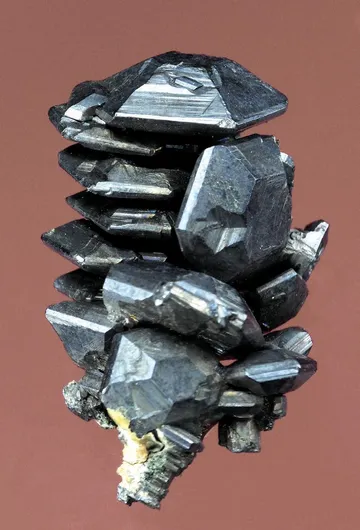
Other minerals documented from Allenheads Mine include ankerite, calcite, chalcopyrite, dolomite, galena, pyrite and sphalerite. Sphalerite is the most important associated species for collectors, commonly forming glossy black crystals or masses that create the dark base for pale fluorite. Galena is historically the ore mineral that made the mine, but well-crystallised Allenheads galena is less prominent in the specimen market than fluorite-sphalerite-carbonate combinations. Calcite and dolomite occur as minor carbonates on some pieces, including nail-head calcite and saddle-shaped dolomite in older dealer descriptions. No mineral species is generally credited to Allenheads Mine itself as a type locality; its mineralogical stature rests instead on classic fluorite associations, economically important lead-zinc-fluorite flats, and a few specialised pseudomorph and epimorph occurrences.
The chief authenticity issue with Allenheads is provenance, not treatment. Many older North Pennines specimens moved through collections under broad or imprecise labels: Alston Moor, Cumberland, Weardale, Durham, “North of England,” or simply “English fluorite.” Allenheads is in Northumberland, not County Durham, though it is close enough to Weardale and Alston Moor that historic and dealer usage can blur the boundary. A strong Allenheads attribution is most convincing when the specimen carries an old Beaumont, Allenheads, Diana Vein or Henry’s Vein label, or when the assemblage matches the locality: pale lavender to violet fluorite, commonly twinned in Diana Vein material, with black sphalerite and siderite or ankerite on silicified limestone or carbonate-rich matrix.
No widely documented treatment problem is associated with Allenheads fluorite. The practical concern is condition. The fluorite is cubic and lustrous, so corner bruising, edge nicks and rubbed high points matter. Siderite and ankerite can oxidise or dull; limonitic alteration is natural in the orefield but can reduce the crisp look of a specimen. Old pieces may also have clay or iron staining in crevices. Cleaning should be cautious: avoid acids on carbonate-bearing specimens, and remember that what appears to be “dirt” may be siderite, ankerite or an iron-carbonate epimorph. For display, keep fluorite out of prolonged strong sunlight to minimise any risk of colour change, and store specimens so cubes do not abrade against harder quartz or loose matrix.
Fluorescence is a real attraction. Many northern English fluorites respond under ultraviolet light, and Allenheads examples have been described with strong UV reaction and, in some pieces, an appreciable daylight fluorescence or colour shift from grey-lavender under artificial light toward richer violet in daylight. As always with fluorite, the response varies specimen by specimen; UV performance is a bonus, not a substitute for luster, form and provenance.
Market availability is limited. Allenheads is closed, the British Steel specimen period was short, and the best Diana Vein pieces are long absorbed into private collections. Small cabinet and miniature specimens appear periodically, often as old collection material, but top examples with intact twinned lavender cubes, sphalerite contrast and siderite accents are not common. Larger cabinet pieces, especially those above 10 cm with multiple sharp cubes and clean aesthetics, deserve careful provenance review and command a premium over anonymous North Pennines fluorite.
In 1821, Westgarth Forster’s account of the Allendale lead mines gives Allenheads the feel of an underground city rather than a simple vein working. The mine was listed seven miles south of Allendale Town and four miles east of Coalcleugh, with a named network of Poverty, Sun, Diana, Blackett, Style, Christopher Mills’ and Grindstone veins. It had a horse level, a water level, four underground water-wheel engines, seven whimseys — one underground — and a large crushing machine. The mineral description is strikingly close to what collectors still recognise: lead with coloured cubical spar, sphalerite, quartz and carbonate minerals spread through the strata.
The village later became one of the great nineteenth-century stages for Thomas Sopwith, the mine agent whose name belongs to both practical mining and geological illustration. Sopwith lived and worked at Allenheads while serving W. B. Lead, and the village still preserves the industrial geography of that period: Gin Hill Shaft, Fawside Level, the horse incline, mine offices, workshops, rows of cottages, the school and Allenheads Hall. The mine was not just a workplace; it was a designed industrial settlement arranged around ore, water power and management.
One of Allenheads’ most memorable survivals is the Armstrong hydraulic engine. William Armstrong’s hydraulic machinery was among the most advanced industrial technology of the period, and Allenheads became one of its early proving grounds. A surviving water-powered Armstrong engine, once used in the mine yard and sawmill complex, was later restored and displayed at the heritage centre. Its presence is a reminder that the North Pennines were not technologically backward uplands: they were places where mine drainage, crushing, winding and water power pushed engineering forward.
Gin Hill Shaft supplies the physical scale. The shaft is recorded at 77.5 fathoms, more than 130 metres deep. Miners originally descended by ladders, a sobering thought when a working shift began with a vertical journey down a stone-lined shaft. By the 1860s, three-man cages hauled by water-powered hydraulic winding gear had replaced that ladder descent for the lower levels. The Blackett Level project, intended to drain the Allenheads workings from farther down the valley, carried its own drama: the accuracy of the driving was such that a pinhole of light from the entrance could reportedly be seen two miles away near Holms Linn, yet the level never reached Allenheads and failed to become the profitable drainage and exploration artery its promoters hoped for.
The twentieth-century reopening reads almost like a collector’s parable. British Steel Corporation returned to Allenheads in 1969–1970 with confidence that the old lead mine still held commercial fluorspar, enough to justify a modern inclined access and substantial surface investment. Planning requirements meant the new surface buildings had to be faced in natural stone, increasing costs before the ore had proved itself. When the old workings were reached, the anticipated reserves were not there. As an industrial venture, Beaumont Mine was a failure; as a specimen-producing episode, it was a gift. The Diana Vein pockets yielded the pale lavender twinned fluorites that now define the locality, and accounts of the 1975 material travelling to the Munich show explain why some of the best Allenheads fluorites emerged into European collections almost as soon as they left the mine.
_-_geograph.org.uk_-_71431.jpg)