A collector's guide to Alice Mine, near Idaho Springs, Clear Creek County, USA: its geology, mining history and notable minerals, illustrated with the 42 specimens documented from this locality on EarthWonders.
Key facts
Alice Mine is a small locality with a large reputation: a high-country Colorado gold mine whose best specimens came not from a neat vein in a display-case sense, but from the Alice Glory Hole, the open-pit exposure of a gold-bearing pyritic stockwork in Tertiary quartz monzonite porphyry. The mine lies near the former camp of Alice in the Alice-Yankee Hill district, west of the Idaho Springs–Central City country and close to St. Marys, in the mineralized Front Range belt where Precambrian Idaho Springs Formation rocks and Boulder Creek granitic rocks are cut by younger porphyry intrusions and pyritic gold mineralization.
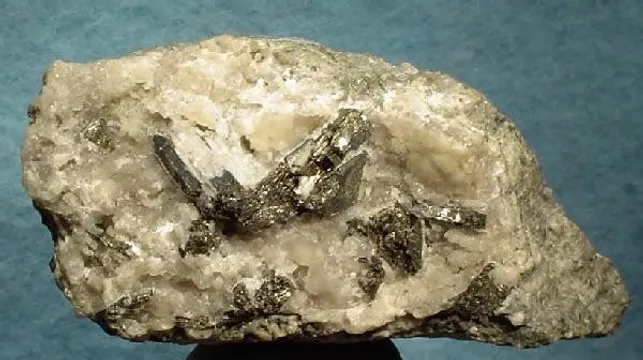
For collectors, Alice means chalcopyrite first. The classic pieces are burnished-brassy, twinned, striated chalcopyrite crystals—commonly thumbnail to miniature size, occasionally large enough to anchor a serious Colorado suite—often with pyrite, quartz, or siderite. The mine also produced sharp pyrite, brown siderite rhombs, quartz including amethyst and sceptre habits, and a surprisingly sophisticated suite of Cu-Pb-Bi-Ag sulfosalts. It is one of those localities where the most attractive specimens and the ore geology tell the same story: copper-rich sulfides, pyrite, quartz, carbonate gangue, and late secondary enrichment all crowded into a compact, once-accessible glory hole.
Historically, Alice belongs to the second act of the Colorado gold story. After the famous 1859 discoveries around Idaho Springs and Central City, the high ground toward Yankee Hill saw placer, hydraulic, lode, underground, and eventually open-pit work. The Alice ore body was attacked early for its oxidized, free-milling gold, revived when the 1930s gold price made lower-grade enriched sulfides profitable, and then reclaimed so completely that the old collecting ground is essentially gone. That closure has made old Alice labels more desirable: the best specimens carry not only mineralogical quality, but the finality of a locality that no longer yields material.
Regional View
Country View
The visual signature of Alice specimens is compact, metallic, and architectural. Good chalcopyrite crystals show distinct twinning, strong metallic luster, and fine parallel striations across brass to bronze faces; good pyrite tends toward bright, sharp cubes or stepped crystals, best when isolated enough to read as crystals rather than merely ore. Siderite adds warm brown rhombohedra, and quartz—often slender and clear—gives the association the open-space contrast that separates a collector specimen from a broken sulfide chunk.

Photo: Wikimedia Commons
Search for specimens: View all specimens from Alice Mine, near Idaho Springs, Clear Creek County, USA
Alice Mine is in the Alice-Yankee Hill mining district, a high-elevation district straddling the north-central Clear Creek County and southwest Gilpin County line. The mine itself is in Clear Creek County, near the head of Fall River Road and roughly three-quarters of a mile west to southwest of the former town of Alice. Published coordinates for the Alice Mine and Alice Glory Hole place it near 39.815° N, 105.656° W, at an elevation of roughly 10,300 feet.
Geologically, the deposit is a gold-bearing pyritic stockwork hosted chiefly by a Tertiary quartz monzonite porphyry stock that intrudes older Precambrian rocks, including schists of the Idaho Springs Formation and Boulder Creek granitic rocks. The surrounding district also contains quartz-pyrite veins in the Precambrian rocks, but the Alice ore body itself was notable as a stockwork in the porphyry rather than a single simple fissure vein. Primary ore was dominated by quartz and pyrite, with chalcopyrite, minor arsenopyrite, and local bismuth sulfides; in the enriched zone, sooty chalcocite and bornite became locally important. That secondary copper enrichment mattered economically because the better supergene sulfide material carried markedly higher gold values than the lean primary pyrite below.
The mine’s early history is imperfectly documented, but the deposit was probably first worked in the early 1880s. Early work attacked the oxidized, near-surface gold by hydraulic methods and by treatment in a stamp mill, recovering free gold by amalgamation while the oxidized ore lasted. When miners tried to treat the unoxidized sulfide ore by concentration, the results were poor enough that the district declined after the shallow enriched material was stripped. The revival came in the 1930s, when the higher gold price made the lower part of the supergene sulfide zone profitable; the Alice Mine reopened as a large open pit with underground workings, and the district recorded its strongest modern production during the 1935–1941 period.
Several historical names and operators appear around the mine. Western Mining History records the Alice Mine as the chief producer of the camp and repeats an 1894 newspaper report of an exceptionally rich body of ore at Yankee Hill. In 1903, the property—then reported to cover 1,000 acres—was said to have been sold to the Woods’ Investment Company for half a million dollars, with Sweeney, an old-time manager of the Alice, quoted as the source. MRDS-derived records also list “Commercial Union” as a secondary name associated with the Alice Mine-Glory Hole entry.
For specimen collectors, the meaningful locality within the locality is the Alice Glory Hole. That open pit produced the familiar chalcopyrite, pyrite, siderite, and quartz specimens, including fine miniatures and occasional cabinet-scale pieces, before reclamation ended collecting. A collector-oriented account described the mine as developed by both open-pit and irregular underground workings, with much of the underground ground below the pit floor flooded or collapsed. Later reclamation changed the site decisively: the glory hole was filled in 1988, and subsequent maintenance and revegetation stabilized the reclaimed surface. Today, the old glory hole is not an active collecting site; ownership, mineral rights, reclamation status, and safety restrictions must be treated as controlling, and collectors should not assume that historical access still exists.
Chalcopyrite is the collector mineral of Alice Mine: the classic crystals are brassy to bronze, lustrous, distinctly twinned, and commonly striated, with the best examples occurring as sharp disphenoid-like crystals or intergrown clusters from the Alice Glory Hole rather than as dull massive copper ore. Documented specimens include miniatures around 3–5 cm, with individual crystals in the 3–4 cm range known, and many pieces are either loose crystal groups or chalcopyrite on pyrite, quartz, and locally siderite. The finest Alice chalcopyrites stand apart by crisp twinning, bright undulled faces, strong three-dimensional form, and minimal contacting; ordinary examples tend to be incomplete on the back, rubbed on high edges, or visually merged into massive pyrite-rich matrix.
Pyrite at Alice is both ore mineral and collectible species, occurring in the quartz-pyrite stockwork and as discrete crystals from the Glory Hole, including stepped crystals reported to reach 9 cm. Most pieces are brassy metallic pyrite with quartz, siderite, and chalcopyrite, but good crystallized pyrite from Alice is less commonly seen on the market than the chalcopyrite; notable miniatures show sharp cubic crystals, sometimes around 2 cm, set among clear prismatic quartz and small brown siderite rhombs. A superior Alice pyrite specimen needs clean crystal definition, strong luster, and an open association that shows the cube or stepped form clearly; massive pyrite ore, even if historically interesting, lacks the sculptural quality collectors prize from this locality.
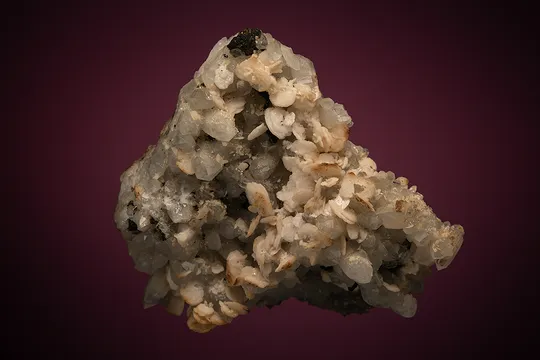
Siderite from Alice Glory Hole is characteristically brown to golden-brown and occurs as rhombohedral crystals or compressed rhombs with quartz and pyrite, occasionally providing the warm carbonate contrast in otherwise metallic sulfide specimens. Museum and dealer-documented pieces show siderite as a companion mineral on miniatures and small cabinet specimens, commonly in the 3–7 cm specimen range, rather than as isolated large crystals. The best Alice siderites are sharply crystallized, visibly rhombohedral, and aesthetically positioned with clear quartz or bright pyrite; ordinary pieces can read as brown iron carbonate crusts unless the crystal faces are clean, lustrous, and arranged in a balanced association.
Quartz at Alice is the principal gangue mineral and the species that most often gives Alice sulfide specimens their collector contrast: it occurs with chalcopyrite, pyrite, and siderite, and documented forms include clear prismatic crystals, amethyst, and sceptre quartz from the Glory Hole. In the best associations, slender colorless quartz crystals frame metallic pyrite or chalcopyrite without overwhelming them, while amethyst and sceptre habits add locality interest beyond the usual sulfide matrix. Good Alice quartz specimens are not just quartz from a Colorado mine; they show recognizable Glory Hole associations—chalcopyrite, pyrite, or siderite—and enough crystal clarity or habit distinction to separate them from common vein quartz.
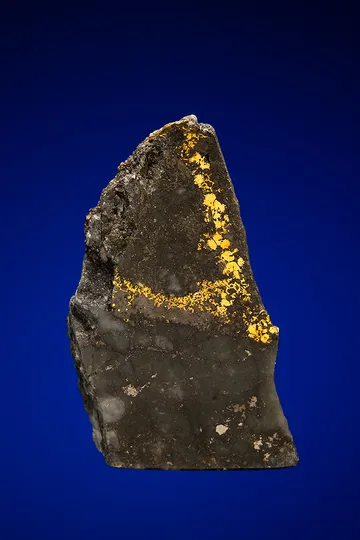
Other documented Alice minerals reflect the copper-, lead-, bismuth-, silver-, and gold-bearing character of the ore system. Native gold and native silver are both recorded, and collector literature notes that fine gold crystals from the Glory Hole were not fully appreciated until after years of attention to pyrite and chalcopyrite. The rare-sulfosalt suite is especially important for systematic collectors: aikinite, benjaminite, cupropavonite, emplectite, friedrichite, hammarite, heyrovskýite, hodrušite, krupkaite, matildite, and pavonite have all been reported from the mine or Glory Hole in published locality compilations. Bornite, chalcocite, covellite, sphalerite, baryte, chalcanthite, muscovite, chlorite-group material, limonite, allanite-group material, and questionable stibnite round out a list that is far richer than the mine’s simple “gold mine” label suggests.
Alice specimens are a closed-locality market: the glory hole was reclaimed and filled, and old production now circulates through collections, auctions, and dealer inventories rather than fresh collecting. That makes provenance unusually important. Labels reading “Alice Mine,” “Alice Glory Hole,” “Alice District,” “near Idaho Springs,” and sometimes “near Central City” may all refer to the same collecting tradition, but the county assignment should be Clear Creek County, not Gilpin County. Because many unrelated mines are named Alice in the western United States, labels should include Clear Creek County, Colorado, and ideally “Alice Glory Hole” when the specimen is one of the classic chalcopyrite-pyrite-siderite-quartz pieces.
No widely repeated tradition of manufactured fakes is attached to Alice Mine specimens, but there are common authentication problems. Bright chalcopyrite crystals should be checked for artificial acid-brightening or unnatural rainbowing; natural Alice chalcopyrite is typically brassy to bronze and may show subtle iridescence, but overly vivid peacock colors should be viewed cautiously unless the piece is clearly labeled as treated. Siderite can be dulled or etched by aggressive cleaning, and delicate quartz-siderite associations can lose their visual balance if iron staining is stripped too harshly. Chalcanthite, where present, is water soluble and should be kept dry; sulfide-rich pieces generally deserve stable, low-humidity storage.
Condition is central to value. The classic Alice chalcopyrite crystals are often contacted on the back or along one edge because many were recovered from tight vugs, stockwork seams, or broken pit material. A contacted rear is acceptable if the display face is sharp and complete, but bruised striated faces, crushed twin edges, and greasy luster reduce desirability quickly. Pyrite pieces should be checked for edge chipping and for any signs of instability, though well-preserved Alice pyrite is not notorious for widespread decay. Siderite specimens should be examined for rubbed crystal corners and loose quartz needles.
Rarity varies by species. Chalcopyrite is the signature mineral and appears periodically in older Colorado collections, but top, sharp twinned crystals are scarce and competitive. Fine pyrite is less common than the number of ore pieces might suggest. Aesthetic siderite-quartz-pyrite associations are obtainable but not abundant. The rare bismuth sulfosalts are primarily systematic and analytical material; they should not be expected as obvious cabinet crystals and are best bought with reliable analytical or literature-backed provenance.
In the winter of 1894, the Alice Mine briefly flashed across the mining press with the kind of report that could make a camp talk for years. A December 22 issue of the Silver Standard described a rich body of ore in the Alice property at Yankee Hill running “40 to 50 ounces of gold per ton.” The same report claimed the ore was wonderfully rich in native silver, and that one blasted piece was estimated at 50 percent brittle silver—so heavy, the story went, that no man in the mine could lift it. Even allowing for the boosterish tone of nineteenth-century mining papers, it captures the atmosphere around Alice at its most hopeful: high elevation, hard rock, and the perennial possibility that the next round might break into something astonishing.
The human scale of Alice is preserved in the story of Mrs. Harper’s cabin. Alice was not just a pit and a mill; it was a small mountain camp where miners needed meals, mail, and a warm threshold. Mrs. Harper boarded miners, packed lunches for them, and for a time ran the post office out of her cabin before the work became too much. That detail is easy to pass over, but it says much about the settlement: a camp large enough to need a postal point, small enough that one cabin could become its social infrastructure.
By July 1903, the Alice property was still substantial enough to draw major money. Reports credited Sweeney, an old-timer and former manager of the mine, with saying that the property covered 1,000 acres and had been sold to the Woods’ Investment Company for half a million dollars. For a high-country gold camp that would later fade into summer cabins and ghost-town status, the figure is striking. It shows Alice not as a minor prospect, but as a property that investors could imagine remaking on a large scale.
The collector chapter had its own drama. For years, the Glory Hole was known for pyrite and chalcopyrite—fine miniatures and cabinet specimens from a rugged, open pit above 10,000 feet. Then collector attention shifted when fine gold crystals from the same locality were recognized as something more than incidental ore. The 1984 New Mexico Mineral Symposium abstract and the later Mineralogical Record article by Timothy A. Hanson and W. B. “Rusty” Craft caught the locality at a transitional moment: the pit still existed, underground workings were described as flooded and collapsed, and access required descending from the eastern edge of the pit. The warning was plain: the Glory Hole was decaying, and extreme caution was necessary.
The final act was reclamation on a scale few specimen labels convey. In 1988, the Alice Glory Hole was backfilled with tailings material, pond cleanings, large rock, fill, and topsoil gathered from surrounding roads. Approximately 100,000 cubic yards of fill went into the opening, the final surface was graded to a broad concave slope, and the disturbed ground was fertilized, seeded, and mulched. In 2013, further maintenance revegetated about one and one-half acres below Alice Road using erosion-control barriers, compost, lime, mulch, and a specialized seed mixture. For collectors, that makes every old Alice chalcopyrite more than a pretty sulfide—it is a surviving fragment of a pit that has been physically erased.