
Chrysocolla specimens for sale
257 for sale · $145–$150,000 USD
285 in the gallery
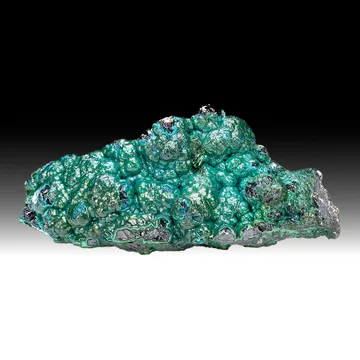
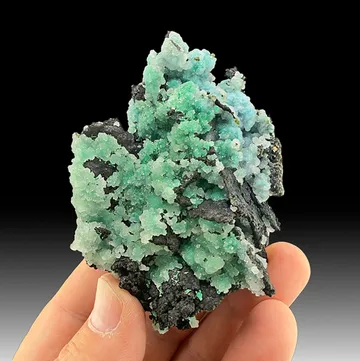
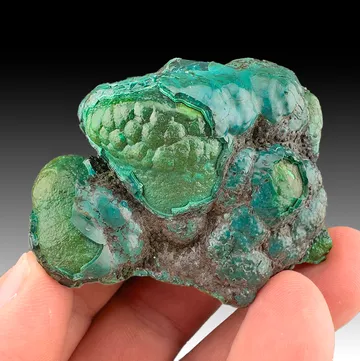
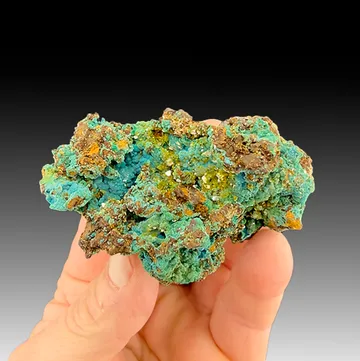
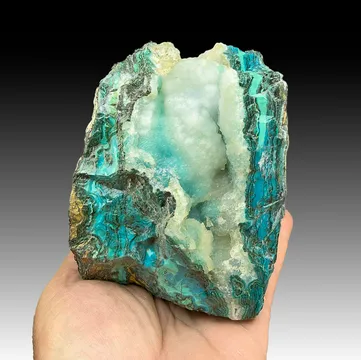
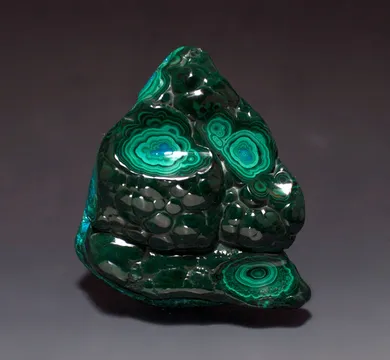
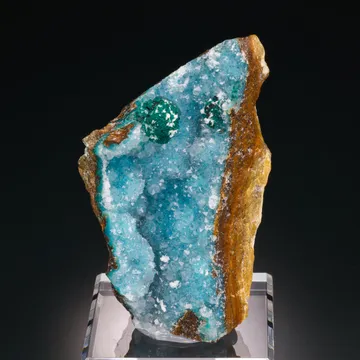
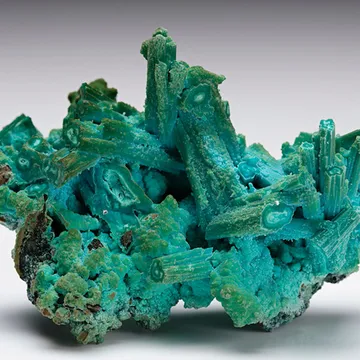
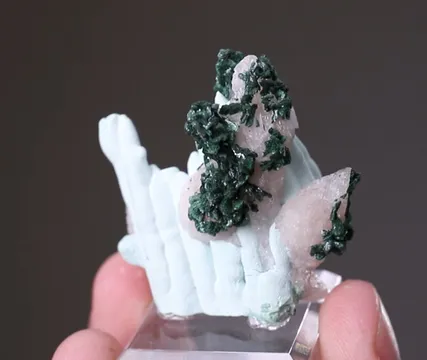
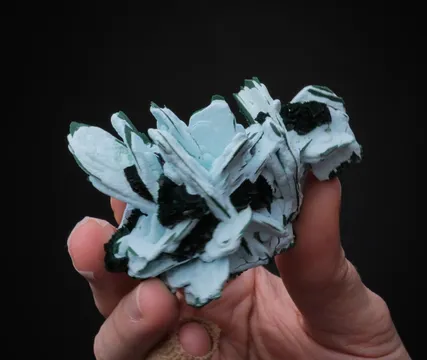
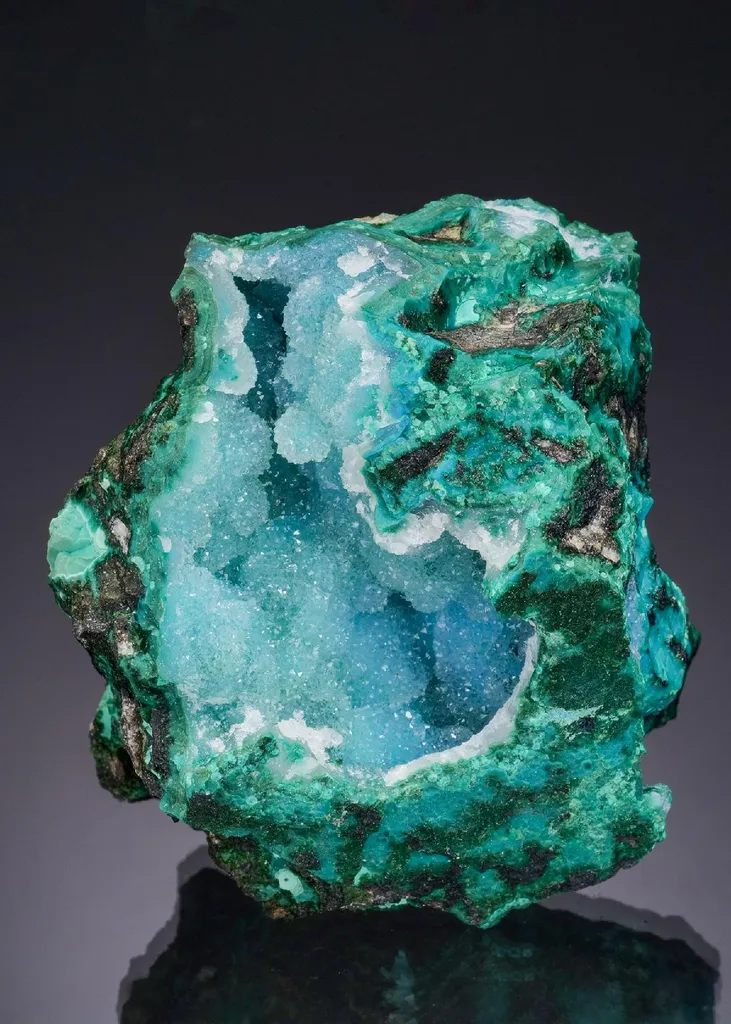
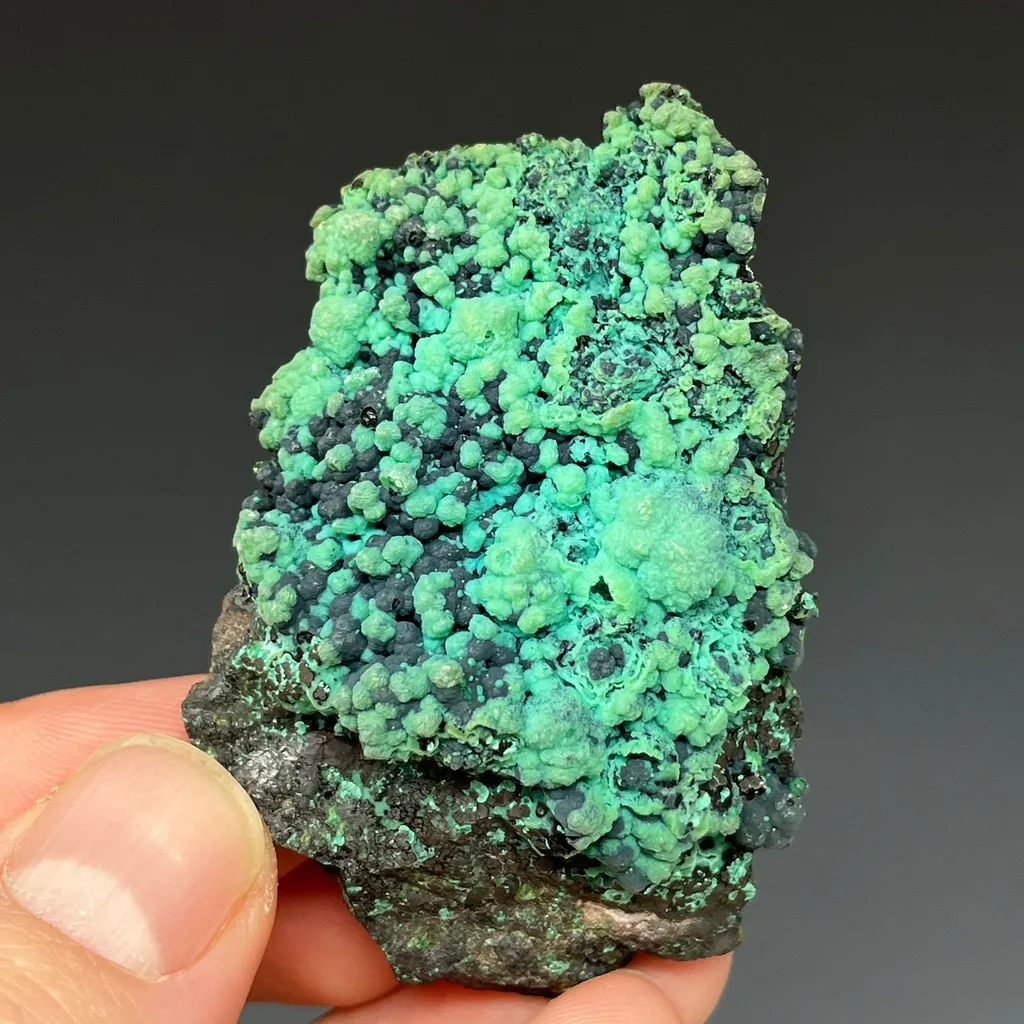
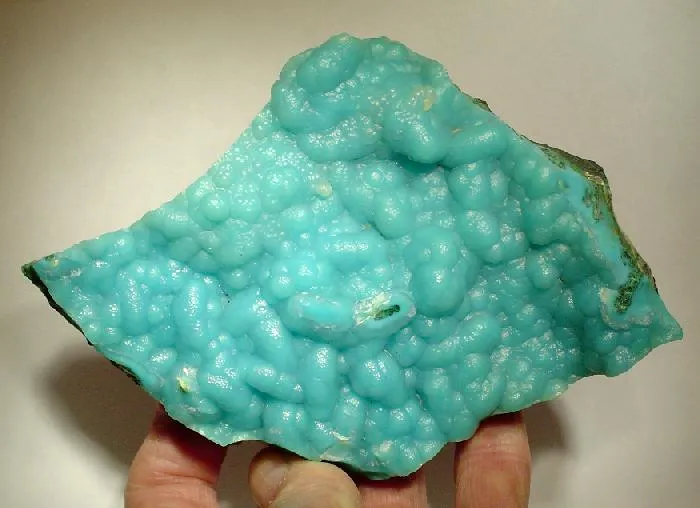
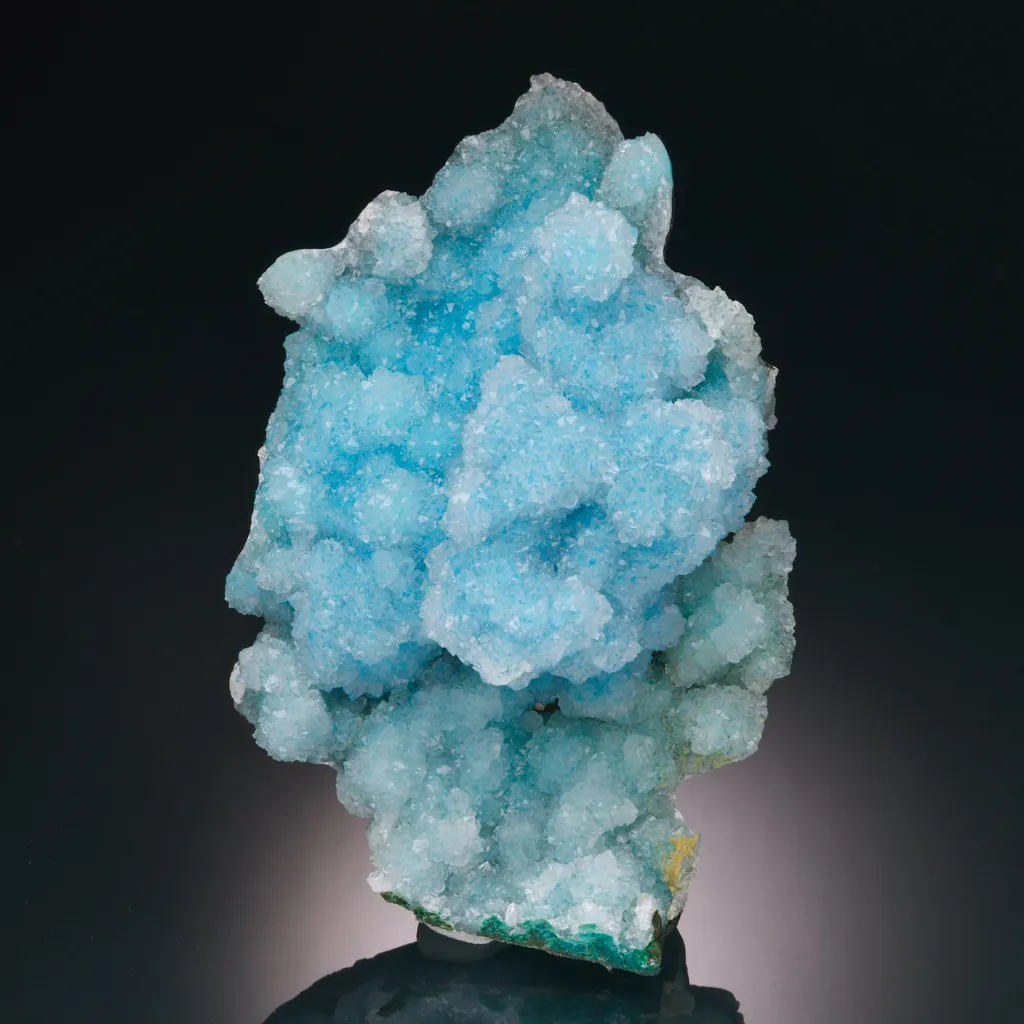
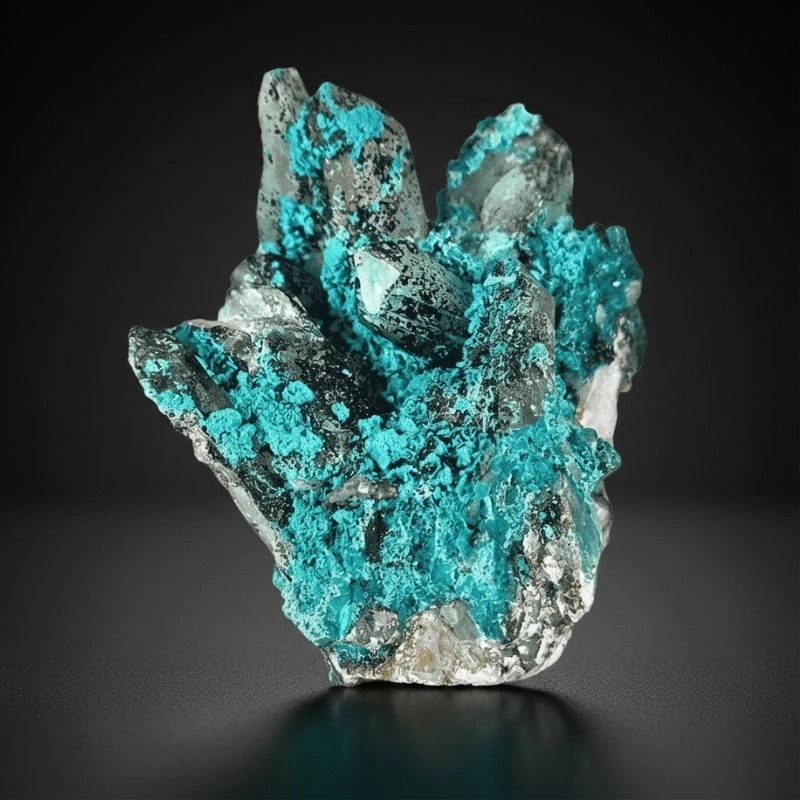
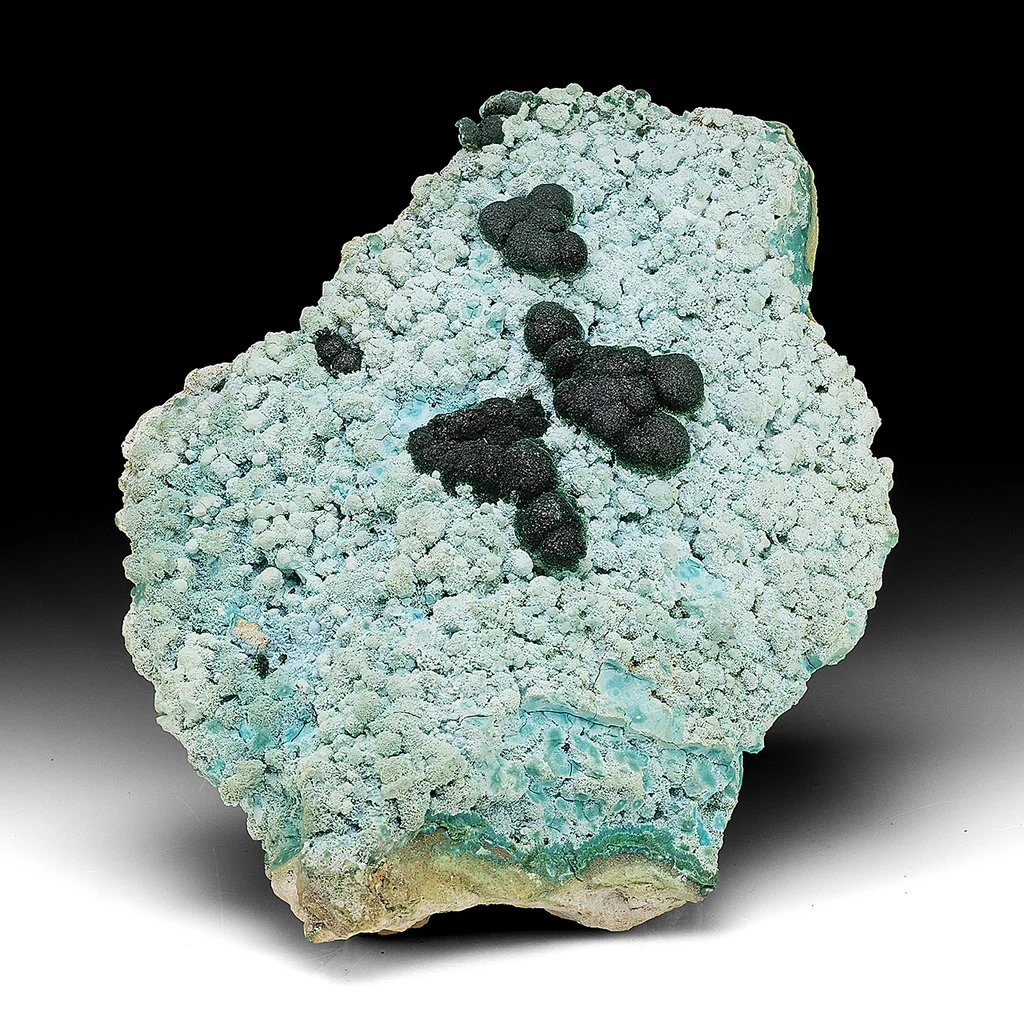
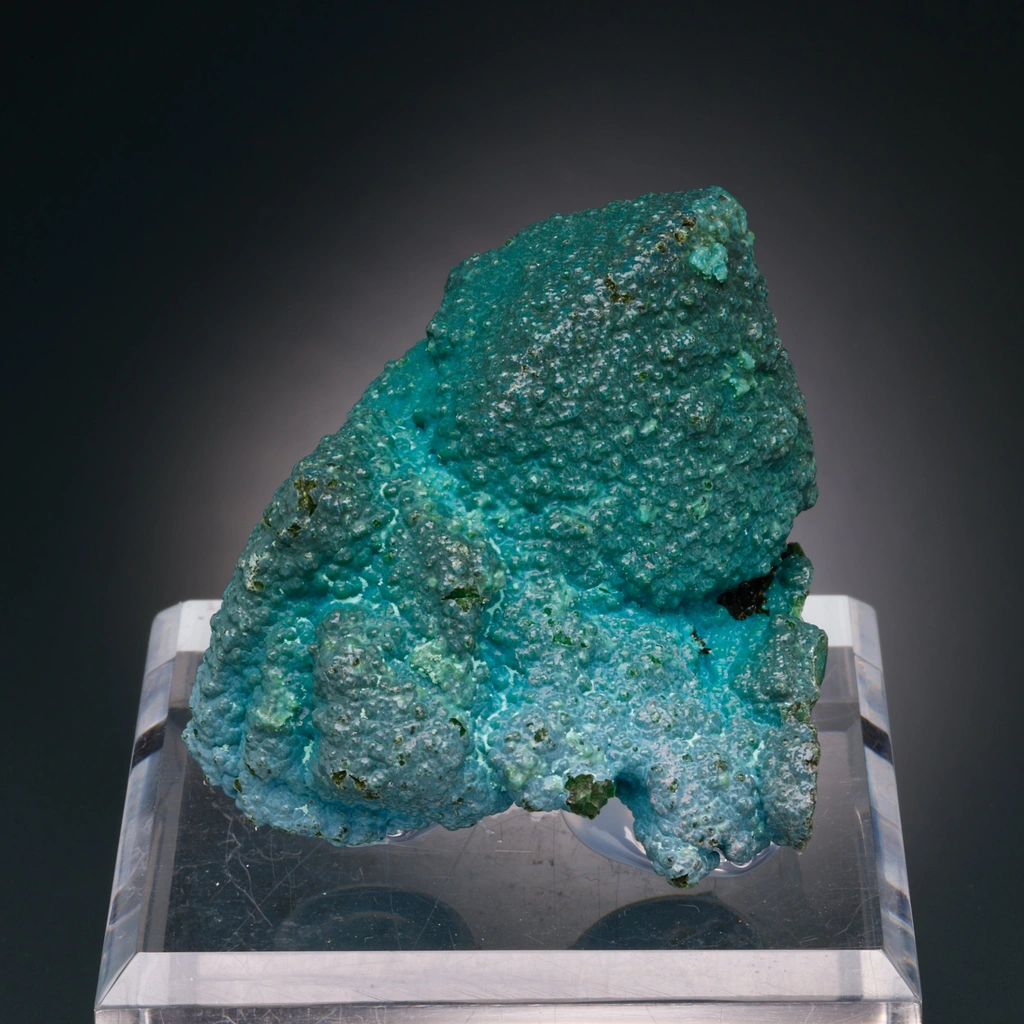
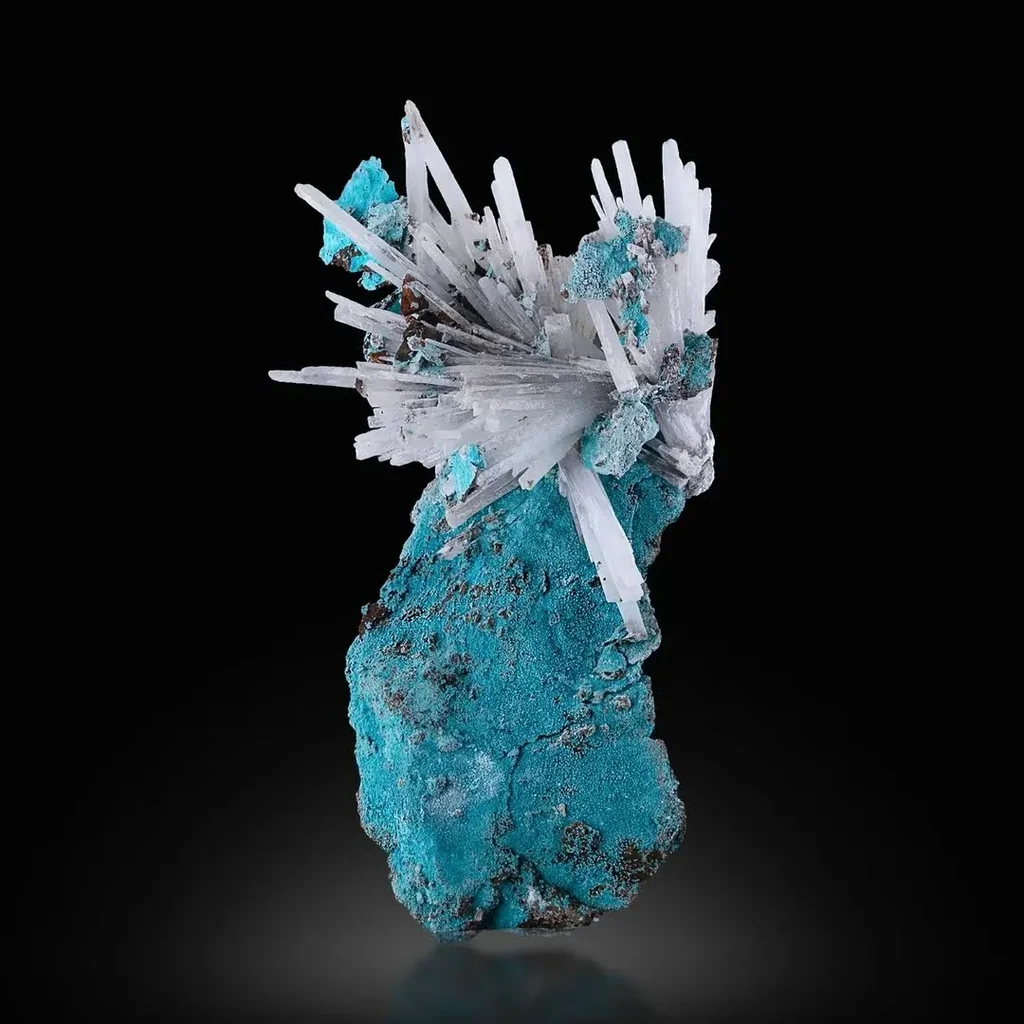
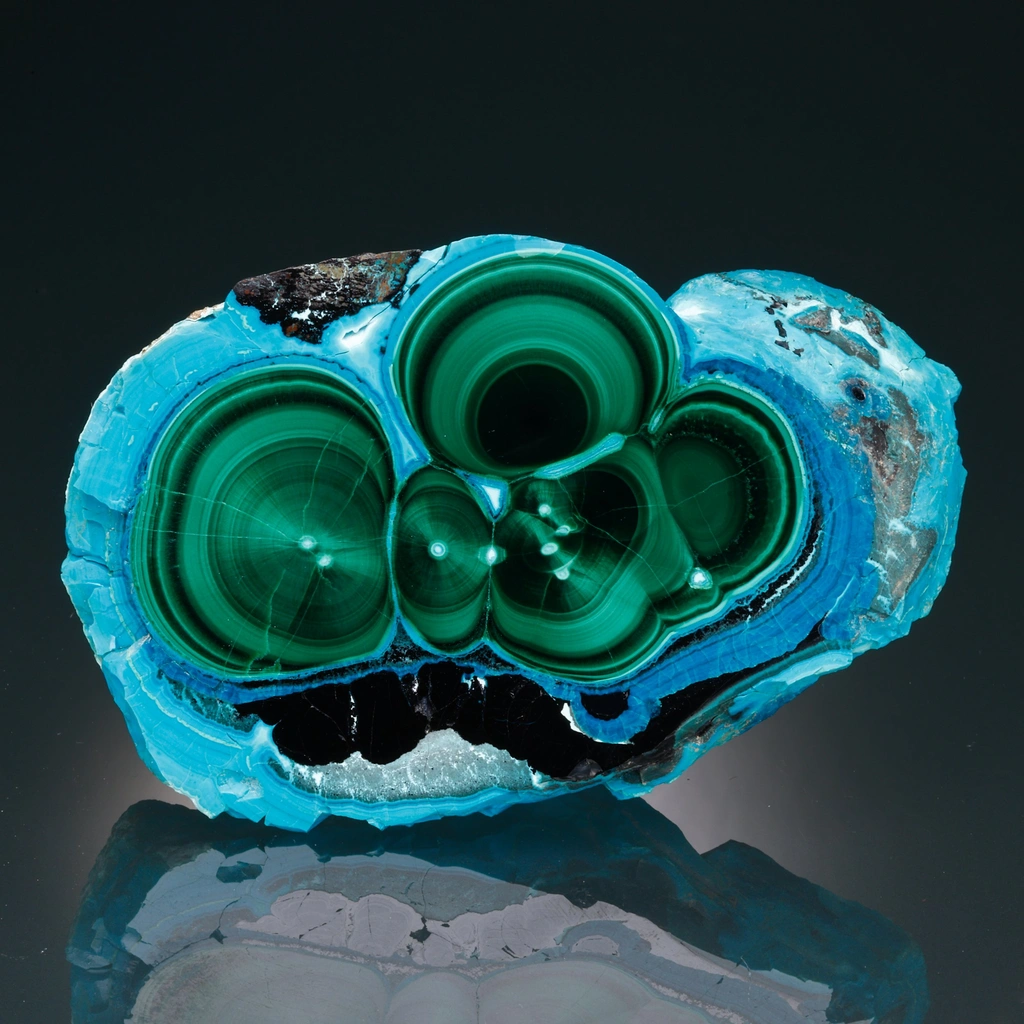
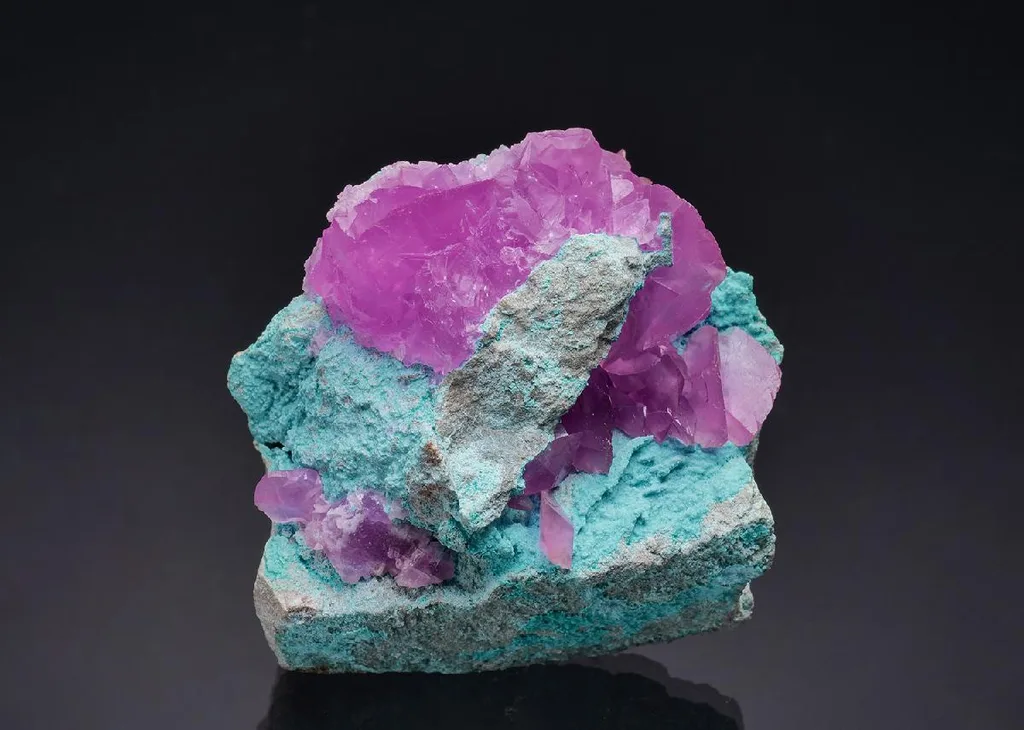
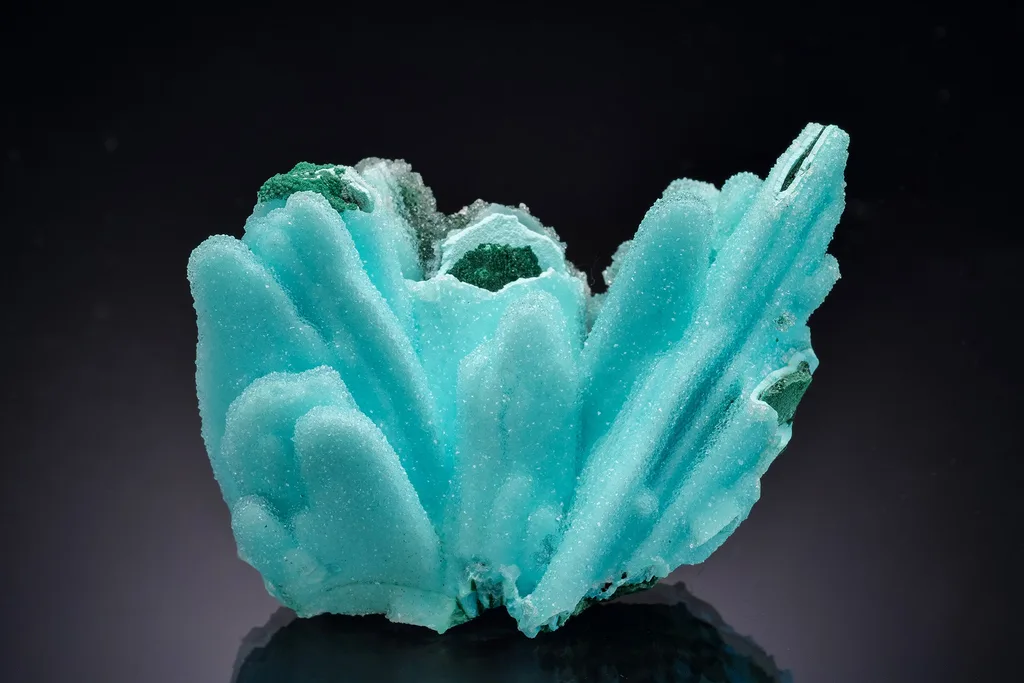
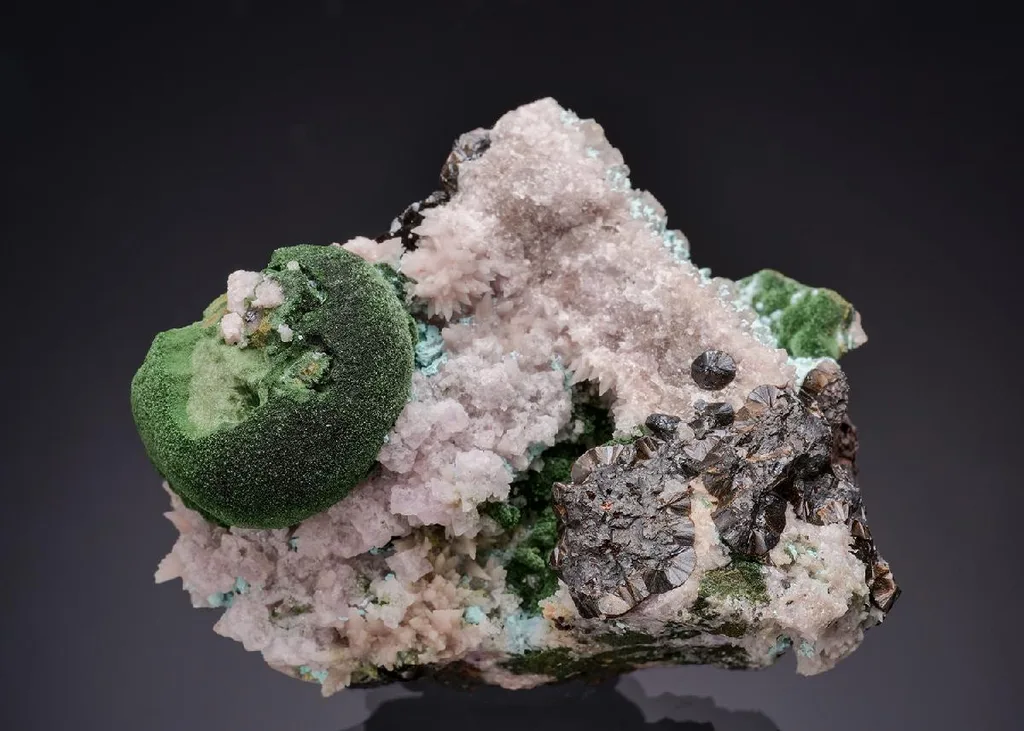
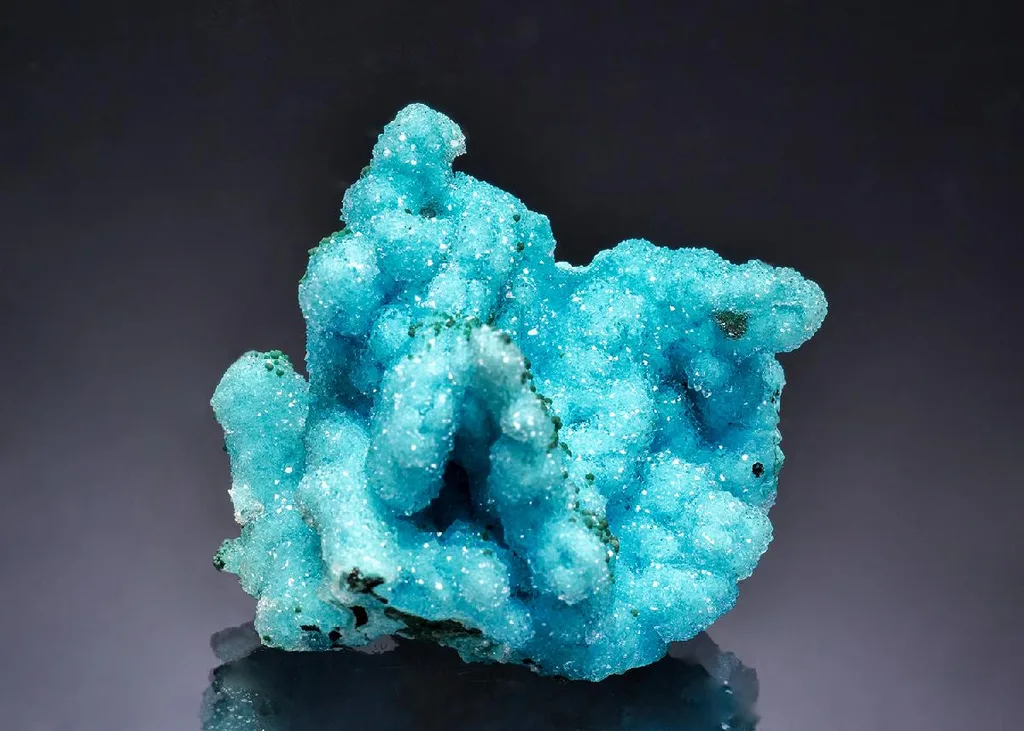
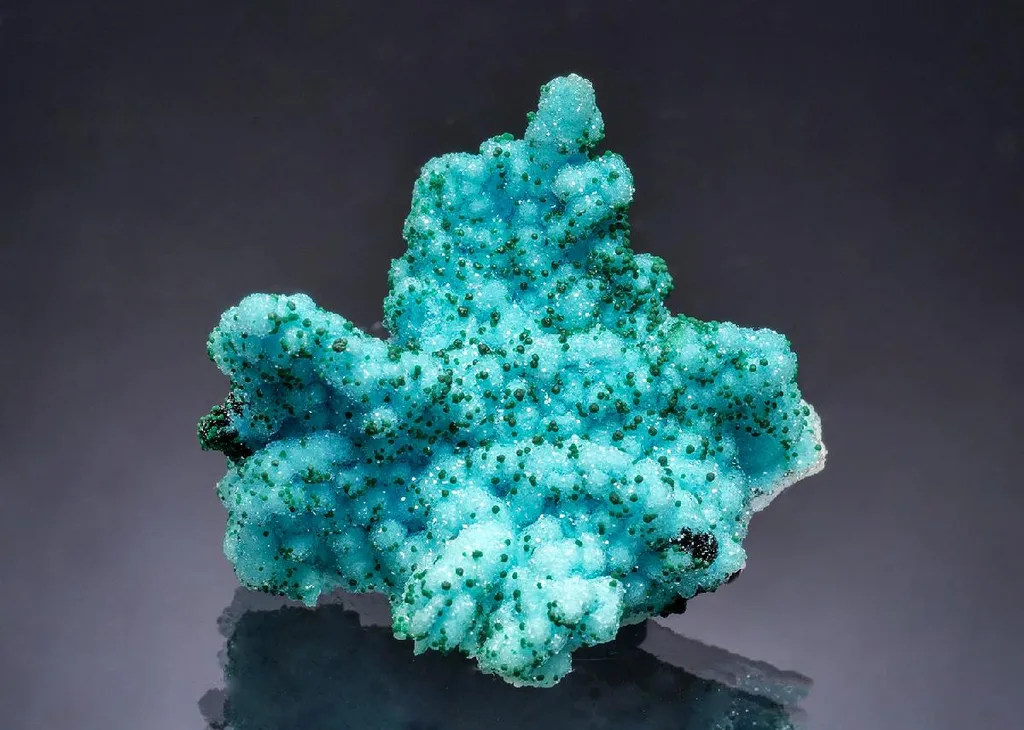
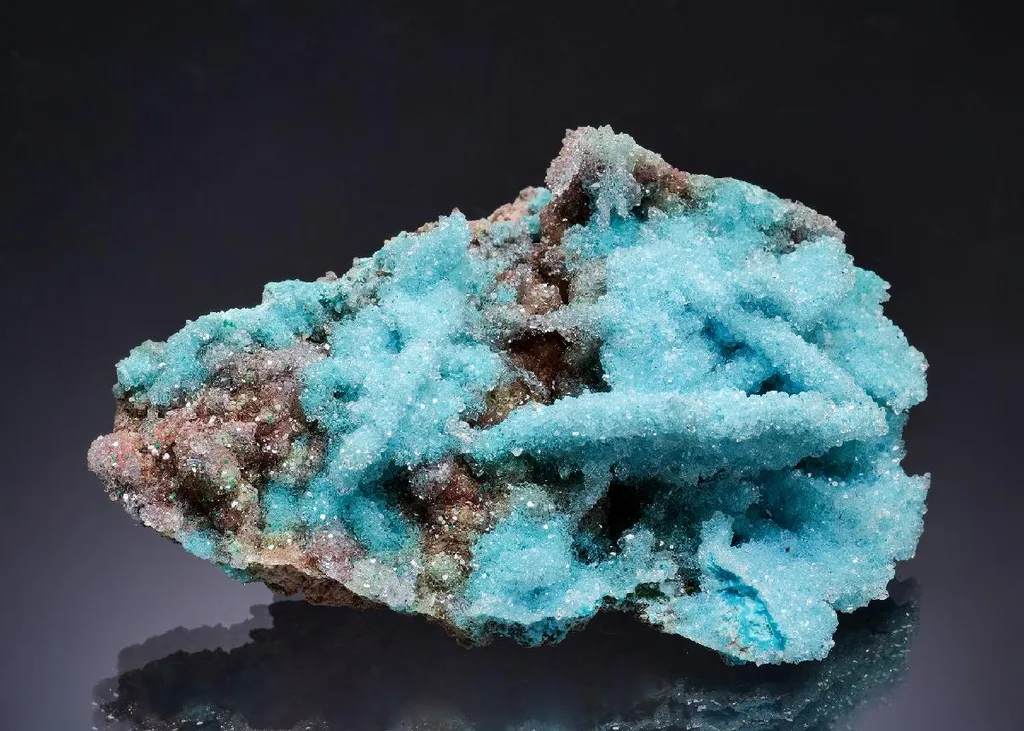
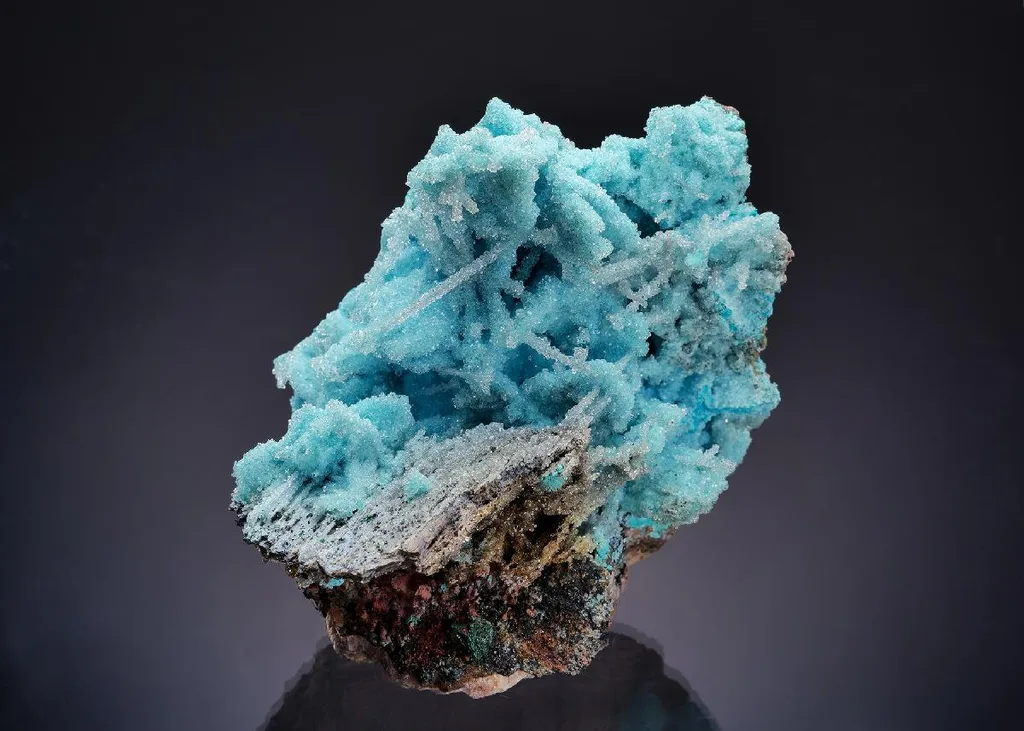
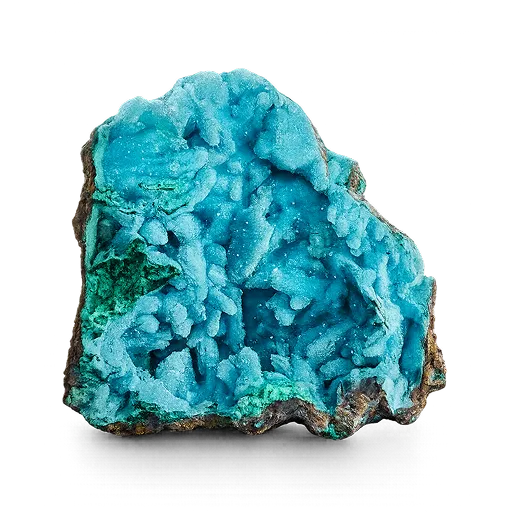
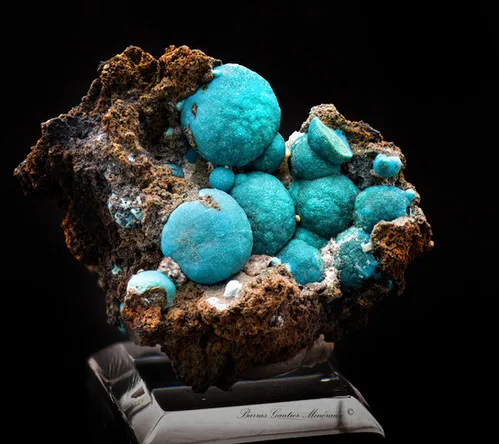
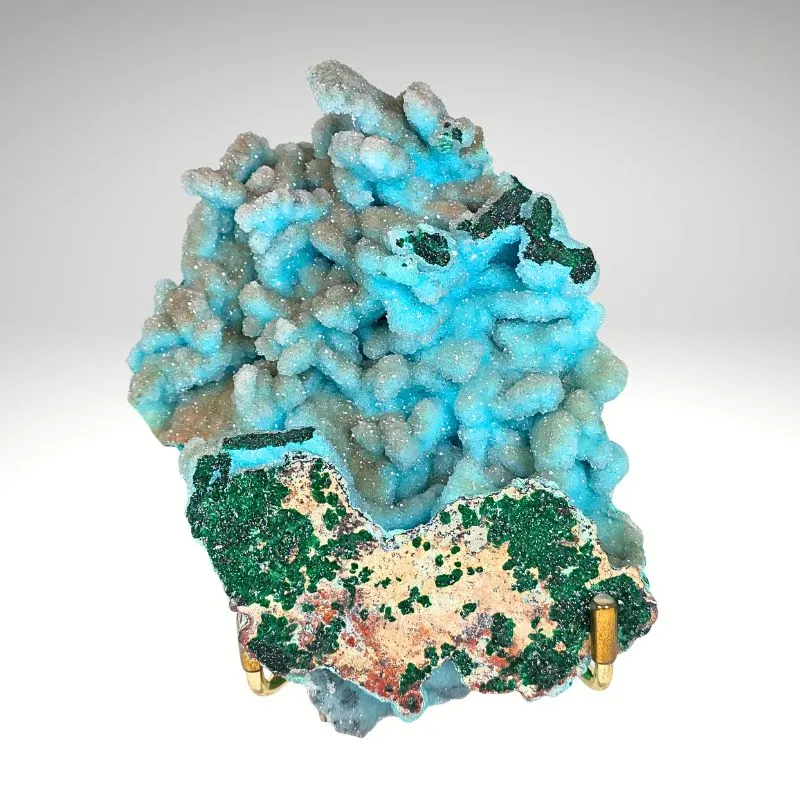
Chrysocolla is a hydrated copper silicate mineral that forms as a secondary product of copper ore weathering. It typically appears as a softly waxy to vitreous pale to deep blue-green crusts or botryoidal masses, often intergrown with other copper minerals such as quartz, malachite, or chrysocollite. The mineral’s color varies from blue to green, reflecting copper content, and its luster ranges from silky to glassy in well-formed specimens. Crusts and nodules are common habits, with surface textures that can be smooth or gently botryoidal, sometimes revealing drusy or microcrystalline interiors.
- Formula
- Cu2-xAlx(H2-xSi2O5)(OH)4 · nH2O, x < 1
- Rarity
- Common
- Stability
- Stable
- Collector interest
- Moderate Interest
- Classification notes
- Silicates; hydrous copper silicate (phyllosilicate-like)
Buy Chrysocolla specimens
View all 257Where Chrysocolla is found
Guides
All guides


Chrysocolla from Tenke-Fungurume Area, DR Congo
Chrysocolla from the Tenke-Fungurume area belongs to one of the most important modern copper-cobalt districts on Earth, and the best collector pieces show that pedigree immediately: saturated sky-blue to turquoise chrysocolla, commonly dra…Read guide
Chrysocolla from Ray Mine, Arizona, USA
Chrysocolla from Ray Mine, Arizona — saturated blue-green color, textures like drusy quartz and botryoidal seams, with Ray District appeal for collectors.Read guide
Chrysocolla from Morenci Mine, Arizona, USA
Chrysocolla from Morenci Mine, Arizona: renowned for blue botryoids and copper-oxide matrices; prized by collectors for provenance and vivid color.Read guide
Chrysocolla from Inspiration Mine Area, Arizona, USA
Chrysocolla from Inspiration Mine Area, Arizona — blue-to-blue-green copper silicate often with quartz or malachite, prized for this historic mining locality.Read guide
Chrysocolla from Bagdad Mine, Arizona, USA
Chrysocolla from the Bagdad Mine belongs to the broad Arizona copper-oxide tradition, but the best pieces have a look of their own: robin’s-egg blue to greenish-blue botryoidal masses and coatings, commonly glazed or dusted with sugary qua…Read guideAbout Chrysocolla
Notable specimens come from copper-rich regions around the world, with especially strong representation from DR Congo, the United States, Peru, Namibia, and Chile. In such deposits chrysocolla can occur as crusts on veining, botryoidal aggregates in vuggy pockets, or as inclusions within matrix rocks. Collectors prize well-crystallized, vibrant blue-green botryoids and richly colored masses that reveal the mineral’s characteristic hue when polished. Its association with other copper minerals adds appeal, offering a visual palette of turquoise to deep azure alongside contrasting hosts. Chrysocolla is favored for its distinctive color and relative rarity in gem-quality forms, making specimens attractive for display and study alike.