A collector's guide to Zillertal, Austria: its geology, mining history and notable minerals, illustrated with the 27 specimens documented from this locality on EarthWonders.
Key facts
Zillertal is not a single mine locality so much as a classic Alpine mineral province: a north–south Tyrolean valley draining the high Zillertal Alps, with its most coveted specimens coming from the clefts, ridges, glaciers, schists, and old workings of the inner valleys around Mayrhofen, Finkenberg, Tux, Zell am Ziller, the Zemmgrund, Schlegeisgrund, and the Mörchner area. For collectors, the name immediately calls up one of the great Austrian Alpine assemblages: scepter amethyst on clear quartz, smoky and rock-crystal quartz from Alpine fissures, hematite “iron roses,” red almandine garnets, apatite, bicoloured diopside, chromium-bearing vesuvianite, rutile, adularia, pericline, titanite, and a long tail of rarities from old gold, copper, magnesite, and scheelite occurrences.
Geologically, the inner Zillertal belongs to the Tauern Window, where deep Penninic and Sub-Penninic rocks are exposed through the overlying Austroalpine nappes. The collector localities are therefore not ordinary vein dumps in a lowland mining district: they are high-alpine fissure systems, shear zones, metamorphic host rocks, old ore horizons in quartz phyllite, and industrial workings driven into magnesite-scheelite bodies. The best specimens have the look of the Alps at their most architectural—bright, glassy quartz perched on feldspar and mica; purple scepter heads rising from colorless stems; hematite roses as black-red metallic plates; and amethyst crystals that are often skeletal, fenstered, doubly terminated, or dusted and included with rutile, tremolite, chlorite, and pocket clay.
Regional View
Country View
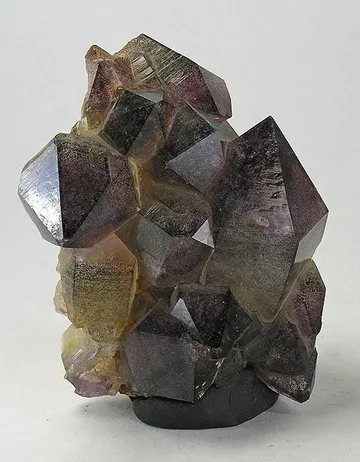
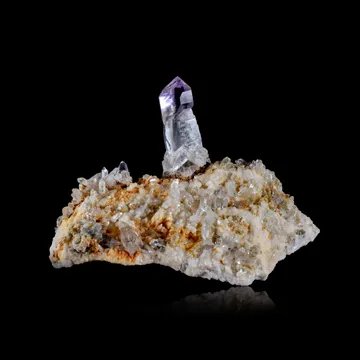
The fame of Zillertal amethyst rests above all on the high cleft localities of the Zemmgrund and Mörchner area, especially Mörchnerkar and Saurüssel. These are Alpine-fissure specimens, not geode amethysts: the crystals are generally isolated, sculptural, and hard won. The finest pieces show a colorless or smoky quartz “stem” capped by a sharper, deeper violet scepter, or they display the stepped “Fensterquarz” growth so admired by Alpine collectors. Matrix examples are particularly prized because many old finds were removed as single crystals or small groups, and because a balanced plate of amethyst, clear quartz, albite or pericline, mica, chlorite, and rutile has a visual identity that is unmistakably Tyrolean.

Photo: Wikimedia Commons

Photo: Mineralica
Historically, Zillertal’s mineral story has several overlapping chapters. The Hainzenberg and Zell am Ziller gold mines made the valley an ore district for centuries, with auriferous quartzite and sulphides in the Innsbruck Quartz Phyllite belt. Rossrugg and nearby high ridges supplied red almandine for jewellery. Tux became an important magnesite and scheelite mining district in the twentieth century. Meanwhile, generations of Alpine strahlers searched the high clefts above the huts, where a single productive pocket could change a collection for life. That combination—science, mining, gem material, and high-alpine collecting tradition—is what gives “Zillertal” its weight on an old label.
Search for specimens: View all specimens from Zillertal, Austria
The collecting locality “Zillertal” covers a valley-scale mineral province in Schwaz District, Tyrol, rather than a single pit or quarry. The principal specimen environments are Alpine-type fissures in the Zillertal Alps; garnet-bearing chlorite-mica schists and shear zones around the Rossrugg and Hornkees area of the Zemmgrund; gold-bearing quartzite layers and sulphide mineralization around Zell am Ziller and Hainzenberg in the Innsbruck Quartz Phyllite; and the former Tux magnesite-scheelite mine above Vorderlanersbach. For a specimen label, precision matters: “Zillertal” is acceptable for older material, but a modern label should preserve the sublocality whenever known—Mörchnerkar, Saurüssel, Zemmgrund, Rossrugg, Furtschaglkar, Schlegeisgrund, Hainzenberg, Tux, or Großer Greiner are far more informative than the valley name alone.
The great display minerals of the inner valley are products of the Alpine cleft system. During deformation, uplift, and exhumation of the Tauern Window, fissures opened in gneiss, schist, and related metamorphic rocks. Hot aqueous fluids moved through those fissures and deposited quartz, feldspar, mica, chlorite, rutile, hematite, apatite, and other species in open spaces. The best quartz and amethyst specimens therefore have growth features typical of repeated Alpine crystallization: scepter overgrowths, skeletal or fenstered faces, phantoms, chlorite inclusions, rutilated zones, and doubly terminated crystals that formed in clay-filled cavities rather than growing directly out of a drusy wall.
Saurüssel is a steep ridge in the Mörchner area of the Zemmgrund, west of Kleiner Mörchner and near the Mörchnerkees. It is one of the critical names for Zillertal amethyst and hematite. The mineral suite recorded there includes albite and pericline, aragonite, beryl var. aquamarine, calcite, chlorite-group minerals, euclase, fluorapatite, hematite var. iron rose, magnetite, muscovite, pyrite, quartz varieties including amethyst, rock crystal, rutilated quartz, scepter quartz, smoky quartz and Fensterquarz, rutile including sagenitic growths, and tremolite. The finest Saurüssel and Mörchnerkar amethysts are generally not large geode clusters but discrete, high-character Alpine crystals: small cabinet and miniature scepters, skeletal crystals, and matrix groups whose value depends on color, completeness, luster, form, and the survival of delicate contacts.
The Zemmgrund also contains the Rossrugg garnet area, a steep high-alpine ridge between glacial terrain near the Berliner Hütte. Almandine-bearing chlorite-mica schists there were worked for gem garnets, and the garnets were separated from the schist for jewellery use. This is an important historical distinction: Zillertal garnet specimens may be mineral specimens today, but the original reason for systematic extraction was gem material. Garnet from Rossrugg and related areas is part of the broader East Alpine gemstone history that linked high-alpine extraction sites with cutting and trade centers.
The Hainzenberg and Zell am Ziller gold mines belong to a different geological setting from the amethyst clefts. There, gold occurs in gold-bearing quartzite layers and sulphide assemblages in the Innsbruck Quartz Phyllite belt. The gold was largely microscopic and associated with pyrite and arsenopyrite, though native gold specimens are known. Mining around Zell am Ziller was underway before 1630 and continued for roughly two and a half centuries. Hainzenberg became the most important part of the Zell gold-mining complex. Historical studies estimate about 300,000 tonnes of crude ore mined between roughly 1600 and 1870, with approximately 2.2 tonnes of contained fine gold and about 1.1 tonnes actually recovered by dressing and smelting. Later public-history summaries describe Hainzenberg as Tyrol’s only mine worked for gold as the principal precious metal, with operations documented from the early sixteenth century, regular mining until 1870, and later trials into the twentieth century. Today the Goldschaubergwerk Zillertal preserves that mining history for visitors rather than specimen production.
Tux adds the industrial twentieth-century chapter. The magnesite deposit above Vorderlanersbach was discovered in 1910 by Bruno Sander. After preparations that included a long material ropeway to Mayrhofen, mining began in 1927. Early work was open-cast; underground extraction began in 1948, and the operation became notable as a very high-altitude magnesite mine, with workings reaching about 2,100 m elevation. Scheelite was identified in quantity in the deposit in the early 1950s and was mined as a tungsten ore along with the magnesite. The mine closed in December 1976, and the surface installations were later removed and the area renatured. For specimen collectors, Tux is less about aesthetic amethyst and more about historically important magnesite, scheelite, and associated minerals from a former mine environment.
Collecting access today must be treated with particular care. Much of the attractive mineral ground lies within or adjacent to the High Alps Nature Park Zillertal Alps, and the Nature Park has published explicit rules because of damage caused by mineral collectors, especially in the Zemmgrund above the Berliner Hütte. In Tyrol, deliberate destruction of minerals and fossils is prohibited, mechanical, explosive, incendiary, and chemical methods are not permitted, and only simple hand tools such as hammer and chisel fall within the published allowance. Grassed areas must not be damaged, and recovery sites must be restored after collecting. In the Zemmgrund in particular, collecting is generally allowed only with the consent of the landowner. The practical collector’s conclusion is simple: obtain permission first, avoid turf and unstable slopes, do not enlarge old scars, and leave high-alpine cleft localities cleaner and safer than you found them.
The most famous documented pocket story is the 1976 Saurüssel amethyst find by Erika and Rudolf Planitzer and companions from Linz. That pocket produced hundreds of amethyst specimens—scepters, negative scepters, skeletal crystals, doubly terminated pieces, matrix specimens, and rutilated or tremolite-included examples—from a cleft that was later described as about 3 m deep, 1 m wide, and 2.5 m high when closed. The accompanying minerals recorded from that find included smoky quartz, rock crystal, pyrite as lustrous octahedra and limonitized cubes, rutile crystals and sagenite, tremolite needles, pericline, and chlorite phantoms. Such finds explain why serious collectors still treat a fine, well-labelled Zillertal amethyst as an Alpine classic rather than simply another purple quartz.
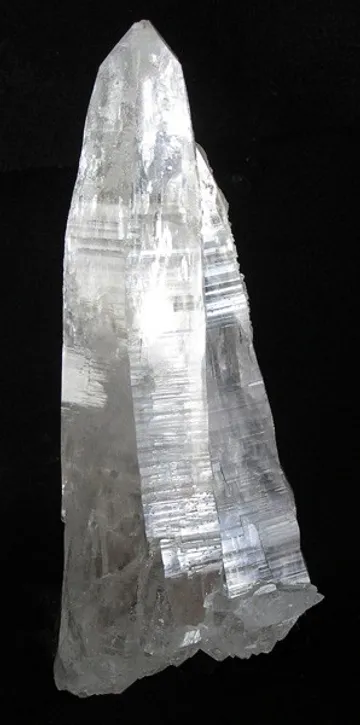
Quartz from Zillertal is primarily admired as an Alpine-cleft mineral: sharp rock crystal, smoky quartz, rutilated quartz, Fensterquarz, and scepter forms from the Zemmgrund, Mörchnerkar, Saurüssel, Schwarzenstein area, Schlegeis workings, and related high-alpine clefts. The best pieces are not merely clear points; they show the full Alpine vocabulary—doubly terminated crystals, stepped and skeletal faces, chlorite phantoms, pericline or albite matrix, rutile needles or sagenitic lattices, and clean contrast between water-clear quartz and darker smoky or violet overgrowths. Sizes range from thumbnail crystals and miniatures to small-cabinet and cabinet pieces, with larger historical specimens far scarcer on the market than broken or iron-stained singles. A good Zillertal quartz specimen has glassy luster, intact terminations, an undisturbed pocket surface, and enough matrix or association to prove its Alpine context; ordinary pieces are often just loose, bruised, colorless points lacking locality character.
Zillertal amethyst is the valley’s most desirable quartz variety and is most strongly associated with Mörchnerkar and Saurüssel in the Zemmgrund, where it occurs as Alpine scepter, negative-scepter, skeletal, fenstered, and doubly terminated crystals rather than as geode druse. The color is commonly pale to medium violet, but the finest scepter heads show richer purple with internal gemminess, sometimes grading down into colorless or smoky quartz stems; chlorite, rutile, tremolite, pyrite, albite-pericline, muscovite, and rock crystal are characteristic companions in the best documented finds. Most market examples are thumbnails to miniatures or small-cabinet pieces, while complete matrix specimens and larger, undamaged crystals are significantly rarer. What separates a strong Zillertal amethyst from an ordinary one is not size alone but the combination of Alpine form, visible scepter architecture, bright luster, balanced matrix, good purple color, and an old or precise label tying it to Mörchnerkar, Saurüssel, or the Mörchner area rather than only to “Austria.”
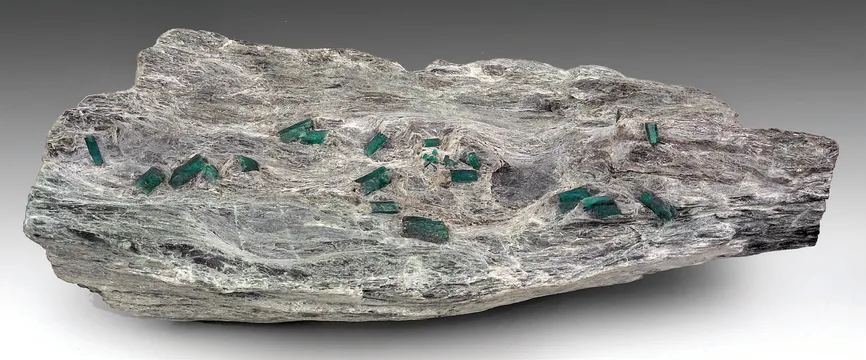
Beyond quartz and amethyst, Zillertal has an exceptional species list. Hematite var. iron rose from the Saurüssel and Mörchner area is one of the classic Alpine associates, often giving the dark metallic counterpoint to quartz and rutile. Rossrugg and Hornkees garnet-bearing schists supplied red almandine, historically important as jewellery material and still attractive as specimens in chlorite-mica schist. Fluorapatite, bicoloured diopside, Cr-bearing vesuvianite, titanite, rutile, brookite, anatase, adularia, pericline, tremolite, schorl, zoisite, euclase, aquamarine, and scheelite are all part of the collector vocabulary of the valley and its side valleys. The region is also scientifically important for type-locality minerals: karlite from Furtschaglkar, aspidolite from Zillertal, and the historically debated but important margarite type-locality attribution connected with Großer Greiner.
For Zillertal specimens, authenticity is usually a question of locality precision rather than laboratory treatment. Amethyst scepters from Mörchnerkar and Saurüssel have a distinct Alpine look, but loose purple quartz without matrix or old documentation can be difficult to distinguish from other Alpine amethyst localities, and vague labels such as “Tyrol,” “Ziller Valley,” or “Zillertal Alps” may conceal a more specific sublocality that has been lost. Strong pieces should be kept with every scrap of provenance: old dealer labels, collection numbers, photographs, and even the original German locality spelling can matter.
The most desirable amethysts are natural purple scepters and skeletal crystals. Be cautious with any orange, yellow, or smoky-purple quartz being marketed loosely as “citrine” or “heated amethyst” from Zillertal; the classic collector demand is for natural amethyst scepters, rock crystal, smoky quartz, and fenstered Alpine quartz, not treated novelty colors. For serious acquisition, the label should match the habit: “Mörchnerkar,” “Saurüssel,” “Zemmgrund,” or “Mörchnergebiet” carries more credibility on a scepter amethyst than a broad country label.
Condition is critical. Alpine cleft crystals commonly have natural contacts where they touched pocket walls or neighboring crystals, and older specimens may have edge bruises from extraction, transport, or trimming. Fenstered and skeletal amethysts can look more complex than damaged crystals, so distinguish true stepped growth from post-recovery chipping. Many Zillertal quartz pieces were recovered from clay-rich fissures and may retain films, iron staining, chlorite, limonite, or pocket debris; overcleaning can reduce both character and value, especially where rutile, tremolite needles, chlorite phantoms, or delicate pyrite are present.
Matrix Zillertal amethysts are scarcer and generally more desirable than isolated crystals of comparable size, provided the composition is balanced and the crystal is not obviously glued or repaired. Scepter heads perched on water-clear quartz stems are especially collectible. A good miniature can be worth more than a larger but dull, abraded, or poorly colored crystal. The market remains thin: fine Zillertal amethyst is loved by Alpine specialists and often stays in European collections, so strong examples appear irregularly through specialist dealers, auctions, and old collections rather than as abundant stock.
Tux scheelite-bearing specimens should be tested and viewed appropriately: scheelite’s shortwave ultraviolet response is useful, but associated mine minerals and matrix should not be subjected to unnecessary handling or aggressive cleaning. Old Hainzenberg gold ore specimens are historically interesting, but most gold is microscopic or sulphide-bound; bright brassy specks in quartz are commonly pyrite or arsenopyrite rather than visible native gold. For Hainzenberg, provenance and geological context often matter more than visible metal.
The great modern Zillertal amethyst story began in foul weather. Erika and Rudolf Planitzer arrived in the valley on July 25, 1976, with friends from Linz, hoping to search the high ground around Saurüssel and Mörchnerkar. The weather was bad enough that cancelling was discussed. They waited. On July 27 the fog lifted, and the group climbed toward the Berliner Hütte; the next day fog and about 10 cm of snow returned. Even so, Erika, Rudolf, and Hermann went prospecting beside the Edelweißklamm on Saurüssel. Erika’s diary caught the first hint: small amethyst splinters and quartz crystals, poor finds overall, but enough to mark the ground as suspicious.
Two days later, in bright sun, the mountain began to open. Rudolf and Hermann returned to a small cleft they had noticed the year before and, using long chisels, deepened it until the first doubly terminated amethyst appeared. Erika, meanwhile, worked near a large old hole where black biotite lay loose “like poppies” among rough white quartz. She quietly uncovered a small cavity, said nothing at first, and finally fell asleep sitting on her pick at the site.
The decisive moment came the next day. At about 11 a.m., Erika asked Rudolf for help. At first they found only coarse quartz. Then amethyst-colored faces flashed in the sun, and a funnel-like cavity lined with crystals opened in the rock. They began removing crystals by hand. By evening the day’s finds were laid out and divided, and what had been a promising prospect became the beginning of one of the great Alpine amethyst recoveries.
On July 31 the pocket sloped steeply down and to the right, and the finds kept coming. Then rain, cold, and snow returned. Hermann and his family descended; the Planitzers retreated to the Berliner Hütte for rest. On August 2, with snow again on the ground and an avalanche breaking loose in the nearby Rutilschlucht, Erika and Rudolf still went back up. In clear air and cold wind they walked alone through the wintry landscape, accompanied only by twelve ptarmigans. Rudolf noticed a 10–12 mm quartz vein with slight color changes running about 2 m into the gneiss. He was drawn to it and began clearing and chiseling. For hours there was nothing.
Then a stubborn block came free. The cavity behind it had to be enlarged with hard physical effort. Rudolf, unused to such lifting, fought cramps and pain in his forearms; Erika bandaged him, and he continued. When Erika could finally get a hand into the cleft, she pulled out the first major amethyst of the new opening—the piece they later called the “gatekeeper,” measuring 17 x 12 x 8.5 cm. As daylight faded, the pocket became a race between exhaustion, weather, and abundance. They packed crystals in anything available: newspaper, hats, work pants, kerchiefs, toilet paper, tins. The amethysts came out as scepters and skeletal crystals, still coated in pocket mud, with just enough point or edge showing to betray what they were.
The find was too large to tell openly in a mountain hut. There were no mobile phones in 1976, and Rudolf did not want strangers at the Berliner Hütte overhearing news of a major amethyst cleft. He called his friend Karl in code. Referring to the name Saurüssel, he said they had “pulled a tooth out of the sow.” Karl understood. The next day Hermann, Hannes, Gerhard, and Otto came to help.
On August 3 Rudolf had already crawled deep into the pocket before Gerhard arrived. At first Gerhard saw only Rudolf’s shoes; the rest of him was inside the cleft. Rudolf later recalled the shock of suddenly seeing a pair of legs appear in his limited field of view—he feared another collector had found the pocket—before realizing it was his friend. The working method became secretive and efficient: good specimens were packed at once and hidden in backpacks so passing hikers or collectors would not grasp the scale of the find. That day produced countless amethysts, rutile in sagenitic patterns, tremolite needles, and water-clear rock crystal still attached to walls of the cavity.
One of the day’s last pieces became legendary in the account. Rudolf pushed back into the cleft, reached to the rear, and passed a long stone back between his legs. Cleaned outside the pocket, it proved to be a flawless, heavily skeletal, doubly terminated amethyst weighing about 2.62 kg. That evening Erika met the men at about 6:30 p.m. as they came down covered in dust and pocket debris, fingers bloodied, bodies bruised, backpacks bulging. They rested at the Diopsidbacherl. She wrote that they had no thirst and no hunger at that moment—only amethysts. Among the pieces was a large specimen about 30 cm long with two amethyst scepters about 16 cm long, nicknamed the “turtle.”
The logistics became almost absurd. By the end, there would be 18 full backpacks. On August 4, specimens were carried down to the Breitlahner parking lot, repacked inconspicuously into suitcases, bags, and boxes, and loaded into cars. The Planitzers then climbed back up with empty packs to remove more. On August 6 they returned again with Karl, Heide, Otto, Hermann, and Hannes. The pocket grew large enough for three clay-smeared men to work inside it at once. Everyone wanted the most forward and difficult position because that was where the best crystals were. Erika also crawled in on her stomach and searched by hand, while amethyst crystals still glittered on the walls and ceiling.
On August 8, at 6:30 p.m., another hole opened in the ceiling. Otto, the tallest of the group, was given a makeshift pedestal so he could reach farther into the opening and feel for a loose thick crystal. Only after that final recovery did the group close and camouflage the pocket for the last time that season. The Planitzers alone retained more than 600 larger crystals and specimens plus countless smaller pieces. Decades later Rudolf described 18 full backpacks and display cases so crowded that the material still exceeded what could be shown. He and Erika never sold a single piece.
Zillertal’s older gemstone story is garnet. In 1745, Andrä Kreidl reportedly found red garnets while hunting chamois at the Rossrugg, a steep north–south ridge in the Zemmgrund. By 1747 he had acquired mining rights, and others soon followed. The work was high, seasonal, and exposed, near glacial terrain around the Hornkees and Waxeggkees. Garnet-bearing schist was blasted from the ridge, and the garnets were separated from the mica schist on site using simple water-powered equipment. Those stones entered the European jewellery trade, linking the remote Zillertal high country to cutters and merchants far beyond Tyrol.
Tux tells a different kind of mountain story. The magnesite deposit above Vorderlanersbach was discovered before the First World War, but mining began only after years of preparation. A 9 km material ropeway tied the high workings to the valley. A small mining settlement grew around the operation, complete with infrastructure for workers and families. Then, on January 20, 1951, an avalanche destroyed the old laboratory and killed nine miners, stopping operations for two months. The mine later resumed and continued until December 21, 1976, when the last shift came out and the Tux magnesite-scheelite era ended. Today the industrial site is largely renatured, leaving a quieter landscape over a surprisingly large chapter in Tyrolean mining history.
Martin Grüll, “Historical Amethyst Discovery At The Saurüssel,” Mineralica, published October 22, 2024 — The essential modern account of the 1976 Planitzer Saurüssel amethyst cleft, with pocket dimensions, specimen descriptions, associated minerals, and diary-based field details.
Gerhard Franz, Dietrich Ackermand and Eddie Koch, “Karlite, Mg7(BO3)3(OH,Cl)5, a new borate mineral and associated ludwigite from the Eastern Alps,” American Mineralogist, 66, 872–877, 1981 — Original description of karlite from Furtschaglkar near Furtschaglhaus in the Schlegeistal area of the Zillertal Alps.
Karlite specimen record, Smithsonian National Museum of Natural History — Museum record for karlite from the Zillertal Alps, Schlegeistal, near Furtschaglhaus.
F. von Kobell, “Ueber den Aspidolith,” Sitzungsberichte der Königlich Bayerischen Akademie der Wissenschaften zu München, 1869 — The nineteenth-century reference tied to aspidolite from Zillertal, an important historical mica-group mineral record.
Appendix to the 5th edition of Dana’s Mineralogy, entry on Aspidolite — Historical English-language summary of aspidolite from “Zillerthal, in Tyrol,” including physical description and association with chlorite.
Johannes Karl Bauer, “Der Goldbergbau Zell am Ziller, Tirol. Eine historische Betrachtung,” Jahrbuch der Geologischen Bundesanstalt, 123, 143–168, 1980 — Detailed historical and production study of the Zell am Ziller–Hainzenberg gold mining district.
O. Schulz, “Zell am Ziller, a Syngenetic Old Paleozoic Gold Deposit in the Innsbruck Quartz Phyllite Belt,” in Syngenesis and Epigenesis in the Formation of Mineral Deposits, 1984 — Geological treatment of the Zell am Ziller gold deposit in the Innsbruck Quartz Phyllite belt.
Johannes K. Bauer, “Die Goldlagerstätte am Hainzenberg,” extraLapis No. 12, Zillertal, Christian Weise Verlag, 1997, pp. 80–83 — Local mineralogical reference for the Hainzenberg gold mine and associated species.
Herwig Pirkl, “Magnesit und Scheelit im Bergbau Tux,” Mitteilungen der Österreichischen Geologischen Gesellschaft, 78, 159–165 — Geological and mining account of the former Tux magnesite-scheelite operation.
M. A. Leutl and M. A. Götzinger, “Einschlusscharakterisierung von Zillertaler Schmuckgranaten, Tirol, Österreich,” Mitteilungen der Österreichischen Mineralogischen Gesellschaft, 146, 2001 — Study of inclusions in Zillertal jewellery garnets, including Rossrugg/Zemmgrund material.
Bianca Zerobin and Gert Goldenberg, “Vom Rohstoff zum geschliffenen Edelstein,” University of Innsbruck Press — Cultural-historical treatment of Zillertal garnet extraction and gemstone production.
S. Wagner, B. Zerobin, R. Köchl, P. Tropper and G. Goldenberg, “Petrological investigations on garnet-chlorite-mica schists of the Rossrugg and Hornkees (Zemmgrund, Zillertal)” — Petrological abstract on the Rossrugg and Hornkees garnet-bearing schists.
Mindat: Zillertal, Schwaz District, Tyrol, Austria — Broad mineral list, sublocalities, photographs, type-locality notes, and references for the valley-scale collecting locality.
Mindat: Saurüssel, Mayrhofen, Schwaz District, Tyrol, Austria — Key sublocality page for Saurüssel amethyst, hematite iron rose, rutile, tremolite, and associated Alpine-cleft species.
Mindat: Furtschaglkar, Finkenberg, Schwaz District, Tyrol, Austria — Type-locality page for karlite and an important Schlegeisgrund-area reference.
High Alps Nature Park Zillertal Alps: Collecting minerals — Current collecting rules, landowner-permission warning for the Zemmgrund, and environmental guidance.
University of Innsbruck GeoKlimLab: Goldbergbau Hainzenberg — Concise geological and historical summary of Tyrol’s Hainzenberg gold mining district.
Goldschaubergwerk Zillertal — Official visitor site for the Hainzenberg gold show mine.
University of Innsbruck GeoKlimLab: Bergbau Tux — Accessible overview of the Tux magnesite-scheelite mine, discovery, mining period, ropeway, scheelite, and closure.
The Quartz Page: Amethyst — Useful background on Alpine amethyst habits, including the Zillertal Alps and scepter forms.
The Quartz Page: Alpine-Type Fissures — Context for Alpine fissure formation and why Zillertal quartz and amethyst differ from geode material.
Wikimedia Commons: Minerals of Ziller valley — Open image category with quartz, amethyst, almandine, apatite, diopside, zoisite, and other Zillertal specimen photographs.
Quartz var. Amethyst from Mörchnerkar, Mineral Auctions archive — Market example showing the premium placed on fenstered scepter amethyst from Mörchnerkar.
Amethyst Scepter from Mörchnerkar, mineralien.de archive — Dealer archive illustrating the typical miniature scale and quartz-matrix aesthetics of Zillertal amethyst scepters.