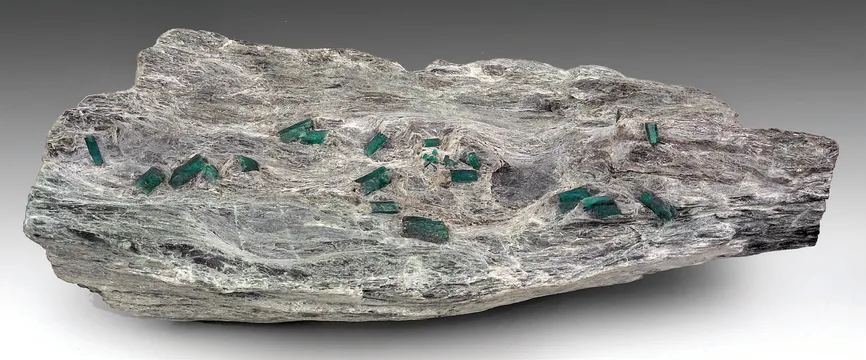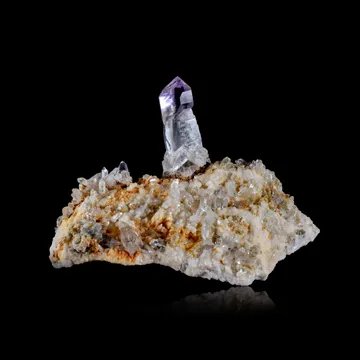
Tyrol, Austria — renowned alpine quartz and amethyst crystals, plus historic fahlore and copper minerals; a dual locality prized by collectors.
Key facts
Tyrol is less a single collecting spot than a compressed alpine mineral province: high fissures in the Tauern Window and Zillertal Alps, carbonate-hosted silver-copper fahlores around Schwaz and Brixlegg, Bronze Age chalcopyrite districts in the Kitzbühel Alps, evaporite minerals from Hall in Tirol, and small but mineralogically important manganese, rare-earth, and metamorphic occurrences scattered through North and East Tyrol. For collectors, its name evokes two very different specimen worlds. One is the classic alpine-cleft suite: transparent rock crystal and smoky quartz, adularia, albite-pericline, chlorite, anatase, rutile, hematite “iron roses,” titanite, apatite, garnet, and locally amethyst from fissures opened in gneiss, schist, amphibolite, and quartzite. The other is the old mining suite of the Lower Inn Valley: tetrahedrite-tennantite “fahlore,” azurite, malachite, tyrolite, cuprite, baryte, dolomite, quartz, and a long list of copper arsenates and sulfates from weathered ore bodies.
Regional View
Country View
The heart of Tyrol’s mineral fame is the contrast between pristine alpine crystals and the deep historical weight of its ores. Zillertal was long one of the best-known Austrian collecting districts, famous among collectors for amethyst, hematite iron roses, apatite, bicoloured diopside, chromium-bearing vesuvianite, almandine, and alpine fissure quartz. East Tyrol adds the Dorfertal and Prägraten-Großvenediger area, where rock crystal groups from clefts could reach display size and where the familiar alpine associations of quartz, adularia, albite, chlorite, titanite, and epidote appear in sharply crystallized combinations.

Photo: Pakeha/Wikimedia Commons
The Schwaz-Brixlegg district gives Tyrol a second, very different identity. Its silver-copper ores occur in a belt of hydrothermal fahlore mineralization hosted chiefly by Devonian Schwaz Dolomite, with stratabound bodies, veins, and breccia ores distributed along the Lower Inn Valley. Around 1500, Schwaz stood among Europe’s great mining centers; its argentiferous fahlore brought wealth to Tyrol and to trading houses such as the Fuggers. Mineralogically, the same district produced tyrolite, named for Tyrol and first described from the Falkenstein mining district near Schwaz, as well as old “schwazite” labels that still provoke careful discussion among collectors because modern analyses showed the supposed mercury-rich fahlore variety to be far less straightforward than 19th-century labels imply.

Photo: GeologMax/Wikimedia Commons
Search for specimens: View all specimens from Tyrol, Austria
For specimen collectors, “Tyrol, Austria” should be read as a regional locality label covering the Austrian state of Tyrol, including North Tyrol and East Tyrol, not the historical Tyrol that also includes South Tyrol in Italy. Old labels often say simply “Tyrol,” “Tirol,” “Zillertal,” “Schwaz,” “Brixlegg,” “Falkenstein,” “Hall,” or “Osttirol,” and the best of them deserve to be preserved because they may indicate very different geological environments.
The alpine-cleft deposits are the source of the clean quartz, smoky quartz, amethyst, adularia, albite, chlorite, anatase, titanite, hematite, apatite, and related specimens that dominate the collector image of Tyrol. These fissures formed in metamorphic rocks of the Alpine orogen, particularly in the Tauern Window and adjacent crystalline belts. The essential process was tensile fracturing during uplift and deformation, followed by hydrothermal mineral growth into open cavities. In the Zillertal Alps and East Tyrol, the host rocks include gneisses, mica schists, amphibolites, quartzites, and related metamorphic lithologies; the fissure assemblages vary with host chemistry, so a chlorite-coated smoky quartz-adularia pocket in schist has a different look from a hematite-rich “iron rose” occurrence, a garnet-bearing mica schist zone, or an amphibolite-hosted quartz-epidote association.
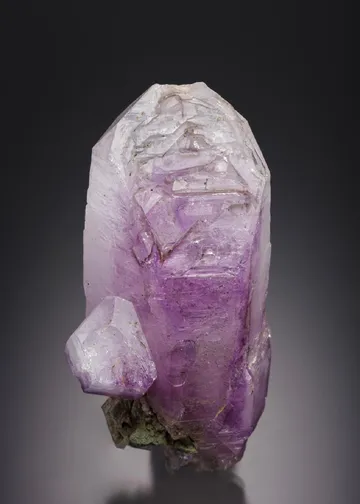
Zillertal is the broad classic district. Collectors have long known the valley and its side valleys—Zemmgrund, Floitengrund, Gunggltal, Schönach valley, Gerlos, Tux, Finkenberg, Mayrhofen, and the high ground toward the Zillertal main ridge—for alpine fissure minerals. The district is not “just quartz.” Amethyst from the Zillertal Alps is especially prized because Austrian alpine amethyst is much scarcer than ordinary rock crystal; the better specimens show purple scepters or stout lustrous crystals, sometimes with hematite or darker inclusions. Hematite iron roses from Zillertal are another important style, commonly as thin, metallic, bladed aggregates. Almandine from the Hornkees and related Zillertal localities, apatite, vesuvianite, diopside, titanite, rutile, anatase, euclase, monazite-group minerals, xenotime-(Y), and aeschynite-(Y) round out the serious collector list.
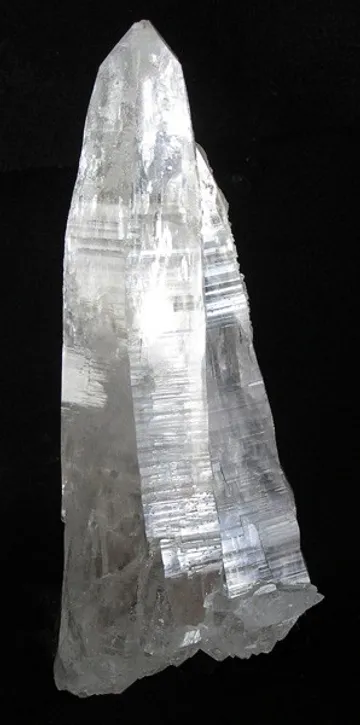
East Tyrol contributes alpine fissure specimens from the Lienz District, especially the Prägraten am Großvenediger and Virgen-Dorfertal areas. The Dorfertal rock crystals displayed at the Museum im Zeughaus in Innsbruck show the possible scale of East Tyrolean quartz: large, pale, lustrous crystals and groups rather than merely cabinet-sized clusters. Prägraten and the Timmelbach valley area are also represented in modern locality records by adularia, quartz, chlorite, titanite, epidote-group minerals, garnet, and rare accessory species. These are classic high-alpine finds: pocket clay, chlorite dusting, healed faces, rehealed fractures, and contact marks are all part of the alpine-cleft vocabulary, and the finest pieces are those that combine transparency, undamaged terminations, lustrous faces, balanced matrix, and a fully credible old Tyrolean provenance.
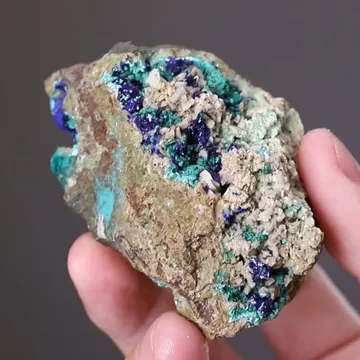
The Schwaz-Brixlegg mining district is the major ore-specimen district. Its most important ore bodies occur over an approximately 20 km belt parallel to the Inn Valley, mainly in Devonian Schwaz Dolomite. The ores are hydrothermal fahlore deposits of the tetrahedrite-tennantite series, occurring as stratabound bodies, discordant veins, and breccia ores. Gangue minerals include dolomite, quartz, and locally baryte; oxidation produced azurite, malachite, tyrolite, cuprite, devilline, brochantite-group and related copper secondary minerals, plus numerous arsenates and sulfates. The district includes names that recur on old labels—Falkenstein, Ringenwechsel, Burgstall, Gratlspitz, Kleinkogl, Großkogl, Roggland, and Brixlegg-Rattenberg among them.
Historically, Schwaz is exceptional. Bronze Age and Iron Age exploitation of copper-bearing ores is documented in the Lower Inn Valley, but the famous boom was late medieval and early modern. At its height around 1500, Schwaz became one of the largest mining centers in Europe. In 1523, production is reported as 15.7 tonnes of refined silver, with much larger associated copper output from the same fahlore ores. The prosperity rested on a simple mineralogical fact: fahlore at Schwaz contains only modest average silver in absolute terms, but when mined on a vast scale from rich ore shoots it became economically transformative.
Kitzbühel-Jochberg-Kelchalm is the other major Tyrolean mining story. Unlike Schwaz-Brixlegg, where fahlores dominate, the Kelchalm and related Kitzbühel deposits are chalcopyrite-pyrite copper ores in the western Greywacke Zone, particularly within the Jochberg or Glemmtal Unit and Wildschönau Schists. The gangue is reported as quartz, ankerite, and dolomite, with secondary goethite, covellite, marcasite, azurite, and subordinate copper alteration minerals. Archaeologically, the Kelchalm area is one of the great Bronze Age copper-production districts of the Eastern Alps, with underground workings, ore-processing heaps, stone tools, wooden artifacts, ceramic material, animal bones, hearths, and smelting evidence used to reconstruct the full production chain.
Hall in Tirol represents a third geological environment: evaporites of the Northern Calcareous Alps. The Hall Valley salt mine near Absam was worked from the medieval period and is important mineralogically as a type-locality setting for anhydrite and D’ansite. Collectors should not expect the same visual specimen drama here as in Zillertal or Schwaz; the significance is historical and mineralogical, tied to evaporite assemblages including halite, anhydrite, polyhalite, glauberite-related associations, and rare salt minerals.
Collecting access today is a serious matter. Much of the best alpine-cleft ground lies in sensitive high-alpine terrain, nature parks, private or Alpine Club land, and areas subject to specific local restrictions. In the Hochgebirgs-Naturpark Zillertaler Alpen, collecting in the Zemmgrund has drawn official concern because of erosion damage caused by digging through turf and disturbing slopes. Simple hand tools such as hammer and chisel may be allowed under Tyrolean nature-conservation rules, but mechanical equipment, blasting, chemical aids, avoidable damage to vegetation, and leaving open holes are not acceptable. In some Zemmgrund areas, including the Zemmschlucht and the Schwarzensteinkar-West altitude band cited in locality notes, collecting is not allowed. Permission from landowners is essential, and in protected or national-park ground the answer may simply be no.
Quartz from Tyrol ranges from water-clear alpine rock crystal to smoky quartz and scarce amethyst, with the best specimens coming from high fissures in Zillertal and East Tyrol rather than from the ore mines. Tyrolean quartz is typically alpine in character: sharply terminated prisms, occasional doubly terminated crystals, chlorite phantoms or greenish inclusions, healed bases, growth zoning, scepters in amethyst occurrences, and associations with adularia, albite-pericline, chlorite, anatase, rutile, hematite, titanite, calcite, and epidote-group minerals. Zillertal material is famous for both amethyst and clear-to-smoky fissure quartz, while the Hinterbichler Dorfertal in East Tyrol has produced large rock-crystal groups substantial enough for museum display. Good Tyrolean quartz is separated from ordinary alpine quartz by strong provenance, glassy luster, undamaged terminations, transparency or attractive chlorite zoning, and matrix associations that visibly place it in a genuine alpine cleft rather than as a contextless loose point.
Other minerals documented from Tyrol are unusually diverse because the state contains several unrelated mineral environments. The type-locality list alone is notable: tyrolite from Falkenstein near Schwaz; anhydrite and D’ansite from the Hall salt-mining district; innsbruckite from a manganese-bearing quartzite-serpentinite contact near Staffelsee in Navis; and aspidolite from Zillertal. The Schwaz-Brixlegg ores add tetrahedrite-tennantite, azurite, malachite, cuprite, baryte, dolomite, devilline, strashimirite, theisite, turquoise, and other copper arsenates and sulfates. Zillertal and the Tauern-related alpine-cleft localities add hematite iron roses, titanite, anatase, rutile, apatite, almandine, diopside, vesuvianite, euclase, monazite-group minerals, xenotime-(Y), and aeschynite-(Y). The Kitzbühel-Jochberg-Kelchalm copper district is more ore-geological than cabinet-specimen-famous, but chalcopyrite, pyrite, fahlore, azurite, malachite, covellite, and goethite are part of its mineral record.
The most important authenticity issue for Tyrol is locality precision. “Tyrol” on an old label may mean the Austrian state, North Tyrol, East Tyrol, or—on older European labels—the historical region that includes South Tyrol in Italy. Zillertal also crosses collector habits in confusing ways: specimens from the Zillertal Alps on the Italian side should not be sold as Austrian Tyrol unless the exact find site is in Austria. Serious buyers should value labels naming a specific valley, mine, adit, glacier, ridge, or collecting area over a vague “Tirol” label.
Schwaz-Brixlegg material has a special mislabelling issue around “schwazite.” In older collections the word often appears for mercury-bearing tetrahedrite from Schwaz. Modern microprobe work on Schwaz silver ores showed that many historical assumptions about unusually mercury-rich “schwazite” are unreliable, and that the original high-mercury analysis was probably made on a mixed aggregate rather than a clean single fahlore phase. A specimen labelled “schwazite” should therefore be treated as an old varietal or historical label unless accompanied by modern analytical data. “Mercurian tetrahedrite,” “tetrahedrite-tennantite series,” or “fahlore from Schwaz-Brixlegg” is often the safer mineralogical description.
Condition expectations vary by suite. Alpine quartz from Tyrol commonly has contact points where the crystal grew against the opposite wall of a fissure, slight rehealing, chlorite clay in protected corners, and bruised edges from extraction. These are normal; however, broken terminations, polished chips, or acid-cleaned surfaces that have lost their natural chlorite context lower desirability. Amethyst from Tyrol is scarce enough that modest color can still be collectible, but saturated, lustrous, well-formed scepters are the pieces collectors chase. Hematite iron roses are delicate and easily bent or chipped along thin blades. Anatase, titanite, and euclase from alpine clefts are small-specimen minerals, so magnification should be expected when assessing quality.
Tyrolite and other secondary copper minerals from Schwaz-Brixlegg require gentle handling. Tyrolite is soft, typically pearly to silky, and may occur as platy, scaly, or crusty blue-green aggregates on carbonate matrix; it should be kept dry and protected from abrasion. Azurite, malachite, and copper arsenates from old mine dumps can be attractive but are commonly thin coatings, microcrystals, or cavity linings rather than robust freestanding crystals. Bright color alone is not evidence of quality; a good Schwaz-Brixlegg secondary specimen should have identifiable mineralogy, old provenance, and a stable carbonate or dolomite matrix.
Current market availability is uneven. General Tyrolean quartz appears regularly, especially as older alpine-cleft specimens with broad “Zillertal” or “Osttirol” labels. Fine amethyst, large undamaged rock-crystal groups, sharp hematite roses, and matrix specimens with multiple alpine species are much less common. Schwaz-Brixlegg pieces are obtainable as old ore specimens and small secondary copper specimens, but top historical pieces with precise mine labels—especially Falkenstein tyrolite or convincing old fahlore specimens—deserve scrutiny and a premium. Innsbruckite, D’ansite, and many of the rarer Tyrolean type-locality or rare-earth species are mainly analytical or micromount material rather than mainstream cabinet specimens.
Schwaz is the locality where mineralogy becomes European history. The old Tyrolean mining verse by Georg Rösch, written in 1558, called Schwaz “aller perckhwerck muater”—the mother of all mines—and pictured a community fed by mining in staggering numbers: men, women, young, and old, “ob treyssygh taussent,” more than thirty thousand. The phrase was not mere civic boasting. Around 1500, Schwaz had swollen from a rural settlement into a mining metropolis, and its fahlore ores financed more than local prosperity. Silver had to be sold to the territorial ruler, while copper from the same ore could be traded more freely, making the chemistry of the ore body—copper, antimony, arsenic, zinc, mercury, iron, and a little silver—matter at the scale of European politics.
The 1523 production figure has become part of the Schwaz legend: 15.7 tonnes of refined silver, reported as an enormous share of world production for that moment, with roughly seventy times as much copper drawn from the same mining system. For a mineral collector holding a dark, polished fahlore specimen from Falkenstein or Eiblschrofen, that history is unusually close at hand. The silver was not visible as wires or bright crystals; it was locked chemically inside dark metallic tetrahedrite-tennantite. The “silver mine” was, mineralogically, a fahlore mine.
Kelchalm tells an older, rougher story. At about 1750 m near Jochberg and Aurach, traces of prehistoric copper mining were recognized in the late 19th century by Matthäus Much. What came from the high pasture was not a romantic scatter of green copper stains but the tool kit of an industry: hammerstones, stone anvils, ceramic fragments, animal bones, fragments of wooden vessels, ore-processing places, hearths, and the remains of a local alpine economy that fed the miners. Later excavations from the 1930s through the 1950s showed enough of the production sequence to reconstruct how Late Bronze Age miners extracted and dressed chalcopyrite ore. The district is now important not just because copper was present, but because the discarded objects show work organization, ore beneficiation, and mountain life in a high alpine mining landscape.
The modern collecting story in Zillertal has a cautionary edge. The same mineral richness that drew early travelers and generations of Strahler-style alpine collectors also led to damaged slopes, especially in the Zemmgrund above the Berliner Hütte. Officials inspecting the area in 2012 found broad stretches of turf removed by mineral seekers. In alpine terrain, cutting the grass cover is not a cosmetic wound; it can start open erosion scars that grow downslope. The result was a stronger public emphasis on permission, hand-tool limits, and restoration of dig sites, with some zones closed entirely. For collectors, it is a reminder that the finest alpine-cleft specimens are inseparable from the fragile ground that produced them.
Thilo Arlt and Larryn W. Diamond, “Composition of tetrahedrite-tennantite and ‘schwazite’ in the Schwaz silver mines, North Tyrol, Austria,” Mineralogical Magazine 62(6), 801–820, 1998 — Essential modern analytical study of Schwaz fahlores and the historical “schwazite” problem.
S. V. Krivovichev, D. Yu. Chernyshov, N. Döbelin, T. Armbruster, V. Kahlenberg, R. Kaindl, G. Ferraris, R. Tessadri, and G. Kaltenhauser, “Crystal chemistry and polytypism of tyrolite,” American Mineralogist 91, 1378–1384, 2006 — Defines the tyrolite polytypes documented from the Falkenstein type-locality material.
Vera M. F. Hammer, “Tirolit,” Austria-Forum / Naturhistorisches Museum Wien — Concise museum-based note on tyrolite, its formula, occurrence as a secondary product of fahlore weathering, name, type locality, and literature.
Hannes Krüger, Peter Tropper, Udo Haefeker, Reinhard Kaindl, Martina Tribus, Volker Kahlenberg, Christoph Wikete, Martin R. Fuchs, and Vincent Olieric, “Innsbruckite, Mn33(Si2O5)14(OH)38 – a new mineral from the Tyrol, Austria,” Mineralogical Magazine 78(7), 1613–1627, 2014 — Type-mineral description of innsbruckite from the Staffelsee/Navis occurrence near Innsbruck.
Innsbruckite occurrence, Staffelsee, Navis, Innsbruck-Land District, Tyrol, Austria — Mindat locality page — Useful locality summary for the innsbruckite type occurrence, including coordinates, host setting, associated minerals, and type-material information.
Aspidolite data, Athena Mineralogy — Lists Zillertal, Tyrol, Austria as the type locality for aspidolite and gives formula and reference data.
Anhydrite data, Athena Mineralogy — Gives Hall, Tyrol, Austria as a type locality for anhydrite.
Salt mine, Hall valley, Absam, Innsbruck-Land District, Tyrol, Austria — Mindat locality page — Evaporite locality record for the Hall salt mine, including anhydrite type-locality status and salt-mineral references.
Kelchalpe project catalogue, University of Vienna Prehistoric and Historical Archaeology Study Collection — Catalogue and summary of Late Bronze Age mining finds from Kelchalm near Kitzbühel.
Steiner, Vavtar, Tropper, and Lutz, “Minor Element Chemistry of the Cu-Deposit of the Kelchalm near Kitzbühel (N-Tyrol, Austria)” — Geological and ore-mineralogical abstract describing Kelchalm chalcopyrite-pyrite mineralization, host units, gangue, and trace-element work.
Tyrol, Austria — Mindat locality page — Broad mineral locality index for the Austrian state of Tyrol.
North Tyrol, Tyrol, Austria — Mindat locality page — Regional mineral list for North Tyrol, including type-locality entries and district-level references.
Zillertal, Schwaz District, Tyrol, Austria — Mindat locality page — Key collector locality page for the Zillertal mineral district and its sublocalities.
Schwaz-Brixlegg mining district, Tyrol, Austria — Mindat locality page — Main reference portal for the classic silver-copper fahlore district and its secondary copper minerals.
Schwazer Silberbergwerk: History of the Schwaz silver mine — Visitor-mine history with useful context for Schwaz’s late medieval silver-copper boom.
Schwazer Silberbergwerk official site — Practical information and historical interpretation for the modern show mine.
Fahlore exhibit, University of Innsbruck geology teaching collection — Clear explanation of Schwaz silver ore, fahlore chemistry, and secondary azurite-malachite weathering.
Hochgebirgs-Naturpark Zillertaler Alpen: Mineral collecting regulations — Important current access and conservation guidance for mineral collectors in the Zillertal Alps Nature Park.
Zemmgrund, Zillertal — Mindat locality page — Locality page noting specific collecting restrictions in parts of the Zemmgrund.
Tyrolean Nature Conservation Act 2005, current consolidated text — Primary legal source for mineral, fossil, and cave-protection provisions in Tyrol.
Kupferplatte Jochberg: Mining history in Tyrol — Accessible summary of the Jochberg/Kelchalm copper-mining tradition and show-mine history.
Kitzbühel-Jochberg prehistoric mining research, University of Innsbruck project page — Context for the Bronze and Iron Age copper-mining networks between Schwaz-Brixlegg and Kitzbühel-Jochberg.
Wikimedia Commons: Minerals of Tyrol (state) — Open image category for Tyrolean mineral specimens and locality photographs.