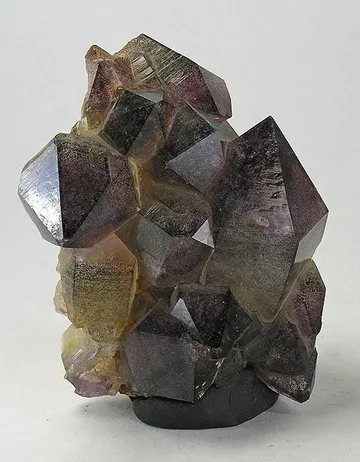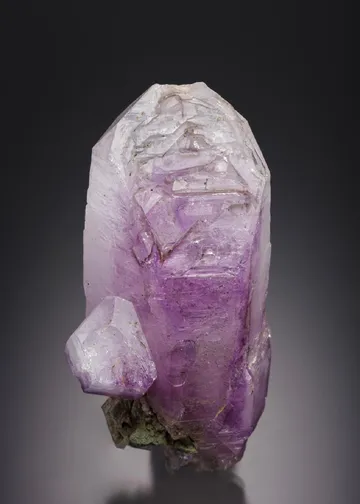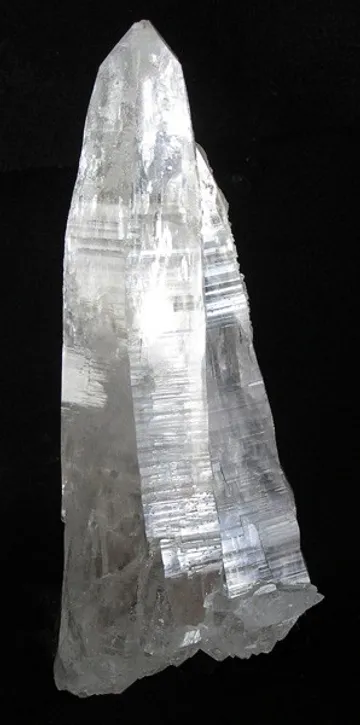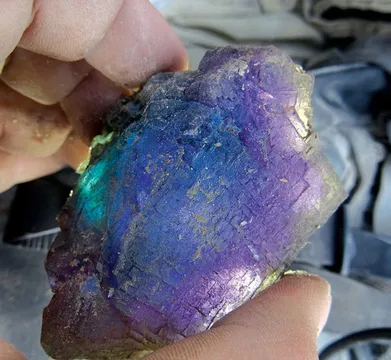
A collector's guide to Schwaz - Brixlegg mining district, Austria: its geology, mining history and notable minerals, illustrated with the 40 specimens documented from this locality on EarthWonders.
Key facts
Schwaz - Brixlegg is one of the classic names of Alpine ore mineralogy: a long, historically worked belt of silver-copper fahlore deposits in the Lower Inn Valley of North Tyrol, developed chiefly in the Devonian Schwaz Dolomite of the Austroalpine Greywacke Zone and, toward Brixlegg and Radfeld, in adjacent Triassic carbonate units of the Schwaz Triassic. To a collector, the district is not important because it produced great masses of familiar chalcopyrite; it is important because its ore is dominated by dark, antimony- and arsenic-bearing tetrahedrite-tennantite fahlore, the deceptively modest-looking mineral that carried the silver wealth of medieval Schwaz and later yielded one of the most distinctive Austrian secondary suites.
The finest specimens have a very particular look. Primary pieces tend to be somber and sharp: steel-gray to black tetrahedrite crystals, locally mercurian or silver-bearing, on quartz, dolomite, calcite, or baryte, often with an old European label bearing the traditional name “Fahlerz” or the historically troublesome “Schwazite.” Oxidized specimens are far more colorful: deep blue azurite, apple- to bottle-green malachite, pale blue-green tyrolite, and a crowd of uncommon copper arsenates and sulfates lining small dolomite cavities and old dump pieces. The district’s most instantly recognizable collector habit is the celebrated curly malachite from the Brixlegg side—thin green scrolls, spirals, and locken-like growths that look more like plant tendrils than mineral crystals.
Historically, Schwaz was far more than a specimen locality. Its silver-copper ores helped shape late medieval and early modern European mining, finance, and metallurgy. The mines were tied to the rise of the Fugger interests, to the great 16th-century Tyrolean mining boom, to deep drainage and water-lifting engineering, and to an even older prehistoric copper industry that worked the same fahlore-bearing dolomites by fire-setting more than two millennia before Schwaz became famous as a silver town.
Regional View
Country View
The district is best understood as a cluster of old mining areas rather than a single mine. On the Schwaz side, Falkenstein, Ringenwechsel, Arzberg, Rotenstein, Roggland, the Weißer Schrofen, and related adits and dumps dominate the old collector literature. On the Brixlegg-Rattenberg side, Kleinkogel, Großkogel, St. Gertraudi, Geyer-Silberberg, Gratlspitz, Maukenötz, Mockleiten, Maukenstadl, and the Mauken Valley add the great baryte-fahlore specimens, azurite-baryte pieces, curly malachites, tyrolite-type locality material, and a remarkable prehistoric mining record.

Photo: Wikimedia Commons

Photo: Wikimedia Commons
Search for specimens: View all specimens from Schwaz - Brixlegg mining district, Austria
The Schwaz - Brixlegg district occupies the Lower Inn Valley between the Schwaz and Brixlegg-Rattenberg sectors of North Tyrol. Its defining ore host is the Schwaz Dolomite, a Devonian platform-carbonate unit in the Paleozoic Greywacke Zone. In this host the ore occurs as fahlore-rich bodies described in the literature as stratabound mineralization, discordant veins, and breccia bodies. The principal ore mineral is tetrahedrite-tennantite, commonly Fe-Zn-bearing and variably carrying Ag and Hg in solid solution. Quartz, dolomite, calcite, and baryte form the main gangue assemblage, with azurite, malachite, tyrolite, brochantite, and other copper secondary minerals developed where near-surface oxidation acted on the sulfides.
The district is not geologically uniform. The Schwaz side is famous for the Schwaz Dolomite fahlore deposits, including Falkenstein and Ringenwechsel. The Brixlegg side includes the classic Großkogel and Kleinkogel mines, where baryte and fahlore specimens have long been valued, and the Geyer-Silberberg and Maukenötz areas, where mineralization also involves Triassic carbonate rocks of the Schwaz Triassic. The Mauken area includes two ore types: the more typical Fe-Zn-Hg tetrahedrite-tennantite veins in Schwaz Dolomite, and a more complex Triassic-hosted polymetallic copper assemblage in which tennantite-rich fahlore occurs with pyrite or bravoite, enargite or luzonite-famatinite, chalcopyrite, thiospinel phases, gersdorffite-cobaltite-arsenopyrite, galena, sphalerite, marcasite, pearceite, and locally barite.
Ore textures range from millimeter- to centimeter-scale fahlore veinlets in dolomite to breccia-hosted aggregates and crystalline cavities. Collector specimens from the oxidized zones are usually small-cavity pieces rather than large open-pocket showpieces. The best azurite and malachite examples depend on intense color, unbruised surfaces, contrast against pale dolomite or baryte, and the presence of clearly crystallized habits rather than mere green or blue staining. Baryte specimens, especially from the Brixlegg side, may show platy, lamellar, or bladed masses, sometimes dusted with blue azurite or carrying exposed tetrahedrite crystals. Tetrahedrite specimens are most desirable when the crystals are free, sharp, lustrous, and not merely sawed or broken from massive ore.
The mining history is unusually deep. Archaeological work has documented Late Bronze Age to Early Iron Age mining and smelting in the Brixlegg-Radfeld-Mauken area, including fire-set cavities in dolomite, charcoal-rich mine fills, ore beneficiation installations, wooden troughs, hammer stones, and smelting remains. At Mauk E, prehistoric workings reached about 25 m into dolomite; dendrochronology and radiocarbon dating place parts of the activity in the late 8th century BC. At Schwarzenberg-Moos, a drainage-channel discovery led to excavation of a prehistoric ore-washing site with wooden structures dated around 900–870 BC.
The medieval and early modern boom came much later and transformed Schwaz into one of Europe’s great mining towns. Rich silver-bearing fahlore was mined on a vast scale in the 15th and 16th centuries, with the Fugger family and other powerful mining and trading houses deeply involved. The Sigmund Erbstollen, begun in 1491, became part of the deep drainage and access system. By the 16th century, water inflow from deep workings required a sophisticated wooden water-lifting system, remembered today through the reconstructed Schwazer Wasserkunst at the show mine.
Mining declined after the peak silver years, affected by technical costs, water problems, management issues, and the rise of richer overseas silver sources. The district did not simply vanish, however. Iron, siderite, baryte, and later dolomite were worked in different parts of the region. Montanwerke Brixlegg traces its industrial history to the 15th-century smelting tradition and today operates as a secondary copper producer, using recycled copper feed rather than local mine ore.
For collectors today, Schwaz - Brixlegg is a historic specimen district rather than an open collecting playground. The show mine at Schwaz is a visitor destination, not a collecting site. Many old adits, stopes, and dumps are on private land, unstable ground, protected cultural features, or active industrial property. Some places long cited in collector literature have changed drastically: at Mockleiten, the old dump near Hohenbrunn was reportedly removed at the end of the 1990s and leveled into meadow, while access to some historically productive ground has been denied by the landowner. Any field visit requires explicit permission, local safety knowledge, and respect for archaeological and mining-heritage protections.
Malachite is the district’s most characterful display mineral, and the Brixlegg side—especially Mockleiten and related Maukenstadl-area material—is renowned for “Malachit-Locken,” thin green curls and spirals of malachite crystals developed in pockets in dolomite; these are growth forms rather than simple pseudomorphs, and documented curls may reach several centimeters in length. Ringenwechsel near Schwaz and Mockleiten near Brixlegg also produced malachite balls and curled aggregates, while more ordinary district material occurs as coatings, crusts, botryoidal patches, and green alteration around fahlore with azurite, tyrolite, dolomite, calcite, quartz, and baryte. Good pieces here are judged less by size than by freshness and architecture: undamaged curls, open scrolls with visible separation from the matrix, saturated green color, and association with azurite or pale dolomite distinguish cabinet-worthy Schwaz - Brixlegg malachite from the abundant flat green staining found on many old dump fragments.
Azurite from Schwaz - Brixlegg is a classic oxidation product of the fahlore ores, typically appearing as deep blue crusts, sprays, small blades, and minute crystals in dolomite cavities or on baryte-rich matrix rather than as large, isolated crystals. The best-known associations are with malachite, calcite, dolomite, quartz, baryte, tyrolite, and rare copper arsenates such as theisite in the Brixlegg-Rattenberg sector; old pieces from Johann adit and Geyer-Silberberg show how attractive the contrast can be when blue azurite sits on green secondary copper minerals in a tight pocket. Fine specimens have intense royal-blue color, clearly crystallized surfaces, and clean contrast against pale carbonate or white to cream baryte, while lesser examples are merely blue-stained dolomite or azurite partly altered to dull green malachite.
Tetrahedrite, broadly part of the tetrahedrite-tennantite fahlore series, is the mineralogical backbone of Schwaz - Brixlegg: the dark ore mineral that carried copper and silver through centuries of mining and that occurs in the Devonian Schwaz Dolomite as stratabound bodies, veins, and breccia-hosted masses. In hand specimens it ranges from massive steel-gray fahlore in pale dolomite to sharp metallic gray crystals on quartz, calcite, dolomite, or baryte, with the Brixlegg Großkogel-Kleinkogel sector especially associated with tetrahedrite crystals prepared from baryte and the Schwaz sector with historic “Schwazite” labels. Modern analyses show that the district’s fahlores vary widely along the tetrahedrite-tennantite solid solution and may contain Fe, Zn, Ag, and Hg, but collectors should value crystal quality rather than the old name: a truly good piece has bright luster, well-formed tetrahedral or modified tetrahedral crystals, minimal edge wear, and a credible old locality label tied to a specific subdistrict such as Falkenstein, St. Gertraudi, Kleinkogel, Großkogel, or Schwaz.
Barite is an important gangue mineral in the Brixlegg part of the district, particularly around Kleinkogel and Großkogel, where it accompanies fahlore and contributes the pale bladed matrix from which dark tetrahedrite crystals may stand out. Specimen barite is typically white, cream, grayish, or slightly honey-toned and appears as lamellar, platy, or bladed aggregates rather than large transparent display crystals; a documented Lilien adit style includes tiny azurite crystals sprinkled over a roughly 5 cm mass of lamellar barite. The best pieces use barite as architecture: crisp blades, clean contrast with azurite, malachite, or tetrahedrite, and minimal rusting or bruising matter more than simple mass, because plain baryte lumps from an old ore district have little specimen impact without sharp habit or strong mineral association.
Baryte—the same mineral name more commonly used in British and European mineral literature—is especially tied to the district’s older labels and publications, where BaSO4 is listed with dolomite and quartz as a principal gangue in parts of the Schwaz Dolomite fahlore system. In Schwaz - Brixlegg collections, “baryte” often signals a Brixlegg-side piece: Kleinkogel, Großkogel, St. Gertraudi, Geyer-Silberberg, or related workings, with fahlore, azurite, malachite, calcite, dolomite, and quartz. The strongest baryte specimens from the district are not glassy modern barite miniatures but historical ore specimens—tabular to lamellar pale plates, sometimes partly etched or naturally opened, carrying blue copper carbonates or exposed metallic tetrahedrite; they are most desirable when the baryte is clean, three-dimensional, and documented to a precise mine or adit rather than broadly labeled “Brixlegg.”
Beyond these headline species, Schwaz - Brixlegg is a deep locality for copper arsenates, sulfates, carbonates, sulfosalts, and slag minerals. Tyrolite is the major type-locality mineral of the district, first described from the Schwaz - Brixlegg area and long associated with pale blue-green to green platy and radial aggregates in the oxidation zone. Other notable recorded species include brochantite, aurichalcite, adamite, claraite, calumetite, connellite, cuprite, copper, linarite, cyanotrichite, chrysocolla, bayldonite, theisite, tangdanite, serpierite, chalcostibite, enargite, luzonite-famatinite, sphalerite, galena, marcasite, arsenopyrite, gersdorffite-cobaltite, pearceite, acanthite, proustite, pyrargyrite, and a wide suite of Brixlegg slag minerals from historical and industrial metallurgical sites. The abundance of uncommon micro-minerals makes precise labels and analytical confirmation especially valuable.
Schwaz - Brixlegg specimens reward label discipline. A label that simply says “Schwaz,” “Brixlegg,” or “Tyrol” may be historically plausible but not very informative; sublocality names such as Falkenstein, Ringenwechsel, Rotenstein, Roggland, Mockleiten, Maukenstadl, Kleinkogel, Großkogel, St. Gertraudi, Lilien adit, Geyer-Silberberg, Johann adit, Gratlspitz, or Maukenötz add real value. Old Central European labels may use “Fahlerz” for tetrahedrite-tennantite ore, “Baryt” for baryte/barite, and “Schwazit” or “Schwazite” for mercury-bearing fahlore. The last term is the largest authenticity trap: modern analytical work has shown that many, and likely most, old “Schwazite” labels should be treated as historical variety labels rather than proof of a distinct Hg-dominant tetrahedrite-group species. Unless a piece has modern quantitative analysis, sell and collect it as tetrahedrite-tennantite or mercury-bearing tetrahedrite, not as a confirmed tetrahedrite-(Hg).
Curly malachite is the other major label-sensitive material. Genuine Mockleiten or Brixlegg curl specimens have a distinctive habit—thin green scrolls and spirals in dolomite cavities—but loose or relabeled malachite curls can be over-attributed because the habit is famous. Check that the matrix, associations, and old label make sense. Be skeptical of unusually large, perfect, isolated curls without matrix or provenance. The best examples are fragile; the curls can be crushed by careless boxing, and dust or old glue can be difficult to remove without damaging the crystal edges.
Azurite from the district is generally small and can alter, darken, or partially change to malachite along edges and fractures. Store away from prolonged humidity swings, acids, and sulfurous environments. Malachite and azurite are both copper minerals and should be handled sensibly: avoid inhaling dust from broken material, do not clean with acids, and wash hands after handling friable specimens. Tyrolite and related copper arsenates are soft, delicate, and arsenic-bearing; keep them dry, avoid ultrasonic cleaning, and do not abrade or trim them casually.
Condition issues are typical for an old European mining district. Tetrahedrite crystals often have edge wear, old trimming, saw cuts, or contacts from being liberated out of baryte or carbonate. Baryte plates bruise and cleave easily. Oxidized dump specimens may be earthy, iron-stained, or partly coated with indistinct green-blue secondary crusts. Conversely, a little age-appropriate contact wear on an old Schwaz or Brixlegg specimen with a strong provenance is acceptable; what matters is whether the main display crystals, curls, or color patches remain sharp and visually coherent.
Market availability is uneven. Common azurite-malachite coatings from old collections appear regularly, as do small baryte and fahlore pieces. Excellent curly malachite, sharp freestanding tetrahedrite, old “Schwazite” specimens with credible provenance, and attractive tyrolite-rich pieces are much less common and are pursued by collectors of Alpine classics, type-locality minerals, and historic European ores. Specimens with 19th- or early 20th-century labels, museum deaccession history, or exact mine names deserve a premium over anonymous modern pieces.
The traditional Schwaz origin story begins in 1409 with a herdsmaid, Gertraud Kandlerin, above Schwaz in the Kogelmoos area. The tale says she noticed that a bull, pawing or thrusting its horns into the grassy ground, had exposed a silver-bearing stone. Whether read as legend, compressed memory, or civic myth, it captures something true about the Schwaz ores: the first attractions were near-surface, oxidized or easily noticed pieces in a mountain landscape that later hid hundreds of adits.
Long before the Fuggers and the silver boom, the same fahlore had already drawn prehistoric miners into the dolomite. At Moosschrofen, the old cavities are not straight medieval adits but cupola-like hollows made by fire-setting: wood fires heated the dense dolomite until it fractured and could be broken away. The 16th-century Schwazer Bergbuch already spoke of old “haidnisch Zecherl,” heathen little mines, still visible in the mountains. Modern archaeological work turned that phrase into a concrete record of mining in the 9th and 8th centuries BC.
Mauk E is one of the most vivid places in that record. The mine goes about 25 m into dolomitic rock. Fresh surfaces still show antimony-rich fahlore in millimeter- to centimeter-thick veinlets. Where prehistoric miners worked by fire, the rock is blackened with carbon and rounded into cupola forms; where early modern prospectors returned, the surfaces are brighter and marked by hammer-and-chisel cuts. Because the later miners found too little ore to keep driving hard, much of the prehistoric evidence survived. Researchers even laser-scanned parts of the Early Iron Age cavities to calculate mined volumes, a striking collision of ancient fire and modern surveying.
At Schwarzenberg-Moos, the discovery was quieter but just as evocative. In 2000, traces of a Late Bronze Age ore-beneficiation site appeared in a drainage channel in the former peat bog. Excavations in 2007 and 2008 revealed a small workshop set up to use outflowing bog water: a rectangular wooden washing structure, two wooden troughs, crushed-ore waste, a mortar stone still in place, hammer-stone fragments, wooden tools, and ceramics. Dendrochronology placed the activity between about 900 and 870 BC. The preferred hammer stones were rounded pebbles of tough metamorphic rock—amphibolite, garnet amphibolite, and eclogite—collected from Inn River gravels or glacial moraine.
The medieval mines had their own drama of depth and water. In 1491 the Sigmund Erbstollen was begun, and deeper workings were eventually driven to about 238 m below the old levels. Water became a formidable enemy. The answer was the Schwazer Wasserkunst, a complex wooden water-lifting installation built deep in the mountain and powered by water energy. The show mine today preserves a reconstructed version, but the original idea belongs to a world in which wood, iron, falling water, and human calculation had to keep a silver empire from drowning.
By the early 16th century, Schwaz was no longer a mountain village with mines; it was a mining metropolis. The Fugger interests entered the Schwaz mining business in the 1520s, and the region’s silver and copper became part of a continental network of finance, smelting, coinage, and political power. The figures attached to the boom are staggering in any retelling: thousands of miners, scores of pits, and a peak year in 1523 often given as 15.7 tonnes of refined silver. Every old fahlore specimen from the district carries a little of that paradox—the ore mineral itself is dark, visually restrained, and easy to overlook, yet it bankrolled one of the great mining stories of Renaissance Europe.
A newer story comes from Kropfsberg near Reith im Alpbachtal. Excavations in 2020 showed that a mine long understood as an extraction site also held layers with abundant charcoal, animal bones, and almost 200 votive coins. The evidence suggests that during the Roman period and Late Antiquity the artificial cave may have served as a Mithraeum. Later, water changed the place again. The nearby Inn could flood the surrounding ground, and catastrophic rock avalanches from Pletzachkogel downstream appear to have dammed the river and formed backwater lakes. One lake reached about 522 m above sea level, matching the elevation of the cultic entrance. The image is hard to forget: a mine first opened for copper, then used for ritual fire and offerings, then sealed or invaded by water from a river transformed by falling mountains.