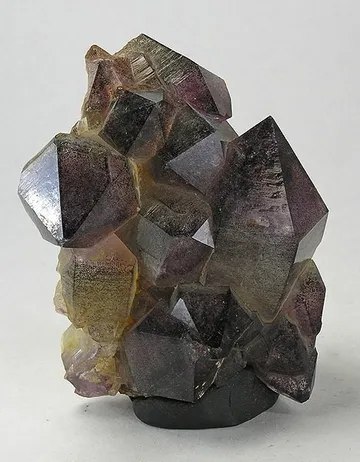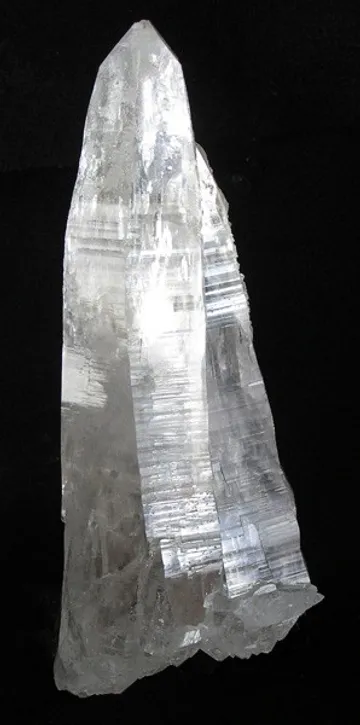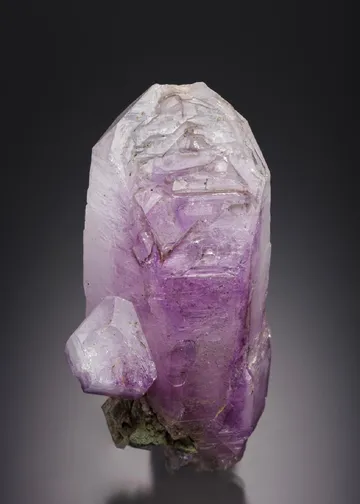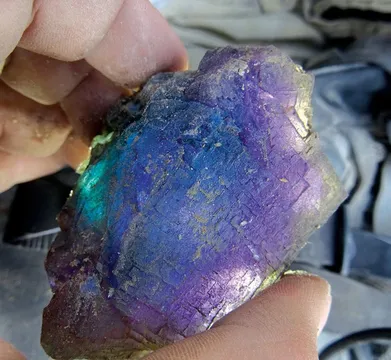
A collector's guide to Wolfsberg, Austria: its geology, mining history and notable minerals, illustrated with the 38 specimens documented from this locality on EarthWonders.
Key facts
For mineral collectors, “Wolfsberg, Austria” is best understood not as a single pocket name but as a historically mined district in Carinthia’s Lavanttal, where several quite different specimen traditions meet: old siderite–limonite iron deposits at Wölch near St. Gertraud, the micaceous hematite workings at Waldenstein, stibnite-bearing siderite and carbonate assemblages around Loben and Reichenfels, and, higher on the Koralpe at Brandrücken–Weinebene, the modern rare-element pegmatite locality that gave mineralogy the type species weinebeneite. The unifying collecting theme is Alpine metamorphic basement cut, replaced, and reopened by later ore fluids—iron, antimony, lead, copper, silver, and lithium-bearing systems crowded into a compact corner of eastern Carinthia.
Regional View
Country View
The district’s classic cabinet character is dark, metallic, and carbonate-rich. Wölch is the old name most closely associated with fine bournonite: dark steel-gray crystals and aggregates in white to pale siderite or limonitic iron ore, scarce enough that nineteenth-century authors already treated them as noteworthy. Loben and the Staubmann workings add the antimony suite—stibnite, plagionite, jamesonite, galena, pyrite, arsenopyrite, quartz, calcite, and siderite—usually on a more modest Alpine scale than the giant stibnites of Japan, Romania, or China, but with real paragenetic interest. Waldenstein contributes glittering micaceous hematite and quartz in an actively worked industrial setting; the finest collector pieces show crisp sparkle, sharp sulfide contrast, and old Austrian locality character rather than sheer size.
A special caution belongs in the first paragraph of any serious Wolfsberg guide: the famous type-locality zinkenite is from Wolfsberg in the Harz Mountains of Germany, not from Wolfsberg in Carinthia, Austria. Because old European labels often shortened localities simply to “Wolfsberg,” and because the mineral assemblages can superficially overlap—stibnite, bournonite, lead-antimony sulfosalts, quartz—Austrian and German Wolfsberg material can be confused in collections and commerce. Austrian Wolfsberg is a real and interesting collecting district; it should not be made more “classic” by importing the Harz type-locality story onto Carinthian labels.
Search for specimens: View all specimens from Wolfsberg, Austria
The collector locality “Wolfsberg, Austria” spans the mineral localities of Wolfsberg District in Carinthia, especially the Lavanttal and the adjacent Saualpe–Koralpe crystalline terranes. The old ore bodies fall mainly into iron-carbonate and iron-oxide systems with local Pb-Cu-Sb sulfosalt enrichment; the modern lithium locality at Brandrücken belongs to a very different LCT pegmatite system. This matters for labels: a bournonite in siderite from Wölch, a stibnite from Loben, a micaceous hematite from Waldenstein, and a weinebeneite from Brandrücken are all “Wolfsberg District” pieces, but they are not the same occurrence.
At Wölch, near St. Gertraud, the old iron workings are described as an ancient mining area and as an eastern continuation of the limestone-hosted iron-ore mineralization of the Hüttenberg area. The ore was developed in carbonate rocks and limonitic iron ore, with siderite, ankerite, aragonite, calcite, quartz, bournonite, bindheimite, stibnite, arsenolite, native silver, malachite, pyromorphite, leadhillite, chalcocite, and other secondary Pb-Cu-Sb minerals recorded. The bournonite tradition is especially old: nineteenth-century descriptions mention beautiful crystals at Wölch, locally embedded in white crystalline-granular siderite, and note that the mineral occurred rarely and at greater depth than the material historically called “Wölchit.”
Waldenstein, west of the village of Waldenstein in the municipality of Wolfsberg, is the industrial anchor of the district. Its micaceous hematite, or specularite, is an epigenetic replacement and vein-type hematite mineralization in the Koralm Crystalline Complex, developed in highly metamorphosed schists and gneisses with alteration zones marked by sericitization and chloritization close to the hematite veins. In older mining-geology descriptions, the Waldenstein system includes siderite replacement of carbonate host rocks, dolomite–ankerite alteration, hematite formation after siderite, later siderite with minerals such as bournonite and ullmannite, and younger quartz fracture fillings. Modern Kärntner Montanindustrie operates the Waldenstein micaceous hematite business under the MIOX name; its product is a platy hematite pigment used principally in anticorrosion coatings and exported widely.
Loben, in the Bad Sankt Leonhard im Lavanttal part of the district, supplies the most specimen-relevant stibnite records. Older descriptions distinguish slender stibnite needles, rarely up to about 80 mm long and 2 mm wide, grouped in attractive sprays on siderite crystal druses, and also stibnite on or between siderite and calcite rhombohedra. The mineralization is reported on fractures cutting and locally offsetting siderite bodies. Later locality lists add quartz, calcite, siderite, galena, chalcopyrite, arsenopyrite, pyrite, marcasite, pyrrhotite, jamesonite, plagionite, tetrahedrite-group minerals, manganese oxides, scorodite, pyromorphite, and other alteration products.
The Staubmann Mines at Mischlinggraben, Reichenfels, are another Pb-Sb-Cu point in the Wolfsberg District suite. Their recorded assemblage includes native antimony, stibnite, chalcostibite, plagionite, galena, chalcopyrite, arsenopyrite, pyrite, marcasite, realgar, quartz, calcite, smithsonite, cerussite, malachite, anglesite, brochantite, alunogen, halotrichite, mimetite, scorodite, serpierite, and scheelite. For collectors, this is a locality to think of in terms of small metallic sulfides and sulfosalts, alteration minerals, and micros rather than large show specimens.
Brandrücken–Weinebene, although geologically separate from the old Pb-Sb-Fe material, is too important to omit from a Wolfsberg District guide. The spodumene-bearing pegmatites belong to the Austroalpine Unit Pegmatite Province and have been studied intensively as the Wolfsberg lithium deposit. The pegmatites are LCT-type bodies hosted in mica schist and amphibolite, with rare-element halos enriched in Li, Cs, Sn, Rb, Tl, and related elements. The same prospect is the type locality for weinebeneite, a rare colorless to white hydrous calcium beryllium phosphate found in narrow fractures of fine-grained pegmatite with roscherite, uralolite, and fairfieldite.
Collecting access today is limited and should be approached conservatively. Waldenstein is an operating industrial mine and processing site, not a casual collecting locality. Brandrücken–Weinebene is tied to a lithium exploration and development project, with underground infrastructure and technical ownership issues rather than open public collecting. Older Wölch, Loben, Kliening, and Reichenfels sites include historical workings, dumps, private land, forest, and potentially unsafe adits; serious collectors should work through local clubs, landowners, and Austrian regulations rather than assuming that an old locality name grants access. Proven old collection material with precise sublocality and date is often more desirable than newly gathered, poorly documented fragments.
Zinkenite deserves special treatment here because Wolfsberg is a name trap: the documented type-locality zinkenite is from the Graf Jost-Christian Mine at Wolfsberg in the Harz Mountains of Germany, whereas verified Carinthian Wolfsberg District lists and publications for Wölch, Loben, Staubmann, and Waldenstein support other Sb-Pb-Cu sulfosalts such as bournonite, plagionite, jamesonite, chalcostibite, and related species, but do not establish a dependable Austrian Wolfsberg zinkenite occurrence; therefore a “Wolfsberg, Austria” zinkenite should be valued primarily as a label requiring confirmation, with the collector looking for analytical proof, old Austrian provenance, and associations consistent with the exact Carinthian sublocality rather than accepting Harz-style dark metallic needles or sprays on quartz as Austrian by name alone.
Stibnite from the Wolfsberg District is best documented from Loben and the Staubmann workings rather than from a single showy “Wolfsberg mine”; at Loben the classic habit is slender, lead-gray metallic needles and small radiating groups on siderite crystal druses, also occurring on or between siderite and calcite rhombohedra and in granular or radial-stengelig aggregates in the siderite host, with older descriptions noting rare needles to about 80 mm by 2 mm; the best pieces are those that retain sharp terminal faces, bright metallic luster, and a clear carbonate matrix association, while ordinary material is massive, granular, crushed, or dulled by oxidation and loses much of the locality’s character.
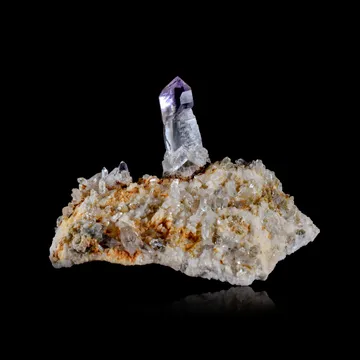
Quartz at Wolfsberg District localities is a matrix and late-fracture mineral more than a stand-alone alpine superstar: Wölch records stibnite in quartz and sometimes on rock-crystal druses in limonite-bearing fractures, Waldenstein includes milky quartz, rock crystal, smoky quartz, and quartz veinlets associated with specular hematite and later fracture filling, and the wider district includes rock-crystal and smoky quartz specimens from sites such as Marxbauer, Steinweißwald, and the St. Leonhard Alp; good Wolfsberg quartz specimens are those that carry the ore story with them—metallic hematite sparkle, siderite, stibnite, bournonite, or sulfide context—rather than anonymous clear crystals without a precise sublocality.
Bournonite is the strongest classic sulfosalt for the Austrian Wolfsberg story, particularly at Wölch near St. Gertraud and also at Waldenstein, Kliening, and related district occurrences; old Wölch descriptions mention beautiful dark steel-gray crystals about three-quarters of an inch across, as well as massive bournonite enclosed in white crystalline-granular siderite, and later records note bournonite associated with siderite and with secondary alteration products such as bindheimite; the best pieces show recognizable bournonite form or bright metallic crystal groups with contrasting siderite, whereas ordinary examples are small black masses in iron ore, worn pseudomorphous material, or specimens lacking the Wölch/Waldenstein sublocality needed to separate them from the many other Austrian bournonite occurrences.
Other documented Wolfsberg District minerals give the locality much of its depth. Wölch is important for bindheimite, historically studied in relation to Oberzeiring, Hüttenberg, Waitschach, Olsa, and Wölch, and for a suite that includes ankerite, aragonite, arsenolite, calcite, siderite, chalcocite, native silver, malachite, pyromorphite, leadhillite, and pyrolusite. Loben adds jamesonite, plagionite, galena, arsenopyrite, chalcopyrite, pyrite, marcasite, pyrrhotite, kutnohorite, manganese oxides, and scorodite. Waldenstein contributes specularite, native antimony, native bismuth, ullmannite, stibiconite, pyrargyrite, tetrahedrite-group minerals, siderite, titanite, rutile, albite, almandine, tremolite, scapolite-group minerals, and smoky to milky quartz. Brandrücken–Weinebene stands apart with spodumene, holmquistite, roscherite, uralolite, fairfieldite, triphylite alteration products, columbite-series minerals, and the type-locality species weinebeneite.
The most important authenticity issue is locality confusion with Wolfsberg, Harz, Germany. Zinkenite, plagionite, and other classic Harz sulfosalts have circulated for generations with shortened “Wolfsberg” labels; without country, district, mine, or old collection context, a specimen can be easy to misfile. For Austrian material, insist on sublocalities such as Wölch, Loben, Staubmann Mines, Waldenstein, Kliening/Bischofeck, or Brandrücken. A label that reads only “Wolfsberg” is not enough for high-value zinkenite, and for zinkenite specifically it should raise immediate suspicion unless accompanied by analysis and a strong Austrian provenance.
A second concern is analytical identity among small black sulfosalts. Bournonite, tetrahedrite-group minerals, chalcostibite, plagionite, jamesonite, galena-rich mixtures, and alteration products can look deceptively similar in thumbnail or micro material. The district even has a documented case of an NHM Vienna specimen originally labelled “Polybasit?” from the Waldenstein area that proved by PXRD and SXRD to be bournonite. For expensive or unusual Wolfsberg District sulfosalts, analytical support is not excessive—it is good practice.
Condition is usually more important than size. Stibnite is soft, brittle, and easily bent or rubbed; Wolfsberg District stibnite is valued when needles remain lustrous and undisturbed on siderite or calcite. Bournonite can be more robust, but small crystals in siderite or limonite are easily bruised, and oxidized bindheimite-rich material may be friable. Specular hematite from Waldenstein sheds glittering particles and can dirty labels and boxes; store it in a covered thumbnail or perky box if the specimen is granular. Arsenolite, realgar, scorodite, native antimony, and other As/Sb species recorded in the district call for normal toxic-mineral hygiene: no cutting or sanding, no dust, no licking or acid testing, and hand-washing after handling.
Fluorescence is not the chief attraction of this locality group. The appeal is paragenesis, old Austrian mining history, and precise sublocality documentation. The strongest market pieces are well-labelled Wölch bournonite in siderite, old Loben stibnite on siderite or calcite, attractive Waldenstein specularite/quartz/hematite associations, and Brandrücken–Weinebene type-locality weinebeneite or rare pegmatite phosphates. Availability is sporadic: common quartz and hematite appear, but well-provenanced old Wölch and Loben sulfide specimens are far less frequent, and good weinebeneite is a specialized micro-to-thumbnail market.
In the Lavanttal, mining history is not an abstract backdrop; it is written into the landscape. Waldenstein’s micaceous hematite workings are associated with a long iron-mining tradition that local industrial sources trace back to Roman times, and the present underground mining and processing area sits below Schloss Waldenstein, the Romanesque castle said to have been built in 1150 to protect the mines. That image—an industrial hematite mine still producing beneath a medieval defensive structure—captures the district better than any single specimen label. The mineral that now leaves Waldenstein as MIOX pigment is not a cabinet mineral in the romantic sense; it is platy hematite, valued because its lamellar structure makes it useful in anticorrosion coatings. Yet that same platy sparkle is what attracts collectors to hand specimens of specularite.
The old Wölch bournonite story has a classic mineralogical twist. Nineteenth-century Carinthian mineralogists dealt with a material called “Wölchit,” named from the locality, but later investigation reduced the romance: it was not a new independent species, but bournonite in decomposition. One old account remarks that this explained why analysts could never derive a rational formula from “Wölchit.” For collectors, the episode is more than a footnote. It is a reminder that Wölch produced enough distinctive Pb-Cu-Sb material to generate a local mineral name, and also that weathered sulfosalts from iron-ore settings can mislead even careful observers.
The measurements in the old descriptions are wonderfully concrete. At Wölch, bournonite was described as beautiful crystals roughly three-quarters of an inch across, also massive in white crystalline-granular siderite, and rare—especially compared with the decomposed material that carried the Wölchit name. At Loben, stibnite appeared as slender needles, very rarely up to 80 mm high and only about 2 mm wide, gathered into handsome tufted groups on siderite druses or set among siderite and calcite rhombohedra. Those numbers define the collecting scale: this is not a district of giant freestanding stibnite swords, but of elegant, delicate, old-style Alpine ore specimens.
Modern analytical work has added its own small detective story. A Natural History Museum Vienna specimen from Waldenstein, originally labelled “Polybasit?”, was later checked by powder and single-crystal X-ray diffraction and turned out to be bournonite. It is exactly the sort of correction that serious collectors should welcome. In the Wolfsberg District, a black metallic grain with an old label may carry real locality value, but the name on the label is only the beginning of the evidence.
The Brandrücken–Weinebene pegmatite chapter belongs to a different century. Weinebeneite was found not as a showy cabinet crystal but as a rare fracture mineral in fine-grained pegmatite, with platy colorless crystals measured in fractions of a millimeter and rosette-like aggregates that could reach about 20 mm. Type specimens went to major Austrian institutions in Graz, Klagenfurt, and Vienna. Later studies of the Wolfsberg lithium deposit turned the area into a model for rare-metal exploration, showing that pegmatite-derived fluids left chemical halos in mica schist and amphibolite even where obvious mineralogical clues may be absent. For the collector, that means a small pale phosphate on a pegmatite fragment from Brandrücken can be as scientifically rooted as a dark Wölch bournonite from an old iron mine.