A collector's guide to Wheal Mary Anne, UK: its geology, mining history and notable minerals, illustrated with the 41 specimens documented from this locality on EarthWonders.
Key facts
Wheal Mary Anne—historically and in most mineralogical records, Wheal Mary Ann—is one of the classic Menheniot lead-silver mines of east Cornwall, a locality whose best specimens carry the unmistakable signature of a low-temperature Pb-Ag-F vein system rather than the tin-copper character more commonly associated with Cornwall. The mine worked the Mary Ann–Trelawny lode north of Menheniot, in slaty Devonian country rock on the eastern side of the Liskeard district, where argentiferous galena was accompanied by a gangue suite rich in quartz, chalcedony, fluorite, siderite, calcite and baryte. To collectors, its importance rests less on big showy ore than on texture: sugary and chalcedonic quartz replacing octahedral fluorite, pale blue to yellow and sea-green fluorite, quartz-coated fluorite, vuggy siderite with pyrite, and a micromineral supergene suite that can include pyromorphite, wulfenite, dundasite, langite and phosphohedyphane.
Regional View
Country View
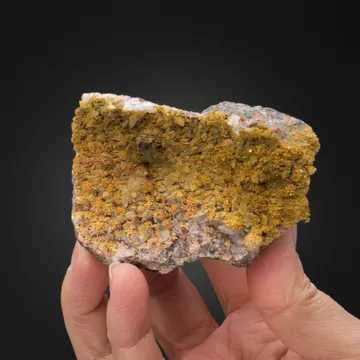
The finest Wheal Mary Anne specimens are compact but highly characteristic. The famous form is chalcedony or quartz after octahedral fluorite: little four-sided pyramids and hollow-looking octahedral shells set on pale, sugary quartz or tan chalcedonic crusts. Better examples preserve crisp fluorite geometry instead of mere lumpy chalcedony; some show broken or open faces revealing the internal quartz fabric. Original fluorite crystals are scarcer than the pseudomorphs and are prized when they show coherent octahedral form, sea-green or blue-green colour, and minimal cleaving or bruising.
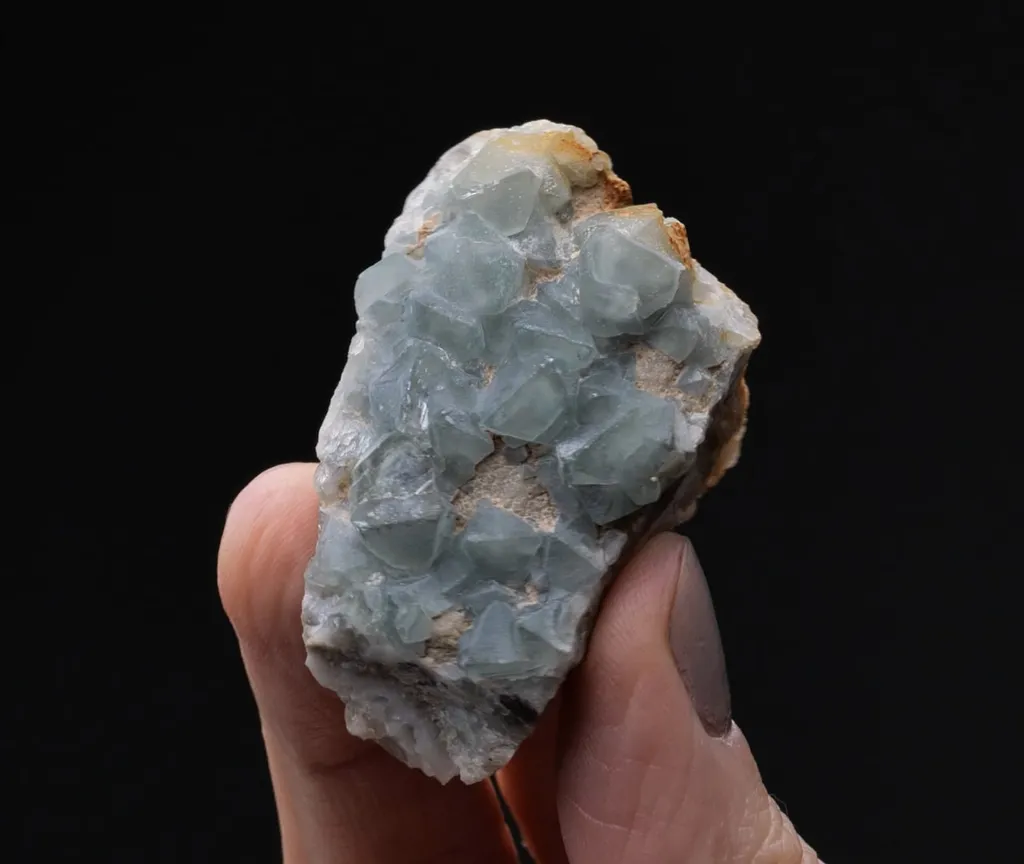
Photo: EarthWonders
Search for specimens: View all specimens from Wheal Mary Anne, UK
Wheal Mary Anne lies at Menheniot, near Liskeard in east Cornwall, on a north-south lead-silver lode system that forms part of the Menheniot group of Pb-Ag veins. The mine should not be confused with West Wheal Mary Ann, a separate nearby locality, nor with the Australian Wheal Mary Anne name sometimes encountered in South Australian mining history. The Cornish mine is inactive, on private land, and the collector’s name “Wheal Mary Anne” is largely a modern spelling variant; most older mining, geological and Mindat records use “Wheal Mary Ann.”
Geologically, the mine belongs to the post-granite crosscourse style of mineralisation in south-west England. These veins are not the classic cassiterite-chalcopyrite lodes close to the Cornubian granites, but later, low-temperature lead-zinc-silver-fluorite systems deposited from saline basinal fluids. British Geological Survey work treats the productive Menheniot veins as part of a district-scale pattern of north-south vein systems extending northward from Menheniot. The fluids recorded in related Menheniot and Tamar Valley fluorites homogenise at roughly 110–170°C and have high salinities, consistent with a relatively cool, brine-dominated Pb-Ag-F event rather than a high-temperature tin-copper stage.
At Wheal Mary Anne itself the lode filling is notably layered. The principal vein material is quartz, with banded chalcedony commonly developed along the lode walls. Crystalline quartz with galena follows, siderite is a major later carbonate, and fluorite occurs in at least two generations: one before and another after the main quartz-galena stage. Late mineralisation includes calcite, siderite and pyrite, with baryte locally lining vugs. This sequence explains the specimens: fluorite was abundant enough to be worked from the dumps, but it was also unstable in parts of the lode history, leaving the celebrated chalcedony and quartz pseudomorphs after octahedral fluorite.
The main Mary Ann–Trelawny vein was worked over a strike length on the order of two kilometres and to a depth of at least about 457 m below surface. Mine sections indicate that much of the upper and middle ground was extensively stoped, while deeper development became progressively less productive. By the 250-fathom level, C. Le Neve Foster described the lode as a fissure vein in killas, dipping steeply east, locally narrow and irregular, with successive fillings of chalcedonic “cab,” quartz, galena, chalybite or siderite, calc spar and fluorspar.
Mining began in the Menheniot parish after a shallow lode of lead ore was found in 1843 during road work near the village. Charles Trelawney granted rights to James and Peter Clymo, already associated with Caradon mining, and Wheal Trelawney was followed in 1845 by Wheal Mary Ann, named for Mary Ann Pollard, the farmer and landowner whose ground lay over the richest part of the lode. The mine rapidly became one of the district’s important lead-silver producers. Contemporary and later summaries record working from 1843 or 1845 into the mid-1870s, producing about 30,000 tons of galena and more than one million ounces of silver. Peak production fell between 1857 and 1872; by 1875 the combination of depth, cost and weakening returns had brought closure.
The mine’s ownership and management history is unusually well documented. The Mary Ann sett was bound up with the neighbouring Wheal Trelawney enterprise, and an early dispute over shares went to Chancery before the mine had properly prospered. Once settled, the mine was strongly associated with Captain Peter Clymo. By 1859, the adventurers presented Clymo with a silver salver in recognition of his management, at a time when the mine had paid substantial dividends on the original shares. Ore was raised through Pollard’s and Clymo’s shafts, with Barratt’s shaft serving northern ground near the Trelawney boundary. A dedicated footway shaft provided separate access down to the adit and deeper workings.
The old dumps have been disturbed more than once. After underground working ceased, material was reprocessed for additional lead and silver, probably continuing in some form into the early twentieth century. In the 1980s, parts of the dumps were reworked again for fluorspar. These reprocessing episodes removed or redistributed a great deal of specimen-bearing material, but also helped expose the fluorite-quartz vein stone that later collectors prize.
Collecting today is not open casual collecting. The site is private, old mine ground is unstable, and the workings are partly flooded. A volunteer project between 2003 and 2012 cleared and explored the old Footway Shaft area with landowner permission, but persistent water ingress defeated attempts to reach the deeper adit level fully. That project and later organised visits produced much of the modern micromount and small-cabinet material now circulating: blue and yellow fluorite, chalcedonic pseudomorphs after fluorite, vuggy siderite with pyrite cubes, sparse galena cubes, and gossanous quartz-baryte vein material carrying pyromorphite and wulfenite.
The best recorded modern collecting episode is the Russell Society visit of 18 May 2013, when members dug shallow trenches through overgrown dumps to expose fresh spoil. Fluorite turned up quickly, especially blue and yellow material, with occasional octahedral chalcedony pseudomorphs after fluorite. Vuggy siderite yielded pyrite cubes to about 3 mm, while galena was rarer as 2–3 mm cubes associated with fluorite. Near the Footway Shaft, local collectors worked a decomposed quartz-baryte gossan with minor galena and black iron-manganese coatings; that material was rich in microcrystalline green pyromorphite, with wulfenite fairly common among paler pyromorphite.
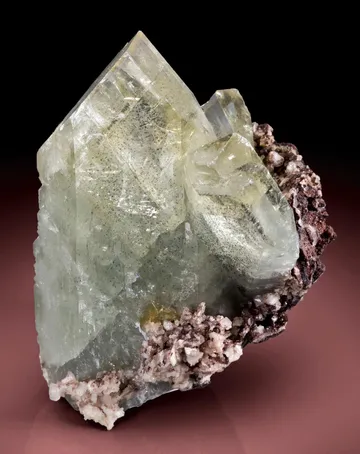
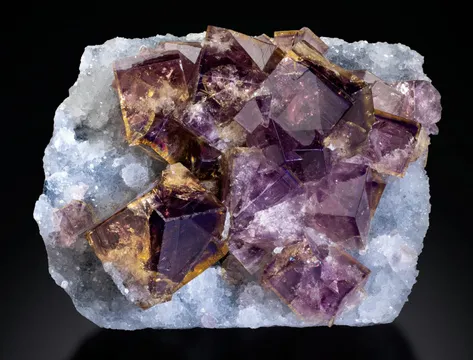
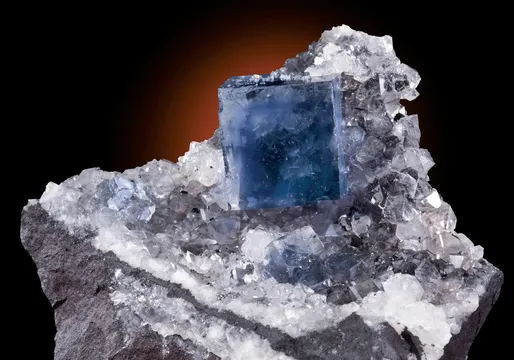
Fluorite from Wheal Mary Anne is best understood as both an original mineral and a ghost-forming ancestor to the locality’s famous quartz and chalcedony pseudomorphs. The typical collector pieces show pale blue, yellow, pale green or sea-green fluorite in octahedral crystals, commonly only a few millimetres across and often set on chalcedonic or sugary quartz; documented recent pieces include octahedra around 7 mm, while older and scarcer specimens show larger fluorite masses or crystal groups with quartz overgrowths. The mine’s paragenesis allows at least two fluorite generations, one bracketing the main quartz-galena stage and another later, which helps explain why fluorite may be partly preserved, coated by microcrystalline quartz, or wholly replaced. The best pieces here have recognisable octahedral form, attractive green-blue colour, some translucency or zoning, and a lively quartz association; ordinary material is massive, cleaved, dull, or so altered that the fluorite habit is no longer crisp.
Quartz is the defining specimen mineral of Wheal Mary Anne because it records both the vein walls and the replacement history of the fluorite. Banded chalcedony occurs along the lode margins, crystalline quartz is associated with the galena stage, and the classic cabinet material consists of chalcedony or quartz pseudomorphs after octahedral fluorite, commonly as cream, white, tan or orange-tan crusts on thin plates or vuggy masses. Modern and museum-documented examples range from millimetre-scale octahedral faces to part-octahedra around 1.5–2.5 cm on edge, with some larger plates carrying many small pyramidal forms; the most desirable examples retain sharp octahedral geometry, show sugary microcrystalline sparkle, and may reveal internal quartz where a face is naturally broken or “opened.” Lesser pieces are abundant as broken chalcedonic crusts, but a well-centred intact pseudo with clean faces is immediately recognisable as Menheniot material.
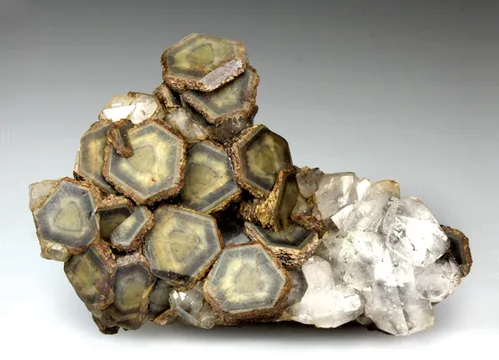
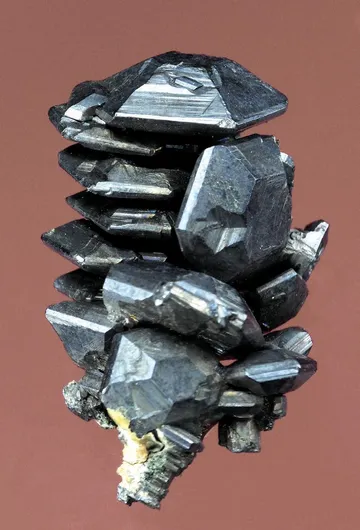
Beyond fluorite and quartz, Wheal Mary Anne has a compact but rewarding Pb-Ag-F supergene and gangue assemblage. Galena is the principal ore mineral and occurs as massive argentiferous ore and small cubes; siderite forms important vuggy carbonate material; baryte is locally present in vugs and quartz-baryte gossan; calcite and pyrite are common late associates. The secondary lead suite includes cerussite, pyromorphite, mimetite and phosphohedyphane, with wulfenite a notable collector rarity in small lemon-orange bipyramidal or tabular crystals. Dundasite and langite are recorded as microminerals, and the broader list also includes chalcopyrite, sphalerite, marcasite, cuprite, malachite, gypsum, selenite and alunite-group material. No valid mineral species is treated here as a Wheal Mary Anne type-locality mineral; the site’s rarity value is instead in its pseudomorphs, its Cornish wulfenite and phosphohedyphane occurrences, and the well-preserved microassemblages from the Footway Shaft area.
The main authenticity issue is locality confusion rather than outright fakery. Labels may read “Wheal Mary Ann,” “Wheal Mary Anne,” “Mary Ann Mine,” “St Mary’s Lead Works,” or simply “Menheniot,” and all can refer to the same Cornish locality depending on context; however, “West Wheal Mary Ann” is a different mine and should not be merged without evidence. The South Australian Almanda mine was also historically associated with the name Wheal Mary Anne, so country and county must be checked carefully on old labels. For Cornish pieces, the key visual clue is the chalcedony-quartz pseudomorph after octahedral fluorite: repeated small octahedral forms on tan or pale chalcedonic matrix are far more characteristic than generic Cornish fluorite or quartz.
No well-established class of artificial fakes or routine treatments is associated with this locality in the mineral-collecting literature. Cleaning, trimming and matrix preparation are more relevant. Chalcedony pseudomorphs can be sturdy as silica, but individual pyramidal faces and edges chip easily, and many pieces show broken octahedra from extraction or dump weathering. Original fluorite is much more vulnerable: cleaved edges, bruised corners and matte abraded surfaces are common. Since the mine dumps have been reworked repeatedly, older specimens with good provenance—especially labels from established Cornish collections or dealers—carry a premium.
Micromount material should be handled with the usual caution for lead-bearing secondaries. Pyromorphite, mimetite, phosphohedyphane, cerussite, wulfenite and galena all contain lead, so avoid generating dust, wash hands after handling, and keep small fragments away from children and pets. Pyrite and marcasite-bearing material may oxidise, especially if stored damp; Wheal Mary Anne waste is also known from the wider Cornish “mundic” concrete problem, where pyrite-bearing mine waste aggregates can weather and produce sulphates. For specimens, that means dry, ventilated storage is sensible, and any active white sulphate bloom or crumbling pyrite should be isolated.
Market availability is moderate but uneven. Small quartz pseudomorphs after fluorite appear regularly enough that a specialist can build a locality suite, while sharp, aesthetic, undamaged examples are much less common. Original fluorite crystals from Wheal Mary Anne are scarcer than the quartz pseudomorphs and attract more attention when they are visibly octahedral, pale green to blue-green, and still on matrix. Wulfenite, phosphohedyphane, dundasite and langite are primarily micromount propositions; they are desirable because of locality and association rather than size. The locality is well represented in serious Cornish collections, but field-fresh supply is limited by private ownership, restricted access, overgrowth, unstable mine ground and the fact that the productive dumps have already been disturbed many times.
The story begins in a farming parish that did not yet know it was sitting over one of Cornwall’s notable lead-silver lodes. In 1843, a road digger near Menheniot exposed shallow lead ore close to the village church. Mining rights followed, and the first ground was taken up as Wheal Trelawney. Two years later the adjoining ground became Wheal Mary Ann, named not for a romantic Victorian invention but for Mary Ann Pollard, a farmer and landowner whose 41 acres lay over the richest part of the lode. Within a generation, the parish had changed character: miners poured in, the population doubled, and an agricultural village found itself ringed by engine houses, shafts, dressing floors and ore traffic.
The mine’s birth was anything but tidy. The adjoining sett was granted in July 1845 to Peter Clymo, James Clymo and Edward Lyne, men whom the Wheal Trelawney adventurers understood to be acting in trust for the existing shareholders. Instead, the grantees proposed to keep control of much of the new venture themselves. A group of shareholders led by O. H. Smith took the dispute into Chancery, and arbitration followed before mining men and a Tavistock banker. By October and November 1846 the award had gone in favour of the Trelawney shareholders, with costs reported at about £1,500. It was an expensive and very Cornish beginning: legal paper before ore profit, competing adventurers before settled ground.
Once the argument was resolved, Captain Peter Clymo made Wheal Mary Ann pay. By September 1859, the adventurers presented him with a silver salver worth £75, praising his management from the mine’s commencement. The numbers explain the gesture: dividends had reached £48,512, equal to £47 7s 6d on each original share, about six times the subscribed capital. For a lead mine that had to sink deeper and deeper to maintain ore, that was a remarkable return. Contemporary descriptions put the 1862 monthly production at about 60 tons of best ore and 25 tons of seconds, while the workings had already reached more than 200 fathoms below surface.
Le Neve Foster’s 1874 visit catches the mine near its end, still technically alive but already ageing underground. He examined the lode at the 250-fathom level, where the fissure vein ran steeply through killas and showed repeated openings and fillings. First came fractured wall rock and chalcedonic cab, binding angular slate fragments into breccia; then the lode opened again and received quartz, galena, siderite and calc spar, with fluorspar appearing in more than one generation. Foster thought the sequence worth recording because it preserved, in cross-section, a readable history of the vein’s repeated movement and mineral deposition. He also described the mine as “on the point of being abandoned,” a sentence that reads now like the closing line of the nineteenth-century chapter.
The twentieth- and twenty-first-century collecting story moved from deep stopes to tangled dumps and the Footway Shaft. From 2003 to 2012, a volunteer group worked with landowner permission to clear the old footway, timbering and laddering the shaft as they went. Their aim was part exploration, part history, part specimen recovery, but water was the great adversary. Persistent inflow from the old adit defeated attempts to keep the workings dry enough for full access, and the project ended with the deeper ground still flooded. Even so, the Footway Shaft area became an important source of modern micromaterial: pyromorphite, wulfenite, galena and gossanous quartz-baryte vein stone.
On 13 November 2007 the same ground demonstrated why old mines command respect. A trench beside the Footway Shaft collapsed while pipework was being laid to help drain the workings, trapping a volunteer in a trench 25–30 feet deep with rising water. Cornwall Fire & Rescue sent two appliances from Liskeard, a rescue tender from Bodmin and an operational support unit from St Austell; paramedics worked as the trench was made safe. The casualty was lifted out by an RAF Sea King helicopter from RAF Chivenor and taken onward by air ambulance. The incident ended without a fatality, but it remains the locality’s modern cautionary tale: even with organised work and experienced people, a mine like Wheal Mary Ann is not casual ground.
The Russell Society visit of 18 May 2013 gives a happier collector’s snapshot. Ten members arrived on a brilliant sunny morning, met by Tony Aldsworth, the site’s “custodian,” and guided by Tony Lee on where to dig. The place was heavily overgrown, and collecting meant cutting into undergrowth and tree roots rather than strolling over open spoil. Soon the trenches began to produce: blue and yellow fluorite, occasional octahedral chalcedony pseudomorphs after fluorite, vuggy siderite with pyrite cubes to 3 mm, and rare galena cubes of 2–3 mm associated with fluorite. Nearby, local Cornish collectors worked a decomposed quartz-baryte gossan by the Footway Shaft, blackened with iron and manganese oxides. Under the hand lens it was alive with green pyromorphite and lemon-orange wulfenite, a reminder that at Wheal Mary Ann the richest collecting may be measured in millimetres rather than inches.