A collector's guide to Wessels Mine, South Africa: its geology, mining history and notable minerals, illustrated with the 578 specimens documented from this locality on EarthWonders.
Key facts
Wessels Mine is one of the great specimen names of the Kalahari Manganese Field, and its reputation rests on a combination that few localities can match: a huge Proterozoic manganese ore system, intense hydrothermal upgrading along faults, and a mineral assemblage so chemically adventurous that it has yielded world-class display pieces, gem material, and type-locality rarities from the same underground mine. The mine lies near Hotazel in the Northern Cape, in the northern part of the Kalahari Manganese Field, where manganese-rich beds of the Hotazel Formation are interlayered with iron formation and carbonate rocks of the Transvaal Supergroup. The ore is not merely a source of manganese metal; it is the host to one of the most distinctive calcium-manganese-barium-strontium-boron-silicate-carbonate-sulfate mineral suites known to collectors.
For collectors, Wessels is especially famous for mirror-bright hematite on drusy brown andradite, black lustrous hausmannite, pink to cream kutnohorite and manganese-bearing calcite, salmon to cherry-red inesite, rich purple manganoan sugilite, yellow ettringite on blue brucite, celestine, gaudefroyite, datolite, xonotlite, and rarities such as poldervaartite, wesselsite, effenbergerite, vonbezingite and colinowensite. The best pieces have a unmistakable Kalahari look: hard contrasts of black oxides, orange-brown garnet, white or pink carbonate, sulfur-yellow sulfate, sky-blue brucite, and deep red to purple manganese silicates. Good Wessels specimens often look less like ordinary ore-mine pieces than like miniature mineralogical cross-sections through a chemically overcharged hydrothermal system.
Regional View
Country View
The specimen history of Wessels also matters because many of its finest pieces are not recent casual finds. The mine is an active industrial underground operation, so collector access has always depended on material recovered through mining, mine personnel, controlled channels, and subsequent movement through South African collections, international dealers, old show inventories and estate dispersals. That history is why strong labels, older provenance, and convincing mineralogical identification are especially valuable with Wessels material.
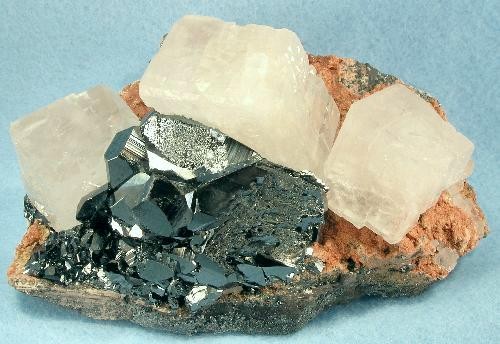
Photo: Wikimedia Commons / Rob Lavinsky, iRocks.com

Search for specimens: View all specimens from Wessels Mine, South Africa
Wessels Mine is an underground manganese mine in the Hotazel area of the Northern Cape, within the northern Kalahari Manganese Field. The regional deposit is hosted by Paleoproterozoic rocks of the Hotazel Formation, part of the Transvaal Supergroup, where manganese ore layers are interbedded with banded iron formation and carbonate-rich sedimentary units. In the broadest geological sense, Wessels belongs to the giant stratiform Kalahari manganese system; in specimen terms, it is distinguished by the later hydrothermal alteration that transformed parts of the original carbonate-rich manganese ore into higher-grade oxide-rich Wessels-type ore and generated the vugs, veins, skarns and replacement assemblages that collectors prize.
The key collector distinction is between the widespread low-grade Mamatwan-type ore and the more restricted high-grade Wessels-type ore. The primary sedimentary ore in the Kalahari field is dominated by braunite-rich lutite with hematite and manganese carbonates such as kutnohorite and manganoan calcite. Later fluid flow altered parts of that ore, especially in the northwestern part of the deposit, converting carbonate-rich material to oxide-rich high-grade ore with hausmannite, braunite II, bixbyite, hematite, manganite and a wide range of silicate, carbonate, sulfate and borate gangue species. That alteration was structurally controlled, particularly by north-south and subordinate east-west faults, and it is the mineralogical engine behind Wessels’ collector fame.
Mining in the Hotazel district developed after systematic work revealed the economic scale of the northern Kalahari manganese deposits. Wessels was discovered in the late 1950s and came into underground production in the 1970s. Historical accounts of sugilite from the mine identify South African Manganese Mines Ltd., part of the Samancor sphere, as the operator during the classic period, and modern corporate reporting places Wessels within Hotazel Manganese Mines, alongside the Mamatwan open-cut mine. Today the operation is part of South Africa Manganese, operated through Hotazel Manganese Mines, with South32 and Anglo American interests held through the Samancor structure.
The ore bodies at Wessels are mined underground rather than by casual surface collecting. That matters to mineral collectors because the best specimens were recovered incidentally or selectively during normal mine advance, not by open-access weekend collecting. Pockets and vugs in hydrothermally altered ore yielded hematite-andradite-calcite plates, hausmannite combinations, rich kutnohorite crusts, celestine and baryte, yellow ettringite, blue brucite, gaudefroyite, datolite, xonotlite, inesite and extremely unusual rare-species assemblages. Many market specimens are therefore older pieces, ex-collection pieces, or material that has passed through a chain of South African and international dealers rather than fresh mine-run production.
Several finds have entered collecting lore. Manganoan sugilite was found as massive seams, patches, and fillings between brecciated manganese ore blocks; the original discovery was accidental during ordinary mining. Inesite came from multiple Wessels finds, with collectors distinguishing pale salmon radiating aggregates from richer cherry-red material and unusual pieces associated with calcite, natrolite, xonotlite, datolite, orlymanite, gypsum and apophyllite-group minerals. Blue brucite with yellow ettringite from late 2003 created a vivid and highly recognizable Wessels style. Poldervaartite from Wessels is especially significant because the mine is the type locality and the source of the classic true material; later Kalahari pieces sold as poldervaartite were often shown to be olmiite or related material, making well-documented Wessels examples particularly important.
Collecting access today should be regarded as closed industrial-mine access. Specimens are obtained through the market, not by visiting and collecting. For serious collectors, the practical locality work is therefore label work: distinguish Wessels from nearby N’Chwaning, Black Rock, Hotazel, Mamatwan and other Kalahari localities; preserve old labels; note whether the piece is from a named collection or a known dealer; and, where rare species are involved, give strong preference to specimens with analytical confirmation or a trustworthy chain of custody.
Calcite from Wessels is rarely the locality’s only attraction, but it is one of its most important display and association minerals: sharp white, cream, translucent, pinkish and manganese-bearing crystals sit on hematite-andradite plates, accompany inesite and orlymanite, contrast with black hausmannite and manganite, and form part of the kutnohorite–manganoan calcite carbonate suite in altered ore. Good examples show lustrous, undamaged crystals with enough translucency and architectural presence to lift the specimen beyond “carbonate on ore”; the classic show pieces are those where white calcite cubes or modified rhombs stand cleanly above mirror hematite and drusy brown andradite, or where pale carbonate provides contrast for red inesite, yellow ettringite, blue brucite, celestine, xonotlite or datolite.
Hematite is one of the signature Wessels display minerals, famous here as glossy black to steel-gray metallic plates, blades and tabular crystals on orange-brown drusy andradite, commonly with white to translucent calcite and locally with hausmannite, baryte, gaudefroyite, quartz or ettringite. The best specimens have mirror-bright faces, crisp edges, and undamaged hematite rising above a contrasting garnet carpet; ordinary pieces are more granular, dull, crowded or bruised, whereas elite Wessels hematites have the dramatic black-silver reflectivity and sharp geometry that make them instantly recognizable across a show table.
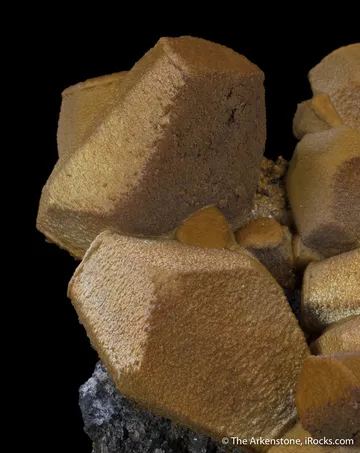
Andradite at Wessels is principally a matrix and association mineral, but in that role it is essential: brown, orange-brown to dark drusy garnet coats surfaces and hosts hematite, hausmannite, calcite, gaudefroyite, baryte, datolite and other species. Good Wessels andradite specimens are judged less by isolated garnet crystal size than by texture, coverage and contrast; the finest pieces use tight lustrous garnet druse as a sparkling ground against metallic hematite, black hausmannite, pale calcite or rare gaudefroyite, while weaker examples look flat, dusty or visually dominated by massive manganese oxides.
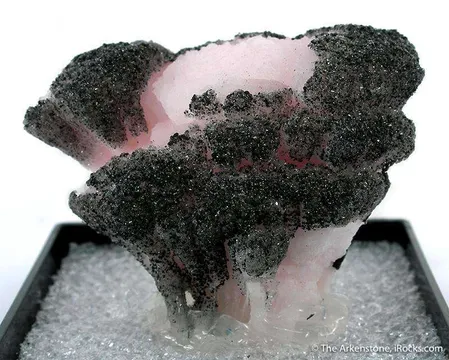
Wessels is one of the classic world localities for kutnohorite, producing pink, cream, white and locally multicolored crusts, botryoidal surfaces, radial or fibrous-looking aggregates and vug linings that are closely tied to manganese-bearing calcite. The best pieces show attractive soft pink to cream color, sparkle, form and scale—sometimes as large cabinet plates with open vugs—while ordinary pieces may be visually confusing, massive, or difficult to separate from manganoan calcite without analysis; because Wessels labels have long mixed kutnohorite, calcite, rhodochrosite and “manganese-bearing calcite,” top specimens need both beauty and credible identification.
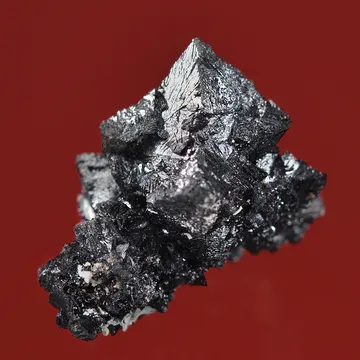
Hausmannite from Wessels occurs as black, submetallic to highly lustrous manganese-oxide crystals and crystal groups, commonly with andradite, calcite, hematite, datolite, baryte, gaudefroyite, manganite and celestine. Fine pieces show sharp pseudo-octahedral to tetragonal forms with bright faces, strong relief on matrix, and ideally a pale carbonate or brown garnet contrast; poorer examples may be perfectly legitimate ore hausmannite but appear massive, dull, bruised or visually lost among other black oxides.
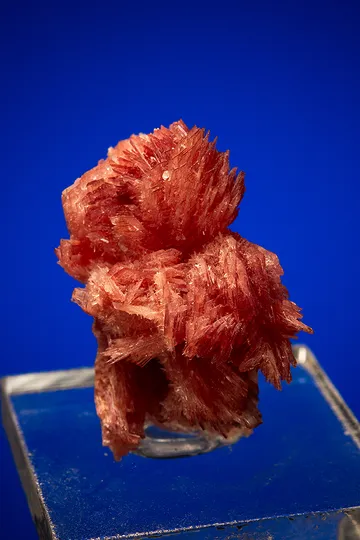
Inesite is one of the great Wessels collector species, appearing as pale salmon, orange-red to deep cherry-red chisel-shaped crystals in stacked fan-like groups, radiating balls, rosettes, crusts and rich aggregates with calcite, natrolite, xonotlite, orlymanite, datolite, hydroxyapophyllite-(K), quartz, pectolite, gypsum and rhodochrosite. The best specimens are not necessarily the largest: a small piece with saturated red color, lustrous well-terminated blades, complete radial form and contrasting white calcite or natrolite can outrank a bigger but duller plate; the most prized styles include early rich red material and combination pieces where the inesite is clearly perched, not merely embedded.
Sugilite from Wessels is the locality’s most famous gem-related mineral, occurring mainly as massive manganoan sugilite in seams, layers, patches and fillings in brecciated manganese ore, with important associations including pectolite, quartz, aegirine, andradite, wollastonite, vesuvianite, glaucochroite, braunite and other manganese minerals. Collector specimens range from rich purple massive material to rare small crystals, with the strongest value placed on saturated bluish-purple to purple color, clean contrast, convincing Wessels provenance, and lack of misleading chalcedony-rich dilution; much trade “sugilite” from Wessels is actually a rock containing sugilite with variable chalcedony, so pure, well-labeled material is preferred.
Rhodochrosite at Wessels is less dominant in the locality’s identity than it is for certain other Kalahari mines, but it is documented in attractive associations with calcite, andradite, inesite, datolite, natrolite, baryte, gaudefroyite and hausmannite. Good Wessels rhodochrosite is judged by freshness of pink to rose color, crystal definition or pleasing crust texture, and association with clearly Wessels-style minerals; ordinary material can be hard to separate visually from kutnohorite or manganese-bearing calcite, so clean paragenesis and reliable labeling matter more here than for famous standalone rhodochrosite localities.
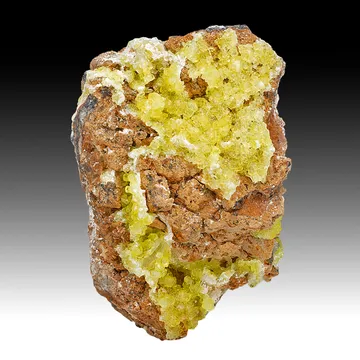
Ettringite from Wessels is best known as yellow to sulfur-yellow, honey-yellow or pale yellow hexagonal to barrel-shaped crystals and coatings, locally on pale blue brucite and also with calcite, hausmannite, andradite, manganite, gaudefroyite, oyelite and other late-stage minerals. The standout specimens combine vivid color, transparency or gemminess, recognizable crystal form, and a contrasting matrix—especially yellow ettringite on blue brucite—while lower-grade examples are powdery, massive, tiny, dehydrated-looking or poorly isolated on pale matrix.
Celestine from Wessels occurs as pearly blue, colorless to white, slightly curved prismatic to nearly fibrous crystals, commonly associated with calcite, baryte, hydroxyapophyllite-(K), pectolite, hausmannite, datolite and manganese-bearing calcite. The finest pieces are those in which the celestine is visibly crystalline and lustrous rather than merely a pale fibrous crust, with blue tone, curvature, and contrast against calcite or dark manganese minerals giving them their Wessels character.
Manganite at Wessels appears as black to steel-gray blades, prismatic crystals, coatings and manganese-oxide masses associated with calcite, manganese-bearing calcite, hausmannite, bixbyite, gaudefroyite, sturmanite, hematite and andradite. Strong specimens show individual bladed or prismatic crystals with metallic luster and enough contrast to read clearly against pale carbonate or other matrix; ordinary examples can be visually swallowed by black hausmannite, braunite or mixed manganese oxides, so good form and secure identification are essential.
Garnet from Wessels is represented chiefly by andradite-group material in the altered manganese assemblage, most familiar to collectors as drusy brown to orange-brown garnet matrix for hematite, hausmannite, calcite, gaudefroyite and baryte. Fine garnet specimens from this mine are valued when the garnet surface is sparkling, continuous and three-dimensional, especially where it frames sharper, more colorful species; loose granular garnet-rich matrix has less appeal unless it carries a strong associated species or an analytically significant rare-mineral context.
Brucite from Wessels is known for a memorable late-2003 find of sky-blue to sea-foam blue material studded with sulfur-yellow ettringite, a color pairing that is instantly different from the mine’s black-oxide-and-garnet classics. The best specimens preserve the blue brucite surface cleanly and carry bright, sharp yellow ettringite crystals or druse; condition is crucial because brucite can bruise, scuff or appear chalky, and the aesthetic premium drops sharply when the blue color is hidden, stained or dominated by massive yellow coating.
Gaudefroyite at Wessels is a dark brown to black manganese borate-carbonate species that occurs with andradite, baryte, hausmannite, calcite, hematite, manganite, rhodochrosite, sturmanite and thaumasite. Good specimens show identifiable gaudefroyite crystals or rich crystalline coverage with strong contrast—especially against orange-brown garnet or pale carbonate—whereas massive dark material without crystal definition can be difficult for collectors to appreciate and should be approached with the expectation of analytical or expert confirmation.
Datolite from Wessels is documented as flesh-pink material and as crystals or crusts associated with hausmannite, inesite, xonotlite, natrolite, calcite, andradite, tobermorite, rhodochrosite, hydroxyapophyllite-(K) and celestine. The best pieces show a distinct datolite presence—good color, clean crystal faces or attractive coverage—and a readable Wessels paragenesis, especially with red inesite or white xonotlite; ordinary datolite can be pale and visually subdued unless the association is strong.
Xonotlite from Wessels is a calcium silicate of the late hydrothermal assemblage, typically white to pale fibrous, radiating or acicular-looking material associated with inesite, datolite, hydroxyapophyllite-(K), calcite, johannsenite, natrolite, bultfonteinite, gypsum and baryte. Good collector pieces use xonotlite as more than a white filler: attractive sprays, clean balls, fibrous contrast with red inesite, or strong association with datolite and apophyllite-group minerals make the specimen meaningful, while matted or anonymous white crusts need careful labeling to avoid being overlooked or misidentified.
Braunite is both an ore mineral and a collectible Wessels species, occurring as black crystals reported to about 1 cm as well as in massive manganese ore, with associations including effenbergerite, pectolite, hausmannite, sugilite, andradite, bixbyite, colinowensite and scottyite. The best specimens are sharp, lustrous, and visibly crystalline rather than just black ore; pieces tied to sugilite-bearing or rare Ba-Cu silicate assemblages are especially interesting, but the visual and identification challenge is separating braunite convincingly from hausmannite, bixbyite and mixed manganese oxides.
Barite from Wessels, under the common American spelling, is the barium sulfate represented by prismatic crystals and combination pieces with andradite, gaudefroyite, hematite, hausmannite, calcite, celestine, rhodochrosite, pyrite, shigaite, inesite and other Kalahari species. Good pieces are those where the barite crystals have size, luster and separation, or where they add a barium-rich note to a gaudefroyite or hematite-andradite association; plain, colorless or broken barite is less competitive unless it has exceptional crystal size or rare-mineral context.
Apophyllite at Wessels is most commonly encountered in the collector literature and databases as hydroxyapophyllite-(K), occurring with inesite, natrolite, xonotlite, calcite, datolite, rhodochrosite, pectolite, brucite, sturmanite, schizolite, celestine, kutnohorite and other late-stage minerals. The best specimens show sharp, lustrous, colorless to white tabular or blocky crystals clearly associated with red inesite, xonotlite, natrolite or rare silicates; ordinary apophyllite from Wessels can be small and subordinate, so association and crystal quality drive value.
Baryte, the IMA-preferred spelling of BaSO4, is a documented Wessels species with prismatic crystals reported to impressive lengths and associations that include andradite, gaudefroyite, hematite, hausmannite, calcite, celestine, rhodochrosite, pyrite, shigaite, inesite, manganvesuvianite, kutnohorite, manganite and xonotlite. Top Wessels baryte specimens combine clean prismatic form, good luster, and a matrix that proves the Kalahari context—particularly garnet, gaudefroyite or hematite—while isolated pale broken prisms are much less compelling.
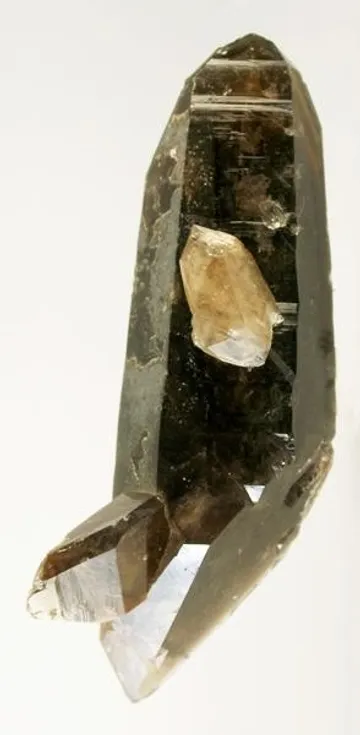
Quartz is a subordinate but important Wessels association mineral, appearing in sugilite-bearing assemblages, inesite-bearing late-stage assemblages, and rare Ba-Cu silicate parageneses with minerals such as pectolite, hydroxyapophyllite-(K), sturmanite, hematite, calcite, natrolite and wesselsite-related species. Good Wessels quartz is valuable less as a standalone quartz specimen than as a clean, well-crystallized witness to a rare association—particularly with sugilite, inesite, wesselsite, effenbergerite or pectolite—whereas ordinary small quartz without context is easy to overlook.
Bixbyite-(Mn) from Wessels is a scarce manganese oxide documented with calcite, manganite and braunite, occurring as black to silvery-black crystalline masses and small cubic to sub-cubic crystals in the altered ore assemblage. The best pieces show recognizable cubic habit, metallic luster and separation from other black oxides; massive material should be treated cautiously, because visual confusion with hausmannite, braunite, manganite and mixed manganese-oxide ore is easy without analytical support or a dependable old label.
Natrolite from Wessels occurs in the late silicate-zeolite assemblage, especially with inesite, hydroxyapophyllite-(K), datolite, rhodonite, manganvesuvianite, xonotlite, rhodochrosite, quartz, tobermorite, oyelite and thomsonite-Ca. Good pieces have clean white to colorless acicular or prismatic natrolite that contrasts sharply with red inesite or pink manganese silicates, while ordinary examples can appear as pale fibrous background unless the sprays are fresh, undamaged and aesthetically placed.
Poldervaartite is one of Wessels’ most important rarities because the mine is the type locality and the source of the classic true specimens, generally seen as pale cream, colorless, beige-pink to flesh-pink prismatic crystals and rounded lustrous aggregates associated with the altered calcium-manganese silicate assemblage. The best Wessels pieces show translucent, bright, short to slightly elongated crystals in attractive clusters; identification is critical because many later Kalahari specimens once sold as poldervaartite were later recognized as olmiite or related material, making analytically backed Wessels examples far more desirable than loosely labeled pink calcium-manganese silicates.
Schizolite from Wessels, also encountered in older collector language around the pectolite-serandite-schizolite group, is documented as light pink to deep pink material discovered in the Wessels and N’Chwaning II mines in the early 2010s, with Wessels specimens associated especially with aegirine, calcite and hydroxyapophyllite-(K). Good examples show pink, foliated or prismatic crystal aggregates with visible terminations and attractive contrast to black aegirine or white apophyllite; because only limited pocket material is known and because nomenclature in this group can be difficult, serious specimens merit analytical confirmation.
Sturmanite from Wessels belongs to the broader Kalahari ettringite-group fame and occurs with brucite, hydroxyapophyllite-(K), calcite, manganite, hematite, andradite, quartz, gaudefroyite and charlesite. Fine pieces show yellow to orange-yellow, lustrous, robust crystals or crystal groups with readable hexagonal habit and attractive placement on matrix; mediocre material may be small, dull, dehydrated-looking or visually confused with ettringite-group relatives, so locality, association and specimen freshness are all important.
Beyond the featured species, Wessels is extraordinary for its type-locality and rare-mineral inventory. Type-locality or locality-defining rarities include wesselsite, effenbergerite, vonbezingite, poldervaartite and colinowensite, and the mine has also produced important occurrences of afwillite, hennomartinite, kornite, norrishite, scottyite, lavinskyite, cairncrossite, tweddillite, richterite-related amphiboles, henritermierite, holtstamite, bultfonteinite, oyelite, thaumasite, tobermorite, jennite, vaterite and other unusual calcium-silicate and manganese-rich phases. In many cases these are not casual display minerals but micromount, systematic or analytical-specimen species, and Wessels’ importance is precisely that it bridges the cabinet and research worlds.
The most important Wessels collecting issue is identification. The mine’s mineralogy is crowded with visually similar black manganese oxides, pale calcium silicates, pink manganese carbonates and pink calcium-manganese silicates. Hausmannite, braunite, bixbyite and manganite can be confused when they occur as black crystalline masses. Kutnohorite, manganoan calcite and rhodochrosite can be confused in pink to cream carbonate pieces. Poldervaartite, olmiite and related calcium-manganese silicates are a well-known trouble area in Kalahari collecting, and Wessels poldervaartite should be treated as an analytical-specimen species unless the provenance is exceptionally strong.
Sugilite has its own authenticity and description problems. Much Wessels material in the gem and lapidary trade is not a single-mineral sugilite specimen but a rock composed of sugilite mixed with chalcedony and other minerals. That material can be attractive and genuine, but it should not be sold or cataloged as pure sugilite without evidence. Strong purple color, Wessels provenance and toughness make massive sugilite attractive, but collectors should watch for dyed or misleadingly described purple rocks in the broader market; for mineral specimens, context and association matter more than lapidary polish.
Condition problems vary by species. Hematite is often chipped on sharp edges and shows bruises readily on mirror faces. Hausmannite and other black oxides can be abraded and difficult to photograph honestly. Inesite sprays and rosettes are delicate at terminations and suffer from edge rub. Ettringite-group minerals and brucite deserve gentle handling and stable storage away from excessive heat, dryness and rough cleaning; even when stable enough for normal display, they should not be washed casually. Celestine, baryte and calcite can chip along exposed crystal edges. Fibrous xonotlite, natrolite and similar pale silicates should be protected from dust and handling.
Fluorescence is most relevant for calcite and some carbonate-rich specimens, and individual pieces should be tested rather than assumed. Sugilite from the Wessels gemological study was reported as inert to both longwave and shortwave ultraviolet, so claimed strong fluorescence in “sugilite” should prompt caution and identification work. As with many manganese deposits, unusual fluorescence can occur in associated phases, but it is not a substitute for mineral identification.
Market availability is uneven. Calcite, hematite, andradite, hausmannite, inesite, kutnohorite and sugilite appear regularly enough that patient collectors can choose among examples, though top pieces are far from common. Brucite-ettringite, fine celestine, gaudefroyite, datolite and xonotlite are less common and quality-dependent. True Wessels poldervaartite, rare Ba-Cu silicates, type-locality species and analytically confirmed micromount rarities are specialized and scarce, often moving through old collections rather than ordinary dealer stock. For serious buyers, an old Wessels label, ex-collection provenance and analytical paperwork can add as much importance as aesthetics.
The sugilite story at Wessels begins underground, not in a gem showroom. Miners encountered the purple material accidentally while pursuing manganese ore, and the early descriptions make clear how practical the recovery was: when a sugilite-rich zone appeared, workers probed the massive manganese ore with metal poles, removed the purple material by hand tools, hauled it to the surface, separated it from the more abundant ore, and stockpiled it for later sale. In the mine, sugilite was not a continuous, predictable vein. It occurred in layers and seams, irregular patches, and as massive purple filling between brecciated blocks of manganese ore. Individual groups of layers could reach about 15 cm thick, and some sugilite-rich zones extended laterally as much as 15 m.
The gemological literature also preserves a wonderfully specific snapshot of the material at the moment it left the mine. One published photograph shows a miner underground holding a chunk of freshly mined sugilite; another shows workers probing for purple layers in the dark manganese ore. The estimated resource was never nailed down formally, but R. D. Dixon gave an unofficial estimate of 12 to 15 tons of sugilite of varying quality, while noting that no one could say how much of that was gemologically important or recoverable. Blocks of jewelry-quality massive sugilite weighing several kilograms were found, but the material varied greatly in quality, and the richest color was not confined to a neat, predictable part of the workings.
The poldervaartite story is a cautionary tale for systematic collectors. Wessels produced the classic type-locality material, but later Kalahari calcium-manganese silicate specimens entered the market under the same name and were eventually shown in many cases to be olmiite or related material. One Mindat discussion records Anatoly Kasatkin’s visit to the Bill Pinch collection, where he sampled a miniature labeled as Wessels poldervaartite, took a small cluster for study, and returned to Moscow for independent microprobe and infrared work. The result was striking: the specimen proved to be nearly pure end-member poldervaartite, quite different from the hundreds of later “poldervaartites” he had seen that were in reality olmiite. For collectors, that episode is a reminder that a beautiful pink Kalahari silicate is not enough; the name on the label may be the beginning of the investigation, not the end.