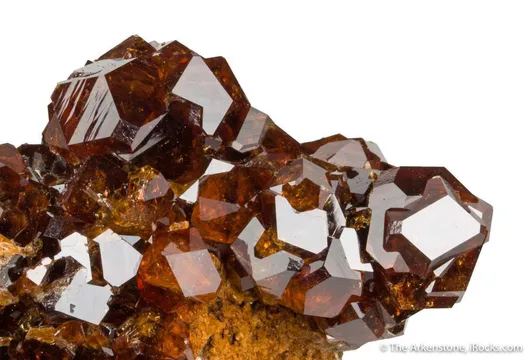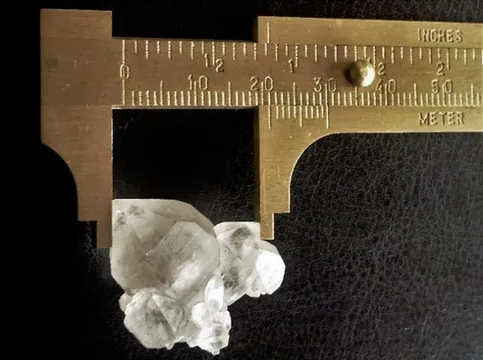
A collector's guide to Washington, USA: its geology, mining history and notable minerals, illustrated with the 48 specimens documented from this locality on EarthWonders.
Key facts
Washington is best treated as a collector’s province rather than a single mine: a compact summary locality for a remarkably varied state whose specimens come from uranium showings in the granitic terrane near Mount Spokane, rare-element miarolitic cavities in the Golden Horn Batholith at Washington Pass, molybdenite-bearing quartz veins in the Lake Chelan country, gold camps in the Swauk, Liberty, Republic, and Okanogan districts, and zeolite- and quartz-bearing volcanic rocks along the Cascades and Columbia River basalt province. For collectors, the state’s reputation rests on a handful of world-class signatures: vivid autunite and meta-autunite from the Daybreak mine; mirror-bright pyrite on quartz from the Spruce Ridge/Spruce Claim area of King County; sharply crystallized molybdenite on white quartz from Crown Point in Chelan County; crystalline and wire gold from the Liberty–Swauk district; and rare sodium-rich silicates from Washington Pass, including zektzerite, okanoganite-(Y), and calciohilairite.
The best Washington specimens have an unmistakable visual character. Daybreak autunite is a “day-glow” yellow-green to deep olive-green uranium phosphate in stacked books, sheaves, and platy crusts, commonly on pale granitic matrix and often partially dehydrated to meta-autunite at the rims. Crown Point molybdenite makes dramatic specimens because the metallic, striated, hexagonal plates sit in clean white vitreous quartz rather than being lost in a dark ore mass. Washington Pass pieces are alpine-miarlotic: pale feldspar and smoky to amethystine quartz with dark arfvedsonite, aegirine, riebeckite, zircon, siderite, and rare pink to peach zektzerite in tight pockets. The state’s gold specimens range from placer nuggets and hackly bits to delicate wire and crystalline forms from the Liberty area, where free-milling gold in quartz breccia veins fed the nearby placers.
Regional View
Country View
Washington also matters historically because its mineral story overlaps several very different collecting eras. The Liberty–Swauk gold camp belongs to the territorial placer rushes of the late nineteenth century; the Republic district records the great epithermal gold-silver development of northeastern Washington; the Daybreak and Midnite uranium story belongs to the Atomic Energy Commission boom of the 1950s; Spruce Ridge became a modern collector classic after pyrite-quartz specimens made a splash on the show circuit in the 1970s; and Washington Pass became a rare-mineral landmark when collectors and mineralogists recognized that its alkaline granite cavities held species then new to science.

Photo: Wikimedia Commons
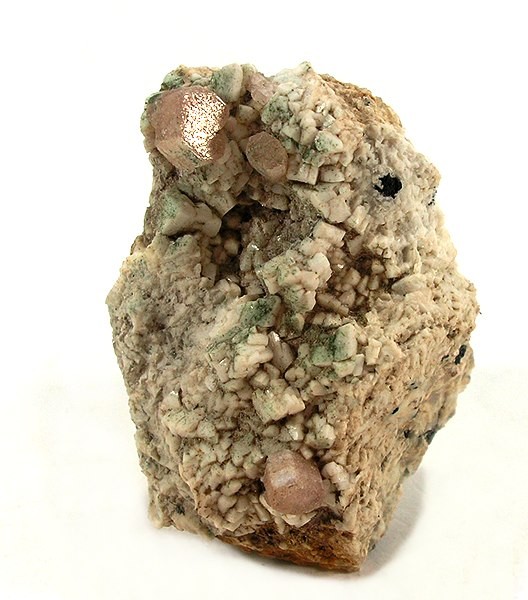
Photo: Wikimedia Commons
Search for specimens: View all specimens from Washington, USA
Washington’s collectible minerals are distributed across several geologic belts. In the north and northeast, Paleozoic to Mesozoic metamorphic and sedimentary rocks, Jurassic and Cretaceous intrusive rocks, Eocene volcanic centers, and later hydrothermal systems host many of the state’s metallic deposits. In the central and northern Cascades, granitic bodies and alpine fracture systems supplied quartz, molybdenite, scheelite, base-metal sulfides, and rare-element minerals. In the Columbia River basalt province and related Tertiary volcanic terrains, cavities and alteration zones yielded zeolites, quartz, calcite, opal, and associated secondary minerals. The collector must therefore think of “Washington” as a series of mineralogical districts, each with its own paragenesis, access pattern, and specimen style.
The Daybreak mine near Mount Spokane, also known in collector literature as the Dahl lease, is the best-known Washington uranium specimen locality. Its uranium mineralization occurs in shallow fractures, joints, vugs, and shear zones in Cretaceous-age quartz monzonite to related granitic rocks. Autunite was the principal visible ore mineral in the classic specimen zones, with dispersed submicroscopic uraninite documented in darker crystal cores. The chemistry is unusually instructive: the surrounding granitic rock contains apatite, and studies of mineralized zones found leached and corroded apatite, suggesting a local source for calcium and phosphate during autunite formation. These conditions produced coarse platy crystals in books, sheaves, and crusts rather than the thin dusty coatings that characterize many lesser uranium occurrences.
Daybreak’s great specimen production was brief, concentrated around the mid-1950s uranium boom. The nearby Midnite mine on the Spokane Indian Reservation became Washington’s major uranium producer and operated from the mid-1950s until 1981, with Dawn Mining Company and Newmont-associated interests central to the broader district’s milling and production history. Daybreak, by contrast, became legendary among collectors more for specimen quality than for sustained mining tonnage. Thousands of specimens entered collections, and the finest pieces are still among the classic American radioactive minerals: thick yellow-green books and fan-like crystal masses, sometimes with darker cores, sometimes with meta-autunite rims from dehydration.
Chelan County’s Crown Point mine is Washington’s classic molybdenite locality. The deposit is not a low-grade porphyry disseminated system of the kind that later defined large molybdenum resources elsewhere; it is a spectacular quartz-vein occurrence. Early descriptions place the molybdenite in a nearly horizontal white vitreous quartz vein exposed high on a steep granite cliff, several hundred feet along the outcrop and roughly 700 to 800 feet above the cliff base. The vein pinched from several feet thick to only inches, and the molybdenite occurred irregularly as minute specks, plates, and masses. Its aesthetic importance comes from the unusually sharp crystallization of the molybdenite, the striated hexagonal form of many crystals, and the clean contrast of dark metallic MoS2 against white quartz.
Washington’s gold history centers on both placer and lode systems. The Liberty–Swauk district in Kittitas County is the best-known collector district for native gold specimens, with placer gold in Swauk and Williams creeks and gold-quartz vein systems in Eocene Swauk Formation rocks and related structural zones. Published district work describes silica-dominated, gold-bearing hydrothermal fluids moving along permeable fault zones and depositing free-milling gold in quartz breccia veins with minor illite alteration. The nearby placers produced nuggets, leaves, and crystalline gold; the hard-rock veins and pockets produced the wire and crystalline forms that make Liberty specimens distinctive. The Republic district in Ferry County represents another major Washington gold-silver setting: epithermal veins associated with Eocene volcanic and sedimentary rocks, historically worked at mines such as Knob Hill and Republic-area operations.
Access today varies sharply by locality. Many historic mines are private, patented, claimed, reclaimed, environmentally restricted, unsafe, or closed; collecting at them requires explicit permission from landowners and mineral-rights holders. The Daybreak and uranium districts require particular caution because of radioactivity, mine hazards, and land status. Washington Pass collecting occurs in rugged alpine terrain of the Okanogan National Forest area, but responsible collecting there demands careful attention to land designations, seasonal access, road conditions, wilderness boundaries, and claim status. DNR-managed State Trust lands allow individual non-commercial recreational rockhounding without a permit only under specific conditions, excluding typed waters and sensitive habitats, and mechanized equipment is not allowed for exposing, collecting, or transporting material to a vehicle. Placer prospecting in or near water is governed separately by Washington Department of Fish and Wildlife rules, with the current Gold and Fish pamphlet authorizing only certain non-motorized methods and requiring a separate Hydraulic Project Approval for activities outside its scope.
Notable specimen finds are scattered through the state’s literature and collector memory. Daybreak produced plate and cabinet autunites of a quality rarely equaled; Crown Point yielded molybdenite crystals so large that early writers recorded masses of several pounds and a 300-pound crystal or cluster shipment in 1903; Spruce Ridge produced pyrite-on-quartz combinations that entered the American market dramatically in 1977 and have continued to define Washington aesthetics; Washington Pass cavities supplied rare pink zektzerite crystals, some once mistaken for morganite; and the Liberty area produced crystalline gold pockets, including historically important high-value pockets from the Ace of Diamonds mine.
Autunite from Washington is dominated in collector memory by the Daybreak mine near Mount Spokane, where coarsely crystalline material formed in vugs, fractures, and shear zones in granitic rock; the classic habit is platy to foliated books, sheaves, fan-like clusters, and richly coated plates in bright yellow-green, day-glow green, olive, and locally dark green to nearly black-cored crystals. Documented Daybreak crystals occur as individual plates and sheaves to more than 1.5 inches, with larger crystal groups across substantial matrix areas; many specimens show pale to dark zoning because darker cores contain fine uraninite particles, while lighter margins are cleaner autunite. Good pieces here are not merely fluorescent crusts: they show thickness, three-dimensional books, saturated color, strong response under ultraviolet light, and a sturdy granitic matrix that preserves the “sandwich” look of layered plates. Ordinary pieces are thinner, bruised, dehydrated, or patchy; top Daybreak specimens combine coverage, crystal definition, and the unmistakable electric color that made the locality a benchmark for American radioactive minerals.
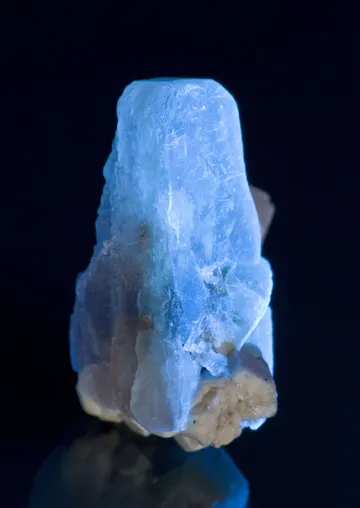
Meta-autunite is inseparable from Washington because the Daybreak mine is the type locality for the species as now recognized, and much of the material sold as “autunite” from Daybreak carries at least partial dehydration to meta-autunite. At this locality it commonly appears as yellow-green to lemon-green pseudomorphous plates and books after autunite, often as rims, surfaces, or partially converted zones on older specimens; the best pieces retain the bold architecture of the original autunite sheaves while showing the slightly drier, more matte, sometimes more yellow or olive cast of the dehydrated phase. Associations are essentially those of the Daybreak uranium system: pale granitic matrix, minor uraninite in darker zones, and autunite-meta-autunite intergrowths rather than a complex suite of colorful secondaries. Excellent Washington meta-autunite specimens are valued when the crystal forms remain crisp and abundant despite dehydration; less desirable pieces are powdery, flaking, excessively desiccated, or labelled simply by habit without any locality or phase evidence.
Washington’s collector-grade molybdenite is anchored by the Crown Point mine in Chelan County, where sharp, lustrous, striated hexagonal plates occur on or within white vitreous quartz from a nearly flat quartz vein in granite. Historic descriptions emphasize crystals and masses from minute specks up to several inches, with flat hexagonal pyramidal forms, strong striation, and dramatic contrast against clean quartz; larger masses of several pounds were reported, but display specimens are prized when the molybdenite is an exposed, well-formed crystal rather than a smeared graphite-gray patch. Accessory minerals at Crown Point are minor—occasional chalcopyrite, copper carbonates, galena, and sphalerite near walls—but the classic look is essentially MoS2 on white quartz. The best Washington molybdenite pieces have sharp edges, undistorted faces, metallic luster, and minimal rubbing or molybdite alteration; ordinary pieces are soft, smeared, cleaved, or embedded too deeply in quartz to show the crystal form.
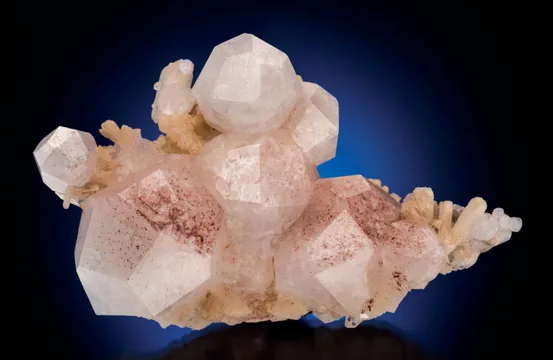
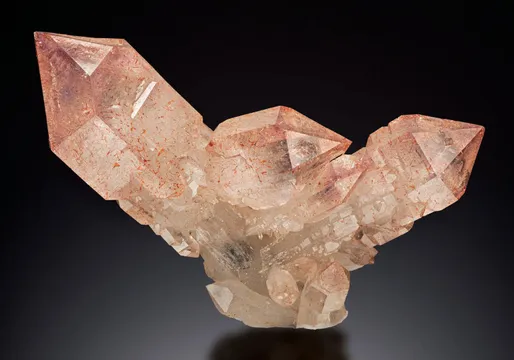
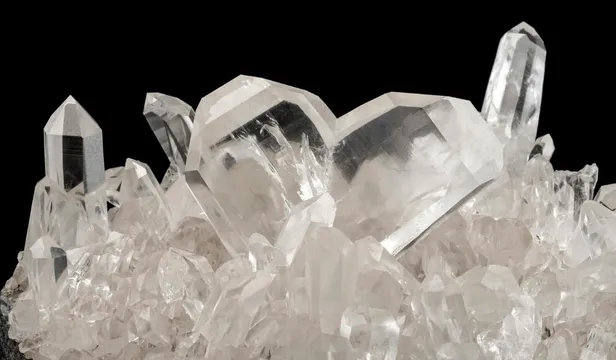
Quartz from Washington is not one story but several: smoky to amethystine crystals in the rare-element cavities of the Golden Horn Batholith at Washington Pass; clear quartz points and drusy quartz associated with pyrite, ankerite, barite, and calcite at Spruce Ridge in King County; vein quartz carrying gold in the Liberty–Swauk district; and smaller quartz occurrences across volcanic and mining districts statewide. Washington Pass quartz commonly occurs as milky to smoky crystals lining decimeter-scale pockets, with arfvedsonite, astrophyllite, aegirine, riebeckite, zircon, microcline, siderite, and rare zektzerite; some crystals show smoky-amethyst coloration and included dark amphiboles or bronze astrophyllite. Spruce Ridge pieces are prized for clear to milky points that frame bright pyrite cubes or pyritohedrons, especially from named vugs and modern claim work. Good Washington quartz specimens are locality-specific: included smoky-amethyst from Washington Pass, balanced quartz-pyrite combinations from Spruce Ridge, or gold-bearing quartz from Liberty all outrank loose, waterworn, or unlocalized quartz that could have come from almost anywhere.
Gold from Washington has its finest collector identity in the Liberty–Swauk district of Kittitas County, where placer mining along Swauk and Williams creeks and nearby lode work in quartz veins produced nuggets, leaves, crystalline grains, and prized wire gold. The district’s gold is linked to hydrothermal quartz breccia veins in and around the Swauk Formation, with free-milling gold released into short-travel placers; this explains why some specimens are coarse, bright, and texturally sharp rather than thoroughly rounded. The Ace of Diamonds mine and related Liberty-area workings are particularly associated in collector circles with crystalline and wire forms, while Republic and Okanogan localities contribute more typical mine and ore-suite gold associations. Strong Washington gold specimens show recognizable crystalline or wire structure, natural surfaces, and trustworthy Liberty or Swauk provenance; ordinary pieces are small placer flakes, flattened nuggets with little character, or gold-in-quartz pieces where the metallic identification is uncertain without testing.
Beyond these five, Washington’s mineralogical record is unusually rich for rare species. Washington Pass in the Golden Horn Batholith is the type locality for zektzerite, okanoganite-(Y), and calciohilairite, and it has also produced noteworthy astrophyllite, arfvedsonite, aegirine, riebeckite, zircon, bastnäsite-(Ce), genthelvite, gadolinite-group minerals, siderite, microcline, albite, and rare REE-bearing species in miarolitic cavities. The state is also important for zeolites from volcanic rocks, including mordenite, heulandite, stilbite, analcime, chabazite, mesolite, natrolite, and related species from southwestern Washington and Columbia River basalt settings. Spruce Ridge pyrite on quartz is among the classic American pyrite associations, while northeastern deposits add realgar, pyrite, base-metal sulfides, scheelite, uranium minerals, and gold-silver telluride or sulfosalt assemblages in selected mining districts.
Washington labels matter. “Washington, USA” is too broad for serious collecting except as a marketplace search category; a meaningful specimen should carry the mine, district, county, and, where appropriate, a pocket or vug name. Daybreak, Dahl lease, Mount Spokane, Mount Kit Carson, and Spokane County have all appeared in labels for the uranium material, sometimes inconsistently, so older labels should be preserved and compared rather than “cleaned up” into an oversimplified modern name. For Washington Pass material, keep the distinction between Washington Pass, Golden Horn Batholith, Okanogan County, and any more precise claim or basin data supplied with the specimen.
Autunite and meta-autunite need special handling. They are radioactive uranium phosphates, soft, cleavable, and prone to dehydration. Keep specimens boxed, labelled as radioactive, isolated from food and living spaces, and handled with the usual precautions: minimize time, maximize distance, avoid dust, wash hands, and do not trim, grind, or ultrasonically clean them. UV fluorescence is one of the joys of Daybreak material, but intense light and dry storage can worsen dehydration or make already fragile plates shed. Many old “autunite” specimens are partly or largely meta-autunite; this is not necessarily deception, but the phase name should be treated cautiously unless the piece has been analyzed or comes with a reliable expert label.
Crown Point molybdenite is physically vulnerable. The mineral is very soft, has perfect basal cleavage, and smears metallic gray when rubbed. Avoid touching exposed crystals, packing them against cotton, or sliding them in a box. A specimen with a bright, complete, striated crystal on white quartz is far more desirable than one with graphite-like patches or rounded, rubbed plates. Brown to yellow molybdite alteration can be interesting and locality-appropriate, but it lowers the value of a display molybdenite if it obscures the form.
Washington Pass specimens are often small-pocket alpine pieces, so repairs, reattachments, and broken terminations are common market issues, especially for zektzerite and included smoky quartz. The locality’s rare minerals can be visually deceptive: pink zektzerite was once mistaken for morganite, and pale zektzerite, albite, feldspar, quartz, and carbonate can confuse non-specialists. Micromount-scale REE and zirconium minerals from Washington Pass should not be accepted on color alone; reliable analytical or expert provenance is important for okanoganite-(Y), calciohilairite, bastnäsite-group, gadolinite-group, and other rare species.
For gold, the main authenticity issue is locality and natural form. Liberty wire and crystalline gold commands a premium, so labels should be scrutinized, especially for loose wires and small nuggets that can resemble material from California, Australia, or other western U.S. districts. Natural gold in quartz should show believable vein context and should not be confused with pyrite, chalcopyrite, mica, or brass-colored sulfides. As with all placer gold, a pan flake from Washington is common; a sharp crystalline or wire specimen with strong Liberty provenance is not.
Current market availability is uneven. Daybreak autunite and meta-autunite remain obtainable because so much was collected during the uranium boom, but top cabinet pieces with thick, bright, undamaged books are increasingly competed for. Crown Point molybdenite is far scarcer in fine condition than casual listings imply. Spruce Ridge pyrite-quartz continues to appear from old and more recent collecting, but the best balanced combinations with undamaged pyrite and glassy quartz are costly. Washington Pass zektzerite on matrix is genuinely rare, and matrix specimens with attractive pink crystals are far less common than loose grains, fragments, or faceted stones. Liberty crystalline and wire gold is a specialist market where provenance, form, and scale dominate value.
The Daybreak story begins in the mid-century Geiger-counter age, when uranium-bearing rock in the Mount Spokane area drew prospectors into shallow granitic fracture systems that would prove far more important to mineral collectors than the scale of the mine itself. In the Daybreak workings, the prize was not a black massive uranium ore but brilliant green plates growing in open spaces and along fractures. Later study found the chemistry almost written into the rock: apatite in the granitic host had been preferentially leached in mineralized zones, apparently helping supply calcium and phosphate for the autunite. That gives the best Daybreak specimens their peculiar authority. They are not just bright; they are the visible product of a small, local chemical trap in a uranium-bearing granite.
Crown Point reads like an old mining romance scaled for mineralogists. The molybdenite-bearing quartz vein cropped out on the northeast face of a nearly perpendicular granite cliff, hundreds of feet above its base, the white vein narrowing and swelling as it traced the rock face. Early work included open cuts and tunnels, and in 1903 a reported 300-pound crystal or cluster of molybdenite crystals was shipped. The most memorable description records molybdenite scattered through the quartz from tiny specks to pieces several inches across, with many crystals as flat, striated hexagonal pyramids. Some were half an inch to an inch high, four to five inches across, and heavy enough to weigh a quarter to a third of a pound each. It is easy to understand why the locality became famous: black metallic crystals lying in snow-white quartz on a cliff above Lake Chelan country is the kind of occurrence specimen collectors remember long after production figures are forgotten.
Washington Pass has its own quieter drama. In 1966, before final construction of the North Cascades Highway was complete, Bart Cannon found unusual pink crystals in the alpine alkaline granite of the Golden Horn Batholith. Their color and stout pseudohexagonal habit first suggested morganite, a reasonable field guess in a rare-element setting. The material eventually reached Jack Zektzer, a Seattle mathematician and collector, who submitted specimens to the Smithsonian Institution. By 1976 the species was approved, and in 1977 Pete J. Dunn, Roland C. Rouse, Bart Cannon, and Joseph A. Nelen published zektzerite as a new lithium sodium zirconium silicate. The locality went on to yield not only zektzerite but two more type-locality species, okanoganite-(Y) and calciohilairite, giving a cold, rugged pass in the North Cascades an outsized place in modern systematic mineralogy.
Spruce Ridge entered collector folklore in a more public way. In 1977, a large number of pyrite-on-quartz specimens from the King County locality were displayed and offered at the Greater Detroit Gem and Mineral Show. Collectors remembered the “splash” because the pieces were so unlike the usual American pyrite: bright cubes and pyritohedrons, some with stepped faces, perched among quartz crystals in sculptural combinations. Later finds from named vugs kept the locality alive in the market, but that first show-era debut fixed the look of Spruce Ridge in the collecting mind.
Liberty’s story belongs to gold country, and it is full of the small, physical details that turn a district into a legend. The Swauk district’s earliest gold discoveries are tied to the Goodwin brothers and other prospectors working the creeks in the late 1860s and early 1870s. One account has Benton Goodwin turning over a rock while getting water, finding a nugget, putting it in his mouth because his hands were full, and returning to camp before showing the others. Whether told as camp memory or local history, the image is perfect: a gold rush beginning with a man carrying buckets and hiding a nugget under his tongue. Later Liberty mining produced not only placer gold but crystalline and wire specimens from pockets in the hard-rock veins. In July 1950, Clarence Jordin reportedly found his largest pocket at the Ace of Diamonds mine, containing around $10,000 in crystalline gold, a reminder that the district’s best pieces were not just colors in a pan but mineral specimens in the strictest sense.