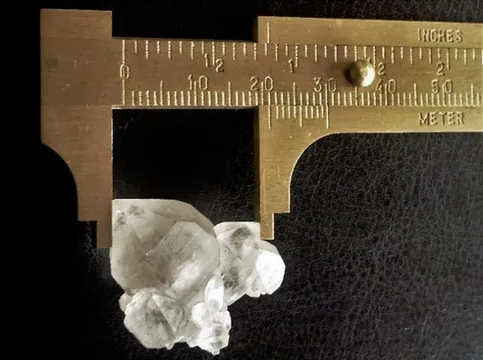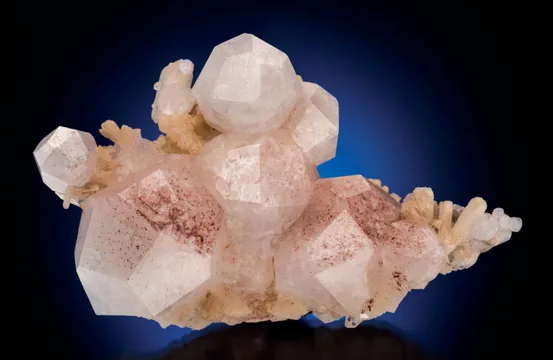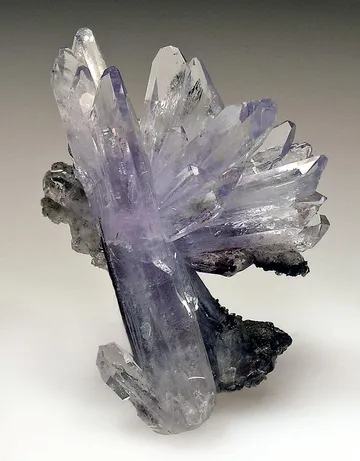
Denny Mountain, Washington — a classic specimen locality noted for quartz-rich skarns, raspberry amethyst scepters, doubles, and strong collector appeal.
Key facts
Denny Mountain, on the west side of Snoqualmie Pass in King County, Washington, is one of the Pacific Northwest’s classic specimen localities: a steep, forested Cascade skarn famous not for tonnage but for personality. The collector’s Denny is the western-slope gulch often called Rockhound Gulch or Denny Gulch, where carbonate-rich beds and associated metasedimentary rocks were altered at the margin of the Snoqualmie Batholith. The result is a quartz- and iron-rich skarn suite in which calcite-filled openings protected sharp quartz, epidote, grossular, hematite, adularia, scheelite, pyrite, and related contact-metamorphic minerals.
The locality’s reputation rests above all on quartz. Denny Mountain has produced glassy Japan-law twins, tapering “dagger” crystals, double-terminated crystals, and the celebrated raspberry or strawberry amethyst scepters: white to colorless quartz stems capped by reddish-violet, hematite-spangled scepter heads. In the best examples the color is not a flat purple wash but a warm raspberry glow created by dense red to silvery iron-oxide inclusions, often concentrated in the scepter head or in later overgrowths. The finest pieces combine strong architecture, sharp termination, sparkle, and contrast: pale quartz stems rising from skarn or vein matrix, capped by compact mauve to rose-purple heads that look almost dusted with metallic red sugar.
Denny’s historical significance is twofold. It was an old iron and limestone prospect long before it became a famous specimen locality, with patented nineteenth-century iron claims, later limestone evaluation, and magnetite-garnet-calcite-quartz bodies described in early government reports. For mineral collectors, however, its modern importance began with amethystine scepter discoveries in the early 1960s and grew into a short, hazardous, intensely productive specimen-mining episode in the 1980s. Those pocket finds placed Denny Mountain among the notable American quartz localities cited in collector literature, and old Denny labels still carry real weight when the specimen is sharp, intact, and unmistakably raspberry.
Regional View
Country View
The setting matters. Denny Mountain is not a gentle dig pit beside a road; the specimen zones lie in a steep canyon system above Denny Creek, with loose blocks, waterfalls, brush, and exposure. Much of the ordinary skarn suite is encountered lower in the drainage, while quartz becomes more prominent with elevation, and the most coveted scepter and Japan-law material came from the upper reaches and named working zones described by collectors. This vertical zoning is one reason Denny specimens can vary so much: a lower-gulch piece may be epidote, grossular, hematite, or calcite-rich skarn, while a classic upper-zone piece is a sculptural quartz specimen with raspberry amethyst overgrowths.
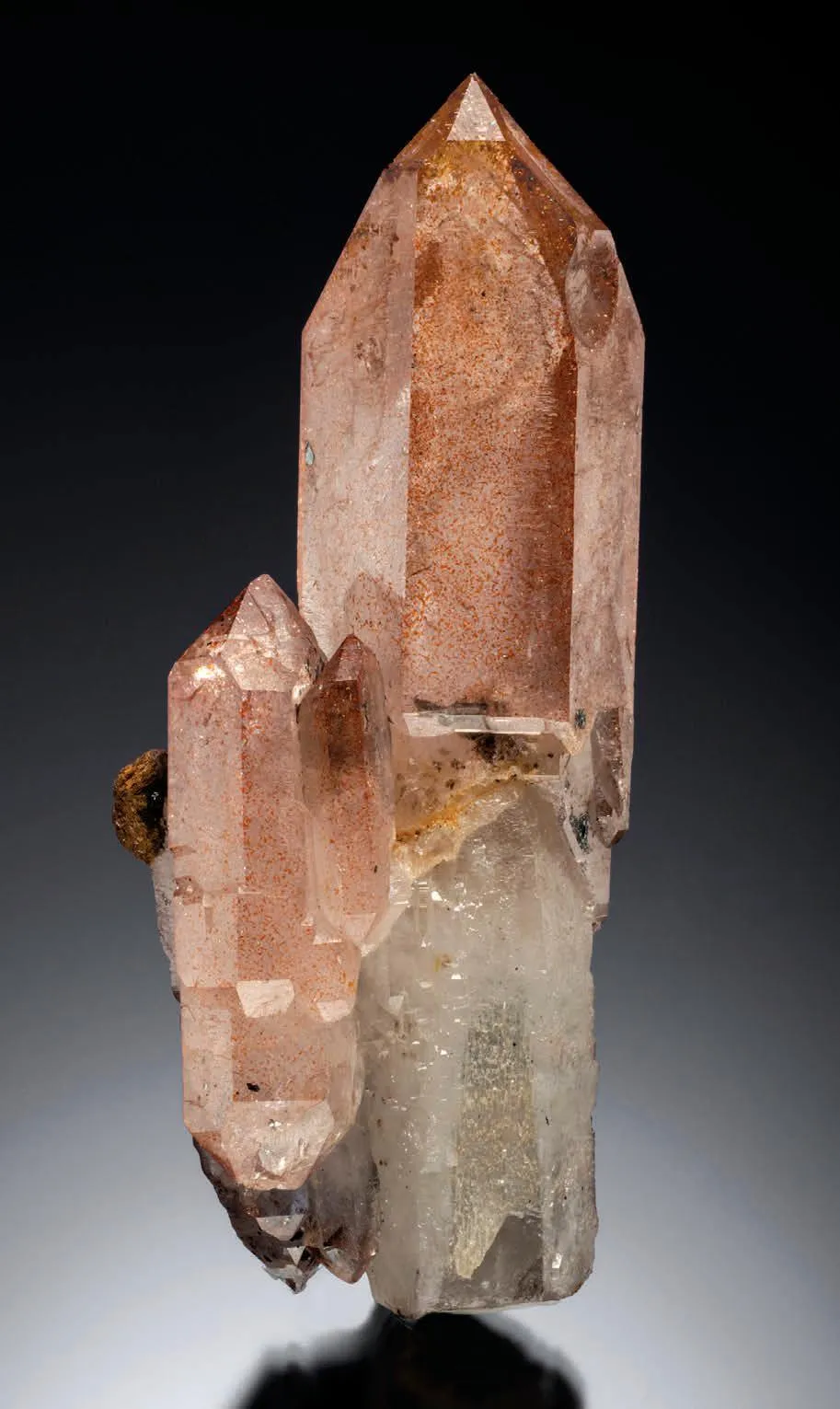
Photo: EarthWonders
Search for specimens: View all specimens from Denny Mountain, USA
The collector locality is the Denny Mountain skarn, near North Bend and Snoqualmie Pass, within the Snoqualmie Mining District of King County, Washington. Geologically it sits at the periphery of the Snoqualmie Batholith, where intrusive rocks altered older carbonate-bearing and metasedimentary units. Government work on the area has long recognized limestone on Denny Mountain, Guye Peak, and Chair Peak, and the Denny Mountain limestone body was described as a large lenticular mass on the west side of the mountain, roughly 2,500 feet long, as much as 500 feet wide, and exposed between about 2,800 and 4,000 feet elevation. Later collector descriptions focus on the skarn exposed in a deep drainage flowing toward Denny Creek: a steep natural cross-section through garnet-, pyroxene-, calcite-, quartz-, and iron-oxide-bearing rock.
The mineralization is best understood as contact metasomatism rather than a simple open fissure vein. Early descriptions of the Denny iron prospect note a mineralized band near the contact of granodiorite and the intruded country rock, with garnet, quartz, green hornblende or amphibole, calcite, magnetite, and pyrite. Magnetite occurred as nodules and local vein-like masses, while massive garnet and calcite formed parallel zones. For specimen collectors, this history explains the mixture seen in hand specimens: grossular-rich skarn, calcite-enclosed hematite rosettes, epidote sprays, adularia with garnet, scheelite on skarn matrix, and later quartz that grew freely in cavities and fractures.
Denny Mountain was examined early as an iron and limestone property. The Denny Mine or Denny prospect appears in nineteenth- and early twentieth-century accounts as a magnetite occurrence reached by a steep ascent on the mountain’s western side. Claims associated with the Denny Mountain limestone and iron bodies were surveyed in 1883 and 1884, and nine claims were patented principally for magnetite. In 1927 the Pacific Coast Company investigated the limestone potential, drilling at least twelve holes and driving a few adits, but the deposit did not develop into a major limestone producer. Government summaries later noted considerable exploration but no reported production from the Snoqualmie Pass limestone deposits.
The specimen era is far better known to collectors. Amethystine scepters in a narrow west-side gulch were first discovered by Bill “Willie” Hawes in the early 1960s, reportedly in clay pockets high in the gulch where weathering had freed many crystals into the pocket clay. During the 1980s Bob Jackson claimed and worked the deposit commercially, using power tools and explosives in a difficult cliff-and-canyon environment. That work produced the locality’s iconic material: hundreds of pounds of quartz crystals from productive pockets, including large raspberry scepter clusters and Japan-law twins of exceptional span. Commercial operations ceased around 1990 when the claim lapsed, and later collecting has been mostly amateur and intermittent, with occasional attractive pieces but no widely publicized modern pocket on the scale of the 1980s finds.
Access today should be treated as backcountry access, not casual quarry collecting. The Denny Creek area is in Mount Baker-Snoqualmie National Forest country, with the Denny Creek Trailhead providing access to the popular Denny Creek Trail and Alpine Lakes Wilderness approaches; the mineral gulch itself is an off-trail, steep, unstable drainage. Casual personal collecting rules, land status, road status, seasonal closures, wilderness boundaries, and any active claims or special closures must be checked before a trip. The canyon has a real accident history, and collector accounts repeatedly emphasize exposure, loose rock, waterfalls, brush, snowmelt, and difficult extraction. Denny rewards careful observation and restraint: a few sharp, intact crystals preserved without over-digging are far better than a pack full of bruised, acid-burned fragments.
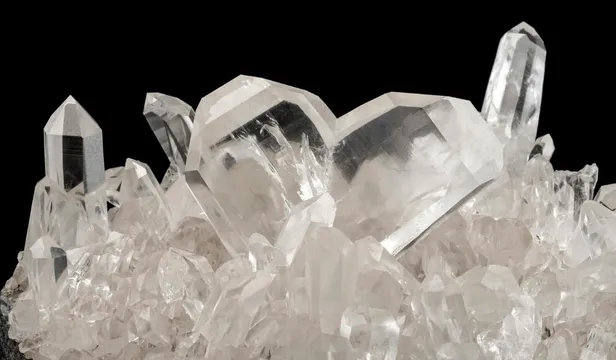
Quartz is the signature species at Denny Mountain, occurring as ordinary prisms, double-terminated crystals, tapering “dagger” crystals, scepters, skeletal and hoppered growths, and Japan-law twins; the best pieces are sharp, lustrous, damage-free crystals to a few centimeters, with exceptional Japan-law twins reported to far larger spans, including famous specimens reaching roughly 30 cm ear to ear. The locality’s quartz is closely tied to the skarn setting: lower-gulch material may be associated with calcite, epidote, grossular, pyrite, hematite, and adularia, while higher zones produced the sought-after freestanding crystals and twin groups. Good Denny quartz is separated from ordinary material by clarity, crisp geometry, intact terminations, visible twin form or scepter architecture, and the presence of sparkling red to silvery iron-oxide inclusions that give some crystals their unmistakable raspberry cast.
Denny Mountain amethyst is most prized as raspberry or strawberry scepter quartz: pale to colorless quartz stems capped by compact reddish-violet to mauve amethystine heads, commonly with dense hematite inclusions that add both color and metallic sparkle. Many classic crystals are modest in size, often only a few centimeters tall, but the finest clusters from the 1980s combine multiple sceptered crystals on matrix, strong separation of individual crystals, lustrous faces, clean terminations, and vivid raspberry color concentrated in the overgrowth. The best examples avoid the two common weaknesses of the locality—rubbed scepter heads and broken side crystals—and show obvious contrast between the white or clear primary quartz and the later purple-red cap.
Hematite at Denny Mountain is important both as a specimen mineral and as the visual engine behind the locality’s raspberry quartz. It occurs as massive platy aggregates of lustrous silver crystals, terminated rosettes commonly enclosed in calcite, and millimeter-scale red to silvery inclusions inside quartz and amethyst scepters. Stand-alone hematite roses and plates are less famous than the scepters, but good examples have bright metallic luster, distinct rosette or platy form, and minimal bruising after removal from calcite. In quartz specimens, the most desirable hematite is evenly distributed enough to create saturated rose-purple color and sparkle without muddying the transparency or obscuring the crystal form.
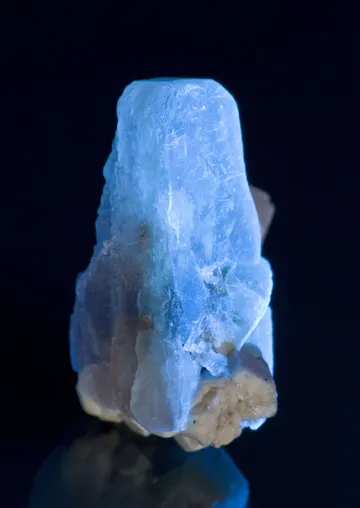
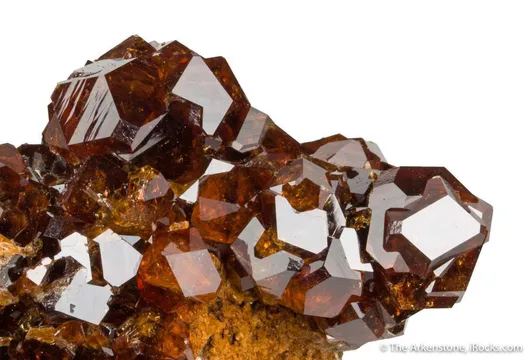
Other documented Denny Mountain minerals give the locality its skarn identity. Calcite commonly filled voids and can enclose earlier-formed crystals; careful etching of massive calcite has revealed preserved hematite, epidote, and other cavity minerals. Epidote occurs as attractive fan-like acicular sprays, grossular as translucent to opaque brownish-red dodecahedra, and adularia as sharp white orthoclase crystals to about 2 cm with grossular. Scheelite is a notable rarity as millimeter-scale golden-yellow pseudo-octahedral crystals on skarn matrix, fluorescing blue under short-wave ultraviolet light. Additional reported species include actinolite or byssolite, diopside, goethite, malachite, pyrite, sericite rosettes or possible pseudomorphs after epidote, chlorite-included quartz, siderite-associated material, chrysocolla coatings, and botryoidal blue opal. Denny Mountain is also significant in regional stratigraphy: Denny Mountain was designated the type locality for the Denny Formation, although no valid mineral species is known from the locality as a mineral type locality.
Denny Mountain specimens are locality-sensitive: the best examples have a look that is hard to fake but easy to mislabel. The classic label language includes “Denny Mountain,” “Denny Gulch,” “Rockhound Gulch,” “Denny Creek,” and sometimes “Denny Mine,” and old specimens may be attributed broadly to King County or the Snoqualmie Mining District. Confusion with Hansen Creek, Spruce Ridge, Green Ridge, and other King County quartz localities is common in casual trade because those areas can also produce scepters, Japan-law twins, or amethystine quartz. A true classic Denny raspberry scepter should show the characteristic iron-oxide sparkle and reddish-purple cap on a pale quartz stem, often with skarn associations or old collection provenance.
The inclusion mineral is another label issue. Most modern collector descriptions call the red and silver inclusions hematite, while some older or locality pages have used lepidocrocite-like terminology for wormy red inclusions. Unless a specimen has been analyzed, it is safest to describe the visible feature as hematite-bearing or iron-oxide-included quartz only when the attribution is consistent with the label and appearance. The trade nicknames “raspberry quartz” and “strawberry quartz” are locality nicknames here, not a separate mineral species.
No well-documented modern fake industry is associated specifically with Denny Mountain, but ordinary quartz scepters from other localities can be upgraded on weak labels, and repaired scepters deserve close inspection. Check the junction between stem and head under magnification, especially on isolated single crystals, and look for glue, mismatched luster, discontinuous growth zoning, or unnatural alignment. Detached scepter heads, broken stems, bruised tips, and polished or acid-rounded contacts can all diminish value sharply.
Condition is central. Denny material formed in cavities and calcite-rich skarn, then endured natural weathering, pocket collapse, and difficult extraction from a steep canyon. Chipped terminations, contacted side faces, bruised twin “ears,” etched calcite residue, and broken accessory crystals are common. Acid preparation to remove calcite is normal for the locality when done skillfully, but over-etching can dull quartz, loosen iron-oxide inclusions, undercut matrix, or remove contextual associations that help authenticate the piece. Fine old matrix clusters with multiple intact scepters or well-balanced Japan-law twins are much rarer than single loose crystals.
For fluorescence, scheelite-bearing Denny specimens are the main candidates: documented scheelite from the skarn fluoresces blue under short-wave ultraviolet light. Quartz and the raspberry amethyst scepters should not be bought for fluorescence. Handle scepters and Japan-law twins by the matrix or by a stable acrylic base whenever possible; the wide twin ears and scepter caps are the first points to break. In the market, Denny Mountain is available but not abundant. Small singles appear periodically, good thumbnails and miniatures are sought after, and cabinet-quality raspberry clusters or large Japan-law twins with old provenance are increasingly difficult to replace.
The Denny story begins, as many classic American quartz stories do, with a collector in a gulch rather than a mine superintendent in an office. Bill “Willie” Hawes found the amethystine scepters in the early 1960s high on the western side of Denny Mountain. The first pockets were clay pockets, already softened by weathering, and many crystals were loose in the clay rather than locked in unyielding rock. That detail explains why some early Denny specimens have a clean, naturally freed look: the mountain had done part of the extraction before collectors arrived.
By the 1980s the locality had become a serious undertaking. Bob Jackson claimed the deposit and worked it with power tools and explosives, a far cry from pocket clay and hand tools. A small cabin was reportedly helicoptered to the top of the mountain, a practical response to the steep approach and the remoteness of the working zone. Productive pockets yielded hundreds of pounds of crystals. The prize pieces were not merely “nice scepters” but giant raspberry scepter clusters said to reach about two feet by two feet, along with Japan-law twins reaching roughly a foot across. For a locality many collectors still reach by scrambling up a narrow drainage, that scale is startling.
A contemporary gemological abstract of Jackson’s 1986 account gives the episode an even sharper edge. It described the quartz vein as being on a cliff in Red Wall Canyon, a place called dangerous enough that nine mountain climbers had died there within the preceding years. The men and equipment had to be brought in by helicopter. After ten weeks of unrewarding digging, the effort produced forty specimens of amethyst double scepters, some up to 10 cm long. That is the Denny paradox in miniature: immense effort, real danger, long stretches of nothing, and then a small number of crystals that became American classics.
The later history is quieter but no less telling. After the claim lapsed around 1990, large-scale commercial work stopped, and the mountain returned to the rhythm of individual collectors—dozens in some years—looking for traces of the old pockets and for skarn minerals lower in the canyon. The legendary zones still shape how collectors talk about the place: lower skarn for garnet, epidote, hematite, calcite, and scheelite; higher quartz zones for tiny Japan-law twins, scepters, and the dream of a raspberry crystal missed by earlier hands. Denny Mountain keeps its best material grudgingly.