King County, USA, renowned quartz localities around Snoqualmie Pass, featuring sceptered quartz, amethyst, hematite-included raspberries, and rare skarn pocket…
Key facts
For mineral collectors, King County means the steep, wet western flank of Washington’s central Cascades: a county better known to the wider public for Seattle and Puget Sound, but to quartz specialists for a tight constellation of alpine and forested localities around Snoqualmie Pass, North Bend, the Middle Fork of the Snoqualmie River, Denny Mountain, Hansen Creek, Spruce Ridge, and Green Ridge. The best specimens are products of two related but visually distinct environments. At Denny Mountain, limestone and other older sedimentary rocks were altered to skarn where they were intruded by the Snoqualmie Batholith; at Spruce Ridge, Green Ridge, Hansen Creek, and related Middle Fork occurrences, fractured granodiorite, tonalite, intrusive breccia, and hydrothermal cavities furnished open space for quartz, pyrite, carbonate, barite, and late amethyst growth.
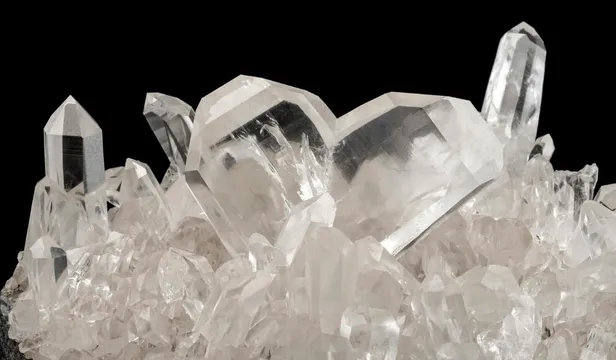
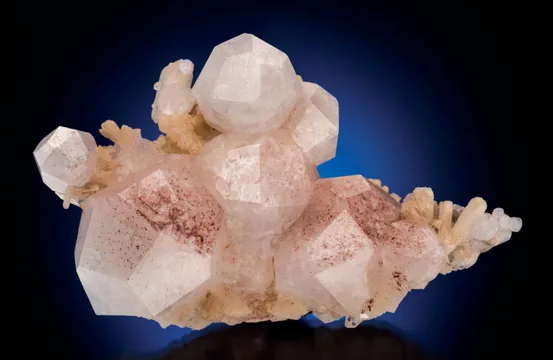
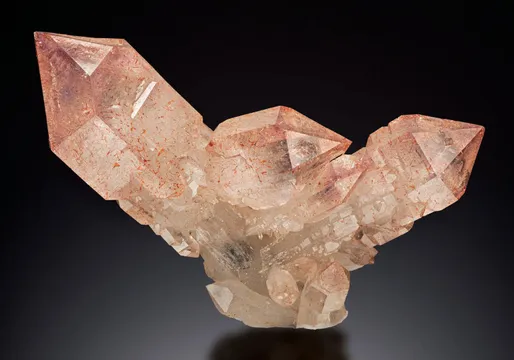
King County’s reputation rests above all on quartz: glassy rock-crystal groups, sceptered quartz, Japan-law twins, Reichenstein-Grieserntal-law twins, amethyst scepters, pyrite-on-quartz combinations, and the famous hematite-included “raspberry” scepters from the Denny Mountain skarn. These are not anonymous Western quartz points. Fine King County pieces tend to have strong habits and locality fingerprints: slender Hansen Creek scepters with pale purple caps and green chlorite-family inclusions; Denny Mountain scepters glowing red-purple from hematite or lepidocrocite-like inclusions; Spruce Claim pyrites with sharp modified cubes and pyritohedra rising from clear quartz; and Green Ridge amethyst with sharp zoning, oil-bearing or aqueous inclusions, rare enhydros, and high-grade twinning from named pockets on the Purple Hope claims.
Historically, the county is significant because specimen mineralogy here grew out of hard-rock prospecting rather than from a purpose-built gem field. Arthur A. Denny’s 1869 discovery of mineralization in the Snoqualmie Pass area, the later patented iron claims on Denny Mountain, the quartz-crystal investigations of the 1940s, and the specimen-mining era at Spruce and Green Ridge all form part of the same story: uneconomic metallic deposits that became first-rate mineral-specimen localities. King County has also entered technical mineralogy through the type locality of lasmanisite at the Bear Basin Mines and through the re-examination of the Bald Hornet Claim tourmaline once marketed and published as luinaite-(OH), now treated as oxy-dravite-1A or related triclinic tourmaline material rather than a valid standalone species.
Regional View
Country View
The county’s best specimens often look alpine in miniature but carry a Cascade signature. Many were freed from calcite, clay, altered breccia, or collapsed pocket rubble rather than split cleanly from open pegmatitic cavities. The finest pieces are therefore judged not only by luster and transparency, but by survival: intact scepter caps, undamaged twin ears, natural contacts rather than fresh breaks, preserved phantoms, unbleached amethyst color, and clean associations with pyrite, barite, ankerite, epidote, hematite, grossular, or chlorite-group inclusions.
Search for specimens: View all specimens from King County, USA
The specimen-producing King County localities belong chiefly to the Snoqualmie Pass and Middle Fork Snoqualmie mineral belt. The Snoqualmie Batholith is a composite Miocene intrusive complex dominated by granodiorite, with associated quartz monzonite, tonalite, diorite, gabbroic phases, aplite, porphyritic dacite, and intrusive breccia. Where the intrusive rocks cut older carbonate-bearing units of the Denny Formation, skarn developed; where volatile-rich intrusive and hydrothermal activity fractured the plutonic rocks, breccia bodies and fault zones supplied open cavities for quartz, sulfides, and carbonates.
Denny Mountain, including Denny Gulch or “Rockhound Gulch,” is the classic skarn locality. It lies on the west side of Denny Mountain above Denny Creek, west of Snoqualmie Pass, where limestone was intruded and recrystallized by granodiorite and converted locally to garnet-magnetite-calcite skarn. The mineral assemblage is broad for a small collecting area: calcite, diopside, epidote, grossular, hedenbergite, hematite, malachite, adularia, pyrite, quartz, scheelite, sericite, and related alteration minerals have all been documented. The practical specimen story is tied to calcite-filled openings and skarn cavities. Massive calcite commonly encased earlier-formed crystals, and careful removal of calcite has revealed quartz, epidote sprays, garnets, scheelite, hematite rosettes, and other minerals. The locality is especially treasured for quartz habits: Japan-law twins, skeletal and sceptered quartz, and hematite-included “raspberry” scepters, including amethystine examples.
The Denny Mountain deposit was not originally a mineral-collector’s playground. Arthur A. Denny is credited with the first discovery of mineralization in the Snoqualmie Pass area in 1869, after information obtained from Indigenous people led him to the skarn area on the mountain that now bears his name. The Denny Mountain limestone and iron claims were surveyed in 1883 and 1884, and a suite of patented claims, including Denny Lode Iron Mine, Chief Lode, Climax Lode, and Cliff Lode claims, was established primarily for magnetite associated with the limestone. In 1927 Pacific Coast Company investigated the deposit for limestone, drilling at least a dozen holes and sinking small adits, but the composition and location made the deposit unattractive for ordinary industrial limestone use. By the mid-twentieth century, Denny Mountain had become important for quartz crystal rather than ore; in 1944 a quartz-crystal deposit near the upper north end of the limestone body was investigated by the U.S. Geological Survey.
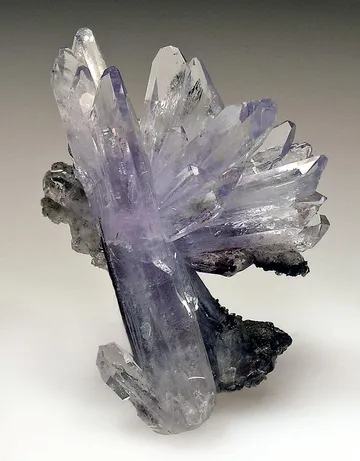
Hansen Creek, on the northern and western slopes of Humpback Mountain, is the county’s most familiar public-facing quartz area, although it includes private claims and claim-bound ground. It consists of a popular crystal area with slump material and bedrock exposures, while the most significant amethyst comes from breccia zones on Humpback Mountain. The main northern zone was exposed by logging roadcuts in the 1950s and 1960s between roughly 2,750 and 3,500 feet elevation, with peripheral zones extending beyond that belt. The better cavities yield clear quartz crystals, scepters, amethyst caps, rare Japan-law twins, and inclusions of clinochlore, actinolite, epidote, pyrite, siderite, ankerite, iron oxides, and related alteration minerals. Most ordinary Hansen Creek quartz is small to miniature, but anomalous pockets have produced much larger crystals, and the best scepters are clean, sharp, and unusually elegant for a Cascades locality.
Spruce Ridge and the Spruce #16 Claim represent a different kind of King County classic. Here quartz and pyrite occupy breccia pipes and open spaces along faulted megabreccia in granodiorite and tonalite of the Snoqualmie Batholith. The specimen-mining history is modern and deliberate: the Spruce Claim became commercially important for collector specimens in the 1970s, and later work, particularly associated with Robert Jackson and Spruce Collectors, LLC, made the locality famous well beyond the Pacific Northwest. Spruce specimens are sought for combinations of water-clear quartz with lustrous, modified pyrite crystals, together with ankerite, calcite, barite, chalcopyrite, sphalerite, and occasional amethystine sceptered quartz. The finest pieces have a visual identity that is difficult to confuse with other North American pyrites: brassy to soft golden pyrite forms perched among slender quartz crystals, often with ankerite or barite adding a secondary architecture.
Green Ridge, including the Purple Hope claims, is the great modern King County amethyst-scepter and quartz-twin locality. The Green Ridge Breccia cuts the Snoqualmie Batholith near the Middle Fork of the Snoqualmie River and contains large angular blocks of host granite cemented and lined by quartz-amethyst crystals. Supergene oxidation is strong; much of the original sulfide has altered to goethite, and pockets may preserve pyrite as corroded remnants, inclusions, or phantoms. Green Ridge pockets are large for quartz cavities in the Cascades, and some were spacious enough to crawl into. The most important specimens came from named pockets on Purple Hope No. 4 and related claims: Rolling Thunder, Purple Reign, Purple Mountain Majesty, Lollipocket, Moby Dick, Mother Earth, Twin Fantasy, Yoga, Captain Nemo, Blowhole, and Never Surrender. Green Ridge has yielded amethyst scepters, doubly terminated amethystine crystals, zoned “half-and-half” amethyst, citrine- and smoky-zoned quartz, pyrite inclusions, barite on quartz, Japan-law twins, and unusually rare Reichenstein-Grieserntal-law twins.
Access must be approached conservatively. Some lower Hansen Creek material has been collected by generations of rockhounds, but significant upper Humpback Mountain breccia zones and named claim areas are privately claimed. Spruce is private claim ground associated with a membership organization. Green Ridge is covered by private mining claims, and collecting there is prohibited; the claims also lie within or adjacent to protected Alpine Lakes Wilderness context where collecting outside claim boundaries is prohibited by federal regulation. Denny Mountain has long been visited by collectors, but old mine workings, steep terrain, talus, cliffs, snow, changing Forest Service management, and claim boundaries make current permission and land status essential. Collectors should never rely on an old field-guide entry or a specimen label as proof that a site is open.
King County quartz ranges from colorless rock crystal to smoky, citrine-zoned, amethystine, phantomed, included, sceptered, doubly terminated, and twinned forms, with each sublocality having a distinct personality: Denny Mountain is prized for Japan-law twins, skeletal groups, and hematite-included “raspberry” scepters from skarn cavities; Hansen Creek produces abundant small clear crystals plus slender scepters, pale amethyst caps, clinochlore and actinolite inclusions, rare Japan-law twins, and occasional larger crystals from anomalous pockets; Spruce Ridge is famous for slender quartz crystals and scepters in association with highly lustrous pyrite, ankerite, calcite, and barite; and Green Ridge produced some of the county’s most sophisticated quartz, including sharply zoned crystals, phantoms, enhydros, pyrite inclusions, doubly terminated plates, Japan-law twins to notable size, and scarce Reichenstein-Grieserntal-law twins. Good King County quartz is separated from common material by undamaged terminations, sharp twin geometry, strong glassy luster, pleasing matrix, visible internal features, and a locality-specific association rather than by size alone.
King County amethyst is typically a late quartz generation rather than massive geode-style amethyst: it appears as pale to deep purple scepter caps, zoned terminations, amethystine doubly terminated crystals, and rare matrix plates. Hansen Creek amethyst from Humpback Mountain is commonly light, gemmy purple and often forms secondary growth on quartz stems, with the best examples showing slender balanced scepter form, high transparency, and green clinochlore or actinolite inclusions; Denny Mountain amethystine scepters may be warmed by red hematite or lepidocrocite-like inclusions, creating the celebrated raspberry appearance; Spruce amethyst scepters are much scarcer than the pyrite-quartz combinations and seldom reach the market in significant plates; and Green Ridge, especially Purple Hope No. 4, has produced the county’s most dramatic modern amethyst, including sharply zoned “half-and-half” crystals, royal-purple scepter plates, hydrocarbon-bearing inclusions, enhydros with movable bubbles, and named pocket specimens such as the Queen of Desire, the Thunderbolt, the Crown, Big Brother, and Captain Nemo material. The finest King County amethyst combines saturated natural color, scepter definition, bright luster, intact matrix or floater surfaces, and documented pocket or claim provenance.
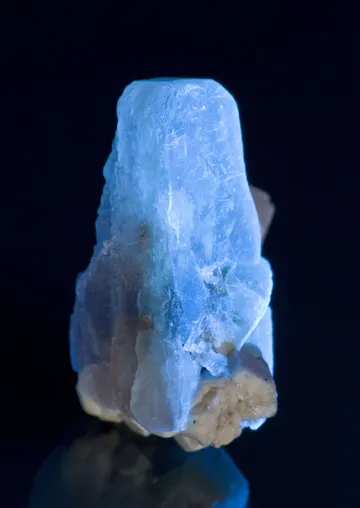
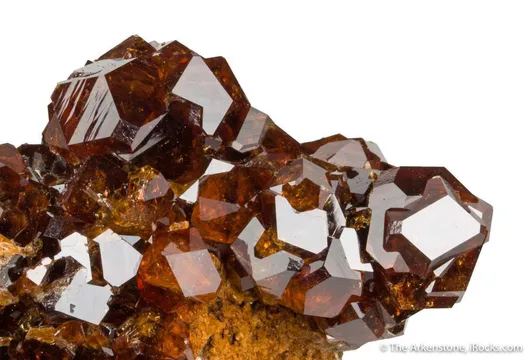
Beyond quartz and amethyst, King County has a remarkable supporting cast. Denny Mountain adds skarn minerals such as grossular, epidote, diopside, hematite, scheelite, adularia, calcite, malachite, and pyrite, with scheelite notable for blue short-wave ultraviolet fluorescence. Spruce Ridge contributes pyrite, ankerite, barite, calcite, chalcopyrite, and rare sphalerite. Green Ridge is more restricted as a display locality—chiefly quartz, barite, and pyrite/goethite—but scientifically important for petroleum-bearing inclusions in quartz-amethyst. The county’s ore districts also record arsenic, antimony, lead, silver, copper, molybdenum, zinc, and related sulfosalt mineralization, including realgar, stibnite, senarmontite, valentinite, schulténite, beudantite, galena, sphalerite, chalcopyrite, and complex sulfosalts. Lasmanisite is recorded as a type-locality mineral from the Bear Basin Mines, while the Bald Hornet Claim at Blue Mountain Saddle is important for rare tourmaline material once known as luinaite-(OH), subsequently discredited and reinterpreted in the oxy-dravite/schorl structural discussion.
King County specimens are locality-sensitive, and mislabelling is the most common authenticity problem. “King County quartz” is too broad for a serious label; Denny Mountain, Hansen Creek, Spruce Ridge, Green Ridge, Purple Hope No. 4, Pedro, Katie Belle, Bald Hornet, or Bear Basin should be preserved whenever known. The distinction matters: a hematite-included raspberry scepter is not simply “Hansen Creek amethyst,” and a pyrite-quartz combination from Spruce should not be lumped with Denny Mountain skarn quartz. Older labels may use “Denny Creek,” “Rockhound Gulch,” “Denny Mine,” “Goldmyer Hot Springs,” “Middle Fork Snoqualmie,” “Hanson Creek,” or simply “North Bend,” so collector provenance often requires interpretation.
Hansen Creek amethyst is notably prone to bleaching in sunlight and should be stored away from direct UV exposure. Pale scepters that once had attractive lavender caps can become nearly colorless if displayed in a sunny window. This is not a theoretical concern for this locality; it is a recognized handling issue, and good Hansen material deserves low-light display. Green Ridge and Denny Mountain amethyst should also be treated as light-sensitive by habit, especially when the color is pale or zoned.
Repairs are not automatically disqualifying for King County quartz, but they must be disclosed. Scepters and twins grow in open pockets, collapse zones, and talus-derived material, and many matrix plates detached naturally during pocket evolution. Hansen Creek and Green Ridge twins may show edge nicks from pocket collapse or alluvial movement. Green Ridge produced many spectacular plates that had fallen from ceilings or pocket walls before collection, so excellent specimens may still show natural back-side contacts, repaired twin ears, or reconstructed plates. A repaired scepter on matrix can still be desirable if the repair is clean, the locality and pocket provenance are strong, and the main display crystals are undamaged.
Pyrite requires special scrutiny. Spruce Claim pyrite can be highly lustrous and sharp, but damaged edges, contacts, fractures, and incomplete cubes are common. Green Ridge pyrite is often deeply oxidized, altered, or “worm-eaten,” and goethite shells after large pyrite crystals may crumble when wetted or cleaned. Aggressive acid treatment can brighten quartz but may destabilize sulfides, carbonates, goethite crusts, and delicate included specimens. Denny Mountain material etched from calcite should be checked for overcleaning: unnaturally stripped surfaces, weakened contacts, and missing matrix can reduce both scientific and aesthetic value.
The rare tourmaline from Bald Hornet deserves special label care. Specimens sold as luinaite-(OH) should be updated or at least annotated, because luinaite-(OH) has been discredited and the King County material has been reinterpreted in the context of triclinic oxy-dravite-1A. Old labels are part of the history, but a modern collection should not present luinaite-(OH) as a currently valid species without qualification.
Market availability varies sharply by sublocality. Hansen Creek quartz and pale amethyst are the most available, from common self-collected points to better scepters. Denny Mountain raspberry scepters and fine Japan-law twins are much scarcer and command premiums when undamaged and well documented. Spruce Claim pyrite-quartz combinations remain a North American classic and are actively traded, but the best pieces are expensive, recognizable, and often remain in long-held collections. Green Ridge Purple Hope material appears intermittently and is strongly provenance-driven; named-pocket amethyst scepters, Reichenstein-Grieserntal twins, oil-inclusion specimens, and major plates are genuinely scarce.
The old Denny Mountain story begins before “Rockhound Gulch” had that name. In 1869, Arthur A. Denny followed information obtained from Indigenous people into the Snoqualmie Pass country and located the mineralized skarn on the mountain that now bears his name. The magnetite and limestone were enough to pull nineteenth-century claimants into steep Cascade terrain, and by 1883 and 1884 the Denny Mountain deposit had been surveyed and nine claims patented. What miners saw as iron and limestone, later collectors came to see as a calcite-armored cabinet of quartz, epidote, grossular, hematite, scheelite, and amethystine scepters. A small quarry near the south end of the limestone body even carried a bit of mountain folklore: running water could be heard through a crevice in the quarry wall, feeding reports of a lost cave on Denny Mountain.
Green Ridge has the most vivid modern specimen-mining narrative in King County. The locality sits above the Middle Fork of the Snoqualmie River in country that punishes optimism. The trailhead starts around 300 meters, Mount Garfield rises to 1,683 meters nearby, and the collecting faces require roughly 1,000 meters of ascent through wet forest, talus, brush, fog, and short-season alpine weather. Joe George and Rick Dillhoff describe the practical routine with the kind of realism only field collectors write: rain at dawn, devil’s club, vine maple, mud, running water, vertical faces, and dry clothes waiting back at the car because staying dry was fantasy. In winter, camp snowpack can exceed 6 meters. In summer, fog can soak clothing when no rain is falling. The first 200 meters from camp to the face are straight up, with ropes.
Lew Landers learned about Green Ridge crystals in the 1960s from his high school gymnastics coach, who belonged to a group that planted trout fingerlings in alpine lakes. A year or two later, Landers saw Green Ridge quartz at a Seattle rock show in the display of the Faddis brothers and decided he had to find the place immediately. He headed up the same day with a friend. The Faddis brothers apparently sensed his enthusiasm and were waiting when he finally arrived late after an arduous climb by the wrong route. They invited him to dinner. There were, at that time, enough crystals for everyone; Landers later remembered early open pockets with loose plates “stacked like cordwood.”
In late July 1981, Lanny Ream, Randy Becker, and Rick Dillhoff climbed to Green Ridge to stake the Purple Hope claims for Ream. Ream had found a large pocket the previous year containing amethyst scepters and pyrite-phantomed quartz, enough to convince him the deposit had commercial potential. After the northeast corner of Purple Hope No. 2 was staked, Dillhoff broke into a virgin pocket at the base of a sulfide-stained wall and simply refused to continue staking while the others went on. The entrance was blocked by the remnant of a huge former pyrite crystal about 30 cm across, now an intact goethite pseudomorph shell with bright corroded pyrite inside. Once the pyrite was sacrificed, the pocket opened into an arm’s-length tube lined with bright clear quartz and doubly terminated clusters.
One of the most charming Green Ridge pockets was born from an accident. In summer 2008, while excavating the Nacho bench, Joe George dislodged a large boulder that tore a 2-meter-wide clump of blueberry bushes off a vertical face 30 meters below. The scar exposed several small amethyst crystals still caught in the blueberry roots. When George probed a crack at the intersection of the pocket trend and the ravaged bushes, he found a hand-sized hole. Out came a 4-cm glassy amethyst scepter, then another, then two more in the next handful. Jeff Schwartz offered to help, and because they were working on rope, every crystal had to be wrapped and secured immediately. George, intent on wrapping each piece, could barely get a turn at the pocket because Schwartz kept handing him one scepter after another. The pocket earned the name Scooby Snack Pocket because it seemed like “a candy machine dispensing Scooby Snacks.”
In 2009, George worked around a group of small trees near a vertical canyon below the Scooby Snack Pocket, trying not to undermine roots above or lose specimens into the drop below. When the first large plate was flipped, a Japan-law twin with sceptered ears appeared. Sceptered twins are considered a holy grail among King County quartz collectors; two were found near the entrance of the Desperation Pocket, both on matrix. A week later, after two days of work and two meters farther into the face, George reached blindly around a corner into the back chamber and felt a large scepter head. It felt special before he saw it. A light tug released a nearly hand-sized floater matrix plate with an egg-sized scepter, excellent clarity, and wispy purple phantoms stacked through the crystal. It became the Queen of Desire. When the chamber was opened fully, a 9 × 4.5 cm monster amethyst appeared nearby; if there was a queen, there had to be a king.
Green Ridge’s Turning Point Pocket justified its name. In 2012, after a period of discouraging barren rock, Archer McGill had left to continue work at the Spruce Claim. The next day George opened a new chamber in the back of an open pocket on the main face and saw a huge twin hanging from the roof. It appeared to be an exceptional Reichenstein-Grieserntal-law twin. Dillhoff climbed to Spruce to persuade McGill to return; according to the published account, “many beers” were required to convince him to make the long climb back to Green Ridge the next morning. A full day of effort and three small blasts yielded the largest Green Ridge twin found to that date: a 9 cm high by 16 cm wide crystal, with a pale smoky-citrine phantom visible in the largest twin ear.
The 2013 season brought weather, twins, and some of the best amethyst plates yet found at Green Ridge. Rolling Thunder Pocket was named for the day’s storms. George pried a large flake from the face, and McGill, working below, told him there was an open pocket with loose scepters. George told him to collect it, then nearly fell down the cliff when he saw the quality of what McGill was pulling out: brilliant, deep-colored amethyst scepters on fine-grained sericite and tiny quartz matrix. The Purple Reign Pocket followed with a scene that sounds theatrical because the pocket itself staged it: once George could crawl in and look up, a crown of royal-purple amethyst scepters hung from the ceiling behind an isolated large scepter, with a Japan-law twin standing by. Dillhoff had not been present at first, but when word came that wrapping material was running out and a second great amethyst pocket was underway, he arranged to fly in with more packing material so the Crown could be removed carefully.
Captain Nemo was the kind of pocket collectors imagine and almost never experience. In 2015, after work through the String of Pearls zone, George and McGill opened a man-sized cavity between Moby Dick and the Black Pearl. The next morning George enlarged the opening enough to fit his upper body. As he worked up the tube, a ceiling plate blocked him; when he loosened it, the plate fell on his head and the pocket contents poured down. McGill heard the muffled words, “It’s on my head,” and ran over to help extract both George and the plate. The plate carried several amethyst scepters on matrix. When George went back in, he saw 3 meters of open air, widening upward, with collapsed ceiling material and crystals piled in the middle. Captain Nemo ultimately proved to include a 3-meter vertical entrance, an upper chamber, and a horizontal tube open for about 2 meters to the right and 5 meters to the left—roughly 10 meters of pocket. It produced the largest quantity of amethyst the Green Ridge miners had seen from a single pocket, including 20-cm plates, spectacular singles, and doubly terminated crystals amethystine at both ends. A side chamber yielded major barites, including an 8-cm barite flower on a 10-cm quartz plate, while the limonite crust on the floor preserved heavily corroded pyrite octahedra to 18 cm on edge.
The final 2015 session at Captain Nemo turned dangerous. George was drilling the last shot to open the back of the pocket when a substantial rock fell from above and struck his knee. The wound was not large, but bone was visible. Helicopter pilot Tony Reese arrived within an hour, and George was in the emergency room within a couple of hours of the accident. A few days later, George returned, to the alarm of his companions and with Dillhoff under orders from George’s wife to keep him from tearing out his stitches. George promptly harnessed up and scaled loose rock from the wall where the falling rock had originated. Dillhoff and McGill at least kept him from drilling. Later, Dillhoff found a ledge blocking access to a widening chamber. Before hammering it, he felt underneath and discovered a 6-cm Japan-law twin hanging on the edge of the plate. After two hours, he freed a 30-kilogram plate, then had to keep it from sliding down a steep chute and flip it to protect the twin. McGill again heard the call—not “it’s on my head,” this time, but “help me with this twin!”
George still was not finished. After a brief recovery and before snow forced the dismantling of the seasonal structure, he returned to Captain Nemo and found the Blowhole extension rising into the ceiling, with more good amethyst including a 10.5-cm long-stemmed scepter and another crystal with striking color zoning. Then he returned to an unfinished fissure in the Yoga Pocket, broke through with a jackhammer attachment, and squeezed into what became the Never Surrender Pocket. It was 3 meters long and ended in a pool of water, rare at Green Ridge. The best crystals were lightly amethystine, brilliant, and large. One trimmed matrix specimen, Crystal Mountain, measured 31 cm and carried five major crystals to 11 cm long. With that on his back, George had hard choices about what else he could carry down, but he made room for a limonite-coated plate that proved to hold the second-best Reichenstein-Grieserntal-law twin yet found at Green Ridge.