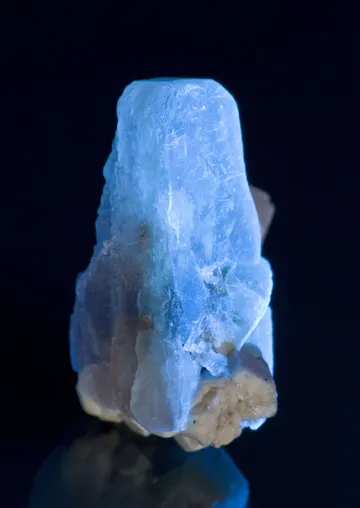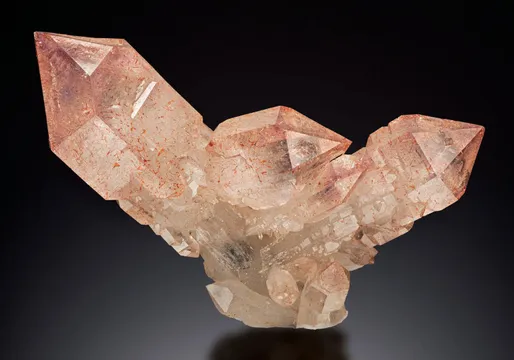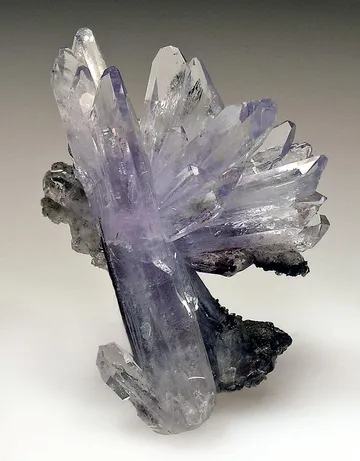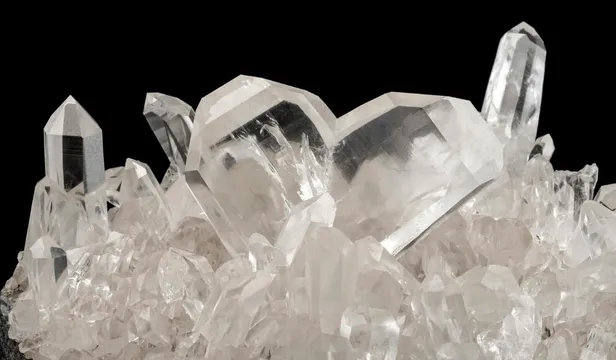
Skookumchuck Dam, USA — a fleeting Pacific Northwest zeolite locality yielding stilbite, mesolite needles, analcime, and thomsonite, prized by collectors.
Key facts
Skookumchuck Dam is one of the great construction-era zeolite localities of the Pacific Northwest: a short-lived, tightly controlled exposure in Eocene basalt that produced specimens far better than the modest name “dam site” might suggest. The locality lies near Bucoda and Tenino in Thurston County, Washington, where the Skookumchuck River cuts through volcanic rocks assigned to the Northcraft Formation. During dam and spillway work from 1969 to 1971, blasting opened amygdaloidal and fracture-controlled cavities in olivine basalt, flow breccia, and associated tuff. Those cavities had already been quietly lined by a late, low-temperature zeolite assemblage: heulandite, mordenite, stilbite, mesolite, analcime, thomsonite-Ca, calcite, quartz, and several lesser species.
Collectors remember Skookumchuck not because it was a mine, but because it was a fleeting window. Access was restricted while the dam was under construction, and the best material was recovered by only a few people connected with the project, notably project geologist Charles I. Trantham and Rudy W. Tschernich, who later made the locality part of the formal zeolite literature. The finest specimens have a classic Northwest look but with unusual refinement: creamy-white bow-tie stilbite on snow-white quartz-mordenite, coarse mesolite needles, sharp glassy analcime trapezohedra, and pastel-orange thomsonite spheroids sitting on mounds of clear analcime. The locality’s best pieces are not large in the cabinet-specimen sense so much as complete, crisp, and unmistakably from a single moment in Washington collecting history.
Regional View
Country View
The geological setting explains both the richness and the selectivity of the specimens. Zeolite mineralization followed permeability: gas cavities, brecciated flow zones, joints, and small fractures in basalt became the plumbing for late fluids. Some cavities were only a few centimeters across and lined with pink to orange heulandite and small stilbite or calcite, while the largest documented openings reached one to more than two meters. The mineral sequence recorded for the locality begins with calcite and heulandite, passes through mordenite-quartz, okenite, apophyllite, stilbite, mesolite, analcime, and thomsonite, and ends with laumontite, chabazite, and later calcite. That sequence is unusually helpful to collectors because it explains why the most desirable pieces are combinations rather than isolated species: stilbite can sit on heulandite or quartz-mordenite, mesolite may overgrow earlier stilbite, and analcime can carry thomsonite rosettes or spheroids.

Search for specimens: View all specimens from Skookumchuck Dam, USA
Skookumchuck Dam is a collector locality created by civil construction rather than by mining. The dam was built on the Skookumchuck River to provide water for the Centralia power facility, with construction beginning in spring 1969 and completion in October 1970; zeolite collecting extended through the construction interval and into the immediate post-construction period as newly exposed rock remained accessible to the small group working at or around the site. The structure itself is an earthfill embankment, roughly 190 feet high and 1,340 feet long, with an ungated side-channel spillway on the south or left abutment. Today the site is operated by TransAlta, and it remains an active dam and water-management facility rather than a collecting area.
The bedrock at the site consists of gently west- to southwest-dipping basalt flows with intercalated flow breccia and tuff assigned to the Eocene Northcraft Formation. Downstream, these volcanic rocks are overlain by coal-bearing sandstones and shales of the Skookumchuck Formation, the broader sedimentary unit tied to the Centralia coal district. Several northwest-trending faults cut the local volcanic and sedimentary rocks, and the Northcraft Formation contains northeast- and northwest-striking joint sets. Many of those joints were healed by secondary zeolites, calcite, and quartz. For collectors, the important point is that the dam excavation intersected both vesicular basalt cavities and mineralized fractures, producing specimens from discrete pockets rather than from continuous beds or veins.
There are no ore bodies in the usual mining sense at Skookumchuck Dam. The “deposit” is best understood as a low-temperature zeolite occurrence in basaltic volcanic rocks, exposed by blasting for abutments, spillway, and associated dam works. The productive zones were not worked commercially for minerals. They were construction cuts, broken faces, and pockets encountered as the dam was being built. The north side of the valley yielded some of the large mesolite pockets early in construction, while the south-side spillway became especially important for stilbite and quartz-mordenite-lined cavities.
The locality’s pocket history is unusually well preserved. Early blasting on the north side of the Skookumchuck River valley opened pockets containing exceptionally large mesolite crystals. Some mesolite occurred as coarse needles 2 to 3 mm across and up to 6 cm long; other later specimens show thinner, more delicate colorless needles radiating from thomsonite with analcime. Later work on the south side, especially in the spillway, exposed excellent stilbite. Small cavities 2 to 6 cm across were commonly lined by pink to orange heulandite, with scattered stilbite or calcite. The orange heulandite was noted for fading toward light pink after removal from the damp basalt, a useful warning for anyone trying to understand color variation in old Skookumchuck labels.
Several of the most memorable finds came from larger, mud-filled spillway pockets. Some were lined only with drusy quartz, mordenite, and a few small stilbite crystals. One small opening in the spillway floor, once fully enlarged, revealed a snow-white cavity over two meters across, lined with quartz-mordenite intergrowth and scattered white stilbite to about 6 cm. Other records describe loose white stilbite from an eight-foot cavity in the floor of the spillway, collected in 1970. A later north-wall pocket, discovered from the reservoir side after completion of the dam, produced exceptional analcime with thomsonite-Ca, apophyllite, and chabazite.
Collecting access today is closed. The dam is an operating infrastructure site with water-control, fish, and safety functions, and the mineral occurrence is not an open public collecting locality. Modern specimens entering the market are therefore old-stock pieces: construction-era material from the Trantham, Tschernich, Rice Northwest Museum, and related Northwest collecting networks, plus pieces dispersed from older private collections. Labels may use Bucoda, Tenino, Skookumchuck Dam, Skookumchuck Reservoir, or Thurston County; those variations are normal for the locality, but the strongest labels will tie the specimen to the dam construction, spillway, north-side valley wall, or one of the known collectors.
Skookumchuck stilbite is the locality’s most elegant zeolite, best known as colorless to creamy-white bow-tie aggregates and pointed blades from the south-side spillway pockets; exceptional examples reach about 10 cm, while many fine pieces show smaller lustrous crystals on quartz-mordenite, pink heulandite, calcite, or earlier pocket linings. Flat-topped stilbite crystals to only a few millimeters occur on red to pink heulandite in smaller spillway cavities, but the showier cabinet pieces are the snow-white stilbite groups from larger quartz-mordenite pockets, especially those with complete crystallization and minimal bruising to the blade edges. Good Skookumchuck stilbite is not just “white stilbite from basalt”; it has a clean, architectural look, often perched on a contrasting granular or fibrous white substrate, and specimens with clear construction-era provenance to the spillway or left abutment are particularly desirable.
Analcime from Skookumchuck occurs as sharp trapezohedra, colorless to white, transparent to translucent, and locally with a glassy luster that gives the best specimens a bright, icy appearance against white zeolite matrix. Documented crystals range from small associated individuals only a few millimeters across to much larger examples reported up to about 7 cm, and the most collectible analcime pieces are the combinations: analcime mounds carrying pastel-orange thomsonite spheroids, analcime with thomsonite-Ca, apophyllite, and drusy chabazite from the north-wall pocket, and specimens where the analcime remains undulled and undamaged. Ordinary pieces can look granular or crowded; the superior ones show crisp isolated faces, strong luster, and an unmistakable association with thomsonite or mesolite.
Mesolite was one of the first Skookumchuck minerals to make collectors pay attention: large pockets on the north side of the valley produced coarse needles reported at 2 to 3 mm across and up to 6 cm long, a robust habit for a species more often seen as fragile hairlike sprays. The locality also produced thinner colorless needles radiating from white thomsonite and associated with small analcime crystals, as well as mesolite with calcite and drusy chabazite. Top pieces balance size and delicacy: long, undamaged needles with open spacing, good radial form, and readable associations. Because mesolite needles are easily broken or flattened, specimens with intact terminations and little abrasion from the original basalt cavity are far scarcer than simple presence of the species might suggest.
Skookumchuck thomsonite-Ca is most admired as rounded, bladed spheroids and wheat-sheaf aggregates, commonly white, tan, or pastel orange, growing with analcime and mesolite. The best-known display pieces show well-developed orange thomsonite balls to roughly 1.6 cm scattered over a mound of sharp, glassy, colorless analcime; other examples show smaller tan to white thomsonite aggregates with analcime to a few centimeters and fine mesolite needles. Crystallized thomsonite is much less common on the market than the locality’s stilbite or analcime, and quality depends on strong color, discrete rounded forms, and the absence of rubbing to the fine bladed surfaces. A Skookumchuck thomsonite that still has three-dimensional spheroids standing proud of the analcime is a serious Northwest zeolite specimen.
Other documented minerals from Skookumchuck Dam include calcite, mordenite, heulandite-subgroup minerals, quartz, apophyllite-group minerals, chabazite, laumontite, okenite, and clinochlore. Mordenite is especially important as a snow-white to colorless fibrous or needly substrate with quartz, forming the stage on which some of the best stilbite developed. Heulandite is visually important as pink to orange cavity linings, though color stability after removal from damp rock is a known issue. Okenite and apophyllite are rarer parts of the paragenesis, while chabazite and late calcite represent the closing stages of pocket mineralization. The locality is not chiefly a species-count locality; its strength is the preservation of a complete zeolite sequence in a small number of highly recognizable pockets.
Skookumchuck Dam specimens should be judged first by provenance. The locality has been closed to collecting for decades, and legitimate material should trace back to construction-era collecting, old Northwest collections, or later dispersals of material from Charles I. Trantham, Rudy W. Tschernich, the Rice Northwest Museum circle, or collectors who acquired specimens from those sources. Labels reading “near Bucoda,” “near Tenino,” “Skookumchuck Dam,” or “Skookumchuck Reservoir” can all be consistent with the locality, but vague labels such as simply “Washington zeolite” deserve caution, especially for white stilbite and mordenite pieces that resemble other Coast Range and Cascade foothill zeolite localities.
The most common authenticity problem is mislocality, not treatment. Skookumchuck pieces have a distinctive association suite, but individual species can be deceptively generic: white stilbite on mordenite, analcime in basalt, and mesolite needles all occur elsewhere in the Pacific Northwest. The strongest specimens carry old labels, construction-era notes, or species combinations matching the known pockets. A label specifying the spillway, left abutment, north side of the valley, north wall of the reservoir, or a Trantham/Tschernich connection adds real confidence and value.
Condition is critical. Mesolite needles are fragile and easily shortened. Stilbite blades and bow-ties commonly suffer bruised terminations or rubbed ridges. Thomsonite spheroids are composed of fine bladed crystals and can lose their velvety surface if handled roughly. Analcime is tougher than the fibrous zeolites, but glassy faces show contacts and scuffs clearly. Older pieces may also retain clay or pocket mud in protected areas; careful dry cleaning is preferable to aggressive washing when fibrous mordenite, mesolite, or thomsonite is present.
Color should be assessed with locality history in mind. Pink and orange heulandite from Skookumchuck was recorded as fading from deeper orange toward light pink after removal from damp basalt, so differences between old descriptions and present color are not necessarily suspicious. Conversely, unusually saturated colors on loose or poorly documented material should be considered in the broader context of matrix, associated minerals, and provenance.
Market availability is limited but not impossibly rare. Small stilbite-mordenite specimens and analcime combinations appear periodically as old collections are dispersed, while top thomsonite-on-analcime and robust mesolite pieces are much less common. The collector premium is strongest for specimens with named provenance, intact delicate crystals, and associations that tell the pocket story rather than presenting a single isolated mineral.
The Skookumchuck story begins in noise, not in a prospector’s trench: drills, blast patterns, concrete planning, and basalt faces opened for a dam that was never intended to become a mineral locality. In 1969 and 1970, as the abutments and spillway were cut into the valley walls, the rock unexpectedly began yielding zeolite-lined cavities. Access was tightly controlled. This was not a weekend rockhound site; it was an active construction project. The few people who saw the best pockets were the people who had reason to be there: Charles I. Trantham, the geologist on the project; Rudy W. Tschernich, then a young geology student who would become one of the defining figures in Pacific Northwest zeolite collecting; and the dam guard.
The north side of the valley gave up some of its best secrets early. Blasting opened cavities with mesolite unlike the usual soft, hairlike coatings collectors expect from many basalt zeolite localities. Here the needles could be coarse, 2 to 3 mm across and up to 6 cm long, projecting with enough substance to make proper cabinet specimens. Some pieces later preserved in the Rudy Tschernich Zeolite Collection show the mineral as sturdy greenish sprays with calcite and drusy chabazite, an assemblage that reads like a frozen sequence of late fluids moving through the basalt.
The spillway on the south side produced a different kind of drama. Small cavities were common enough, lined with pink to orange heulandite and touched with stilbite or calcite, but the memorable event was a small opening in the spillway floor that proved to be only the keyhole to a much larger chamber. When opened, it exposed a pocket more than two meters across, snow-white inside with quartz-mordenite and scattered white stilbite crystals to about 6 cm. Other spillway material was loose in an eight-foot cavity in the floor. Those pockets are why the best Skookumchuck stilbite has such a clean, white, architectural look: the crystals were not merely coating basalt walls; they were growing on a pale quartz-mordenite lining that made them seem brighter and more sculptural.
The strangest collecting episode came after the dam was finished. The guard, moving by boat on the new reservoir, noticed a pocket in the north wall and recovered exceptional analcime. Later records describe a two-meter pocket on the reservoir wall containing colorless analcime trapezohedra with thomsonite-Ca, apophyllite, and drusy chabazite. That image—an operating dam, a reservoir now covering the old construction landscape, and a boat nosing up to a zeolite pocket in the wall—is one of the locality’s most vivid moments. It also explains why Skookumchuck specimens feel finite in a way many quarry specimens do not: the openings were found, emptied, flooded, covered, or simply sealed away by the completion of the project.
Rudy Tschernich carried the locality from a construction anecdote into the mineralogical record. His 1972 article on Skookumchuck zeolites appeared while the memory of the pockets was still fresh, and later references folded the site into the broader story of Washington zeolite localities. In the Rice Northwest Museum orbit, Tschernich became so identified with zeolite collecting that even his hammer entered collector folklore; a later display tag attached to it read, “This Hammer Knows Zeolites.” For Skookumchuck, that phrase lands with unusual force. The locality was made by heavy equipment, but its mineral legacy survived because a few attentive collectors recognized the significance of fragile white needles, bow-ties, trapezohedra, and orange spheroids as they came out of the basalt.