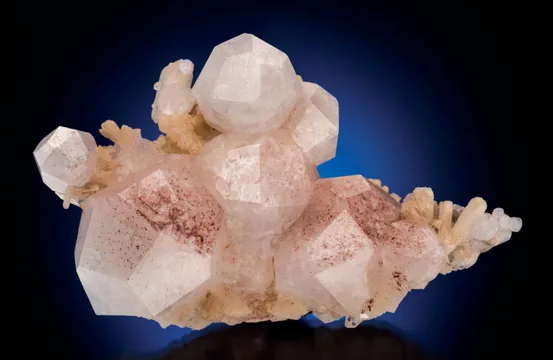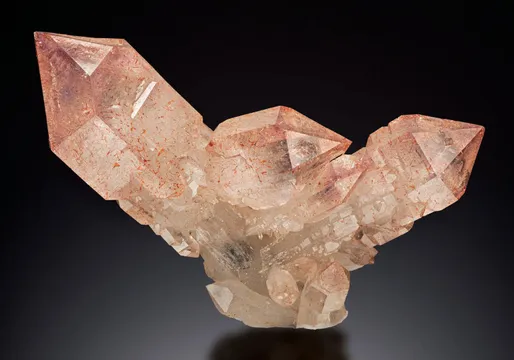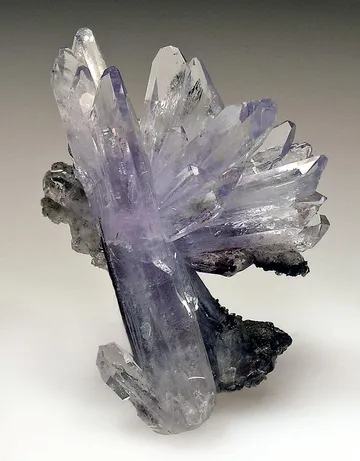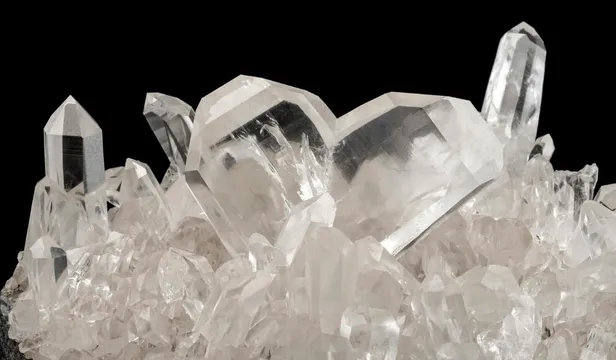
Washington Pass, USA — premier alkaline-granite locality for zektzerite and REE minerals in miarolitic cavities, with pale pink crystals and arfvedsonite.
Key facts
Washington Pass is the great American locality for zektzerite and one of the most distinctive rare-mineral occurrences in the North Cascades. Its specimens come not from an ore mine but from miarolitic cavities in the Golden Horn batholith, an Eocene, highly evolved alkaline to peralkaline granite exposed around the serrated skyline of Liberty Bell, Kangaroo Ridge, Willow Basin, Silver Star, and the highway cuts of State Route 20. The locality is collector-famous because late, volatile-rich residual fluids concentrated lithium, sodium, zirconium, fluorine, rare-earth elements, and other incompatible elements into small open cavities, producing a sharp, unusual assemblage: zektzerite, arfvedsonite, microcline, quartz, zircon, astrophyllite, bastnäsite-(Ce), okanoganite-(Y), calciohilairite, fluorite, sogdianite, and a long tail of rare REE and Zr-bearing species.
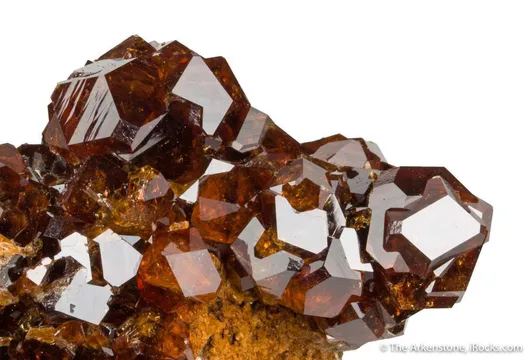
The best Washington Pass specimens have a look all their own. Fine zektzerite is usually pale pink, peach, tan, colorless, or off-white, with stout pseudohexagonal to tabular orthorhombic crystals perched on white feldspar or embedded with black sodic amphibole. Arfvedsonite gives the contrast: glossy black prismatic crystals, sprays, and included needles against feldspar, smoky quartz, and rare pink zektzerite. The locality also rewards the micromineralogist; some of its most important minerals are measured in millimeters rather than centimeters, and several significant species were recognized only because collectors and mineralogists looked carefully inside small vugs in unpromising granite boulders.
Regional View
Country View
Historically, Washington Pass stands with the better-known agpaitic and alkaline granite localities of the world because its cavities yielded type material for zektzerite, okanoganite-(Y), and calciohilairite. The discovery story is rooted in Pacific Northwest field collecting: zektzerite was first noticed before the North Cascades Highway was fully completed, first mistaken for a pink beryl-like mineral, and later recognized as an entirely new lithium-sodium-zirconium silicate after study at the Smithsonian. The locality has remained a collecting rather than a mining district: generations of Northwestern collectors have searched talus below Liberty Bell, boulders on Kangaroo Ridge, glacial cirques, Willow Basin, and roadcut material near the pass for tiny cavities that can hold disproportionately important minerals.

Search for specimens: View all specimens from Washington Pass, USA
Washington Pass lies in Okanogan County, Washington, on State Route 20 in the North Cascades, at about 5,477 feet elevation. The mineral locality is normally understood by collectors as the Washington Pass portion of the Golden Horn batholith, especially the alkaline granite and associated miarolitic cavities exposed around Liberty Bell, Kangaroo Ridge, Willow Basin, Silver Star, Cutthroat Lake trail area, glacial cirques, roadcuts, and talus fields. The collecting ground is alpine, steep, seasonal, and snow-controlled; the highway commonly closes in winter and reopens after spring avalanche-clearing, so practical access is usually a late-spring-through-autumn matter rather than a year-round one.
The deposit type is best described as a miarolitic-cavity rare-mineral occurrence in highly evolved alkaline granite. The Golden Horn batholith is a shallow Eocene intrusive complex, approximately 48–50 million years old, emplaced in the North Cascades crystalline core near the Ross Lake fault zone. Modern work describes it as a roughly 310 km2 batholith built from multiple intrusive phases, including sodic-amphibole-bearing alkaline granite, hypersolvus biotite granite, two-feldspar biotite granite with rapakivi texture, and smaller tonalitic to granodioritic intrusions. For collectors, the key phase is the sodic-amphibole-bearing alkaline granite: the rock in which residual fluids enriched in Li, Zr, REE, F, B, and related incompatible elements deposited rare minerals in open cavities as the magma cooled and crystallized.
There are no ore bodies in the normal mining sense at Washington Pass. The “ore” of the locality is specimen mineralization in cavities, seams, and pocketed granite. Individual miarolitic cavities may be only a centimeter or a few centimeters across, yet can contain feldspar, smoky quartz, arfvedsonite, zircon, astrophyllite, zektzerite, bastnäsite-(Ce), okanoganite-(Y), calciohilairite, fluorite, and other rare species. The best pockets are not large crystal caverns; they are small vugs in granite, pocketed talus boulders, or weathered roadcut blocks where a collector’s patience, eye, hand lens, and ultraviolet lamp matter more than heavy equipment.
The recognized collecting areas include talus below Liberty Bell Peak, Kangaroo Ridge, Willow Basin, glacial cirques, roadcuts, and boulders downslope from highway cuts between about milepost 164 and 167.7. The 167.7 road-log stop in Washington geological literature is specifically noted for rapakivi granite of the high-level Golden Horn batholith and for miarolitic cavities. The pass itself is also an important geologic boundary zone, with the Golden Horn batholith stitching together older North Cascades crustal domains that record accretion, subduction, faulting, and later Eocene magmatism.
Mining history is almost absent because Washington Pass was never a conventional mine camp. There were no major operators, no shaft-and-adit production history, and no commercial ore tonnage for the zektzerite-bearing pockets. Instead, the locality’s history is a collectors’ and mineralogists’ history. Bart Cannon, Jack Zektzer, Russell C. Boggs, Robert M. Boggs, Randy Becker, Rudy Tschernich, Pete Dunn, Roland Rouse, Joseph Nelen, and later Pacific Northwest micromineral collectors are among the names tied to the recognition and documentation of the assemblage. Important collecting began before and around the completion era of the North Cascades Highway, when roadcuts and new access made the high granite terrain more approachable. Later finds came from talus, float boulders, glacially exposed blocks, and small cavities opened by careful hand collecting.
Collecting today must be treated as recreational collecting on public land, subject to land ownership, claim status, agency rules, road and seasonal closures, wilderness or protected-area boundaries, and safe-practice limits. Much of the classic collecting is within Okanogan-Wenatchee National Forest terrain, where casual personal-use rock and mineral collecting is generally allowed on many National Forest lands, but commercial collecting, mechanized excavation, vegetation damage, unsafe roadcut work, and work in closed or specially protected areas are different matters. Serious collectors should verify current Forest Service guidance, avoid undercutting roads or cliffs, stay out of unstable talus during freeze-thaw or avalanche conditions, and remember that the locality’s scientific value is tied to small, well-documented finds—not volume removal.
Several notable finds and pockets have entered collector vocabulary. A miarolitic cavity called the “Pyramid Pocket” produced zektzerite with a cream-colored shell of sogdianite on crystal terminations and prism faces, perched on black arfvedsonite, from a granite boulder in the glacial cirque south of the Cutthroat Lake trailhead. Highway 20 material near milepost 166 yielded pyrochlore-supergroup octahedra on microcline with black arfvedsonite and hematite staining. The Liberty Bell area has produced arfvedsonite, zektzerite, smoky quartz, and REE-bearing micros; Kangaroo Ridge float and boulders were important in the recognition of zektzerite; and the Silver Star roadcut became a favorite place for ultraviolet night collecting because zektzerite, microcline, and hyalite opal can produce a striking multi-color response under shortwave UV.
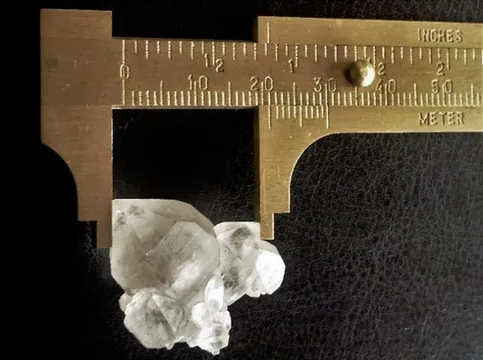
Washington Pass zektzerite is the species-defining material: pseudohexagonal to tabular orthorhombic crystals of LiNaZrSi6O15, commonly colorless, white, pale pink, peach, tan, or orange-tan, formed in miarolitic cavities of the alkaline arfvedsonite granite phase of the Golden Horn batholith. Good specimens are judged first by crystal completeness, size, translucency, luster, and position on contrasting matrix; crystals around 5–10 mm are already attractive, centimeter-class crystals are important, and sharp matrix examples with microcline, albite, arfvedsonite, smoky quartz, zircon, astrophyllite, or sogdianite are especially desirable. The very best pieces show a free-standing pastel crystal on white feldspar or black amphibole, ideally with minimal bruising along the edges and terminations. Ordinary pieces tend to be massive, contacted, etched, partly embedded, or visually lost in pale feldspar; fine pieces have the “Washington Pass look”—a crisp, pale, rare silicate crystal set against stark feldspar and sodic-amphibole matrix—and many show a pale blue to white response under shortwave ultraviolet light.
Autunite is not part of the classic published zektzerite-okanoganite-calciohilairite story at Washington Pass, so specimens carrying this locality label deserve closer-than-usual scrutiny. Where accepted as Washington Pass material, it should be approached as a secondary uranyl phosphate occurrence rather than as a major pocket mineral of the Golden Horn alkaline-granite assemblage: expect small yellow-green to green tabular plates, books, or coatings rather than the large cabinet-quality autunite for which other Washington localities, especially the Daybreak mine, are famous. Strong color, recognizable platy habit, secure matrix context, and credible provenance separate worthwhile Washington Pass-labeled examples from ordinary or suspect material. Because autunite is radioactive, water-bearing, and prone to dehydration or alteration toward meta-autunite, collectors should keep specimens dry, boxed, clearly labeled, and away from unnecessary handling, and should be especially alert to confusion with better-known northeastern Washington autunite localities.
Arfvedsonite is both a collectible species at Washington Pass and a geological signature of the alkaline granite that produced the locality’s rarest minerals. It occurs as black to very dark blue-black prismatic crystals, equant crystals, sprays, inclusions, and cavity linings in association with smoky quartz, microcline, albite, astrophyllite, zircon, riebeckite, and zektzerite; Bart Cannon reported the largest crystals at about 3.5 inches, and Stull’s amphibole work described cavity crystals in the 5–10 cm range from the alkali granite. Attractive collector pieces show glossy, well-formed amphibole crystals with good contrast, especially when paired with pale feldspar, smoky quartz, zektzerite, or astrophyllite. Ordinary arfvedsonite is abundant-looking black material in granite; good Washington Pass arfvedsonite has form, luster, and paragenetic context, and it becomes especially desirable when it serves as the dramatic black pedestal for pink zektzerite or rare REE-Zr micros.
Beyond these, Washington Pass is exceptional for type-locality minerals and rare microminerals. Okanoganite-(Y), named for Okanogan County, occurs as tan to pale pink pseudotetrahedral twinned crystals, generally around 1 mm and rarely to 4 mm, perched on microcline, arfvedsonite, zircon, or zektzerite in the arfvedsonite granite cavities. Calciohilairite, the calcium analogue of hilairite, is another Golden Horn type mineral and is prized by micromounters as a rare Zr silicate hydrate rather than as a showy cabinet species. Sogdianite is locally important, including material coating zektzerite in the Pyramid Pocket. Brannockite was identified in the Golden Horn batholith as a notable later discovery and only the second known occurrence of that species at the time of publication. The broader assemblage also includes aegirine, albite, microcline, quartz including smoky quartz and amethyst, zircon, astrophyllite, bastnäsite-(Ce), synchysite-(Ce), synchysite-(Y), gagarinite-(Y), gadolinite-(Ce), gadolinite-(Y), kainosite-(Y), fluorite, pyrochlore-supergroup minerals, chevkinite-(Ce), titanite, siderite, hematite, goethite, wulfenite, and many other species that make the locality one of the Pacific Northwest’s richest rare-mineral granite occurrences.
Washington Pass specimens should be bought and labeled with precision. The most meaningful locality wording is “Washington Pass, Golden Horn batholith, Okanogan County, Washington, USA,” ideally with a more specific note such as Liberty Bell, Kangaroo Ridge, Willow Basin, Silver Star roadcut, Highway 20 milepost area, or a named pocket when known. Labels that merely say “Washington” or “Washington Pass” without species context can invite confusion, especially because the state has other famous mineral localities for quartz, autunite, pyrite, and zeolites. Autunite deserves particular caution, as Washington’s best-known autunite specimens are from northeastern Washington uranium localities rather than the classic Golden Horn miarolitic assemblage.
Zektzerite authenticity is usually less about outright fakery and more about misidentification, repairs, and over-optimistic locality or size claims. Historically, the mineral was first mistaken for pink beryl or morganite-like material; in the market, pale feldspar, quartz, broken feldspar laths, or other light-colored silicates can still be offered to inexperienced buyers as rare zektzerite. Good zektzerite should show the characteristic stout pseudohexagonal to tabular habit, appropriate luster, and proper association, and important pieces merit analytical confirmation or impeccable provenance. Washington Minerals has documented comparative photographs including natural and lab-grown zektzerite, so advanced buyers should be aware that synthetic material exists, even though it is not normally encountered as deceptive matrix specimens. Repaired feldspar matrix is also possible and should be disclosed; reattached albite or microcline is not automatically disqualifying, but it matters greatly at fine-specimen prices.
Condition is a major value factor. Zektzerite has perfect cleavage and is commonly edge-nicked, contacted, etched, or broken at the base where it detached from a cavity wall. A small, undamaged crystal with clean terminations can be more desirable than a larger bruised one. Arfvedsonite tends to be tougher visually but can show broken terminations, splintering, and loss of luster. Micromineral specimens may look unimpressive without magnification, and many of the most important species occur as sub-millimeter to millimeter crystals; trimming should be conservative, with an emphasis on preserving pocket context.
Fluorescence is a genuine collecting feature at Washington Pass. Zektzerite is reported to fluoresce pale blue, white, or yellowish under shortwave ultraviolet light, microcline can fluoresce red, and hyalite opal can fluoresce green. Three-color shortwave UV pieces from the pass—zektzerite, microcline, and hyalite opal together—are especially memorable. UV response should support an identification, not replace it, because fluorescence varies and several species can be visually misleading.
Radioactive-specimen handling applies to autunite, thorianite, and other U- or Th-bearing species from the broader assemblage. Autunite and meta-autunite should be stored in closed, labeled containers, handled minimally, kept away from abrasion and dust generation, and not displayed in living spaces where children or pets can touch them. Hydrated uranyl phosphates can dehydrate or flake; avoid heat, soaking, and repeated humidity swings.
Rarity and market availability vary dramatically by species. Zektzerite is the name mineral and is always in demand, but fine Washington Pass crystals on matrix are scarce and expensive relative to their size. Loose, contacted, or massive zektzerite is more available but still not common. Arfvedsonite is more obtainable, though aesthetic crystals associated with zektzerite, smoky quartz, or feldspar are far better than ordinary black amphibole in granite. Okanoganite-(Y), calciohilairite, sogdianite, brannockite, and many REE-Zr micros are specialist material: small, rarely offered, and best purchased from collectors or dealers who understand the locality.
The zektzerite story begins with a mistake that every collector can understand: a pretty pink crystal in granite that looked enough like something familiar to be filed away under the wrong mental label. Bart Cannon found the material at Washington Pass in the 1960s, before the North Cascades Highway was finally completed. Its color and stout pseudohexagonal habit suggested pink beryl, even morganite, but the chemistry refused to cooperate. Jack Zektzer, a Seattle mathematician and collector, later submitted material to the Smithsonian Institution, where Pete Dunn, Roland Rouse, Joseph Nelen, and colleagues recognized that the Washington Pass crystals were not beryl at all but a new lithium-sodium-zirconium silicate. The International Mineralogical Association approved the species in 1976, and the formal American Mineralogist description appeared in 1977. In the span between a roadside alpine find and a published new mineral, Washington Pass entered the short list of localities that define a species.
The early finds were not the kind of enormous pockets that produce legends of wheelbarrows and mine lamps. They were alpine granite boulders, small miarolitic cavities, roadcuts, and steep places where a collector might be rewarded by noticing a pale crystal only millimeters to a centimeter across. A later account notes additional zektzerite material from a float boulder on the north side of Kangaroo Ridge at roughly 6,500 feet elevation, where the old “pink beryl” idea gave way to the recognition that something stranger was present. That is the Washington Pass rhythm: climb, break, inspect, reject, inspect again—then discover that a thumbnail-sized cavity can carry a mineralogical first.
Russell Boggs’s okanoganite work reads like the opposite of romantic treasure hunting and precisely like real micromineralogy. In September 1976 he found only a few small crystals in two cavities, less than ten milligrams of material. Later, better material was recognized on specimens collected by Robert M. Boggs in August 1976, but even the descriptive work for the new species depended on only a few hundred milligrams. The cavities were 1–5 cm across in the peralkaline arfvedsonite granite, and the crystals were usually about 1 mm, tan to pale pink, twinned into pseudotetrahedral fourlings. It is hard to imagine a better lesson in why Washington Pass matters: a new mineral species built from grains so small that an entire scientific description could rest on material lighter than a postage stamp.
Collectors have also given the locality a civic tradition. The Pacific Northwest Chapter of Friends of Mineralogy made Washington Pass clean-up weekends a recurring institution, pairing field collecting with volunteer work for the Forest Service. In August 2011, about twenty people attended the clean-up coordinated by Wes Gannaway. They worked in Klipchuck campground, clearing brush, repairing stairs on the trail to the creek, leveling gravel, and moving a fire pit that proved stubborn because its retaining bars had been welded in place. The Saturday evening social center was a fireside potluck, complete with a birthday cake prepared by Betsy Hunter even though she could not attend.
That same 2011 weekend produced one of the best fluorescent-mineral anecdotes from the pass. Collectors worked the Silver Star roadcut and the ground below the highway by shortwave UV on both Friday and Saturday nights. The weather was so clear and warm that it created an unexpected problem: the full moon was bright enough that flashlights were unnecessary in camp, and the moonlight made UV collecting less effective unless one had a very powerful lamp. Bob Meyer borrowed an especially bright lamp from Ray Lasmanis and spotted a rich massive zektzerite-and-microcline specimen in a deep puddle at the roadcut—visible even under about four inches of water.
The clean-up tradition continued with very practical work. In August 2012, Friends of Mineralogy members and guests spent three days camping, collecting, and doing Forest Service clean-up, including the removal of dumped tires from the roadside. A photograph from that report identified Randy Becker, Ray Lasmanis, and Wes Gannaway with illegally disposed truck tires recovered during the volunteer weekend. It is an oddly fitting Washington Pass image: serious collectors standing not only with rare minerals in mind, but with trash pulled out of one of Washington’s preeminent mineral localities.
One of the locality’s most memorable named pockets is the Pyramid Pocket, a miarolitic cavity in a granite boulder in the glacial cirque south of the Cutthroat Lake trailhead. The key specimen described from it shows colorless to cream-colored sogdianite forming a shell up to about 3 mm thick on the terminations and prism faces of zektzerite, all perched on black arfvedsonite. The specimen was confirmed by EDX and XRD. For a collector, the image is unforgettable: zektzerite, already the locality’s signature mineral, wearing a skin of another rare silicate inside a high Cascade boulder pocket.
Dunn, Pete J.; Rouse, Roland C.; Cannon, Bart; and Nelen, Joseph A. “Zektzerite, a new lithium sodium zirconium silicate related to tuhualite and the osumilite group.” American Mineralogist, 62, no. 5–6, 1977, pp. 416–420. The formal type description of zektzerite from Washington Pass. Mindat reference
Ghose, S., and Wan, C. “Zektzerite, NaLiZrSi6O15: a silicate with six-tetrahedral-repeat double chains.” American Mineralogist, 63, 1978, pp. 304–310. Crystal-structure work on zektzerite from miarolitic cavities of the Golden Horn batholith near Washington Pass. Webmineral zektzerite data
Boggs, Russell C. “Okanoganite, a new rare-earth borofluorosilicate from the Golden Horn batholith, Okanogan County, Washington.” American Mineralogist, 65, no. 11–12, 1980, pp. 1138–1142. Type description of okanoganite-(Y), including habit, associations, type material, and miarolitic-cavity occurrence in the arfvedsonite granite phase. PDF
Boggs, Russell C. “Calciohilairite: CaZrSi3O9·3H2O, the calcium analogue of hilairite from the Golden Horn batholith, northern Cascades, Washington.” American Mineralogist, 73, no. 9–10, 1988, pp. 1191–1194. Type description of calciohilairite, one of the Golden Horn batholith’s type-locality minerals.
Stull, Robert J. “Calcic and alkali amphiboles from the Golden Horn batholith, North Cascades, Washington.” American Mineralogist, 58, no. 9–10, 1973, pp. 873–878. Foundational amphibole work for interpreting arfvedsonite and related sodic amphiboles in the batholith.
Becker, Randy. “Minerals of the Golden Horn Batholith, Okanogan County, Washington.” Rocks & Minerals, 66, no. 6, 1991, pp. 450–459. A key collector-oriented treatment of the locality’s mineralogy and specimen species. DOI
Ream, Lanny R. “Washington Mineral Locality Index.” Rocks & Minerals, 66, no. 4, 1991, pp. 286–292. Places Washington Pass among the state’s notable type-locality mineral occurrences. ResearchGate record
Scudder, Christopher. “Structure and Emplacement of the Eocene Golden Horn Batholith, North Cascades, Washington.” M.S. thesis, San José State University, 2018. Modern structural and emplacement study of the 48 Ma Golden Horn batholith. SJSU ScholarWorks
Eddy, Michael P.; Bowring, Samuel A.; Miller, Robert B.; and Tepper, Jeffrey H. “Rapid Emplacement of the Golden Horn Batholith: North Cascades, WA.” Geological Society of America Abstracts with Programs, 2014. Reports high-precision U-Pb zircon work suggesting rapid emplacement of much of the batholith at about 48 Ma. GSA abstract
Raschke, Markus B.; Anderson, Evan J. D.; Allaz, Julien; Friis, Henrik; Smyth, Joseph R.; Tschernich, Rudy; and Becker, Randy. “Crystal chemistry of brannockite, KLi3Sn2Si12O30, from a new occurrence in the Golden Horn Batholith, Washington State, USA.” European Journal of Mineralogy, 28, no. 1, 2016, pp. 153–161. Documents Washington Pass/Liberty Bell brannockite as a significant new occurrence in the alkaline granite assemblage. DOI
“Battle of the Batholiths at Washington Pass” — Nick Zentner / Cascade PBS. A short field segment explaining the Golden Horn and Black Peak batholiths at Washington Pass and the broader North Cascades geologic story. URL: https://www.pbs.org/video/battle-of-the-batholiths-at-washington-pass-4ninnk/
“Nick on the Rocks: Colossal batholiths collide in the Cascades” — Cascade PBS. Companion article to the PBS segment, emphasizing the Golden Horn granite, Liberty Bell, and the 50-million-year geologic setting at Washington Pass. URL: https://www.cascadepbs.org/environment/2025/01/nick-rocks-colossal-batholiths-collide-cascades/
Mindat: Washington Pass, Golden Horn Batholith, Okanogan County, Washington, USA — The most useful single reference page for the locality’s mineral list, photographs, coordinates, and specimen associations.
Washington Minerals: Minerals of the Golden Horn Batholith — Collector-focused overview with geology, locality photographs, species list, and images of Washington Pass specimens.
Washington Minerals: Zektzerite from Washington State — Practical collector page on zektzerite history, appearance, fluorescence, and Washington Pass examples.
WA100: Washington Pass — Washington Geological Survey geotourism page explaining the Golden Horn batholith, North Cascades domains, and glacial landscape.
SJSU ScholarWorks: Structure and Emplacement of the Eocene Golden Horn Batholith — Modern thesis on the batholith’s intrusive phases, structure, emplacement, and regional tectonic setting.
GSA Abstract: Rapid Emplacement of the Golden Horn Batholith — Concise technical summary of U-Pb zircon age work and rapid emplacement interpretation.
American Mineralogist: Okanoganite type description — Primary paper for okanoganite-(Y), with detailed occurrence, associations, crystal habit, and type-material information.
Mindat reference: Zektzerite type description — Bibliographic record for the 1977 American Mineralogist description of zektzerite.
Webmineral: Zektzerite data — Useful mineral-data summary including formula, crystallography, and Golden Horn batholith structural references.
Olav Revheim: Arfvedsonite root name group — Includes a Washington Pass section summarizing arfvedsonite habit, associations, and amphibole interpretation.
Friends of Mineralogy newsletters — Archive containing Pacific Northwest Friends of Mineralogy field notes, clean-up reports, and Washington Pass collecting references.
September 2011 Pacific Northwest Friends of Mineralogy newsletter transcription — Detailed report of the 2011 Washington Pass clean-up, UV collecting, and field activity.
Washington DNR: Rockhounding — State-level guidance on land ownership, permissions, and recreational collecting in Washington.
U.S. Forest Service: Collecting on National Forest System Lands — General federal guidance on recreational collecting, personal-use limits, and collecting restrictions on National Forest lands.