A collector's guide to Tuscany, Italy: its geology, mining history and notable minerals, illustrated with the 109 specimens documented from this locality on EarthWonders.
Key facts
Tuscany is not a single mine in the collector’s sense; it is a compact mineralogical province whose best specimens come from several sharply different geological worlds. On Elba, Late Miocene magmatism, faulting, carbonate rocks, and Fe-rich sedimentary sequences produced the iron deposits of Rio Marina, Rio Albano, Capoliveri, and associated skarns: the home ground of mirror-bright hematite, brassy pyrite on black hematite, ilvaite, magnetite, quartz, and a long list of secondary and skarn minerals. In western Elba, around San Piero in Campo and Sant’Ilario on the Monte Capanne pluton, miarolitic LCT pegmatites yielded polychrome tourmalines, beryl, feldspars, lepidolite, petalite, pollucite, and quartz; the island is the namesake and type region for elbaite and remains one of Europe’s defining tourmaline districts. On the mainland, the Colline Metallifere and Campiglia Marittima districts add pyrite, skarn sulfides, Pb-Zn-Cu-Ag mineralization, and a mining record stretching from the Copper Age and Etruscans to modern industrial sulfuric-acid production. Farther north, the Carrara marble quarries of the Apuan Alps are famous to mineral collectors for water-clear “Diamanti di Carrara,” small but brilliant rock-crystal quartz formed in rare cavities in white marble.
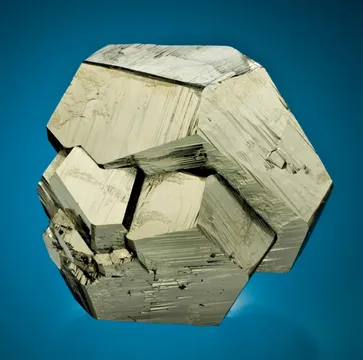
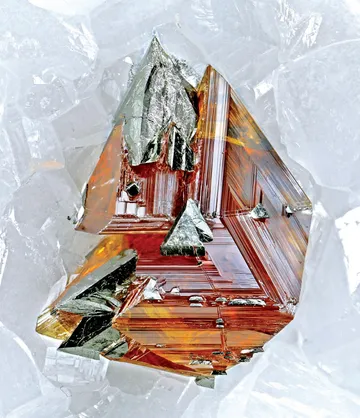
The look of a good Tuscan specimen depends entirely on which Tuscan story it belongs to. A first-rate Rio Marina hematite is metallic gray to black, mirror-lustrous, and sharply tabular or rhombohedral, often on massive hematite with quartz or pyrite. Rio pyrite at its best is not just “fool’s gold,” but golden pyritohedra or cubes perched in theatrical contrast on black specular hematite. Elban elbaite is usually smaller than the great Brazilian or Afghan tourmalines, but the classic pieces have old-world charm: green, blue-green, yellow-green, smoky, pink, or polychrome crystals in feldspar-quartz pegmatite, with the distinctive dark-capped “Moor’s head” habit highly prized. Carrara quartz, by contrast, is about purity and form—little water-clear crystals in marble vugs, famous for varied crystallography and deceptively diamond-like brilliance.
Regional View
Country View

Photo: Wikimedia Commons
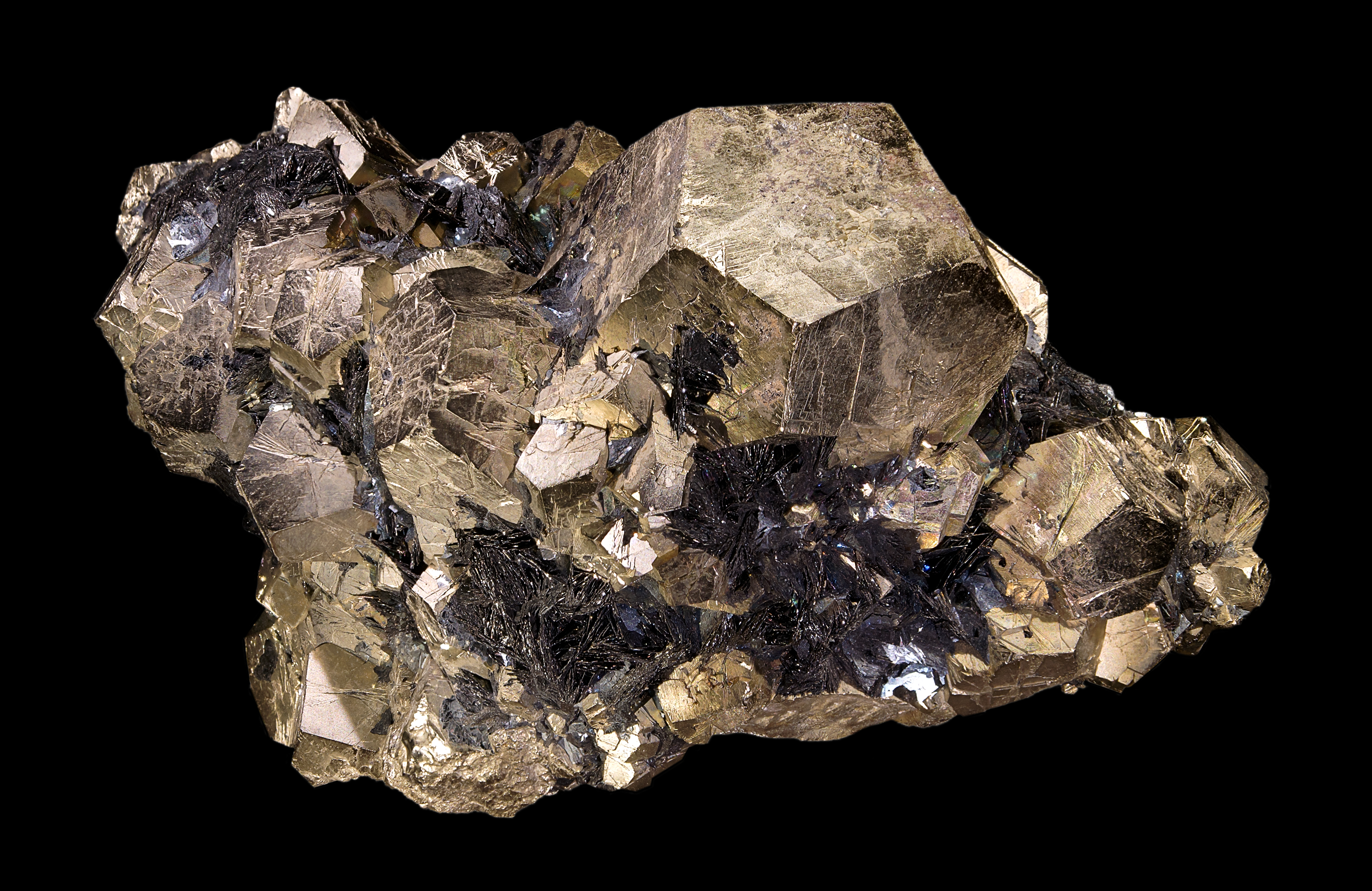
Photo: Wikimedia Commons

Photo: Wikimedia Commons
The collector must therefore read “Tuscany” with precision. A label that says only “Toscana” may be charming, but it is incomplete. Serious pieces should ideally resolve to Rio Marina, Valle Giove, Bacino, Vigneria, Falcacci, Rio Albano, San Piero in Campo, Grotta d’Oggi, Rosina, Carrara, Gavorrano, Niccioleta, Boccheggiano, Campiglia Marittima, Larderello, Sasso Pisano, Monte Amiata, or another documented sublocality. The value, rarity, associations, and even the correct mineralogical interpretation can change completely from one Tuscan district to the next.
Search for specimens: View all specimens from Tuscany, Italy
The Tuscan mineral province owes much of its richness to the geological evolution of the Northern Apennines and the later magmatism and hydrothermal activity of the Tyrrhenian margin. In southern Tuscany and Elba, stacked Ligurian, Subligurian, and Tuscan tectonic units were later intruded and thermally overprinted by Neogene magmas. That combination—reactive carbonate rocks, Fe-rich schists and sedimentary units, brittle faults, granitic intrusions, and long-lived geothermal systems—produced skarns, iron-oxide bodies, pyrite deposits, Pb-Zn-Cu-Ag skarn and vein systems, mercury-antimony-gold mineralization, and borate-rich geothermal deposits. For collectors, the important point is that Tuscany is not a simple “one-species” region. It is a layered archive of Mediterranean mining, contact metasomatism, pegmatite crystallization, marble cavities, geothermal borates, and epithermal ores.
The most specimen-famous iron district is eastern Elba. At Rio Marina, the iron deposits are exposed in and around open-cast workings that include Bacino, Valle Giove, Vigneria, Falcacci, and related sites. The Rio Marina mine is described by the mining park as the oldest and most important mine on Elba, extending roughly 1.5 km north-south and 1.2 km east-west, over about 2 km2, from near sea level up to around 200 m elevation. The ore assemblage is dominated by hematite, with pyrite and limonitic or goethitic alteration; deeper and related bodies include skarn silicates such as hedenbergite, epidote, ilvaite, and associated quartz, calcite, chlorite, adularia, and sulfides. Classic descriptions of the Rio ore distinguish hematite-rich zones with pyrite toward lower parts and oxidized limonite/goethite toward upper weathered portions. Bacino and Vigneria are especially associated with fine- to medium-grained lamellar hematite and minor quartz, while cavities in massive hematite produced the brilliant crystal groups that made Rio Marina a world classic.
Rio Marina’s mining history is unusually long. Etruscan exploitation is documented from the first millennium BC, and Roman, Pisan, early modern, and industrial phases followed. In antiquity, iron ore was smelted on or near the island and also shipped across the Tyrrhenian Sea to Populonia, one of the great metalworking centers of the Etruscan world. The Greek name Aithalia, often rendered as “smoky,” preserves the image of furnace smoke rising from Elba. Industrial mining continued into the twentieth century, with major open-pit and underground work in the Rio and Capoliveri districts; the Elban iron mines closed in the early 1980s, after which the mining and mineralogical park began preserving the sites and interpreting them for visitors.
Specimen production at Rio Marina has two distinct faces. The old underground and open-pit workings yielded fine cabinet hematites, pyrite-on-hematite combinations, and quartz associations that entered European collections during the nineteenth and twentieth centuries. Later, dumps, park-controlled collecting areas, and specific modern discoveries continued to produce smaller pyrite and hematite pieces. The Bacino stope has a particularly strong reputation among collectors, with spectacular hematite crystals reported from the 1980s. Falcacci is noted for cubic pyrite and for the 2005 discovery of riomarinaite, a new species named for Rio Marina. Valle Giove is a familiar source name on modern pyrite and hematite labels, and the red, stepped landscape of the mine remains one of the most recognizable collecting images in Italy.
The western side of Elba is a different province entirely. Around San Piero in Campo, Sant’Ilario in Campo, Grotta d’Oggi, Fonte del Prete, Rosina, San Silvestro, Fucili, Facciatoia, and related pegmatites, the Monte Capanne monzogranite and associated aplite-pegmatite dykes produced Europe’s classic gem-bearing Elban pegmatite suite. These are miarolitic LCT pegmatites, with cavities containing quartz, feldspar, lepidolite, tourmaline, beryl, petalite, pollucite, and accessory species. The tourmalines include elbaite and fluor-elbaite, but also a broader modern tourmaline-supergroup record, including tsilaisite, fluor-tsilaisite, celleriite, foitite, rossmanite, schorl, uvite, and magnesio-lucchesiite. The Rosina pegmatite, a few hundred meters south of San Piero in Campo, has particular modern importance because it supplied the approved neotype material for elbaite.
On mainland Tuscany, the Colline Metallifere—literally the Metalliferous Hills—form one of Italy’s great historical mining districts. Around Gavorrano, Niccioleta, Boccheggiano, Campiano, Fenice Capanne, and Massa Marittima, pyrite deposits and mixed sulfide systems were mined intensively, especially in the modern era for sulfuric-acid feedstock. At Gavorrano, the famous modern pyrite story begins in 1898, when Francesco Alberti and companions followed a limonite outcrop and opened a tunnel near the village. From that start, Gavorrano grew into one of Europe’s major pyrite mining centers. Montecatini acquired a significant share of Unione Italiana Piriti, owner of the old Gavorrano pyrite mine, in 1910, and the district later became deeply tied to the chemical industry. Niccioleta and Campiano near Boccheggiano continued later than many Tuscan mines, ceasing production in 1992 and 1994 respectively.
Campiglia Marittima and the Temperino mine add another important setting: Cu-Pb-Zn-Ag skarn and related sulfide mineralization, developed where hydrothermal fluids interacted with carbonate host rocks near Neogene intrusions. Collectors know the broader Campiglia district for skarn minerals, sulfides, and historical mine specimens rather than for the Rio Marina-style hematite showpieces. Tuscany also includes the Larderello-Sasso Pisano geothermal borate field, historically central to boric-acid production and famous mineralogically for sassolite, larderellite, ammonioborite, santite, sborgite, nasinite, biringuccite, ginorite, sulfur, and realgar. These are generally delicate, soluble, or earthy borate and evaporitic-geothermal minerals, very different in preservation needs from robust hematite, pyrite, or quartz.
The Carrara district in the Apuan Alps rounds out the collector picture. The famous marble quarries, worked since Roman times, occasionally expose rare cavities containing clear quartz crystals known as “Diamanti di Carrara.” The best crystals are water-clear, highly lustrous, and crystallographically varied; documented crystals up to 10 cm are reported in modern locality summaries, while older literature and collector lore record even larger examples. Their rarity comes from the quarry environment: pockets are uncommon, hard to see in white marble, and usually appear in active industrial quarries where collecting is controlled by permission, safety, and quarry operations.
Collecting access today is highly variable and must be treated conservatively. The Rio Marina mining park offers guided access, including tours where visitors may collect small pyrite and hematite samples in designated areas; unrestricted entry to the mine areas has not been allowed, and the park has publicly emphasized that access is by ticketed guided tour, train, or authorized excursion rather than casual wandering. Capoliveri and Rio sites are now heritage landscapes as much as mineral localities. San Piero pegmatite localities include active, private, protected, or historically worked areas, and serious collecting requires permission or participation in local museum- or guide-associated activities. Carrara quarries are industrial sites, not public collecting grounds. Mainland abandoned mines in the Colline Metallifere are generally park, municipal, private, or hazardous heritage sites; old dumps and workings should not be entered without explicit permission, local guidance, and mine-safety awareness.
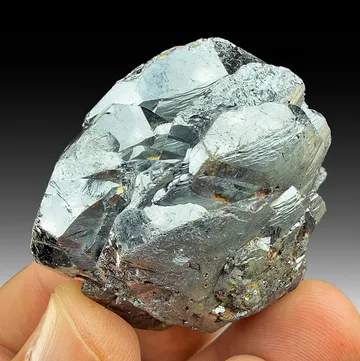
Tuscan hematite for the specimen collector means, above all, Rio Marina and nearby eastern Elba workings, where the classic pieces are metallic gray to black, mirror-lustrous, tabular to rhombohedral crystals in cavities in massive or lamellar hematite, commonly with quartz and pyrite and locally with limonitic/goethitic staining from oxidation. Small pieces with sparkling blades are common enough in old collections and park-collected material, but the great cabinet specimens are distinguished by isolated, sharp crystals, undamaged reflective faces, sculptural contrast against massive hematite, and credible sublocality labels such as Bacino, Valle Giove, Vigneria, or Falcacci. The best old Rio Marina hematites can show brilliant specular luster, slight natural iridescence, or handsome quartz associations; ordinary examples are more massive, rubbed, iron-stained, or composed of drusy crusts without a strong focal crystal.
Pyrite occurs across Tuscany’s ore districts, but the collector classics are from Rio Marina, Valle Giove, Falcacci, and related Elban iron workings, where golden cubes, pyritohedra, and dodecahedral-looking forms sit on black hematite or hematite-rich matrix with a contrast few European pyrite localities can match. Rio pyrite can range from small bright crystals scattered on specular hematite to robust crystals several centimeters across; dealer and museum examples document sharp pyritohedral crystals, cubic Falcacci material, and pieces where pyrite preserves impressions after vanished hematite blades. Mainland Tuscany’s Gavorrano, Niccioleta, Boccheggiano, Campiano, Fenice Capanne, and Campiglia districts produced abundant pyrite in industrial quantities and occasional specimen crystals, but the market’s most recognizable Tuscan pyrite remains the Elban combination piece: lustrous, brassy, sharp, and aesthetically perched on dark hematite without sulfide decay or heavy rusting.
Tuscan quartz appears in several distinct specimen styles: elongated milky quartz with Rio Marina hematite, smoky to clear quartz in the San Piero in Campo pegmatites with feldspar and elbaite, prase-like quartz associations in eastern Elba, and the famous water-clear “Diamanti di Carrara” from marble cavities in the Apuan Alps. Carrara crystals are valued for transparency, glassy luster, and varied forms—often short-prismatic but sometimes elongated or tapered—while San Piero quartz is prized less as a standalone species than as the matrix and companion for elbaite, schorl, orthoclase, albite, lepidolite, and beryl. A good Tuscan quartz specimen therefore depends on context: a Carrara piece should be bright, transparent, undamaged, and ideally in marble matrix, while an Elban pegmatite piece gains value when the quartz frames undamaged tourmaline or beryl rather than merely occupying space.
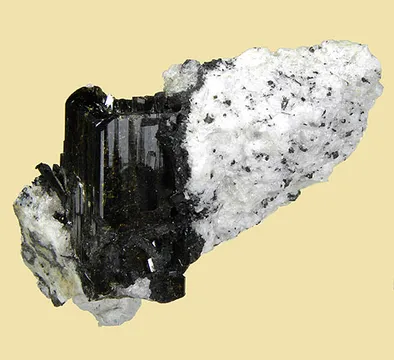
Elbaite from Tuscany is historically and nomenclaturally essential because the species takes its name from Elba, with the likely original material tied to Fonte del Prete near San Piero in Campo and the approved neotype material from the Rosina pegmatite south of the village. The finest Elban crystals are typically modest in size compared with modern Brazilian, Afghan, or African tourmalines, but they compensate with classic provenance, polychrome zoning, dark-capped “Moor’s head” terminations, and associations with quartz, orthoclase, albite, lepidolite, beryl, petalite, and pollucite in Monte Capanne pegmatites. Good pieces show identifiable prismatic tourmaline crystals, attractive green to blue-green or multicolored zoning, sharp terminations, and stable original matrix; ordinary examples may be broken pegmatite fragments, black schorl-dominant pieces, indistinct tourmaline sprays, or loose crystals without convincing Elban provenance.
Beyond these four staples, Tuscany is unusually rich in type-locality and historically important species. Elba is the type locality or type region for elbaite, ilvaite, tsilaisite, fluor-tsilaisite, celleriite, magnesio-lucchesiite, uvite, riomarinaite, and additional historically named varieties such as rosterite in beryl. The Larderello-Sasso Pisano geothermal field is central to the mineralogy of sassolite and several borates, including larderellite, ammonioborite, santite, nasinite, sborgite, biringuccite, and ginorite. The broader Tuscan suite includes magnetite, goethite, limonite, siderite, hedenbergite, epidote, calcite, fluorite, galena, sphalerite, chalcopyrite, bismuthinite, adularia, chlorite, gypsum, realgar, sulfur, cinnabar from the Amiata mercury district, stibnite from southern Tuscan epithermal systems, and a wide range of skarn, sulfide, borate, and pegmatite rarities that reward precise locality labeling.
The principal authenticity issue with Tuscan material is not usually outright forgery, but imprecise or overconfident locality attribution. “Elba,” “Tuscany,” “Rio,” “Rio Marina,” “Isle of Elba,” “oligiste,” and “specularite” all appear on older labels, and some are historically interesting, but they do not carry the same information as “Bacino stope, Rio Mine, Rio Marina” or “Valle Giove stope, Rio Marina.” A fine hematite crystal simply labeled “Elba” may be genuine, but value and scientific interest rise when the sublocality is documented. The same is true for pyrite: an Elban pyrite-on-hematite specimen should not be casually reassigned to Gavorrano, Niccioleta, or Boccheggiano, and mainland pyrite should not be dressed up as Rio Marina material unless the matrix, habit, and provenance support it.
For hematite, the treatment concern is artificial iridescence. Rio Marina hematite can naturally show beautiful iridescent tarnish, but the modern market also contains artificially coated “rainbow hematite” from many sources. On a serious Rio piece, iridescence should look textural and selective rather than like an even, slick, high-saturation film spread uniformly across every surface. Good hematite will give a reddish-brown streak, but streak confirms hematite, not locality or natural iridescence. Check edges and raised faces carefully: Rio hematite blades chip, bruise, and rub easily despite hematite’s hardness, and polished-looking high points may simply be wear from handling or old transport.
Pyrite from Rio Marina and the mainland pyrite districts should be inspected for tarnish, cracks, sulfurous odor, powdery alteration, and iron-sulfate efflorescence. Stable old pyrite can remain excellent for generations, but microfractured pieces stored in humidity may oxidize. Combination specimens with hematite are often more stable than marcasite-rich material, yet any pyrite should be kept dry, ventilated, and away from paper labels that can absorb acidic oxidation products. Avoid oiling or sealing unless advised by a conservation professional; coatings may darken the specimen, trap moisture, or complicate future treatment.
Elban elbaite requires a different kind of skepticism. Many collectors want an “Elba” tourmaline because of the name, and small loose green or pink elbaites from other countries can be tempting substitutes in poorly documented collections. True Elban material is usually associated with feldspar-quartz pegmatite and often has a subdued, old-European character rather than the large, glassy, intensely saturated appearance of many modern pegmatite districts. Repairs are possible on matrix tourmalines, and broken or reattached crystals should be examined under magnification. Species names in the tourmaline supergroup can be visually uncertain; if the piece is not analytically confirmed and the color or habit is ambiguous, a cautious label such as “tourmaline group, probably elbaite” may be more honest than a forced species assignment.
Carrara quartz is widely admired but easily overgeneralized. Water-clear quartz crystals from marble may be sold as “Carrara diamonds,” but a collector should want marble matrix, old labels, quarry information, or at least a convincing habit and provenance. The best examples are bright, transparent, undamaged, and not merely loose quartz crystals with a romantic name. Because Carrara is an active quarry district, newly collected material should have a legal and safe chain of permission.
Market availability is uneven. Small Rio Marina pyrite and hematite pieces are still available, helped by old collections and limited park-permitted collecting, but top old hematites from Bacino or other named workings are far scarcer than their fame suggests. Elban elbaite is not common on the market in fine quality, and good matrix pieces with strong color and old labels can be strongly held. Carrara quartz appears sporadically, often as small specimens. Mainland pyrite from Gavorrano, Niccioleta, Boccheggiano, and Campiano is historically important but usually appeals more to regional, systematic, or mining-history collectors than to those seeking dramatic display pieces.
Elba’s oldest mineral story is not a pocket story, but a skyline story. Ancient writers and later historians preserved the idea of the island as Aithalia, the smoky one—a place where ore, wood, furnaces, and sea trade turned geology into atmosphere. The Etruscans began exploiting Elba’s iron deposits as early as the 8th century BC, and the ore did not remain a local curiosity. It fed the great metallurgical system of Populonia across the water, where Elban iron moved into the wider economy of the Tyrrhenian world. Modern accounts still point to roughly one hundred ancient furnace-slag heaps on the island, the “fabbrichili,” as durable black witnesses to a time when mineral specimens were not collected for cabinets but burned, hammered, and shipped as power.
Rio Marina’s modern landscape keeps that history visible in a way few classic localities do. The mine begins almost behind the village houses and climbs northward toward Monte Giove, a red, terraced amphitheater where hematite dust stains the slopes. At Vigneria, the mining installations once reached toward the sea; the last of the seven ore-loading piers, the Ponte di Vigneria, collapsed during the violent storm of October 28, 2018. For collectors who knew Rio Marina only through black hematite and golden pyrite in drawers, the loss was a reminder that a mineral locality is also a working landscape, a coastline, a village economy, and a set of structures exposed to weather after industry ends.
The Gavorrano pyrite story begins with a very human act of noticing. In 1898, Francesco Alberti, helped by three fellow villagers—Oreste Leporatti, Savino Rosselli, and Giuseppe Simonetti—and supported by the geologist Bernardino Lotti, followed the trace of a limonite outcrop and opened a tunnel near Fonte Vecchia, only a short distance from the village. From that first outcrop grew one of Europe’s major pyrite mines. The discovery changed the social geography of Gavorrano: a hill town became a mining town, and “fool’s gold” became industrial sulfur, acid, wages, shafts, and the reason whole communities organized themselves around the underground.
San Piero in Campo tells a quieter, more collector-centered story. For centuries the western side of Elba was a world of granite, vineyards, pasture, and stonecutters. Then the pegmatite veins of Monte Capanne became a second treasure of the island. The names attached to this mineral culture—Raffaello Foresi, Giorgio Roster, Luigi Celleri, the D’Achiardi family, Piero Aloisi, Federico Pezzotta, Renato Pagano, and many others—belong to a lineage of collectors, scholars, and curators who turned small cavities in granite into one of Europe’s great tourmaline records. Modern research on historic museum material and new finds continues to refine the story; the approved elbaite neotype from the Rosina pegmatite is a particularly elegant example of an old locality still doing new scientific work.
There is also a very practical modern field note: Rio Marina is one of the rare classic European localities where a casual visitor can still experience a form of collecting legally, but only under controlled conditions. The mining park’s train and adventure tours take visitors through the open workings and designated areas where small pyrite and hematite samples may be collected. That is not the same thing as free access to historic stopes or serious specimen mining. The distinction matters. The locality survives because its mine benches, museums, guides, and mineral heritage are now managed as a cultural landscape, not as an unregulated dump.
Federico Pezzotta, The Italian Island of Elba: A Mineralogical Jewel in the Tuscan Archipelago — Major modern monograph on Elba’s geology, ore deposits, Monte Capanne pegmatites, type-locality minerals, and collecting history.
F. Bosi et al., “Elbaite, the neotype material from the Rosina pegmatite, San Piero in Campo, Elba island, Italy,” European Journal of Mineralogy, 37, 505–516, 2025 — Formal IMA-approved neotype description of elbaite from the Rosina pegmatite.
F. Bosi et al., “Fibrous tourmaline from San Piero in Campo (Elba, Italy),” European Journal of Mineralogy, 37, 437–453, 2025 — Modern study of fibrous tourmaline parageneses in the San Piero pegmatites.
M. Altieri et al., “Blue-growth zones caused by Fe2+ in tourmaline crystals from the San Piero in Campo gem-bearing pegmatites, Elba Island, Italy,” Mineralogical Magazine, 2022 — Crystal-chemical study of blue zones in Elban tourmaline from San Silvestro and Fucili/Grotta d’Oggi.
F. Bosi et al., “Uvite, CaMg3(Al5Mg)(Si6O18)(BO3)3(OH)3(OH), a new but long-anticipated mineral species of the tourmaline supergroup from San Piero in Campo, Elba Island, Italy,” Mineralogical Magazine, 86, 767–776, 2022 — Type-locality description of uvite from San Piero in Campo.
Paolo S. Garofalo et al., “Failed genesis of a Fe-skarn deposit caused by redox states of intrusion and wall rocks (Torre di Rio, Island of Elba, Italy),” Ore Geology Reviews, 177, 106446, 2025 — Recent open-access study of Torre di Rio, the ilvaite type locality, and reduced Fe-skarn processes on Elba.
M. Benvenuti, C. Boschi, A. Dini, G. Ruggieri, and A. Arias, “Geothermal resources, ore deposits and carbon mineral sequestration in hydrothermal areas of Southern Tuscany,” Geological Field Trips and Maps, 7(1.2), 2015 — Field-trip volume covering Larderello geothermal systems, Campiglia skarns, hydrothermal ores, and southern Tuscan metallogeny.
“Skarn deposits in Southern Tuscany and Elba Island, Central Italy,” ISPRA field-trip volume — Useful technical overview of Tuscan and Elban skarn systems, including Rio Marina Profondo and Campiglia-related deposits.
Natale Perchiazzi, Pietro Armienti, Salvatore Iaccarino, and Marco Lezzerini, “A contribution to the mineralogy of the Larderello geothermal field. X-ray crystallographic studies on borate minerals ‘bechilite’ and ‘lagonite’ and crystal structure determination of ginorite” — Study of Larderello-Sasso Pisano borates, including ginorite from the type locality.
Mindat occurrence record: Quartz from Carrara, Massa-Carrara Province, Tuscany — Concise locality record for “Diamanti di Carrara,” including habit, color, associated minerals, historical references, and crystal-size notes.
Mindat locality page: Elba Island, Livorno Province, Tuscany — Broad mineral list and locality hierarchy for Elba, including type-locality flags for major species.
Parco Minerario dell’Isola d’Elba — Guided Tours — Current official access information for Rio Marina and Rio Albano mine tours, including designated opportunities to collect pyrite and hematite samples.
Parco Minerario dell’Isola d’Elba — Mining Areas — Official descriptions of Rio Marina, Rio Albano, Bacino, Valle Giove, Falcacci, and related mining sites.
Mineral Park on the Island of Elba — Infoelba — Visitor-oriented but useful overview of the Rio Marina mining park, mining history, and specimen minerals.
Elba Mineral Museum in Rio Marina — Virtual Elba — Good introduction to the Rio Marina museum, Elban iron-mining history, and the hematite-pyrite-limonite assemblage.
Mineralogical Museum Luigi Celleri, San Piero in Campo — MUM — Museum dedicated to the San Piero mineral tradition, Elban pegmatites, and tourmaline-bearing specimens.
Luigi Celleri Museum — Virtual Elba — Accessible account of San Piero in Campo, the Elban collections, and the island’s tourmaline culture.
Tuscan Mining UNESCO Global Geopark — Global Geoparks Network — Geopark overview for the Colline Metallifere, including the region’s 3,000-year mining history and major ore commodities.
Geology, Geosites and Geodiversity — Parco delle Colline Metallifere — Useful geological background for the Metalliferous Hills, mixed sulfide mineralization, pyrite mining, and regional geodiversity.
The History of Gavorrano Mine — Tuscany, Beautiful Everywhere — Clear account of Francesco Alberti’s 1898 discovery and the rise of Gavorrano as a major pyrite-mining center.
Quartz Page — “Diamanti di Carrara” — Collector-focused discussion of Carrara quartz, including rarity, habit variation, and comparison with Herkimer-style quartz.
Wikimedia Commons — Minerals of Rio Marina — Open image category with Rio Marina hematite, pyrite, pyrite-on-hematite, and museum specimens.
Wikimedia Commons — Elbaite from San Piero in Campo — High-quality image page for a classic topotype elbaite specimen from San Piero in Campo.
Wikimedia Commons — Pyrite from Rio Marina — High-quality image page for pyrite from Rio Marina, Elba.
Wikimedia Commons — Hematite with Quartz from Rio Marina — Image page for a classic mirror-bright Rio Marina hematite specimen with quartz.