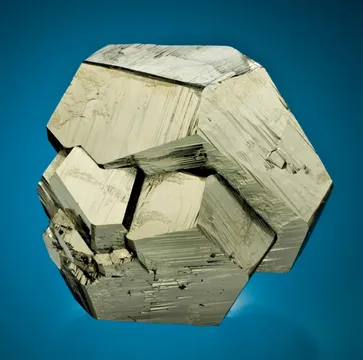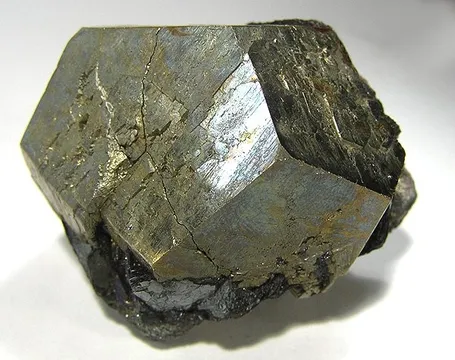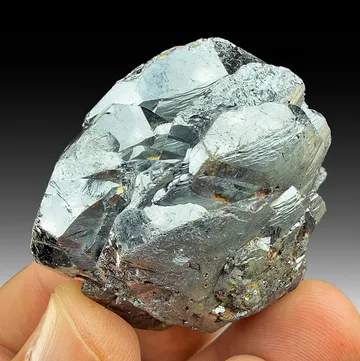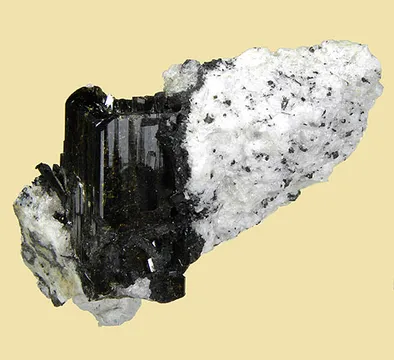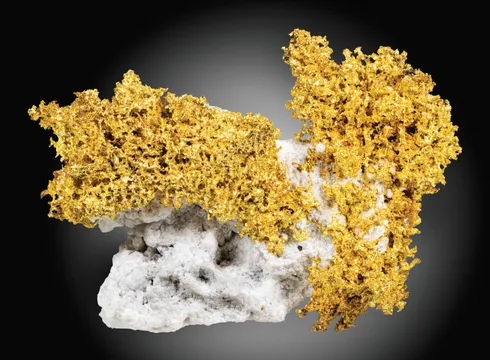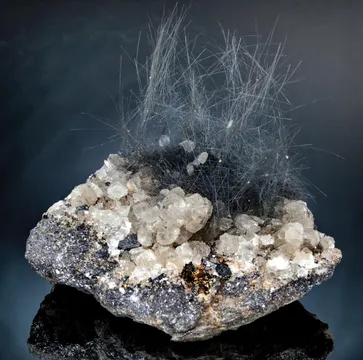
La Facciata quarry, Carrara, Italy — a classic collector locality with marble geodes featuring sphalerite, wurtzite, quartz, calcite, fluorite, and sulfides.
Key facts
La Facciata quarry is one of the classic collector localities hidden in plain sight inside the Carrara marble country: an active, industrial white-marble quarry in the Torano basin of the Apuan Alps, better known to architects for blocks of Bianco La Facciata than to mineral collectors for the tiny, jewel-like crystals that occasionally line its geodes. Its specimens are not “ore mine” minerals in the usual sense. They are the accidental mineralogical treasure of a decorative-stone quarry—small cavities, fractures, and calcite veins opened in high-grade marble, where late fluids and trace elements produced a surprisingly sophisticated suite of sulfides, sulfosalts, carbonates, sulfates, halides, and quartz.
The collector importance of La Facciata rests above all on Carrara’s celebrated marble-geode assemblage: transparent to honey-brown sphalerite, wurtzite, quartz “Carrara diamonds,” dolomite, calcite, fluorite, gypsum, native sulfur, colusite, enargite, sulvanite, galena, geocronite, and several rarer secondary species. The best specimens have a distinctive visual signature: sharp miniature or micromount-scale crystals perched on snow-white marble, with the host rock acting like a natural display base. Fine pieces are all about contrast and perfection—an orange sphalerite tetrahedron glowing against white calcite, a water-clear doubly terminated quartz standing upright on marble, or a small wurtzite aggregate in dark resinous blades with sphalerite nearby.
Regional View
Country View
Geologically, La Facciata belongs to the Carrara Marble Formation of the Apuan Metamorphic Complex, where originally marine carbonate strata were recrystallized during Alpine metamorphism into the famous white and blue-grey marbles of Carrara. For the mineral collector, the key point is that the valuable, homogeneous marble blocks are interrupted here and there by cavities and veins. Those imperfections may lower a block’s commercial value, but they are precisely where the crystals occur.
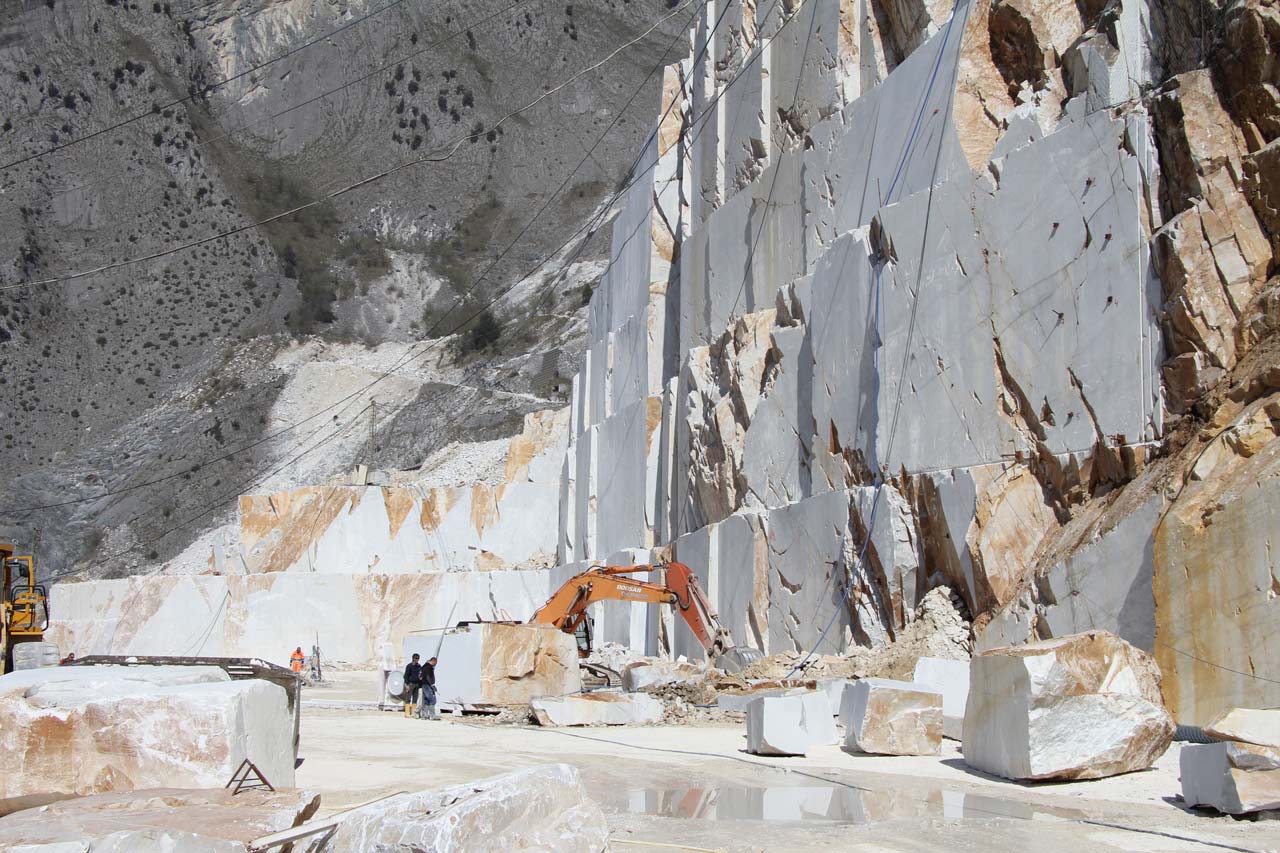
Photo: Campolonghi
The locality is also historically important beyond mineral collecting. La Facciata has supplied building stone for more than 130 years under its modern commercial identity, and the broader Carrara district has been quarried since antiquity. In the mineral literature, Carrara’s marble geodes became a serious subject of study in the later twentieth century, when systematic collecting and analytical work revealed that the tiny pockets contained far more than quartz and calcite: they held a distinctive Zn-Cu-Pb-As-Sb-V sulfosalt assemblage, including sphalerite-wurtzite parageneses of real crystallographic interest.
Search for specimens: View all specimens from La Facciata quarry, Carrara, Italy
La Facciata is an ornamental-stone quarry in the Torano quarrying basin at Carrara, in the marble mountains of the Apuan Alps. The modern operator is La Facciata S.r.l., part of the Campolonghi Group, which describes the quarry as located at Ravaccione and producing Bianco La Facciata and Bardiglio Nuvolato Apuano. The quarry covers about 100,000 square metres and is reported by the operator to extract about 25,000 tons of material annually. Stone-industry reporting from the Oslo Opera House project gives a vivid sense of its scale: in the mid-2000s the quarry was being worked at high levels of the mountain, accessible only by four-wheel-drive vehicles, with diamond-wire saws and modern quarry machinery.
The geological host is Carrara marble, part of the metamorphosed Mesozoic carbonate sequence of the Apuan Alps. In practical collecting terms, La Facciata is not a vein mine with continuous ore shoots. Its “mineralization” occurs in discrete geodes, extension cavities, fractures, and calcite veins within the marble. These voids may carry transparent quartz, dolomite, calcite, fluorite, gypsum, sulfur, and small but highly crystallized sulfides and sulfosalts. The sulfide suite is the heart of the locality: ZnS occurs as both sphalerite and wurtzite, and is associated with Cu-V-As and Cu-As species such as colusite, sulvanite, and enargite, as well as Pb-Sb sulfosalts including geocronite and boulangerite.
The quarry’s mineral production is therefore tied to block extraction. Pockets are encountered incidentally when commercial marble is cut, trimmed, or broken; the same fractures and cavities that produce specimens are defects from the stone producer’s point of view. This explains both the beauty and the scarcity of good pieces. A cavity large enough to preserve sharp crystals is not necessarily accessible to a collector, and a block opened for building stone may expose, destroy, or scatter its contents before a mineralogist ever sees them.
Historically, La Facciata belongs to a quarrying landscape that has supplied marble for centuries. Stone World reported that operations at the site have documentary history extending back about 300 years, with evidence of earlier stone extraction including hand-carved bowls and traces of quarrying in discarded blocks. Campolonghi states that La Facciata has supplied white marble for more than 130 years. Its best-known modern architectural use is the Oslo Opera House, for which La Facciata marble was used in the interior flooring and exterior cladding; the project required careful selection of stone from a specific sector of the quarry because the building demanded both aesthetic consistency and structural performance.
For collectors today, La Facciata must be treated as an active industrial quarry, not an open collecting site. Access is controlled by quarry operations, safety constraints, and private ownership. Fine specimens normally reach the market through quarry contacts, Italian collectors, dealers, old collections, or recent commercial dispersals rather than through casual field collecting. The most desirable pieces are usually small: thumbnails, miniatures, and micromounts with undamaged crystals, clean white marble matrix, and strong contrast.
No single famous “pocket name” dominates the published record for La Facciata. Instead, its mineral reputation is built from many small finds in marble cavities, especially those documented in the Torano basin literature since the 1970s and 1980s. The 1980 study of minerals from Carrara marble geodes specifically lists La Facciata with quartz, dolomite, gypsum, sulfur, albite, fluorite, colusite, wurtzite, and galena, and later records added or confirmed species including sphalerite, enargite, zaccagnaite, hydrozincite, vaesite, and rare copper arsenates and carbonates.
La Facciata sphalerite is the locality’s signature collector species: sharp ZnS crystals, commonly tetrahedral and often transparent to translucent in yellow, orange, honey-brown, reddish brown, or darker brown tones, set on white marble, calcite, quartz, dolomite, or associated sulfides. Documented specimens include small but very fine crystals; exhibition material from the University of Pisa collection includes an 8 mm tetrahedral twinned sphalerite group on marble from La Facciata, and collector-gallery records show orange crystals around 3.6 to 5.7 mm, including epitactic associations with colusite and enargite. Good La Facciata sphalerite is judged less by size than by crystal integrity, color, transparency, placement, and associations: a clean, isolated orange tetrahedron on white marble, or sphalerite visibly intergrown with colusite, enargite, wurtzite, or tetrahedrite-group minerals, is far preferable to a bruised, dark, crowded grain lost in calcite.
Quartz from La Facciata is the classic “Carrara diamond” style: water-clear rock-crystal points, commonly isolated or in small groups, perched directly on white Carrara marble or on calcite and dolomite-lined cavities. The crystals are typically small but highly attractive, with reported examples including doubly terminated quartz around 0.9 cm on quartz-dolomite matrix, 1.3 cm quartz with gypsum and dolomite on a larger matrix piece, a sharp 1.4 cm water-clear crystal on marble sold as a thumbnail, and more substantial cabinet pieces carrying clear doubly terminated crystals reported at about 2.9 cm and 1.9 cm. The best pieces have limpid transparency, complete terminations, little iron staining, and a sculptural position on a contrasting marble matrix; ordinary pieces are more common as scattered small clear points, broken tips, or quartz crowded into less elegant calcite-dolomite surfaces.
Wurtzite from La Facciata is important because Carrara marble geodes are one of the classic European settings for the sphalerite-wurtzite ZnS pair. At La Facciata it is documented with sphalerite and, in photo-based occurrence data, with calcite and colusite; the broader Carrara marble literature describes wurtzite as a genuine geode mineral rather than an orebody mineral, and 1978 work on Carrara sphalerite-wurtzite paragenesis treated its morphology, chemistry, and X-ray identification. Collector pieces are usually small and highly specialized, with wurtzite occurring as resinous brown to dark brown crystals or aggregates, commonly pyramidal to bladed in appearance and commonly more desirable when the ZnS relationship is visible—wurtzite with sphalerite, or wurtzite in a clean sulfide-sulfosalt association on white marble. Fine examples are separated from ordinary ones by recognizable crystal form, lack of bruising, good contrast, and credible identification, since unattractive dark ZnS fragments without form can be visually underwhelming and are easy to misjudge without provenance or analysis.
Other documented La Facciata minerals include native sulfur, colusite, sulvanite, galena, pyrite, vaesite, bournonite, tetrahedrite-subgroup minerals, boulangerite, geocronite, enargite, fluorite, rutile, calcite, dolomite, strontianite, azurite, malachite, hydrozincite, dawsonite, claraite, zaccagnaite, alumohydrocalcite, celestine, gypsum, fluorapatite, chalcophyllite, and tyrolite. Zaccagnaite is especially noteworthy because the species was first described from the broader Carrara marble quarry district, with the type locality at the Calagio quarries rather than La Facciata; its presence at La Facciata connects the quarry to the same unusual Zn-Al carbonate-hydroxide alteration environment. Among the rarities, colusite and sulvanite give the locality much of its Apuan character, while geocronite, boulangerite, vaesite, claraite, chalcophyllite, and tyrolite are of strongest interest to systematic collectors and micromounters.
La Facciata specimens should be bought with close attention to scale and locality precision. Many Carrara marble specimens are visually similar, and labels may drift among Torano, Fantiscritti, Colonnata, Lorano, Val Pulita, Fossa degli Angeli, and La Facciata. A correct old label matters, particularly for sphalerite-wurtzite-sulfosalt specimens where several neighboring Carrara quarries produced related assemblages. “Carrara” alone is a district label, not a La Facciata label.
No widely documented fake industry specific to La Facciata is established in the mineral literature, but repairs and mislabelling are realistic concerns. Quartz “Carrara diamond” specimens are often isolated crystals on marble, so inspect the point of attachment under magnification for glue, filled contact zones, or a crystal that has been reset. On sulfide specimens, look for broken tetrahedral sphalerite edges, cleaved faces, dull bruises, and chips hidden against dark associated minerals. Marble and calcite matrices are acid sensitive, relatively soft, and easily abraded; careless cleaning can etch matrix surfaces and leave a chalky look.
Identification is important for the darker sulfide and sulfosalt material. Sphalerite and wurtzite are both ZnS, but their crystal systems and habits differ, and poor fragments can be difficult to separate visually. Colusite, sulvanite, tetrahedrite-group minerals, enargite, and other small opaque sulfides may require analytical confirmation for high-value labels. For micromounts, documentation from a serious Italian collector or a published collection is a significant premium.
Fluorescence can add interest. Carrara sphalerite and wurtzite were the subject of a dedicated study on fluorescence in marble geodes, and some specimens respond under ultraviolet light. The response should be treated as a bonus rather than a stand-alone proof of identity, because fluorescence varies by specimen and does not replace morphology, association, or analytical work.
Rarity is uneven by species. Quartz on marble appears regularly enough that attractive miniatures can still be obtained, though superb, undamaged, water-clear “diamond” crystals on aesthetic matrix are much less common than ordinary small points. Sphalerite from La Facciata is well represented in collections and on EarthWonders, but fine orange, transparent, sharp crystals with colusite, enargite, or wurtzite associations remain very desirable. Wurtzite is more specialized and scarcer in attractive cabinet-quality pieces; the best material is usually thumbnail to micromount scale and commands collector interest because of the Carrara ZnS paragenesis rather than because of large crystal size.
The most vivid modern story of La Facciata is not a mineral-pocket story but a marble story: the quarry’s role in the Oslo Opera House. In the mid-2000s, Campolonghi’s team was extracting and processing Carrara White marble from La Facciata for a building that the architects imagined as a sloping stone landscape rising from the Oslo fjord. The project called for 20,000 tons of stone from one specific section of the quarry, subdivided again into four areas so that the finished building would have the right physical behavior and visual continuity.
The quarry process described for the Oslo project reads almost like a geological selection ritual. The stone had to come from high levels of the mountain to meet the required quality and structural characteristics. By that time, Campolonghi had been working those upper levels for six years and had extracted 300,000 tons of stone there. Blocks were not simply cut and shipped. They were washed, inspected, approved, moved to the fabrication plant, and tracked. Each block carried records of where it came from in the quarry, when it was extracted, when it went into storage, when it was inspected, and when it entered fabrication. Ten percent of the project blocks were independently tested for flexural and compressive strength.
One detail from the quarry floor is especially revealing for collectors: the quarry master, Stefano Lorenzoni, came from a family that had worked at the quarry for a century, and he described the work as a process of reading the earth. Even with diamond-wire saws, machinery, geologists, and quality-control systems, extraction could not be reduced to a formula. That is exactly the world from which La Facciata mineral specimens emerge. The quarrymen are pursuing coherent building stone, while the collector is hoping for the opposite: the little discontinuity, the unexpected void, the geode whose crystals survived the industrial act of opening the mountain.
The same account notes that quarry operations at La Facciata are documented for about 300 years, but that workers have found evidence pushing stone extraction much farther back: hand-carved bowls and signs of quarrying in discarded blocks. For a mineral collector holding a thumbnail quartz on marble, that matters. The specimen is a small object from a quarry landscape where Roman traces, nineteenth- and twentieth-century marble commerce, modern architecture, and micromount mineralogy all overlap on the same white stone.
There is also a quieter collector story in the way Carrara marble minerals entered the modern literature. The geodes were not treated as mere curiosities forever. From the 1970s onward, systematic work by mineralogists and collectors brought thousands of small specimens into view, and the Bologna Mineral Show’s 2019 exhibition on minerals from Carrara and the Apuan marbles emphasized the collaboration between academic mineralogists and amateurs. Its catalogue illustrated an 8 mm sphalerite crystal from La Facciata in the University of Pisa Natural History Museum collection. In a district famous for monumental blocks, the mineralogical excitement often occurs at millimetre scale.
Orlandi, P., Bracci, G., Dalena, D., Duchi, G., and Vezzalini, G. (1980). “I minerali delle geodi della formazione marmifera di Carrara.” Atti della Società Toscana di Scienze Naturali, Memorie, Serie A, 87, 93–124. The foundational study of Carrara marble geode minerals; La Facciata is listed among the marble geode localities with quartz, dolomite, gypsum, sulfur, albite, fluorite, colusite, wurtzite, and galena.
Bracci, G., Dalena, D., and Orlandi, P. (1978). “Associazione blenda-wurtzite nei geodi del marmo di Carrara.” Atti della Società Toscana di Scienze Naturali, Memorie, Serie A, 85, 243–251. Early paper reporting and characterizing wurtzite in Carrara marble geodes and discussing sphalerite-wurtzite relationships.
Franzini, M., Orlandi, P., Bracci, G., and Dalena, D. (1982). “I minerali del marmo di Carrara.” Rivista Mineralogica Italiana Ed., Milano, 110 pp. Important monographic treatment of Carrara marble minerals.
Del Chiaro, R., and Lari, A. (1990). “Osservazione sui solfuri dei marmi delle Apuane.” Rivista Mineralogica Italiana, 14(3), 171–174. A focused reference on sulfides in Apuan marbles, cited for La Facciata enargite and related sulfide occurrences.
Bellé, E., and Simonini, A. (1997). “Nuovi campioni del marmo delle Apuane (Massa-Carrara).” Rivista Mineralogica Italiana, 21(3), 279–282. Later note on new Apuan marble specimens, cited in the locality literature.
Orlandi, P., and Criscuolo, A. (2009). Minerali del marmo delle Alpi Apuane. Parco delle Alpi Apuane – Pacini Editore, Ospedaletto-Pisa, 180 pp. The key modern guidebook for Apuan marble minerals, with hundreds of photographs and species organized by marble areas.
Morino, A., and Passarino, G. (2014). “I minerali delle cavità dei marmi Carrara: sfalerite e wurtzite.” Rivista Mineralogica Italiana, 38(4), 212–221. A specific modern study of sphalerite and wurtzite from Carrara marble cavities, including La Facciata.
Dallegno, A., and Mazzoleni, G. (2014). “Sfalerite e wurtzite. La fluorescenza dei cristalli nei geodi del marmo di Carrara.” Rivista Mineralogica Italiana, 38(4), 222–239. Dedicated treatment of fluorescence in Carrara sphalerite and wurtzite.
Morino, A., and Passarino, G. (2016). “Minerali nel marmo di Carrara: solfuri e solfosali.” Rivista Mineralogica Italiana, 2016(1), 22–33. Modern paper on Carrara marble sulfides and sulfosalts, cited for the broader sulfosalt assemblage.
Merlino, S., and Orlandi, P. (2001). “Carraraite and zaccagnaite, two new minerals from the Carrara marble quarries: their chemical compositions, physical properties, and structural features.” American Mineralogist, 86(10), 1293–1301. Description of two new species from the Carrara marble quarry district; relevant to La Facciata because zaccagnaite is also documented there.
Bologna Mineral Show catalogue, 50th edition, 2019. Exhibition catalogue on minerals of Carrara and the Apuan marbles, including a University of Pisa museum sphalerite from La Facciata.
“Italy,” Brad J. Goldberg, Inc. — A photography portfolio including multiple views of La Facciata quarry, quarry roads, block handling, and nearby Carrara marble sites.
“Overseeing production of a landmark project,” Michael Reis, Stone World. — Illustrated trade article documenting La Facciata’s role in supplying and fabricating Carrara marble for the Oslo Opera House.
Campolonghi La Facciata S.r.l. quarry page. — Operator page with quarry photographs and current commercial information on La Facciata marble.
Mindat: La Facciata Quarry, Torano quarrying basin, Carrara, Tuscany, Italy — The most useful locality database page, with species list, references, photos, and geographic hierarchy.
Mindat: Sphalerite from La Facciata Quarry — Occurrence page for La Facciata sphalerite, including associated minerals and the main literature references.
Mindat: Wurtzite from Carrara and La Facciata references — Useful for tracking the Carrara wurtzite literature and locality hierarchy.
Campolonghi: La Facciata S.r.l. — Current operator information, production figures, marble varieties, and project history.
Stone World: “Overseeing production of a landmark project” — Detailed article on La Facciata quarrying and fabrication for the Oslo Opera House.
Apuan Alps Geopark geology page — Regional geological background for the Apuan Alps, metamorphism, marble, and mineral diversity.
IUGS Geoheritage Stone: Carrara Marble Province — Concise authoritative context for Carrara marble as a global heritage stone province.
Orlandi et al. (1980), “I minerali delle geodi della formazione marmifera di Carrara” — Primary reference for the geode minerals of Carrara marble, including La Facciata.
Bracci, Dalena & Orlandi (1978), “Associazione blenda-wurtzite nei geodi del marmo di Carrara” — Early paper on sphalerite-wurtzite paragenesis in Carrara marble geodes.
Orlandi & Criscuolo (2009), Minerali del marmo delle Alpi Apuane — Modern collector-oriented guidebook to Apuan marble minerals.
Morino & Passarino (2014), “I minerali delle cavità dei marmi Carrara: sfalerite e wurtzite” — Specific reference for Carrara sphalerite and wurtzite, including La Facciata.
Bologna Mineral Show 2019 catalogue — Exhibition context and illustrated Carrara marble mineral specimens, including La Facciata sphalerite.