Winza, Tanzania — remote corundum locality famed for vivid ruby and sapphire colors and well-formed, transparent crystals prized by collectors.
Key facts
Winza is one of the great “sudden fame” corundum localities of the 21st century: a remote central Tanzanian mining area that moved from local obscurity to international gem-market excitement in late 2007 and early 2008. Its importance is not based on volume alone, but on a very particular combination collectors rarely see together: vivid ruby and sapphire colors, well-formed crystals, and high transparency preserved in loose specimens and matrix pieces. The deposit lies in the Mpwapwa District of the Dodoma Region, in rocks of the Paleoproterozoic Usagaran Belt, where corundum occurs in dark amphibolite and in garnet- and pargasite-bearing dike-like bodies. Unlike Tanzania’s famous ruby-in-zoisite material from Longido and Mundarara, Winza is visually and geologically its own locality: red to pink ruby, blue to purple sapphire, and striking mixed-color corundum from an amphibolite-garnet-pargasite setting.
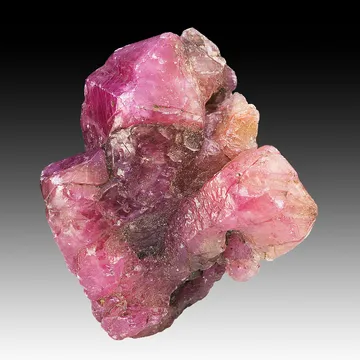
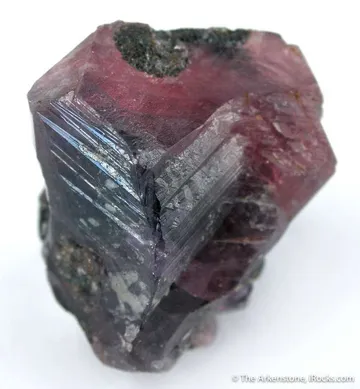
The finest Winza specimens have the saturated color collectors want in gem ruby, but with crystal form still intact: glassy rhombohedral, pseudo-octahedral, tabular, prismatic, and dipyramidal corundum crystals, commonly centimeter-scale, with some crystals from the hard-rock amphibolite reported much larger. Good specimens can show red ruby cores or zones with bluish violet to blue sapphire banding, sometimes producing the unforgettable “ruby-sapphire” look that made Winza instantly recognizable. For mineral collectors, that zoning is as important as the cutting potential. A faceted Winza stone may be judged by color and clarity; a specimen-grade Winza crystal is judged by its form, luster, transparency, color zoning, freedom from heavy contacts, and whether it still carries a meaningful association with garnet, pargasitic amphibole, kyanite, mica, or other host-rock minerals.
Regional View
Country View
The deposit’s collecting history is compact but dramatic. News of bright, transparent rubies from Winza spread through the Tanzanian gem trade in November 2007; by early 2008, hundreds and then thousands of miners, brokers, and buyers had converged on the area. The first excitement centered on fine unheated rubies from the eluvial soil, while the underlying hard rock yielded more abundant but generally lower-grade ruby, sapphire, and color-zoned corundum. That distinction still matters for collectors: some of the cleanest red gem material appears to have come from the residual or eluvial ground, whereas many of the more mineralogically interesting corundum crystals and matrix specimens belong to the amphibolite-hosted system.

Photo: Rob Lavinsky, iRocks.com via Wikimedia Commons
Search for specimens: View all specimens from Winza, Tanzania
The Winza mining area is in central Tanzania, south to southeast of Dodoma and reached through the town of Mpwapwa, with the mining ground lying beyond Winza village in a remote seasonal-river landscape near Mtakanini Hill. Field accounts from the first rush describe the dry-season journey from Mpwapwa to the workings as a long four-wheel-drive trip; in the rainy season, mud could make the road extremely difficult or effectively impassable. The main mining area was associated with the Mtindiri River, which supplied water for washing gem-bearing soil during the early rush.
Geologically, Winza is an amphibolite-hosted ruby and sapphire occurrence in the Usagaran Belt. Corundum occurs in mafic metamorphic rocks, especially dark amphibolite and garnet-rich, pargasite-bearing, dike-like bodies that cut or occur within the amphibolite. The key assemblage reported for the corundum-bearing zones includes corundum with garnet of the pyrope-almandine series, pargasitic amphibole, plagioclase locally, spinel, apatite, mica, kyanite, titanite, and allanite or other accessory phases in some descriptions. Thermobarometric work on the garnet-amphibole-corundum assemblage placed the metamorphic overprint at roughly 800 ± 50°C and 8–10 kbar, a high-grade environment compatible with metamorphosed mafic to ultramafic or high-alumina gabbroic protoliths. This is part of what separates Winza from classic marble-hosted ruby localities: the inclusions, chemistry, and host-rock context are fundamentally different.
The deposit was worked in both eluvial and primary forms. The eluvial material consisted of weathered, gem-bearing soil over the primary rock; miners dug it with picks and shovels, carried it to the river in bags, by hand, by bicycle, or by simple carts, and washed it with screens and small pumps. During the dry season, when the river held little water, miners dug pits in the riverbed and built small dams to create washing pools. Primary mining began early in 2008, following the corundum-bearing amphibolite and dike-like zones underground. Initial tunnels were hand-dug and tens of meters deep, with buckets raised by ropes or windlasses; later field observations described some underground workings exceeding 100 meters.
Mining at Winza was overwhelmingly small-scale rather than a single formal industrial operation. During the height of the 2008 rush, several hundred small groups worked under local organization, while Tanzanian brokers carried stones to Mpwapwa, where Thai, Sri Lankan, Indian, and other buyers competed for parcels. The best early rough moved quickly through Bangkok and Colombo, and the locality became widely discussed at the 2008 Basel and Tucson gem shows. Government processing of many small-scale mining license applications was reported during the rush period, and later academic work treated Winza as a case study in the institutional and environmental challenges of small-scale gemstone mining in Tanzania.
The production curve was sharp. The finest, cleanest red rubies appear to have been most abundant in the first months of exploitation, especially from the residual or eluvial ground. As that soil was worked down, miners turned increasingly to the harder primary rock, which produced more sapphire, pink-to-purple corundum, mixed ruby-sapphire material, and lower-grade included corundum. By 2016, GIA field gemologists found the principal Mtakanini workings nearly deserted, with an old rusted washing plant idle and only a handful of people mining, mainly in deep primary tunnels subject to flooding. They also recorded brief nearby ruby rushes at Godegode, Makutop, Magaseni, Singonali, and Berega, underscoring that Winza is best understood as a district-scale corundum event rather than one neat, continuously productive mine.
Collecting access today should be treated as restricted and conditional. Winza is a working gemstone area, not a public collecting locality. Any visit requires permission from the relevant landholders, license holders, and Tanzanian authorities, and foreign visitors to Tanzanian gem deposits have been specifically noted in field literature as needing proper approval and business status. For most collectors, the practical route is the specimen market: old-stock material from the 2008–2010 rush, later intermittent production, and occasional pieces from private collections or dealer inventories. Specimens with reliable labels from the early Winza rush are now a meaningful part of the locality’s desirability.
Winza ruby is the locality’s signature prize: transparent to translucent red corundum, commonly in rhombohedral to pseudo-octahedral, tabular, prismatic, or dipyramidal crystals, with the best examples showing a glassy luster and a lively red to pinkish red color that caused early buyers to compare the finest stones with top commercial ruby. Eluvial crystals and fragments from the first rush were often small but facetable, while hard-rock corundum in amphibolite and garnet-pargasite rocks could be larger and more mineralogical; published descriptions mention eluvial corundum generally around centimeter scale or smaller, but amphibolite-hosted crystals approaching 10 cm in exceptional cases. Top red Winza rubies are especially noted for curved orange-brown tube-, fiber-, needle-, or hair-like inclusions, together with amphibole, garnet, and rare apatite inclusions; collectors prize sharply formed, lustrous, gemmy red crystals with minimal contacting, visible zoning, and attractive matrix associations, while ordinary pieces are darker, fractured, heavily included, abraded, or too massive to show the locality’s distinctive crystal character.
Winza sapphire occurs with the ruby in the same amphibolite-hosted system and is most admired where it shows pink, purple, violet, blue, orangy pink, or rare padparadscha-like hues, often with dramatic color zoning in the same crystal. Much of the blue, purple, pink, and mixed-color sapphire belongs to dipyramidal or prismatic-tabular-rhombohedral habits rather than the finest red rhombohedral ruby habit, and Winza’s sapphires can carry bluish violet layers parallel to prism, basal, rhombohedral, or dipyramidal faces. The best collector sapphires from Winza are not necessarily the cleanest cutting rough; they are crystals that show the locality’s mixed-color identity clearly—blue against red, lavender against pink, or sharp bands and patches inside a partly transparent crystal—preferably with crisp form, good luster, and limited damage. Ordinary pieces tend to be hazy, dark, fractured, or so heavily included that the zoning becomes muddy rather than graphic.
As a mineral-specimen locality, Winza is best understood through corundum in the broad sense, because many pieces sit at the boundary between ruby, pink sapphire, purple sapphire, blue sapphire, and mixed ruby-sapphire material. Published morphological work divides Winza corundum into prismatic-tabular-rhombohedral and dipyramidal types, with medium to dark red top-quality ruby commonly rhombohedral and the pinkish red, purplish red, pink, purple, blue, and strongly zoned stones more often dipyramidal. Some rhombohedral crystals mimic spinel octahedra closely enough to be described as pseudo-octahedral, although their face angles and common twin lines reveal them as corundum. For collectors, the strongest Winza corundum specimens combine recognizable crystallography with transparency and zoning: a crystal may be too mixed in color for a gem dealer’s “ruby” category yet far more exciting to a mineral collector because it displays the full genetic and visual complexity of the deposit.
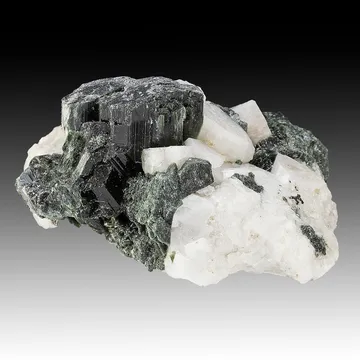
Other documented minerals from Winza and its immediate corundum assemblage include garnet of the almandine-pyrope series or garnet group, pargasite, kyanite, mica, titanite, spinel, apatite, plagioclase or scapolite-group material in regional listings, and accessory phases such as allanite reported in geological descriptions. No verified type-locality mineral is known from Winza in the major published and locality sources consulted; the locality’s rarity value rests instead on its distinctive ruby-sapphire corundum, amphibolite-hosted paragenesis, and short-lived, well-documented gem rush.
Winza material has two separate authenticity issues: natural-versus-synthetic ruby, and true Winza origin versus other red or mixed-color corundum sold under the name. The first became a problem almost immediately. The finest early Winza rubies were so clean, bright, and transparent that experienced buyers and gemologists initially suspected synthetics. At the same time, reports from Mpwapwa and the early trade specifically mention synthetic ruby and ruby imitations being mixed into parcels, including flame-fusion synthetic ruby fragments and flux-grown spinel imitations that could resemble rough Winza ruby to an unwary buyer. Pink-red spinel was also reported as a possible contaminant in Winza ruby parcels.
For specimen collectors, this means a loose “Winza ruby” crystal should be judged with the same skepticism one applies to any valuable loose corundum crystal. Desirable natural indicators include genuine crystal wear or contacts consistent with mining, natural surface textures, internal growth zoning, bluish violet Winza-type color zoning, natural healed fissures, and inclusions such as amphibole, garnet, apatite, and the distinctive orange-brown tubes or hairs in fine red material. However, some natural Winza fissures contain grayish white to pale yellow material that can resemble flux residues, so simplistic “flux-like = synthetic” judgments are risky. High-value pieces, especially clean red loose crystals or cut stones, deserve laboratory confirmation.
Heat treatment is documented for some Winza gem rubies, though early published work considered treated Winza stones uncommon and noted that heating was not especially successful for much of the material. Heat-treated Winza stones reported in 2008 tended to show an orange modifying hue. For mineral specimens, treatment questions are usually less about routine heating and more about honesty of labeling, repair, oiling or filling of fissures, and whether a crystal has been polished, windowed, or altered to show transparency. Because Winza corundum can contain valuable cutting areas, some specimens were historically caught between the gem and mineral markets; broken, cleaved, or partly polished pieces are not unusual.
Condition is a major value divider. Many crystals are contacted, chipped, or internally fractured, and even attractive specimens may show natural healed fissures, twin planes, or included zones. The best loose crystals have strong luster, complete or nearly complete form, clear color, and minimal edge abrasion. Matrix specimens are rarer in top quality and should be evaluated for the stability and attractiveness of the host: garnet-amphibolite or kyanite-bearing matrix can add strong locality character, but it may also obscure the ruby or make the piece blocky and less displayable.
Winza ruby and sapphire are hard and durable as corundum, but collectors should still avoid ultrasonic cleaning for fractured or included stones, especially matrix specimens. Gentle hand cleaning is safer. Ruby from Winza may show weak to moderate long-wave ultraviolet fluorescence, with some top-quality rubies showing stronger reactions, while short-wave response is generally weak to very weak; fluorescence is useful as an observation, not as a stand-alone test of origin.
Market availability is uneven. Winza was famous quickly, then overshadowed by the enormous Montepuez ruby deposit in Mozambique after 2009. As a result, Winza specimens remain available but not abundant in fine quality. Low-grade fractured ruby, pink-to-purple sapphire, and color-zoned corundum appear periodically; sharp, gemmy red crystals with good form, especially old-stock pieces from the first rush, are much scarcer. The most collectible specimens are those that could only be Winza at a glance: glassy red rhombohedral ruby, red-and-blue corundum, or ruby on a credible amphibolite-garnet-kyanite matrix with a reliable label.
The Winza story begins like many great gem rushes: with a rumor that outran the road. Before the rush, the area was described as sparsely populated farming country, and the origin story already had the quality of local legend. Some residents said gems had been mined for years by a farmer who quietly sold stones in Dar es Salaam. After his death, the story goes, his young son continued the business but could not keep the secret. By November 2007, Tanzanian traders had learned enough to go looking. Within weeks, Winza was no longer just a farming area; it was a destination for miners, brokers, buyers, and gemologists.
One of the first named figures in the story was Abdul Msellem, a Tanzanian gem broker who returned from a month at Winza and reported to the Gübelin Gem Lab in January 2008 that roughly 600 miners were already at work. The deposit was not producing only red ruby, but pink-to-red ruby, blue sapphire, and purple sapphire. The first gem-bearing ground was described in one early field report as a former cornfield, yielding small facetable stones of 0.5 to 3 grams and well-formed crystals up to 10 grams. For mineral collectors, that image remains powerful: not a deep industrial shaft, but a field and hillside suddenly giving up gem corundum in colors from red to blue.
The pace accelerated brutally. By December 2007, about 600 diggers and brokers from Tanzanian mining areas and gem markets had moved in. By the time of the Tucson show in February 2008, word reaching international dealers spoke of more than 1,000 miners. In April and June 2008, field visits by Vincent Pardieu, Jean Baptiste Senoble, Brendan Laurs, and James Shigley found the rush in full force. By July 2008, estimates placed roughly 6,000 miners at Winza, and more than 100 foreign buyers—mostly Thai and Sri Lankan—were operating out of Mpwapwa. The town took on the feel of earlier gem-rush centers such as Tunduru in Tanzania and Ilakaka in Madagascar, with buying offices, advertisements, and brokers moving parcels from mine to market.
The name Mtakanini adds a wonderfully human detail to the locality. The mining camp near the main workings was associated with Mtakanini Hill, a name translated in field accounts as “what do you want?” The question must have sounded apt in 2008. Miners wanted the next red crystal from the soil; brokers wanted parcels before their competitors saw them; buyers wanted clean unheated stones; gemologists wanted firsthand samples before the trade was flooded with confusion; and collectors, once they saw the crystals, wanted specimens that kept their natural shape rather than disappearing into cutting wheels.
The working methods were as direct as the rush itself. Miners dug eluvial soil with picks and shovels, carried it to the Mtindiri River, washed it with simple screens and pumps, and picked out the gems by hand. In the dry season, the river could run low enough that miners dug pits into the riverbed and dammed small pools just to have washing water. When the easy soil began to run out, attention shifted underground. By spring 2008, tunnels had already been driven by hand into the hard rock; some were only tens of meters deep at first, but later mining reached far deeper. Buckets of rock came up by rope or windlass, a low-tech method for a deposit producing stones that could be compared on the world stage with some of the finest ruby then available.
One of the most memorable twists is that the finest rubies were almost too good-looking. Gübelin gemologists saw early stones with such high transparency and such bright color that synthetic origin was seriously considered. The suspicion was not academic; synthetic stones really were turning up in the trade around Mpwapwa, mixed into parcels offered as Winza material. The field expedition was partly an answer to that problem: go to the mine, collect samples directly, and build a reference base before the market made certainty impossible. The result was one of the best-documented modern ruby rushes, with field observation, microscopy, spectroscopy, chemistry, isotope work, and inclusion studies all tied back to the same sudden source.
Then came the anticlimax common to many rushes. The best red eluvial rubies declined as the upper ground was worked out, and the hard-rock material did not consistently match the best early soil stones. By 2016, when GIA field gemologists returned to Winza, Mtakanini was nearly deserted. An old washing plant stood rusting and idle, reportedly unable to wash stones for more than a year because of mechanical problems. Only a handful of people were still mining, mostly in deep primary tunnels, some over 100 meters, where hard rock and flooding made work difficult. Nearby places—Godegode, Makutop, Magaseni, Singonali, and Berega—had seen brief ruby rushes of their own, but the great Winza moment had already passed into collecting history.
That brevity is part of the locality’s magnetism. Winza was not a century-long mine with orderly production records; it was a brilliant interruption. For a short time, remote ground in central Tanzania produced rubies so transparent they made gemologists suspicious, sapphires so color-zoned they challenged simple gem names, and crystals so sharp that mineral collectors still recognize them instantly. The market moved on to Mozambique in volume, but Winza kept its identity.
Dietmar Schwarz, Vincent Pardieu, John M. Saul, Karl Schmetzer, Brendan M. Laurs, Gaston Giuliani, Dieter Klemm, Charles A. Hauzenberger, Daniel Fallick, and others, “Rubies and Sapphires From Winza, Central Tanzania,” Gems & Gemology, Winter 2008, pp. 322–347. GIA PDF
Dietmar Schwarz, Vincent Pardieu, John M. Saul, Karl Schmetzer, Brendan M. Laurs, Gaston Giuliani, Dieter Klemm, and coauthors, “Rubies and Sapphires from Winza, Central Tanzania,” online article version of the Winter 2008 Gems & Gemology study. GIA article
Vincent Pardieu and Dietmar Schwarz, “Field Report From Winza,” Rapaport Magazine, July 1, 2008. Rapaport
K. Schmetzer, W. Radl, and D. Schwarz, “Winza ein neues Rubinvorkommen in Tansania,” Lapis, Vol. 34, No. 5, 2009, pp. 41–46. Listed as a Winza corundum and garnet reference in Mindat locality records. Mindat corundum occurrence
Abduriyim A. and Kitawaki H., “New geological origin: Ruby from Winza of Tanzania,” Gemmology, Vol. 39, Issue 8, No. 467, 2008, pp. 4–7. Cited in the reference list of the GIA Winza study. GIA PDF
Choudhary G., “Gem News International: An interesting zoned sapphire crystal from Winza, Tanzania,” Gems & Gemology, Vol. 44, No. 3, 2008, pp. 270–272. Cited in the reference list of the GIA Winza study. GIA PDF
Gaston Giuliani, Lee A. Groat, and coauthors, “Geology of Corundum and Emerald Gem Deposits,” Gems & Gemology, Winter 2019. Includes Winza as an amphibolite-hosted ruby-sapphire example with garnet-pargasite-bearing dikes and high-grade metamorphic conditions. GIA article
Mandy Y. Krebs, Matthew F. Hardman, David G. Pearson, Yan Luo, Andrew J. Fagan, and Chiranjeeb Sarkar, “An Evaluation of the Potential for Determination of the Geographic Origin of Ruby and Sapphire Using an Expanded Trace Element Suite Plus Sr–Pb Isotope Compositions,” , 2020, 10(5), 447. Includes Winza ruby in trace-element and Sr-Pb isotope origin work.
Mindat: Winza, Mpwapwa District, Dodoma Region, Tanzania — Core locality page for coordinates, geology, mineral list, and specimen photos.
Mindat: Corundum from Winza — Species occurrence record with habit, color, size, and reference notes specific to Winza corundum.
GIA: Rubies and Sapphires From Winza, Central Tanzania — The indispensable full scientific study of Winza geology, mining, morphology, inclusions, chemistry, and origin.
GIA article page: Rubies and Sapphires from Winza, Central Tanzania — Web version of the landmark G&G article.
Rapaport: Field Report From Winza — Early 2008 field account by Vincent Pardieu and Dietmar Schwarz, especially valuable for rush history and mine-site observations.
GIA: Update on Colored Gemstone Mining in Tanzania — Later field update noting Winza’s post-rush decline and the condition of the Mtakanini workings.
GIA: Geology of Corundum and Emerald Gem Deposits — Broader geological context for Winza as an amphibolite-hosted corundum deposit.
MDPI Minerals: Sr-Pb isotope and trace-element origin study — Technical paper using Winza samples in modern geographic-origin research for ruby and sapphire.
University of Dodoma repository: Kimambo dissertation on Winza small-scale mining — Useful source on institutional, environmental, and management aspects of Winza ruby mining.
Wikimedia Commons: Minerals of Winza — Public image archive of Winza ruby and corundum specimens, many from early dealer photography.
Sakunda Ndeliso Kimambo, “Institutional Dimensions in Management of Small-Scale Mining in Tanzania: A Case of Winza Ruby Mining at Mpwapwa District,” M.Sc. dissertation, University of Dodoma, October 2012. University of Dodoma repository PDF
Rob Lavinsky / iRocks specimen photographs of Winza corundum preserved on Wikimedia Commons document early-market mineral specimens, including lustrous gemmy ruby crystals with sizes and weights recorded in the original descriptions. Wikimedia Commons category