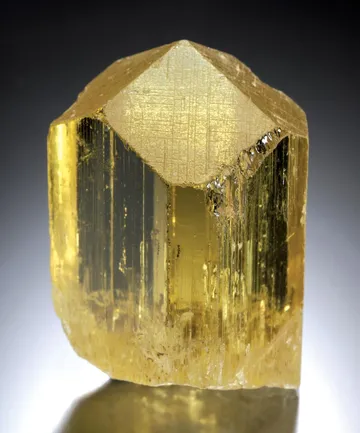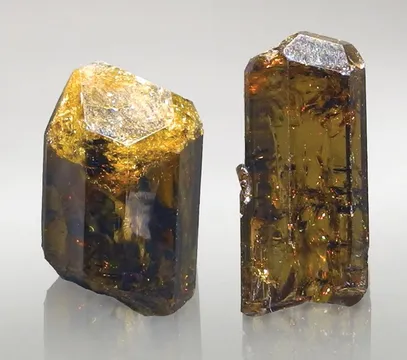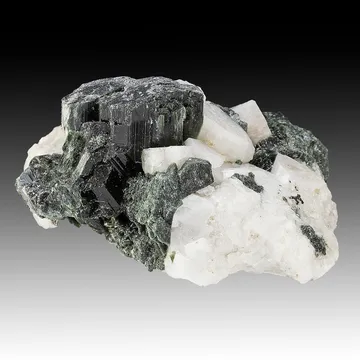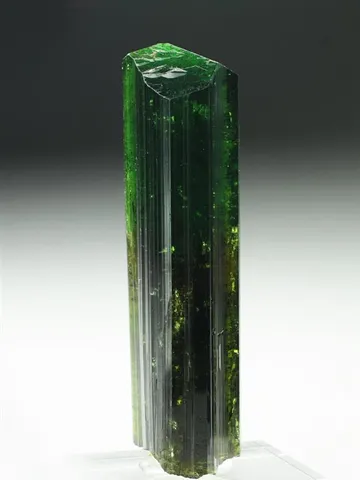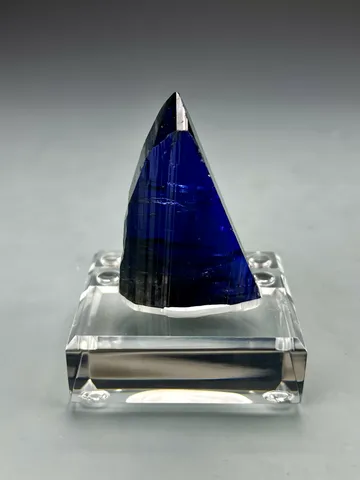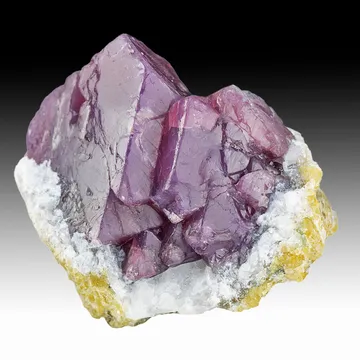
Mahenge, Tanzania - marble-hosted spinel in vivid colors (hot pink to cobalt blue) and giant crystals, sculptural specimens prized by collectors.
Key facts
Mahenge is one of the few modern gem localities whose name has become a color term. For collectors, “Mahenge” means marble-hosted spinel of extraordinary saturation: hot pink, cherry red, orange-pink, and, in a newer chapter, cobalt-influenced blue. The locality sits in the Mahenge Mountains of the Ulanga District, Morogoro Region, in south-central Tanzania, where spinel and ruby occur in and around high-grade metamorphic marbles of the Mozambique Belt / East African Orogen. The best specimens are not merely gem rough; they are sculptural mineral specimens — sharp octahedral spinel crystals, sometimes partly transparent, perched on pale marble with clinohumite, pargasite, phlogopite, apatite, graphite, or corundum.
Regional View
Country View
The district’s reputation changed abruptly in August 2007, when several giant pinkish-red spinel crystals were recovered at Epanko, also spelled Ipanko, southwest of Mahenge. One crystal weighed about 52 kg, and later gemological literature cites crystals up to 54 kg from the same event. Their centers were not uniformly fine, but their outer zones yielded unusually clean, vivid stones in 10–50 ct sizes, enough to make Mahenge one of the benchmark names in the world market for fine spinel. For the mineral collector, the same discovery matters because it proved that Mahenge could produce spinel not only as cuttable fragments but as major crystals and matrix specimens, a rarity for gem spinel localities.
Mahenge also has an older and quieter specimen history. Around 2000, dark purple spinel octahedra in white marble appeared, with crystals reported up to about 5 cm and, more rarely, flattened spinel-law twins. The orange associated mineral on some pieces was first suspected to be spessartine but was confirmed by X-ray diffraction as clinohumite, an association that gave the specimens a look reminiscent of classic Pamir spinel-and-clinohumite material. Since 2021, the Lukande area southeast of Mahenge has added a distinct blue-spinel chapter: cobalt-bearing spinels, commonly included and often small when fine, but scientifically important because they can be separated from cobalt-bearing spinels from Vietnam, Sri Lanka, and Pakistan by trace-element chemistry and inclusion suites.
Search for specimens:
Mahenge is a district-scale gem field rather than a single hole in the ground. The core localities documented around the town include Epanko / Ipanko, Lukande / Lukanda, Chipa, Mayote, Kituti / Ketuti, Ruaha, Mbarabanga, Isongo, and associated small workings along the Lukande River. Mindat places Mahenge at about 8°40'59" S, 36°43'00" E and summarizes the setting succinctly as spinel occurrences within a large marble massif. The gem-bearing rocks belong to the high-grade metamorphic terrain of eastern Africa: marbles and calc-silicate rocks associated with granulitic basement gneisses, folded and thrust in nappe structures during the East African Orogen and later overprinted during late Pan-African to Kuunga-Malagasy events.
The mineralization is best understood as marble-hosted spinel and ruby, locally modified by weathering into eluvial and secondary deposits. At Epanko, the famous pink-to-red spinel was recovered from karstic and weathered marble. Field reports from 2007 describe marble outcrops standing above the spinel diggings, a primary hard-rock spinel area nearby, and spinels in marble with blue apatite and clinohumite. At Lukande, the 2021 cobalt-bearing blue spinel find was described from an eluvial layer roughly 1–8 m below surface, beneath dark soil and in strongly weathered marble that had partly decomposed to soil. Miners also broke unweathered marble blocks with hammers when searching for larger stones. That contrast — gem crystals in marble, then liberated by tropical weathering into pits, gravels, and soil — explains why Mahenge produces both specimen crystals in matrix and loose rough for the cutting trade.
Ruby and sapphire are part of the same regional story. The Lukande River area, Chipa, Mayote, Kwam Somali, Ibogoma, Gombe, and Kitonga have all been noted for small-scale ruby recovery. Geological work on Morogoro ruby deposits places the Mahenge ruby occurrence in dolomite-dominated marbles, with corundum-calcite-plagioclase-phlogopite assemblages and accessory dolomite, pargasite, sapphirine, titanite, and tourmaline. The ruby deposits are structurally controlled, tied to mica-rich boudins and fold hinges where fluid-rock interaction increased permeability. Mahenge spinel and ruby are therefore not accidental neighbors; they are products of a carbonate-rich metamorphic system capable of concentrating aluminum, magnesium, chromium, and other trace elements into corundum and spinel during deformation and metamorphism.
The mining history is a sequence of small rushes punctuated by one world-famous find. Cabochon-grade ruby was reported around Kitonga from 1988 to 1993, and Lukande was active from 1986 to 1992 when Thai operators worked the “Simba” mine. In 1989, local accounts record a hunter finding a large red stone; by 1990–1994, the “Tom mine” was operating with a Thai partner before attention shifted toward the new Tunduru discoveries. By the time of the 2007 field visit by Richard W. Hughes, Vincent Pardieu, and colleagues, Lukande, Mayote, and Chipa each had about twenty small-scale miners, while Mbarabanga was reported with 30–50 miners working ruby and color-change spinel.
The 2007 Epanko discovery remains the defining production event. The giant spinels came from the “Joel Box,” named for the miner associated with the find. Four large crystals were reported at about 52, 28, 20, and 5.7 kg, and other literature describes the largest as up to 54 kg. The material was important because its outer zones were bright, clean, and large enough to cut exceptional gems, but the collector world also remembers it for scale: true spinel crystals of boulder-like mass from a marble locality.
Mining at Ipanko was already complicated by rights conflicts in late 2007, and a field report notes that work stopped just days after the visit. Later, some miners left Mahenge for other Tanzanian rushes, including spessartine near the Serengeti and the then-new Winza ruby rush. By 2016, GIA reported Ipanko as still the main spinel deposit in the region, but with activity slower than in 2012: several excavators were working secondary deposits, the nearby primary spinel deposit was active, and roughly 400 people were mining red spinel with only a few working ruby.
The 2021 Lukande blue-spinel rush shows how quickly Mahenge can still change. In January 2022, a field visit connected with SSEF and Journal of Gemmology research recorded about 3,000 people working the new blue-spinel area, though only about 300–500 were reportedly from Mahenge itself; others had come from elsewhere in Tanzania and from neighboring countries such as Mozambique, Kenya, and Burundi. Local government supervisors divided the area into small plots of about 6 x 10 m, with artisanal miners paying a fee equivalent to about US$10 to compensate landowners. The gem-bearing material was bagged and carried by bicycle to a nearby stream for washing in sieves.
Collecting access today should be treated as restricted and commercial, not recreational. The Lukande blue-spinel study specifically notes that access by foreigners and gem dealers was generally restricted, that only local brokers could buy directly from miners, and that the brokers had to present stones to government officials at the mining office in Mahenge before royalties were paid on sales. For Epanko, the Tanzanian Ministry of Minerals has described Ruby International as overseeing spinel mining in Epanko village, and also names Ruby International Limited and Franone Mining as key Tanzanian companies involved in Mahenge spinel. Ruby International states that it began in 2014 with the Mahenge / Epanko project focused on spinel, while Franone describes itself as mining spinel in Mahenge alongside its tanzanite operations. A collector should therefore expect that legitimate specimens come through miners, licensed dealers, or companies, and that any field visit requires permission from landowners, claim holders, and local authorities.
Graphite adds another layer to the modern Mahenge mining landscape, though it is separate from the classic spinel specimen story. The Mahenge Graphite Project, near Mahenge township and about 70 km south of Ifakara, is planned as a large open-pit flake-graphite operation. Its presence underscores that the Mahenge Mountains are not only a gem field but a broader metamorphic resource district, with graphite-rich units in the same regional terrain that hosts marble, calc-silicate rocks, and gemstones.
Mahenge spinel is prized most when it combines saturated color, euhedral form, and some survival as a specimen rather than disappearing into the cutting wheel. The classic collector pieces are sharp octahedra in pink, red, purple, and violet tones, locally on white to gray marble and associated with clinohumite, pargasite, phlogopite, apatite, graphite, calcite, and corundum; good specimens may have gemmy edges or windows when backlit, while exceptional pieces show multiple bright octahedra naturally seated on marble. Older purple material from the 2000 find reached about 5 cm as octahedra and rare spinel-law twins, and the post-2007 Epanko material established Mahenge as a source of very large pinkish-red crystals, with rough masses tens of kilograms in weight. The finest red-to-pink examples separate themselves from ordinary Mahenge material by clean, glowing color without a gray or brown cast, sharp undamaged octahedral faces, strong translucency or gemminess, and, for specimen collectors, the rare preservation of matrix and associated minerals; the newer Lukande blue spinels are usually known as cut stones rather than cabinet specimens, but their cobalt-bearing color, högbomite-like lamellae, and apatite-zircon-phlogopite inclusions make them an important scientific extension of the same Mahenge marble-spinel system.
Other documented minerals from the Mahenge area reflect a high-grade marble and calc-silicate assemblage rather than a broad metallic ore suite. Mindat records apatite, calcite, chlorite group, clinohumite, corundum including ruby and sapphire, diopside, dolomite, forsterite, graphite, högbomite group, magnesite, magnetite, olivine group, pargasite, phlogopite, powellite, pyrite, quartz, rutile, scapolite, and tremolite from Mahenge and its sublocalities. The most collectible associates are clinohumite with spinel, ruby after or with spinel, green pargasite on red spinel, and blue apatite in the marble assemblage. The most scientifically useful rarities tend to be inclusions rather than display minerals: högbomite lamellae, apatite, zircon, graphite platelets, phlogopite, dolomite, and forsterite have all been used in gemological work to understand and separate Mahenge spinel.
Mahenge presents one of the central dilemmas of gem-mineral collecting: many of the best crystals are worth more as cut stones than as mineral specimens. That is why complete matrix specimens, even small thumbnails, are far scarcer than faceted gems. A loose crystal or broken fragment may be entirely genuine Mahenge spinel, but a specimen with sharp undamaged octahedra naturally attached to marble is much harder to replace.
The most common condition issues are contact marks, cleaves or broken attachment points from marble removal, bruised octahedral edges, and repaired or trimmed matrix. Interrupted growth surfaces are common where spinel grew against marble or detached from it during pocket extraction; these should not automatically be treated as damage, but they should be distinguished from fresh breaks. On larger red crystals, inspect for zones of lower transparency, stress fractures, graphite or mica inclusions, and sawed or polished windows added to expose gem color. Some large masses from the 2007 event had superb outer zones but lower-quality centers, so “giant Mahenge” does not automatically mean uniformly gemmy.
Fluorescence can be useful but should not be used alone for origin. Chromium-rich pink-to-red Mahenge spinel commonly shows red fluorescence under long-wave ultraviolet light and may be inert or weaker under short-wave, while documented spinel-ruby replacement specimens from Mahenge can fluoresce bright red because both Cr-bearing spinel and ruby are present. Blue cobalt-bearing Lukande spinels behave differently: studies reported weak greenish reaction to long-wave UV in many samples, with inert short-wave response, and other work linked moderate to strong green fluorescence to an emission band near 511 nm. For specimens that combine spinel and ruby, UV can help reveal replacement, coatings, and mixed areas, but lab work is needed for certainty.
The authenticity problem is not that Mahenge spinel is routinely treated in the way ruby or sapphire may be; it is that the name “Mahenge” has become valuable. Attractive pink spinel from other Tanzanian or East African deposits, Mogok-style Burmese spinel, and even synthetic spinel may be loosely sold as Mahenge in the market. SSEF notes that spinel can be treated, including heat treatment or fissure filling, and GIA has documented that some heat-treated spinel exists even though top-quality natural spinel has not been subject to large-scale treatment. For important faceted stones or high-value crystals, a modern laboratory report from a major gem lab is sensible, especially when the sale depends on origin, treatment status, or a cobalt-blue claim.
Blue Mahenge / Lukande material deserves particular caution. Historically, strong cobalt-blue color in spinel raised suspicion because synthetic cobalt-doped spinel is common, while natural cobalt-bearing blue spinel is rare. The recent Lukande material is real and well studied, but it can be included, dark, grayish, greenish, or small; very fine blue stones over 5 ct are rare, and fine stones above 10 ct are exceptional. The best verification relies on a combination of trace-element chemistry, spectra, and inclusions such as oriented lamellae inferred as högbomite, plus apatite, zircon, and phlogopite.
Market availability is split. Small faceted pink-to-red Mahenge spinels remain visible in the trade, but top color in clean stones over a few carats is increasingly expensive and thinly supplied. Specimen-grade crystals on matrix are much scarcer still, because most fine rough has historically been cut. The most desirable mineral specimens are not simply “red”: they are balanced pieces with recognizable octahedral form, strong color, some translucency, attractive marble or clinohumite/pargasite association, and minimal extraction damage.
The Mahenge story that collectors still repeat began not in a polished showroom but in a named pit: the Joel Box at Ipanko. When Richard W. Hughes, Vincent Pardieu, and their companions arrived in October 2007, they were told that several giant spinel crystals had been taken from that ground only two months earlier. The reported weights were staggering for spinel: 52 kg, 28 kg, 20 kg, and 5.7 kg. The biggest was so large it had to be split into smaller pieces for transport. In a single episode, a locality known to specialists became a world name.
The romance of the Joel Box is sharpened by the mineralogical contradiction inside those crystals. They were not flawless glassy masses from center to rim. The central portions were lower quality, but the outer zones were superb — vivid, transparent enough, and large enough to yield clean red stones from 10 ct to nearly 50 ct. A collector looking at a Mahenge specimen today should remember that tension: the same crystal could be a mineralogical monument, a parcel of gem rough, and a financial argument. Every undamaged octahedron left on matrix represents a decision not to cut.
The road to Ipanko gave experienced gem travelers an uncanny sense of déjà vu. Weathered marble rose above the diggings in a way that reminded Hughes of Burma’s Mogok Stone Tract, another marble-spinel world where karst, soil, and gem pockets interact. At Ipanko, miners worked the spinel-bearing marble itself, and a hard-rock area nearby produced spinel with blue apatite and clinohumite. The finest handfuls of red stones were the end of a long chain of digging, carrying, washing, sorting, bargaining, and sometimes breaking apart crystals that mineral collectors would have preferred to save.
Mahenge’s pre-2007 history is no less human. At Lukande, local miners told the 2007 visitors that a hunter named Mr. Gutapak found a large red stone in 1989 and brought it to a villager, Mr. Mash, who claimed the area. A Thai partner known as Khun Tom joined later, and the mine became the “Tom mine.” The story then darkened: the earlier Thai-operated “Simba” mine was said to have closed after a claim-jumper was killed and the camp was attacked by an angry mob, with three people reportedly killed. Whether retold in a gem office or beside a pit, the lesson is plain: Mahenge’s mineral wealth has always sat inside a difficult social and legal landscape, not outside it.
The 2021 Lukande blue-spinel rush had a different look. Instead of a few giant red crystals, the new attraction was a valley with farmland, dark overburden, weathered marble, bicycles, bags, and sieves. By January 2022, about 3,000 people were reportedly working there. Local supervisors divided the ground into plots about 6 x 10 m, and miners paid a fee equivalent to US$10 to compensate landowners. The gem-bearing dirt and decomposed marble were bagged, carried by bicycle to a stream, and washed. Most miners, however, were not becoming rich. Researchers reported that many could not cover expenses because much of the spinel was included or colored grayish purple, grayish blue, or greenish blue rather than the vivid blue the trade wanted.
The blue stones also tell a story under the microscope. Nearly every studied stone held some internal record of its origin: oriented rhombic lamellae inferred to be högbomite, sometimes flashing iridescent colors as the stone was turned under light; clusters of apatite, zircon, and phlogopite; needles, particles, healed fissures, and octahedral negative crystals. In a market where origin names can be carelessly applied, those tiny internal objects are Mahenge’s more durable paperwork.
Mindat — Mahenge, Ulanga District, Morogoro Region, Tanzania — Core locality entry documenting coordinates, sublocalities, and the mineral list for Mahenge and its associated occurrences.
Mindat — Spinel from Mahenge, Ulanga District, Morogoro Region, Tanzania — Species-locality entry for spinel at Mahenge, including references to modern gemological studies and photo records.
Krzemnicki, M. S., Leuenberger, A., & Balmer, W. A. (2023). “Cobalt-bearing Blue Spinel from Lukande, near Mahenge, Tanzania.” The Journal of Gemmology, 38(5), 474–493. — The essential modern paper on the 2021 Lukande cobalt-bearing blue spinel discovery, including mining observations, gemology, inclusions, trace-element chemistry, and U-Pb dating of zircon inclusions.
Stephan, T., Henn, U., & Müller, S. (2023). “New Finds of Cobalt-Bearing Spinel Near Mahenge, Tanzania.” The Australian Gemmologist, 28(3). — Accessible discussion of blue cobalt-bearing spinel from Mahenge, including Fe-Co chemistry, green fluorescence, and högbomite-like lamellae.
Balmer, W. A., Hauzenberger, C. A., Fritz, H., Sutthirat, C., Prinz, S., & Häger, T. (2017). “Marble-hosted ruby deposits of the Morogoro Region, Tanzania.” Journal of African Earth Sciences, 134, 626–643. — Geological treatment of Morogoro ruby deposits, including Mahenge marbles, structural controls, assemblages, and metamorphic conditions.
Wu, J., Sun, X., Ma, H., Ning, P., Tang, N., Ding, T., Li, H., Zhang, T., & Ma, Y. (2023). “Purple-Violet Gem Spinel from Tanzania and Myanmar: Inclusion, Spectroscopy, Chemistry, and Color.” Minerals, 13(2), 226. — Open-access study comparing Tanzanian and Myanmar purple-violet spinels, with Mahenge-associated geology, inclusions, spectroscopy, and chemical discriminants.
Chankhantha, C., Kidkhunthod, P., Amphon, R., & Shen, A. H. (2020). “Gemological and XANES Investigations of Pink Spinel from Mahenge, Tanzania.” ICREM conference contribution. — Conference study of fifteen faceted pink Mahenge spinels, reporting RI, SG, fluorescence, inclusions, chromophore chemistry, and XANES results.
Gems & Gemology, Summer 2001 — “Spinel with clinohumite from Mahenge, Tanzania.” — Early Gem News International note documenting dark purple spinel crystals in white marble, crystals up to about 5 cm, rare spinel-law twins, and clinohumite confirmed by X-ray diffraction.
GIA — “Update on Colored Gemstone Mining in Tanzania.” Gems & Gemology, Fall 2016. — Field update describing Ipanko as the main Mahenge spinel deposit in 2016 and summarizing mining activity at spinel and ruby sites around the district.
Fluorescent Mineral Database — “Spinel and Ruby from Mahenge, Tanzania.” — Specimen-specific fluorescence record for a Mahenge piece composed of pink spinel partly replaced or coated by ruby, with long-wave and short-wave UV observations and emission spectra.
Lotus Gemology — Gem Hunting in Mahenge & Tunduru, Tanzania — The most vivid field narrative for Mahenge, including Lukande, Ipanko, the Joel Box giant spinel discovery, mining conditions, and photographs from the 2007 visit.
GIA — Update on Colored Gemstone Mining in Tanzania — Reliable field update for the status of Ipanko and nearby Mahenge ruby workings in 2016.
Journal of Gemmology — Cobalt-bearing Blue Spinel from Lukande, near Mahenge, Tanzania — Detailed scientific paper on the newer Lukande blue-spinel find, including geology, mining, spectroscopy, inclusions, trace elements, and dating.
Gemmological Association of Australia — New Finds of Cobalt-Bearing Spinel Near Mahenge, Tanzania — Practical gemological summary of the Lukande blue spinel material, including fluorescence and inclusion features.
Mindat — Mahenge, Ulanga District, Morogoro Region, Tanzania — Mineral list, map context, and sublocality framework for Mahenge.
Mindat — Spinel from Mahenge — Spinel-specific occurrence page for Mahenge, useful for specimen photos, references, and associated minerals.
Minerals — Purple-Violet Gem Spinel from Tanzania and Myanmar — Open-access comparison of Tanzanian and Myanmar spinel, with helpful inclusion and trace-element data.
ScienceDirect — Marble-hosted ruby deposits of the Morogoro Region, Tanzania — Geological paper placing Mahenge ruby mineralization within Morogoro’s marble-hosted metamorphic framework.
GIA PDF — Gems & Gemology Summer 2001 — Includes the early note on Mahenge spinel with clinohumite, a key reference for specimen collectors.
Tanzania Ministry of Minerals — Spinel tourism and Ruby International at Epanko — Government news item on Mahenge spinel, Epanko mining, and mineral tourism.
Tanzania Ministry of Minerals — Mahenge spinel and local mining companies — Government article naming Ruby International Limited and Franone Mining among principal investors in Mahenge spinel.
Ruby International Limited — Company site describing the Mahenge / Epanko project and the firm’s history in Tanzanian spinel mining.
Franone — Our Mines — Company page noting Franone’s involvement in Mahenge spinel mining.
Faru Graphite Corporation — Mahenge Graphite Project — Context for modern large-scale graphite development in the Mahenge district, separate from the gem spinel workings.