A collector's guide to Sweet Home Mine, USA: its geology, mining history and notable minerals, illustrated with the 784 specimens documented from this locality on EarthWonders.
Key facts
The Sweet Home Mine on Mount Bross, above Alma in Park County, Colorado, is one of the defining modern localities in the mineral-specimen world. It began as a high-altitude silver mine in the Alma mining district, but its lasting fame rests on pockets in which rhodochrosite crystallized with quartz, fluorite, tetrahedrite-tennantite, sphalerite, pyrite, chalcopyrite, hübnerite, and minor late-stage species. The deposit lies in the Mosquito Range within the Colorado Mineral Belt, where Tertiary magmatic-hydrothermal activity overprinted older crystalline basement and generated polymetallic Ag-Pb-Zn-Cu veins with a strong fluorine-tungsten-molybdenum signature.
Sweet Home specimens have a look that is instantly recognizable: saturated cherry-red rhombohedra, often translucent to transparent, perched above snow-white needle quartz and dark metallic sulfide matrix, sometimes accented by purple to colorless fluorite, brassy pyrite, black sphalerite, or sharp tetrahedrite. The best examples are not simply “red rhodochrosite”; they are sculptural, high-contrast vein-cavity specimens in which every mineral records the sequence of opening, ore deposition, and late open-space crystallization. The finest crystals from the mine, including the Alma King, Alma Rose, Alma Queen, Searchlight, Butterfly, Sno-Cone, and other named pieces, placed Colorado rhodochrosite among the most coveted classic mineral specimens ever produced.
Regional View
Country View
The mine’s historical importance comes from the unusual fact that it was reborn as a specimen mine. After nearly a century of intermittent silver work, the old workings were rehabilitated in the early 1990s by Sweet Home Rhodo, Inc., associated with Collector’s Edge Minerals, specifically to search for intact crystal pockets. That program combined underground mining, careful geological mapping, geochemical work, fluid-inclusion study, ground-penetrating radar, and unusually delicate extraction and preparation methods. The result was not a single lucky pocket, but a sustained run of named pockets that changed the market for rhodochrosite and set a new standard for specimen mining.

Photo: Wikimedia Commons
Search for specimens: View all specimens from Sweet Home Mine, USA
The Sweet Home Mine is in the Detroit City claim block on Mount Bross, northwest of Alma, in the Alma mining district of Park County, Colorado. Its portal was at roughly 11,600 feet elevation in steep alpine terrain, with surrounding summits rising toward 14,000 feet. Snow, ice, altitude, and underground conditions made it a short-season operation; published gemological accounts described practical access as only two to three months in a typical year, with the truly snow-free interval much shorter.
Geologically, the mine belongs to the Climax-Alma mineralized region of the Colorado Mineral Belt. The country rocks include Proterozoic crystalline rocks—gneiss, schist, granitic gneiss, migmatite, pegmatite, and related basement units—cut by Tertiary intrusions and mineralized vein systems. Several studies have connected the Sweet Home hydrothermal system to a Climax-type molybdenum-fluorine environment. The nearby Climax molybdenum deposit lies to the northwest, and Sweet Home shares several diagnostic features of that broader magmatic-hydrothermal setting: fluorite-rich veins, quartz-pyrite-sericite and greisen-style alteration, hübnerite, topaz, molybdenite, ferrimolybdite, and fluorine-rich fluids.
The productive specimen veins are polymetallic Ag-Pb-Zn-Cu veins. Historically, the valuable ore mineral was chiefly silver-bearing tetrahedrite-tennantite rather than the rhodochrosite itself. Rhodochrosite was a gangue mineral in the ore veins, forming in open cavities where fluids had space and time to grow crystals rather than simply seal the fracture with massive vein fill. The classic collecting assemblage—quartz, tetrahedrite-tennantite, sphalerite, pyrite, chalcopyrite, fluorite, hübnerite, fluorapatite, calcite, and rhodochrosite—reflects multiple pulses of mineralizing fluid and repeated opening of vein structures.
Structure mattered enormously. Published mine studies describe three principal structural trends near Sweet Home: an early northwest to east-west fracture trend generally parallel to basement fabric, a northeast-trending vein trend that contains most of the Ag-base-metal veins, and a later north-south fracture system. Good rhodochrosite pockets were not evenly scattered through the mine. They tended to occur at structurally favorable intersections and in openings along veins, especially where movement created cavities and later fluids deposited the crystal assemblage. This is why the 1990s operation relied heavily on underground mapping, three-dimensional target modeling, probing, geophysics, and paragenetic interpretation rather than blind drifting.
The paragenesis is central to understanding specimen quality. Quartz is abundant and often early, forming the white to transparent needle carpets so familiar on Sweet Home specimens. Sulfides and sulfosalts—tetrahedrite-tennantite, sphalerite, pyrite, chalcopyrite, galena, bornite and related copper sulfides—formed as important ore-stage minerals. Rhodochrosite followed in the open spaces, and fluorite, late quartz, calcite, fluorapatite, and clay minerals such as dickite may be present in or on the same pocket material. Fluid-inclusion studies and crystal-chemistry work show that the prized cherry-red rhodochrosite formed at higher temperature than later, paler, lower-quality pink rhodochrosite; the gemmiest red cores are notably low in iron, magnesium, and calcium impurities.
The mine was established as a silver mine in 1872 under the name Home Sweet Home, and it holds one of the early U.S. mining patents issued under the General Mining Law of that year. It was worked intermittently for silver into the twentieth century. During the silver years, rhodochrosite was often viewed as troublesome gangue; miners reportedly discarded much of it on the dumps, and later accounts emphasize that it interfered with silver recovery methods rather than being valued as a specimen mineral. By the 1960s and 1970s, however, the specimen value of the red crystals was becoming impossible to ignore. John Soules explored rhodochrosite-bearing ground in 1966 after an unproductive silver venture, and in 1977 Leonard Beach leased the mine to Richard Kosnar and John Saul of Intercontinental Mining Corporation, who recovered productive pockets but also learned how easily major pieces could be destroyed without purpose-built extraction methods.
The great modern chapter began in 1991, when Bryan and Kathryn Lees of Collector’s Edge Minerals and investors formed Sweet Home Rhodo, Inc. and leased the property from Leonard Beach. The old workings were rehabilitated for specimen mining: debris was removed, tunnels were widened, ventilation improved, and the mine was brought into a state suitable for a professional underground project. The 1992 discovery of the Rainbow Pocket yielded the Alma King, a deep red rhombohedral crystal on quartz matrix that became the mine’s signature specimen. Other important pockets followed through the 1990s and early 2000s, including Cash Flow, Bad Luck, Good Luck, Museum, Red & Blue, Blueberry, Corner, Butterfly, Hedgehog, Clay, Rivas, Pincushion II, and a series of smaller named pockets in raises and extensions off the main workings.
The Good Luck Pocket is among the most celebrated sources of high-end Sweet Home rhodochrosite, including the Sno-Cone specimen illustrated on the cover of the 1998 Sweet Home issue of The Mineralogical Record. The Rainbow Pocket produced the Alma King. The Hedgehog Pocket, discovered in 1996, produced more than a thousand rhodochrosite specimens ranging from thumbnails to large plates, many with quartz, fluorite, and hübnerite. The Corner Pocket and Watercourse Raise are well represented by rhodochrosite on tetrahedrite, quartz, and fluorite. The Rivas Pocket and Fluorite Raise yielded particularly attractive rhodochrosite combinations with quartz, fluorite, tetrahedrite, chalcopyrite, and pyrite. The 2000 Calcite Pocket is remembered for pale yellow to white calcite with gemmy red rhodochrosite, and late operations in 2004 produced specimens from pockets such as 04-02 in the 3rd Tetrahedrite Raise.
The original Sweet Home Mine operation ceased in 2004. The portal was removed, the entrance was sealed, and reclamation was completed; no collecting access exists there today. A related project, the Detroit City Portal, was later developed approximately 200 feet above the original Sweet Home portal on Mount Bross. Work there began after years of planning, and specimens started appearing from the new workings in the late 2010s. The Detroit City Portal produced additional Sweet Home-associated rhodochrosite and secondary minerals, including fluorite, fluorapatite, calcite, svanbergite, and sulfides, before operations ceased permanently in September 2024. For collectors now, Sweet Home material comes from old production, retained inventories, museum deaccessions if any ever occur, private collections, and the secondary market—not from field collecting.
Sweet Home rhodochrosite is the locality’s calling card: sharp rhombohedra only, not the scalenohedral habit familiar from some South African material, with colors ranging from pale pink and raspberry to the saturated cherry-red that made the mine famous. The best crystals are translucent to transparent, glassy, and strongly saturated, commonly 1–3 cm on edge on collector specimens, with exceptional crystals far larger; the Alma King’s main rhombohedron measures about 14 cm on edge and sits on a large quartz-rich matrix. Classic associations include needle quartz, tetrahedrite-tennantite, sphalerite, pyrite, chalcopyrite, fluorite, and occasional hübnerite or fluorapatite. Good Luck, Rainbow, Hedgehog, Butterfly, Museum, Corner, Rivas, Pincushion II, and other named pockets all have distinct reputations among specialists. The difference between an ordinary Sweet Home rhodochrosite and a serious one is not just size: crystal placement, unbroken edges, glassy faces, saturated red color without a dull pink overgrowth, contrast against quartz and sulfide matrix, and documented pocket provenance all matter.
Quartz is the architectural mineral of Sweet Home specimens, forming the white to transparent needle carpets, freestanding prisms, massive vein fill, and sparkling vug linings on which the more colorful species sit. In the Rainbow and Museum pockets, hand specimens and plates were described as carrying countless upright and intergrown quartz prisms that serve as the pale background for rhodochrosite, fluorite, sulfides, and sulfosalts. Individual quartz crystals are usually small, commonly under about 0.5 cm in the open-space assemblage, but their density and orientation can make or break a specimen composition. The best quartz pieces from Sweet Home are not collected as isolated quartz trophies; they are valued when clean, bright, undamaged quartz needles provide contrast, depth, and scale for red rhodochrosite, purple fluorite, brassy pyrite, black sphalerite, or metallic tetrahedrite.
Sweet Home fluorite is a major gangue and specimen species, occurring in colors from colorless and yellow to blue, green, brown, and the classic purple accents seen on many rhodochrosite combinations. Crystals are most often cubes modified by dodecahedral faces; nearly dodecahedral crystals and cube penetration twins are also documented, and most crystals are under 1 cm. In pockets, fluorite may appear as small perched cubes on quartz, zoned crystals with multiple color layers, or richly contrasting purple accents against red rhodochrosite and dark sulfides. Good fluorite-bearing Sweet Home specimens are judged by the placement and color of the fluorite rather than by sheer crystal size: a few sharp, purple, undamaged cubes tucked beside rhodochrosite can greatly improve a miniature, while dull, bruised, or clay-coated fluorite contributes little unless the pocket provenance is exceptional.
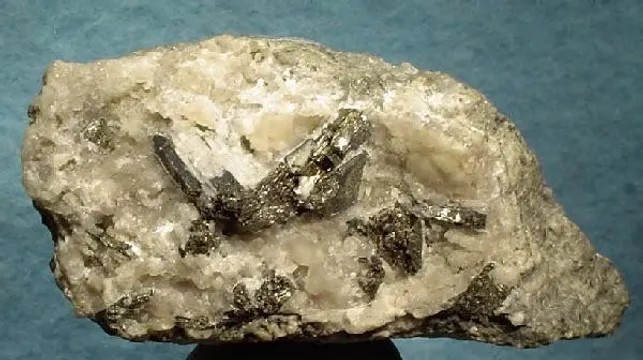
The dark metallic “tetrahedrite” on Sweet Home labels is best treated by modern collectors as tetrahedrite-tennantite or tetrahedrite subgroup unless chemically analyzed, because visually similar Sb- and As-rich members occur in the system. Historically it was the key silver-bearing ore mineral and is also one of the most important display minerals on classic rhodochrosite pieces. Sweet Home tetrahedrite-tennantite occurs as bright, untarnished, specular tetrahedra or intergrown clusters on sulfide matrix, typically about 7 mm to 2.5 cm but with individual crystals to roughly 5 cm reported and fragments of still larger crystals known. The finest pieces show sharp, metallic crystals associated with quartz, rhodochrosite, fluorite, sphalerite, chalcopyrite, or hübnerite; for collectors, the most desirable examples have crisp tetrahedral form, bright faces, minimal bruising, and enough contrast with quartz or rhodochrosite to read as a mineral specimen rather than a dark lump of ore.
Pyrite at Sweet Home is much more than a background sulfide. The famous Pyrite Pocket in the Tetrahedrite Stope, opened in 1993, produced distinctive striated cubes with bulging faces, rounded or octahedrally modified corners, and serrated “saw-tooth” edges visible under low magnification. Crystals from that pocket commonly range from about 5 mm to 2.5 cm, with a largest single cube recorded at 4.4 cm, and occur in clusters on white quartz with dark sphalerite; some are accompanied by pale purple fluorite or a blade of hübnerite. Good Sweet Home pyrite has a personality of its own: sharp enough to be recognizably cubic, lustrous enough to contrast with quartz, and texturally complex enough to show the stepped growth that specialists associate with the locality. Pyrite also enhances rhodochrosite combinations when it adds warm metallic points without crowding or damaging the red crystals.
Chalcopyrite is common in the Sweet Home veins, usually as small brassy crystals on sulfide-rich specimens, but fine display examples are scarcer. The best documented chalcopyrite came from a small vug above the Rainbow Pocket, the same general area that produced the Alma King; sharp, lustrous crystals to about 1 cm were found on sulfide and quartz matrix. Chalcopyrite also occurs in complex combinations with rhodochrosite, tetrahedrite-tennantite, fluorite, pyrite, quartz, and occasional hübnerite, where its yellow metallic color adds a valuable third note between red carbonate and gray-black ore. For collectors, the best Sweet Home chalcopyrite is bright, visibly crystallized, and compositionally useful, not merely a tarnished brassy smear on tetrahedrite or sphalerite.
Sphalerite is one of the most abundant ore minerals at Sweet Home and appears both as massive sulfide and as small well-formed crystals in pockets. Its colors range from opaque black to green, yellow, or red, though black crystals are the most familiar on specimen matrix and can be confused visually with tetrahedrite unless crystal form and chemistry are considered. It occurs with rhodochrosite, fluorite, quartz, galena, pyrite, chalcopyrite, and tetrahedrite-tennantite, and plays an important paragenetic role in the ore assemblage. As a collector species, Sweet Home sphalerite is best when it is crystallized, sharply separated from the matrix, and placed where it strengthens a rhodochrosite or fluorite composition; isolated sphalerite from the mine is much less in demand than combinations with strong locality character.
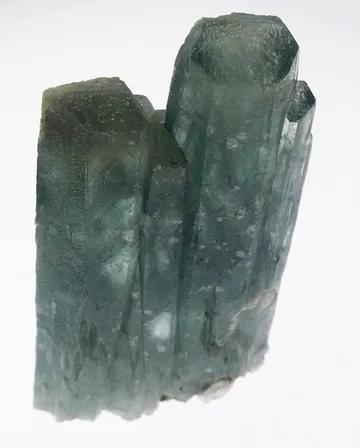
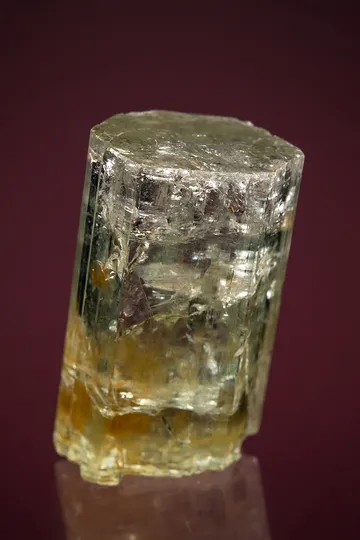
The apatite of collector interest at Sweet Home is chiefly fluorapatite, found sparingly in many veins as pale greenish blue, transparent, commonly doubly terminated crystals. Crystals are usually small, with the largest reported around 1 cm, and occur as thumbnails, micromounts, small clusters with rhodochrosite and needle quartz, or loose “floaters” in white dickite-rich pocket clay. Fluorapatite may sit directly on rhodochrosite or other minerals and is one of the desirable secondary species for systematic collectors of the mine. The best pieces show clean, glassy, visibly terminated crystals with attractive blue-green color, ideally in association with rhodochrosite, fluorite, or quartz; under shortwave ultraviolet light, Sweet Home fluorapatite can fluoresce an attractive pink, adding another layer of interest for careful collectors.
Malachite at Sweet Home is a secondary copper mineral rather than a major display species, most often present as light green microcrystalline coatings on chalcopyrite and other copper-bearing sulfides. It is also documented in association with fluorite, tetrahedrite-tennantite, and rhodochrosite, where small green accents can make a matrix visually and chemically more interesting. The locality does not produce the velvety botryoidal masses or large pseudomorphs that define malachite at classic copper localities; Sweet Home malachite is a collector’s accessory, valuable because it documents late oxidation and adds color contrast to sulfide-rich specimens. Good examples are best judged under magnification for coverage, freshness, and correct identification, since some blue-green coatings from the mine have required study and may represent other secondary copper minerals.
Hübnerite, MnWO4, is one of the distinctive tungsten-bearing species that ties Sweet Home to a fluorine-rich magmatic-hydrothermal environment. It had long been known from the mine area before the modern specimen operation, but fine crystals were uncommon in the 1992–1995 workings; when found, they generally occur as dark, lustrous blades with needle quartz, sulfides, rhodochrosite, and fluorite. Typical collectible examples show a single blade up to about 3 cm, while larger masses of intergrown hübnerite crystals are documented from the Tetrahedrite Stope. The best Sweet Home hübnerite specimens are sharp, bright, and isolated enough to read as bladed crystals, especially when accompanied by quartz and a red rhodochrosite or pale purple fluorite accent; heavily embedded or broken blades are far less desirable except to locality specialists.
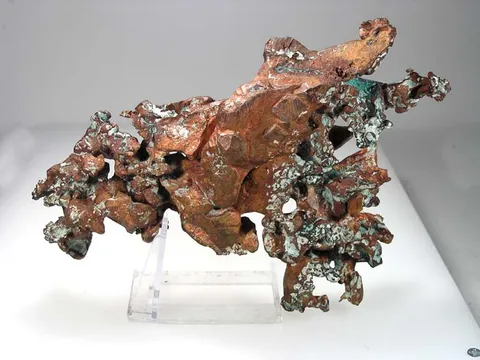
Other documented Sweet Home minerals include galena, calcite, fluorapatite, goyazite, svanbergite, dickite, anglesite, barite, bornite, chrysocolla, native copper, covellite, digenite, dolomite, ferrimolybdite, greenockite, mawsonite, molybdenite, muscovite, native silver, spionkopite, topaz, triplite, stromeyerite, xenotime-(Y), zircon, zinkenite, and possible or rare sulfosalts requiring analysis. Several of these are known mainly as microcrystalline coatings, inclusions, ore constituents, or single-occurrence rarities rather than cabinet specimens. Among the most interesting for advanced collectors are goyazite with an outer svanbergite growth, greenockite coatings on pyrite from near the Blueberry Pocket, triplite as inclusions in fluorapatite enclosed in rhodochrosite, and spionkopite identified during microprobe work with bornite, digenite, stromeyerite, and possible jalpaite.
Sweet Home rhodochrosite is a provenance-driven market. A specimen with a credible old Collector’s Edge, Sweet Home Rhodo, museum, major dealer, or respected collection label is far more desirable than an unsupported “Colorado rhodochrosite” label, because several Colorado localities produced red or pink rhodochrosite and because the best Sweet Home material commands a premium. Pocket names matter: Good Luck, Rainbow, Hedgehog, Butterfly, Corner, Museum, Rivas, Pincushion II, and other documented names can add meaningful value when the attribution is reliable.
No serious buyer should treat the word “Sweet Home” as sufficient authentication by itself. Look for the whole visual package: rhombohedral red rhodochrosite, quartz needles or quartz-rich matrix, dark tetrahedrite-tennantite or sphalerite, purple to colorless fluorite, brassy pyrite, and a style of pocket growth consistent with the mine. Some specimens are just loose rhombohedra or trimmed crystals and may still be genuine, but they lose part of the locality’s aesthetic signature. Be especially cautious with loose red rhombs lacking labels, repaired matrix pieces, or bright red rhodochrosite from other localities offered as Sweet Home.
Condition is a major value factor. Rhodochrosite has perfect rhombohedral cleavage and a Mohs hardness of about 3.5–4, so edge bruises, cleaves, contact marks, and broken corners are common. Many Sweet Home specimens emerged coated with clay, silica, or iron-stained material and required careful laboratory preparation; published accounts describe combinations of acid cleaning and air abrasion, with some pieces requiring many hours and the Alma King requiring months of preparation. Good preparation removes clay and coatings without rounding crystal edges, undercutting quartz needles, dulling luster, or exposing unnatural-looking scars. Poor preparation can damage both the rhodochrosite and the delicate quartz matrix.
The mine is closed, the original portal is sealed and reclaimed, and the later Detroit City Portal ceased permanently in September 2024. There is no legitimate casual collecting access at the old workings. Availability is therefore limited to old production, remaining dealer inventories, and resales from private collections. Small thumbnails and repaired or incomplete miniatures still appear with some regularity; high-saturation, damage-free miniatures are much scarcer; well-composed cabinet specimens from named pockets are now major purchases; and top-level pieces with large red crystals, excellent matrix, and documented history are museum-caliber objects.
Fluorescence is a minor but useful side interest. Fluorapatite from the mine has been reported to fluoresce pink under shortwave ultraviolet light. Rhodochrosite itself should be protected from acids, hard knocks, ultrasonic cleaning, and jewelry-style wear. Even faceted Sweet Home rhodochrosite, while beautiful, is soft and cleavable; it is best suited to protected settings or collection rather than everyday use.
In 1888, when the Sweet Home was still a silver mine, a shaft collapse produced a 32.61 ct rhodochrosite cleavage fragment. Miner Edward Abbott kept the piece rather than sending it to the dump. In 1925 he gave it to Denver businessman Edwin Spray, who later owned the mine; that same year, miners found large rhodochrosite specimens on quartz matrix, many of which went to museums in the United States and Europe. The fragment then passed from Spray’s widow, Eleanor, through a family friend to geologist and collector Charles Trantham in 1968. In 1981, Glenn Vargas cut it into a rectangular step-cut gem. More than a century after the collapse, the resulting 7.94 ct Sweet Home rhodochrosite still carried a traceable human history from underground accident to modern gem exhibition.
Leonard Beach, who owned the mine from about 1961, became the stubborn keeper of the Sweet Home idea. For more than 25 years, he argued through lectures and prospectuses that the old silver workings still held valuable rhodochrosite. It was an unlikely pitch: the mine had not become a silver bonanza, the workings were high, cold, wet, and difficult, and rhodochrosite had once been treated as waste. Yet Beach’s conviction drew the attention of people who understood that a specimen mine could succeed where a silver mine had not. In 1991, Sweet Home Rhodo, Inc. took the gamble, spending heavily to rehabilitate the old workings and search not for ore tonnage but for intact crystal pockets.
The Rainbow Pocket discovery in 1992 is the mine’s great origin scene. In that narrow vug, the Alma King crystal was found loose: a deep cherry-red rhombohedron of extraordinary size, later measured at about 14 cm on edge, lying with quartz, purple fluorite, black sphalerite, tetrahedrite, and a small hübnerite blade. The finished specimen became a monumental plate, with the red crystal dominating a pale quartz matrix. It now stands as the emblem of Sweet Home and one of the most recognizable American mineral specimens.
The Denver Wall is the other grand public expression of the mine. Rather than presenting a single specimen, it reconstructs the experience of looking into a rhodochrosite pocket: a wall-sized display filled with thousands of Sweet Home crystals, assembled after recovery and preparation. The installation made an underground pocket into an architectural object, allowing museum visitors to walk into the mineral hall through a staged echo of the mine’s vugs. For many collectors, seeing the Alma King and the Wall in Denver was their first encounter with Sweet Home rhodochrosite at full scale.
The day-to-day work behind those trophies was neither romantic nor gentle. The mine was at extreme altitude, accessible only briefly each year, with slippery underground workings and near-vertical raises. Equipment sometimes had to be hauled by hand to working faces and removed again before blasting. The best clues could be maddeningly small: a glimpse of red in the heading, a subtle structural intersection, a clay seam, a void suggested by ground-penetrating radar. Once a pocket was found, the problem changed from mining to surgery. A single damaged crystal could erase much of a specimen’s value, so extraction, trimming, packing, and preparation became as important as geology.
In 1996 the Hedgehog Pocket showed how productive the system could be when the structure, chemistry, and open space all aligned. More than 1,500 specimens were reportedly collected from that pocket alone, ranging from thumbnails to plates about 0.6 meters across. Around it came a cluster of other named finds—Blue Moon, Butterfly, Mini-King, Clay, and smaller pockets in raises above the main extension—each now carrying meaning on a label. The names are not marketing fluff to serious Sweet Home collectors; they are coordinates in the mine’s specimen history.