






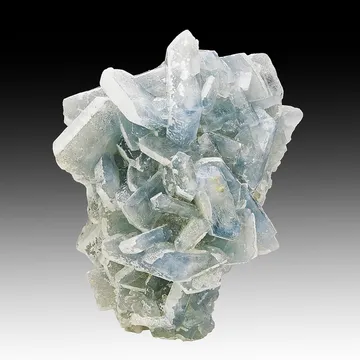
Stoneco Maumee Quarry, Ohio — Findlay Arch locality yielding celestine, calcite, and pale fluorite; prized for its localized, scarce vug specimens.
Key facts
Stoneco Maumee Quarry is a compact but distinctive member of northwestern Ohio’s Findlay Arch mineral belt: an active aggregate and building-stone quarry in Silurian dolostone on the southwestern side of the Toledo area, just outside the city of Maumee in Lucas County. For collectors, its importance is not that it outshines the great Ohio classics such as Clay Center, Lime City, Portage, or Sylvania; it matters because it records the same regional mineralizing event in a more localized, scarcer, and less frequently marketed form. Here the collecting story is written in vugs, fossil molds, breccia openings, and pocketed dolostone rather than in ore shoots. The signature suite is celestine, calcite, and yellow to amber-brown fluorite, with native sulfur, pyrite, sphalerite, dolomite, and gypsum also documented from the quarry.
The best Maumee pieces have a distinctly Ohio look: pale celestine blades or tabular crystals on pale carbonate matrix; warm, honey-amber calcite; and fluorite cubes that range from pale yellow through golden to brown, often smaller and less abundant than those from the headline Findlay Arch localities but very desirable when sharp, lustrous, and well isolated. Fine specimens have the quiet elegance of Midwestern carbonate vugs rather than the flamboyance of high-temperature vein deposits—clean crystal faces, simple geometry, and a pleasing contrast between translucent crystals and gray-white dolostone.
Regional View
Country View
The locality is also important because its labels can be treacherous. “Stoneco,” “Maumee Stone,” “Maumee Quarry,” and “Lime City” have all appeared in the wider northwest Ohio collecting literature and on older specimen labels, sometimes for different quarries tied historically to the same operating companies. A true Stoneco Maumee specimen should be from the Maumee quarry in Lucas County, not the Stoneco Lime City quarry in Wood County, the Stoneco White Rock quarry at Clay Center in Ottawa County, the Portage quarry in Wood County, or the Stoneco Maybee quarry in Michigan.

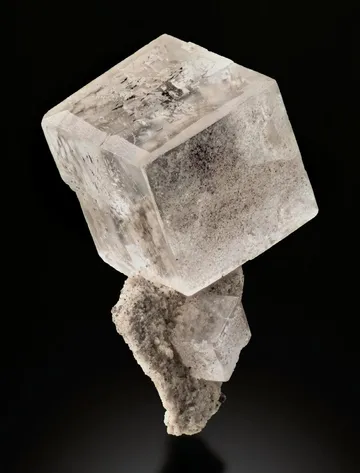
Photo: James St. John / Wikimedia Commons
Search for specimens: View all specimens from Stoneco Maumee Quarry, USA
Stoneco Maumee Quarry lies at 1360 Ford Street, Maumee, Lucas County, Ohio, and is an active crushed-stone, aggregate, aglime, asphalt, and ready-mix facility associated with Stoneco and The Shelly Company. Mindat places the quarry at approximately 41.57508, -83.67396 and lists historical names including Shelly Materials Inc. Maumee Quarry, Maumee Stone Co. Quarry, and Maumee Quarry. The locality is in the low-relief carbonate country of northwestern Ohio, within the broader Findlay Arch mineral district, a region famous among collectors for celestine, fluorite, calcite, sphalerite, galena, pyrite, dolomite, and associated carbonate-vug minerals.
Geologically, Maumee belongs to the family of Silurian dolostone quarries that expose the shallow-marine carbonate section around the Findlay Arch and the southeastern flank of the Michigan Basin. Carlson’s Minerals of Ohio lists the quarry as working Silurian Lockport Dolomite and Greenfield Dolomite; Ohio industrial-mineral directories from different years have reported Maumee production from Silurian dolomite units under names including Tymochtee Dolomite and Toledo Dolomite. For the collector, the important point is that the specimen-producing ground is not a metallic ore body but vuggy, fractured, and locally cavernous carbonate rock cut by late diagenetic to low-temperature hydrothermal mineralization.
The mineralization is part of the same regional carbonate-hosted event that gave northwest Ohio its celebrated celestine and fluorite. Strontium-, sulfate-, carbonate-, and fluorine-bearing fluids moved through permeable dolostone, fossil molds, fractures, small solution cavities, and breccia openings. In the Findlay Arch district as a whole, celestine occurs in dolostone cavities, fossil cavities, fractures, breccias, and replacements of nodular gypsum; the broader paragenesis commonly places bladed to tabular celestine early, followed in many localities by brown fluorite, calcite, sulfides, and later celestine habits. At Maumee, the recorded collector minerals are simpler than at the richest quarries, but the same relationships are evident in the association of celestine, calcite, fluorite, pyrite, and sphalerite.
Industrial production rather than specimen mining has always governed the quarry. In 2005, Stoneco’s Maumee Quarry was listed in Ohio’s industrial-minerals directory as a Lucas County limestone operation with reported sales of more than 1.25 million tons and production of more than 1.15 million tons. In 2009, the quarry was listed under Stoneco, Inc. in the Tymochtee Dolomite, producing crushed stone for portland-cement concrete, road construction and resurfacing, asphalt, commercial building, unspecified uses, and aglime. In 2013, the Ohio directory listed Stoneco, Inc. Maumee Quarry in Waynefield Township, working Toledo Dolomite for riprap, road construction and resurfacing, commercial building, and unspecified crushed-stone use. In 2021, state reporting still listed Stoneco, Inc. Maumee Quarry as a major Lucas County operation, with reported annual tonnages just under one million tons.
The operator history matters to labels. Stoneco Inc. developed as a division of the S.E. Johnson Companies in the 1980s and operated aggregates and asphalt facilities across northwest Ohio and lower Michigan. In 2003, S.E. Johnson merged into The Shelly Company umbrella, and Stoneco’s Ohio quarries became part of Shelly’s operations. A collector label reading “Maumee Stone Co.” can therefore be old and meaningful, but it must still be read critically: the Maumee Stone Company name became attached historically to several northwest Ohio quarry operations, and “Maumee” on a label does not automatically mean the Lucas County Maumee quarry.
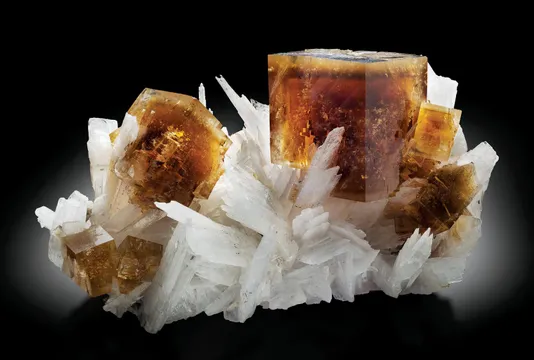
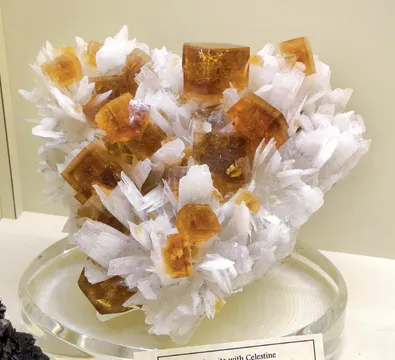
The most specimen-relevant interval reported for Maumee was the late 1990s and early 2000s, when work on a second, deeper quarry level produced the quarry’s best-known fluorite-celestine-calcite combinations. Joseph W. Vasichko’s study of Findlay Arch fluorite notes that Maumee produced pale yellow and brown fluorite crystals with bladed white celestine and calcite, with the best mineralization tied to that deeper-level work. Compared with Clay Center and Genoa, the fluorite crystals are generally smaller, but good examples show the same simple cubic form and warm yellow-brown color that define the district.
Collecting access today should be assumed closed unless arranged directly with the operator through formal permission, club events, or sanctioned educational programs. The site is an active quarry with blasting, heavy equipment, highwalls, haul roads, and regulated operational areas. The nearby Toledo Gem & Rockhound Club is the kind of local organization through which legitimate collecting information is most likely to circulate, but no collector should treat the quarry as a casual public collecting site. A notable public exception was the Stoneco Maumee Open House of August 17, 2019, when The Shelly Company hosted about 600 community visitors for bus tours, geode cracking, a geology station, equipment displays, and quarry education; that was an outreach event, not evidence of regular collecting access.
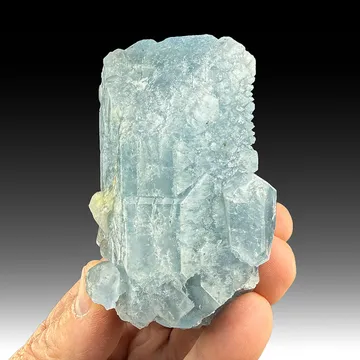
Celestine is the most characterful Maumee mineral and the one that ties the quarry most directly to the Findlay Arch tradition. Documented specimens show celestine in the typical northwest Ohio mode: white to pale bluish-gray, bladed to tabular crystals in dolostone cavities, commonly associated with calcite and locally with pyrite or strontianite-like alteration noted in photo records. Maumee celestine is not known for the giant crystals of Put-in-Bay’s Crystal Cave or the abundance of Clay Center, but sharp blades on clean matrix are very attractive and notably scarcer in commerce than comparable Ohio celestine from the more famous quarries. The best pieces show undamaged terminations, a balanced spray or plate, strong contrast against carbonate matrix, and a trustworthy Lucas County Maumee provenance rather than a vague “Stoneco” or “Maumee Stone” label.
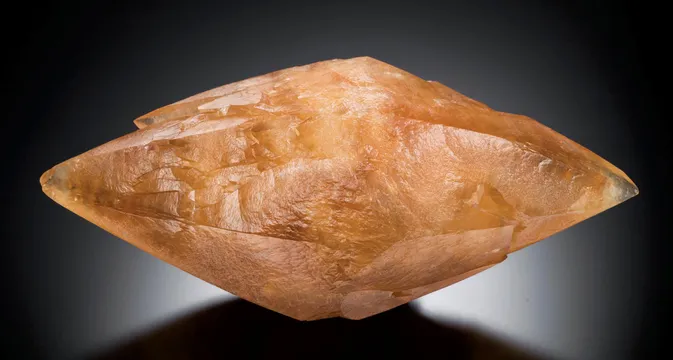
Calcite from Stoneco Maumee Quarry occurs as vug and pocket crystals in the dolostone, often in association with celestine and, in the best combination pieces, amber fluorite. Marketed Maumee calcites include honey to amber, lustrous crystals; one notable small-cabinet specimen from the Al Kidwell collection was a sharp, well-formed, doubly terminated scalenohedron measuring 7.9 x 4.3 x 3.8 cm and described as showing a rich amber color when backlit. Other old calcites from the locality have been sold with 1960 collection dates and sizes around cabinet scale, suggesting that calcite was being preserved from Maumee long before the late-1990s fluorite-celestine pockets became better known. Good Maumee calcite is judged by crystal sharpness, transparency or warm backlit color, intact terminations, and whether it carries the locality’s more diagnostic associations, especially celestine or amber fluorite.
Fluorite is rarer at Maumee than celestine or calcite but is the locality’s most coveted mineral when it is sharp, lustrous, and richly colored. The quarry produced pale yellow to brown cubic crystals, including individuals and clusters, typically smaller than those from Clay Center or Genoa but similar in habit; published accounts note crystals up to about 2.5 cm on edge, with pale yellow cubes and clusters around 1.25 cm observed in small pockets. The prime finds came from the second, deeper level active in the late 1990s and early 2000s, where fluorite occurred with bladed white celestine and calcite. A fine modern market example measured 15.0 x 9.0 x 3.0 cm and carried gemmy amber fluorite cubes to 0.8 cm with lustrous calcite to 2.0 cm, brightly fluorescent under both longwave and shortwave ultraviolet light. The strongest Maumee fluorites have clean cubic outlines, golden to amber color without excessive cloudiness, minimal bruising on edges, and a matrix association that proves the Findlay Arch character at a glance.
Other documented minerals from Stoneco Maumee Quarry include dolomite, gypsum, native sulfur, pyrite, and sphalerite. No type-locality mineral has been documented from the quarry in the principal locality records. Native sulfur is the standout rarity: Maumee is not widely known as a sulfur locality, yet old specimens from the uppermost workings are recorded, including crude crystals several centimeters across and a vividly yellow 8 cm example from the Harris Precht collection. Pyrite and sphalerite fit naturally within the Findlay Arch carbonate-hosted suite, and pyrite is also noted in the same Mineral News locality entry as Maumee celestine.
Stoneco Maumee specimens should be bought with label discipline. The most common authenticity problem is not outright fakery but locality drift: “Stoneco,” “Maumee Stone,” “Maumee Quarry,” “Lime City,” “Clay Center,” “Portage,” and “Maybee” can become tangled on old dealer labels and in collection drawers. A real Stoneco Maumee specimen should specify Maumee, Lucas County, Ohio; a specimen labeled “Stoneco quarry, Maumee Stone Quarry, Lime City” is more likely the Lime City locality in Wood County, and a specimen labeled Stoneco Maybee is a Michigan quarry entirely. For fluorite-celestine-calcite combinations, the risk of confusion with Clay Center is especially high because the mineral association and colors can be similar.
No documented systematic fakes or treatments specific to Stoneco Maumee have surfaced in the published locality sources consulted for this guide. Ordinary cleaning is likely, and carbonate-hosted specimens may show sawed bases, trimmed matrix, or minor acid cleaning; those are handling and preparation issues rather than evidence of fraud. Be wary, however, of overconfident old labels that give only “Maumee Stone Co.” without county or quarry context, because Maumee Stone Company connections extended beyond the Maumee quarry itself.
Condition is critical. Celestine is soft, heavy for its size, and cleaves readily, so blades often show nicks along edges and tips; bright, damage-free sprays from Maumee deserve a premium. Calcite is also cleavage-prone, and large scalenohedra or doubly terminated crystals should be checked under side light for healed-looking cleaves, bruised points, and small contact breaks. Fluorite cubes should be inspected along the corners and edges, where micro-cleaving is common; minor edge wear is typical, but a good Maumee fluorite should still read as sharp and lustrous. Native sulfur, when encountered, should be protected from heat, abrasion, and strong temperature swings, and should not be aggressively washed or left where it can rub against harder minerals.
Ultraviolet response can add value, especially for fluorite. At least one documented Maumee fluorite-calcite combination was brightly fluorescent under both longwave and shortwave ultraviolet light, and Findlay Arch fluorites more broadly are well known for luminescent behavior linked to hydrocarbon-bearing carbonate environments. Test gently and briefly: fluorescence is a bonus, not a substitute for locality, crystal quality, and condition.
In the market, Stoneco Maumee is scarcer than Clay Center, Lime City, Sylvania, or Portage material. That scarcity does not automatically make every Maumee piece valuable; average white celestine or chipped calcite remains modest. The premium pieces are correctly labeled, aesthetic, and demonstrably from Maumee: amber fluorite with calcite, sharp celestine plates, large or doubly terminated calcite, and any old native sulfur of convincing provenance.
For many Ohio collectors, Maumee is the quarry that almost hides in plain sight. It sits in the industrial orbit of Toledo, not in a remote collecting district, and for years its output was measured in road stone, aglime, asphalt aggregate, and concrete material rather than in crystal-lined pockets. Yet the deeper the operation went, the more the quarry began to speak the mineralogical language of the Findlay Arch. In the late 1990s and early 2000s, while a second, deeper level was being worked, the quarry intersected its best mineralized ground: small pockets carrying pale yellow and brown fluorite with bladed white celestine and calcite. These were not the great caves of Clay Center, but for the collectors who saw them fresh, they were unmistakable—golden cubes, white blades, and carbonate vugs from a locality that rarely supplied the market.
The fluorite story is especially good because it is restrained. Maumee did not flood the hobby with large Ohio cubes. Published accounts describe the crystals as smaller than those from Clay Center or Genoa, commonly in the sub-centimeter to roughly centimeter range, with the best reported crystals reaching about 2.5 cm on edge. That modest scale is part of their appeal. A sharp Maumee cube has the feel of a local secret: the same warm yellow-brown Findlay Arch palette, but from a quarry whose pockets were less abundant and whose specimens were far less often saved.
An older story belongs to the sulfur. Maumee is not a locality most collectors would name first for native sulfur, yet old specimens from the uppermost workings are real. One documented Mindat specimen is a crude sulfur crystal measuring 3.5 x 3 x 2 cm, explicitly noted as old material from the uppermost workings that cannot now be found. In 2026, Tom Moore’s online report for The Mineralogical Record singled out an 8 cm, well-formed, vividly yellow sulfur from the Stoneco Maumee quarry, ex Harris Precht, offered by Weinrich Minerals. The report made a point of warning readers not to confuse it with Stoneco Maybee in Michigan, another sulfur-producing quarry. That single warning captures Maumee’s label problem beautifully: the specimen is rare enough, and the names similar enough, that the locality has to be defended every time it appears.
The quarry also opened itself briefly to the wider community. On August 17, 2019, The Shelly Company hosted its third annual Stoneco Maumee Open House, drawing about 600 guests and local residents. Visitors took bus tours into the quarry, cracked geodes, adopted pet rocks, visited a geology station, saw a “touch a truck” equipment display, and played a “Guess how many tons?” game based on the quarry’s 2018 limestone sales. State Representative Michael Sheehy and Maumee Police Chief David Tullis stopped by. For collectors, it is a reminder that the place is not just a dot on a mineral label: it is a living industrial quarry embedded in its community, occasionally letting the public glimpse the walls and benches that have yielded some of Ohio’s quieter mineral prizes.
_2.jpg)