Stoneco Lime City Quarry, USA — Silurian dolostone locality known for celestine–strontianite–calcite–fluorite pockets; blue celestine and amber fluorite cubes…
Key facts
Stoneco Lime City Quarry is one of the classic northwestern Ohio quarry localities: a Silurian dolostone pit in the Findlay Arch mineral district whose specimens sit at the intersection of industrial stone, carbonate-hosted brine mineralization, and Midwestern collecting history. The quarry, historically known as the Maumee Stone Co. Quarry and later as Stoneco and Shelly Materials’ Lime City Quarry, worked dolostone in the Lockport and Greenfield units near Lime City in Perrysburg Township, Wood County. For collectors, its importance rests not on ore production but on pockets, fractures, breccias, and vugs that yielded a distinctive celestine–strontianite–calcite–fluorite assemblage, accompanied by sphalerite, galena, pyrite, marcasite, barite, gypsum, anhydrite, aragonite, dolomite, and native sulfur.
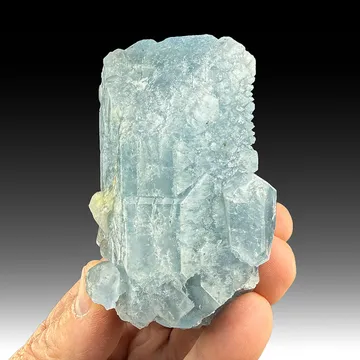
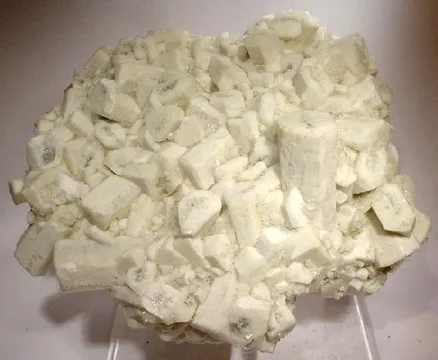
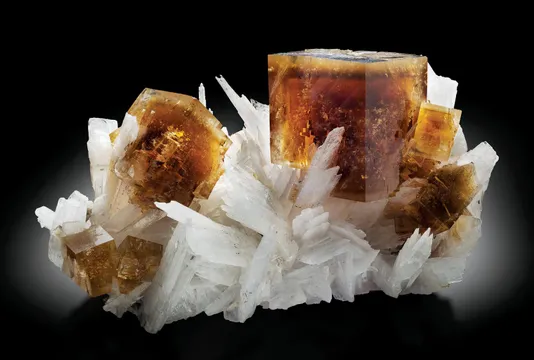
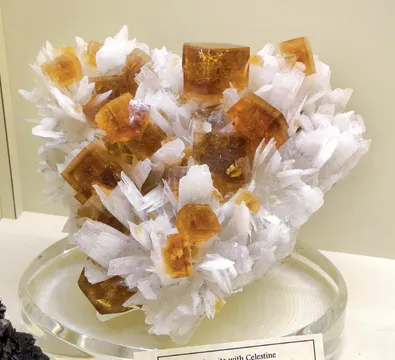
The best Lime City specimens have a look that is instantly separable from the more widely circulated “root beer” fluorites of Clay Center and the great celestine-lined cavities of South Bass Island. Celestine here is especially varied: pale blue bladed groups, white to bluish-white columnar clusters, stout pseudohexagonal “marshmallow” crystals, and pieces partly coated or replaced by white to cream strontianite. Good fluorite specimens show sharp, lustrous, amber to honey-brown cubes on pale dolostone or calcite, often with a ghostly UV response. The most memorable cabinet pieces combine two or three of the quarry’s principal species: blue-gray celestine cores, white strontianite rims, honey calcite scalenohedrons, and amber fluorite cubes, all packed into compact Midwestern vug plates.
Regional View
Country View
Lime City belongs to the broader Findlay Arch story, where mineralizing fluids moved through fractured Silurian and Devonian carbonates and deposited strontium sulfate, fluorite, sulfides, and carbonates in open spaces. In practical collecting terms, that means the quarry produced specimens from discrete horizons and pockets rather than a continuous collectible bed. Older field observations placed calcite–celestine vug material in the west wall about 20 feet below the bedrock surface, a sphalerite-rich zone deeper in the quarry walls, and strontianite–aragonite-bearing material associated with a conspicuous dark carbonaceous zone. That local stratigraphic control is part of the quarry’s appeal: a label reading “Stoneco Lime City Quarry” does not just name a town, it points to a particular style of pale, strontium-rich mineralization in vuggy Silurian dolostone.

Photo: Wikimedia Commons
Search for specimens: View all specimens from Stoneco Lime City Quarry, USA
Stoneco Lime City Quarry is in Lime City, Perrysburg Township, Wood County, Ohio, in the SW 1/4 of section 11. The recorded coordinates place it at approximately 41.53529, -83.56426. It is a quarry locality rather than a metal mine: the industrial product was building stone and crushed dolostone, while the collector specimens came from mineralized cavities, fractures, breccias, and altered zones exposed during quarrying.
The bedrock worked at Lime City belongs to the Silurian carbonate succession of northwestern Ohio, with the quarry commonly described as exposing the Lockport Dolomite and Greenfield Dolomite. A 1960s field study of the Maumee Stone Company Lime City quarry described the rocks as porous, highly fractured Silurian dolostones of the Greenfield Formation. Later Ohio industrial-minerals listings record the Lime City operation in Lockport Dolomite, with nearby Portage quarry operations in Greenfield and Lockport Dolomites. The slight difference in formation emphasis reflects how the quarry has been described at different times and in different parts of the local Silurian section, but all descriptions agree on the essential host: fractured, vuggy dolostone in the Findlay Arch mineral district.
Mineralization is epigenetic and open-space controlled. At Lime City, collector minerals occupy vugs, fractures, and breccia openings rather than forming mineable ore bodies in the usual sense. Calcite was one of the most abundant cavity minerals, occurring as small translucent white to yellow crystals, commonly less than 1 cm along the c axis in early field descriptions, though later collected specimens include more display-quality crystals. The old west-wall occurrences showed two related but different styles: calcite intergrown with blue celestine at about 20 feet below the bedrock surface, and calcite intergrown with sphalerite at roughly 30 to 35 feet below bedrock. The sphalerite zone was sufficiently continuous to be traced around quarry walls, with crystal-bearing vugs and fractures on the north and east walls, more massive fracture fillings on the south wall, and crosscutting fracture networks with large vugs on the west wall.
A conspicuous dark carbonaceous zone was especially important. Just below it, sphalerite occurred with massive strontianite and yellow botryoidal aragonite; directly above it, large celestine blades were observed in weathered vugs. That relationship makes sense in the larger Findlay Arch context, where organic-rich dolostones, breccias, vugs, fossil molds, evaporite molds, and fracture permeability all helped focus the movement of mineralizing fluids. Lime City specimens often carry that story visually: pale dolostone matrix, organic-stained seams or voids, brown fluorite, white calcite, blue-gray celestine, and soft white strontianite all occupying the open spaces left by the host rock’s earlier diagenetic and structural history.
The operator history is reflected in labels. The older and very desirable labels read Maumee Stone Co. Quarry or Maumee Stone Quarry, Lime City. Later pieces may read Stoneco Inc., Stoneco Lime City Quarry, or Shelly Materials Inc., Lime City Quarry. Stoneco was acquired by Oldcastle Materials in 2003, after which Stoneco’s Ohio quarries became part of the Shelly Company. In 2010, Ohio’s industrial-minerals directory still listed Stoneco Inc.’s Lime City Quarry in Perrysburg Township as a Lockport Dolomite crushed-stone operation. Mineralogical locality records now describe most of the quarry as flooded beginning in 2010 and abandoned.
Collecting access has changed sharply from the quarry’s classic period. Older accounts remember Lime City as a club-field-trip locality where many visitors could obtain specimens; later accounts describe increasing restrictions, then the loss of access as the best specimen-producing areas were covered with tailings and much of the quarry flooded. Today, serious collectors should treat the original Stoneco Lime City locality as closed, flooded, and not available for casual collecting. Any collecting in the Lime City area requires clear permission from the relevant landowner and operator; nearby quarry names on labels are not interchangeable, and specimens from the adjacent or later Cardinal Aggregates and Sawyer localities should not be folded into Stoneco Lime City without evidence.
The notable finds span several decades. The quarry was already yielding collectable material under the Maumee Stone name by the late 1950s, was discussed in Ohio mineral literature by the 1960s and 1970s, and became famous among Midwestern collectors for celestine and fluorite during the high-access club-trip years. The late 1970s and early 1980s are particularly important for the white strontianite-coated celestine habit: sculptural clusters of pseudohexagonal crystals, some with blue-gray celestine centers and white outer zones, entered collections from that period and remain among the most recognizable Stoneco Lime City specimens.
Celestine is the signature Stoneco Lime City mineral, and the quarry produced several habits rather than a single standardized style: early sky-blue bladed to tabular crystals, later white to bluish-white stout columnar groups, pseudohexagonal parallel-growth crystals, and “marshmallow” clusters whose rounded, cloudy white columns may show blue-gray celestine cores. Early field descriptions placed blue celestine with calcite in west-wall vugs about 20 feet below bedrock surface and noted large, weathered blades above a dark carbonaceous zone; later collector literature records transparent blue networks to about 6 cm, white columnar crystals around 4 cm, and columnar “marshmallow” examples reaching roughly 3 inches. The most desirable pieces are not merely abundant coatings: they show individual form, contrast between blue-gray interiors and white exteriors, strong association with calcite or strontianite, minimal peripheral pocket damage, and the blue-white fluorescence and lingering phosphorescence for which Lime City material is prized.
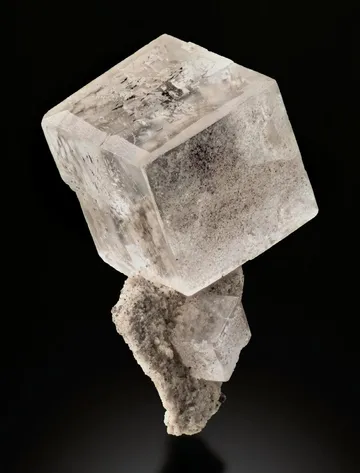
Fluorite from Stoneco Lime City is less abundant than celestine but far more coveted when well crystallized, especially as lustrous amber, honey-brown, or golden cubes on pale dolostone or calcite matrix. A 1960s study found fluorite only in talus specimens and described brown massive fluorite filling fractures, including one mixed specimen with fluorite, calcite, celestine, strontianite, and aragonite; later specimen records document sharp, gemmy cubic crystals commonly in the 1–3 cm range, with notable examples to about 3.2 cm on edge. The best pieces have glassy luster, undamaged cube edges, three-dimensional placement, clean calcite association, and the locality’s characteristic blue-white fluorescence; ordinary pieces tend to be massive brown fracture fillings, isolated battered cubes, or labels that blur Lime City with other Findlay Arch quarries.
The documented Stoneco Lime City suite also includes anhydrite, aragonite, barite, calcite, dolomite, galena, gypsum, marcasite, native sulfur, pyrite, sphalerite, and strontianite. No modern source ties a valid type-locality mineral species to the quarry; its rarities are locality-style rarities rather than new species. Strontianite is the most important of these, occurring as white to pale yellow coatings, fibrous blankets, radiating spheres, and apparent partial replacements of celestine. Aragonite was reported as yellow botryoidal material with radiating internal structure, and sphalerite formed a remarkable quarry-scale zone in vugs and fractures. Galena is scarce, pyrite and marcasite are subordinate, and barite is present but much less central here than at some other Wood County quarries.
The main authenticity issue is locality precision. “Lime City,” “Maumee Stone,” “Stoneco,” “Shelly Materials,” and “Wood County” labels may all point to the same classic quarry, but they may also be confused with nearby Lime City-area quarries or with the Stoneco Maumee quarry in Lucas County. Older Maumee Stone Co. labels are perfectly appropriate for Stoneco Lime City if the label specifies Lime City or Wood County; a Maumee-only label without Lime City needs caution. Likewise, attractive celestine from Sawyer Quarry Preserve or Cardinal Aggregates Quarry should not be upgraded to Stoneco Lime City unless older provenance or a reliable collector note supports it.
The strontianite–celestine relationship deserves special care. Many Lime City specimens have been sold as strontianite pseudomorphs after celestine, and the white outer material on some pieces genuinely involves strontianite or strontianite-rich alteration. Other “marshmallow” specimens once thought to be strontianite-related have been reported as celestine throughout, with both core and rim consisting of celestine. The distinction matters for high-end labels, but destructive testing is not appropriate for most specimens. For valuable pieces, preserve old labels, note the habit carefully, and use cautious wording such as “celestine with strontianite” or “strontianite-coated celestine” unless analysis is available.
Condition is critical. Celestine has perfect cleavage and Lime City crystals commonly grew crowded into pocket walls, so peripheral removal damage is normal but central bruising is not. White strontianite coatings and fibrous aggregates can be friable; avoid aggressive washing, acids, ultrasonic cleaning, and prolonged handling. Fluorite cubes should be examined for contacted corners, cleaved edges, and repairs; natural contacts are common where crystals grew against matrix or other crystals, but broken cube corners materially affect value. Sawed backs or trimmed matrix are common on old quarry pieces and are not inherently problematic when disclosed.
Fluorescence is a real collecting attribute at this locality, not a dealer afterthought. Celestine, calcite, and strontianite specimens commonly show blue-white to white fluorescence under shortwave and longwave UV, followed by blue-green or green phosphorescence. Some fluorite shows blue-white fluorescence, sometimes stronger near crystal exteriors than centers. Store fluorescent pieces clean and dry, and if you display them under UV, keep exposure moderate and avoid heat buildup from older lamps.
Market availability is finite. Lime City was once productive enough that Midwestern clubs and collectors accumulated quantity, but the original quarry is now largely flooded and the old specimen zones are no longer producing in the way they did during the classic collecting years. Good celestine–strontianite pieces still appear from old Ohio collections, often as miniatures and small cabinets. Sharp amber fluorite on matrix is much scarcer and moves quickly when the label and condition are right. The finest pieces combine strong aesthetics with older provenance, especially late-1970s or early-1980s collection history.
There was a time when Lime City seemed almost inexhaustible. Club trips arrived at the Stoneco operation when the quarry was still open enough to collectors that most visitors could expect to leave with something worth wrapping. The attraction was not just abundance; it was variety. One pocket might yield cloudy white celestine columns with the quarry’s “marshmallow” look, another calcite-dusted celestine with a sandy tan surface, and another honey-brown fluorite flashing from pale dolostone. In the memory of older Midwestern collectors, Lime City was one of those generous industrial localities where crushed-stone work briefly opened a mineralogical window, then moved on.
The “marshmallow” habit became the quarry’s most repeatable conversation piece. These crystals look deceptively hexagonal at first glance, stout and columnar rather than the thin blue blades many collectors expect from celestine. The form is actually built from parallel orthorhombic celestine growth, and the habit is sufficiently distinctive that it has caused real label trouble. In one public identification discussion, a collector argued that a specimen labeled as nepheline from Imilchil, Morocco was actually Lime City “marshmallow” celestine: the stout pseudohexagonal form, gray-blue core, and absence of nepheline from the claimed locality all pointed back to Ohio. That is exactly the kind of mistake Lime City can invite—the crystals are so odd that a specimen out of context may be mentally filed under the wrong mineral altogether.
The late 1970s and early 1980s produced the quarry’s great two-toned strontianite–celestine classics. These are the pieces that look like small limestone ledges covered with white prismatic blocks, the white material partially masking gray or blue-gray celestine underneath. One large cabinet specimen, ex George Feist Collection, measures 15.4 x 9.5 x 5.7 cm and carries a single prominent crystal recorded at 5.3 cm. Another, ex Clyde Hardin Collection, measures 9.6 x 6.7 x 5.7 cm with crystals to 3.0 cm. The published specimen descriptions emphasize what collectors still notice in hand: the crystals look hexagonal but are parallel growths, the white material is fluorescent and phosphorescent, and the habit appeared only a few times before disappearing from production.
A smaller but revealing 1977 specimen collected by Doris Biggs shows why the locality remains a connoisseur’s celestine source. It is described as a large, showy display piece with well-formed prismatic crystals to 4.3 cm, pseudohexagonal habit, stark white outer surfaces, and silvery-blue color visible beneath and in crystal centers. That single specimen neatly captures the Lime City aesthetic: not the open, glassy, sky-blue blades of a cavern wall, but thick, sculptural, partly veiled crystals that seem to record successive chemical episodes in one hand specimen.
The quarry’s fluorescent reputation has also grown as collectors have revisited old material under modern UV lighting. A matrix-free cluster of blocky white celestine, strontianite, and honey-colored calcite measures only 39 x 34 x 61 mm, yet behaves like a classic display specimen in miniature: bright blue-white fluorescence under both shortwave and longwave UV, followed by strong phosphorescence. Another 7.6 x 3.3 x 7.6 cm celestine–strontianite specimen responds blue under longwave, midwave, and shortwave ultraviolet, with green afterglow after each exposure. These are not spectacular because they are large; they are spectacular because they demonstrate the quarry’s chemistry in light.
The end of access has its own quiet drama. Nearby Sawyer Quarry, an older Lime City pit, was abandoned in 1932 after filling with water. Decades later, water was diverted from Sawyer into the neighboring Stoneco Lime City Quarry, and the old Sawyer pit was emptied within two years. For collectors, the hydrologic switch was a reminder that these quarries are working industrial landscapes first and collecting localities only temporarily. Stoneco Lime City’s best vug walls are no longer the open faces remembered by club collectors; much of the quarry is flooded, and the classic material now comes chiefly from old collections, show tables, and carefully preserved drawers.