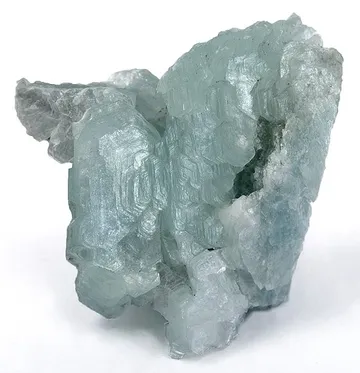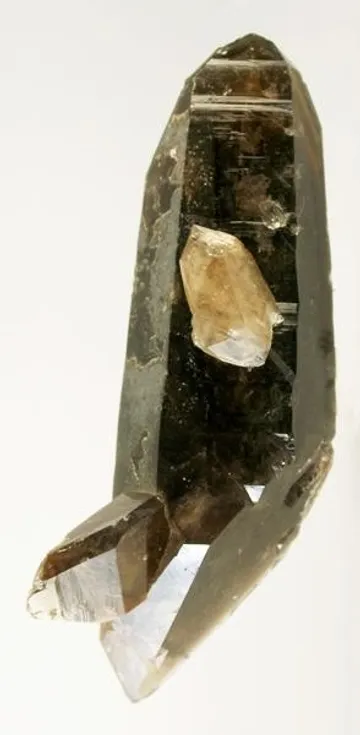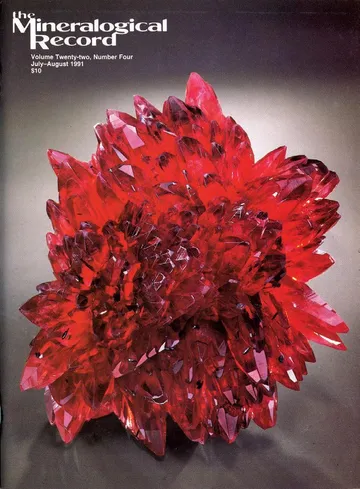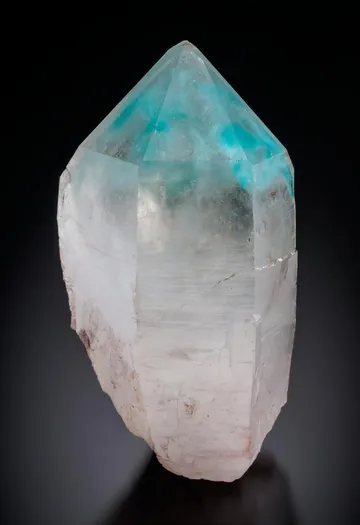
A collector's guide to South Africa: its geology, mining history and notable minerals, illustrated with the 45 specimens documented from this locality on EarthWonders.
Key facts
South Africa is not a single-species locality in the usual collector sense; it is a mineral province on a continental scale, with two deposits that changed the world’s idea of what a mineral locality could be. The diamond fields around Kimberley and the later Premier/Cullinan, Finsch, and Venetia kimberlites made South Africa central to the modern diamond industry and gave the rock name “kimberlite” to geology. The Kalahari Manganese Field of the Northern Cape, centred on Hotazel, Black Rock, N’Chwaning, Wessels, Mamatwan, Gloria, and related mines, is one of the great specimen-producing districts on Earth: a Paleoproterozoic manganese basin whose faulting, hydrothermal upgrading, and late vug mineralization produced red rhodochrosite, black manganite, honey-yellow ettringite and sturmanite, violet sugilite, inesite, hausmannite, and an extraordinary roll call of rare manganese silicates, borates, sulfates, and oxides.
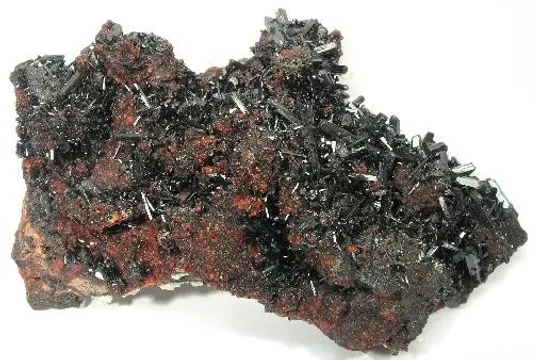
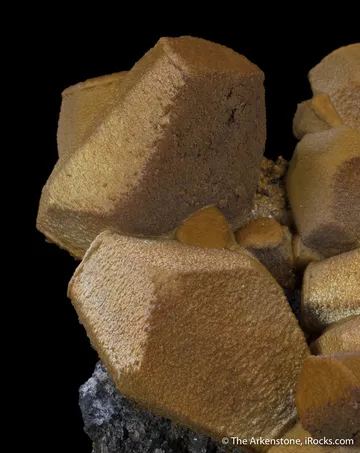
For collectors, the country’s best pieces have a distinctly South African visual language. Fine diamonds are commonly judged as crystals or historic roughs rather than matrix specimens: sharp octahedra, rounded dodecahedral forms, twinned macle-like stones, yellow to brown alluvial crystals, and, from Cullinan, some of the world’s most famous white and blue gem rough. Kalahari manganese specimens are altogether different: sculptural cabinet pieces with wine-red rhodochrosite perched on black manganite, glassy rhodochrosite “dog-tooth” scalenohedra, lustrous metallic-black manganite sprays, orange-yellow sulfate crystals glowing on white calcite, and strange rare-mineral associations that still send specialists back to the literature.
Regional View
Country View
South Africa’s mineralogical importance also extends beyond diamonds and manganese. The Witwatersrand Basin is the world’s classic goldfield, a vast pile of metamorphosed conglomerates whose reefs underwrote Johannesburg and transformed the country’s economy. The Messina district in Limpopo gave collectors blue ajoite-, papagoite-, shattuckite-, hematite-, and epidote-included quartz crystals of a kind scarcely duplicated elsewhere. The Bushveld Complex supplies the platinum-group-mineral context behind many South African ore collections. Taken together, South Africa is one of the few countries whose mineral specimens, ore deposits, and mining history are all genuinely world-defining.

Photo: Wikimedia Commons

Photo: Wikimedia Commons
Search for specimens: View all specimens from South Africa
South Africa’s collector minerals come chiefly from three different geological worlds. The diamond localities are kimberlite pipes and alluvial deposits derived from them. At Kimberley the famous “dry diggings” exposed weathered yellow ground and deeper blue ground in diamondiferous kimberlite, while Premier/Cullinan, Finsch, and Venetia represent later major pipe discoveries exploited by underground or open-pit methods. The Kalahari Manganese Field is a sedimentary manganese province in Paleoproterozoic rocks of the Transvaal Supergroup, especially the Hotazel Formation and related units near Hotazel and Kuruman. The Witwatersrand is a very different deposit type again: gold-bearing conglomeratic reefs preserved in a vast Archean basin and mined at great depth.
The Kalahari manganese ores are the heart of South Africa’s mineral-specimen reputation. The field contains both lower-grade Mamatwan-type sedimentary ore and higher-grade Wessels-type ore produced by hydrothermal upgrading, faulting, and alteration. The ore is dominated in broad terms by manganese oxides and silicates such as braunite, bixbyite, hausmannite, jacobsite, manganite, and related phases, with carbonate, sulfate, borate, and silicate vug assemblages superimposed locally. Specimen pockets occur where mining intersects faults, breccias, cavities, and late mineralized openings; these are the settings that yielded the famous rhodochrosite, manganite, ettringite, sturmanite, inesite, olmiite, poldervaartite, and rare manganese silicates.
Mining history in South Africa begins, for many collectors, with diamonds. The first recorded colonial-period diamond discovery was the Eureka diamond near the Orange River in 1867, followed by the Star of South Africa and then the rushes around Kimberley in the early 1870s. De Beers grew from that Kimberley diamond world. The Premier Mine near Pretoria was discovered in 1902 and became immortal three years later with the Cullinan Diamond. Venetia opened as a major De Beers mine in 1992; after three decades of open-pit production, open-pit mining ceased in December 2022 and underground production began in 2023. Cullinan and Finsch are now major Petra Diamonds assets, with Cullinan still renowned for Type IIa white diamonds and exceptional Type IIb blue diamonds.
The Kalahari manganese story unfolded later. Postmasburg-area manganese was mapped and developed in the early twentieth century, and Guido Sacco’s work helped bring the field into serious commercial focus. Black Rock opened in the early 1940s, followed by Devon, Smartt, Mamatwan, Hotazel, Langdon, Gloria, Wessels, and the N’Chwaning shafts as transport and demand made deeper and richer ore bodies economic. Current operators include Assmang at Black Rock Mining Operations, including Gloria and N’Chwaning II and III, and South32’s Hotazel Manganese Mines, including Mamatwan and Wessels. These are industrial mines, not recreational collecting sites.
Collecting access today is highly restricted. South African diamond rough is regulated, and legitimate rough specimens require a clear legal chain of possession, especially if unpolished. The major manganese mines are active industrial operations with controlled access, underground hazards, and company security; specimens reach the market through mine-authorized recovery, historic collections, South African dealers, and older hoards dispersed at shows and auctions. Labels such as “Kalahari Manganese Field” are useful but often too broad: a serious collector wants N’Chwaning I, N’Chwaning II, N’Chwaning III, Wessels, Hotazel, Mamatwan, Gloria, Black Rock, or Langdon where possible, because the habits, associated minerals, and value can change dramatically from mine to mine.
The most celebrated specimen-producing episodes include the rhodochrosite discoveries of Hotazel and N’Chwaning I, the great manganite and rhodochrosite pockets encountered during N’Chwaning mining in the 1970s, later N’Chwaning II and III finds of ettringite, sturmanite, shigaite, olmiite, and rare silicates, and Wessels pockets rich in sugilite, poldervaartite, and exotic copper- and strontium-bearing minerals. At Messina, closed copper-mine workings supplied quartz crystals with blue to blue-green inclusions of ajoite, papagoite, shattuckite, and related copper minerals; the finest pieces show sharp transparent quartz with feathery internal color rather than merely stained surfaces.
South African diamonds range from historic alluvial stones of the Orange and Vaal River systems to kimberlite-hosted crystals from Kimberley, Cullinan, Finsch, Venetia, Jagersfontein, and other pipes; collector examples may be sharp octahedra, resorbed dodecahedral crystals, flattened twins, irregular cleavage fragments, or waterworn alluvial rough in colourless, yellow, brown, grey, and, rarely, blue hues. Cullinan is the name that dominates the gem side: the mine produced the 3,106-carat Cullinan Diamond in 1905 and continues to be associated with large Type IIa white diamonds and extraordinarily valuable Type IIb blue diamonds, while Finsch is noted for commercial octahedral production and Venetia for large-scale modern output. Matrix diamonds from South African kimberlite are uncommon as aesthetic specimens, so good collector pieces are separated by verified mine provenance, natural crystal form, surface features such as trigons or resorption, attractive colour, size, and legal documentation; ordinary unlabeled rough, especially if small and abraded, is far less desirable than a well-provenanced crystal from a named mine or historic field.
South African rhodochrosite is above all a Kalahari Manganese Field classic, first noted at Hotazel in the 1960s and made world-famous by N’Chwaning I, where late vugs produced cranberry, wine-red, rose-pink, pale pink, and reddish brown crystals in habits ranging from sharp scalenohedral “dog-tooth” groups to spherical aggregates, wheatsheaf bundles, lenticular plates, drusy crusts, and botryoidal-looking masses. The best N’Chwaning I specimens combine vivid red colour, high luster, translucency to gemminess, undamaged terminations, and dramatic contrast with black manganite or manganese-oxide matrix; individual crystals can reach thumbnail to miniature size, and cabinet specimens from the late-1970s pockets are among the most desirable rhodochrosites in the world. Hotazel material is generally earlier and often more drusy or associated with gypsum, while small later N’Chwaning II finds produced curved pink rhombohedra and matrix coatings; ordinary pieces may be dull, cleaved, pale, or crowded, whereas great South African rhodochrosite has sculptural form, inner glow, and unmistakable Kalahari colour.
Other minerals documented from South Africa would fill a specialized catalogue. The Kalahari Manganese Field alone has produced world-class manganite, ettringite, sturmanite, inesite, hausmannite, and sugilite, plus rare and type-locality minerals including nchwaningite from N’Chwaning, wesselsite and vonbezingite from Wessels, taniajacoite and strontioruizite from N’Chwaning III, and important occurrences or descriptions of poldervaartite, olmiite, lipuite, shigaite, hennomartinite, manganipiemontite, and other manganese-rich species. Messina is the collector’s classic for ajoite-, papagoite-, and shattuckite-included quartz. The Witwatersrand contributes gold, pyrite, carbon, uranium minerals, and deep-mine assemblages of historic importance, while Kimberley gave geology the archetypal kimberlite association of diamond with mantle-derived indicator minerals such as garnet, chromite, ilmenite, diopside, olivine, and phlogopite.
South African rough diamond is the category requiring the most caution. Unpolished diamond possession and export are regulated in South Africa, and legitimate international rough-diamond trade is tied to Kimberley Process certification. A loose “South African diamond” without documentation is not merely a weak specimen; it may be impossible to verify and, in some circumstances, legally problematic. Modern synthetic diamond, industrial bort, treated colour, and undocumented parcels can all enter the market, so collectors should insist on provenance, invoices, and, for significant stones, laboratory or regulatory paperwork appropriate to the form of the material.
Rhodochrosite from N’Chwaning and Hotazel is less plagued by elaborate locality-specific faking than by repairs, cleaved tips, exaggerated labels, and confusion between mines or find periods. The best red scalenohedral crystals are brittle and easily bruised; look closely for glued terminations, filled contacts, oiling or surface enhancement, and trimmed matrix that removes evidence of association. A label saying only “South Africa” or “Kalahari” is materially less useful than one naming N’Chwaning I, N’Chwaning II, Hotazel, or Wessels, especially for older pieces. N’Chwaning I rhodochrosite on manganite, with deep colour and intact points, is now scarce and commands a premium; pale drusy coatings, broken clusters, and unattributed fragments are far more common.
Kalahari manganese specimens have their own handling issues. Manganite and hausmannite can be robust visually but brittle at crystal edges; ettringite and sturmanite are relatively soft, hydrated, and best kept away from heat, prolonged dryness, and careless washing. Sugilite is often encountered as massive or fibrous material, and highly coloured rough has been imitated or confused with dyed stone in the broader decorative market. Ajoite-in-quartz from Messina should be judged by internal inclusions rather than surface staining: the prized material shows blue to blue-green sprays, fibers, or phantoms enclosed in clear quartz, commonly with associated hematite, epidote, papagoite, or shattuckite.
Market availability is uneven. South African diamonds are commercially available, but collectible, legally documented rough from a named mine is much less common than generic diamond goods. Kalahari rhodochrosite appears regularly but usually as old-collection material; truly fine N’Chwaning I cabinet pieces are no longer casual purchases. Manganite, inesite, ettringite, sturmanite, olmiite, sugilite, and rare Kalahari species continue to circulate, but most desirable pieces depend on historic pockets, specialist dealers, and provenance-rich collections.
The story usually begins on the Orange River, with a boy and a pebble. In 1867, Erasmus Jacobs, about fifteen years old, found an unusual stone near Hopetown. It was not dug from a mine, not blasted from a pipe, and not recognized at once as the first signal of a mineral revolution. The stone became known as the Eureka diamond, and its identification changed the geological expectations of southern Africa. Two years later the much larger Star of South Africa, an 83.5-carat rough diamond found by a Griqua herdsman, removed any lingering doubt. By 1871 the rush had shifted to the Kimberley area, where men dug straight down through weathered ground into the blue diamond-bearing rock that would give geology the word kimberlite.
The Cullinan Diamond story has the improbable quality of folklore, but the essential details are documented again and again. The Premier Mine had been founded near Pretoria in 1902. On 25 or 26 January 1905, Frederick Wells, the mine’s surface manager, noticed a glitter from the wall of the open pit, about eighteen feet below the surface. Accounts differ in small details, but the image is irresistible: Wells climbing toward the flash, working the stone loose with a pocketknife, and realizing that the object in his hand was not glass or quartz but an immense diamond crystal. One retelling preserves his understated remark that Thomas Cullinan “will be pleased when he sees this!” The rough weighed 3,106 carats, large enough to be described in fist-sized terms, and it remains the largest gem-quality rough diamond ever recovered.
Even after discovery, the Cullinan’s story refused to behave like ordinary gem history. It was displayed, considered too large for any simple sale, and eventually purchased by the Transvaal government and presented to King Edward VII. The transport story is one of the great security anecdotes in mineral history: a heavily guarded decoy shipment attracted attention, while the actual stone was reportedly sent by ordinary registered post. The cutting in Amsterdam was almost as dramatic as the finding. Joseph Asscher studied the crystal, prepared the groove, and split the stone along cleavage; the first knife is said to have broken, while the diamond did not. From the rough came Cullinan I, the Great Star of Africa, Cullinan II, and a suite of additional stones now inseparable from the public image of the British Crown Jewels.
The Kalahari Manganese Field has its own origin story, less royal but just as consequential for collectors. Guido Sacco, an Italian mining engineer who came to South Africa in the 1920s, mapped and promoted manganese ground in the Postmasburg region and later recognized the significance of the Black Rock deposit. By 1940 the manganese fields were moving from geological promise toward industrial reality. Farms with names now famous on specimen labels—Belgravia, N’Chwaning, Santoy, Wessels—became part of a mining landscape that would ultimately supply both steelmaking ore and some of the most exotic mineral specimens ever found.
Collectors remember N’Chwaning I for the moment when mining passed directly through beauty. During opening and development of the mine in the 1970s, workings intersected vugs rich in rhodochrosite. Contemporary accounts describe the shaft and faces cutting into cavities, with loose crystals and specimens on the floor, and later discoveries produced red scalenohedra, spheres, wheatsheaf forms, and manganite-associated groups that made South African rhodochrosite a world standard. The tragedy, from a specimen standpoint, is that these pockets were encountered in an ore mine, not a collector’s excavation. Some pieces were saved; others were broken, swept aside, or lost to the rhythm of production.
Among the saved pieces, “The Snail” became a legend. Collected in 1976 during a great series of N’Chwaning pockets, the 8 cm rhodochrosite on manganite was bought in Africa by Bill Larson while he and Jeanne Larson were on their honeymoon. Its curled, glowing form earned the nickname, and its publication history made it one of the mineral world’s icons. It remained in the Larson collection for nearly thirty years, moved into another private collection through a trade-and-cash deal arranged by Wayne Thompson, and later returned to Bill Larson through Thompson. Few specimens explain the Kalahari’s mystique so quickly: manganese ore, underground work, a brief pocket, a saved object, and a shape so memorable that collectors refer to it by name.