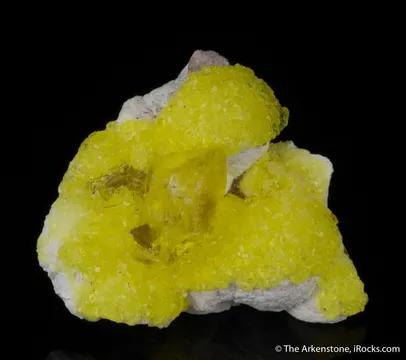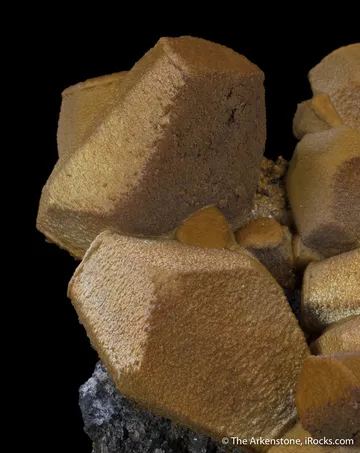
A collector's guide to Black Rock Mine, South Africa: its geology, mining history and notable minerals, illustrated with the 44 specimens documented from this locality on EarthWonders.
Key facts
Black Rock Mine sits in the northwestern, high-grade part of South Africa’s Kalahari Manganese Field, the immense Paleoproterozoic manganese province that has become both an ore giant and one of the world’s most important sources of unusual manganese-specimen minerals. For collectors, “Black Rock” has two meanings that must be held together: the historic mine at the Black Rock koppie, and the broader Assmang Black Rock Mine Operations, whose modern underground complexes include Nchwaning and Gloria. The classic Black Rock locality belongs to the same structural and hydrothermal system that made the Kalahari fields famous—Hotazel Formation manganese beds, banded iron formation, carbonate rocks, faulting, thrust repetition, and later hydrothermal upgrading that turned ordinary sedimentary manganese ore into an extraordinarily complex mineral factory.
The specimens most associated with Black Rock are not merely ore pieces; they are sharp, dramatic small-cabinet and miniature specimens with the Kalahari look: black manganese minerals, blood-red to brown-red andradite garnet, white bladed baryte, yellow sturmanite, and, on older market labels, lustrous black gaudefroyite. The finest combination specimens have a stark graphic quality—black prisms or needles rising from red garnet druse, accented by white baryte blades—while the rare hydrated sulfate-borate minerals from the district add the locality’s scientific cachet. This is a place where specimen beauty and mineralogical complexity overlap, but also where old labels require careful reading, because “Black Rock” has often been used loosely for material from the wider Black Rock–Nchwaning mining area.
Regional View
Country View
The deposit is rooted in the Hotazel Formation of the Transvaal Supergroup, where manganese ore seams are interlayered with iron formation and carbonate rocks. At Black Rock, Belgravia, and Nchwaning, thrusting duplicated parts of the succession, and later fault-controlled hydrothermal alteration produced zoning in both ore grade and mineralogy. Distal zones preserve lower-grade braunite-kutnohorite assemblages; fault-proximal zones became hausmannite-rich high-grade ore; intermediate zones host a particularly diverse suite including bixbyite, braunite, jacobsite, garnet, baryte, hematite, and many rarer manganese-bearing species. This geology explains why collector specimens from the Black Rock district often look so different from one pocket to the next: some are essentially garnet-coated ore, others are sulfate-rich cavity assemblages, and others carry the delicate late-stage minerals that made the Kalahari field a laboratory for new species.

That pictured style—black crystals, red andradite, and white baryte—is the commercial face of the locality. It is also a reminder of the label problem: many gaudefroyite-andradite-baryte specimens long circulated as Black Rock Mine pieces, while later locality compilations and expert discussions have questioned whether strict Black Rock Mine, as opposed to nearby Nchwaning or the broader Black Rock operating area, is the true source for some such material. Serious collectors should treat old Black Rock labels as historically meaningful but not always stratigraphically precise.
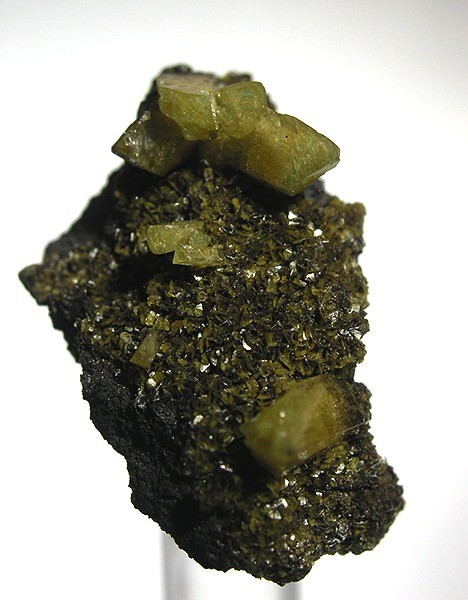
Search for specimens: View all specimens from Black Rock Mine, South Africa
Black Rock Mine is in the Black Rock area of the Kalahari Manganese Field, Northern Cape Province, roughly 80 km northwest of Kuruman and near Hotazel. In modern operating language, Assmang’s Black Rock Mine Operations comprise the Nchwaning 2, Nchwaning 3, and Gloria underground mines, while the old Black Rock Mine area itself is no longer the active extraction focus and functions as part of the mine complex’s infrastructure, offices, and village setting. The operation is held by Assmang, a joint venture owned equally by African Rainbow Minerals and Assore.
The ore belongs to the Paleoproterozoic Hotazel Formation of the Griqualand West Sequence, within the Transvaal Supergroup. Regionally, the Kalahari Manganese Field contains manganese oxide and carbonate-rich beds intercalated with banded iron formations and carbonates. At Black Rock, Belgravia, and Nchwaning, the succession has been structurally duplicated by thrusting, and the Black Rock Koppie, Belgravia 1, and Belgravia 2 bodies are collectively treated in operating reports as the Black Rock ore bodies. The Hotazel Formation is about 40 m thick in this mining area, and the manganese seams show strong lateral and vertical zoning.
The main collector-relevant geological fact is hydrothermal upgrading. Fluids moving along faults converted parts of lower-grade, carbonate-bearing, braunite-kutnohorite ore into high-grade manganese oxide ore. Nearest the controlling structures, hausmannite-rich assemblages dominate; away from them, lower-grade braunite and kutnohorite assemblages persist; between those zones lies the mineralogical sweet spot, where bixbyite, braunite, jacobsite, and many other manganese species occur with calc-silicate and sulfate minerals. The same zoning helps explain the recurring specimen associations: red-brown andradite over manganese ore, baryte in open spaces and fractures, hematite, hausmannite, calcite, and the hydrated ettringite-group minerals that made the district famous among systematic collectors.
Mining activity in the Black Rock area is reported from 1938. In 1940, Assmang acquired the manganese ore outcrop on the small hill known as Black Rock, and underground operations followed in 1942. The discovery and development of additional ore-bearing properties led to a larger mining complex. Gloria was commissioned in 1975 and produces medium-grade carbonated ore; Nchwaning II was commissioned in 1981; Nchwaning III was commissioned in 2004; the Nchwaning mines produce high-grade oxide ore. Modern mining is underground, using bord-and-pillar methods, trackless equipment, underground crushing, and conveyor systems, with two seams presently worked in the broader Black Rock Mine Operations.
Collecting access today should be regarded as closed industrial-mine access, not a field-collecting destination. The Black Rock–Nchwaning–Gloria complex is an active manganese operation with controlled underground workings, mine security, and formal mining rights. Contemporary specimens reach collectors only through permitted channels, mine-associated recovery, old collections, dealer inventories, and secondary-market dispersals. Loose use of the “Black Rock” name on old labels is common enough that provenance should be evaluated specimen by specimen, especially for gaudefroyite, sturmanite, ettringite-group species, and newer sugilite-related material.
The notable finds associated with the Black Rock label include baryte-rich assemblages with hematite and sturmanite, deep red andradite coatings and crystal druses, and the well-known commercial gaudefroyite-andradite-baryte style. Historical sturmanite material was associated with baryte and hematite and was assigned to Black Rock partly because baryte was known in quantity there when the specimens were studied. Later expert discussion has pointed out that some early-1980s Kalahari specimens attributed to Black Rock may more plausibly have come from then-current Nchwaning or Wessels operations. That tension is part of the locality’s collecting history: Black Rock is both a real historic mine and, in the specimen trade, a label sometimes used for material from the larger operating district.
Gaudefroyite-labelled specimens from Black Rock Mine are prized for lustrous black prismatic to acicular crystals scattered over deep red andradite and accented by white baryte blades; documented dealer and Wikimedia-hosted examples include miniatures around 5.7 cm and 8.6 cm across, with individual gaudefroyite crystals reported from about 7 mm to 1.2 cm, and another dealer example notes black crystals to 9 mm with white baryte and red andradite. The best pieces in this Black Rock-labelled style have upright, sharply terminated, bright black crystals set cleanly against red garnet and contrasting baryte rather than a confused dark crust. The caution is locality precision: modern compiled locality data has flagged gaudefroyite from strict Black Rock Mine as an erroneous dealer report, while gaudefroyite is well documented from the broader Kalahari manganese field, especially Nchwaning and Wessels; therefore a “Black Rock” gaudefroyite should be valued as a classic historic trade-label association unless its chain of custody specifically ties it to the old mine rather than the nearby Black Rock–Nchwaning operating area.
Barite from Black Rock is collector-important less as a stand-alone show mineral than as the pale structural counterpoint in Kalahari manganese assemblages: white to translucent blades, tablets, and drusy aggregates occurring with hematite, red andradite, sturmanite, and Black Rock-labelled gaudefroyite combinations. In the original sturmanite description, abundant barite was a key clue used to assign the studied Kuruman-district material to Black Rock, because barite was then known in quantity from that mine; in the gaudefroyite-andradite-barite trade specimens, barite crystals may be small sprays or more prominent blades, with reported individual crystals reaching about 1.7 cm on one miniature. Better Black Rock barite pieces show clean white bladed crystals standing free of manganese-oxide smearing and positioned as a visual accent among red garnet and black manganese minerals; ordinary pieces are commonly broken, dull, or reduced to indistinct pale patches in dark ore.
Andradite is one of the essential visual minerals of the Black Rock specimen style, forming dark red, brown-red, wine-red, to nearly black garnet druses and small sharp crystals on manganese-rich matrix, commonly associated with baryte and black manganese minerals and, on older market specimens, gaudefroyite-labelled black prisms. The best Black Rock-labelled andradite is not judged by size alone; it is judged by color contrast, sharpness, coverage, and whether the garnet forms a sparkling red ground that frames more delicate associated species. In the Kalahari manganese field, andradite belongs to the hydrothermal alteration assemblages that accompany high-grade oxide ore, so it is especially meaningful when preserved with baryte, hematite, hausmannite, sturmanite, or gaudefroyite-labelled crystals rather than as a massive garnet-coated fragment. Fine specimens show saturated red garnet without heavy black staining, with enough relief and luster to remain visible under low-angle light.
Baryte—the same mineral species as barite, BaSO4, under the spelling more often used in British and European mineral literature—is central to Black Rock’s scientific and aesthetic identity because it appears repeatedly in the classic manganese-cavity assemblages. At Black Rock it is documented with sturmanite and hematite, and in collector-market specimens it forms white to pale, delicate bladed crystals with deep red andradite and black manganese species. Especially desirable baryte pieces from this locality are those where the white blades are not merely included inside other minerals but are exposed, undamaged, and compositionally balanced on the specimen; they brighten the otherwise dark manganese palette and often serve as the visual proof that a piece belongs to the sulfate-rich Black Rock/Kalahari paragenesis. Fragility is a real issue: baryte blades on these specimens chip readily, and the finest examples preserve clean edges and open spaces rather than flattened, manganese-coated remnants.
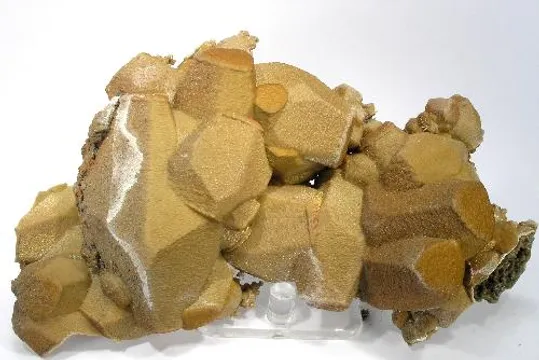
Beyond the four featured species, Black Rock is especially important to systematic collectors for sturmanite, the yellow to amber ettringite-group mineral described in 1983 as a ferric-iron, boron-bearing analogue of ettringite; its type material was assigned to Black Rock, with hematite and baryte as associated minerals, though the original paper noted that the exact mine was not specifically recorded and inferred Black Rock partly from the abundant baryte association. Later structural work on sturmanite used better-quality crystals from the type locality and refined its complex hydrated sulfate-borate structure. Other minerals documented from the strict locality or older Black Rock literature include hematite, hausmannite, braunite, braunite-II, bixbyite, jacobsite, calcite, xonotlite, ettringite, rhodochrosite, and marokite, with marokite known from Black Rock as an important additional occurrence after its Moroccan type locality. The larger Black Rock Mine Operations and neighboring Nchwaning/Wessels district add many more Kalahari rarities, but collectors should keep strict-mine, operating-complex, and district-level labels distinct.
The main authenticity problem at Black Rock is not artificial treatment; it is locality attribution. Older labels, dealer descriptions, and even image archives may use “Black Rock Mine” for specimens that modern locality specialists would prefer to assign to Nchwaning, Wessels, or the broader Black Rock operating area. Gaudefroyite is the prime example: highly attractive gaudefroyite-andradite-baryte specimens have long circulated under Black Rock labels, yet current locality vetting has questioned gaudefroyite from strict Black Rock Mine and treated at least some such reports as erroneous. For a serious collection, the safest wording for uncertain old labels is “Black Rock Mine label, Kalahari Manganese Field” or “Black Rock–Nchwaning area” unless the specimen has strong mine-specific documentation.
Sturmanite also deserves label nuance. It is historically tied to Black Rock as the type locality, and type material is conserved in major institutions, but the original description itself recorded the specimens as coming from the Kuruman district and assigned Black Rock because of the baryte-rich assemblage. This does not make a sturmanite specimen “wrong,” but it does make precise provenance valuable. A sturmanite with an old Royal Ontario Museum, Smithsonian, Gaines, Burke, or well-documented Kalahari specialist provenance carries more authority than a loose modern label.
Condition is critical. Baryte blades snap and bruise easily; gaudefroyite-labelled black crystals can lose terminations; andradite druses are tougher but can be abraded on high points; sturmanite is soft, hydrated, and vulnerable to edge bruising, dehydration concerns, and careless washing. Avoid ultrasonic cleaning and aggressive chemical cleaning on Kalahari combination specimens. Dry dusting with a soft brush and careful air-puff cleaning are safer than soaking, especially where hydrated sulfate minerals, baryte blades, or crumbly manganese-oxide matrix are present.
Matrix staining is normal. Black manganese oxides and dark ore minerals commonly coat baryte, calcite, garnet, and fracture surfaces. A perfectly clean white baryte on dark Kalahari matrix is attractive, but overly brightened or chemically etched pieces should be examined with a hand lens for unnatural surface texture, etched garnet luster, or weakened baryte edges. No major published fake industry is associated with Black Rock in the way one sees for some gemmy tourmaline or quartz localities, but relabeling and over-precise locality claims are common enough to affect value.
Market availability is uneven. Andradite-bearing Kalahari pieces and baryte-bearing combination specimens appear periodically, especially from older collections. Fine Black Rock-labelled gaudefroyite-andradite-baryte combinations are less common and are bought as classic aesthetic miniatures or small cabinet pieces, with value driven by sharp black crystals, red garnet contrast, undamaged baryte, and provenance. Sturmanite from the strict historic Black Rock association is significantly more specialized and should be evaluated for color, transparency, crystal completeness, and documentation. Sugilite connected to Black Rock Mine Operations is a current legal and provenance-sensitive subject; any such material should be approached with exceptional caution, requiring clear legal export and ownership history.
The first Black Rock story is almost geological folklore: a small dark hill in the Kalahari becoming the namesake of a manganese empire. The area was remote, dry, and difficult enough that large-scale exploitation lagged for decades after manganese-bearing rocks were first documented in the wider field. World War II changed the urgency of manganese supply, and in 1940 Assmang acquired the ore outcrop on the hillock known as Black Rock. Underground mining followed in 1942. From that koppie, the mining footprint expanded into Belgravia, Nchwaning, and Gloria, and the name “Black Rock” grew from a mine name into an operating identity recognized by ore geologists, industrial miners, and mineral collectors around the world.
The most collector-relevant human story is the naming of sturmanite. The mineral reached the attention of Donald Peacor, Pete Dunn, and Marjorie Duggan through Dr. Richard V. Gaines of Pottstown, Pennsylvania, who recognized that the material was unusual and deserved study. Preliminary optical and X-ray work showed that it was related to ettringite but materially different; chemical tests revealed significant ferric iron and little aluminum. The specimens had been obtained through a Johannesburg mineral dealer, but the exact mine was not recorded. The authors assigned the material to Black Rock because both observed assemblages contained abundant baryte, then known in quantity only from the Black Rock mine. Holotype material went to the Smithsonian under catalogue number 148261, while cotype and metatype material was placed in both the Smithsonian and the Royal Ontario Museum. The mineral was named for B. Darko Sturman of the Royal Ontario Museum, honoring his work in systematic mineralogy.
That type-locality story has a second act. Later, better-quality sturmanite crystals from the Black Rock type locality allowed a full structural study. The new crystals were good enough to refine the mineral’s complex ettringite-type architecture, including calcium polyhedra, Fe-bearing octahedra, sulfate groups, borate groups, hydrogen bonding, and partial site occupancy. For most collectors, this level of crystallography seems far removed from a thumbnail specimen in a box. But at Black Rock the connection is direct: a yellow crystal only a few centimeters across can be both an attractive cabinet mineral and a datum in the structural mineralogy of boron-bearing ettringite-group species.
The modern Black Rock story has also become a provenance story because of sugilite. In 2024 and 2025, official and parliamentary records described a dispute involving Assmang, PP Gemstone Mining and Exporting, government departments, community representatives, and rights to sugilite occurring within manganese-mining areas. Assmang stated that it does not trade sugilite and stockpiles material encountered, while the dispute raised questions about overlapping permits, consultation, community benefit, and control of high-value gemstone material. For collectors, the practical lesson is blunt: Black Rock sugilite is not just another colorful Kalahari label. It sits inside a contested legal and mining-rights context, and any specimen lacking a transparent, lawful chain of custody should be treated with skepticism.