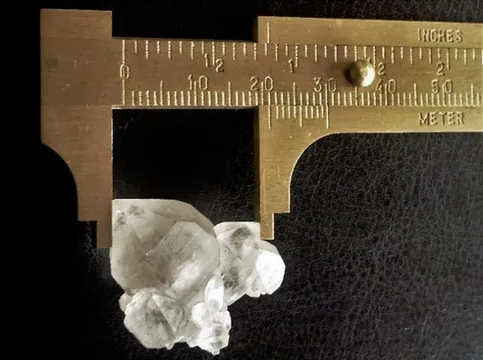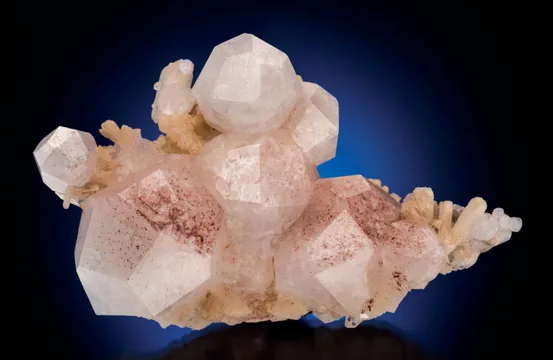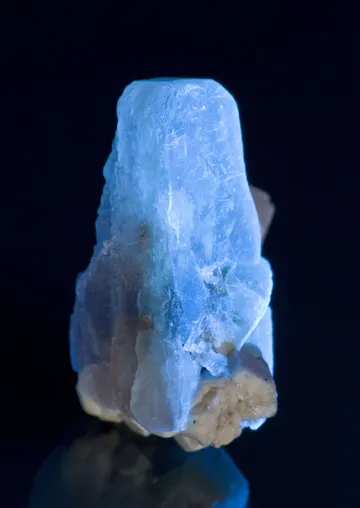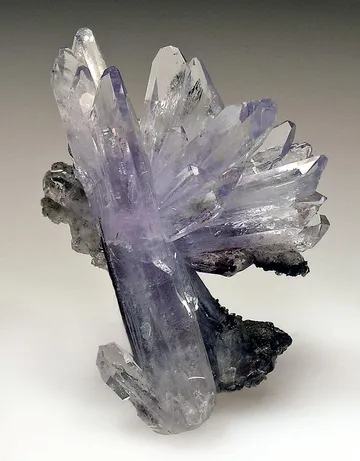
Snoqualmie Mining District, USA — renowned for quartz-pyrite specimens on alpine-breccia textures, amethyst scepters, and Japan-law twins, prized by collectors.
Key facts
The Snoqualmie Mining District of King County, Washington, occupies one of the great specimen-producing corners of the central Cascades: steep, wet, heavily forested country cut into the Snoqualmie batholith and its contact rocks. For ore geologists the district is a cluster of intrusive-breccia, shear-zone, skarn, and porphyry-copper-related occurrences; for mineral collectors it is best known for the dramatic contrast of bright pyrite cubes and pyritohedrons set on sprays and plates of quartz. The best Snoqualmie specimens have a distinctly American alpine-breccia look: glassy rock-crystal quartz, pale amethystine scepters, Japan-law twins, iron-oxide pocket staining, ankerite or barite accents, and pyrite crystals that can sit like polished brass architecture on a bed of sharp quartz points.
Regional View
Country View
The district’s fame rests especially on the Middle Fork Snoqualmie River localities, above North Bend and toward Goldmyer Hot Springs, where breccia-hosted hydrothermal pockets at Spruce Ridge and related claims yielded the classic quartz-pyrite combinations. These are not ordinary “quartz with pyrite” specimens: the sharpest pieces show pyrite cubes or complex pyritohedrons perched cleanly on slender quartz sprays, sometimes with the pyrite slightly etched or isolated on iron-oxide seams that record a second stage of crystallization and pocket corrosion. At Green Ridge and Denny Mountain, the district adds another collector language—amethyst scepters, Japan-law twins, rarer Reichenstein-Grieserntal quartz twins, and skarn minerals tied to the batholith’s contact aureole.

Photo: Wikimedia Commons
Historically, the district attracted prospectors for copper, gold, silver, molybdenum, tungsten, and iron rather than for cabinet specimens. The Rainy or Quartz Creek Mine, the Middle Fork property, the Clipper zone, Condor-Hemlock, Pedro, Porter, Puff Ball, Spruce, Denny Mountain, Guye, Green Ridge, and numerous smaller showings together record more than a century of exploration. Commercial ore production was modest, but the specimen record is disproportionately important: Spruce Ridge in particular stands among North America’s most recognizable quartz-pyrite localities.
Search for specimens: View all specimens from Snoqualmie Mining District, USA
The district lies in the Cascade Range east of the Snoqualmie Valley, chiefly in King County, Washington, around Snoqualmie Pass, North Bend, the Middle Fork of the Snoqualmie River, Goldmyer Hot Springs, Denny Mountain, Guye Peak, Green Ridge, Humpback Mountain, Hansen Creek, and adjacent ridges. The principal hard-rock specimen localities are tied to the Snoqualmie batholith, a late Oligocene to early Miocene composite intrusive body whose exposed lithologies include granodiorite, tonalite, granite, gabbro, porphyritic dacite, andesite, aplite, and intrusive breccia. Granodiorite is the dominant exposed rock in many of the specimen-producing breccias.
The most celebrated collector deposits are intrusive breccias: pipe-like or irregular shattered zones produced near the upper parts of a cooling shallow intrusion, where volatile-rich fluids fractured the host rock and created cavities, shear openings, and broken wall-rock blocks. Later hydrothermal fluids altered plagioclase and mafic minerals to muscovite, clay, chlorite, sericite, and related alteration minerals, while depositing quartz, pyrite, chalcopyrite, arsenopyrite, pyrrhotite, sphalerite, galena, carbonates, barite, and rarer species along open surfaces. This is why the best specimens have such an open-space pocket character rather than the massive-vein appearance of much ordinary sulfide ore.
The Middle Fork property, one of the district’s important exploration tracts, extended along the Middle Fork Snoqualmie River above its confluence with Burntboot Creek. Historic mapping shows a northeast-trending belt of mineralized zones and claims that included Three Brothers, Hawk, Katie Belle, North Katie Belle, Pedro, Clipper, Condor-Hemlock, River-North Hill, Burnt Boot-Goat Creek, Crawford, Puff Ball, and Porter zones. The overall mineralized corridor has been described as more than 6 miles long and several hundred to a few thousand feet wide, developed in breccia pipes, shatter zones, and shears cutting granitic rock.
The Rainy Mine, also known as the Quartz Creek Mine, is a useful example of the ore side of the district. Copper was discovered there in 1901, and exploration and mining during the early and mid-twentieth century developed an approximately 100-foot west adit, two shallow tunnels, an east-zone shaft or winze approximately 100 feet deep, and related mill structures. The east and west mineralized breccia zones are about 800 feet apart. In 1951 a 50-ton-per-day flotation mill was built; test shipments were processed into the mid-1950s, and recorded production in one state summary was 363 tons of ore from 1952 to 1956 yielding 127,974 pounds of copper, 3,377 ounces of silver, and 94 ounces of gold. A separate mineral examination reported about 2,000 tons produced from 1951 to 1957, with much of the work during a Western States Copper Company lease.
Quartz Creek mineralization includes chalcopyrite, brannerite, molybdenite, scheelite, pyrite, pyrrhotite, arsenopyrite, quartz, and tourmaline. At the west adit, sulfides are dominated by pyrrhotite, arsenopyrite, and chalcopyrite in a quartz stockwork; arsenopyrite is especially abundant, with small chalcopyrite veinlets and minor molybdenite. For collectors, Rainy is much less famous than Spruce Ridge, but it is mineralogically important because it shows the copper-molybdenum-tungsten-arsenic side of the Snoqualmie hydrothermal system.
Spruce Ridge, historically also labeled Spruce Claim, Spruce 15, Spruce 16, or Spruce Peak, is the district’s marquee fine-mineral locality. The claims were originally part of a much larger mid-twentieth-century exploration package for a deep-seated copper porphyry system. Later, they became a specimen-producing locality: What on Earth, Inc. worked the claim for specimens in 1977 and 1978; Bob Jackson, Stan Esbenshade, and Neal Pfaff followed from 1979 to 1982; Geology Adventures operated there from 1983 to 2008. The property was patented in 2001, and mineral rights are now held by Spruce Collectors, LLC, a membership organization. The Spruce assemblage records a complex pocket history, including quartz-pyrite deposition followed by later carbonate and barite stages.
The Pedro Claim, near the east end of the northeast-trending Middle Fork property, represents another active-claim specimen occurrence in brecciated intrusive rock. Its quartz occurs as terminated crystals lining vugs in brecciated diorite or tonalitic rock, commonly inclusion-rich and typically under about 3 inches, with rare Japan-law twins. Associated species include calcite, chalcopyrite, pyrite, siderite, sphalerite, galena, and possible gustavite-lillianite series material. The claim is private, and collecting is prohibited without permission.
Denny Mountain and the Guye Mine skarn broaden the district’s geology beyond breccia pockets. Along the Guye and Chair Peak saddle, skarn formed where the Snoqualmie batholith intruded older sedimentary rocks, producing calcite marble, andradite, diopside, magnetite, quartz, and locally fibrous amphiboles and epidote-group minerals. Denny Mountain’s “Rockhound Gulch” is a long-known King County locality for skarn minerals as well as quartz, amethyst scepters, and Japan-law twins from a small zone high in the canyon.
Access today is not simple. Much of the celebrated specimen production came from private or patented claims, active lode claims, or claims within federally managed mountain land where mineral rights, wilderness boundaries, safety, and environmental restrictions matter. Spruce Ridge is not an open public dig; Pedro is private; the Purple Hope claims on Green Ridge are within the Alpine Lakes Wilderness boundary, and the claim owners explicitly do not grant permission to collect. At old mine sites such as Rainy, collapsed adits, flooded workings, arsenic-rich waste, sulfide oxidation, acid-rock drainage, and unstable dumps add real hazards. Serious collectors should treat all Snoqualmie material as claim-controlled unless they have current, explicit permission from the land and mineral-rights holders.
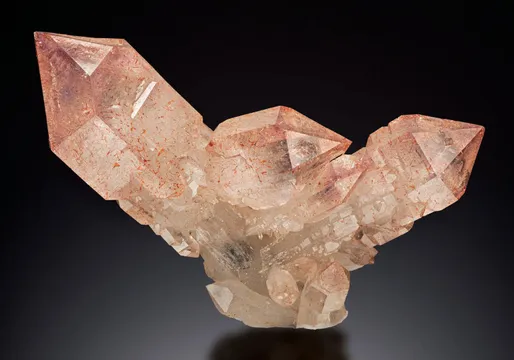
Quartz from the Snoqualmie Mining District is most admired from Spruce Ridge, Green Ridge, Denny Mountain, Pedro, and related Middle Fork breccias, where it occurs as slender rock-crystal sprays, doubly terminated crystals, rehealed plates, amethystine scepters, pale to richer amethyst zones, occasional citrine, Japan-law twins, and rarer Reichenstein-Grieserntal twins. At Spruce Ridge, crystals range from small sharp points to many inches and are prized when they carry well-positioned pyrite cubes or pyritohedrons, ankerite rosettes, barite, or calcite without heavy iron staining or broken terminations. Green Ridge and Purple Hope quartz is more about scepter habit, amethyst zoning, and unusual twin laws; the best pieces show crisp late-stage scepter growth of higher clarity and luster on an earlier quartz matrix, while ordinary pieces tend to be iron-coated, frost-damaged, fractured, or detached without composition.
Pyrite is the signature metallic mineral of the district’s collector-grade Spruce Ridge material, occurring as bright cubes, pyritohedrons, octahedrally truncated forms, trisoctahedral and diploid modifications, and complex etched crystals perched on quartz. Reported Spruce pyrite reaches exceptionally large sizes for this style—up to several inches, with mindat records noting crystals to 5 inches—though most fine cabinet pieces show smaller, sharper crystals arranged aesthetically on quartz sprays or plates. The most desirable examples have high luster, crisp geometry, rich brassy to slightly iridescent color, and clean placement; lesser pieces may be corroded, coated in iron oxides, detached, hollowed at the contact, or acid-cleaned to a silvery look that differs from the natural brassy finish. Associations with quartz dominate, but ankerite, calcite, barite, limonite-goethite oxidation products, and occasional chalcopyrite enrich the pocket story.
Beyond quartz and pyrite, the Snoqualmie Mining District has a surprisingly varied mineral list. Spruce Ridge adds ankerite, barite, calcite, chalcopyrite, sphalerite, galena, malachite, tenorite, cosalite, and native gold. Quartz Creek contributes arsenopyrite, pyrrhotite, chalcopyrite, molybdenite, scheelite, brannerite, tourmaline, covellite, native copper, talc pseudomorphs after possible anthophyllite, and pennantite. Pedro has produced attractive chalcopyrite with iridescence, black sphalerite, galena on sceptered quartz, siderite, and calcite. The district’s most important rarity is schultenite from Gifford Ridge, near North Bend, where white to colorless adamantine crystals of PbHAsO4 were described in a quartz-arsenopyrite-galena vein as the second world occurrence of the species after Tsumeb. Armenite is also documented from about 16 km northeast of North Bend, though its type locality is the Armen Mine at Kongsberg, Norway, not Snoqualmie.
The first authenticity issue is locality precision. “King County, Washington,” “Snoqualmie,” “Spruce Claim,” “Spruce Ridge,” “Spruce Peak,” and “Goldmyer Hot Springs” have all appeared on labels for related material, and a vague King County label is not enough to distinguish Spruce Ridge quartz-pyrite from Green Ridge amethyst scepters, Denny Mountain quartz, Pedro material, Hansen Creek pieces, or Quartz Creek ore specimens. For significant specimens, insist on a sublocality, collecting period if available, and previous ownership; the best Spruce Ridge pieces are sufficiently distinctive, but weakly documented examples should be treated cautiously.
No well-documented large-scale fake market specific to Snoqualmie quartz-pyrite was found, but repair, reattachment, and cleaning are real concerns. A pyrite cube perched dramatically on quartz is exactly the look that makes Spruce famous, so check contacts under magnification for glue, unnatural isolation, mismatched oxidation, or a contact surface that does not agree with the pocket’s growth history. Natural Spruce contacts may be distorted, hollow, or separated by iron-oxide films because of etching and later pocket alteration; that natural imperfection can be confused with damage or repair, so compare suspicious pieces with well-documented examples before dismissing them.
Condition is often the decisive value factor. Quartz tips chip easily, doubly terminated and scepter crystals bruise at the neck, and thin sprays may be reconstructed after pocket collapse. Pyrite from Spruce can be brilliant, corroded, or altered; acid cleaning can leave a silvery color rather than the warmer brassy surface many collectors prefer. Iron-oxide coatings are common in pockets with water seepage and can be either distracting or historically honest, depending on the specimen. Calcite associated with Spruce material may fluoresce pink to orange, but fluorescence is not the defining test for Snoqualmie quartz-pyrite; it is simply a useful note when calcite is present.
Rarity is highly uneven. Small quartz pieces and modest quartz-pyrite combinations appear periodically, but top-tier Spruce Ridge specimens with a sharp, lustrous pyrite crystal perfectly placed on undamaged quartz are legitimately scarce. Large, intact amethyst scepters, Japan-law twins on matrix, and Reichenstein-Grieserntal twins from the district are scarcer still. Many of the best specimens were collected decades ago or came from controlled claim operations, so availability depends less on ordinary field collecting than on old collections, member-mined material, and occasional claim production.
Handling deserves extra care for arsenic- and lead-bearing sublocalities. Quartz-pyrite display specimens are generally stable if kept dry, but ore pieces rich in arsenopyrite, galena, schultenite, or altered sulfides should be handled with normal toxic-mineral discipline: wash hands, keep dust out of the air, do not trim dry without protection, and keep such specimens away from children and food-preparation areas. Old waste-dump material from Rainy and related sulfide-rich sites can carry elevated arsenic and acid-drainage residues, so field-collected material from mine dumps should not be treated casually.
The most vivid Snoqualmie collecting stories come from the Green Ridge and Purple Hope claims, where the romance of King County quartz quickly gives way to the reality of the Cascades. The trailhead sits around 300 meters, but the deposits are high on steep forested faces, reached through roughly 1,000 meters of ascent. The country is not arid-mining-camp picturesque; it is a temperate rainforest where devil’s club, vine maple, rain, mud, loose talus, wet vertical faces, and short seasons dictate the work. In winter, snowpack at camp can exceed 6 meters. In the wet seasons, collectors have described the routine as starting in rain at dawn, emerging from soaked brush onto talus, then lying in mud or running water to work a pocket on a vertical face.
Joe George first became interested in the Green Ridge claim after a brief visit, telling Bob Jackson that if the claim ever came up for sale, he wanted the chance to buy it. Nearly eight years later, in October 1998, that call came. The first night after George agreed to buy the claim was not a triumphant campfire moment: he spent it alone, soaking wet, with inadequate gear. The claim would eventually justify the misery, but it introduced itself in the language Snoqualmie collectors know well—water, exposure, and discomfort before crystals.
The 2001 citrine discovery began with a pocket that looked large but disappointing. Its first chamber held crystals to 10 cm across and broken prism pieces to 20 cm long scattered on the floor, yet nearly everything was frost damaged, white with foggy internal fractures and microcracks. Then George broke into an adjacent chamber and found a few brilliant crystals with far better clarity and luster. When he shone a flashlight into the opening, he could not see the far end. Following the vein, he broke into the back of the pocket 7 meters away. Most of that rear chamber was also frost damaged, but a small section held several large undamaged crystals. Their yellow color was first assumed to be iron stain; repeated cleaning showed that the color was real.
The following year George shifted his work bench to a difficult western ridge where he suspected others had avoided the ground. The upper half was discouraging, almost barren, but a middle zone marked by small trees revealed remarkable pocket density. One of the first openings offered a water-clear 7-cm Japan-law twin at the entrance. Lower in the zone, the Nacho Cheese Pocket opened more than 4 meters wide and about 0.5 meter high, producing 10–15 kg plates covered with brilliant low drusy quartz tipped in pale amethyst. The pocket earned its name because the specimens came coated in a bright red-orange iron-oxide crust that looked like powdered snack-chip cheese.
In 2003 a small cabin was helicoptered onto a precarious ridge below the working bench. Steel cables fixed to a large old-growth tree held it in place. Only one edge of the cabin rested solidly on the ground; the other three sides hung out over air on thin supports. One guest was so unnerved by the exposure that he put on a harness and tied in before taking a midnight bathroom break.
One of the great small-pocket discoveries started with destruction. A 2-meter-wide clump of blueberry bushes was ripped off the vertical face and dropped roughly 30 meters, exposing little amethyst crystals tangled in the remaining roots. Probing the crack behind the torn-out bushes revealed a hand-sized opening. The first crystal was a glassy 4-cm amethyst scepter; then came another, and then two more in the next handful. The pocket was lined with sericite, and many scepters were loose in the bottom. The best specimen was a 3 × 10 cm doubly terminated amethyst scepter.
The Desperation Pocket delivered the kind of specimen that keeps hard-rock collectors returning to bad weather and worse terrain. Sceptered twins are among the great prizes of King County quartz. Two were found near the pocket entrance, both on matrix. A week later, after two days of work and another 2 meters into the face, George reached blindly around a corner into the rear chamber and felt a large scepter head. Even by touch, it was clearly exceptional. A gentle pull released a nearly hand-sized floater matrix plate with an egg-sized scepter. The crystal carried excellent clarity and wispy purple amethyst phantoms stacked through its length, and George named it Queen of Desire on the spot.
The 2015 season brought the “String of Pearls,” a line of related pockets in altered rock beside a large barren block. The Moby Dick Pocket was a lens nearly 3 meters long; nearby, the Black Pearl Pocket was startling because it was large enough to crawl into yet contained virtually no quartz, only a crisp frothy mass of iron oxides. Later, a new cut higher in the cliff found Twin Fantasy, which yielded a 14-cm Japan-law twin with one dramatically sceptered ear.
Then came the Yoga Pocket and Captain Nemo. George named the first for the contortions required to collect it—bending sideways, arched back, suspended on rope, forcing himself into a position that seemed to demand muscles he had not previously used. The next morning, after the opening was enlarged enough to admit his upper body, he worked up a tube toward a bigger cavity. A large plate blocked the ceiling. He loosened it, and it fell onto his head. Dirt, crystals, and pocket contents poured down around him. His muffled cry—“It’s on my head”—brought help. The plate that had landed on him carried several amethyst scepters on matrix, and the opened cavity showed 3 meters of air space widening upward. Snoqualmie had given him the classic bargain: danger, discomfort, absurdity, and a prize no ordinary locality could have offered.
Medici, John C.; Ludlum, Nathaniel; Pfaff, Neal; and Hawes, William. 1978. “Quartz and Pyrite from King County, Washington.” The Mineralogical Record, 9(6), 349–358. The original national-level account that helped establish the Spruce material in the fine-mineral literature.
Lasmanis, Raymond. 1991. “Minerals of the Spruce 16 Claim, King County, Washington.” Rocks & Minerals, 66(4), 316–320. A key locality article on the Spruce 16 assemblage and its quartz-pyrite significance.
Falls, R.; Cannon, B.; and Mandarino, J. A. 1985. “Schultenite from King County, Washington, USA; a second occurrence, and review.” Mineralogical Magazine, 49(350), 65–69. Formal description of Snoqualmie-area schultenite from a quartz-arsenopyrite-galena vein near North Bend as the second known world occurrence.
George, Joe, and Dillhoff, Rick. 2016. “The Purple Hope Claims: Green Ridge, Middle Fork of the Snoqualmie River, King County, Washington.” Rocks & Minerals, 91(6), 498–517. The best detailed collecting and mineralogical account of Green Ridge amethyst scepters, Japan-law twins, Reichenstein-Grieserntal twins, pockets, and field conditions.
Livingston, Vaughn E., Jr. 1971. Geology and Mineral Resources of King County, Washington. Washington Division of Mines and Geology Bulletin 63. The foundational county geology and mineral-resource reference for Snoqualmie district prospects, claims, and mine geology.
Grant, A. R. 1969. Chemical and Physical Controls for Base Metal Deposition in the Cascade Range of Washington. Washington Division of Mines and Geology Bulletin 58. Regional study cited repeatedly in later Snoqualmie district work for breccia-pipe and base-metal controls.
Patton, T. C.; Grant, A. R.; and Cheney, E. S. 1973. “Hydrothermal alteration at the Middle Fork copper prospect, central Cascades, Washington.” Economic Geology, 68, 816–830. Important technical paper on alteration zoning in the Middle Fork copper system.
Gualtieri, J. L.; Thurber, H. K.; Miller, M. S.; McMahan, A. B.; and Federspiel, F. E. 1975. Mineral Resources of Additions to the Alpine Lakes Study Area, Chelan, King, and Kittitas Counties, Washington. U.S. Geological Survey Open-File Report 75-3. Federal resource assessment covering Alpine Lakes additions and Snoqualmie district-style copper occurrences.
Derkey, Robert E.; Joseph, Nancy L.; and Lasmanis, Raymond. 1990. Metal Mines of Washington—Preliminary Report. Washington Division of Geology and Earth Resources Open File Report 90-18. State compilation with mine-by-mine information for metallic occurrences, including Snoqualmie district properties.
Ream, Lanny R. 1991. “Washington’s Japan-Law Twin and Sceptered Quartz Localities.” Rocks & Minerals, 66(6), 466–476. Broader Washington quartz reference that places King County scepters and twins in a statewide context.
Jackson, Bob. 2008. “Spruce Ridge, King County, Washington.” In American Mineral Treasures, edited by G. A. Staebler and W. E. Wilson, 328–335. Lithographie. Cited in later Green Ridge literature as a major modern account of Spruce Ridge as a classic American locality.
Jackson, Bob. 2015. “Spruce Ridge, King County, Washington: Evolution of a Great American Collecting Locality.” Rocks & Minerals, 90(4), 366–373. Later Spruce Ridge account cited by the Purple Hope paper for the development of the locality.
Washington Department of Ecology. 2003. Abbreviated Preliminary Assessment: Rainy Mine and Millsite, Mt. Baker-Snoqualmie National Forest, Snoqualmie Ranger District, King County, WA. Environmental and historical summary of the Rainy/Quartz Creek workings, production, waste, and access hazards.
Snoqualmie Mining District, King County, Washington — Mindat Broad mineral list, sublocalities, photo index, and locality hierarchy for the district.
Middle Fork of the Snoqualmie River — Mindat Useful portal for the Middle Fork sublocalities, including Spruce, Pedro, Porter, Condor-Hemlock, and other claim areas.
Spruce Ridge — Mindat Key locality page for the classic quartz-pyrite deposit, including historical names, ownership notes, and species entries.
Quartz from Spruce Ridge — Mindat Species-level details on Spruce quartz, including scepters, Japan-law twins, color, and associations.
Pyrite from Spruce Ridge — Mindat Species-level details on Spruce pyrite habits, crystal size, etching, and quartz association.
Minerals of Spruce Ridge — Washington Minerals Collector-oriented summary of Spruce geology, mineral list, photographs, and historical references.
Minerals of the Pedro Claim — Washington Minerals Focused account of a private Middle Fork claim with quartz, chalcopyrite, pyrite, sphalerite, siderite, galena, and calcite.
Minerals of the Quartz Creek Mine / Rainy Mine — Washington Minerals Concise mineral and geology summary for the Rainy/Quartz Creek copper-molybdenum-tungsten occurrence.
Minerals of the Guye Mine Skarn Deposit — Washington Minerals Good overview of the district’s skarn assemblage: andradite, diopside, magnetite, calcite, and quartz.
Minerals of Bessemer Ridge — Washington Minerals Skarn and contact-metasomatic mineral information from another Snoqualmie district locality.
The Purple Hope Claims: Green Ridge, Middle Fork of the Snoqualmie River — Evolving Earth Foundation PDF Essential long-form article for Green Ridge amethyst scepters, twins, pockets, and collecting history.
Geology and Mineral Resources of King County, Washington — Washington DNR Foundational county geology reference with mine descriptions, maps, and historical data.
Rainy Mine and Millsite Abbreviated Preliminary Assessment — Washington Department of Ecology Best accessible source for Rainy Mine production, workings, environmental concerns, and mine-site hazards.
North Cascades Geologic Province — Washington Geological Survey Regional geology context for the Snoqualmie batholith and Washington’s intrusive-related copper, molybdenum, tungsten, quartz, and pyrite localities.
Schultenite from King County, Washington, USA — Cambridge Core Abstract and bibliographic record for the Snoqualmie-area schultenite paper.
Schultenite from Gifford Ridge — Mindat Occurrence record for the district’s important schultenite rarity.