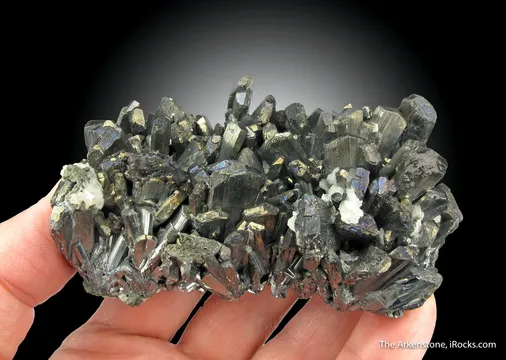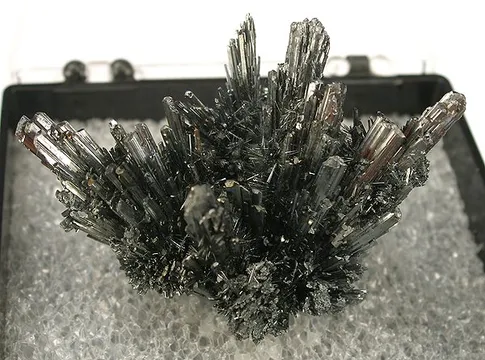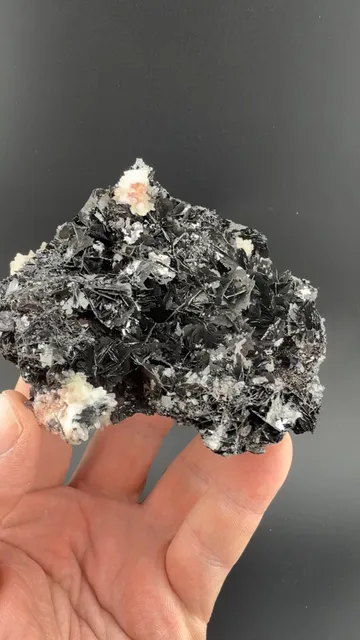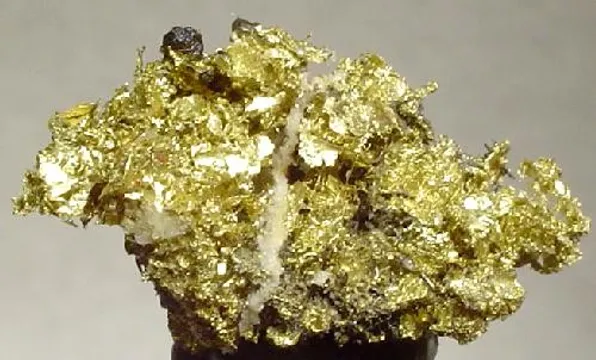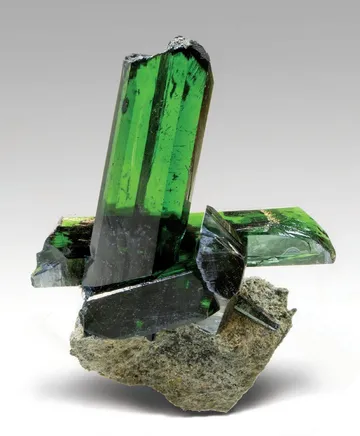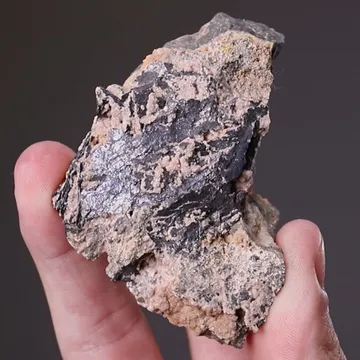
Săcărâmb, Romania — a classic European locality famed for a telluride-rich ore suite (nagyágite, sylvanite, petzite) and historic mining, prized by collectors.
Key facts
Săcărâmb—Nagyág on old Hungarian and German labels—is one of the classic names in European mineral collecting, and one of the few localities whose importance reaches simultaneously into ore geology, mineral systematics, mining history, and the chemistry of the elements. The village lies in the Certeju de Sus commune of Hunedoara County, on the southern side of the Apuseni Mountains, within the famous Golden Quadrilateral. Its deposit is a low-sulfidation epithermal Au-Ag-Te system tied to Neogene volcanic activity: a compact, intensely veined mineralized center developed in and around andesitic volcanic necks, with an exceptional abundance of tellurides.
For collectors, Săcărâmb’s signature is not native gold—although gold is present and historically important—but the dark, metallic telluride suite set against quartz and manganese carbonate gangue. The best specimens have a look that is unlike almost any other European gold-camp material: lead-gray to black, lustrous, lamellar nagyágite plates; bright silver-white sylvanite; pink rhodochrosite seams and crusts; white quartz; and scattered associations with petzite, krennerite, altaite, calaverite, alabandite, sphalerite, tetrahedrite, bournonite, native tellurium, and native gold. Fine pieces are often small by modern cabinet standards, but mineralogically dense: a few centimeters of matrix may carry several rare telluride species and, in the best cases, visible crystals rather than merely massive ore.
Historically, Săcărâmb is indispensable. Mining began in the 1740s and continued, in changing forms, for more than two centuries. Its ores puzzled eighteenth-century mineralogists because they yielded gold from material in which native gold was not obvious; that puzzle became part of the broader story of tellurium and gold tellurides. Săcărâmb later became the type locality for a remarkable group of species including nagyágite, petzite, krennerite, stützite, muthmannite, museumite, krautite, and alabandite. Few localities of comparable size have contributed so many mineral names to the literature.
Regional View
Country View
The specimen aesthetic is strongly old-European: compact plates, seams, and rosettes rather than large open-cavity crystals. The most desirable nagyágite specimens show lustrous, free-standing or partly embedded lamellae with clean contrast against pink rhodochrosite or pale quartz; sylvanite pieces may show silvery crystalline veinlets or elongated crystals; rhodochrosite specimens range from vein-filling masses to sharp pink pseudomorphs after calcite rhombs. Much of the finest material is nineteenth-century or early twentieth-century in character, and old labels reading Nagyág, Sacarîmb, Szekerembe, Sekeremb, or Gross-Astdorf are part of the locality’s collecting language.

Photo: Wikimedia Commons

Photo: Wikimedia Commons
Search for specimens: View all specimens from Săcărâmb, Romania
Săcărâmb is a low-sulfidation epithermal Au-Te to Au-Ag-Te deposit in the South Apuseni Mountains. The mineralization is related to Neogene calc-alkaline volcanic activity and is hosted chiefly by andesitic volcanic rocks. The ore system is centered on a stratovolcanic neck and associated stocks, with the principal volcanic bodies historically named Sarcău, Haitău, Frăsinata, and Săcărâmb. These intrusives cut the Fața Băii sedimentary formation and are bordered regionally by metamorphic basement rocks that include sericite schist, chlorite schist, metarhyolite, and marble.
The classic ore field is compact but structurally intense. Modern summaries describe more than 230 veins, concentrated in a very small area and developed down to roughly 600 m. Older mine descriptions emphasize four main vein groups: Nepomuc, Magdalena-Carolina, Longhin-Antilonghin, and Erzbau. The pattern is nearly rectangular, with NE-SW and NW-SE vein sets and anastomosing branches, especially in the upper portions of the system. Published descriptions of the veins give lengths commonly around 500–600 m, with thicknesses from a few millimeters to 2 m and an average near 0.3 m. The volcanic host rocks are typically propylitically altered away from the veins and more argillic close to the vein structures.
The deposit’s mineral zoning is one of the keys to understanding both ore treatment and collecting quality. Near-surface levels carried base-metal sulfides, sulfosalts, and tellurides; the middle levels were richest in tellurides; deeper levels became more base-metal dominant again. A simplified paragenetic sequence has been given as pyrite, alabandite, base-metal sulfides, sulfosalts, gold-silver-lead tellurides, quartz, rhodochrosite, later carbonates, and clay minerals. For collectors, that means the best specimens tend to be mixed telluride-carbonate-quartz ores rather than simple gold ore.
Individual vein groups had distinctive assemblages. The Magdalena group in the southeastern part of the mine was described with quartz, rhodochrosite, nagyágite, and abundant base-metal sulfides. The Longhin group in the northeastern part carried quartz, baryte, rhodochrosite, sylvanite, krennerite, gold, and subordinate base-metal sulfides. The Nepomuc group in the southwestern part was noted for calcite, petzite, and alabandite. These associations line up closely with the way specimens appear in collections: nagyágite commonly with rhodochrosite and quartz, sylvanite with quartz and carbonate, petzite and krennerite in richer telluride assemblages, and alabandite as a rare but defining manganese sulfide.
Mining began in the mid-eighteenth century. Ludwig von Born, father of the better-known mineralogist Ignaz von Born, played a central role in organizing the early mining company. The Buna Vestire, also known as Maria Veche, gallery was among the starting works, and in 1748 alone it reportedly produced about 14 kg of gold and 19 kg of silver. By the same year, state and imperial interests were involved in the operation, and further galleries, including Maria Nouă, were being driven to open additional mining ground.
Săcărâmb was not just a mine; it became a technical center for mining in Transylvania. A Superior Technical Mining School was established there in 1835 and continued to function until the Second World War. The locality also saw technical improvements in ore handling and washing, including late eighteenth-century machines associated with Felix Franzenau and Munteanu Ursu. In the nineteenth and early twentieth centuries the mines were part of a larger Certej-Săcărâmb mining field, with underground workings, drainage galleries, ore haulage systems, and later flotation treatment.
Production statistics vary depending on the period and what is counted, but the cumulative historical output was substantial: published summaries cite approximately 32 tonnes of gold and 50 tonnes of silver from the deposit, while other historical reviews estimate roughly 30 tonnes of gold, 55 tonnes of silver, and a significant tellurium endowment retained in waste and underground fill. A separate estimate based on Au:Te ratios in widespread tellurides suggested that the mine may have generated tens of tonnes of tellurium in addition to precious metals, though the tellurium was historically not the product being recovered.
After the First World War, the Transylvanian mining assets formerly held by the Hungarian state passed to the Romanian state, and Săcărâmb was operated through Romanian state mining organizations. The mine struggled immediately after the war, with low production in 1919, then recovered during the interwar period. In 1935 a modern flotation plant at Certej replaced older crushing practice for a mixed feed of fresh ore, tailings, and waste-dump material. By the late 1930s the operation was again producing significant gold and silver. Later twentieth-century mining declined, industrial structures were damaged or destroyed, and the broader Certej-Săcărâmb operation closed in 2006.
Collecting today is primarily a matter of old specimens, museum holdings, and residual surface material rather than access to productive underground pockets. The mines are closed and underground access is not available for collecting. Modern geoheritage assessments describe the locality as unprotected and degrading, with old dumps still visited for educational sample collecting, but serious collector-grade nagyágite, sylvanite, and rich telluride combinations are overwhelmingly historic. Fine pieces with old Nagyág labels, documented nineteenth-century provenance, or recognizable museum/dealer history deserve special attention.
The most important documented specimens include those in the Brad Gold Museum and major institutional collections. The Brad material records the locality’s typical mineral associations vividly: nagyágite intergrown with vein-shaped rhodochrosite; finely lamellar nagyágite with rhodochrosite, quartz, and sylvanite; macrolamellar nagyágite on quartz with sphalerite; lamellar nagyágite with sylvanite rods and gold; and prismatic sylvanite on quartz crusts or in carbonate veins with nagyágite, petzite, and microgranular gold. These are exactly the combinations that define Săcărâmb at its best.
Nagyágite is the mineral that most strongly identifies Săcărâmb, both historically and visually. From this type locality it occurs as dark lead-gray to black metallic lamellae, plates, and flattened crystals, commonly embedded in or perched on rhodochrosite, quartz, and carbonate gangue, with frequent close associations to altaite, sylvanite, petzite, calaverite, bournonite, sphalerite, tetrahedrite, native tellurium, and occasional gold. Published ore-microscopy work shows that much of the material is chemically and texturally complex at the microscopic scale, with nagyágite lamellae hosting tiny altaite and native tellurium inclusions and, in some samples, compositional variation within individual lamellae. Collector specimens range from microscopic ore-polished material to cabinet pieces several centimeters across, but the valuable examples are those with visible, lustrous, well-defined lamellae or rosettes, especially when the metallic plates contrast cleanly with pink rhodochrosite or white quartz; dull massive patches, acid-etched surfaces, and undiagnostic gray ore are much less desirable unless analytically documented.
Rhodochrosite at Săcărâmb is not merely a colorful accessory; it is one of the defining gangue minerals of the telluride ore. It forms pink vein material, crusts, small crystals, and attractive pseudomorphs after calcite rhombs, and it is repeatedly documented with nagyágite, sylvanite, quartz, alabandite, sphalerite, and other tellurides. The best collector pieces are old-time specimens in which pastel to stronger pink rhodochrosite frames dark metallic tellurides, or where sharp rhodochrosite pseudomorphs cover vuggy matrix in neat millimeter-scale rhombs. Ordinary Săcărâmb rhodochrosite is often massive or vein-filling, and on such pieces the value depends heavily on associated tellurides; fine standalone rhodochrosite from here is less common than the locality’s fame might suggest, and its appeal is strongest when it preserves the distinctive manganese-carbonate-telluride paragenesis of the mine.
Sylvanite from Săcărâmb occurs in bright silver-white to gray metallic crystals, veinlets, dendritic to hair-like growths, and prismatic crystals on quartz or carbonate-rich matrix, most characteristically with quartz, rhodochrosite, nagyágite, petzite, krennerite, calcite, baryte, sphalerite, altaite, and occasional native gold. The Longhin vein group was historically noted for quartz, baryte, rhodochrosite, sylvanite, krennerite, gold, and subordinate base-metal sulfides, and museum specimens from Săcărâmb include prismatic sylvanite in carbonate veins with nagyágite, petzite, and microgranular gold, as well as prismatic crystals on quartz crusts. Good pieces show visible metallic crystals or coherent crystalline vein networks with strong contrast against pale quartz or pink carbonate; ordinary pieces are massive gray telluride ore that may be mineralogically important but visually ambiguous without analysis.
Quartz at Săcărâmb is the principal stage on which the tellurides are displayed: white to gray crusts, vug linings, vein quartz, microgranular quartz, and locally small prismatic crystals are documented with nagyágite, sylvanite, petzite, krennerite, calaverite, sphalerite, rhodochrosite, and native gold. It is especially important in Longhin-type sylvanite specimens, where bright telluride crystals lie on quartz crusts, and in nagyágite pieces where pale quartz contrasts with dark lamellae and pink rhodochrosite. As a collectible species, Săcărâmb quartz is rarely prized for crystal size alone; its importance is contextual. The best quartz specimens are those carrying visible tellurides or native gold in clean, undamaged association, while barren quartz from the dumps has mainly geological rather than specimen-market interest.
Other minerals from Săcărâmb form one of Europe’s great telluride and sulfosalt inventories. Type-locality species include petzite, krennerite, stützite, muthmannite, museumite, krautite, alabandite, and nagyágite. The locality is also known for altaite, calaverite, hessite, coloradoite, native tellurium, tellurantimony, frohbergite, tellurite, native arsenic, arsenopyrite, galena, sphalerite including Mn-bearing varieties, pyrite, marcasite, bournonite, boulangerite, tetrahedrite-tennantite group minerals, zinkenite, baryte, calcite, and dolomite. For collectors, petzite-krennerite-sylvanite-nagyágite mixtures are particularly significant, but many such pieces require microscopy, analytical work, or trustworthy old provenance to identify confidently.
Săcărâmb specimens demand locality literacy. Old labels may read Nagyág, Nagyag, Sacarîmb, Săcărîmb, Szekerembe, Sekeremb, or Gross-Astdorf, and all can refer to the same classic mining locality. Conversely, “Transylvania telluride” labels are sometimes too vague: Baia de Arieș, Fața Băii, Roșia Montană, and other Apuseni localities produced tellurides as well, so a Săcărâmb attribution is strongest when supported by an old Nagyág/Săcărâmb label, a known collection history, or a paragenesis matching the classic rhodochrosite-quartz-nagyágite-sylvanite suite.
Visual identification is a real problem. Many Săcărâmb tellurides are gray, metallic, and intergrown at millimeter to microscopic scale. Nagyágite, sylvanite, petzite, altaite, krennerite, calaverite, and native tellurium may appear together in a small field of view, and the most scientifically interesting material is often visually subtle. Dealer labels should be treated cautiously when several gray tellurides are named from sight alone. High-value specimens benefit from analytical confirmation, especially when the label claims petzite, muthmannite, stützite, museumite, native tellurium, or complex sulfosalts.
Condition matters more than many catalog descriptions admit. Nagyágite is soft, sectile to slightly flexible, and easily dulled or abraded. Lamellar crystals can be bent, rubbed, or broken at exposed edges. Rhodochrosite and calcite-rich matrices may be etched or cleaned aggressively, and some old nagyágite-rhodochrosite specimens show surfaces affected by acid removal of carbonate. A good piece retains metallic luster on the telluride plates and natural relationships between carbonate, quartz, and ore; overly bright, raw-looking cavities or chalky carbonate should prompt a closer look under magnification.
Sylvanite is another mineral to handle with care. It is a silver-gold telluride that can tarnish, and collector references note its sensitivity to prolonged light exposure. Keep fine sylvanite-rich Săcărâmb specimens out of direct sunlight and display them under conservative lighting. Dusting should be gentle, with no wet chemical cleaning unless directed by a professional conservator familiar with telluride ores.
Rarity is uneven across the locality suite. Small pieces of gray telluride ore from Săcărâmb appear periodically, but attractive nagyágite with visible lamellae, sylvanite crystals on quartz, and sharp pink rhodochrosite associations are much scarcer. The mine is closed, underground access is unavailable, and modern surface collecting cannot be expected to replace the historic production of specimen-grade material. The market is therefore dominated by old European collections, deaccessioned institutional duplicates, long-held dealer stock, and occasional specimens from classic collections.
The first great Săcărâmb story begins with bewilderment. In the eighteenth century, miners and assayers were recovering important quantities of gold from ores that did not look like native gold ore. The metal was locked in unfamiliar telluride minerals—strange, metallic, chemically obstinate substances that forced mineralogists to rethink what “gold ore” could be. That confusion led into the wider discovery history of tellurium, first investigated from Transylvanian gold ores by Franz-Joseph Müller von Reichenstein and later named by Martin Heinrich Klaproth. Săcărâmb’s own ores, described in early literature as auriferous Nagyág material, became part of the intellectual landscape in which tellurium and gold tellurides were recognized as a new mineralogical world rather than troublesome variants of antimony or bismuth ore.
The mine’s opening years read like a Habsburg mining drama. Ludwig von Born, a retired artillery officer and mine owner at Certej-Hondol, helped establish the mining stock company that began work at Săcărâmb. The Buna Vestire, or Maria Veche, gallery quickly justified the gamble: in 1748 alone it yielded about 14 kg of gold and 19 kg of silver. By the end of that same year, after von Born’s death, his widow offered 16 mining shares—“kuxen”—without charge to Empress Elisabeth of Austria. That gesture was decisive. The Imperial Family later acquired another 22 shares, and the state, through the Montanistische Aerarium, acquired 32 more. From the outset, then, Săcărâmb was not a marginal mountain dig; it became an imperial concern.
By 1835, Săcărâmb had become more than a producing mine. A Superior Technical Mining School opened there, later remembered as the first mining technical school in southeastern or eastern Europe. Students and mining men from several ethnic and linguistic communities passed through the village, giving Săcărâmb the atmosphere of a specialized mountain academy as well as an ore camp. Johann Grimm published a manual in Vienna in 1839 for the school’s students. Josef Franzenau, a professor of natural sciences and later a highly honored mine administrator, was another figure in this scholarly-mining world; after his death, his pupils erected a cast-iron monument at Govăjdia.
The technological inventiveness of the camp is just as memorable. In 1796, Felix Franzenau invented a pressurized ore-washing machine and built an animal-traction winch to spare human labor. In 1797, Munteanu Ursu invented a gold-ore washing machine using a barrel lift wheel and improved hydraulic stamp crushers by adding an extra gear. These details matter because they show Săcărâmb not merely as a picturesque old source of rare minerals, but as a working technical laboratory where people were trying to solve the practical problem posed by difficult, telluride-rich gold ores.
A century and a half later, the mine was still being reinvented. After the First World War, production had fallen badly; one account gives only 7.723 kg of gold in 1919. By 1927 it had recovered to 19.955 kg, and in the early 1930s engineers turned to the old waste dumps and low-grade quartz ore. In 1935, the old stamp-crushing approach was replaced by a modern flotation plant at Certej, capable of treating 250 tonnes per day from a deliberately blended feed of 30 percent fresh ore, 30 percent tailings, and 40 percent waste-dump material. The effect was dramatic: gold production rose from 68.963 kg in 1932 to 274.912 kg in 1935, and by the beginning of the Second World War production was around 300 kg of gold and 500 kg of silver per year.
The visible remnants of Săcărâmb are quieter now. Geoheritage studies describe a place where old mine entrances, abandoned mine-office buildings, memorial plates, and a picturesque mountain setting survive, while underground workings are closed and inaccessible. One memorial plate commemorates 225 years of mining in the Certej-Săcărâmb field, 1746–1971. Another, unveiled in 2005, marks the building that housed the 1835 mining school. The strongest field impression today is that of a locality whose greatest treasures have moved into cabinets: Brad, Bucharest, Cluj-Napoca, Vienna, London, Paris, Washington, Princeton, and private collections—while the village itself remains a fading but still legible map of European mining history.